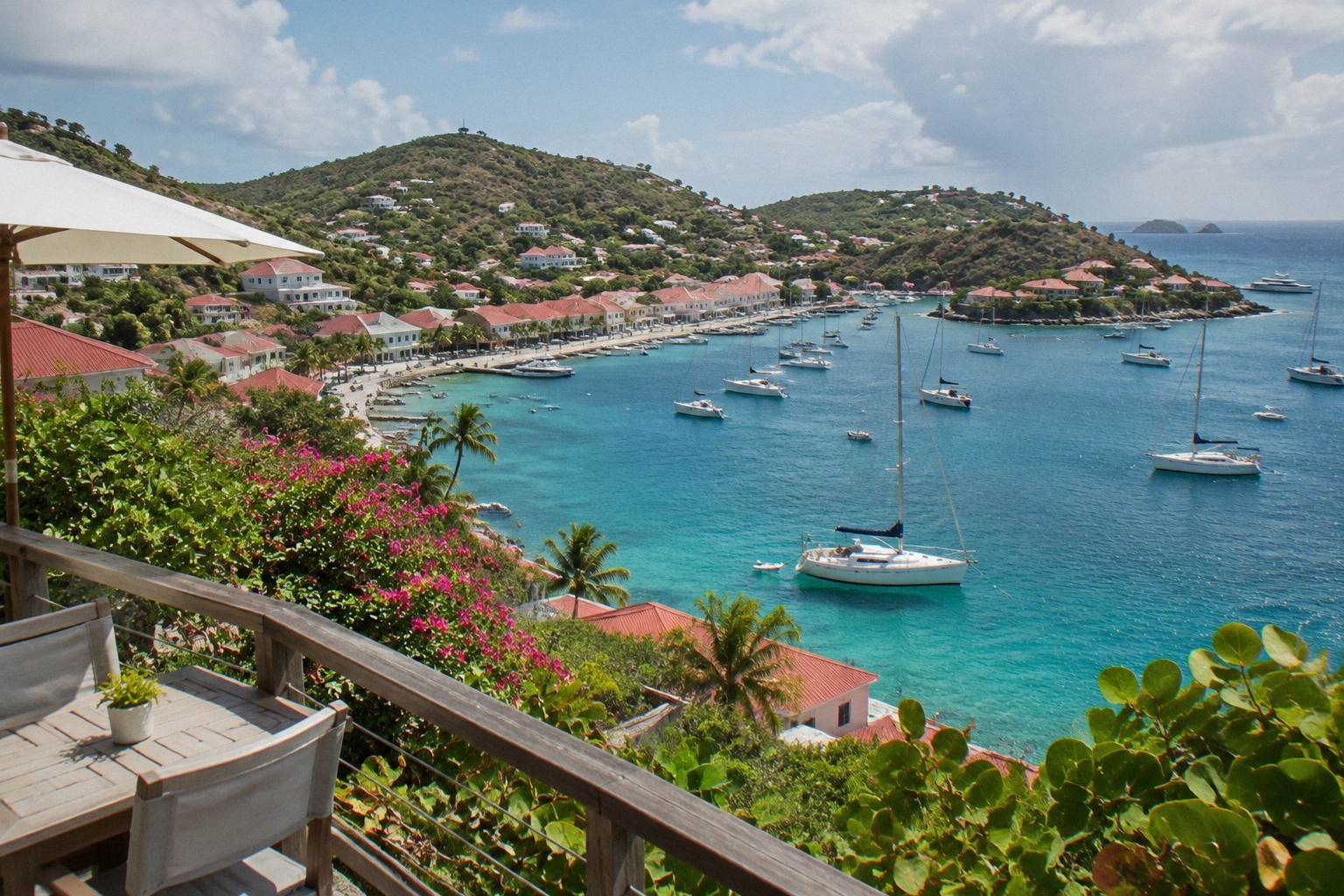
Gustavia Shopping
Gustavia shopping is the retail heart of St Barthelemy: a compact capital of French fashion houses, jewellers and harbourfront galleries wrapped around one of the smallest working ports in the Caribbean.
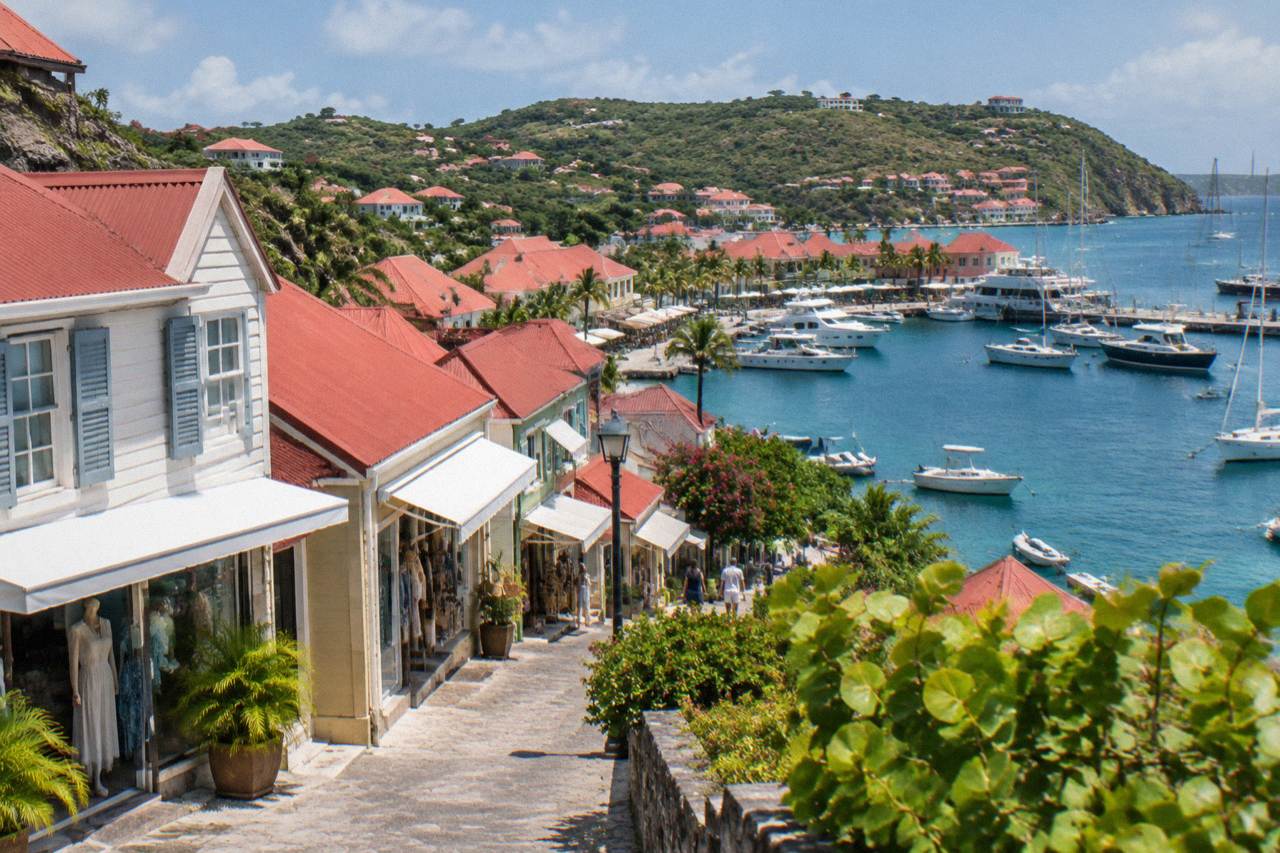
Gustavia concentrates the serious shopping on St Barts into a few harbour-side streets, roughly Rue du Général de Gaulle, Rue de la République and the quays, where French luxury brands, jewellers and art galleries sit within a short walk of the tender pier.
Gustavia shopping is unlike shopping anywhere else in the Caribbean, because St Barthelemy, a French overseas collectivity of about 21 square kilometres and roughly 10,700 residents, has packed its entire luxury retail scene into the harbour capital. The town wraps around a working port where superyachts, ferry arrivals and cruise tenders all dock within a few minutes' walk of the boutiques, and almost everything worth browsing sits on three short streets that climb gently from the water. This guide covers the streets themselves, what each stretch sells, how cruise-tender timing changes the day, and how to fold a shopping stop into a wider trip. For the broader island picture, start with the St Barthelemy Travel overview of things to do across St Barts.
What Is Gustavia Shopping Like In St Barts?
Gustavia shopping is a compact, walkable concentration of French luxury boutiques, jewellers, art galleries and small speciality shops set on the streets that rise directly from the harbour, all within roughly ten minutes' walk of the tender pier and the ferry dock. There is no mall, no arcade and no shopping district beyond the town itself: the retail offer is the town, and the town is small.
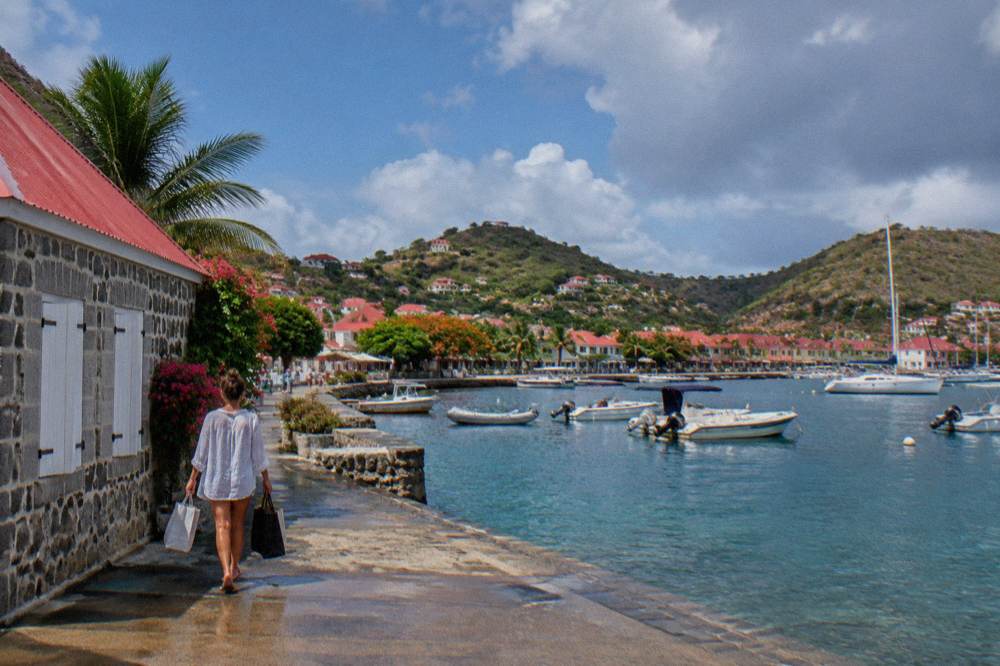
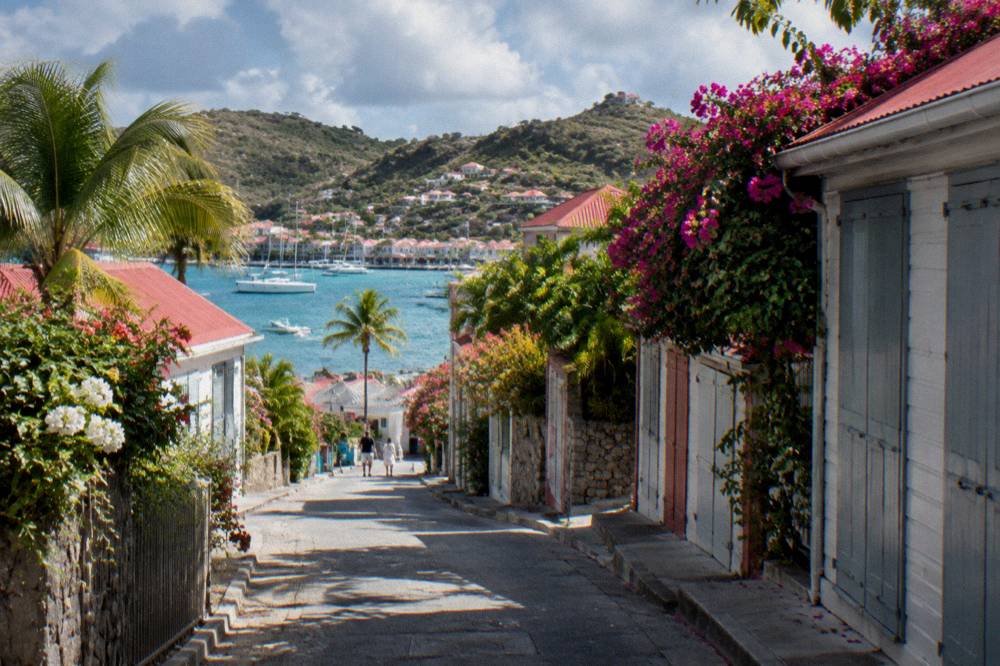
The character of the place comes from what it is not. St Barts has no high-rise retail, no chain department store and no traffic to speak of in the centre of Gustavia. What it has instead is a former Swedish-era harbour grid of low stone and clapboard buildings, red roofs and narrow lanes, where the ground floors have been given over to display windows. The tourism committee presents Gustavia as the island's commercial centre, and the streets back that up: nearly everything on the island that could be called a boutique is here rather than in Saint-Jean or the quieter residential areas.
The scale matters for planning. A determined shopper can walk the entire retail footprint of Gustavia between two stops for coffee, because the streets are short and the blocks are small. That makes it an easy half-day activity, a cruise-tender stop, or the rainy-morning component of a trip whose afternoons belong to the beaches. Visitors planning a first trip often pair a Gustavia morning with an afternoon at one of the public beaches described in the guide to St Barts neighborhoods, or with a walk around Gustavia harbor itself.
What sells here follows the island's French connection. Parisian fashion houses, fine jewellers, swimwear and resort-wear labels, perfumery, art galleries carrying Caribbean and international painters, and a handful of delis and grocers selling French products make up the offer. Duty considerations, covered below, shape why jewellers in particular are prominent. None of this is cheap, and the site does not print prices for goods: what can be said is that the product mix is pitched at a visitor base that arrives by yacht and by private aviation.
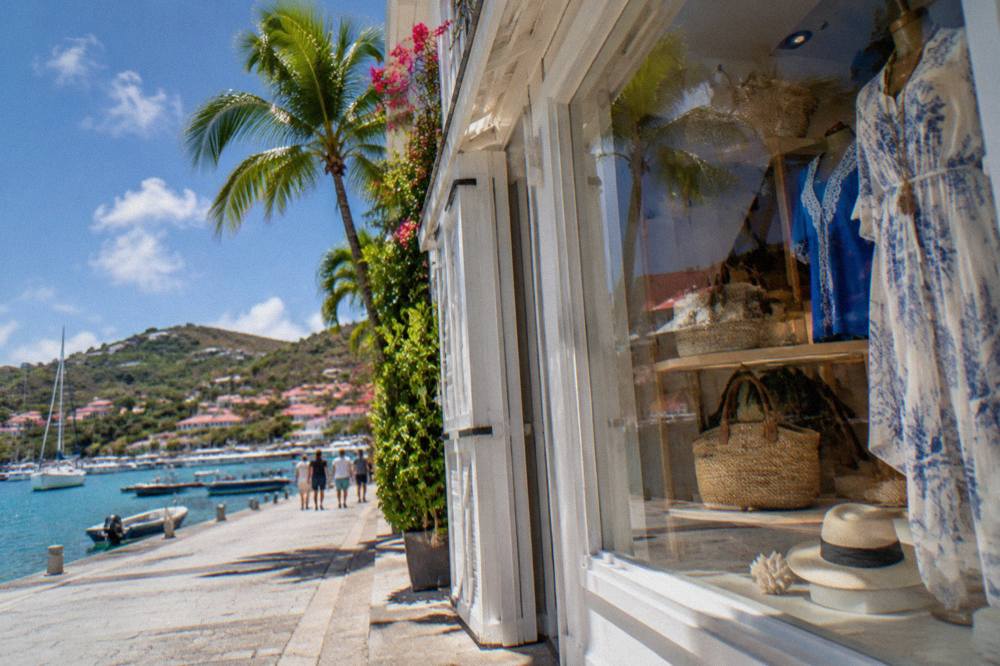
Gustavia shopping: key figures
Cruise crowd limits and weather numbers for planning a shopping day
Figures from the port authority and Meteo-France normals, 1991-2020.
Which Streets Should A Gustavia Shopping Walk Cover?
The core walk covers Rue du Général de Gaulle along the waterfront, Rue de la République one block inland, and the short cross-lanes and quay-level frontage that connect them, with the pier end of town holding jewellers and the upper streets holding fashion, galleries and speciality shops. The whole loop is flat to gently sloping and needs no car.
Rue du Général de Gaulle is the spine. It runs beside the harbour basin where tenders and ferries land, and its ground floors carry the highest-profile frontage in town: jewellers, watch retailers and flagship boutiques of French luxury houses face the water. A shopper arriving by tender boat walks off the pier and is, in effect, already inside the shopping street.
Rue de la République runs parallel, one block up the slope, and carries a slightly different mix: more resort wear, more independent speciality shops, and several of the town's galleries. The lanes between the two streets hold smaller frontage, and the blocks around the town's public spaces add delis, grocers and service shops aimed as much at residents as at visitors. The Gustavia where to stay guide covers the town as a base, and it is worth knowing that everything described here sits within that same five-minute radius.
Two short excursions complete the walk. East of the centre, the road toward Shell Beach leaves the retail grid and passes a handful of shops and restaurants before reaching the water at Shell Beach (Grand Galet), a public cove that makes a natural mid-walk break. And above the town, the fortified headland holds Fort Karl, whose viewpoint gives a panorama over the red roofs a shopper has just been walking beneath.
| Street or area | Position | Character of the shopping |
|---|---|---|
| Rue du Général de Gaulle | Waterfront, beside the harbour basin | Jewellers, watches, flagship French luxury boutiques |
| Rue de la République | One block inland, parallel to the water | Resort wear, independent boutiques, art galleries |
| Cross-lanes between the two | Short connecting alleys | Smaller speciality shops, delis, service retail |
| Quai frontage | At the tender and ferry piers | Marine-frontage shops, immediate pier-side browsing |
| Road toward Shell Beach | East edge of the grid | Scattered shops ending at a public beach cove |
For visitors combining retail with the rest of the island, the practical pairing is a morning in Gustavia and an afternoon elsewhere: the area guides to Saint-Jean, Flamands and Grand Cul-de-Sac cover the main alternatives, and the wider best area to stay in St Barts comparison puts Gustavia's convenience against the quieter coasts.
What Can You Buy In Gustavia, St Barts?
Gustavia's offer clusters into six honest categories: French fashion and leather goods, fine jewellery and watches, swimwear and resort clothing, art and photography galleries, beauty and perfumery, and food shopping in the form of French grocers, delicatessens and wine, and the food end of the town is substantial enough that the island has a dedicated grocery guide. Nothing in the mix is mass-market.
The jewellery and watch segment is the one that draws cross-island questions. Because St Barthelemy is a French collectivity outside the European Union's customs territory in practical terms for duty-free shopping, and because the island's visitor base skews luxury, the harbour streets carry a density of fine jewellers unusual for a town of this size. Shoppers comparing prices should ask each retailer directly about duty and customs treatment on their return home, because no general price claim can be made responsibly here, and the savings question depends on the buyer's home country's personal allowances.
Fashion follows the French flag. Parisian houses maintain boutiques in Gustavia at a scale the town's population could never support on its own, and the resort-wear layer beneath them, swim labels, linen, sandals, sunglasses, is arguably more useful to a visitor actually spending a week on the beaches. Galleries come third: Gustavia's art scene is real rather than ornamental, with galleries carrying Caribbean painters, international names and photography, and a gallery purchase is one of the few Gustavia buys that is both unique to the trip and genuinely portable.
| Category | Where it clusters | Notes for a buyer |
|---|---|---|
| Fine jewellery and watches | Rue du Général de Gaulle waterfront | Ask each retailer about duty treatment for your home country |
| French fashion and leather goods | Waterfront and Rue de la République | Parisian houses present; European sizing |
| Swimwear and resort wear | Rue de la République and cross-lanes | Practical for a beach-based week |
| Art and photography galleries | Upper streets and lanes | Shipping can usually be arranged; confirm with each gallery |
| Beauty and perfumery | Scattered through the core | French brands; carry-on rules apply |
| Food, wine and delicatessen | Around the town's edges | See the island grocery guide for detail |
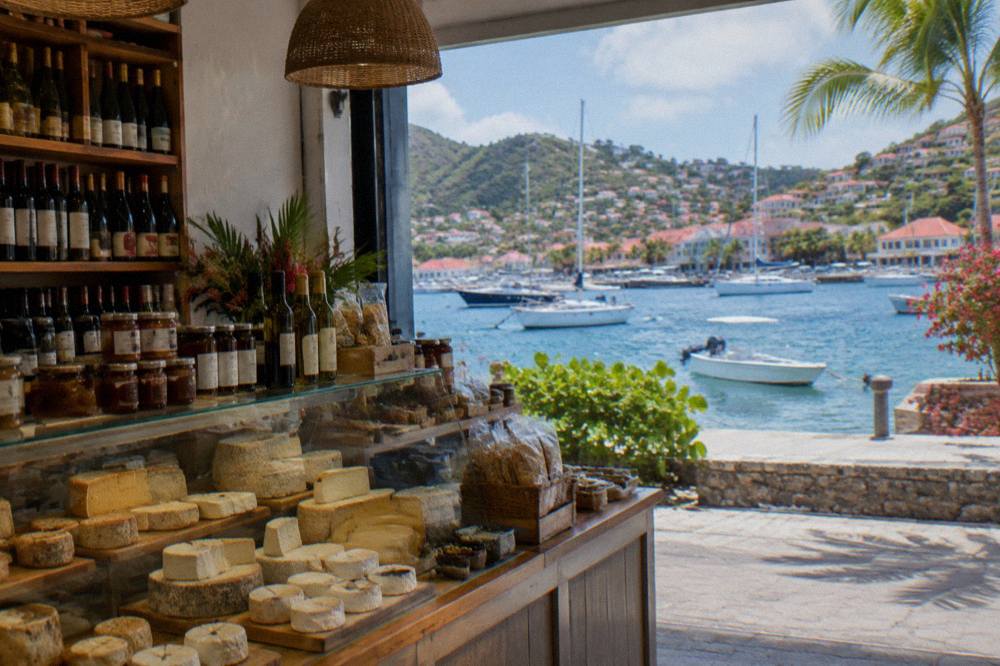
The food category deserves its own paragraph. Gustavia's delicatessens and grocers stock French products, and a self-catering week in a villa or apartment is often provisioned largely in town. The St Barts groceries guide covers provisioning across the island, and the Gustavia restaurants guide covers the eating side of the same streets, which matters because a shopping walk in Gustavia is naturally punctuated by long lunches.
A question this site fields separately is whether branded goods work out cheaper here than elsewhere; that depends on the item, the brand's own pricing, exchange rates and the buyer's duty allowance, and the honest answer is to compare a specific item against its price at home before buying. The wider St Barts shopping guide carries that comparison discussion for the whole island, including the question of whether items such as Cartier are cheaper in St Barts.
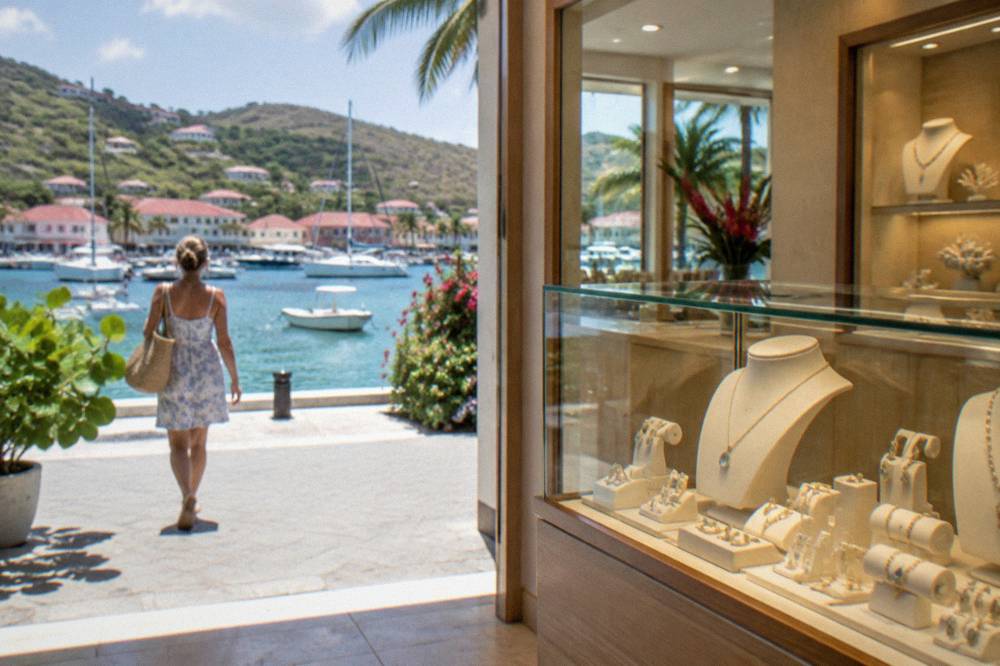
How Does Cruise-Tender Timing Change A Shopping Day In Gustavia?
Cruise ships tender their passengers into the centre of Gustavia rather than docking, there is no cruise pier, and because the tender landing sits at the edge of the shopping streets, a ship day puts the entire retail core within a few minutes' walk of arrival, which concentrates browsing into the hours the ship is in port and means the town quiets once the last tender leaves.
The port authority confirms that cruise vessels anchor offshore and transfer passengers by tender boat to the harbour, and the collectivity authorizes access only for ships with a maximum capacity of 1,200 passengers, which keeps the volume of shoppers at any one time bounded. There is no published official cruise call schedule, so a visitor wanting to know whether a ship will be in port on a given day should check their own itinerary or the operator's information rather than any island source. What is predictable is the pattern: tenders land in the heart of town, the waterfront streets fill through the middle of the day, and the town returns to its working rhythm afterward.
For an independent traveller, the practical takeaway is timing. A morning or late afternoon in Gustavia avoids whatever crowd a ship day brings, and because the island's shops, like its hotels and restaurants, follow a seasonal rhythm with many businesses closing for the autumn low season and reopening between mid-October and early November, a shoulder-season visitor should expect some shutters down and should treat that as normal rather than a signal about the town. The cruise port guide for Gustavia covers tender logistics in full for passengers.
| Tender-day factor | What a shopper should expect |
|---|---|
| Arrival point | Tender landing beside the harbour, at the edge of the shopping streets |
| Ship size limit | Authorized ships carry up to 1,200 passengers |
| Call schedule | No official public schedule exists; check your own itinerary |
| Midday window | Shops and streets at their fullest while the ship is in port |
| Seasonal closures | Many businesses close in autumn and reopen mid-October to early November |
The same tender geography is what makes Gustavia work as a short stop for people arriving by ferry from St Martin, who dock at the opposite end of the same harbour and walk into the same grid within minutes. For sailors and private vessels, the pattern repeats again: everything is close to everything. A day on the water that begins or ends in Gustavia, such as the group sail described in the things to do in St Barts overview, can drop a visitor at the harbour with the boutiques five minutes away.
Is Shopping In Gustavia Duty-Free?
St Barthelemy is a French overseas collectivity, and its customs and tax position is not a classic duty-free airport model: prices in the boutiques are ordinary retail prices in euros, any advantage on jewellery and luxury goods comes from each country's personal duty allowances and the retailer's own pricing, and the buyer, not the island, determines whether anything is cheaper by checking their home allowance before purchasing.
That is a deliberately unglamorous answer, but it is the defensible one. The island's shops are not a duty-free hall; they are ordinary French-style retail businesses charging local prices in the local currency, the euro. Currency handling is straightforward for most visitors: cards are widely accepted in the boutiques, and the site's currency guidance covers what cash is useful for. What a shopper can do sensibly is three things: know the personal import allowance of their home country, keep receipts for anything shipped or carried back, and ask about shipping and insurance for larger items, particularly art.
The per-person group sail above is the site's featured way to combine a Gustavia harbour call with a day on the water, and its listing carries current pricing, dates and cancellation terms. Its season matters too: the listing runs it from 12 May to 31 August 2027, so a winter-season visitor will be looking at the private charter alternatives instead.
How Do You Combine A Shopping Day With The Rest Of St Barts?
A workable pattern is a morning in Gustavia while the shops are open and the streets are quiet, lunch in town, and an afternoon at a public beach or on the water, because the island's scale puts every major beach within a short drive of the harbour and the retail core needs only half a day; a rental car or taxi makes the combination effortless, and the site's island guides cover every leg.
The geography favours this. Gustavia sits on the island's west coast, with the airport at Saint-Jean above the island's best-known beach and the big south-coast strands, Gouverneur and Saline, a short drive over the central hills. A shopper who finishes in town by early afternoon can be on sand within minutes. The area guides to Saline, Lorient, Toiny and Corossol cover those coasts, and the walk to the island's most famous offshore beach is covered in the Colombier area guide.
For a day built around the water instead, the boat options that visit St Barts all depart from St Martin or Sint Maarten, never from the island itself. The one per-person group product is the sail featured above; everything else listed here is a private charter priced per group, which suits families and groups of friends splitting a boat. Two of the strongest fits for a shopping-plus-sailing trip:
The Nikki Beach charter pairs a day on the water with one of the island's known beach-club destinations, and the overnight catamaran turns the crossing itself into the trip, with a night spent aboard rather than rushing back. Both are private, priced per group, and leave from the St Martin or Sint Maarten side. See each operator's live listing for current dates, capacity and cancellation terms.
When Is The Best Time Of Year For Gustavia Shopping?
The high season from December through April is when the full retail offer is open and the town is at its liveliest, the Gourmet Festival from 9 to 15 November 2026 marks the point at which the island is broadly back in business after the autumn closures, and late August through early October is the window in which many businesses are shut, so a shopper wanting full choice should avoid the deepest part of the low season.
The rhythm of the retail year follows the season guide for the island as a whole. Hurricane season runs from 1 June to 30 November with its peak from mid-August to mid-October, and that period coincides with the annual closure pattern: many hotels, restaurants and shops shut for maintenance and holidays and reopen in waves between mid-October and early November. By the time the Gourmet Festival arrives in the second week of November, the town is substantially operational again, and from December the high season runs through to April with the Bucket Regatta in mid-March and the sailing weeks of April adding event-driven bustle.
Weather barely constrains a shopping day in any season, for the honest reason that Gustavia's retail core is small and sheltered. The Meteo-France normals, 1991-2020, put the mean daily high between 28.5 C in January and 31.7 C in September, and October is the wettest month at 135.6 mm of rain, so an autumn visitor planning around closures may also be planning around showers, but neither the streets nor the shops require a car or a long exposure to the weather.
| Period | State of Gustavia shopping |
|---|---|
| December to April | High season, full retail offer open, event weeks add bustle |
| May to mid-August | Low season begins; offer thins but many shops remain open |
| Mid-August to early October | Deepest closures; many businesses shut, hotels included |
| Mid-October to early November | Staggered reopenings ahead of the season |
| 9 to 15 November 2026 | Gourmet Festival week; town broadly back in operation |
What Should A First-Time Visitor Know Before Shopping In Gustavia?
A first-timer should know four things: the euro is the currency and cards are widely accepted, the entire retail core is a flat five-minute walk from both the tender pier and the ferry dock, sizing and stock follow French and European conventions, and the boutiques are small enough that a genuinely leisurely browse of everything takes a half-day rather than a day.
Practicalities first. The island uses the euro, and while cards are accepted almost everywhere in Gustavia's shops, small food shops and markets are easier with some cash; the site's currency guide covers the details, including the answer to whether US dollars can be used. Opening hours are not reliably published anywhere, so the working assumption should be standard Caribbean retail hours with a lull at midday, checked on the spot or with a hotel concierge. Luggage is a real question for a shopping trip with purchases: the site's luggage guidance covers storage and handling options for the island.
Sizing follows Europe. Shoes, clothing and the whole French retail apparatus run on European sizing and cut, and the swimwear layer is no exception; a shopper between sizes should try rather than order. Returns and exchanges operate under the shop's own policy, which varies by retailer, and the safe rule for anything bought on an island trip is to settle sizing before leaving. For shipped items, principally art, get the shipping arrangement, insurance and customs paperwork in writing at the point of sale.
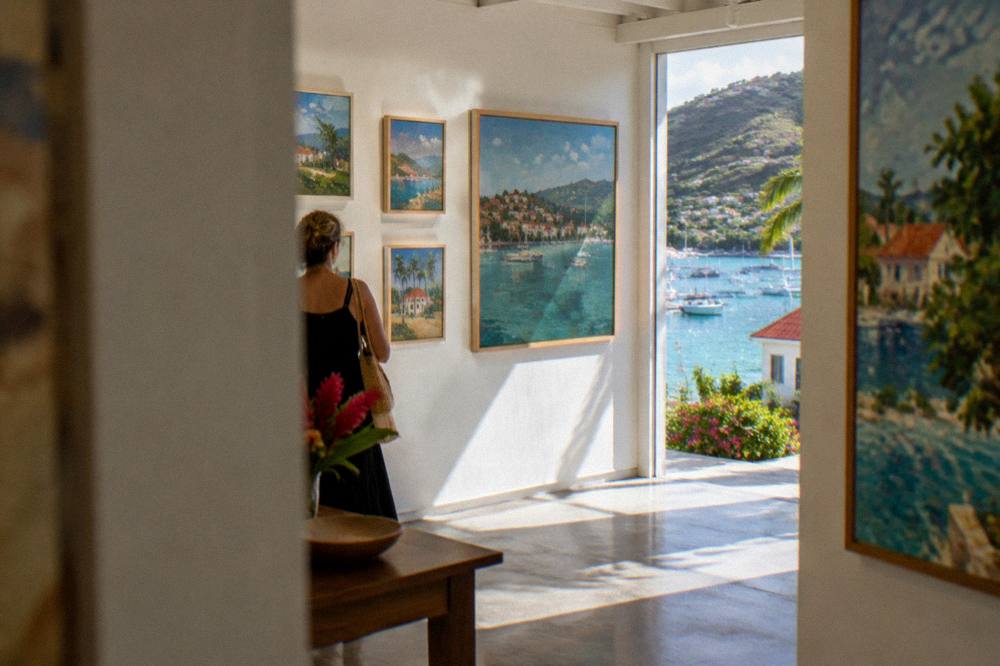
The last thing worth knowing is what Gustavia shopping is for. It is not a bargain hunt; no price claim in either direction is defensible, and anyone chasing a specific discount should price the exact item at home first. What it is, at its best, is a small French town's retail culture transposed onto a Caribbean harbour: galleries worth an hour, jewellers who know their stock, and a delicatessen layer that provisions villas with French products. Visitors building a fuller trip around that culture will find the St Barts honeymoon itinerary and the first-timer itinerary both route through the capital more than once.
Common Questions About Gustavia Shopping
What is Gustavia shopping like in St Barts?
A compact, walkable concentration of French luxury boutiques, jewellers, galleries and food shops on the few streets rising from the harbour, all within a few minutes of the tender pier and ferry dock. There is no mall and no district beyond the town itself.
Which streets should a Gustavia shopping walk cover?
Rue du Général de Gaulle along the waterfront, Rue de la République one block inland, and the short lanes connecting them, plus the quay frontage at the piers. The whole loop needs no car and takes a relaxed half-day.
Is shopping in Gustavia duty-free?
Not in the airport duty-free sense. Shops charge ordinary retail prices in euros, and any advantage on jewellery or luxury goods depends on your home country's personal duty allowance and each retailer's own pricing, so compare a specific item against its price at home before buying.
When is the best time of year for Gustavia shopping?
December through April, when the full offer is open. Many businesses close from late August and reopen in waves between mid-October and early November; by the Gourmet Festival week of 9 to 15 November 2026 the town is broadly back in operation.
Can you combine shopping with a beach day in Gustavia?
Yes, easily. The retail core needs only a half-day, every major public beach is a short drive over the hills, and the area guides to Saline, Lorient, Flamands and Grand Cul-de-Sac cover the afternoon options.
Do Gustavia shops take credit cards?
Cards are widely accepted in the boutiques. The euro is the currency; small food shops are easier with some cash. The site's currency guidance covers what US dollars can be used for on the island.
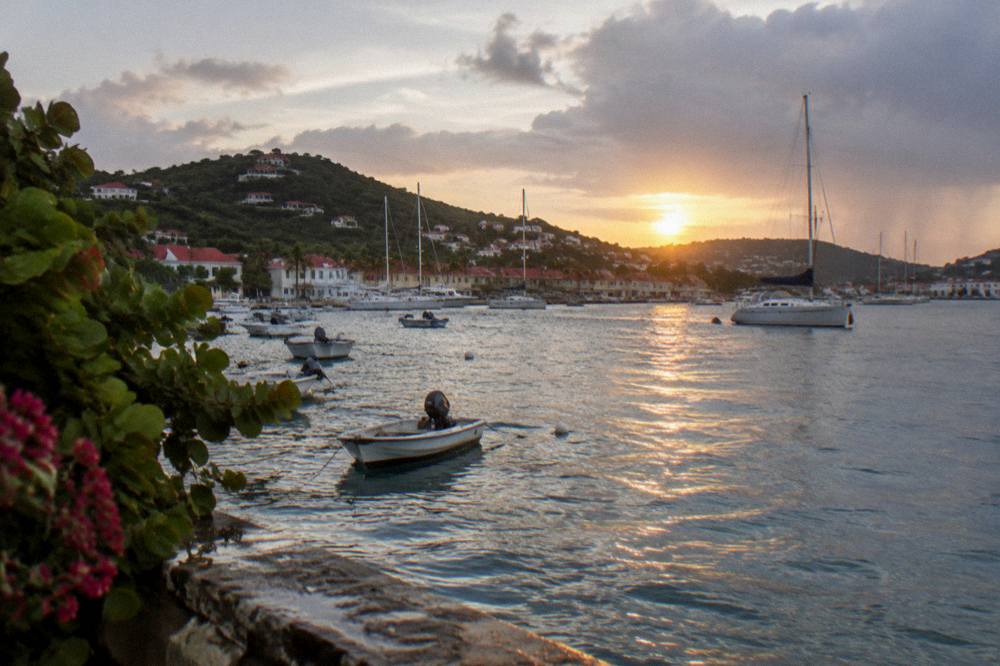
A final note on pacing. Gustavia rewards the unhurried: the town is small enough that nothing needs to be rushed, and the harbour it wraps around is worth as much attention as the display windows. Walk the streets in the morning, eat long at midday, buy what genuinely fits the trip, and give the last hour of the day to the water. For everything beyond the town, the things to do in St Barts overview is the place to continue planning.