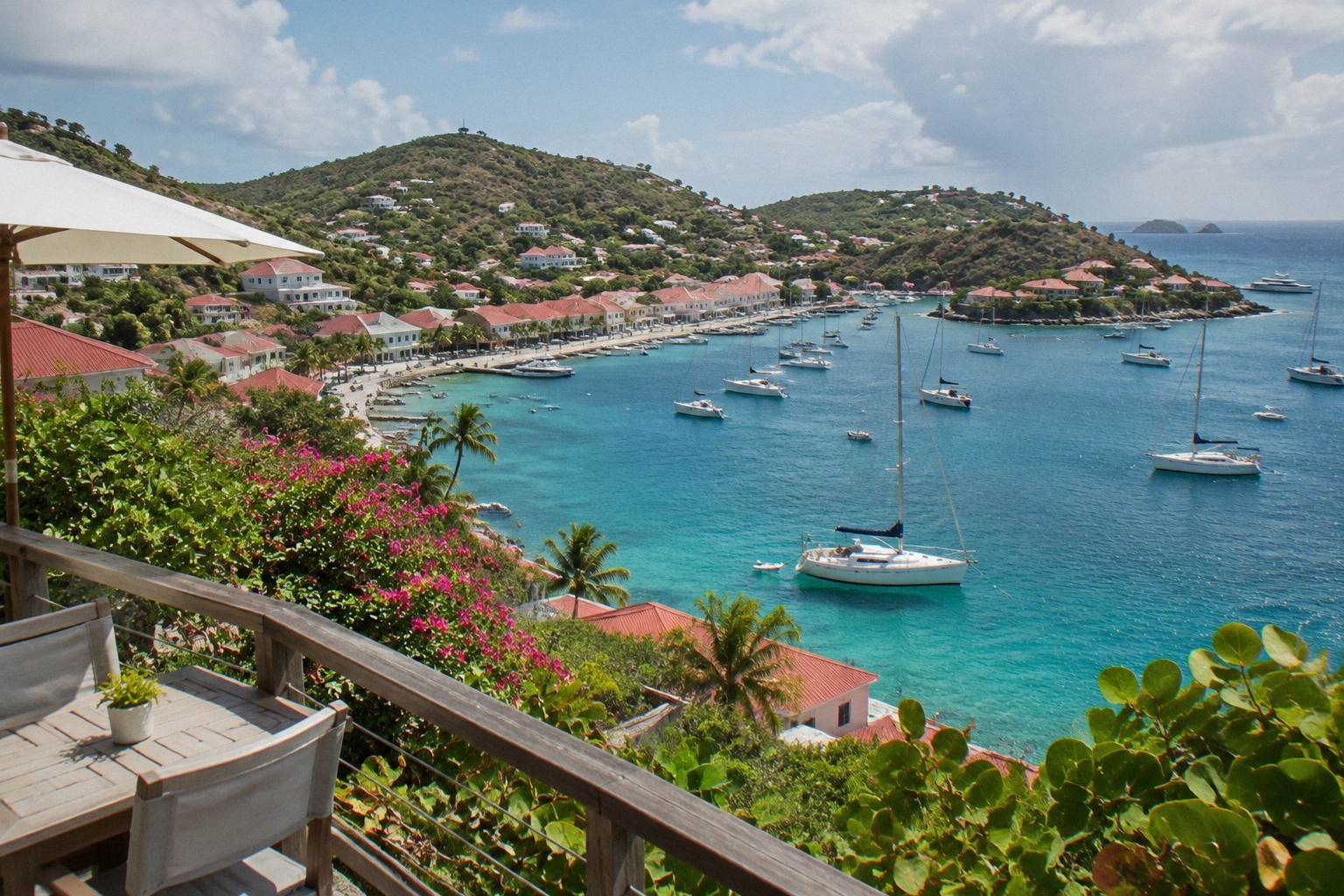
St Jean Area Guide
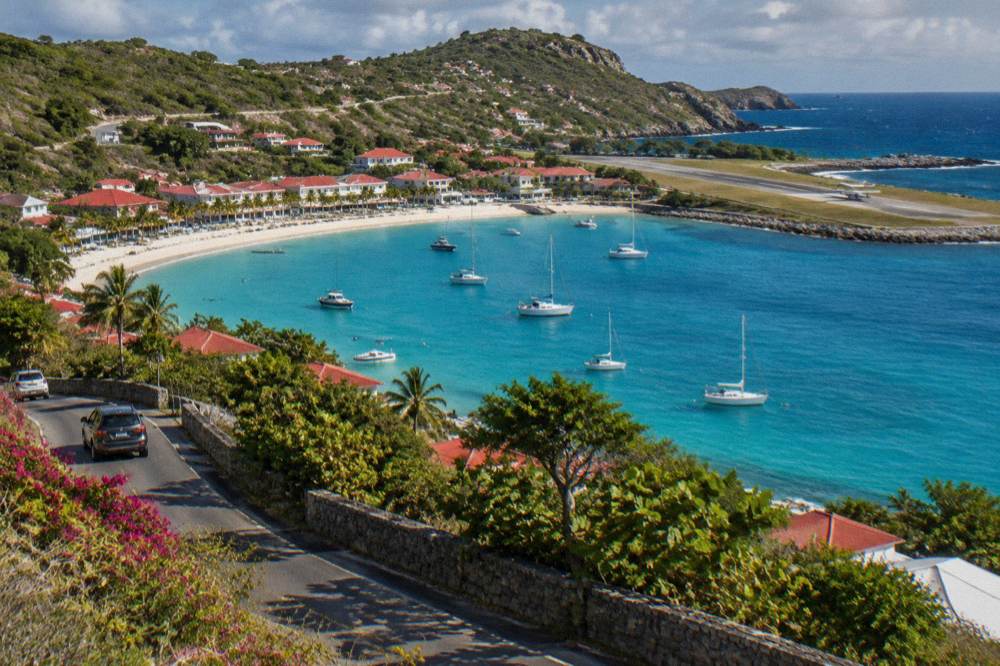
St Jean is the beach-and-aviation heart of St Barts, a stretch of shoreline on the island's north coast where the runway of Gustaf III Airport meets one of the most photographed bays in the Caribbean.
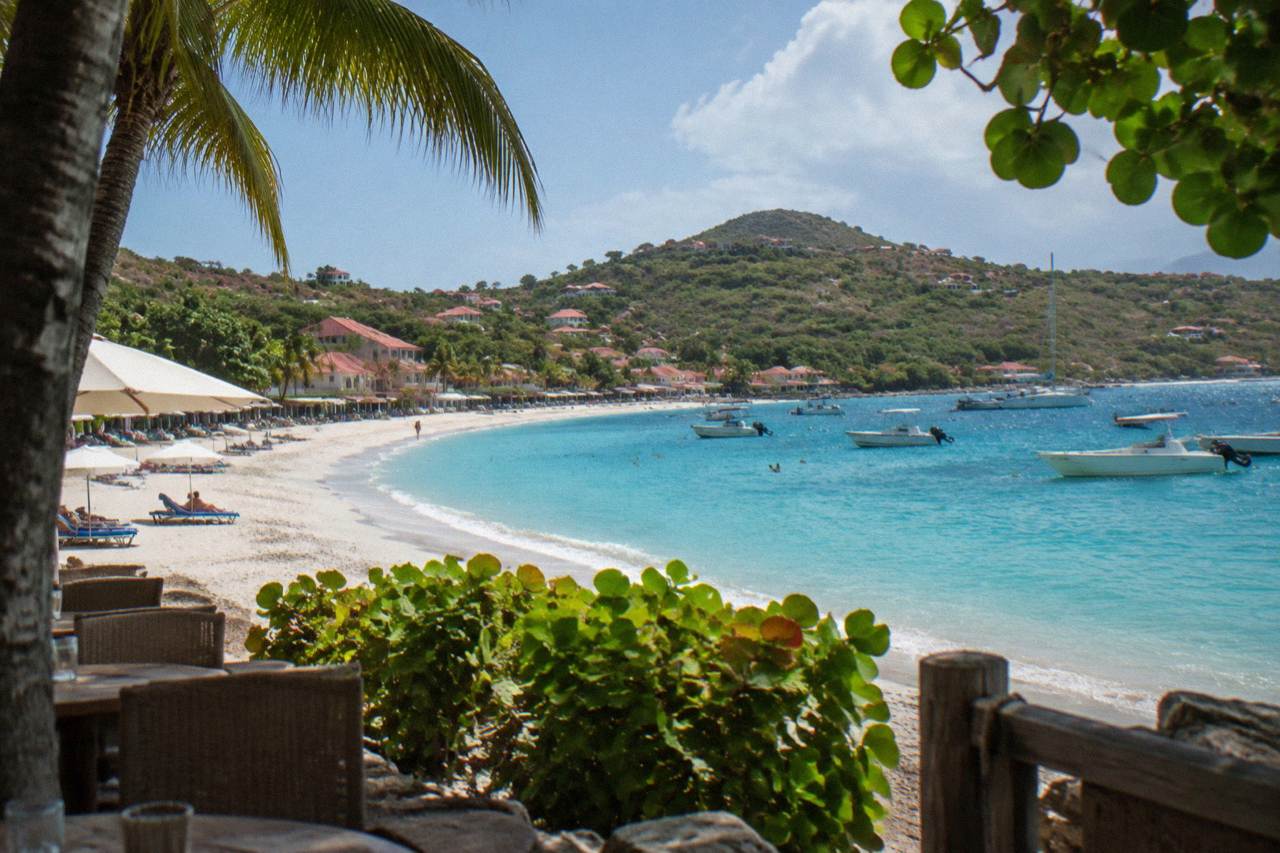
St Jean sits on St Barts' north coast around a public bay, with the island's airport at one end, a small commercial strip of shops and hotels, and easy road access to Gustavia and the rest of the island.
St Barthelemy, usually written St Barts, packs about 21 square kilometres of hills, public beaches and turquoise water into a small French island in the Caribbean, and St Jean is the beating centre of its north coast. The area wraps around a public bay split in two by a low green point, with the short runway of Gustaf III Airport perched on its western headland. That combination, a famous crescent of sand and an airstrip that pilots must approach with special certification, gives St Jean a character no other part of the island matches. This guide covers the beach, the airport, the hotels and shops, the roads in and out, and the boat trips that visit the island's remoter shores.
Where Is St Jean In St Barts?
St Jean occupies the north-central coast of St Barts, on the island's Caribbean side, between the capital Gustavia to the southwest and Grand Cul-de-Sac to the northeast. The area sits around a single public bay on the main island road, about midway along the northern shore, and it is one of the few parts of St Barts where beach, commerce and the airport sit within the same walkable stretch.
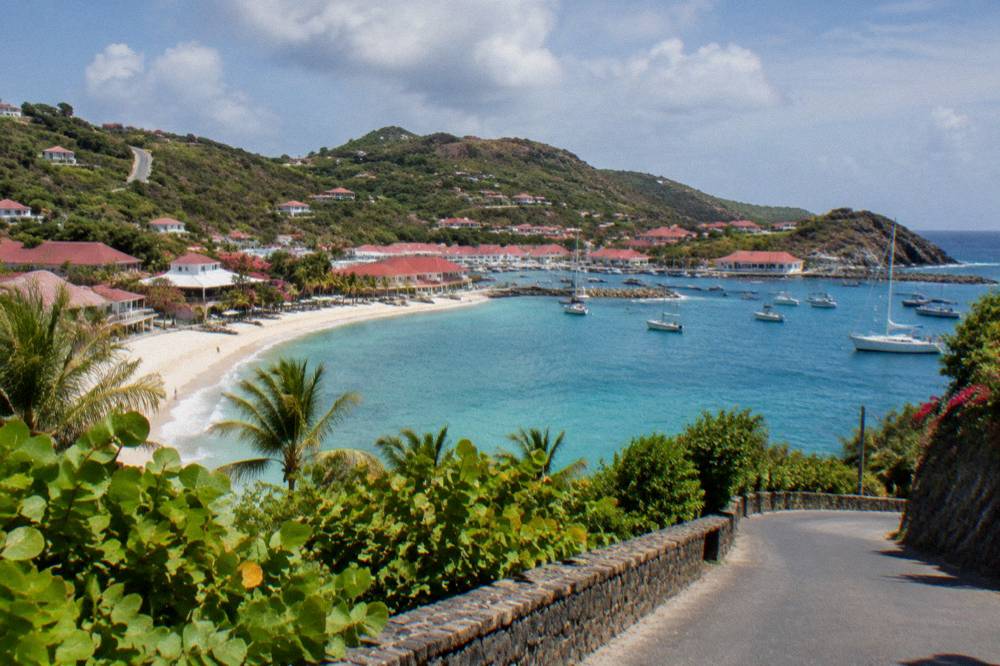
The bay's geography is the first thing any orientation of St Barts should cover. A narrow headland divides the shoreline into two arcs of sand, and behind the eastern arc the land rises steeply toward Vitet and Devet, two hill districts covered in this Vitet and Devet area guide. The western arc ends at a scrubby point where the airport begins. Roads in St Barts are narrow, winding and steep, with a 50 km/h limit island-wide and 30 km/h in populated places such as Gustavia and St Jean, and the single roundabout near the airport is the area's main traffic landmark.
For situating St Jean against every other district, the site's St Barts neighborhoods map page lays out the full island, and the broader question of which district suits which traveller is handled in the best area to stay in St Barts guide. St Jean generally appeals to visitors who want beach access, shops and restaurants within a short drive of nothing, since the island is small and every other beach is reachable by car or scooter in one excursion.
| Place | Position relative to St Jean | Character |
|---|---|---|
| Gustavia | Southwest, down the west coast | Harbour capital, shops and restaurants |
| Grand Cul-de-Sac | Northeast along the coast | Shallow bay, water sports |
| Flamands | West, past the airport headland | Long beach, hotel district |
| Lorient | East, next bay along | Residential, beach and village feel |
| Colombier | Northwest point | Reachable by boat or a walk |
What Defines The St Jean Area?
St Jean is defined by three things stacked together: a public beach that the island's tourism committee lists among its named shores, the runway and terminal of Gustaf III Airport crowning the western headland, and a compact commercial strip of boutiques, hotels and restaurants running behind the shore. No other area of St Barts combines all three, and the layout means the district is busy by day and quiet after the last flights land.
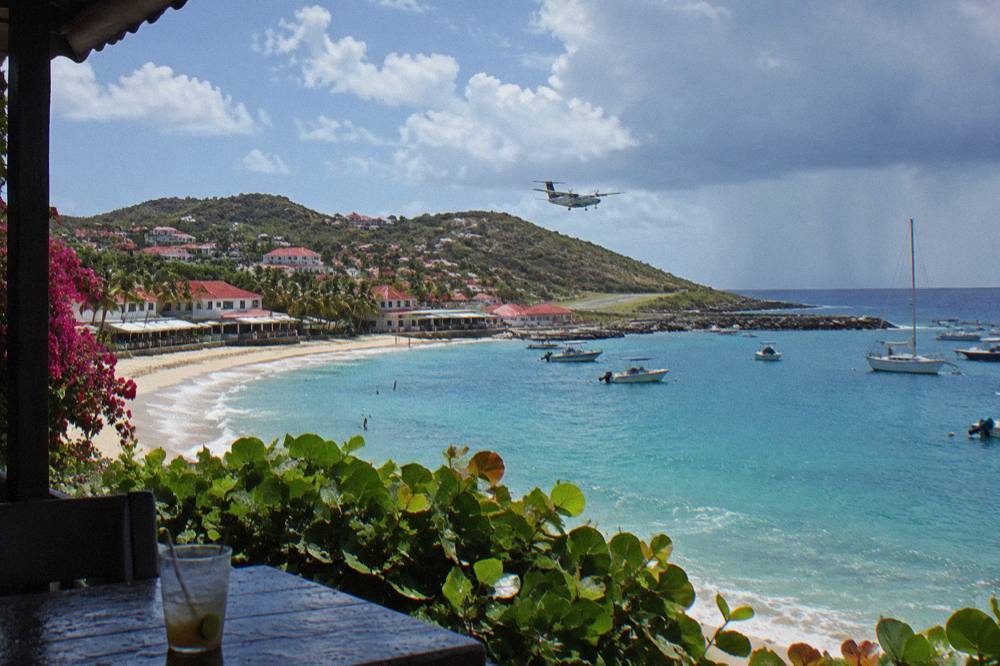
The airport is the defining landmark and a genuine engineering story. The runway is 646 metres long, numbered 10/28, and only small STOL turboprops operate there: aircraft such as the DHC-6 Twin Otter, the Cessna 208B Grand Caravan and the Pilatus PC-12. No jets land at St Barts. Operations are daylight and visual-conditions only, there are no runway lights, and pilots need special certification for the steep approach over the Col de la Tourmente hill. The aviation details are covered in depth on the site's St Barts airport spotting page, which explains where the landing can be watched from the road above the bay.
The beach itself is public, like every beach on St Barts. The tourism committee's beach list names Saint-Jean alongside Gouverneur, Saline, Shell Beach, Flamands, Colombier, Grand Cul-de-Sac, Lorient, Toiny, Marigot and Corossol, and the full shore-by-shore breakdown is on the St Jean beach page. Under the marine reserve's rules, dogs are banned from beaches island-wide, jet skis are prohibited in reserve zones, and a 5-knot speed limit applies on the water inside protected areas. Visitors should not touch turtles, corals or starfish anywhere around the island.
Because St Barts has no on-island tour list, the bookable boat products that visit the island's shores all depart from St Martin or Sint Maarten. The day-sail that stops at Gustavia, Colombier Beach and Ile Fourchue is one of these, leaving from the neighbouring island and reaching St Barts by late morning. It is a natural pairing with a St Jean stay: the sail visits beaches that are hard to reach from land, while St Jean itself is the base. The Boomerangs group sail and snorkel page has the full itinerary, and See the live listing if a water day fits the dates.
What Can You Do Around St Jean Beach?
Around St Jean beach the reliable activities are simple ones: swimming from a public shore, watching aircraft arrive over the hill from the road above the bay, browsing the area's boutiques, and using St Jean as a road base for reaching the island's other public beaches. No on-island tour is bookable through this site, so the busy days here are self-directed, and the boat excursions that do visit St Barts depart from St Martin or Sint Maarten rather than from the beach.
Beach time comes first. All beaches on the island are public and free to access, so a St Jean stay can rotate shores with nothing more than a rental car or scooter. Neighbouring options include Flamands to the west, covered in the Flamands area guide, and Lorient to the east, covered in the Lorient area guide. The shell-strewn cove by Gustavia is described on the Shell Beach page, and the long southern beaches at Saline and Flamands round out the standard circuit.
Aviation watching is St Jean's signature free activity. The approach path over the Col de la Tourmente brings every arriving aircraft low over the road, and the terminal itself sits at the head of the bay. For travellers flying in, the practical chain is a gateway flight into St Martin, San Juan, Guadeloupe or Antigua, then a small plane: St Barth Commuter serves SBH from SXM, Grand Case and Pointe-a-Pitre, and Tradewind flies from San Juan and Antigua. The alternative is the ferry, with Great Bay Express running from Philipsburg in about 45 minutes and Voyager from Marigot in about 50 to 60 minutes, both weather-dependent and both requiring a passport.
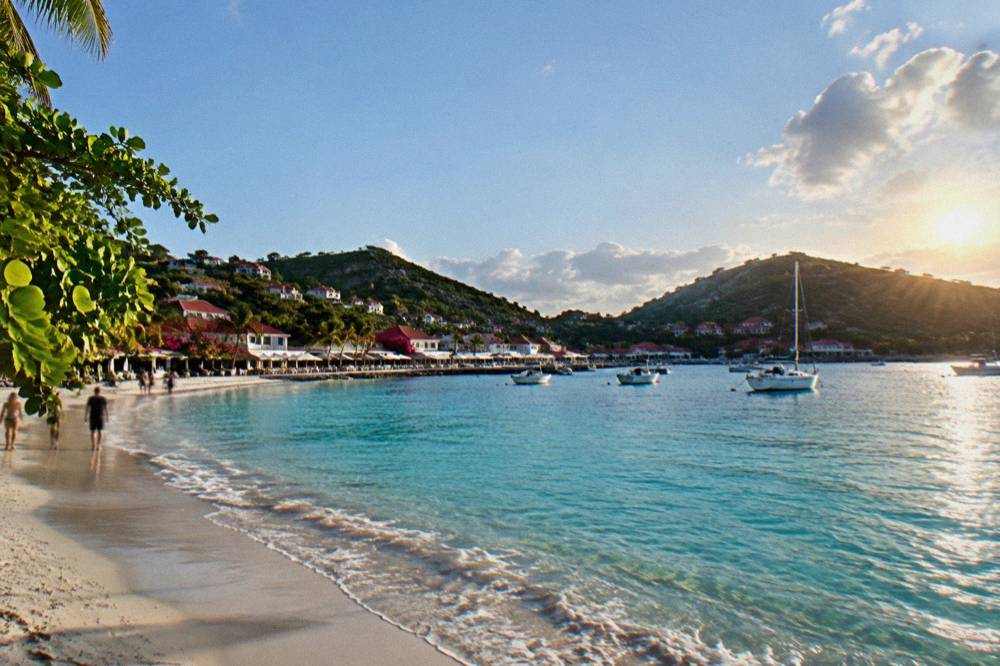
Shopping gives the area its afternoon rhythm. The strip behind the beach holds much of the island's retail, and the broader scene is surveyed on the site's Gustavia shopping coverage at Gustavia shopping. Food on St Barts is French-influenced, and the island's restaurant landscape follows the seasonal closure pattern: many restaurants close each autumn and reopen between mid-October and early November. No individual restaurant in the St Jean strip is named here as a recommendation.
| Activity around St Jean | What it involves | Access |
|---|---|---|
| Swimming and shore time | Public beach in the bay | Free, all beaches are public |
| Aircraft watching | Small turboprops arriving over the hill | Roadside above the bay |
| Boutique browsing | Retail strip behind the beach | On foot from the shore |
| Beach circuit by car | Rotating the island's public beaches | Rental car or scooter |
| Boat excursion to St Barts | Day sails and charters from St Martin | Bookable from the neighbouring island |
For visitors who want the water day without organising anything themselves, the charter products in the band below all depart from St Martin or Sint Maarten and spend their day on or around St Barts. The overnight catamaran option adds a night at anchor, which turns the excursion into a short sailing trip rather than a day out.
How Does The Airport Shape St Jean?
Gustaf III Airport, also called Remy de Haenen and coded SBH, sits directly on St Jean bay and shapes the area in three ways: it caps the island's aircraft size at small STOL turboprops, it limits operations to daylight and visual conditions, and it concentrates arriving visitors into a district where shops, beaches and hotels are minutes away. The runway is 646 metres long and no jet has ever landed on it.
The consequence for travellers is that getting to St Barts is always a two-step journey. Long-haul flights end at St Martin, San Juan, Guadeloupe or Antigua, and the final hop is a small aircraft or a ferry crossing. The details of that chain, including the operators on each route and the ferry terminals at Philipsburg and Marigot, are laid out in the site's coverage of how to get to St Barts and the flights from St Maarten to St Barts route page. Because operations are visual-only, weather can delay or cancel the last leg, and the ferry is the standing backup.
For the area itself, the airport means St Jean carries most of the island's arriving and departing traffic. Every aircraft passes low over the hillside road, every passenger walks out into a district that is essentially one street, and the whole mechanics of the island's tiny aviation system are visible from the beach. The St Barts airport guide explains the terminal and transfer side, and taxis meet flights; the taxi system and route-based tariffs without meters are covered on the site's taxi page.
Where To Stay In St Jean?
St Jean's accommodation runs from the island's most recognised luxury hotel, Eden Rock, which occupies the dividing headland inside the bay, to smaller properties such as Hotel Le Village St Barth, Pearl Beach Hotel and Les Ilets de la Plage along or near the shore. Rates vary by season and each property's own booking page shows them. Many hotels close each autumn and reopen between mid-October and early November.
Eden Rock St Barths sits on the rock that splits the bay in two, and its seasonal closure pattern follows the island norm, with reopening around late October in the 2026 calendar. Hotel Le Village St Barth is a garden-style property in the heart of the district, profiled on the site's Hotel Le Village St Jean page. Les Ilets de la Plage is a beachfront villa-style option noted in October 2026 reporting. Villa rentals are the other strand: the island has a large villa market with no printed count, and managers\1 WIMCO, Sibarth and St Barth Properties, all booking direct with concierge service.
The seasonal rhythm matters when choosing dates. High season runs roughly December to April, and the events calendar peaks around it: the St Barth Music Festival runs 8 to 18 January 2027, the Bucket Regatta falls in mid-March, and the Gourmet Festival runs 9 to 15 November 2026. Autumn is the quiet period, overlapping the late hurricane season from mid-August to mid-October, and the Meteo-France normals for St Barts show October as the wettest month at 135.6 millimetres of rain against an annual 891.3. Other pages covering the same trip are gathered on St Barthelemy Travel.
| Property type in St Jean | Examples | Notes |
|---|---|---|
| Headland luxury hotel | Eden Rock St Barths | Occupies the rock dividing the bay |
| Garden hotel in the village | Hotel Le Village St Barth | Central to the district |
| Beachfront smaller hotel | Pearl Beach Hotel, Les Ilets de la Plage | Near or on the shore |
| Villas | Managers include WIMCO, Sibarth, St Barth Properties | Large market, booked direct |
How Do You Get To St Jean And Get Around?
St Jean is reached by flying into Gustaf III Airport, which stands inside the area itself, or by ferry to Gustavia followed by a short drive along the north-coast road; getting around the district and the island is done by rental car, Mini Moke, scooter or taxi, with Avis, Budget and Hertz counters at the airport alongside local agencies. Driving is on the right, roads are narrow and steep, and the island-wide limit is 50 km/h.
Renting something is an option. The small open-air Mini Moke is the island's signature rental, available through local agencies, and compact cars and small SUVs suit the steep lanes better than anything large. Rental minimum age varies by company, and delivery to hotels and villas is commonly available. The practicalities, including what to check at pickup, are on the St Barts car rental page, and the case for and against renting is argued in the site's is it worth renting a car in St Barts article.
To compare small cars for the island's steep lanes, book a rental car.
Taxis meet flights and ferries and work on route-based tariffs without meters, so fares are confirmed with the driver. For arrivals by sea, the two ferry operators are Great Bay Express from Bobby's Marina in Philipsburg on the Dutch side, about 45 minutes to Gustavia, and Voyager from the Marigot terminal on the French side, about 50 to 60 minutes. Both run roughly two to three sailings a day in each direction, subject to weather and seasonal adjustment, and the crossing can be rough. Check-in closes shortly before departure and a passport is required.
| Route to St Barts | Mode | Operator or carrier | Notes |
|---|---|---|---|
| St Maarten SXM to SBH | Small plane | St Barth Commuter, Winair aircraft types | Short hop, daylight only |
| San Juan SJU to SBH | Small plane | Tradewind | Pilatus PC-12 service |
| Pointe-a-Pitre PTP to SBH | Small plane | St Barth Commuter | From Guadeloupe |
| Philipsburg to Gustavia | Ferry | Great Bay Express | About 45 minutes |
| Marigot to Gustavia | Ferry | Voyager | About 50 to 60 minutes |
What Day Trips Work From St Jean?
The best day trips from a St Jean base are the island's own public beaches by road, the walk or boat trip to Colombier on the northwest point, and the boat excursions that cross from St Martin or Sint Maarten to spend a day sailing St Barts waters; every bookable boat product departs from the neighbouring island, not from St Barts itself, so a water day means joining a trip that collects passengers on the other side.
Colombier deserves its own note. The beach sits on the northwest point inside the marine reserve, is reachable by boat or on foot, and the surrounding area is covered in the Colombier area guide. The reserve's rules apply on the water: a 5-knot limit in its zones, no jet skis, ecological mooring buoys in Colombier and Fourchue bays, no vessels over 25 metres, and a strict ban on touching or feeding protected species, including the green and hawksbill turtles common in these waters.
The group sail that visits Gustavia, Colombier and Ile Fourchue is the one per-person product listed here, running 12 May to 31 August 2027 on its listing. Outside that window, and for groups, the private charters cover the same waters on a per-group basis. The overnight catamaran runs two days and one night from St Martin, anchoring at St Barts, and the 2-day 1-night private catamaran page describes the route. For a purely land-based contrast, the quiet village atmosphere of Corossol on the west coast is covered in the Corossol area guide, and Grand Cul-de-Sac's shallow bay in the Grand Cul-de-Sac area guide.
When Is The Best Time To Visit St Jean?
The dry, busy months from December to April are St Jean's high season, with the Meteo-France normals for St Barts showing mean daily highs from 28.5 C in January to 29.8 C in April and the lowest rainfall of the year in February at 38.4 millimetres; May to July offers warm weather with fewer crowds building later, and the autumn from mid-August to mid-October overlaps the hurricane-season peak, with hotels and restaurants closed or closing.
The climate figures come from the Meteo-France normals, 1991-2020, for the St Barthelemy station. The island is warm all year: mean daily highs run 28.5 C in January up to 31.7 C in September, and annual rainfall totals 891.3 millimetres, of which October takes 135.6. The sea stays warm throughout, about 26 C in winter to about 29 C from August to October. Hurricane season runs 1 June to 30 November with the climatological peak near 10 September, and no storm can be predicted for a date; Irma struck the island in September 2017 and remains the reference event.
Two timing facts sharpen the picture. The per-person group sail runs only 12 May to 31 August 2027 on its listing, which pairs neatly with the shoulder-season window when accommodation is easier to find. And the Gourmet Festival runs 9 to 15 November 2026, timed to the reopening wave, which makes early November a turning point in the island's year rather than a dead zone.
| Period | Mean daily high | Monthly rain | Season character |
|---|---|---|---|
| January | 28.5 C | 52.6 mm | High season, Music Festival 8 to 18 Jan 2027 |
| February | 28.6 C | 38.4 mm | Lowest rainfall of the year |
| April | 29.8 C | 50.9 mm | End of high season, sailing events |
| September | 31.7 C | 96.9 mm | Hurricane-season peak, many closures |
| October | 31.4 C | 135.6 mm | Wettest month, reopening begins |
Is St Jean The Right Base For Your Trip?
St Jean suits travellers who want beach, shops, restaurants and the airport within one compact district, and who are happy driving narrow hills to reach the rest of the island; visitors prioritising harbour views, yacht-watching and duty-free browsing may prefer Gustavia, while those seeking quiet shores will find it in Lorient, Corossol or the beaches of the south coast.
The comparison is straightforward on an island this small. Gustavia, covered in the Gustavia where to stay and Gustavia restaurants guides, concentrates the island's harbour life and shopping. Flamands and Grand Cul-de-Sac hold major hotels of their own, and Pointe Milou, covered in the Pointe Milou area guide, sits on the heights above the sea. St Jean's edge is centrality plus the beach-plus-runway spectacle, and its weakness is that it is the district where day-visitor traffic concentrates.
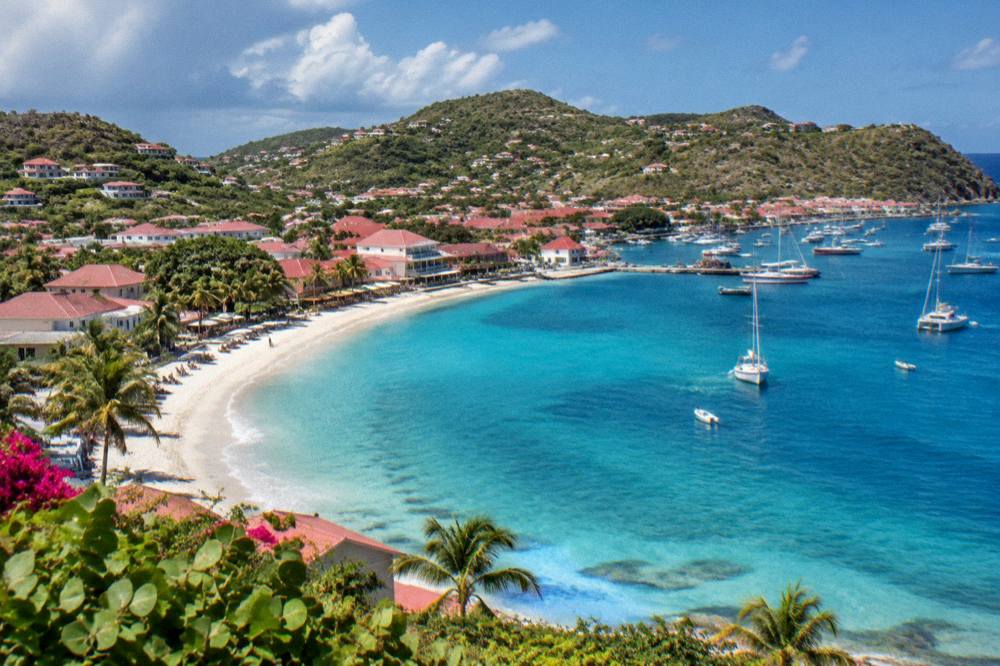
A final planning note on money and documents: the currency is the euro, French is the official language with English widely spoken, and entry rules follow French overseas regulations rather than Schengen, so ETIAS does not govern arrival. US visitors need a passport book, not a card, and onward travel documentation matters; the details are on the site's St Barts passport page. Whatever the season and whatever the base, St Jean's bay remains the single best place on the island to watch aviation, beach life and Caribbean water share the same frame.
Common Questions About St Jean St Barts
Is St Jean Beach public?
Yes. Every beach on St Barts is public, and the tourism committee lists Saint-Jean among the island's named shores along with Gouverneur, Saline, Flamands, Colombier, Grand Cul-de-Sac, Lorient, Toiny, Marigot and Corossol.
Can you watch planes land at St Jean?
Yes. Aircraft arriving at Gustaf III Airport pass low over the Col de la Tourmente hill above the bay, and the roadside there is a recognised viewing spot. Only small STOL turboprops use the 646-metre runway, and operations are daylight and visual conditions only.
Do any boat tours leave from St Jean?
No. Every bookable boat product listed here departs from St Martin or Sint Maarten and visits St Barts, typically calling at Gustavia, Colombier and Ile Fourchue before returning the same day.
Are there hotels in St Jean?
Yes. Properties include Eden Rock St Barths on the headland inside the bay, Hotel Le Village St Barth in the district's centre, and Pearl Beach Hotel and Les Ilets de la Plage on or near the shore. Rates vary by season and each property's own booking page shows them.
When do St Jean hotels and restaurants reopen in autumn?
The pattern is an annual closure in late summer and a reopening wave between mid-October and early November. The Gourmet Festival runs 9 to 15 November 2026, timed to the island's return to full operation.
How far is St Jean from Gustavia?
St Jean sits on the north-central coast with Gustavia to the southwest along the main road. The island is small and every district is a single drive away.