How To Get To St Barts
St Barthelemy, better known as St Barts, has no direct long-haul flights: the usual route runs through St Martin, then a short hop by small plane or a ferry crossing to Gustavia.
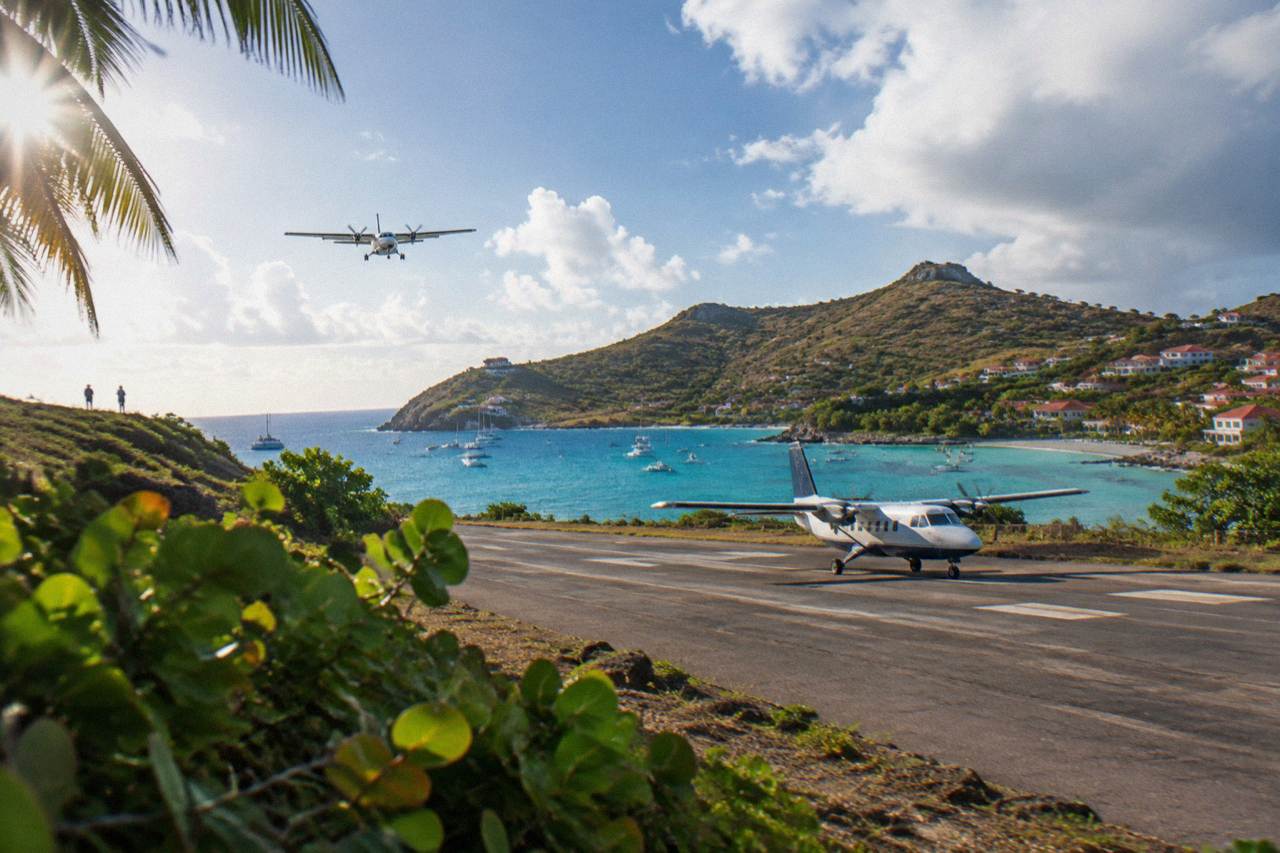
Fly to St Martin (SXM), then take a small STOL turboprop to Gustaf III airport (SBH) or a ferry from Philipsburg or Marigot to Gustavia. San Juan, Guadeloupe and Antigua also feed the island by small plane.
St Barthelemy, usually written St Barts, is a small French island in the Caribbean of about 21 square kilometres with roughly 10,700 residents, and its geography dictates how you reach it. There is no long-haul runway, no cruise pier and no bridge to anywhere: the island's airport takes only small turboprops, ships anchor offshore, and the standard route for a traveller from North America or Europe runs through St Martin, the neighbouring island split between France and the Netherlands. From there the last leg is a short hop by plane or a ferry crossing of about an hour. This guide lays out each option, what documents apply, and what to plan for once you land, with the day-trip boat tours from St Martin covered as a fourth way to touch the island.
How Do You Get To St Barts?
St Barts is reached in two legs: a flight to a Caribbean gateway, usually St Martin (SXM), followed by a small-plane hop to Gustaf III airport (SBH) or a ferry to Gustavia. San Juan (SJU), Pointe-a-Pitre (PTP) and Antigua (ANU) also connect to the island by small carriers, and cruise ships tender offshore. No jet lands on the island, and there is no direct flight from outside the Caribbean.
The island's own airport, Gustaf III, also called Remy de Haenen, sits on a 646 m runway between the Saint-Jean beach and a hill. That length rules out anything larger than small STOL turboprops, which is why every long itinerary ends at a gateway airport first. Princess Juliana (SXM) on the Dutch side of St Martin is the busiest feeder, with Grand Case (SFG) on the French side as a smaller alternative.
The sea option suits travellers who prefer to skip the tiny plane. Two ferry operators run scheduled crossings to Gustavia from St Martin and Sint Maarten, and private boat charters, including the day trips listed here, all depart from the St Martin side as well. This site's overview of things to do in St Barts picks up where this page ends: what to do once the arrival is handled.
Which Gateway Airport Should You Fly Into For St Barts?
Princess Juliana airport (SXM) in Sint Maarten is the main gateway, fed by long-haul flights from North America and Europe, with St Barth Commuter and other small carriers making the short hop to SBH from there. Alternatives are San Juan (SJU) served by Tradewind, Pointe-a-Pitre in Guadeloupe (PTP) served by St Barth Commuter, and Antigua (ANU) served by Tradewind.
Each gateway trades convenience against where you are coming from. SXM works for the widest range of transatlantic and US flights and has the densest onward connections to St Barts. SJU suits travellers already in Puerto Rico or connecting through the US network. PTP gathers French Caribbean routes, and ANU serves some UK and regional itineraries.
| Gateway | Island | Carriers onward to SBH | Best for |
|---|---|---|---|
| SXM (Princess Juliana) | Sint Maarten | St Barth Commuter; Winair is a Twin Otter operator at SXM | Widest long-haul choice |
| SFG (Grand Case) | St Martin | St Barth Commuter | French-side connections |
| SJU (San Juan) | Puerto Rico | Tradewind | US and Puerto Rico itineraries |
| PTP (Pointe-a-Pitre) | Guadeloupe | St Barth Commuter | French Caribbean routes |
| ANU (Antigua) | Antigua and Barbuda | Tradewind | UK and regional itineraries |
The connecting carriers fly small aircraft: St Barth Commuter and Tradewind both operate types certified for the short St Barts runway. Schedules thicken in the winter high season and thin in the late-summer low period, so the gateway plan matters most in the shoulder weeks when hotels reopen between mid-October and early November. The site's St Barts airport guide covers terminals and transfers at SXM in more depth.
What Is Landing At Gustaf III Airport In St Barts Like?
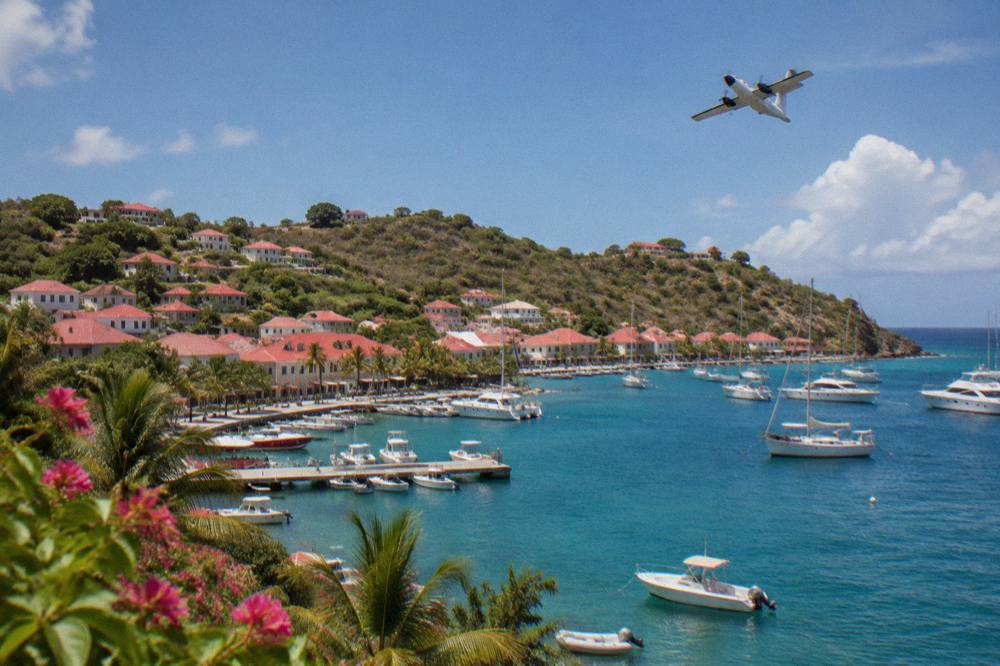
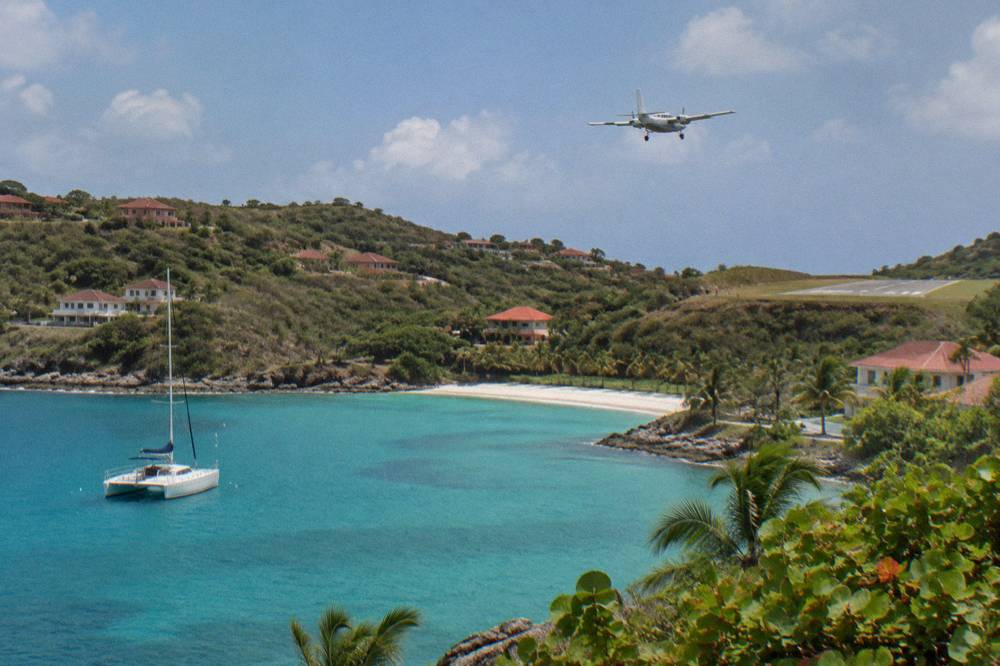
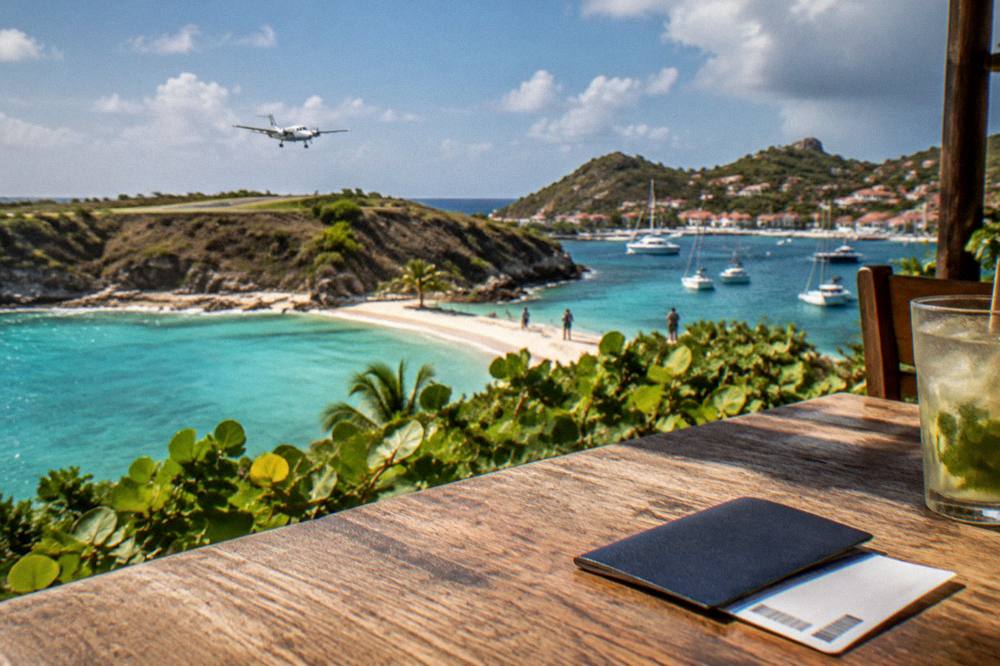
Landing at Gustaf III is a daylight, visual-conditions-only operation on a 646 m strip, flown only by specially qualified pilots in STOL turboprops that descend over a saddle of hill beside Saint-Jean beach before touching down almost at the water's edge. No jets operate there, the runway has no lights for night flying, and the approach is a big part of the island's fame.
The numbers behind that experience are simple. The runway is 646 m, or 2,119 ft, long, and only aircraft with short takeoff and landing performance are permitted. Pilots need a specific qualification for the approach, which crosses low over the Col de la Tourmente road. Operations open in the morning and stop shortly after sunset, so a delayed gateway flight can mean an overnight in St Martin rather than a night arrival.
| Fact | Detail |
|---|---|
| Airport name | Gustaf III, also called Remy de Haenen |
| Codes | SBH (IATA), TFFJ (ICAO) |
| Runway | 10/28, 646 m (2,119 ft) |
| Aircraft | Small STOL turboprops only, no jets |
| Operating hours | Daylight and visual conditions only |
| Position | Between Saint-Jean beach and the hill at the island's north shore |
Because the field closes at dusk, weather below visual minimums can divert the day's last flights back to St Martin. Building a buffer into the gateway connection, or planning the ferry as a backup, is standard practice. The landing at St Barts airport page walks through the approach itself, and flights to St Barts covers booking the hop.
Can You Take The Ferry From St Martin To St Barts?
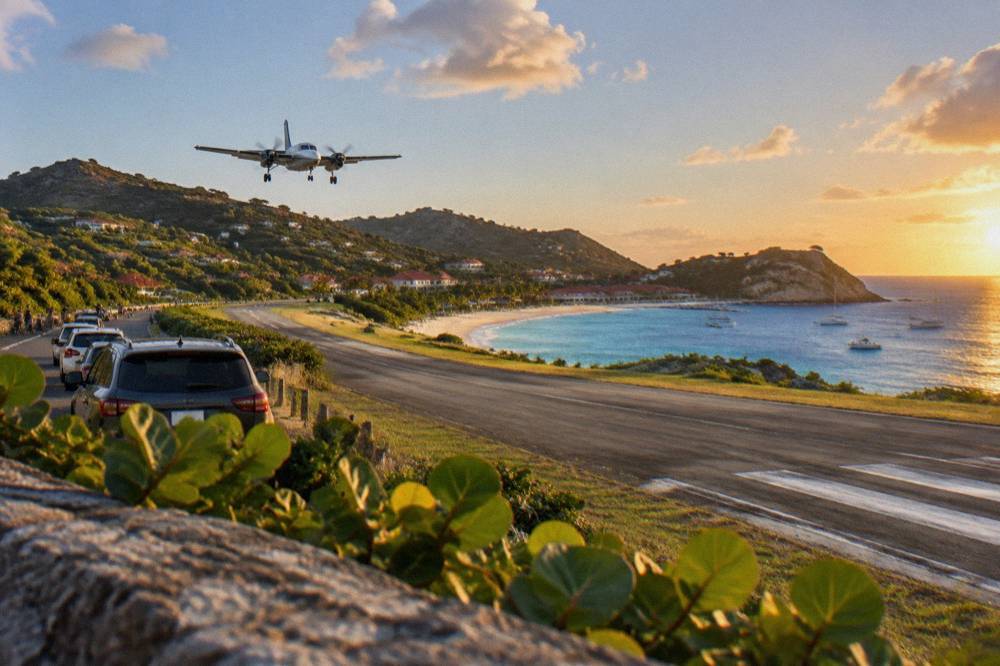
Yes. Great Bay Express runs from Bobby's Marina in Philipsburg on the Dutch side to Gustavia in about 45 minutes, and Voyager runs from the Marigot ferry terminal on the French side in about 50 to 60 minutes, with passengers checked in well before departure and a passport or accepted ID required. Both crossings can be rough, and sailings are subject to weather.
The ferry suits travellers who would rather not board a nine-seat turboprop, and it doubles as the fallback whenever low cloud closes the airport. The two operators leave from opposite sides of St Martin, so the choice usually follows where your gateway flight or hotel sits. Check-in closes before departure and the operators ask passengers to arrive well ahead, with the exact window shown on each operator's booking page.
| Operator | Departure point | Arrival | Approximate crossing | Notes |
|---|---|---|---|---|
| Great Bay Express | Bobby's Marina, Philipsburg (Sint Maarten) | Gustavia | About 45 minutes | Passport or accepted ID required |
| Voyager | Marigot ferry terminal (St Martin) | Gustavia | About 50 to 60 minutes | Typically 2 to 3 sailings a day each way |
Neither operator promises a calm crossing, and the open stretch between the islands can kick up short seas, particularly in the winter months when trade winds blow hardest. Seasickness precautions are worth packing. Schedules thicken in high season and thin in the low weeks of September and early October, and both services pause for annual maintenance periods, so the ferry operators and schedule guide and the page on SXM airport to the St Barts ferry are worth a read before booking a tight connection.
Can You Arrive In St Barts By Private Charter From St Martin?
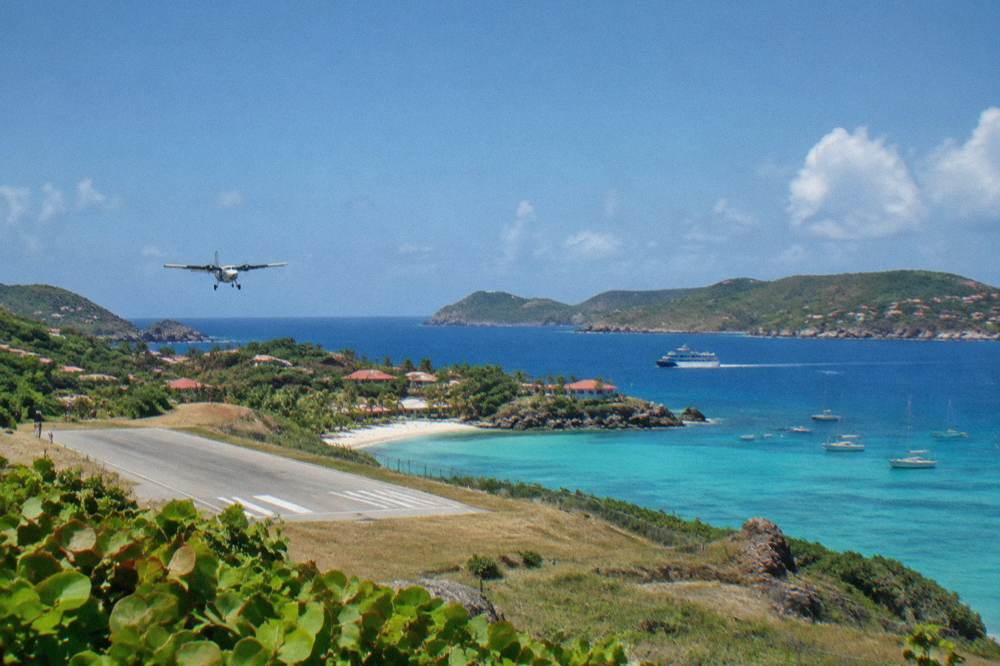
Yes, and listed here every bookable boat tour to St Barts departs from St Martin or Sint Maarten, never from St Barts itself. Options range from a per-person group sail to private day charters and a two-day, one-night private catamaran, all reaching the island by sea with stops at bays such as Colombier and Ile Fourchue on the way.
The group sail is the entry point: a day trip that crosses from St Martin, anchors in the St Barts marine reserve and includes snorkeling, with its per-person dates running 12 May to 31 August 2027 on its listing. Private charters, priced per boat rather than per person, suit families or groups who want the cabin, the timetable and the anchorage to themselves. The two-day catamaran adds a night at anchor, which turns the crossing itself into the trip. The full index of guides sits on St Barthelemy Travel.
A private charter also sidesteps two arrival frictions at once: no airport weather minimums to worry about, and no ferry timetable to chase. The trade is time and cost, since a full day on the water eats the whole first day of an island stay. For travellers who want the sea arrival without the commitment, the overnight catamaran splits the difference, and its listing carries the per-group price and dates.
More detail on each product, including what is included and where in St Martin each one boards, sits on the individual tour pages, and the inline availability link on each card shows the operator's live listing. See the live listing if the group sail fits your dates.
Do Cruise Ships Stop In St Barts?
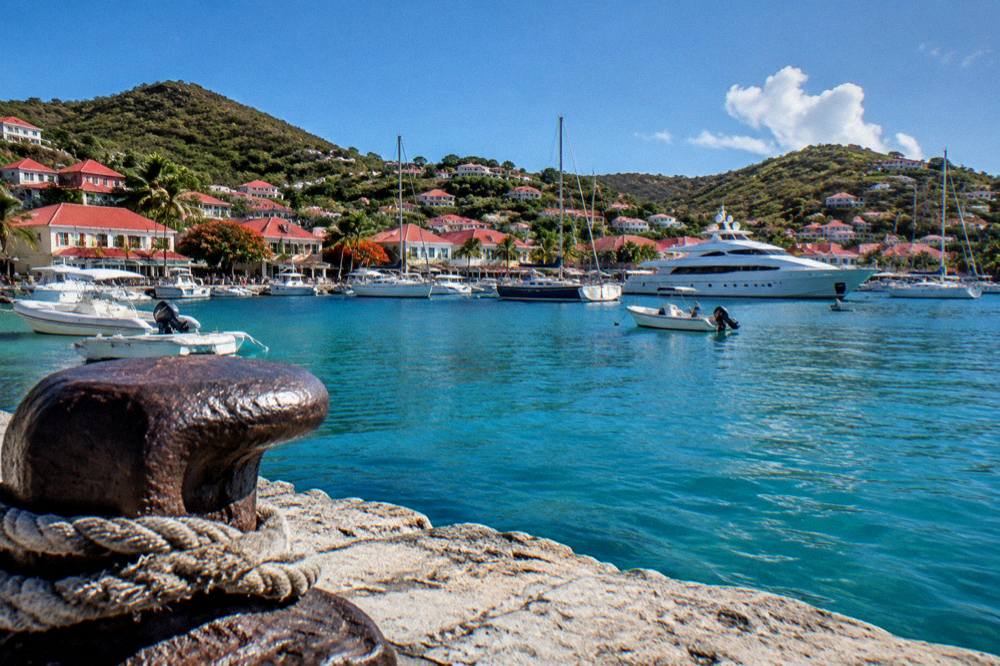
Cruise ships do call at St Barts, but they never dock: every ship anchors offshore and passengers are tendered by small boat to the Gustavia harbour front, because the island has no cruise pier. The Collectivity regulates access around small-to-medium vessels, and no official public call schedule is published, so itineraries are checked through the cruise lines themselves.
The tender arrangement is deliberate. It keeps the harbour, which also serves ferries, day charters and a constant flow of yachts, from being dominated by any single ship, and it naturally caps how many visitors step ashore at once. Tender operations depend on sea conditions in the anchorage, and a swell can cancel a call outright, which is one more reason cruise passengers should treat any St Barts port day as weather-permitting rather than guaranteed.
For shore-time planning, the St Barts cruise port guide covers the walk from the tender dock into Gustavia, and the harbour itself is compact enough that the town, its shops and the Shell Beach path at the edge of town are all reachable on foot. Cruise visitors have no car, and none is needed for a port day spent in Gustavia.
What Documents Do You Need To Enter St Barts?
St Barts is a French overseas collectivity outside the Schengen area, so US, UK, Canadian and EU citizens need a valid passport, or a national ID card for EU citizens, for stays up to 90 days without a visa, plus an onward ticket. ETIAS does not govern entry because it is not live, and a Schengen visa alone does not authorize arrival.
Because the territory sits outside Schengen's border system, entry rules follow French overseas law rather than the rules travellers may know from Paris. US citizens need a passport book, not a passport card, and citizens of the listed nationalities stay visa-free up to 90 days in any 180-day period. Exact passport-validity expectations differ by nationality, so the sound habit is to check your own government's current travel advice for St Barthelemy before flying.
| Nationality | Document | Visa for stays up to 90 days |
|---|---|---|
| United States | Passport book, not card | Not required |
| United Kingdom | Passport | Not required |
| Canada | Passport | Not required |
| European Union | Passport or national ID card | Not required |
| Other nationalities | Passport | Where required, apply through France-Visas with validity for the territory |
An onward or return ticket is part of the standard entry expectation, and airlines apply the strictest applicable rule at check-in. Travel via Sint Maarten means clearing two sets of formalities in one journey, Dutch-side immigration at SXM and French collectivity rules on arrival in St Barts, so documents should be to hand for both. The St Barts passport and entry detail sits in its own guide.
How Do You Get Around St Barts After You Arrive?
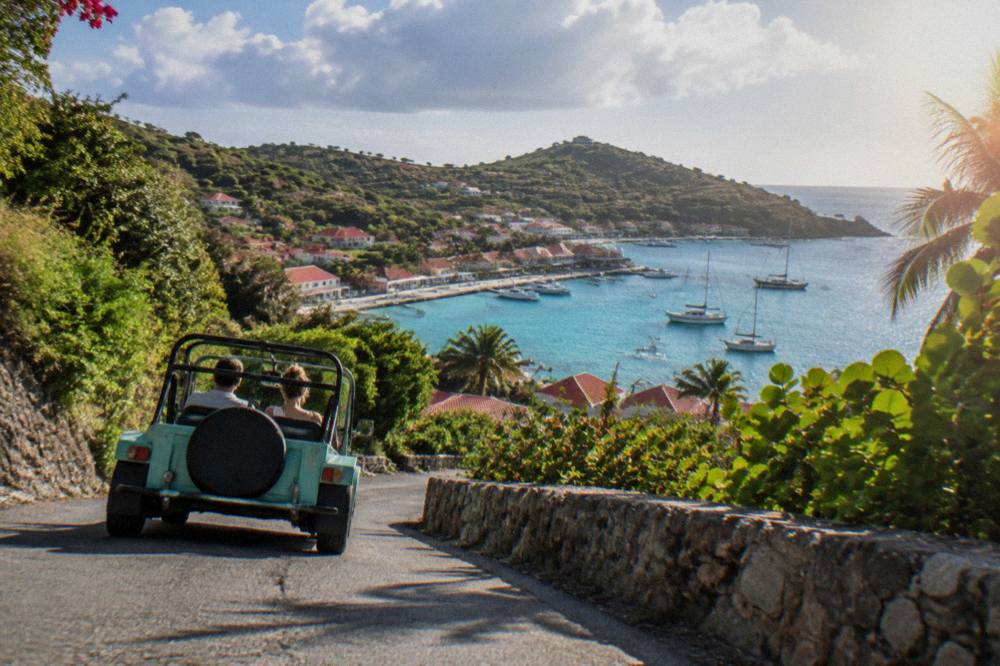
Most arrivals pick up a rental car at the airport or in Gustavia, since driving is on the right, roads are narrow and steep, the island-wide limit is 50 km/h with 30 km/h in Gustavia and Saint-Jean, and counters for Avis, Budget and Hertz sit at SBH alongside local agencies and Mini Moke specialists. Taxis exist without meters, and agreed fares apply.
A car earns its keep fast on an island whose beaches and villages sit at the ends of winding hill roads. Small vehicles with higher clearance handle the grades and the tight passing best, and the open-air Mini Moke remains the island signature, available through local agencies rather than the international counters. Booking ahead matters in the December-to-April high season.
| Option | Where | Notes |
|---|---|---|
| International brands | Counters at SBH airport | Avis, Budget and Hertz listed at the airport |
| Local agencies and Mini Mokes | Airport area and Gustavia | Open-air models through specialist local firms |
| Taxi | Airport and Gustavia | No meters, agree the fare before setting off |
| On foot | Gustavia | Harbour town, shops and Shell Beach path walkable |
For travellers arriving on one of the private day charters, the boat itself is the transport: the itinerary calls at bays such as Colombier and Ile Fourchue, and the marine reserve's rules, from the 5-knot limit in its zones to the prohibition on jet skis, govern the whole day on the water. Details on the reserve are in the site's St Barts nature reserve guide, and the full car-rental picture, including tips on pickups and the island's single roundabout, is in St Barts car rental.
When Is The Best Time Of Year To Make The Trip To St Barts?
The December-to-April high season brings the most flight and ferry frequency, the reopened hotels and the regatta calendar, while May and June offer quieter travel before the Atlantic hurricane season, which runs 1 June to 30 November with its peak from mid-August to mid-October, overlaps the warmest and wettest months of the Meteo-France 1991-2020 normals.
The climate table tells the story in figures. Mean daily highs run from 28.5 C in January to 31.7 C in September, and the island collects 891.3 mm of rain a year, with October the wettest month at 135.6 mm and February among the least rainy at 38.4 mm. The sea stays warm throughout, about 26 C in winter and about 29 C from August to October.
| Month | Mean daily high | Mean daily low | Rain |
|---|---|---|---|
| January | 28.5 C | 23.5 C | 52.6 mm |
| February | 28.6 C | 23.3 C | 38.4 mm |
| April | 29.8 C | 24.2 C | 50.9 mm |
| June | 31.2 C | 25.9 C | 56.0 mm |
| September | 31.7 C | 26.2 C | 96.9 mm |
| October | 31.4 C | 25.8 C | 135.6 mm |
| December | 28.9 C | 24.1 C | 79.2 mm |
Source for the figures: Meteo-France normals, 1991-2020, for the St Barthelemy station. Hurricane season is a statistical window, not a forecast: it indicates only that the peak of climatological activity falls near 10 September, not whether a given week will see a storm. The practical seasonal wrinkle for travel planning is the autumn closure pattern, in which many hotels and restaurants close in the late-summer low period and reopen in waves between mid-October and early November, so late-autumn trips should confirm that a chosen property is open. The best time to go season guide expands on this month by month.
Common Questions About Getting To St Barts
Can you fly direct to St Barts from the US or Europe?
No. The runway at Gustaf III is 646 m long and serves only small STOL turboprops in daylight conditions, so no jet and no direct flight from outside the Caribbean reaches the island. Travellers connect through St Martin (SXM), San Juan (SJU), Pointe-a-Pitre (PTP) or Antigua (ANU) and finish on a small plane or the ferry.
How long is the ferry from St Martin to St Barts?
Great Bay Express crosses from Philipsburg in about 45 minutes, and Voyager crosses from Marigot in about 50 to 60 minutes. Times depend on sea conditions, and sailings can be rough or cancelled in bad weather, so neither crossing should be treated as guaranteed.
Is there a ferry to St Barts from anywhere other than St Martin?
The scheduled passenger ferries on this route run from Philipsburg and Marigot on the two sides of St Martin. Private boat charters, including the day trips listed here, also depart from St Martin or Sint Maarten ports such as Simpson Bay and Grand Case.
Do you need a passport for St Barts?
Yes for most nationalities, including US citizens, who need a passport book rather than a card. EU citizens may use a national ID card. St Barts is outside the Schengen area, ETIAS does not govern entry because it is not live, and stays up to 90 days are visa-free for US, UK, Canadian and EU citizens.
Can cruise passengers get off the ship in St Barts?
Yes, by tender boat, since there is no cruise pier. Ships anchor offshore and passengers are ferried to the Gustavia harbour front, from which the town is walkable. Tender operations depend on sea conditions in the anchorage.
Is the flight from St Martin to St Barts scary?
The hop is flown by specially qualified pilots in STOL turboprops over a hill and onto a short runway, in daylight and visual conditions only. Travellers uncomfortable with small aircraft usually take the ferry instead, which crosses in about 45 to 60 minutes depending on the operator.
With the arrival solved, the island is small enough that the rest of the trip arranges itself around a base in Gustavia, Saint-Jean or one of the beach areas, all covered in the site's area guides and itineraries. Whether the last leg ends on a 646 m runway or at the Gustavia ferry dock, the same red roofs and harbour welcome every arrival.