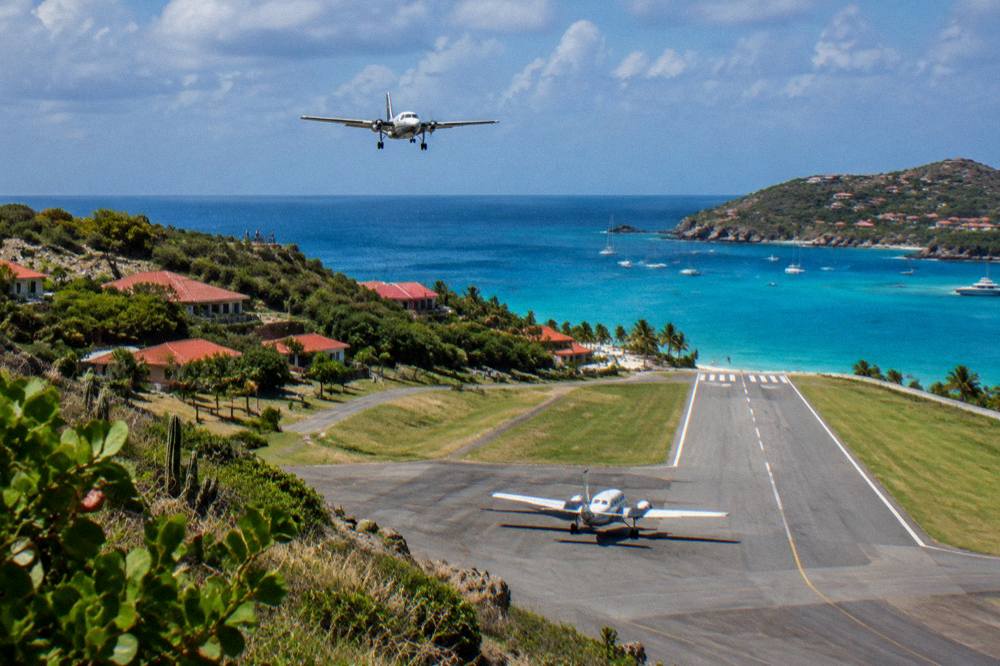
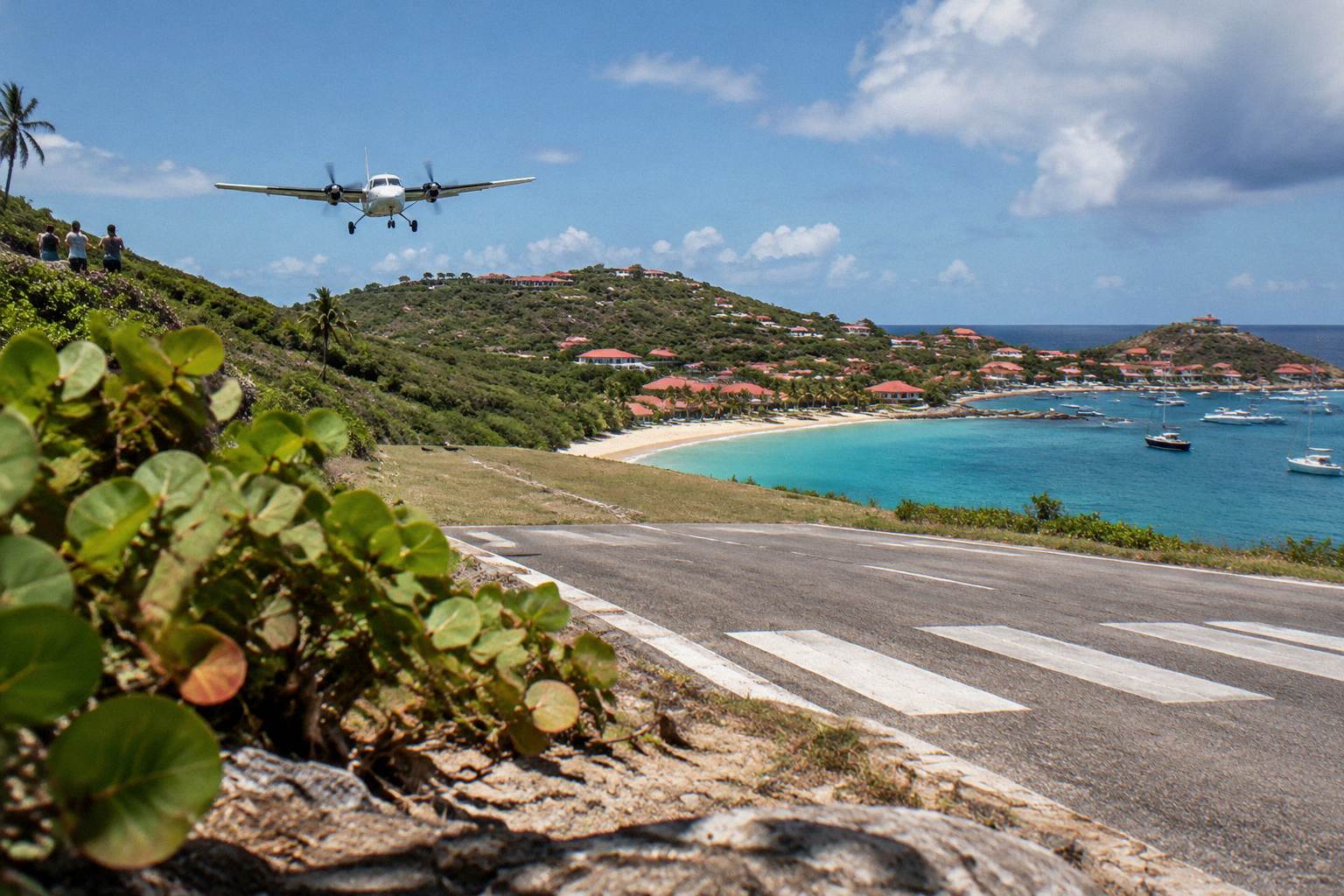
Landing At St Barts Airport
St Barthelemy's Gustaf III Airport has a 646 m runway, no jets, no night flights and one of the most talked-about approaches in the Caribbean.
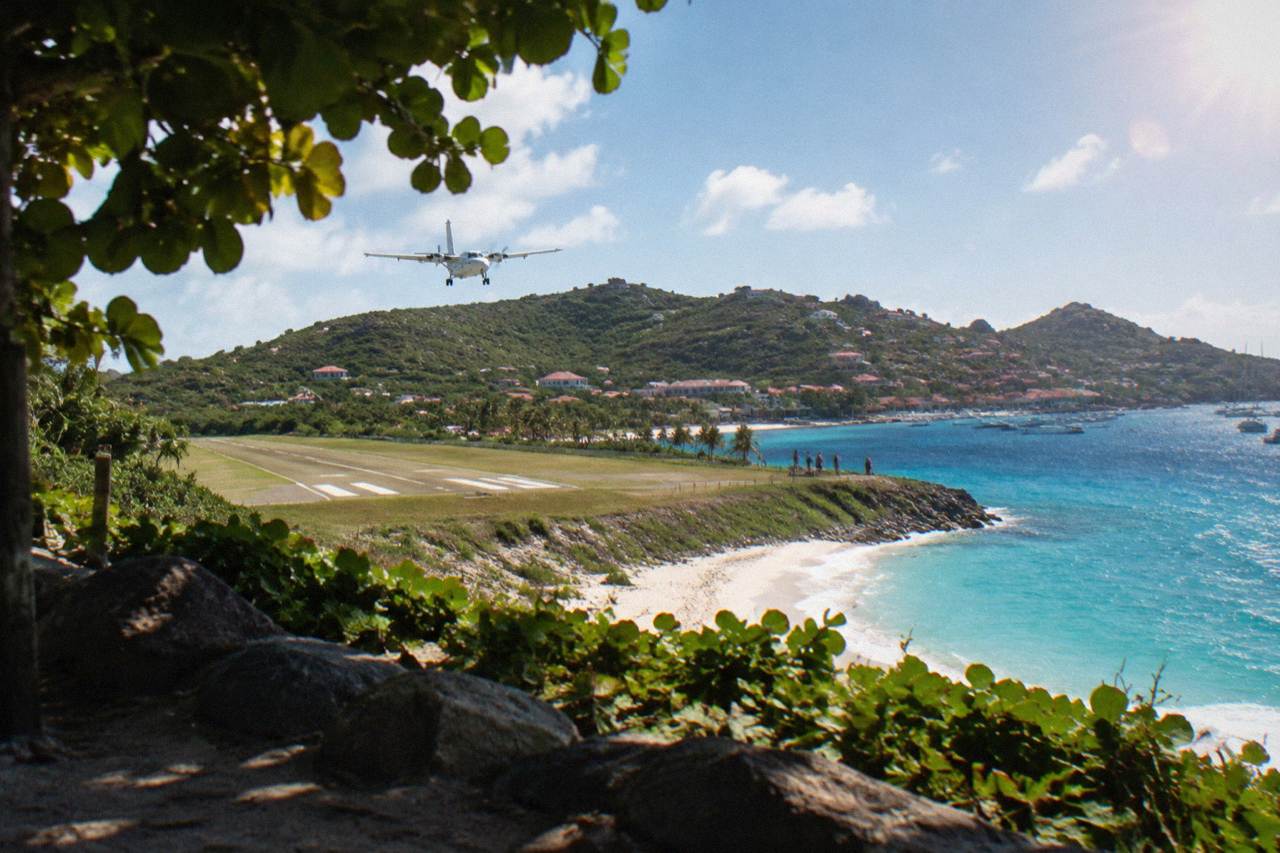
Landing at St Barts means arriving at Gustaf III Airport (SBH), also called Remy de Haenen, on a small STOL turboprop in daylight and visual conditions only. The runway is 646 m long, jets cannot use it, and the main feeder hub is St Martin (SXM), with other gateways at San Juan, Guadeloupe and Antigua.
Landing at St Barts Airport is the moment the island becomes real. St Barthelemy, a French overseas collectivity in the Caribbean since 2007, is served by Gustaf III Airport, also called Remy de Haenen, with the code SBH. Its single runway is just 646 m, or 2,119 ft, long, which means only small STOL turboprops can land there, in daylight and visual conditions only. No jet has ever been able to use this strip, and none ever will under its current layout. This guide covers the approach, the airlines, the arrival routine and the first hour after wheels down. For the wider picture, the site's St Barts airport guide covers the terminal itself, and the complete guide to getting to St Barts covers every route.
What Is Landing At St Barts Airport Actually Like?
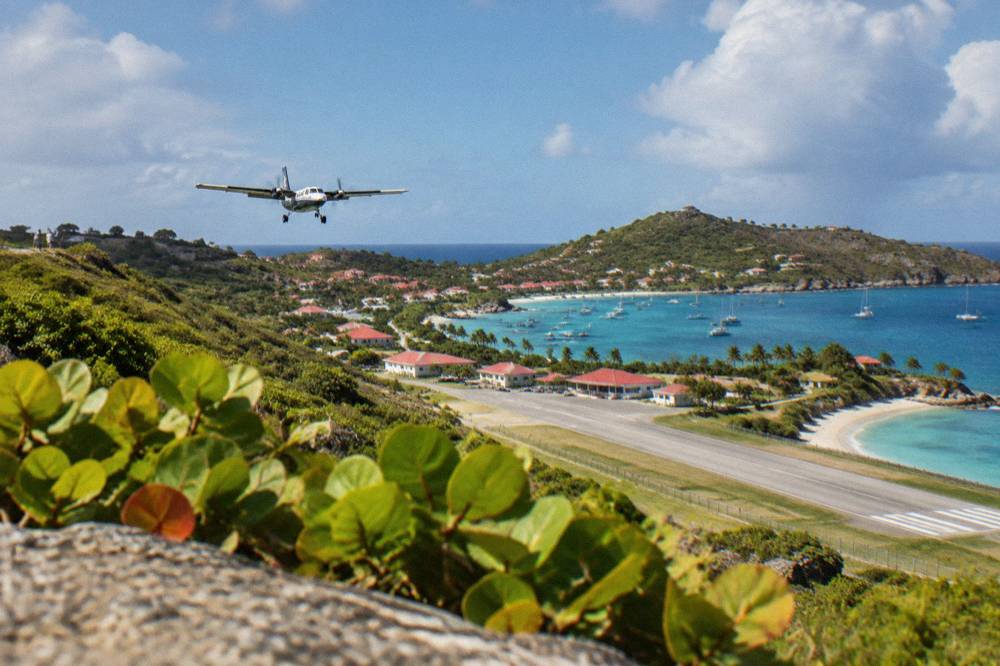
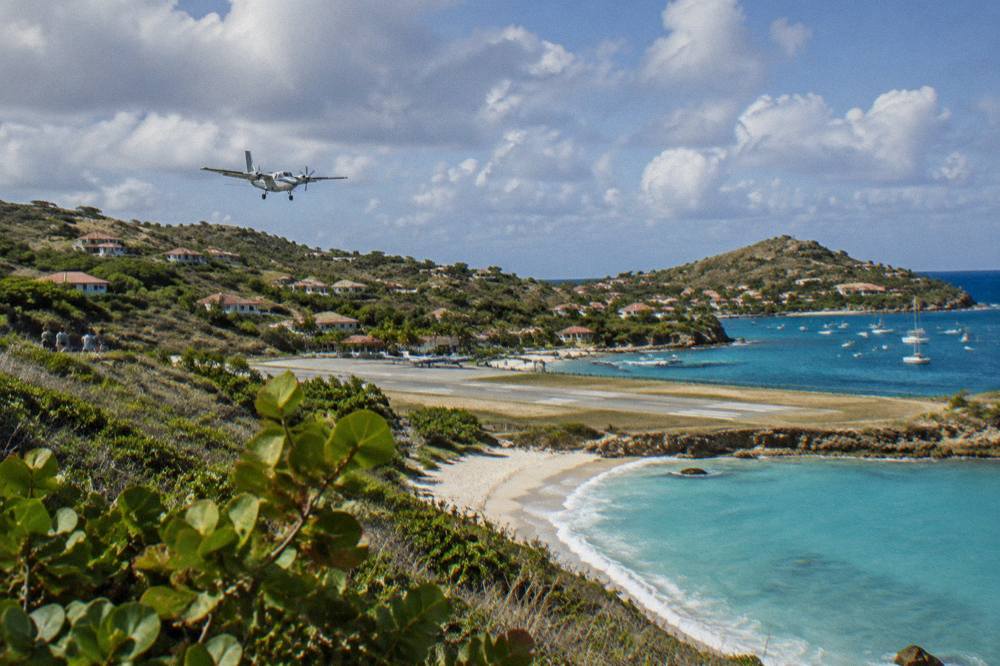
Landing at St Barts Airport means descending in a small STOL turboprop onto a 646 m runway at Gustaf III, also called Remy de Haenen, on the island's northern shore at Saint-Jean, in daylight and visual weather only. The approach crosses a low hill called Col de la Tourmente before a steep, short final over the water. Pilots flying here need a special qualification for the terrain and the short field.
The runway, 10/28, is 646 m of concrete, a figure confirmed in the French aviation information. That single number explains nearly everything about the airport. It rules out jets entirely, it limits operations to aircraft such as the DHC-6 Twin Otter, the Cessna 208B Grand Caravan, the Pilatus PC-12 and the Tecnam P2012 STOL, and it keeps flights short, visual and daylight-only. The airport has no runway lighting, so it opens around 07:00 local time and closes about 15 minutes after sunset.
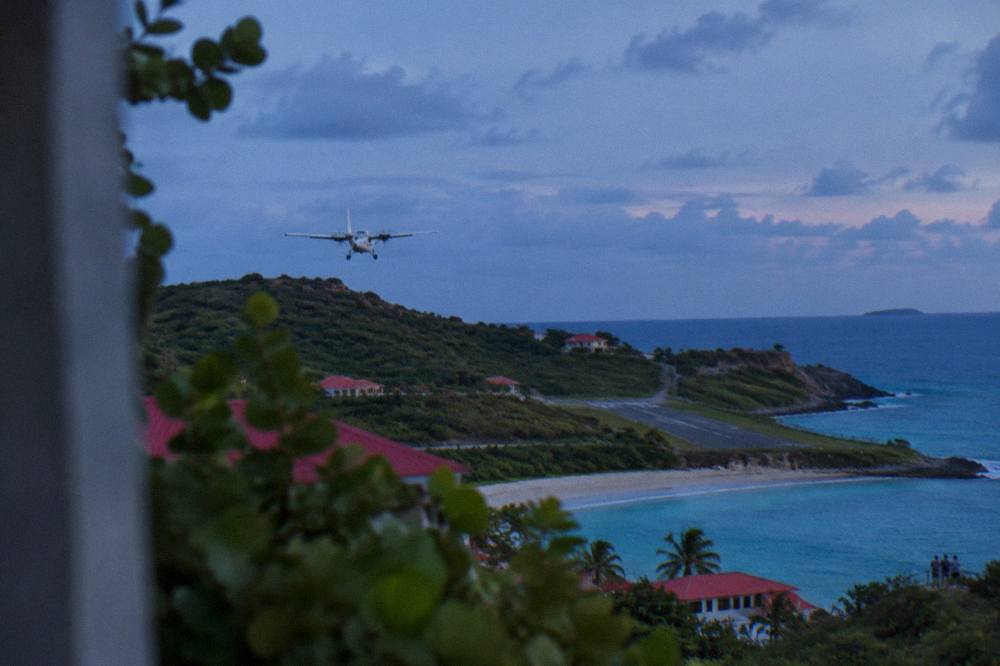
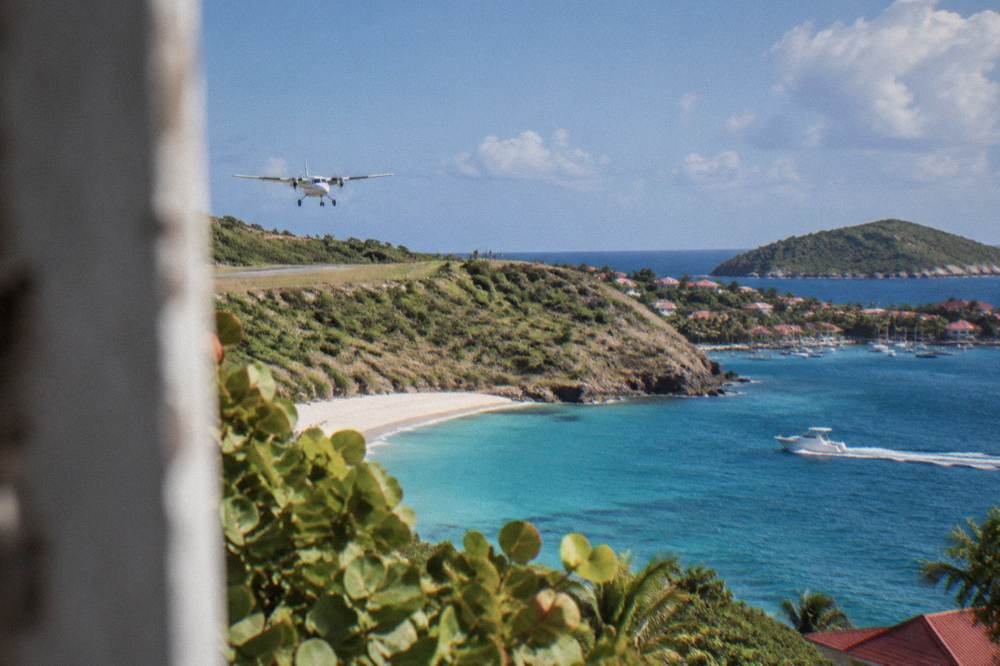
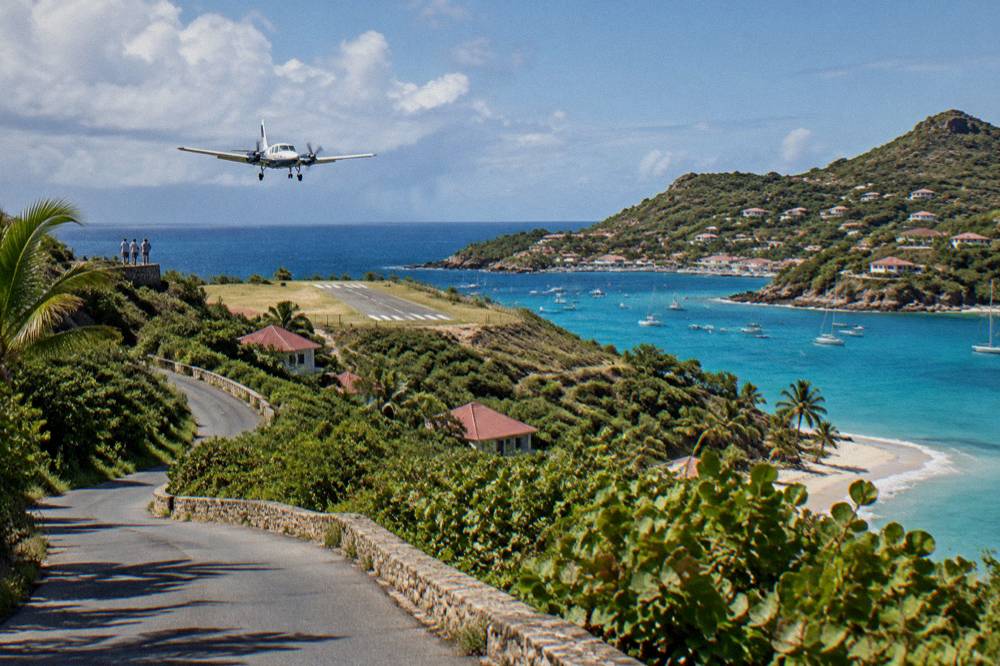
The approach is what people talk about. Aircraft descend over Col de la Tourmente, a hill on the final approach path, then drop steeply to the strip, which ends close to the sand of Saint-Jean beach. The Wikipedia summary of the airport, citing the French AIP, notes the special certification pilots need for the steep approach over terrain and the short-field performance required. That is the whole story of the landing in one sentence: it is a qualified-pilot, daylight, visual-rules, short-field operation, and the island's character follows from it.
| Fact | Value |
|---|---|
| Airport name | Gustaf III / Remy de Haenen |
| IATA / ICAO code | SBH / TFFJ |
| Runway | 10/28, concrete |
| Runway length | 646 m (2,119 ft) |
| Aircraft permitted | STOL turboprops only |
| Jets | None |
| Operating hours | Daylight, visual conditions only |
| Typical opening | Around 07:00 local |
| Typical closing | About 15 minutes after sunset |
Which Airlines Fly Into St Barts And Where From?
St Barth Commuter flies to SBH from St Martin (SXM), Grand Case (SFG) on the French side, and Pointe-a-Pitre, Guadeloupe (PTP), while Tradewind Aviation flies to SBH from San Juan (SJU) and Antigua (ANU). Winair flies the SXM to SBH hop on Twin Otters. These are the carriers the airport's own operator pages name, and every one of them flies small aircraft.
The hub that matters is St Martin. SXM, Princess Juliana Airport on the Dutch side, is where long-haul and regional jets arrive, and the last leg to St Barts is a short hop on a turboprop. Grand Case (SFG) on the French side is a smaller alternative departure point. St Barth Commuter's own flight page lists SXM, SFG and PTP as its scheduled gateways, and Tradewind's destination page lists San Juan and Antigua. Winair operates Twin Otter aircraft at St Martin, though this site prints no Winair route or frequency.
A traveller coming from outside the Caribbean therefore connects through one of four gateways: St Martin, San Juan, Guadeloupe or Antigua, and finishes on a small plane. No direct flight from outside the Caribbean lands on the island, a fact that shapes every itinerary. The site's pages on flights to St Barts and flying to St Barts from the US break down each gateway, and the answer page what airport you fly into for St Barthelemy settles the common question directly.
| Carrier | Gateway airports served | Aircraft type |
|---|---|---|
| St Barth Commuter | SXM, SFG, PTP | Cessna 208B Grand Caravan |
| Tradewind Aviation | SJU, ANU | Pilatus PC-12 |
| St Barth Executive | Reported operations | Tecnam P2012 STOL |
Schedules rise and fall with the season, with more flights in the winter high season from roughly November to April. The airport code page, SBH explained, covers the identifier itself if that is what brought you here.
For many travellers, the flight is only half the plan. Once you have landed, the island is best seen from the water as well, and the Gustavia, Colombier and Ile Fourchue group sail is this site's featured trip for exactly that, a day on the water that leaves from St Martin. It pairs naturally with a St Martin stay before or after your St Barts nights.
The three trips above all depart from St Martin or Sint Maarten and visit St Barts by sea, which is the other half of the arrival story this guide covers further down.
Why Do No Jets Land At St Barts Airport?
No jets land at St Barts because the runway is only 646 m long, far too short for any jet operation, and the airport operates in daylight visual conditions only, with no runway lighting and a steep approach over terrain. French aviation rules permit only specially qualified pilots flying STOL-rated aircraft, such as the Twin Otter and the Pilatus PC-12, onto the strip.
This is worth stating plainly because search results are full of loose language about "flying direct to St Barts" from the US or Europe. It cannot happen on a jet. The airport has a 646 m runway and serves STOL turboprops only. Every traveller from outside the Caribbean changes planes at a gateway, and the final leg is short. If a booking site offers you something that looks like a long-haul flight ending at SBH, read the fine print, because the last segment will be a turboprop or it will not exist.
The constraint is also a protection. The short runway caps the size of aircraft, which caps the volume of arrivals, and the tourism committee presents the island as a small, high-end destination rather than a mass one. Cruise traffic follows the same logic: there is no cruise pier at all, and ships anchor off Gustavia while passengers tender ashore, as the St Barts cruise port guide explains.
What Should You Expect On Arrival At Gustaf III Airport?
Arrival at Gustaf III is fast and small-scale: the terminal is a single low building at Saint-Jean, baggage comes off within minutes on a short belt or by hand, and you walk out onto the road where taxis and rental-car counters are steps away. There are no jet bridges, no long corridors and no immigration hall on the scale of a hub airport.
The terminal's size is the experience. Because only turboprops arrive, each flight carries a few dozen people at most, and the whole arrival cycle, from touchdown to standing on the street, is measured in minutes rather than hours. The airport sits right on the Saint-Jean side of the island, with Gustavia, the capital and harbour town, a short drive away along the island's winding roads.
Entry formalities follow French overseas rules. St Barts is outside the Schengen area, so Schengen systems do not govern entry, and the tourism committee's customs page points travellers to French law on documents. Passport requirements vary by nationality, and this site prints no validity figure in months because government advice differs; check your own government's travel advice before flying. EU citizens can generally use a national ID card. An onward ticket is needed.
| Arrival step | What happens |
|---|---|
| Touchdown | Short-field landing on runway 10/28 |
| Parking | Aircraft park on the apron beside the terminal |
| Baggage | Short belt or hand delivery, minutes after shutdown |
| Documents | French overseas entry rules, outside Schengen |
| Exit | Straight onto the road at Saint-Jean, taxis and rental counters nearby |
One planning note from the seasonal pattern: many hotels and restaurants on the island close each autumn and reopen in waves between mid-October and early November, so an arrival deep in the low season meets a quieter island than one in winter. The St Barts airport transfer guide covers the options for the first leg after you walk out.
Plane Or Ferry: How Does A St Barts Landing Compare With Crossing By Sea?
The alternative to landing at SBH is the ferry from St Martin or Sint Maarten: Great Bay Express runs from Philipsburg on the Dutch side, a crossing of about 45 minutes, and Voyager runs from Marigot on the French side, about 50 to 60 minutes. Both operators' pages require a passport and both crossings can be rough, so neither is a guaranteed smooth ride.
The choice is really a choice of tolerance. The plane is a short hop in a small aircraft with a famous approach; the ferry is a longer sea crossing from a neighbouring island. The operators' own pages give the durations as about 45 minutes from Philipsburg and about 50 to 60 minutes from Marigot, with roughly two to three sailings a day each way in normal times, subject to weather and seasonal adjustment. Great Bay Express asks passengers to arrive early for check-in, which closes shortly before departure, and a passport is required.
This site prints no fare and no timetable, because those live on the operators' live pages and change. The ferry operators and schedule guide and the SXM airport to ferry connection guide cover the practical chain from a long-haul arrival at SXM to the dock. There is also a broader comparison in the site's guide to St Barts versus St Martin if the island choice itself is still open.
| Arrival route | Departure point | Journey character | Operator or carrier |
|---|---|---|---|
| Scheduled flight | St Martin (SXM) | Short hop, STOL turboprop | St Barth Commuter, Winair |
| Scheduled flight | Grand Case (SFG) | Short hop, STOL turboprop | St Barth Commuter |
| Scheduled flight | San Juan (SJU) | Regional leg, turboprop | Tradewind |
| Scheduled flight | Antigua (ANU) | Regional leg, turboprop | Tradewind |
| Scheduled flight | Guadeloupe (PTP) | Regional leg, turboprop | St Barth Commuter |
| Ferry | Philipsburg, Sint Maarten | About 45 minutes by sea | Great Bay Express |
| Ferry | Marigot, St Martin | About 50 to 60 minutes by sea | Voyager |
A third option is the one this site actually sells: arriving by private boat. Several day charters cross from St Martin and Sint Maarten to St Barts, and an overnight catamaran makes the crossing a trip in itself. These leave from the St Martin side, never from St Barts, and they turn the journey into part of the holiday rather than a transfer.
What Comes After Landing: Getting From The Airport Into The Island?
After landing at SBH, the options on the ground are taxis waiting at the terminal, rental cars from the counters at the airport, including Avis, Budget and Hertz, and pre-arranged transfers through hotels and villas. The island is about 21 square kilometres with roughly 10,700 residents, roads are narrow, winding and steep, driving is on the right, and the speed limit is 50 km/h island-wide with 30 km/h in Gustavia and Saint-Jean.
Distances are short but roads are not straight, so a small map-feeling island still takes real driving time, and this site prints no drive times. Taxis operate on route-based tariffs rather than meters. Rental brands with counters at SBH include Avis, Budget and Hertz, and local agencies rent the open Mini Mokes the island is known for; the car rental guide covers the practicalities, and no rental price is printed anywhere on this site.
For travellers staying in Gustavia, the harbour town needs no car for a short visit: shops, the harbour and Shell Beach are all compact. The Gustavia where-to-stay guide and the wider St Barts hotels guide cover the accommodation picture, and a return trip such as the day-trip routing through St Maarten airport covers the reverse leg.
| Ground option | Where it starts | What to know |
|---|---|---|
| Taxi | Terminal forecourt | Route-based tariffs, no meters |
| Rental car | Counters at SBH | Avis, Budget, Hertz plus local agencies |
| Mini Moke | Local agencies | Open-air, iconic, book ahead in season |
| Hotel or villa transfer | Pre-arranged | Common for villa stays |
| On foot | Saint-Jean | The airport sits at the edge of Saint-Jean beach |
Once settled, the island's scale rewards a day on the water, and the featured group sail from St Martin covers Gustavia, Colombier Beach and Ile Fourchue in one loop. Note its season: the per-person group sail runs only from 12 May to 31 August 2027 on its listing, so winter visitors need a private charter for the same route.
When Is The Best Weather For A St Barts Airport Landing?
The Meteo-France normals for St Barthelemy, 1991-2020, show mean daily highs from 28.5 C in January to 31.7 C in September, with 891.3 mm of rain across the year and October the wettest month at 135.6 mm. Because SBH operates in visual conditions only, weather matters more here than at a lit, instrument-equipped airport, and the Atlantic hurricane season runs from 1 June to 30 November.
The climate table below is the full picture. Every landing is daylight and visual, so fog, heavy rain or low cloud can stop flights in a way that would not ground an instrument approach elsewhere. Hurricane season peaks mid-August to mid-October, with the climatological peak near 10 September. No storm can be predicted for a date, and this site never tries, but the seasonal pattern is a planning fact: the winter months from December to April combine the cooler end of the temperature range with the drier end of the rain range, which is why they form the high season.
| Month | Mean daily high C | Mean daily low C | Rain mm |
|---|---|---|---|
| Jan | 28.5 | 23.5 | 52.6 |
| Feb | 28.6 | 23.3 | 38.4 |
| Mar | 29.0 | 23.5 | 41.4 |
| Apr | 29.8 | 24.2 | 50.9 |
| May | 30.7 | 25.1 | 61.7 |
| Jun | 31.2 | 25.9 | 56.0 |
| Jul | 31.2 | 26.0 | 80.4 |
| Aug | 31.6 | 26.3 | 79.6 |
| Sep | 31.7 | 26.2 | 96.9 |
| Oct | 31.4 | 25.8 | 135.6 |
| Nov | 29.9 | 25.0 | 118.6 |
| Dec | 28.9 | 24.1 | 79.2 |
The sea is warm year-round, roughly 26 C in winter and about 29 C from August to October by secondary figures, so the water is never the constraint. The sky sometimes is. If a flight cannot land visually, it diverts, usually to St Martin, and the ferry or a later flight takes over. Building a spare day into a tight itinerary in the wetter months is simple sense, not pessimism.
For travellers who want the arrival itself to be the experience, an overnight crossing by private catamaran removes the runway question entirely and delivers the island at anchor speed.
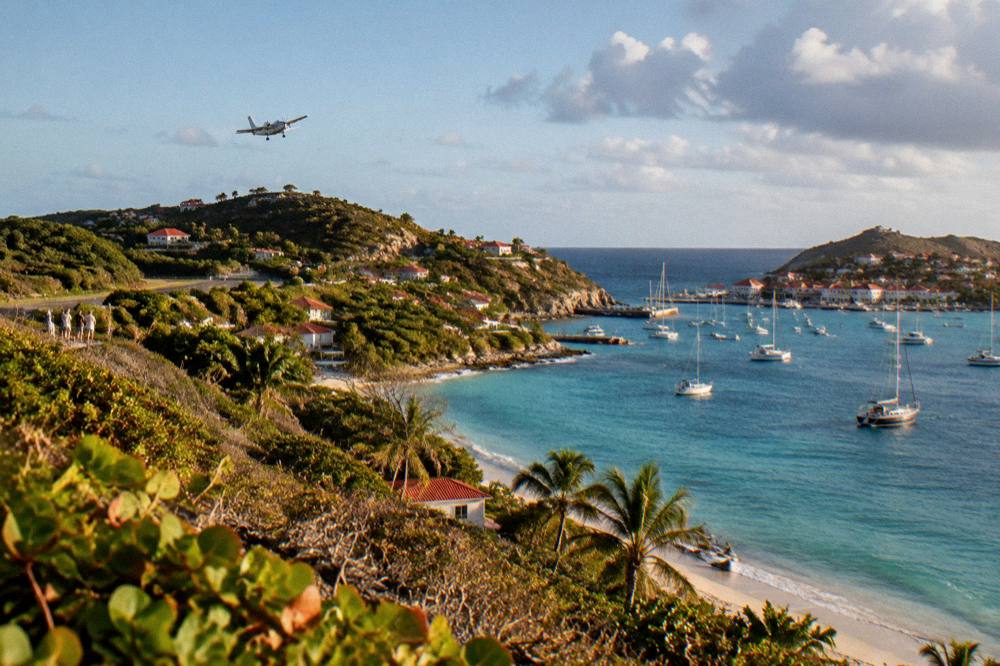
The pairing is common in trip plans this site covers: fly in over Col de la Tourmente once, then see the coastline from the water on the way out. The sea approach to Gustavia, with its harbour and hills, is the other side of the same island.
What Can You Do Near The Airport Right After Landing?
The airport sits beside Saint-Jean, whose public beach curves along the bay below the runway's end, and the whole island's beach map is within a short drive: all beaches on St Barts are public, including Gouverneur, Saline, Flamands, Colombier, Shell Beach, Grand Cul-de-Sac, Lorient and Corossol. The marine reserve's rules, 5-knot limits in its zones, no jet skis and no touching of turtles, apply on and around the water.
Saint-Jean beach is the one you see on final approach, and it is public like all the others. A short drive in either direction reaches the rest: the Saint-Jean area guide covers the neighbourhood around the airport, and the beach guides, from Gouverneur to Colombier, cover each stretch of sand.
The marine reserve, the Réserve Naturelle, covers zones including Colombier Bay and Ile Fourchue. The environment agency's regulatory-zones page lists the 5-knot speed limit in its zones, the jet-ski ban, the ban on dogs on beaches and the rule against touching protected species such as sea turtles. For arrival-day planning, the practical takeaway is simple: the water is regulated, the beaches are free, and the island is small enough that the first hour after landing can genuinely include a swim.
| Post-landing option | Location relative to SBH | Notes |
|---|---|---|
| Saint-Jean beach | Beside the runway | Public, free |
| Gustavia harbour | West of the airport | Shops, harbour, Shell Beach nearby |
| Shell Beach (Grand Galet) | Gustavia | Public |
| Colombier | Northwest coast | Public, marine reserve zone |
| Grand Cul-de-Sac | Northeast coast | Public, turtle habitat per the reserve |
Common Questions About Landing At St Barts Airport
Can a jet land at St Barts Airport?
No. The runway at Gustaf III is 646 m long, which allows only small STOL turboprops such as the Twin Otter, the Cessna 208B Grand Caravan and the Pilatus PC-12. No jet, private or scheduled, lands at SBH.
Why do flights to St Barts only operate in daylight?
The airport operates under visual flight rules only and has no runway lighting, so it opens around 07:00 and closes about 15 minutes after sunset.
Where do you connect through to fly to St Barts?
The gateways are St Martin (SXM), San Juan (SJU), Pointe-a-Pitre in Guadeloupe (PTP) and Antigua (ANU). St Barth Commuter serves SXM, SFG and PTP, and Tradewind serves SJU and ANU.
Is the ferry an alternative to landing at St Barts Airport?
Yes. Great Bay Express runs from Philipsburg, about 45 minutes, and Voyager runs from Marigot, about 50 to 60 minutes, per the operators' pages. The crossing can be rough, and a passport is required.
Do you need a passport to land at St Barts?
St Barts is outside the Schengen area and follows French overseas entry rules. A valid travel document is required, EU citizens can generally use a national ID card, and an onward ticket is needed. Check your own government's travel advice for passport validity, because guidance differs by nationality.
How far is the airport from Gustavia?
Gustaf III sits at Saint-Jean, on the northern shore, with Gustavia to the west along narrow, winding roads. This site prints no drive time for the journey.
The runway is short, the planes are small, the hours are daylight-only, and the arrival is over in minutes. That is the whole character of landing at St Barts, and the rest of the island unfolds from the moment you step off the apron at Saint-Jean. St Barthelemy Travel covers the beaches, ferries, areas and seasons in depth for whatever comes next.