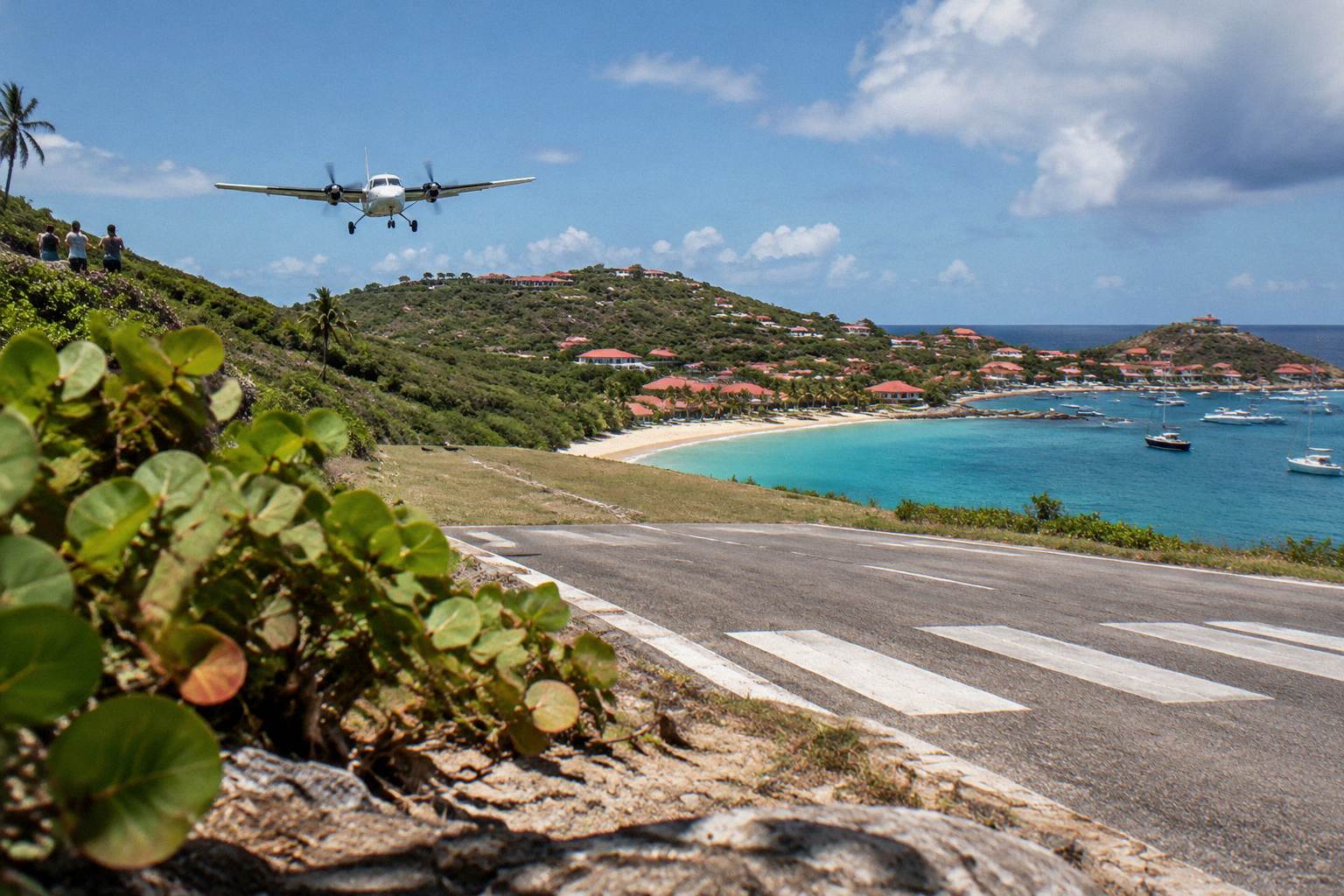
St Barts Airport Code
The airport code for St Barts is SBH, and the field behind it, Gustaf III Airport, has one of the shortest commercial runways in the Caribbean. St Barthelemy is a small French island in the Caribbean, an overseas collectivity of France since 2007, and nearly everyone who flies in connects through another island first.
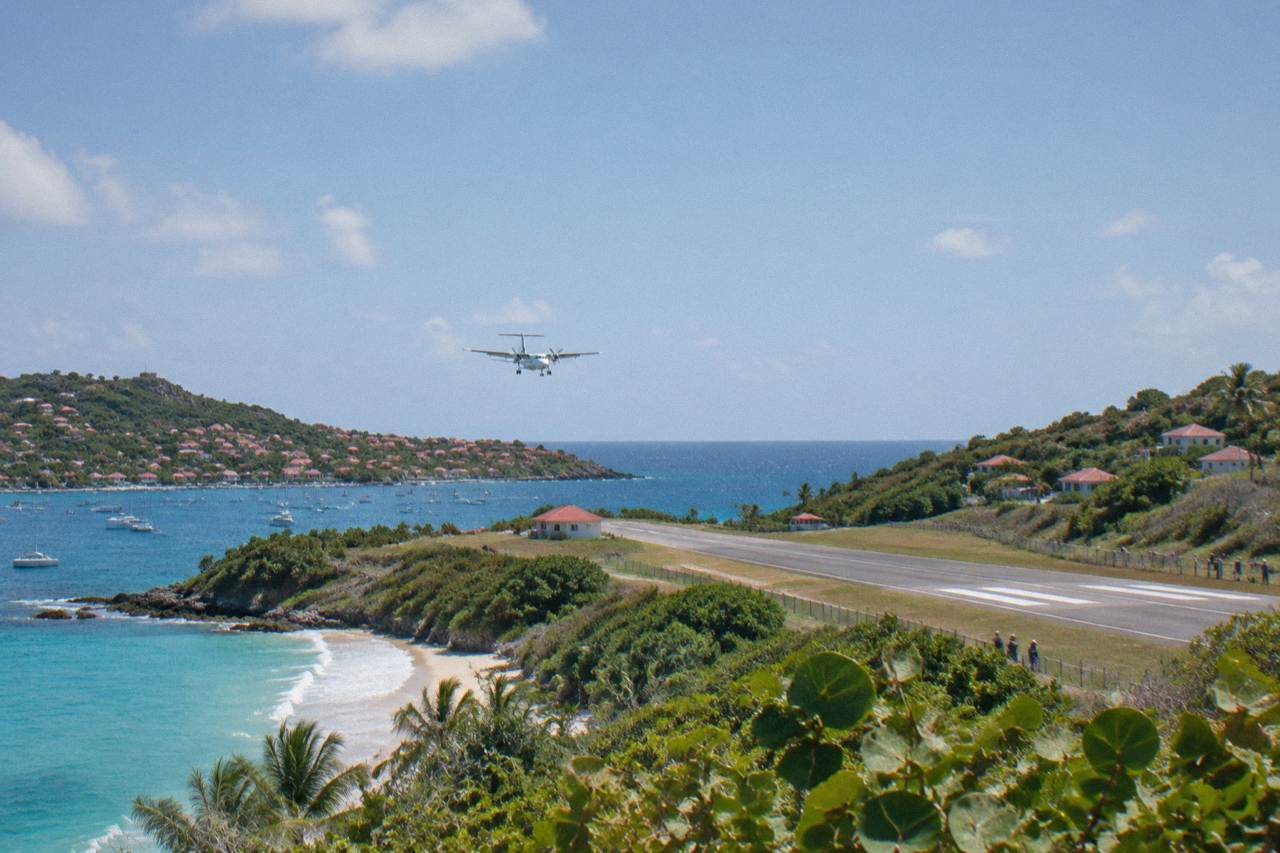
The St Barts airport code is SBH in IATA use and TFFJ in ICAO use. The airport is Gustaf III Airport, also called Remy de Haenen, at Saint-Jean. Its runway is 646 m (2,119 ft), so only small STOL turboprops land there, in daylight and visual conditions, and every traveller on a jet connects through St Martin, San Juan, Guadeloupe or Antigua.
The airport code for St Barts is SBH. St Barthelemy, a French overseas collectivity in the Caribbean since 2007, is an island of about 21 square kilometres with roughly 10,700 residents, and its airport, Gustaf III Airport, also called Remy de Haenen, sits at Saint-Jean between the hill road and the beach. The runway measures 646 m, which is 2,119 ft, short enough that only small STOL turboprops are certified to use it. No jet lands at SBH, ever, and operations are limited to daylight and visual flight conditions because the runway has no lights. This guide decodes the code itself, the carriers that serve it, the gateway airports that feed it and the ferry alternative from St Martin, and it connects to the wider things to do in St Barts planning picture once you are on the island.
What Is The St Barts Airport Code?
The St Barts airport code is SBH in IATA use and TFFJ in ICAO use. The field is Gustaf III Airport, also called Remy de Haenen, located at Saint-Jean on the north coast of the island of St Barthelemy. Booking sites and airline ticketing use SBH, while aviation charts and flight tracking use TFFJ, and both refer to the same single-runway airport with a 646 m strip.
The dual naming trips people up more than the code itself. Gustaf III is the official name, drawn from Swedish history when the island traded hands centuries ago, and Remy de Haenen is the second name honouring a local aviation figure. In practice airlines sell tickets to SBH, controllers and pilots file TFFJ, and islanders simply say the airport is at Saint-Jean, next to the famous stretch of sand where airliners pass low overhead on approach. If a booking site shows you anything other than SBH or TFFJ for this island, it is not selling you a flight to St Barts.
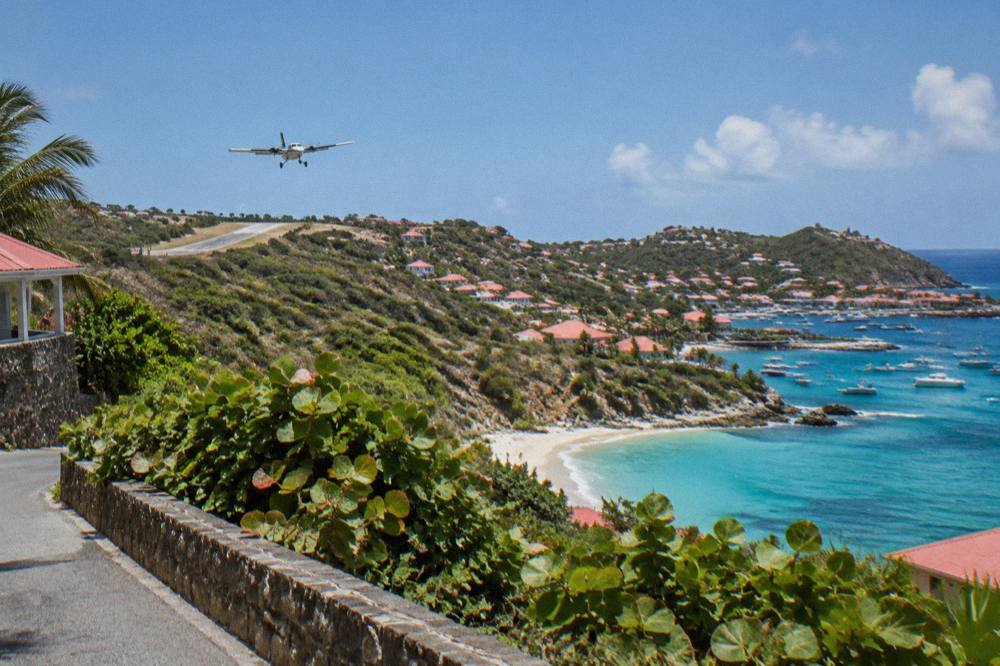
The code matters for planning because search engines confuse St Barts with similarly named places. There are communes in mainland France with names close to Saint-Barthelemy, and INSEE, the French statistics agency, keeps them under separate codes from the Caribbean territory, which carries its own code, 977. When you book, confirm the destination shows SBH and that the connecting airport is one of the four gateways that actually feed the island. The deeper rundown of the field, its layout and its quirks lives in the St Barts airport guide, and the short answer to which airport you fly into for the island is covered at what airport do you fly into for St Barthelemy.
| Code system | Code | Used by |
|---|---|---|
| IATA | SBH | Airlines, booking sites, ticketing |
| ICAO | TFFJ | Aviation charts, flight tracking, air traffic control |
| INSEE (territory) | 977 | French statistics and administration |
Why Can Only Small Planes Land At SBH In St Barts?
SBH has a single runway, 10/28, that is 646 m long, or 2,119 ft, which rules out every jet and nearly all regional aircraft. Only STOL-certified turboprops such as the Twin Otter and Cessna Caravan types are permitted, approaches are flown in daylight under visual conditions only, and pilots need a special qualification for the steep descent over the hill at Col de la Tourmente.
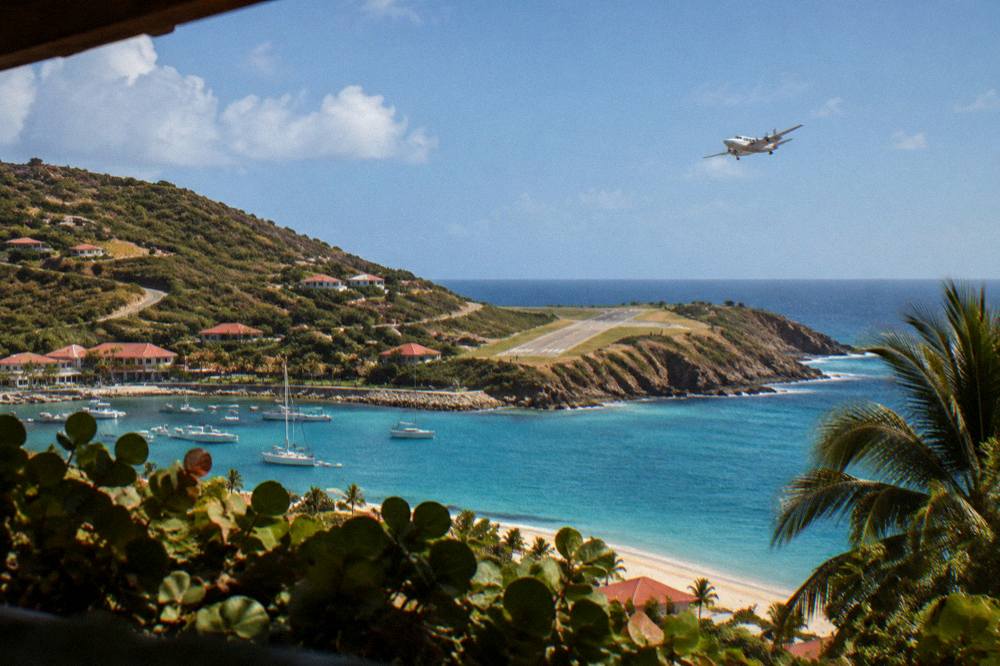
That hill is the reason videos of this airport circulate online. The approach to runway 10 crosses a road and a low ridge, and the aircraft dips below the crest before flattening onto the strip. Departures toward the sea are similarly short: the runway ends near the sand at Saint-Jean and aircraft are airborne within metres of the threshold. The airport opens in the morning and closes shortly after sunset, because there is no runway lighting, and that operating window is why late afternoon connections into St Martin matter when you plan the last flight of the day.
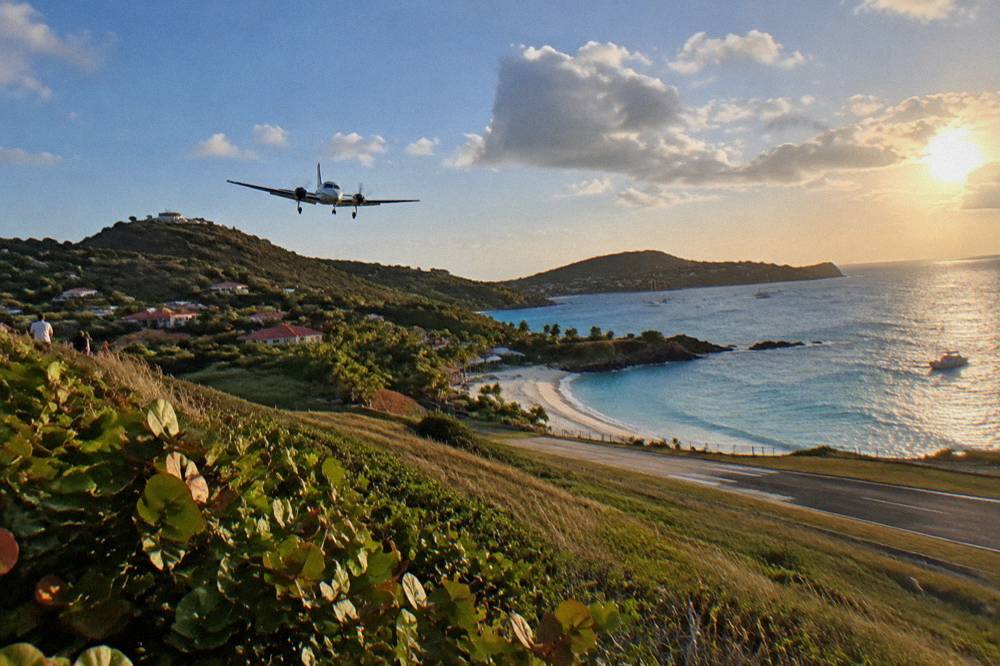
For travellers the practical consequence is capacity. Small aircraft mean fewer seats per departure, and fewer seats mean the feeding airports matter: if a flight into St Martin arrives late, the small plane to SBH may have gone for the night. Building a buffer into the connection, or overnighting on St Martin and flying across in the morning, are the two standard strategies, and the landing at St Barts airport page walks through the approach itself. From the water the airport looks entirely different, and the Gustavia, Colombier and Ile Fourchue sail from St Martin passes the coastline the runway hugs, giving a sense of how compressed the whole island is.
| Runway detail | Figure |
|---|---|
| Runway designators | 10/28 |
| Length | 646 m (2,119 ft) |
| Allowed aircraft | STOL turboprops only |
| Jets | None, at any time |
| Operating window | Daylight, visual conditions only |
Which Airlines Fly Into St Barts Airport Code SBH?
Two scheduled carriers serve SBH from outside the island. St Barth Commuter flies to St Barts from St Martin (SXM), Grand Case on the French side (SFG) and Pointe-a-Pitre, Guadeloupe (PTP), while Tradewind Aviation flies from San Juan, Puerto Rico (SJU) and Antigua (ANU). Winair flies the SXM to SBH hop on Twin Otters.
The carrier you end up on usually follows the gateway you chose. Arriving from Europe, you most often connect at St Martin or Guadeloupe. Arriving from the United States, the usual gateways are San Juan or St Martin, both of which receive widebody and narrowbody jets that would never fit at SBH. The hop from St Martin is short, a few minutes in the air on any of the carriers, and the flights to St Barts and how to get to St Barts pages break down each routing in detail.
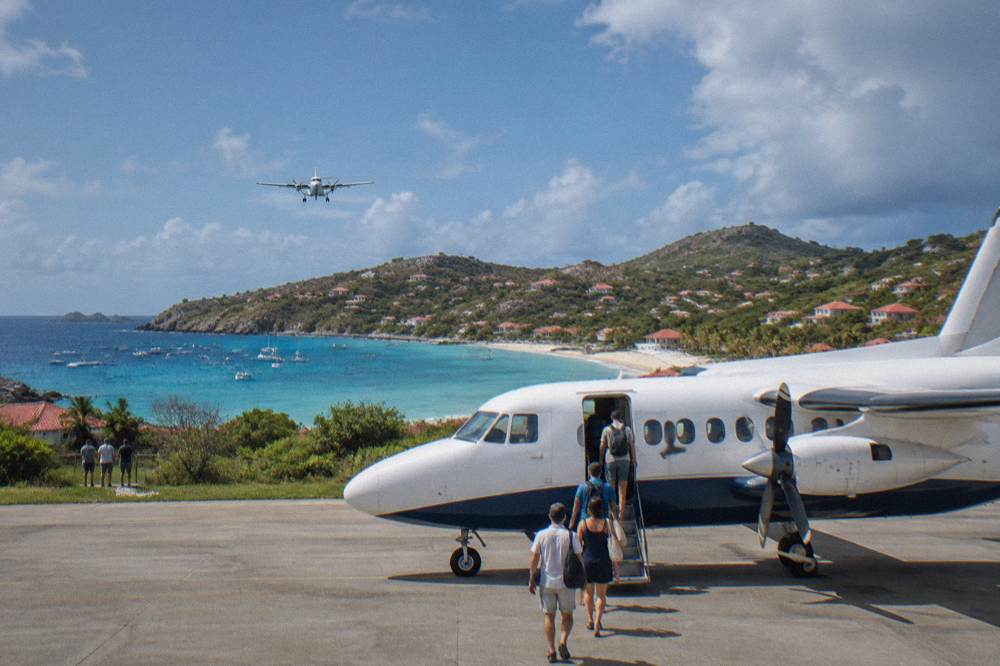
Because the aircraft are small, luggage space is small too, and the general advice on every routing is to check the baggage terms with the carrier rather than assume mainline allowances carry over. Seat availability moves with the season: frequencies rise in the winter high season and thin out in the late summer low period, when several island hotels close for their annual break.
| Gateway airport | Code | Carrier serving SBH |
|---|---|---|
| Princess Juliana, Sint Maarten | SXM | St Barth Commuter |
| Grand Case, St Martin | SFG | St Barth Commuter |
| Pointe-a-Pitre, Guadeloupe | PTP | St Barth Commuter |
| San Juan, Puerto Rico | SJU | Tradewind Aviation |
| Antigua | ANU | Tradewind Aviation |
What Airport Do You Fly Into To Reach St Barts?
Travellers on jets fly into St Martin (SXM), San Juan (SJU), Pointe-a-Pitre in Guadeloupe (PTP) or Antigua (ANU), then finish the journey on a small STOL turboprop into SBH or on the ferry from St Martin. No direct jet flight reaches St Barts from outside the Caribbean, because the 646 m runway at SBH cannot accept one.
St Martin is the workhorse gateway. Princess Juliana Airport on the Dutch side, Sint Maarten, receives long-haul flights from North America and Europe, and the onward hop to SBH is short. Grand Case, SFG, on the French side is a smaller alternative for regional arrivals. From the United States, the flying to St Barts from the US page lays out the connections, and anyone weighing the Dutch-side airport against the ferry across should read the SXM airport to St Barts ferry comparison, which also covers the St Barts to St Maarten airport return leg.
San Juan works well from the eastern seaboard, with Tradewind completing the trip, and Guadeloupe or Antigua suit routings via the French Caribbean or other islands. Whichever gateway you pick, the same rule applies: the last leg is either a nine-seat-and-under turboprop or a boat, and both are weather-sensitive in a way a jet is not. Swell and wind can delay small-craft crossings and shorten the flying day, so a margin in either direction protects the itinerary.
| Gateway | Where it suits | Final leg to St Barts |
|---|---|---|
| St Martin (SXM) | Most North American and European arrivals | Small plane or ferry |
| San Juan (SJU) | US east coast routings | Small plane |
| Guadeloupe (PTP) | French Caribbean connections | Small plane |
| Antigua (ANU) | Eastern Caribbean routings | Small plane |
Can You Take The Ferry Instead Of Flying Into St Barts?
Yes, two scheduled ferry operators connect St Martin with Gustavia: Great Bay Express from Philipsburg on the Dutch side, a crossing of about 45 minutes, and Voyager from Marigot on the French side, a crossing of about 50 to 60 minutes. A passport is required and check-in closes before departure, and sailings can be affected by sea conditions.
The ferry trades the aerial drama of the SBH approach for a sea crossing that is exposed to open water for part of the way, and it is the standard answer for travellers who would rather not fly a small plane, or whose jet arrives too late for the last flight of the day. Great Bay Express leaves from Bobby's Marina in Philipsburg, on the Dutch side, and the operator's own guidance is to arrive well ahead of departure, with check-in closing before the boat sails. Voyager leaves from the ferry terminal in Marigot, on the French side. Both operators run several sailings a day in each direction, with more in the high season.
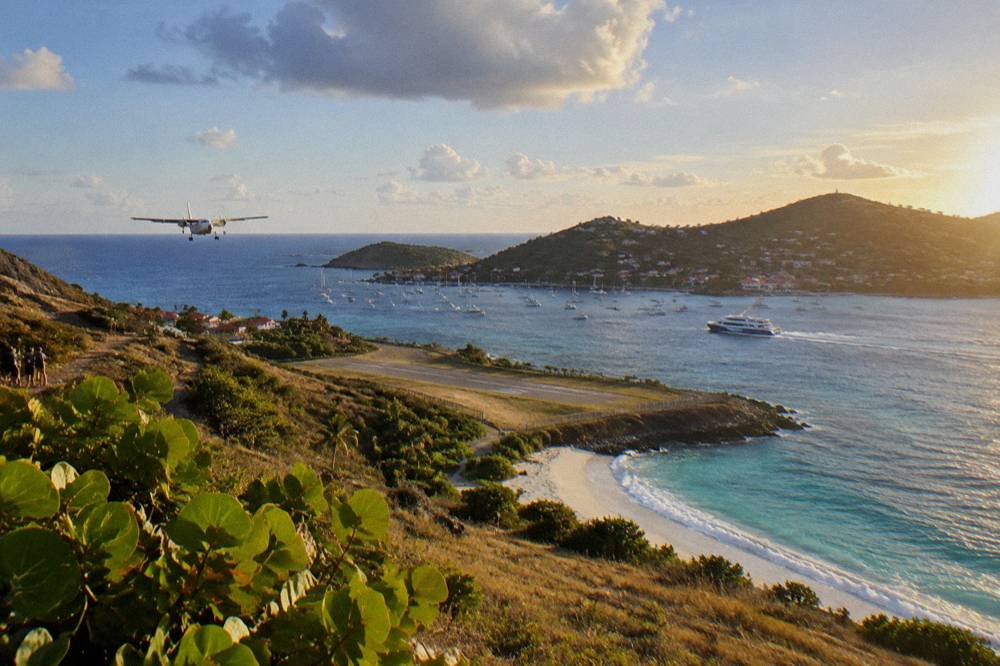
The crossing is not a flat-calm guarantee in any month, and anyone sensitive to swell should look at the St Barts ferry operators and schedule page before committing. Fares and timetables vary. What the ferry does offer is a different first view of the island: Gustavia's harbour, ringed by red roofs, opens up from the water in a way the airport road never manages, and many of the boat tours listed here, including a private charter from St Martin, follow the same approach past the headland.
For a day trip rather than a transfer, the boat logic inverts: you are not trying to reach the island, you are trying to see it, and the day-sail and charter products from St Martin do that with far more coastline than a return ferry ticket covers.
What Is Landing At St Barts Airport Actually Like?
Landing at SBH is a steep, visual approach over the Col de la Tourmente hill onto a 646 m runway that ends near the beach at Saint-Jean, flown only by specially qualified pilots in daylight conditions. The sensation is a quick descent and a firm, short touchdown, with the aircraft taxiing off within seconds and the terminal, a small single building, a short walk away.
The approach to runway 10 is the famous one. The aircraft crosses the hill diagonally, drops below the crest, levels over a road and settles onto the strip, and passengers on the left side look straight down at rooftops before the runway appears. In the other direction, runway 28, the approach comes in over the water of Baie de Saint-Jean. Either way the whole event is over quickly, and the airport's small size means the gap between wheels-down and the terminal curb is measured in minutes rather than the hour-plus of a large hub.
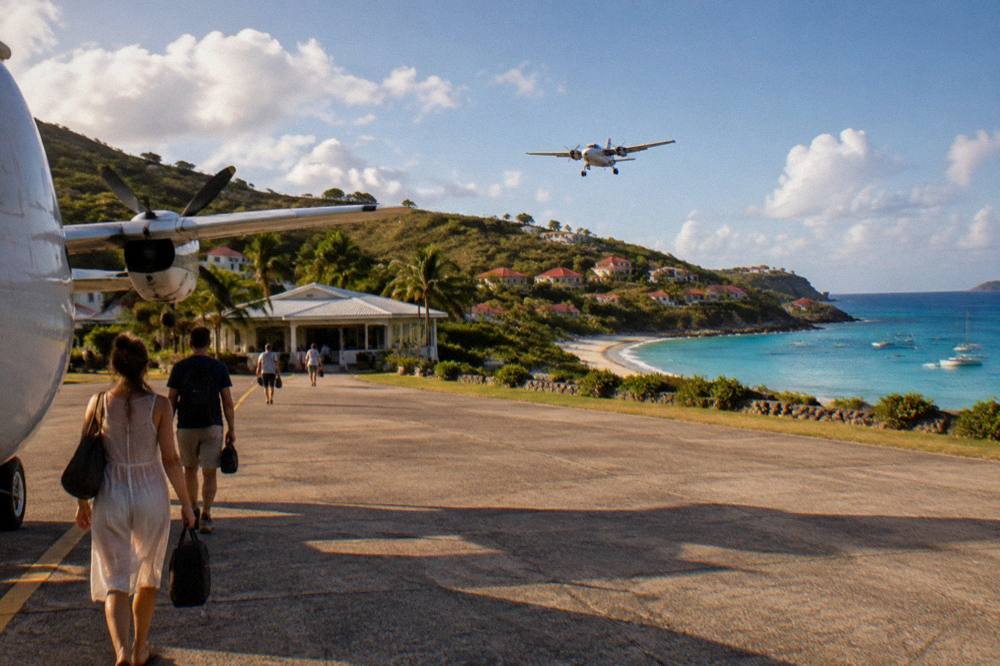
Airside, the airport is a spectator's airport. The terrace above the apron at Saint-Jean draws people specifically to watch the arrivals, and the St Barts airport spotting page covers where the viewing works best. Add the beach itself, which sits close enough to the threshold that bathers hear every departure, and the field functions as a public attraction as much as a transport node, one of the few airports anywhere where the approach path is itself a thing to do.
How Do You Get From SBH Into Gustavia And Saint-Jean?
From SBH the island opens up within minutes: the airport sits at Saint-Jean, the island's second town, and Gustavia, the capital and harbour, is a short drive west on the island's main coastal road. Rental car counters at the airport include Avis, Budget and Hertz alongside local agencies and Mini Moke specialists, and taxis meet scheduled arrivals.
The roads are narrow, winding and steep, driving is on the right, and the island-wide limit is 50 km/h with 30 km/h in the built-up areas of Gustavia and Saint-Jean. Small vehicles with higher clearance are the usual choice, and the open-air Mini Moke is the island's signature rental. Delivery to hotels and villas is commonly available from local agencies. The St Barts car rental page covers the whole picture, including licence requirements and the small-vehicle logic, and the airport transfer page covers the non-driving options.
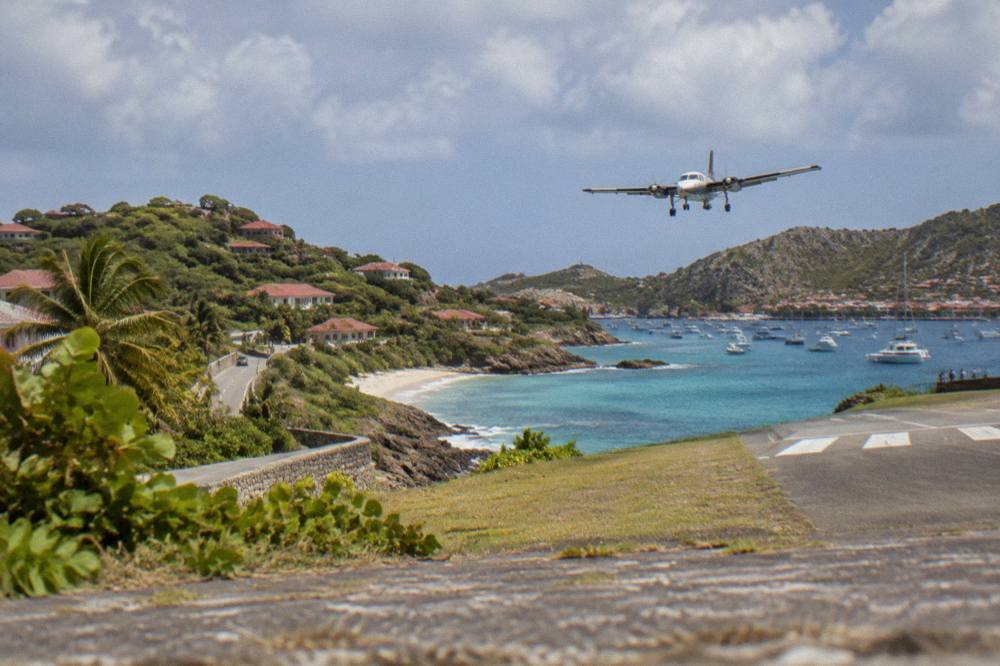
Distances on the island are genuinely tiny: about 21 square kilometres in total means nowhere is far, and the island's structure, Gustavia on the leeward side, Saint-Jean in the middle, Grand Cul-de-Sac and Toiny on the windward side, is easy to hold in your head after one loop. If the whole island is the destination rather than the airport, the choice between St Barts hotels and villas, or the 5-star and luxury hotel shortlists, matters more to the itinerary than any transfer decision.
| Transport from SBH | Notes |
|---|---|
| Rental car | Avis, Budget, Hertz and local counters at the airport |
| Mini Moke | Local agencies, open-air, island signature |
| Taxi | Meets scheduled arrivals |
| Villa or hotel delivery | Commonly offered by local rental agencies |
Does The St Barts Airport Code SBH Change With The Seasons?
The code never changes, SBH and TFFJ year-round, but the schedule around it does. Flight frequencies rise in the December-to-April high season and thin in the late summer low period, and the airport's daylight-only rule means the operating day shortens in winter, while the 1 June to 30 November hurricane season overlaps the quietest months on the island.
Two calendars shape the year. The first is the season calendar: the Meteo-France normals, 1991-2020, show mean daily highs from 28.5 C in January to 31.7 C in September, with 891.3 mm of rain across the year and October the wettest month at 135.6 mm, so the island stays warm throughout and the high season is driven by the northern winter rather than by island weather alone. The second is the hurricane season, which runs from 1 June to 30 November with a peak from mid-August to mid-October; Hurricane Irma struck in September 2017, and the season is a reason many hotels close each autumn and reopen between mid-October and early November. No prediction of a storm, of crowds or of availability follows from any of this; the pattern is simply the pattern.
| Month | Mean daily high (C) | Rain (mm) |
|---|---|---|
| January | 28.5 | 52.6 |
| April | 29.8 | 50.9 |
| July | 31.2 | 80.4 |
| September | 31.7 | 96.9 |
| October | 31.4 | 135.6 |
| December | 28.9 | 79.2 |
The event calendar also pivots on the season. The St Barth Music Festival runs 8 to 18 January 2027, the Gourmet Festival runs 9 to 15 November 2026, and the sailing events of spring, the Bucket Regatta in mid-March and Les Voiles de St Barth in April, bring a rush of superyachts to Gustavia that has nothing to do with the airport and everything to do with the harbour. The Winair page tracks the St Martin feeder picture in more depth for anyone building a winter routing.
For everything that happens after the wheels touch the strip, from the beaches to the itineraries to the water, St Barthelemy Travel keeps the full picture: the airport code is the least interesting three letters on the island.
Common Questions About The St Barts Airport Code
Is the St Barts airport code SBH or TFFJ?
Both. SBH is the IATA code used by airlines and booking sites, and TFFJ is the ICAO code used on aviation charts and flight trackers. They refer to the same airport, Gustaf III Airport, also called Remy de Haenen, at Saint-Jean on St Barthelemy.
What airport do you fly into for St Barts?
Jets fly into St Martin (SXM), San Juan (SJU), Pointe-a-Pitre in Guadeloupe (PTP) or Antigua (ANU), and the trip finishes on a small STOL turboprop into SBH or on the ferry from St Martin. No jet lands at SBH, because the runway is only 646 m long.
Can a large plane land at St Barts airport?
No. The runway at SBH is 646 m, or 2,119 ft, which permits only STOL-certified turboprops such as Twin Otter and Cessna Caravan types. Operations are daylight and visual conditions only, and pilots need a special qualification for the approach.
Do any airlines fly direct to SBH from the United States or Europe?
No direct jet flight reaches St Barts from outside the Caribbean. Travellers connect through St Martin, San Juan, Guadeloupe or Antigua, where St Barth Commuter and Tradewind Aviation complete the trip on small aircraft.
Is there a ferry as an alternative to flying into St Barts?
Yes. Great Bay Express sails from Philipsburg on the Dutch side of St Maarten, a crossing of about 45 minutes, and Voyager sails from Marigot on the French side, about 50 to 60 minutes. A passport is required, and sailings depend on sea conditions.
How far is the airport from Gustavia?
The airport sits at Saint-Jean, and Gustavia, the capital, lies a short drive west along the coastal road. The island is only about 21 square kilometres, so transfer times everywhere are brief.