St Barts Airport Transfers
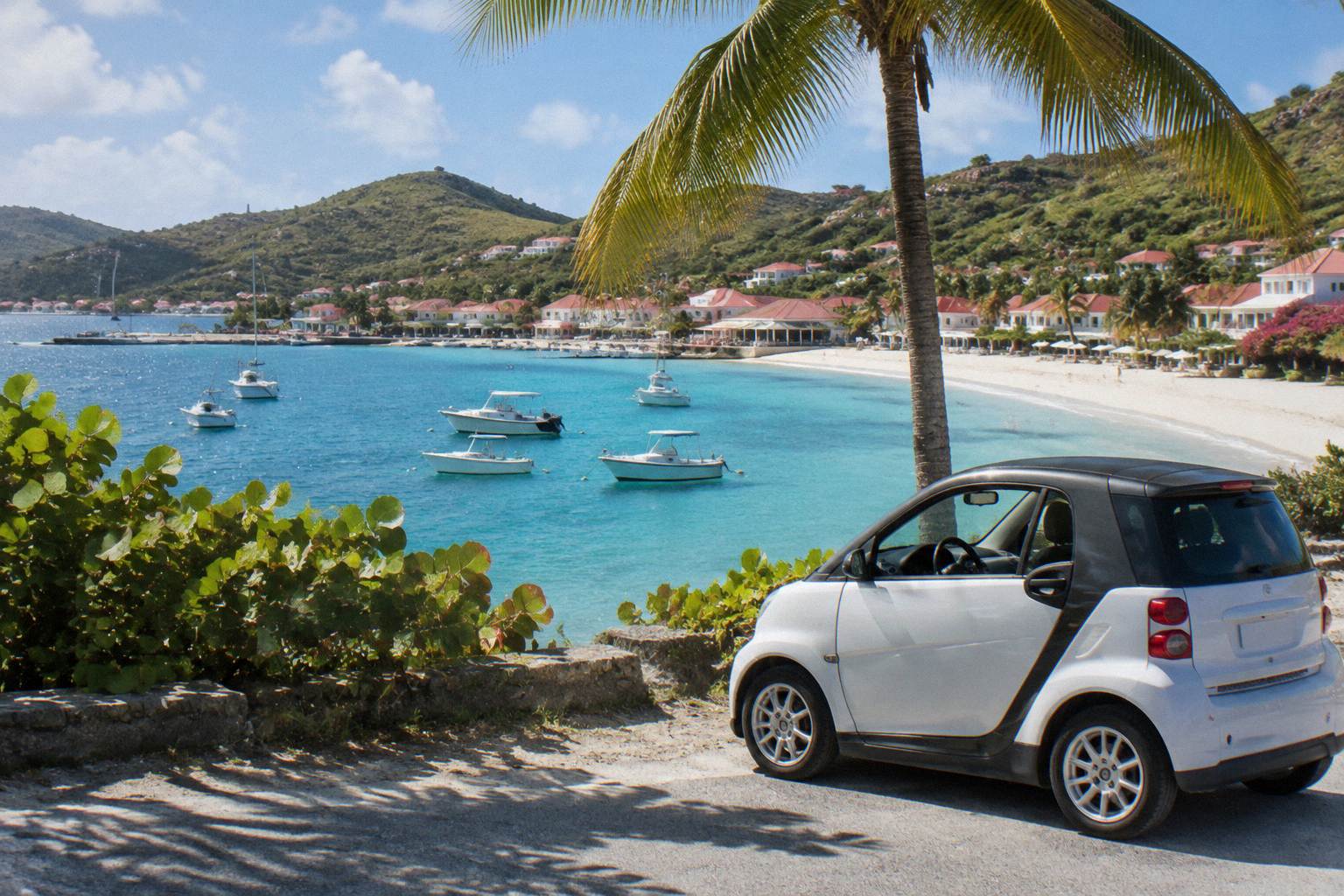
St Barthelemy, usually written St Barts, is a small French island in the Caribbean whose airport takes only small turboprops, so the honest answer to "airport transfer" here has two halves: the ground transfer once you land at Gustaf III, and the sea or air transfer from St Martin that gets you to the island at all.
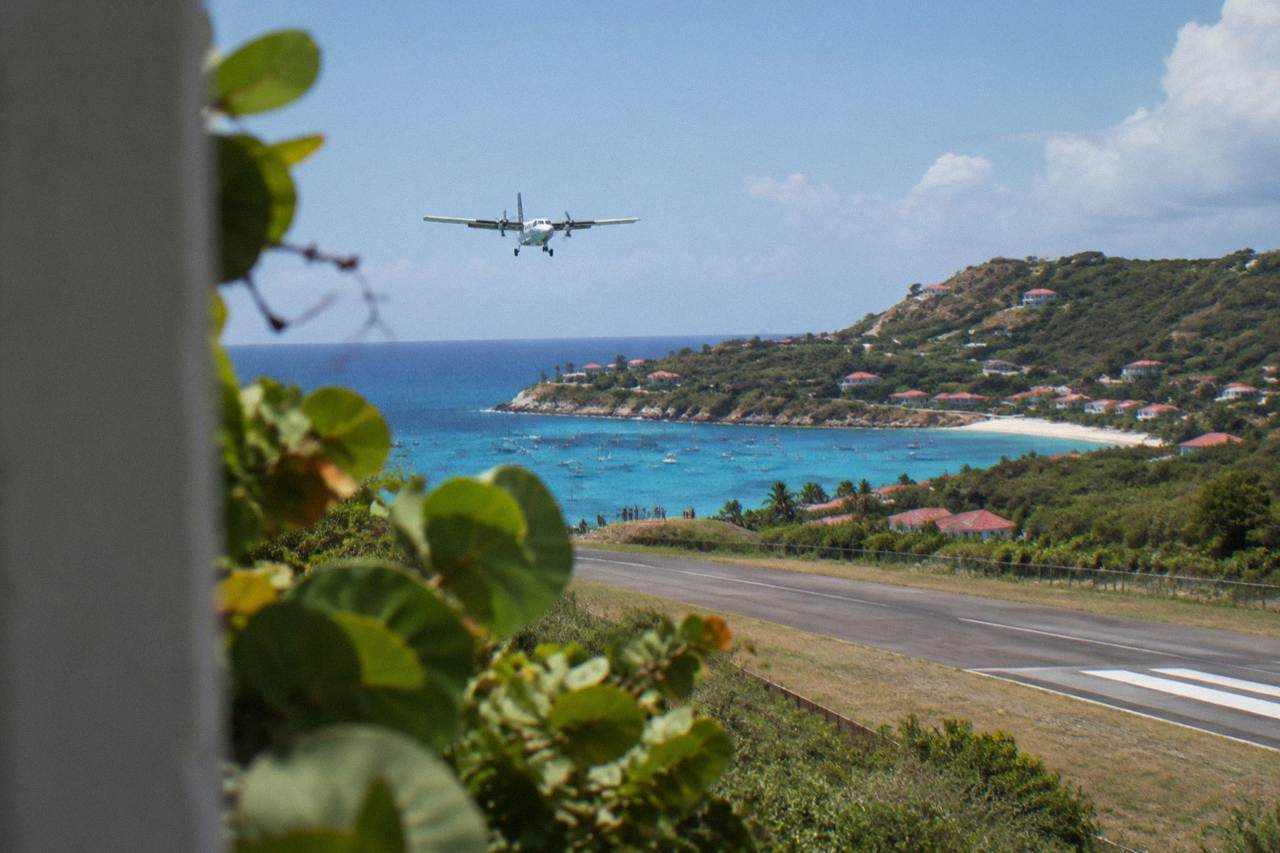
Most travelers reach St Barts through St Martin (SXM), then take a short STOL turboprop hop or a ferry from Philipsburg or Marigot to Gustavia; once on the island, transfers from Gustaf III Airport are taxis and rental cars, with Avis, Budget and Hertz counters at SBH.
St Barthelemy, usually written St Barts, is a small French island in the Caribbean with about 21 square kilometres of hills, public beaches and turquoise water, and its airport is unlike almost any other hub you will connect through. Gustaf III Airport, also called Remy de Haenen and coded SBH, has a single runway just 646 m long. Only small STOL turboprops land there, in daylight and visual conditions, and no jet reaches the island from outside the Caribbean. That single fact reshapes what an "airport transfer" means here: for most itineraries the transfer is really two transfers, a connection through St Martin or another regional gateway, then a short hop or a ferry crossing, and finally a taxi or rental car on the island itself. This page walks through each leg in the order a traveler actually meets it, and pairs the ground options with the boat alternatives that leave from St Martin and Sint Maarten.
What Does An St Barts Airport Transfer Actually Involve?
An St Barts airport transfer involves three linked legs rather than one ride: a jet flight into a Caribbean gateway, usually St Martin (SXM), then a small STOL turboprop or a ferry to the island, then a taxi or rental car from Gustaf III Airport into Gustavia, Saint-Jean or your villa. No jet lands at SBH, because the 646 m runway takes only small turboprops in daylight and visual conditions. The gateway, not the island, is where a conventional airport transfer begins.
The structure follows from the runway. Gustaf III's 646 m strip, per the airport's French AIP data, admits only specially certified aircraft flown by pilots qualified for the steep approach over the Col de la Tourmente. Winair flies Twin Otters at the St Martin end, St Barth Commuter operates from St Martin (SXM), Grand Case (SFG) on the French side and Pointe-a-Pitre in Guadeloupe (PTP), and Tradewind flies from San Juan (SJU) and Antigua (ANU). The hop from St Martin is short.

What that means in planning terms: you book the jet leg to the gateway yourself, you book the inter-island leg with a regional carrier or ferry operator, and you arrange the island leg last. The regional carriers publish their schedules on their own booking pages, and those pages are the only reliable source for times and fares on your travel date. The island leg is short in distance, but the roads are narrow, winding and steep, which is why the choice between taxi and rental car is worth making before you land. For the wider picture of routes and gateways, see how to get to St Barts and flights to St Barts.
| Leg | Where It Starts | Options |
|---|---|---|
| Jet leg | Your home airport | Any airline flying to SXM, SJU, PTP or ANU |
| Inter-island air | St Martin (SXM or SFG) | St Barth Commuter, Winair (Twin Otter operator at SXM) |
| Inter-island air | San Juan (SJU) or Antigua (ANU) | Tradewind |
| Inter-island air | Guadeloupe (PTP) | St Barth Commuter |
| Inter-island sea | Philipsburg (Great Bay Express) or Marigot (Voyager) | Scheduled ferry to Gustavia |
| Island ground | Gustaf III Airport (SBH) | Taxi, rental car |
What Ground Transfers Exist At Gustaf III Airport?
Ground transfers at Gustaf III Airport are taxis and rental cars: there is no rail, no shuttle network and no bus system on St Barts, an island of about 21 square kilometres with roughly 10,700 residents. Car rental counters at SBH include Avis, Budget and Hertz, local agencies rent small cars and the open-air Mini Moke, and taxis meet scheduled flights on a right-hand-drive-free French road network where you drive on the right.
The airport sits at the edge of Saint-Jean, and the island's road network fans out from there: Gustavia to the west, Lorient and Grand Cul-de-Sac to the east, Flamands and Colombier's access roads to the northwest. Roads are narrow, winding and hilly, with a 50 km/h island-wide limit and 30 km/h in built-up areas such as Gustavia and Saint-Jean. Those figures come from the island's driving guidance, and they explain why a small, high-clearance automatic is the usual rental choice.
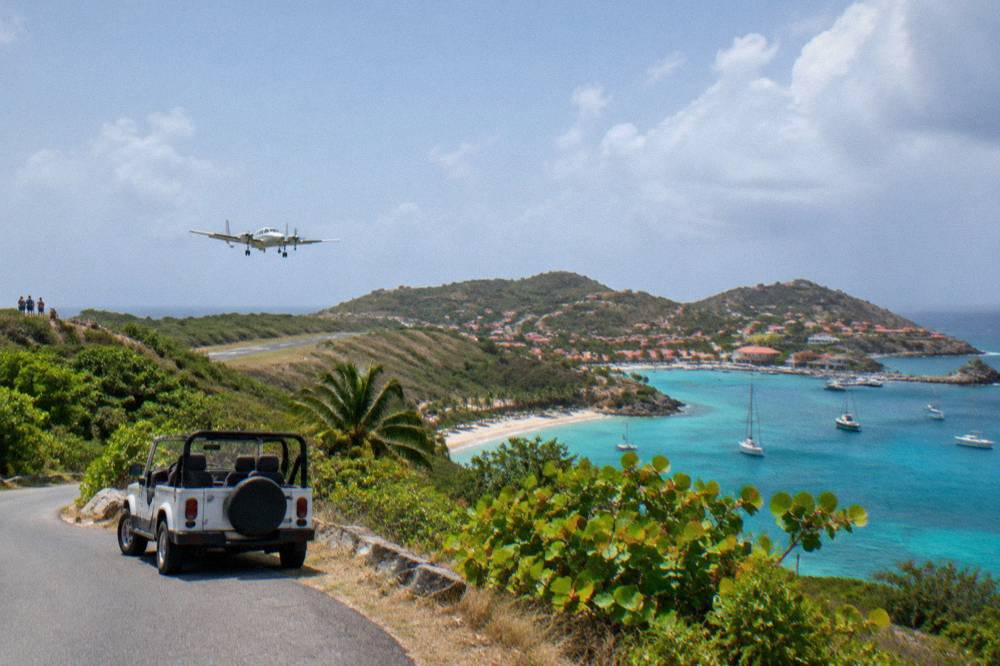
Taxis on St Barts work on route-based tariffs set locally, with surcharges in the evening and on Sundays and holidays, and there are no meters: agree the fare with the driver before setting off. No fare table exists for this page to print, so treat taxi pricing as something to confirm on arrival or through your hotel. Rental counters at SBH include Avis, Budget and Hertz, and local agencies run alongside them, with Mini Mokes available through local operators rather than the international brands. Minimum rental age varies by company, and delivery to hotels and villas is commonly offered: confirm both with the agency you book. The full rental picture, including the Mini Moke question, is covered in St Barts car rental.
| Ground Option | Where To Find It | What To Know |
|---|---|---|
| Taxi | Airport rank and Gustavia stands | Route-based tariffs, evening and Sunday surcharges, no meters |
| International rental | Avis, Budget, Hertz counters at SBH | Counters listed on the airport's rental pages |
| Local rental agencies | Island-wide, several near SBH | Small cars and Mini Mokes offered |
| Hotel or villa pickup | Arranged by the property | Delivery and pickup commonly available |
How Does The St Martin Connection Work As An Airport Transfer?
The St Martin connection works as the de facto St Barts airport transfer: a jet lands at Princess Juliana (SXM) on the Dutch side, and the onward leg is either a short STOL turboprop hop to SBH with St Barth Commuter or Winair, or a ferry from Philipsburg or Marigot across to Gustavia. Because SBH operates in daylight and visual conditions only, the whole chain is schedule-sensitive in a way a normal hub connection is not.
SXM is the busiest gateway for St Barts traffic, and the two sides of the island give you two sea options as well as the air bridge. On the Dutch side, Great Bay Express runs from Bobby's Marina in Philipsburg; on the French side, Voyager runs from the Marigot ferry terminal. Both operators' pages show current sailings, and both require a passport, with check-in typically closing shortly before departure. The crossing time is about 45 minutes from Philipsburg and about 50 to 60 minutes from Marigot, figures the operators themselves publish as approximate and weather-dependent.
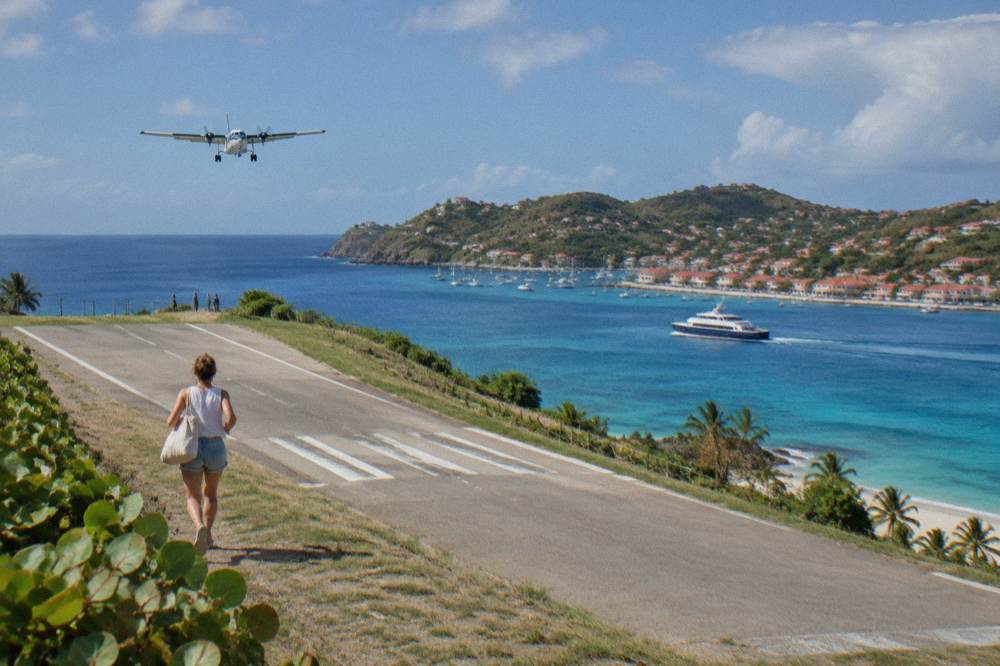
The air leg is the alternative: St Barth Commuter and Winair fly the corridor with small turboprops, and the flight is a short hop. A practical structure for the day is to leave slack between the jet arrival and the inter-island leg, since a late jet into SXM can strand the connection if the last ferry or flight of the day has gone. The mechanics of the SXM-to-ferry routing, including where the terminals sit, are laid out in SXM airport to St Barts by ferry and the day-trip pairing in St Barts to St Maarten airport.
Before the ferry section, one point worth fixing: if your St Martin layover is long, the sea crossing itself can become the day's highlight rather than a transfer to endure. Every bookable boat product listed here leaves from St Martin or Sint Maarten and visits St Barts, so a layover can absorb a full day on the water with time in Gustavia. None of them departs from St Barts itself, which is the single most common mix-up in this corridor.
| Operator | Departure Point | Destination | Crossing (Operator Figure) |
|---|---|---|---|
| Great Bay Express | Bobby's Marina, Philipsburg (Dutch side) | Gustavia | About 45 minutes |
| Voyager | Marigot ferry terminal (French side) | Gustavia | About 50 to 60 minutes |
Can A Ferry Replace A Flight As Your Airport Transfer?
A ferry can replace the flight entirely: Great Bay Express from Philipsburg and Voyager from Marigot both land passengers in Gustavia harbor, a short walk or taxi ride from the town center, and both accept suitcases as normal luggage. The crossing is open water and can be rough, so the operators themselves flag sea conditions, and a traveler prone to seasickness should plan for it rather than assume a smooth ride.
The ferry option suits travelers whose jet arrives with time to spare, whose luggage exceeds small-aircraft limits, or who simply prefer arriving by sea into Gustavia's harbor. Both operators run multiple sailings a day in each direction in normal conditions, with frequency rising in the November-to-April high season and dropping in the autumn low period; the operators' booking pages show the real timetable for your date.
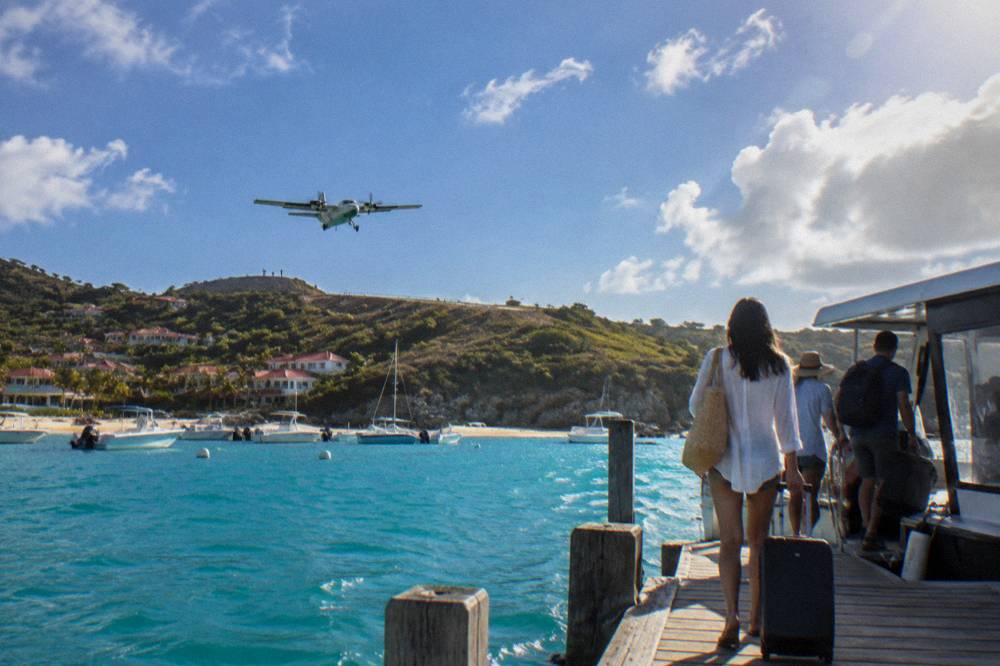
The rough-water point deserves emphasis because it is the one thing first-time visitors underestimate. The corridor between St Martin and St Barts is open Atlantic-facing water for part of the crossing, and sailings are subject to weather cancellation. Build a buffer into any same-day chain, especially on the return, when a missed ferry can mean a missed jet home. The operators, schedules and seasonal patterns are detailed in St Barts ferry operators and schedule, and the queasiness question is treated on its own in the seasickness guide referenced from there.
For cruise travelers the logic inverts: there is no cruise pier on St Barts, so ships anchor off Gustavia and passengers come ashore by tender boat, a transfer the port authority itself describes. The port publishes no public call schedule, so no call dates or ship counts appear here; the tender mechanics are covered in the St Barts cruise port guide.
Is A Private Boat Transfer The Better Airport Transfer From St Martin?
A private boat transfer can be the better airport transfer from St Martin when a group lands together, because the private charters leave from St Martin or Sint Maarten docks, cross to St Barts on your schedule rather than a ferry timetable, and fold the island visit into the crossing. Five of the six bookable products listed here are private charters priced per group, with one per-person group sail running only from 12 May to 31 August 2027 on its listing.
The economics change with party size. A private charter priced per group, carrying up to eight or ten depending on the boat, competes with multiple ferry fares and a taxi at each end, and it removes the timetable dependency entirely. The trade is weather exposure: a private boat is still a boat, and rough conditions can reshape the day.
The per-person option is the Gustavia, Colombier and Ile Fourchue sail, a full-day group sail from St Martin that calls at Colombier and Ile Fourchue, two spots inside the marine reserve's regulated zones where a 5-knot limit applies and mooring rules protect the seabed. Its listing shows the current price, rating and the seasonal window. For private options, the per-group charters are summarized below.
What Should You Know About Bags, Check-Ins And Connection Timing?
Bags, check-ins and connection timing are the parts of an St Barts airport transfer that break itineraries: inter-island flights take small aircraft with tight luggage space, ferry operators close check-in before departure and require a passport, and SBH itself stops operating at night because the runway has no lights. The safe structure is a jet arrival with several hours of slack, an inter-island leg booked with the day's buffer in mind, and a ground leg that needs no booking at all.
Start with the aircraft. Everything that lands at SBH is a small STOL turboprop, in the Twin Otter and Grand Caravan class, which means seat counts are low and hold space is limited. The carriers' own pages state their baggage rules, and those rules differ from a mainline jet's: confirm your bags against the operator's limit when booking, not at the airport. The ferry is the fallback for oversized luggage, and it is a scheduled, passport-controlled crossing, not a foot passenger jaunt.
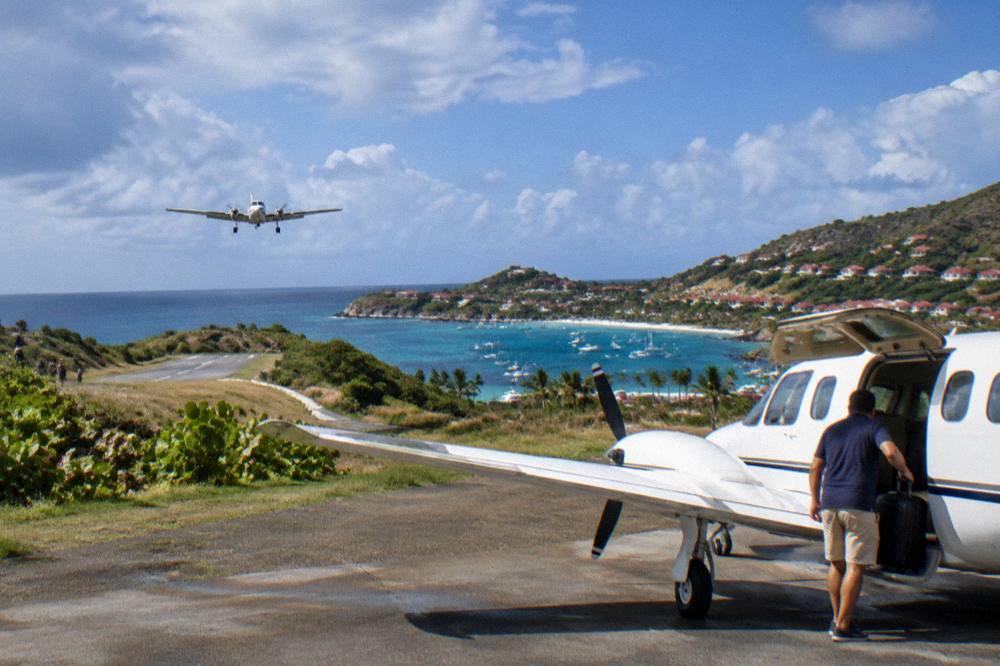
Then the daylight rule. SBH operates in visual conditions only, roughly from first light to shortly after sunset, so evening arrivals into St Martin can strand the final leg overnight. The same applies in reverse on departure day. The ferry extends the window but does not remove it, since sailings thin out toward evening and stop altogether after dark. Check the live timetables for your date rather than a generic pattern.
Finally, the island end. Taxis meet flights, rental counters are at the airport, and hotel or villa pickup can be arranged in advance; none of these needs to be booked the moment you land. The questions that decide your day are the inter-island ones, and the entry rules, documents and Schengen position are covered in St Barts customs and entry alongside the airport mechanics in the SBH airport guide.
| Connection Point | What Can Go Wrong | The Fix |
|---|---|---|
| Jet arrival into SXM | Late arrival after the last inter-island leg | Overnight on St Martin; build hours of slack |
| Inter-island flight | Luggage over the small-aircraft limit | Check the carrier's baggage rule; ferry as fallback |
| Ferry check-in | Check-in closes before departure | Arrive early with passports ready |
| SBH operations | No flights after dark, visual conditions only | Book daylight legs; keep a ferry backup |
| Island ground | Narrow steep roads, no meters in taxis | Pre-book a car or agree the taxi fare first |
Do You Need To Book An St Barts Airport Transfer In Advance?
You need to book the inter-island leg in advance, especially from December to April, when regional flights and ferries run fullest; the island ground leg can usually be arranged on arrival, though rental cars in high season are worth reserving early. The structural facts are fixed: SBH is capacity-limited by its 646 m runway and daylight-only operations, and the ferry fleet is small, so both choke points tighten in the high season.
The booking order that works: gateway jet, then inter-island air or sea, then lodging, then the ground leg. Reversing the order is how travelers end up with a St Martin hotel room they did not plan to use. For the air leg, the carriers' own booking systems show live availability; for the sea leg, both ferry operators take bookings through their pages; for the ground leg, the rental agencies at SBH and the taxi rank cover arrivals, with hotel concierges handling villa pickups.
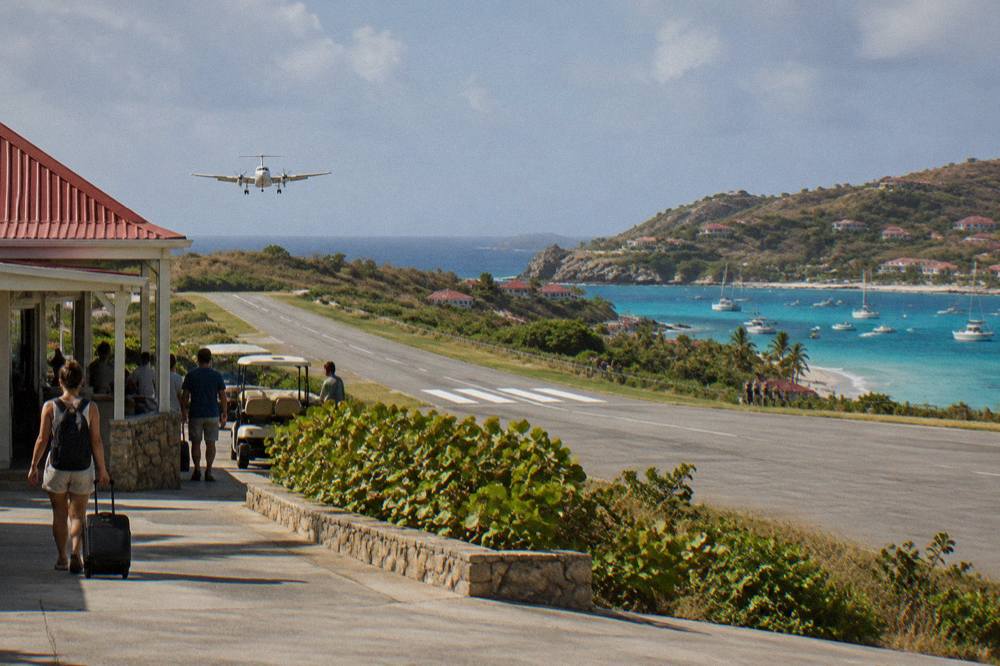
One seasonal wrinkle that affects transfer planning specifically: many hotels and restaurants on St Barts close each autumn and reopen in waves between mid-October and early November. A transfer booked for late October can land on an island still ramping up, which matters less for the transfer itself than for everything waiting at the other end of it. The season-by-season picture is in the best time to go to St Barts, and the airport side of the calendar is in what airport you fly into for St Barthelemy.
For travelers turning the transfer into the trip's first experience, the overnight option is the far end of the spectrum: a two-day, one-night private catamaran from St Martin that treats the crossing as the point.
Which St Barts Airport Transfer Should You Choose?
Choose by party size, luggage and daylight: solo travelers and couples with light bags do well on the STOL hop from St Martin or the scheduled ferry; groups landing together should price a private charter per group against the sum of individual fares; travelers with oversized luggage or evening constraints should take the ferry or overnight on St Martin. The one fixed rule is that every choice routes through a Caribbean gateway, and the jet schedule governs everything downstream of it.
The decision is less about luxury than about arithmetic and timing. A charter priced per group of up to eight or ten competes when the group is real; for two people it rarely does. The ferry wins on luggage and cost predictability but loses on rough-water comfort and evening reachability. The flight wins on speed and views, including the famous approach over the Col de la Tourmente, but loses on baggage limits and daylight dependency, and no jet from outside the Caribbean reaches the island at all.
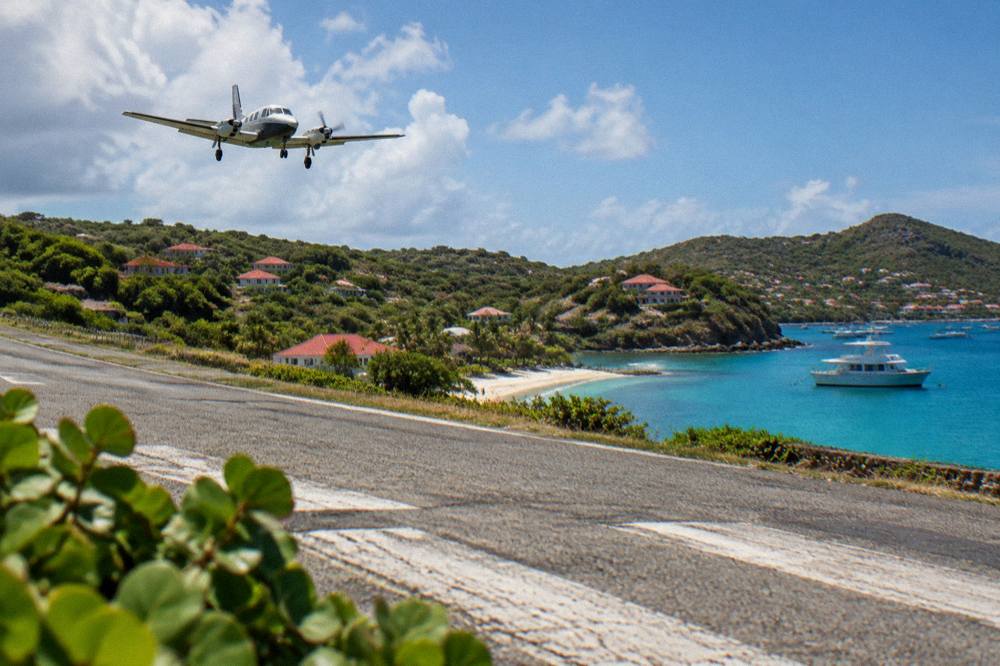
Whatever the choice, the island end is simple: a taxi rank, rental counters including Avis, Budget and Hertz, and a road network that crosses 21 square kilometres in a drive of modest length on narrow, steep roads. From there the island opens up, and things to do in St Barts takes over where the transfer ends. For more on this site's coverage, start with St Barthelemy Travel.
Common Questions About St Barts Airport Transfers
Is there an airport bus or shuttle on St Barts?
No. The ground transfer options at Gustaf III Airport are taxis, rental cars and pre-arranged hotel or villa pickup. The island has no bus network, an island of about 21 square kilometres with roughly 10,700 residents.
Do taxis at St Barts airport use meters?
No. Taxis on St Barts work on locally set route-based tariffs with surcharges in the evening and on Sundays and holidays, and there are no meters, so agree the fare with the driver before the ride.
Which car rental companies are at St Barts airport?
Counters at SBH include Avis, Budget and Hertz, with local agencies alongside them offering small cars and the open-air Mini Moke. Minimum rental age varies by company, and delivery to hotels and villas is commonly available.
Can you take a ferry instead of a flight to St Barts?
Yes. Great Bay Express runs from Philipsburg on the Dutch side, about 45 minutes, and Voyager runs from Marigot on the French side, about 50 to 60 minutes, both landing in Gustavia. The crossing is open water and can be rough, and sailings are weather-dependent.
Why do no jets fly to St Barts?
The runway at Gustaf III Airport is 646 m long and operations are daylight, visual-conditions only. Only small STOL turboprops with specially certified pilots land there; jet travelers connect through St Martin (SXM), San Juan (SJU), Guadeloupe (PTP) or Antigua (ANU).
Should you book the inter-island leg in advance?
Yes, particularly from December through April, when both the small-plane capacity and the ferry fleet run tightest. Neither leg can be promised for a specific date, but the structural limits, a 646 m runway and a small ferry fleet, do not change.