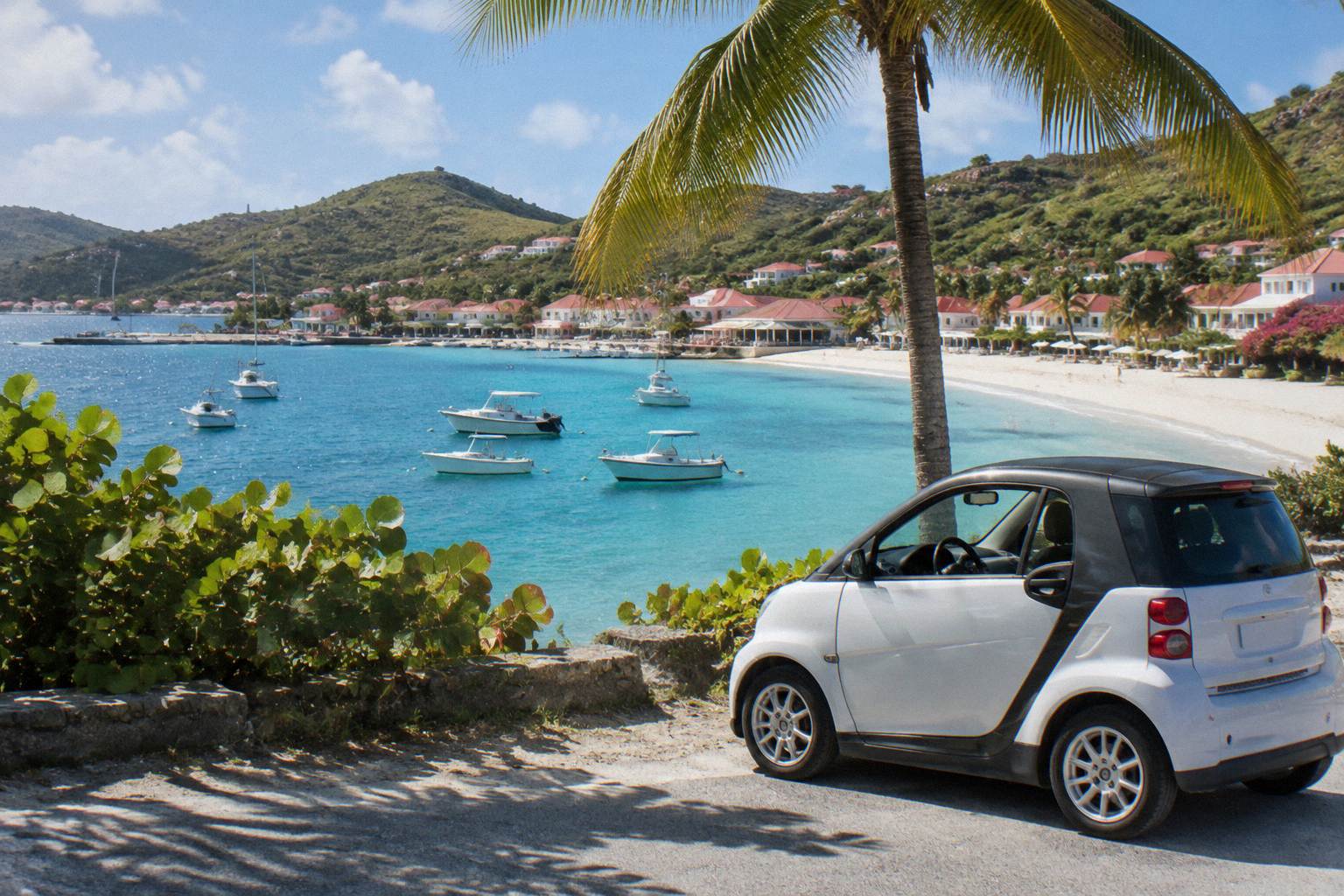
Taxis In St Barts
St Barthelemy, usually written St Barts, is a small French island of about 21 square kilometres, and taxis are one of only a few practical ways to move between Gustavia, the beaches and the airport when you do not want to drive the hills yourself.
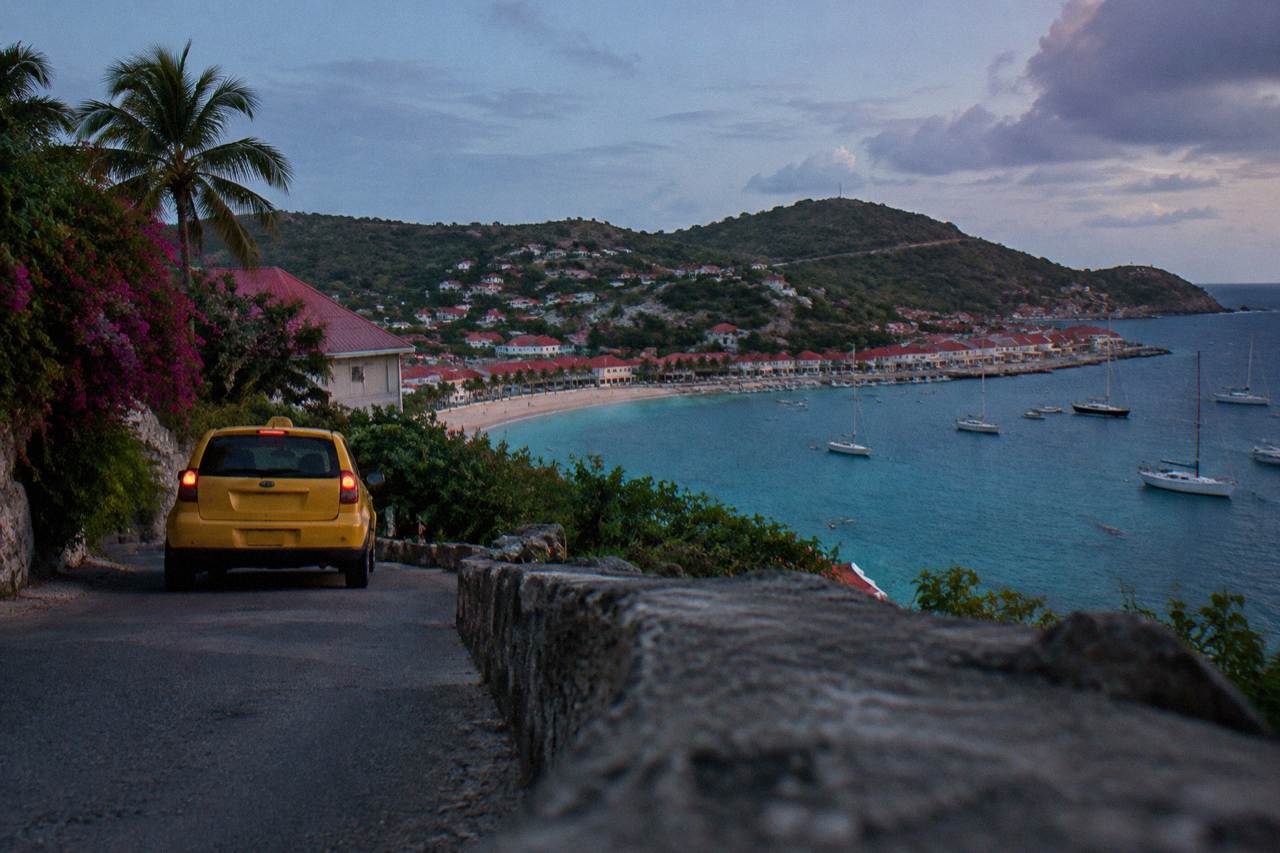
Taxis in St Barts operate without a fixed route network, meet flights at Gustaf III Airport and the ferry quay in Gustavia, charge fares set by route-based official tariffs rather than flat printed rates, and are busiest around flight and ferry arrivals, so arranging pickup through your hotel or villa is the common fallback.
St Barthelemy, usually written St Barts, is a small French island in the Caribbean, an overseas collectivity of France since 2007, with Gustavia as its harbour capital and a population of about 10,700 on roughly 21 square kilometres of hills and beaches. The island has no rail, no tram and no scheduled public bus network of the kind a city traveler would recognize, so the practical question on arrival is narrow: taxi, rental car, or feet. This page from St Barthelemy Travel covers how taxis work here, what the road rules mean for anyone sitting in the back seat, and how taxi trips connect to the airport, the ferries from St Martin and the cruise tender quay.
How Do Taxis Work In St Barts?
Taxis in St Barts are private cars operated by licensed local drivers, summoned from stands at the airport and in Gustavia, booked ahead through hotels and villas, or flagged in the street where the road allows, and they serve the whole island from the airport to Colombier's trailhead. There is no dispatch app ecosystem described in any operator material, and the fallback is the stand or your accommodation's front desk.
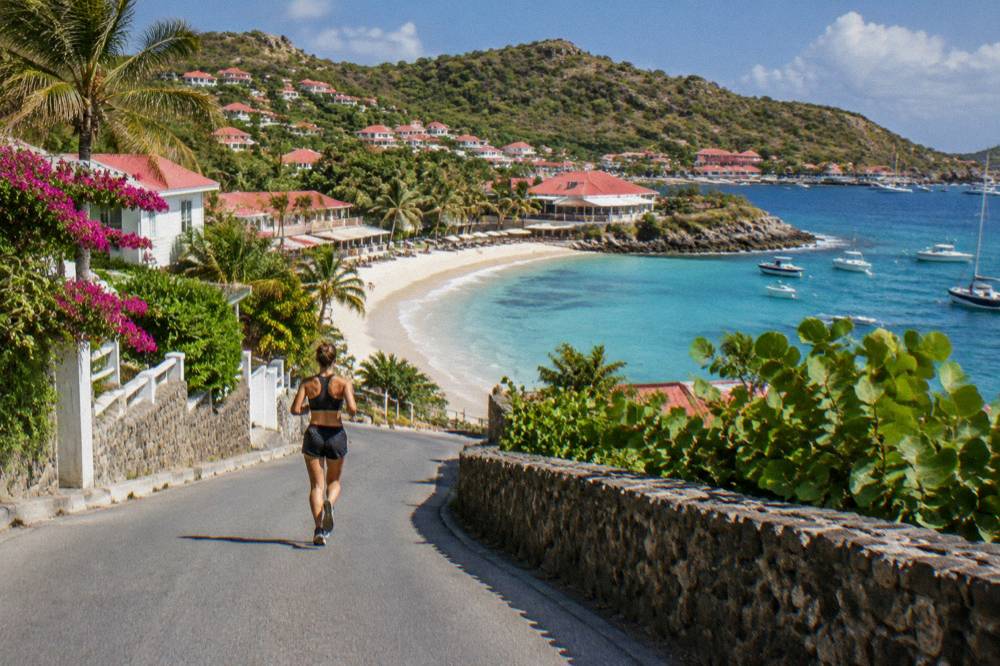
The island is small enough that a taxi is never far from anywhere, but it is also hilly enough that walking between beaches is not realistic for most itineraries. Roads are narrow, winding and steep, reported at a 50 km/h limit island-wide and 30 km/h in Gustavia and Saint-Jean, and the practical effect is that taxi trips are short in distance but slow in feel. Drivers work the airport at Gustaf III (SBH), the ferry quay in Gustavia where Great Bay Express and Voyager passengers arrive, and the tender landing where cruise passengers come ashore.
Because the island has no list of taxi companies with phone numbers, the reliable channels are the stands themselves and the place you are staying. Hotels and villa managers routinely arrange pickups, and villa rental is a large year-round market here, so the concierge or manager channel is well established. If your plan is mostly things to do in St Barts around one beach and one town, taxis plus walking may cover the whole stay; if you want five beaches in a day, the calculus changes, and the St Barts car rental question becomes the real one.
Key Numbers For Taxi Trips In St Barts
Reported surcharge times, speed limits and arrival figures that shape taxi rides
All figures as stated in the St Barts taxi guide.
Do St Barts Taxis Use Fixed Fares?
Fares on St Barts taxis follow official route-based tariffs, meaning the price is tied to the journey between named points rather than to a distance meter reading, with surcharges reported for evening trips after about 6:30 pm and on Sundays and public holidays. Confirm the fare with the driver before setting off, and expect that rates are quoted in euros, the island's currency, not US dollars.
That structure has consequences worth understanding before you land. A route-based tariff means the Gustavia to Saint-Jean trip and the Saint-Jean to Gustavia trip are the same priced journey, but a detour to a fourth beach is a new journey with its own tariff line. The surcharge rules reported on local taxi operators' pages mean an evening dinner pickup in Gustavia costs more than the same run at midday, and a Sunday airport pickup carries the holiday addition. Ask the driver or your hotel to quote the route before the wheels move.
Tipping is a separate, lighter question. The island is French-administered and service is often included in restaurant bills, but for taxi drivers a rounded-up fare is a normal courtesy rather than an obligation. There is no set percentage convention, so treat rounding as a gesture, not a rule.
One structural note: taxis here do not compete with ride-hailing in any way this site can verify, and no bus network is described in any operator or tourism material. The choice is genuinely between taxi, rental car, bicycle-scale options for the confident, and walking within Gustavia, whose centre is compact enough that a harbor-front wander needs no vehicle at all.
For a day when you want zero taxis and zero driving, the boat option is worth a look before you commit to wheels. These depart from St Martin or Sint Maarten, not from St Barts itself.
Where Do You Find A Taxi In St Barts?
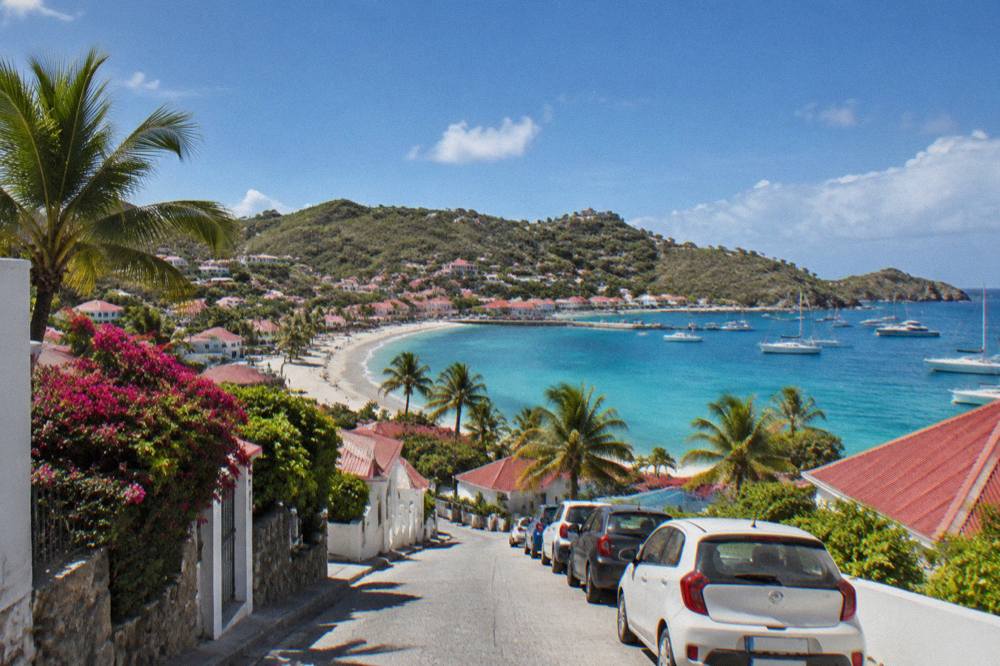
The three reliable taxi points on St Barts are the stand at Gustaf III Airport beside the runway at Saint-Jean, the ferry quay area in Gustavia where arriving passengers from St Martin come ashore, and the tender landing used by cruise ships, which anchor offshore and send passengers in by boat since the island has no cruise pier. Hotels and villas arrange the rest by phone.
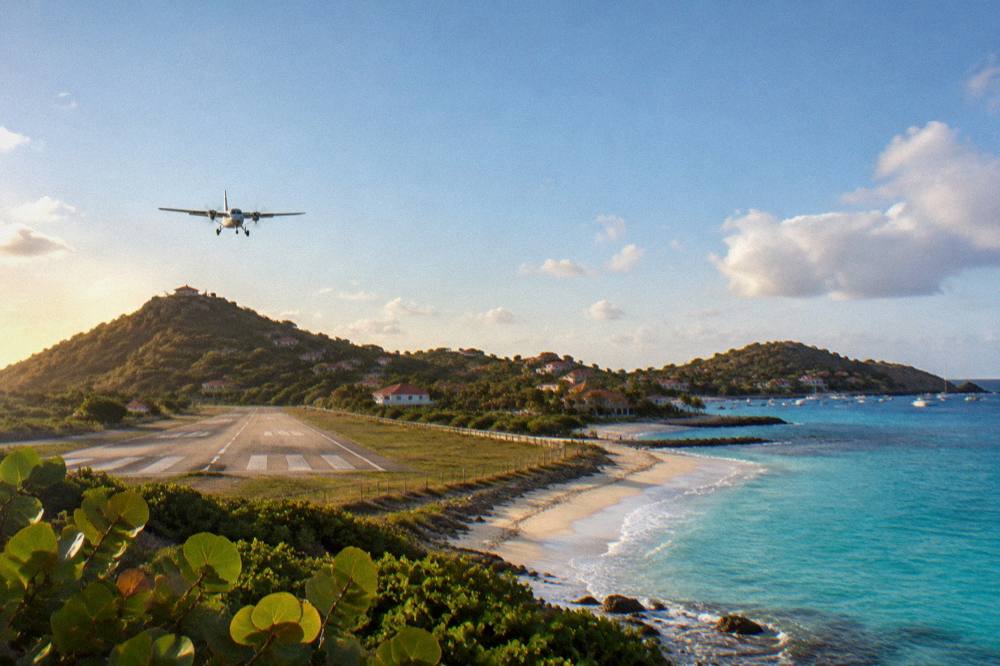
Each arrival stream behaves differently. At the airport, flights land in a steady daytime sequence because operations are daylight and visual-rules only, and the runway is 646 m, served exclusively by small STOL turboprops, never jets. That means arrivals come in small waves of a dozen or two passengers, and the stand clears quickly between them. The St Barts airport guide covers what that arrival actually looks like, including the famous landing over the hill at Saint-Jean.
At the ferry quay, Great Bay Express arrives from Philipsburg on the Dutch side, a crossing of about 45 minutes, and Voyager arrives from Marigot on the French side, about 50 to 60 minutes, both operators running roughly two to three sailings a day each direction in normal conditions. A ferry arrival dumps up to a boatload of passengers at once, so the quay is where patience matters most. The St Barts ferry operators and schedule page gives the operator detail, and how to get to St Barts frames the whole gateway picture.
Cruise passengers have the simplest taxi geography on the island: the tenders land effectively in Gustavia's center, and Gustavia's center is compact, so a taxi is only needed for beach runs. Note that cruise access is capped by regulation at ships of up to 1,200 passengers, with larger vessels needing executive council approval, which keeps the tender flow small. The St Barts cruise port page expands on this.
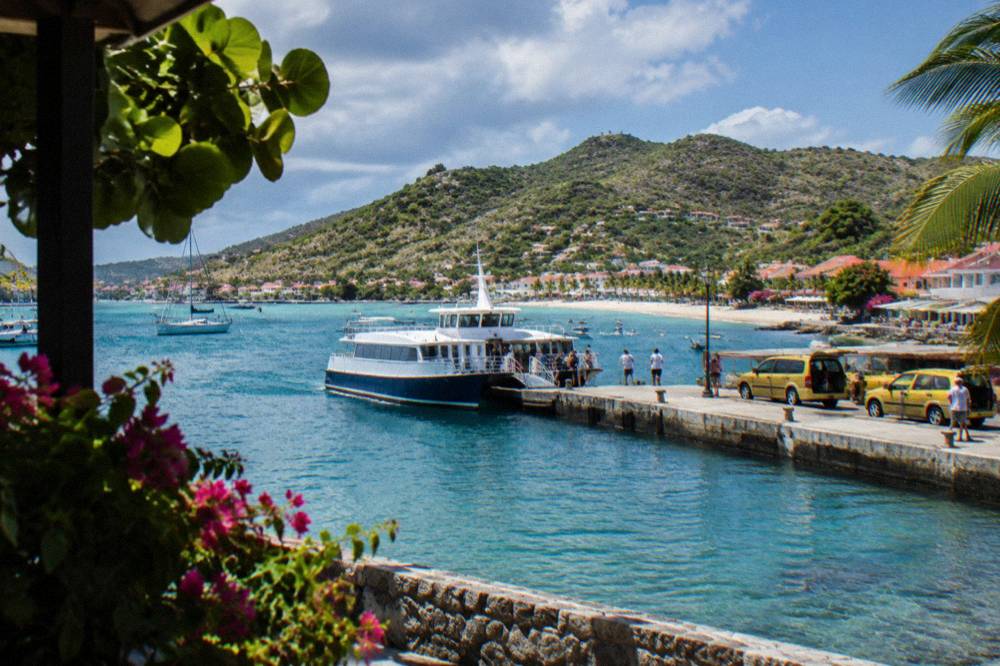
For travelers whose whole day is the boat day, there is a category of trip where the taxi question disappears entirely on the St Barts side, because you never need one: the private charters that run across from St Martin, spend the day around Colombier and Ile Fourchue, and return. This one is a strong fit for a group that wants the island's west coast water without any island driving.
Is A Taxi Better Than A Rental Car In St Barts?
A taxi suits travelers staying in or near Gustavia, making two or three point-to-point trips a day, or arriving by ferry or cruise tender for a single afternoon, while a rental car suits anyone beach-hopping across Colombier, Saline, Gouverneur and Grand Cul-de-Sac in one day, since taxis must be summoned rather than hailed everywhere and wait time eats into a short itinerary.
The dividing line is trip count. Below roughly three vehicle trips a day, a taxi wins on simplicity: no parking, no mountain-road driving, no negotiating narrow lanes in an unfamiliar car. Above that, especially with a beach-hopping plan, the rental wins because St Barts rewards moving at your own pace, and the island's beaches, all of them public, are spread along coasts that a single road loops around. Drivers here keep to the right, and French right-of-way habits apply at unsigned intersections, so the driving itself is learnable but never trivial.
The rental market at the airport is real and named: Avis, Budget and Hertz all have counters at SBH, alongside local agencies and the open-air Mini Moke specialists. Rental prices, deposits and minimum ages are questions for the rental company directly. The comparison below is the honest structural picture, not a price sheet.
| Factor | Taxi | Rental Car |
|---|---|---|
| Best for | Gustavia-based stays, few daily trips, cruise days | Beach circuits, multiple areas per day |
| How you get one | Stand at airport or quay, or phone via hotel | Airport counters: Avis, Budget, Hertz, plus local agencies |
| Evening flexibility | Surcharges reported after about 6:30 pm and on Sundays and holidays | Vehicle on hand all day |
| Driving burden | None, driver handles the hills | You handle narrow, steep, winding roads |
| Beach-hopping fit | Weak, each leg is a new booking | Strong, beaches are all public with road access |
| Airport connection | Stand meets every flight | Counters at SBH itself |
A middle path exists and many itineraries use it: taxi from the airport on arrival day, taxi to the quay on departure day, and a rental only for the middle days. The St Barts car rental guide walks through that pattern, and do you need a car in St Barts frames the same question in question form. Whichever you pick, book wheels ahead for the December to April peak, when the island's calendar, from the Bucket Regatta in mid-March to the Music Festival from 8 to 18 January 2027, fills both taxis and rentals.
If your St Barts time is one big day rather than a stay, the decision collapses: the day-trip products from St Martin handle everything on the water and you never face the car question at all. The question below, from the editor's own decision checklist, is the one to ask.
What Are The Road Rules A Taxi Passenger Should Know In St Barts?
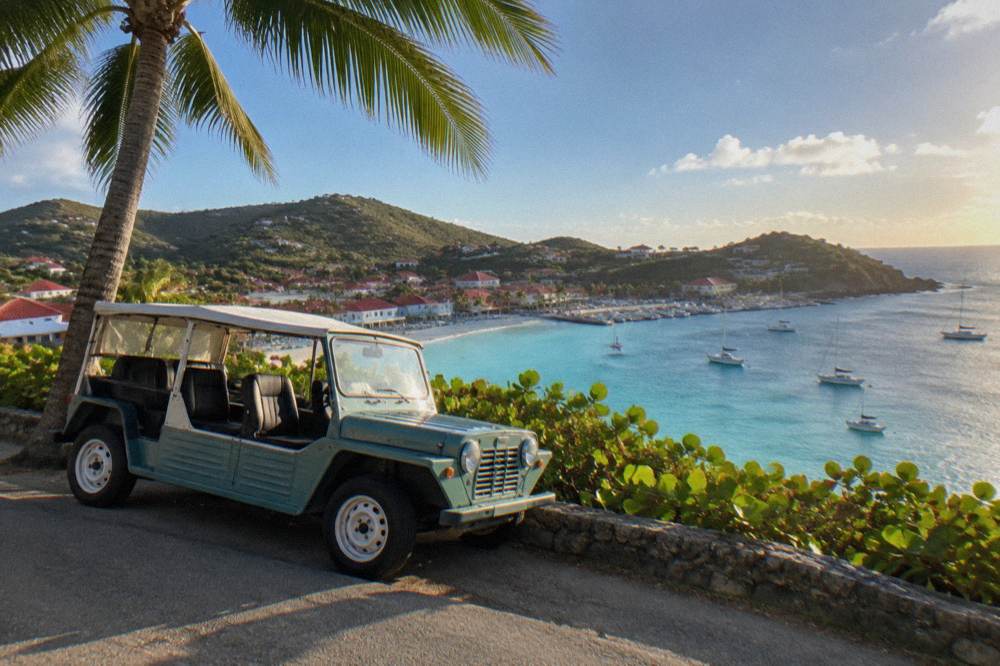
Traffic in St Barts drives on the right under French rules, the reported speed limits are 50 km/h island-wide and 30 km/h in Gustavia and Saint-Jean, the roads are narrow, winding and steep with one roundabout near the airport, and passengers should expect tight passing on hills, because the island's road network was built for a population of about 10,700, not for peak-season traffic.
For a passenger, most of this matters only as atmosphere. The driver handles the hairpins between Gustavia and Colombier's trailhead, the descent into Flamands, and the crest road above Grand Cul-de-Sac. Where the rules touch you directly: seatbelt use follows French law, the 30 km/h zones in the two towns mean short slow hops rather than fast transfers, and the single roundabout near the airport is the closest thing the island has to a traffic signature.
| Road Rule On St Barts | Reported Detail |
|---|---|
| Side of the road | Right |
| Island-wide speed limit | 50 km/h, reported |
| Town speed limits | 30 km/h in Gustavia and Saint-Jean, reported |
| Road character | Narrow, winding, steep grades |
| Roundabouts | One, near the airport |
| Right-of-way | French rules, priorite a droite at unsigned junctions |
One passenger-side rule stands out because it is unusual: dogs are banned from all beaches island-wide under a longstanding municipal order, even on a leash, so a taxi ride with a dog ends at the road, not the sand. The rule exists to protect nesting wildlife, and the territorial environment agency enforces signs at beach entrances. The St Barts pet travel implications are real if you are traveling with an animal.
The marine reserve adds rules that shape any taxi itinerary that ends at a boat. The environment agency's regulatory-zones page lists a 5-knot speed limit in protected zones, a ban on jet skis and other motorized water devices, restrictions on anchoring in Colombier and Ile Fourchue bays, a ban on touching turtles, and a drone ban near the reserve without authorization. None of that affects the taxi ride itself, but it shapes what your destination beach or bay allows once you arrive.
| Marine Reserve Rule | Detail From The Environment Agency |
|---|---|
| Speed in protected zones | 5 knots maximum |
| Jet skis and similar | Prohibited |
| Turtles and protected species | No touching, chasing or feeding |
| Dogs in reserve areas | Banned from beaches and water |
| Vessels in Colombier and Ile Fourchue | No vessels over 25 m, mooring buoy rules apply |
| Diving | 23 dive sites listed within the reserve system |
How Do Taxis Connect To Flights And Ferries Into St Barts?
Taxis meet flights at Gustaf III Airport, where only small STOL turboprops operate on the 646 m runway in daylight and visual conditions, and they meet ferry arrivals at the Gustavia quay, served by Great Bay Express from Philipsburg in about 45 minutes and Voyager from Marigot in about 50 to 60 minutes, with arrivals from St Martin by small plane through St Barth Commuter from SXM, SFG and PTP and Tradewind from SJU and ANU.
The gateway picture matters because no jet and no long-haul aircraft lands on St Barts. Travelers fly into St Martin (SXM), San Juan (SJU), Guadeloupe (PTP) or Antigua (ANU), then finish with a small plane or the ferry. The taxi need on the island begins the moment that last leg ends. Flights land only in daylight, so airport taxi demand is a daytime phenomenon, and the last ferry arrivals of the evening are the other peak, which is exactly when the reported evening surcharge after about 6:30 pm applies.
| Arrival Route Into St Barts | Operator | Reported Crossing Or Hop |
|---|---|---|
| Philipsburg, Sint Maarten to Gustavia by ferry | Great Bay Express | About 45 minutes |
| Marigot, St Martin to Gustavia by ferry | Voyager | About 50 to 60 minutes |
| SXM, SFG and PTP to SBH by air | St Barth Commuter | A short hop |
| SXM to SBH by air | Winair | A short hop |
| SJU and ANU to SBH by air | Tradewind | A short hop |
Two practical warnings come with the table. First, ferry crossings can be rough, and sailings are subject to weather cancellation, so a missed ferry can strand a taxi booking; the ferry seasickness page covers the crossing experience and SXM airport to the St Barts ferry covers the St Martin side of the connection. Second, the airport closes shortly after sunset with no runway lights, so a late-day flight cancellation means rebooking to the next day, and your taxi arrangement needs the flexibility to match.
The overnight boat alternative removes the last-leg scramble entirely for some travelers: a private catamaran crossing from St Martin that spends a night and returns the next day, with no airport and no ferry terminal in the plan at all.
When Is Taxi Demand Highest In St Barts?
Taxi demand on St Barts concentrates around the December to April high season, around flight and ferry arrival waves rather than around clock hours, and around the island's calendar anchors, including the Music Festival from 8 to 18 January 2027, the Gourmet Festival from 9 to 15 November 2026, the Bucket Regatta in mid-March, and the New Year period, when Gustavia's harbor fills with visiting yachts.
The calendar is the honest predictor because the island's transport fleet does not scale. The yacht events bring crews and guests who all move between harbor, hills and beaches in the same few days. The festivals concentrate restaurant and venue traffic in Gustavia and Saint-Jean after dark, which is when the reported evening taxi surcharge applies. And the seasonal pattern of hotel reopenings, with most properties closing in the late-summer lull and reopening in waves between mid-October and early November, means the taxi market effectively switches on for the season in that same October window.
| Period Or Event | Date Basis | Taxi Planning Effect |
|---|---|---|
| High season | December to April | Book pickups ahead |
| Music Festival | 8 to 18 January 2027 | Evening Gustavia demand |
| Bucket Regatta | Mid-March | Harbor and beach runs cluster |
| Gourmet Festival | 9 to 15 November 2026 | Evening restaurant demand |
| Hotel reopening wave | Mid-October to early November, annual pattern | Season taxi supply resumes |
| Hurricane season overlap | 1 June to 30 November, peak mid-August to mid-October | Weather can cancel ferries and flights |
Weather is the other demand driver, in both directions. The Atlantic hurricane season runs from 1 June to 30 November with its peak from mid-August to mid-October, and the island's wettest month in the Meteo-France normals, 1991-2020, is October at 135.6 mm of the annual 891.3 mm. A storm-free October can still be quiet and pleasant, with a mean daily high of 31.4 C, but ferry disruptions in that window are the mechanism that reshuffles taxi plans most often, and no prediction of any specific storm belongs in any plan.
Can You Rely On Taxis For A Full St Barts Day Trip?
Taxis can string together a full day on St Barts, from the airport side at Saint-Jean to Saline, Gouverneur, Colombier's trailhead and back to Gustavia, but each leg is a separate booking on route-based tariffs, drivers must be arranged rather than assumed at every beach, and the plan works best when one driver or company handles the whole day by prior arrangement through a hotel or villa manager.
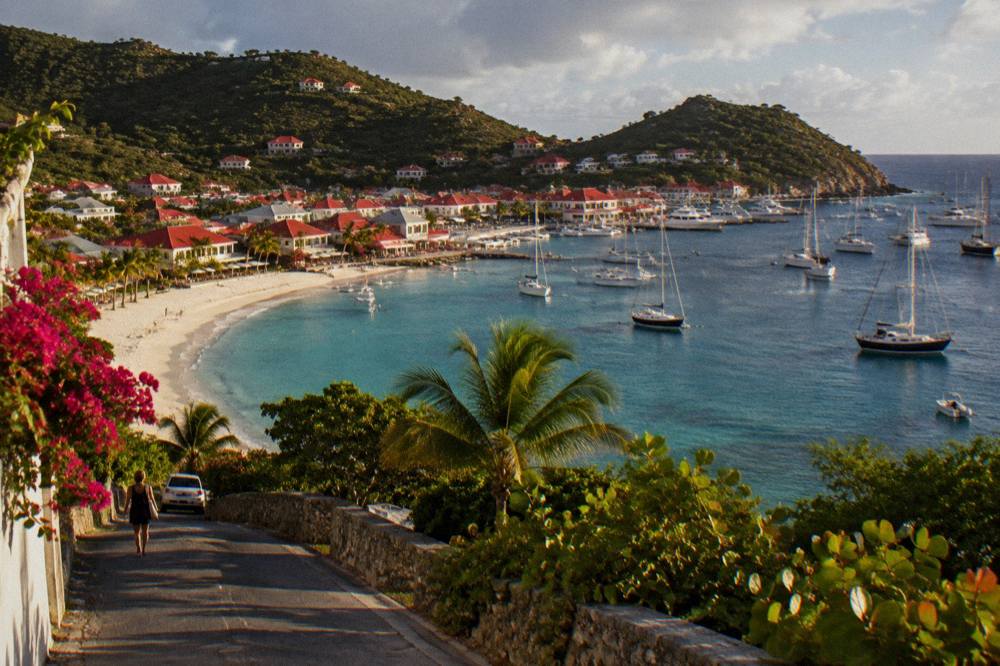
The honest version of the taxi day is a negotiated one. Beaches on St Barts are public and free, from Saint-Jean and Flamands to Saline, Gouverneur, Shell Beach, Colombier, Grand Cul-de-Sac, Lorient, Toiny, Corossol and the smaller coves, and a driver who knows your sequence can time pickups to a walk and a swim. Colombier deserves its own note: the beach has no direct road, and access is by boat or on foot along the coastal trail, so the taxi leg ends at the trailhead, and the alternative is arriving by water from St Martin as part of a boat day.
That water alternative is where the group sail fits. It runs from St Martin or Sint Maarten, spends the day around Gustavia's harbor approach, Colombier Beach and Ile Fourchue, and returns the same evening, replacing an entire day of taxi sequencing with one hull. It runs per-person on set dates from 12 May to 31 August 2027 on its listing, so check the operator's live listing for the dates you actually travel.
For stays rather than day trips, mix the modes. Walk Gustavia, whose center is compact. Taxi the evening legs when the surcharge is worth the convenience. Rent for the one big circuit day. And leave the west-coast water day to a boat, because the road simply does not reach Colombier's sand. The St Barts itinerary pages build full plans on exactly that logic.
If the plan tilts toward the water rather than the road, these are the three departures from St Martin and Sint Maarten that cover the St Barts day-trip spectrum, from a per-person sail to a full private charter to an overnight catamaran.
Common Questions About St Barts Taxis
Do St Barts taxis take credit cards?
Card acceptance varies by driver and no single policy governs the island's taxi fleet. Carry euros in cash for taxi rides, and ask when you book whether the driver takes a card. General card acceptance across St Barts businesses is covered separately, but for taxis specifically, cash is the safe assumption.
How do I get a taxi from the St Barts airport?
A taxi stand operates at Gustaf III Airport at Saint-Jean, meeting arriving flights. Because only small STOL turboprops use the 646 m runway and operations are daylight only, arrivals come in small waves and the stand clears between them. Have your accommodation's name written down, since drivers work from place names and area names rather than street addresses.
How much is a taxi in St Barts?
There is no single standard taxi fare. Fares follow official route-based tariffs tied to named journeys, with surcharges reported for trips after about 6:30 pm and on Sundays and public holidays. Ask the driver or your hotel to quote the exact route before the trip starts.
Is there Uber or a ride-hailing app on St Barts?
No ride-hailing service is described in any operator or tourism material for St Barts. The working channels are the taxi stands at the airport and the Gustavia quay, and phone bookings arranged through hotels and villa managers.
Do I need a taxi if I arrive by cruise tender?
Not for Gustavia itself. Cruise ships anchor offshore and tender passengers into the harbor center, and the town is compact enough to walk. A taxi matters only for beach runs beyond walking range, such as Saline, Gouverneur or Grand Cul-de-Sac, arranged at the quay or through a shore excursion.
Can a taxi take me to Colombier Beach?
Partly. Colombier has no direct road access, so a taxi can reach the trailhead but not the sand. The beach is reached on foot along the coastal trail or by boat, which is why many travelers do Colombier as part of a boat day from St Martin rather than as a taxi destination.