Traveling To St Barts With A Dog
St Barthelemy, usually written St Barts, is a small French island in the Caribbean, and it is a place where the rules around dogs are stricter than many visitors expect: every beach on the island is closed to dogs, under a municipal order that the environment agency restates on its own pages. This guide covers what the rules actually say, how to arrive with a pet by ferry or small plane, and how to plan a trip that works for a dog owner.
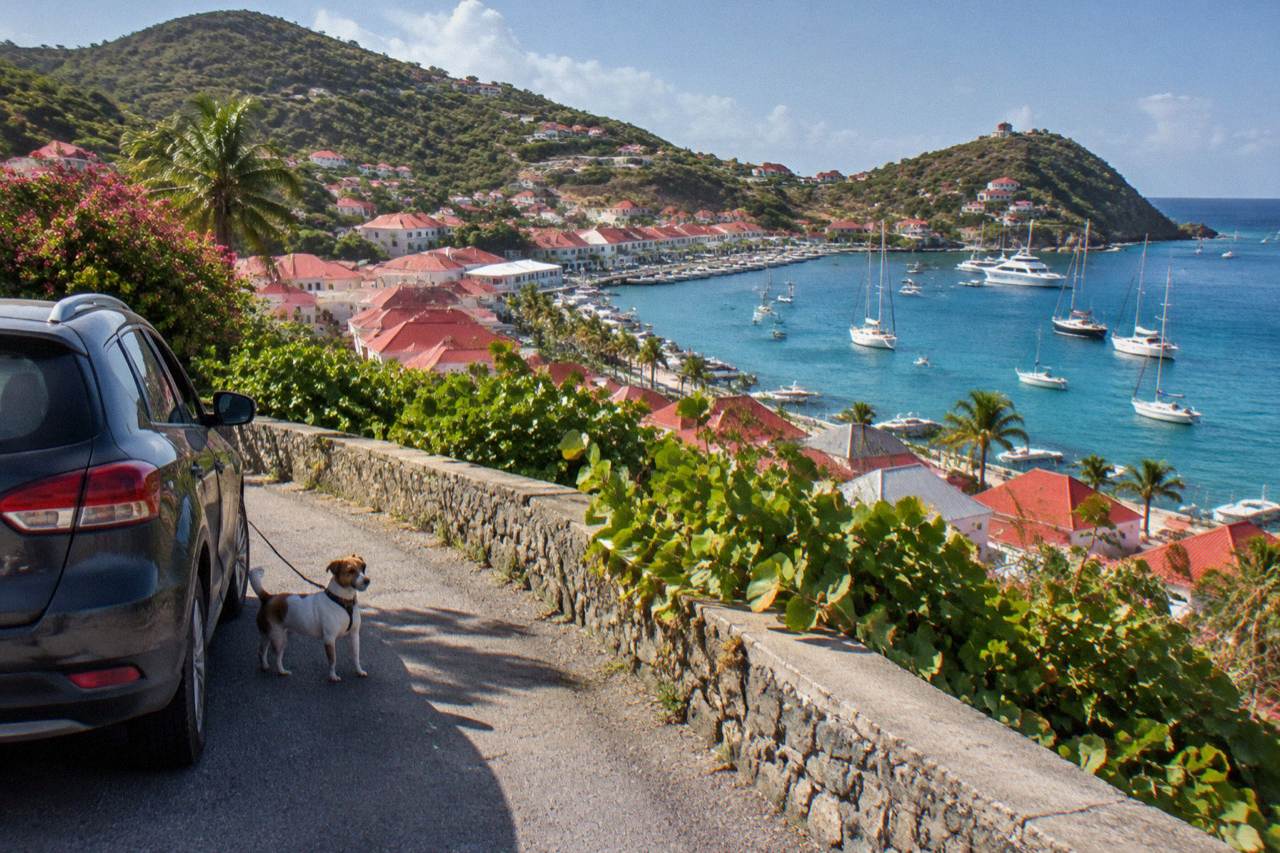
Dogs are banned from all beaches on St Barts, even on a leash, under municipal order number 86-27, and the marine reserve adds its own restrictions. Pets can still travel to the island with the right paperwork, but the practical reality is a car-and-road island for dog owners rather than a beach island.
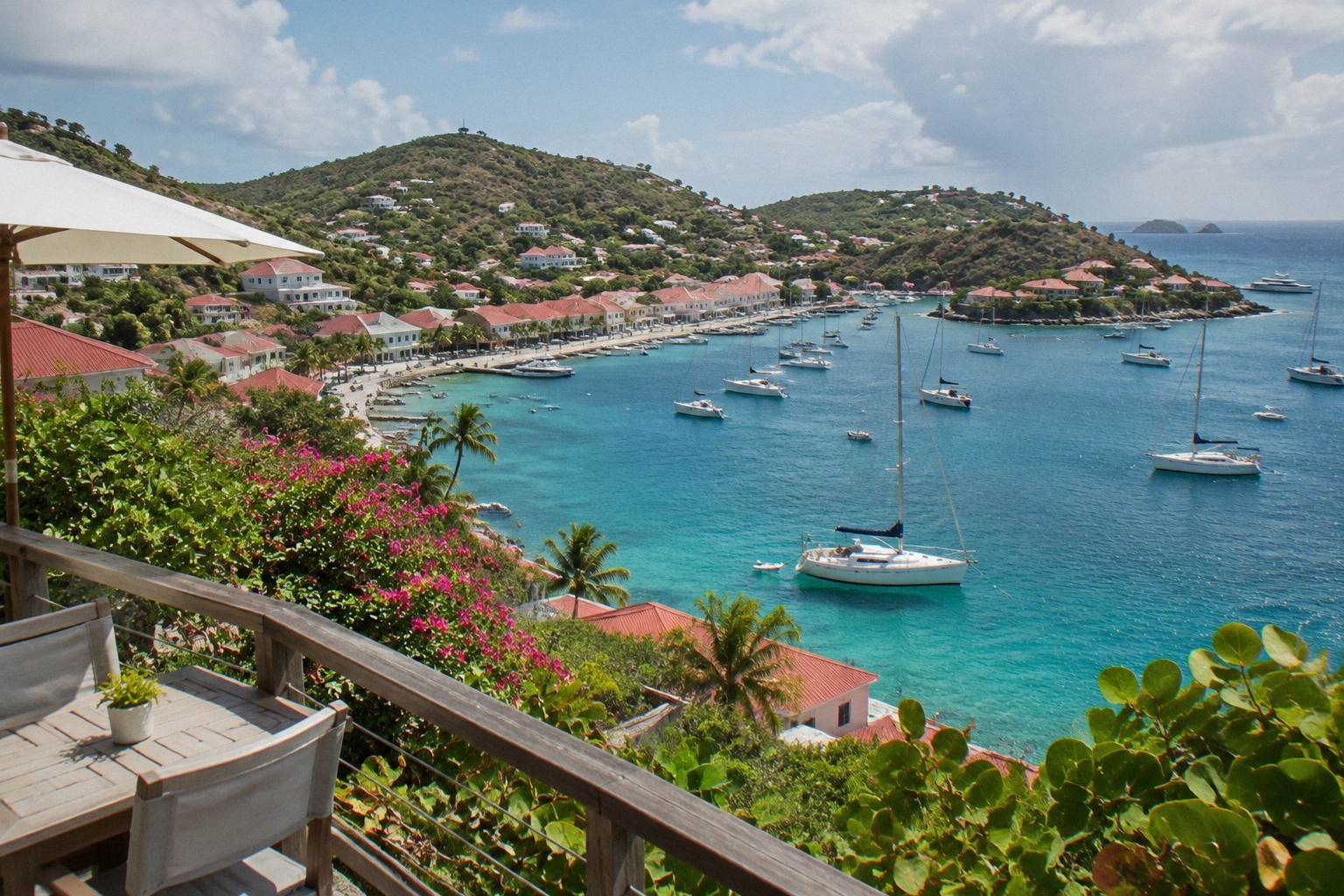
St Barthelemy, usually written St Barts, is a small French island in the Caribbean, about 21 square kilometres of hills, public beaches and turquoise water, with roughly 10,700 residents and Gustavia as its harbour capital. It is a French overseas collectivity, which means the rules that govern a visiting dog are French territorial rules, and the single most important one for a traveller is local: dogs are banned from every beach on the island, on a leash or off, and the ban is enforced as an infraction subject to a fine. The environment agency's beach page states the reasons plainly, protecting wildlife and preventing sand pollution, and signs stand at beach entrances.
That ban shapes everything else on this page. A dog owner can still have a full trip here: roads, viewpoints, walking trails and the streets of Gustavia are open public spaces where a leashed dog is a normal sight in a French territory. What is not available is the thing the island is famous for. This guide walks through the rules, the arrival logistics, the season and heat considerations, and the day-trip and tour options that fit around a dog-free beach day, with the sourcing the site applies everywhere: what a primary page says, not what a competing guide assumes.
Are Dogs Allowed On Beaches In St Barts?
No, dogs are not allowed on any beach in St Barts, on a leash or off, under municipal order number 86-27, and the environment agency's beach page confirms the ban applies island-wide, with signs at beach entrances and fines for violations. The stated reasons are wildlife protection and sand hygiene, and no beach is exempted, not even at dawn or in the off season.
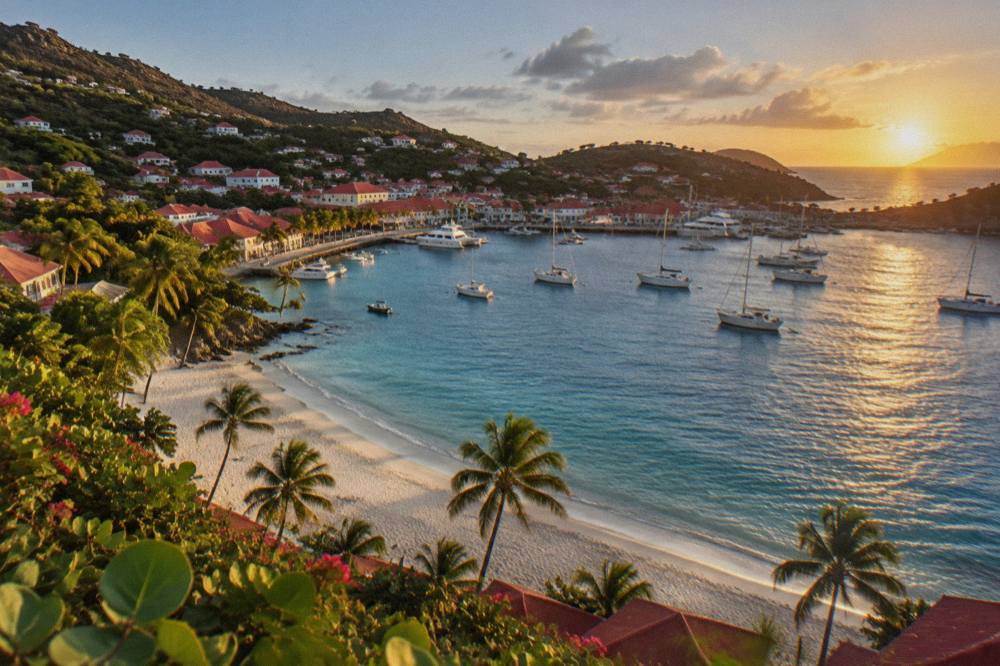
The order is old but it is not dormant. The territory's environment agency, the Agence Territoriale de l'Environnement, restates it on its beach page and explains the reasoning: dogs disturb ground-nesting birds, reptiles and nesting sea turtles, and dog waste poses a parasite and pollution problem in sand that has no municipal cleaning service behind it. Green and hawksbill turtles nest on these shores and are strictly protected, and a dog digging at the top of a beach is a direct threat to a nest.
There is no negotiating the edge case. A dog carried in a bag, a dog that stays on the boardwalk, a dog that only goes in the water for a minute: none of that is provided for. If a dog needs exercise, the practical answer is the island's roads and trails. The walking trails above Colombier and the viewpoints along the island's hilly interior are public land where no beach order applies, though the marine reserve's own zones carry separate rules and a leash is the safe default everywhere in a territory where livestock, wildlife and steep drops all share narrow paths.
| Rule | What It Says | Where It Applies |
|---|---|---|
| Municipal order 86-27 | Dogs banned from all beaches, on or off leash, subject to fine | Every beach on St Barts |
| Marine reserve rules | No dogs on beaches or in the water within reserve areas | Reserve zones, including Colombier Bay |
| Wildlife protection | No touching, chasing or feeding protected species, including turtles | Island-wide, on land and in water |
What Do The Marine Reserve Rules Mean For A Dog Owner?
The marine reserve, the Réserve Naturelle Nationale de Saint-Barthelemy, sets a 5-knot speed limit in its zones, bans jet skis and motorized water toys, lists 23 dive sites, forbids touching turtles and bars dogs from beaches and from the water inside its areas, all on the environment agency's regulatory-zones page. For a dog owner this means the reserve's bays, including Colombier, are closed to pets entirely.
The reserve covers five zones, including Colombier Bay and the waters around Ile Fourchue, and its rules sit on top of the island-wide beach order rather than replacing it. The agency's page is specific about dogs: none on the beaches, none in the water, inside reserve areas. It also prohibits collecting anything, shells, sand, coral or rocks, and bans drones near the reserve without authorization, which matters if a dog owner was planning to film a beach day from the air instead.
The practical takeaway is that the prettiest corners of the island are the ones a dog cannot enter. Colombier, reachable by trail or by boat, is inside the reserve. Ile Fourchue, a common lunch stop for boats from St Martin, is inside it too. A dog owner visiting those places does so without the dog, and the Colombier hike guide covers the trail on its own terms.
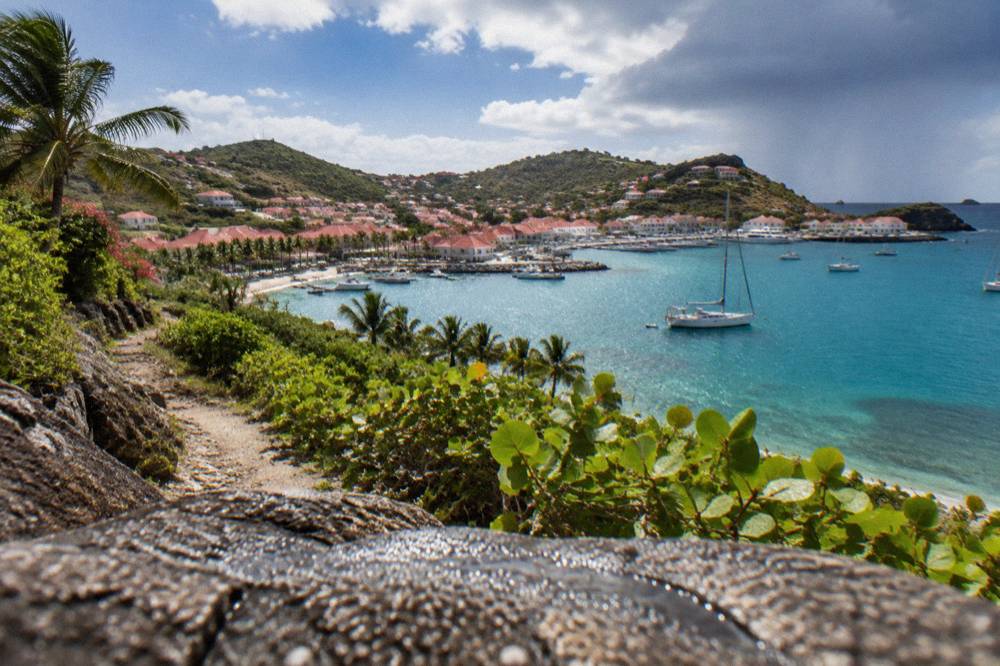
For the boat side, the island's day sails from St Martin visit exactly these reserve bays, which is why they are a poor fit for a pet. The group sail to Gustavia, Colombier and Ile Fourchue is the per-person option, departing from St Martin or Sint Maarten, and its live listing shows the current terms. Leaving a dog ashore for a day is easier than it sounds, because the same trip is the one most dog-free travel companions take.
The Nikki Beach charter and the overnight catamaran in that band are private options, both departing from the St Martin side, and a private boat is the one format where a pet policy is a question for the operator directly rather than a fixed rule. Ask before booking, not at the dock.
Can You Fly To St Barts With A Dog?
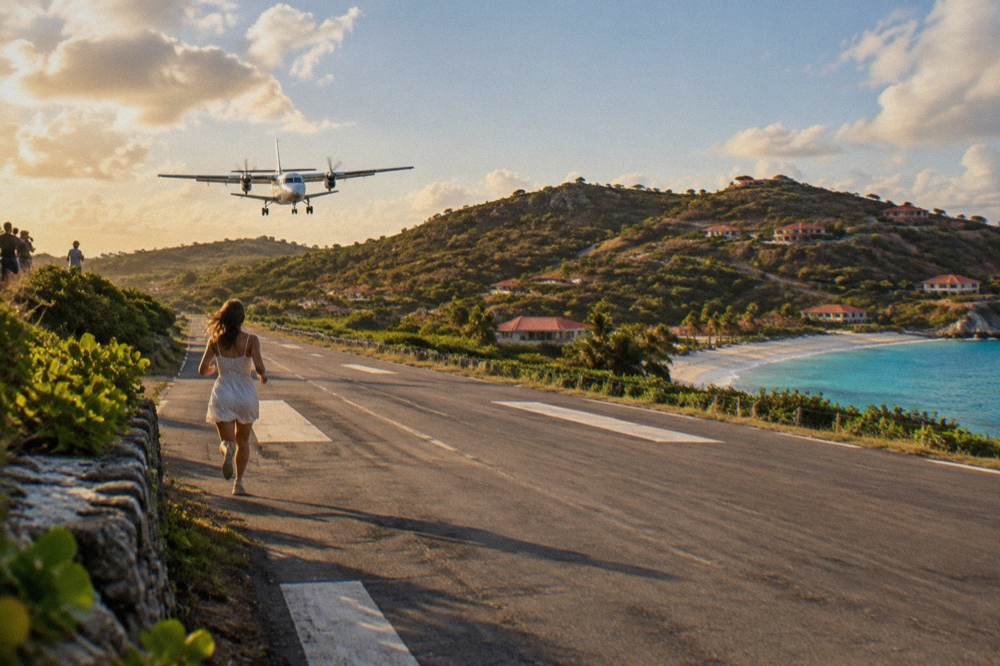
Yes in principle, but the airport is a constraint: Gustaf III Airport (SBH) has a 646 m runway served only by small STOL turboprops in daylight and visual conditions, so a pet flies in a small aircraft with a small hold, subject to the carrier's own rules and to French territorial entry requirements, which must be confirmed with the Collectivité and the airline before travel.
The airport detail matters more here than on any other page. There are no jets at SBH, only Twin Otters, Grand Caravans and similar aircraft, and the hop from St Martin is a short one. Pet space on those aircraft is genuinely limited and entirely at the operator's discretion, so the booking conversation happens early. The St Barts airport guide and the flights to St Barts page cover the carriers, St Barth Commuter from SXM, Grand Case and Pointe-a-Pitre, and Tradewind from San Juan and Antigua.
St Barts sits outside the Schengen area, and entry follows French overseas rules rather than Schengen systems. The specific animal-health requirements for bringing a dog into a French overseas collectivity, rabies documentation, microchipping, tapeworm treatment where applicable, are set by French veterinary authorities and can differ from mainland France. This page does not restate them, because requirements change and enforcement at the point of entry follows the strictest applicable rule. Confirm the current requirements with the Collectivité de Saint-Barthelemy, a French consulate, and the carrying airline, in that order, before booking anything non-refundable.
A wider caution: many visitors reach St Barts through St Martin, and a dog transiting Sint Maarten on the Dutch side is subject to Sint Maarten's own import rules on top of the French territorial ones. The two-island itinerary in how to get to St Barts needs a pet-specific version of its own planning, and that planning starts with the ferry question below.
| Arrival Route | Carrier Or Operator | Pet Consideration |
|---|---|---|
| SXM (Sint Maarten) to SBH by small plane | St Barth Commuter, Winair | Limited pet space, confirm with carrier before booking |
| SFG (St Martin) to SBH by small plane | St Barth Commuter | Same small-aircraft limits apply |
| Philipsburg to Gustavia by ferry | Great Bay Express | Operator pet policy and French entry rules both apply |
| Marigot to Gustavia by ferry | Voyager | Confirm pet carriage and paperwork when booking |
Can You Take The Ferry To St Barts With A Dog?
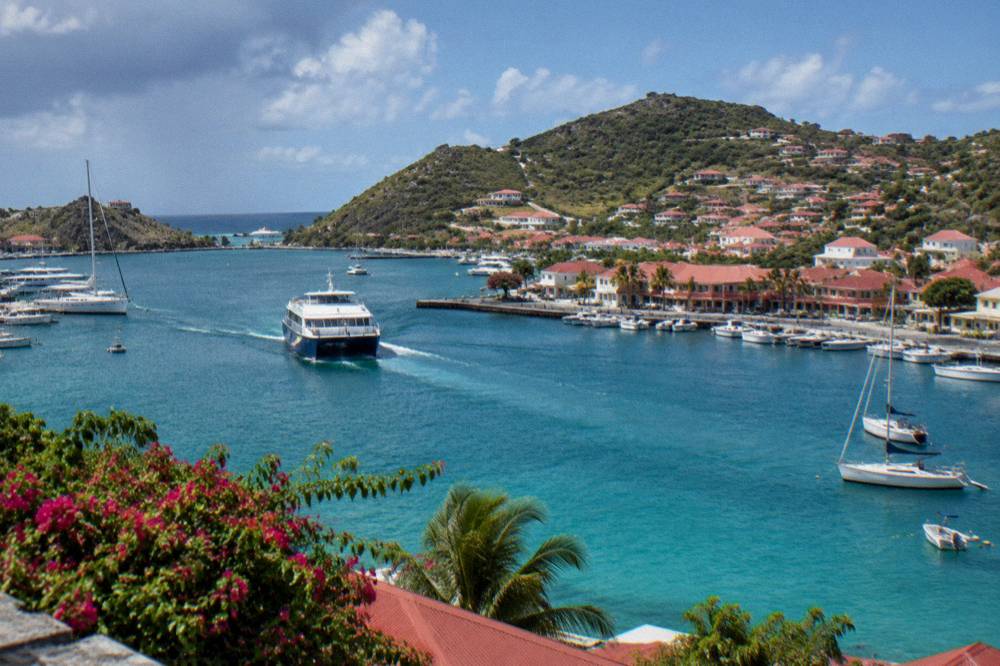
The two scheduled ferry operators to Gustavia are Great Bay Express from Philipsburg, about 45 minutes, and Voyager from Marigot, about 50 to 60 minutes, and both require a passport for human passengers, so a dog owner must confirm pet carriage and any carrier requirements directly with the operator when booking rather than assuming.
Both crossings are open-sea runs and can be rough; no operator promises a smooth one. A dog that travels well in a carrier on a boat is one question, a dog that does not is another, and the crossing length plus check-in time, Great Bay Express asks passengers to arrive early with check-in closing before departure, makes for a longer contained period than the sea time alone suggests. The ferry operators and schedule guide covers the routes in detail, and the SXM airport to St Barts ferry page covers the common connection from the international airport.
The paperwork side is the same as for the flight: the dog is entering French territory, so the French requirements for animal health documentation apply at Gustavia regardless of how the dog arrives. A ferry does not bypass entry rules; it only changes the port of entry. Build the plan on the operator's confirmation, not on another guide's claim that pets are or are not carried, because policies differ between the two companies and can change with the season.
For a traveller weighing flight against ferry with a dog, the honest summary is that both routes are possible in principle and neither is guaranteed in practice. The deciding factors are the operator's answer on the day, the dog's documentation, and the dog's temperament on a boat versus a small aircraft.
Where Can A Dog Actually Go On St Barts?
A leashed dog can go on the island's roads, its walking trails outside reserve restrictions, and the public streets of Gustavia and the villages, which are ordinary French territorial public spaces; what a dog cannot do is set paw on any beach, enter reserve zones, or join the boat trips to Colombier and Ile Fourchue, and no tour listed here carries pets as a listed feature.
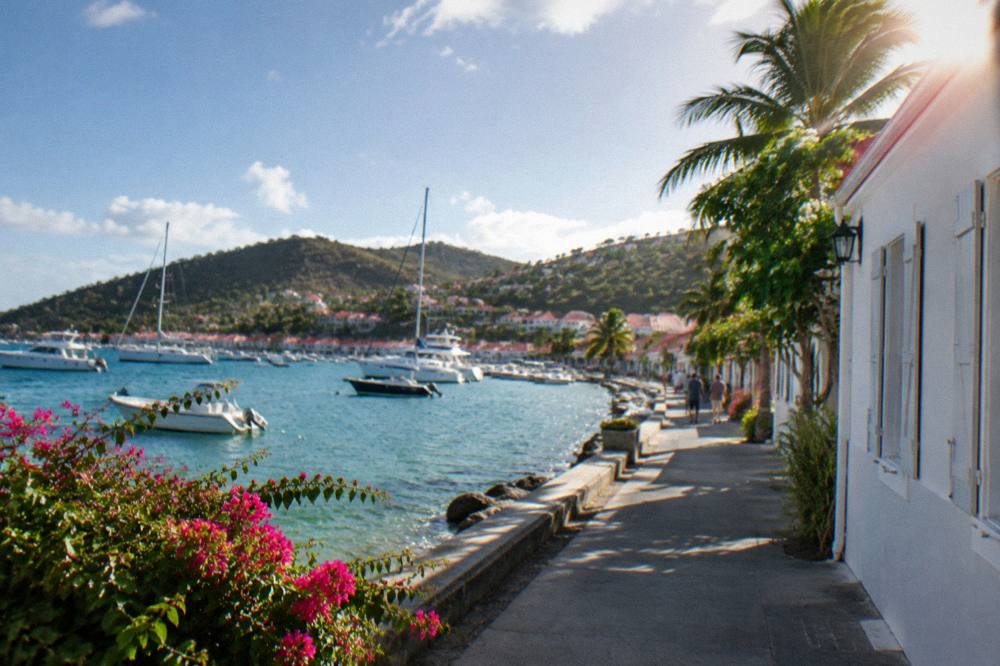
The usable dog territory is real even with the beaches closed. The island's road network climbs through hills with open viewpoints, and the trails described in the St Barts hiking trails guide are public paths where a leashed dog is a matter of common sense rather than a posted prohibition, with the reserve's own zones excepted. Gustavia itself is a walkable harbour town, and the streets around the harbour, the Wall House Museum end of the quay and the approaches to the forts are public space.
Heat is the daily planning constraint. The Meteo-France normals for St Barthelemy, 1991-2020, put the mean daily high at 28.5 C in January rising to 31.7 C in September, warm in every month, and a dog exercising on asphalt or a steep trail does that in temperatures the climate table makes predictable. Early mornings, water, and the shaded village streets are the pattern to plan around, in the same way local walkers do. Other pages covering the same trip are gathered on St Barthelemy Travel.
| Space | Dog Access | Authority |
|---|---|---|
| All beaches | Banned, leashed or not | Municipal order 86-27; environment agency |
| Marine reserve zones | Banned, land and water | Environment agency regulatory-zones page |
| Public roads and viewpoints | Open, leash advised | Standard public-space rules |
| Walking trails outside reserve zones | Open, leash advised | Standard public-space rules |
| Gustavia streets and harbour area | Open, leash advised | Standard public-space rules |
| Bookable boat tours listed here | No pet feature listed | Operator listings |
That charter, like every product listed here, departs from St Martin or Sint Maarten and is booked per group, which makes it the format where an operator conversation about a pet is most likely to get a straight answer. It is still a question to ask before payment, not a promise printed anywhere on this site.
Where Should You Stay In St Barts With A Dog?
St Barts has no hostel stock and a hotel market weighted to upscale properties, many of which close each autumn and reopen between mid-October and early November, and pet policies are set property by property, so a dog owner books by direct confirmation with the hotel or villa manager rather than by category, with WIMCO, Sibarth and St Barth Properties the named villa managers on the island.
The seasonal closure pattern matters for timing. A trip planned in the deep autumn shoulder overlaps the window when much of the island's hotel stock is closed, while the winter season brings the full market back. The St Barts hotels and where to stay in St Barts guides cover the properties and areas; neither assumes a dog, so the pet question is asked of each property directly.
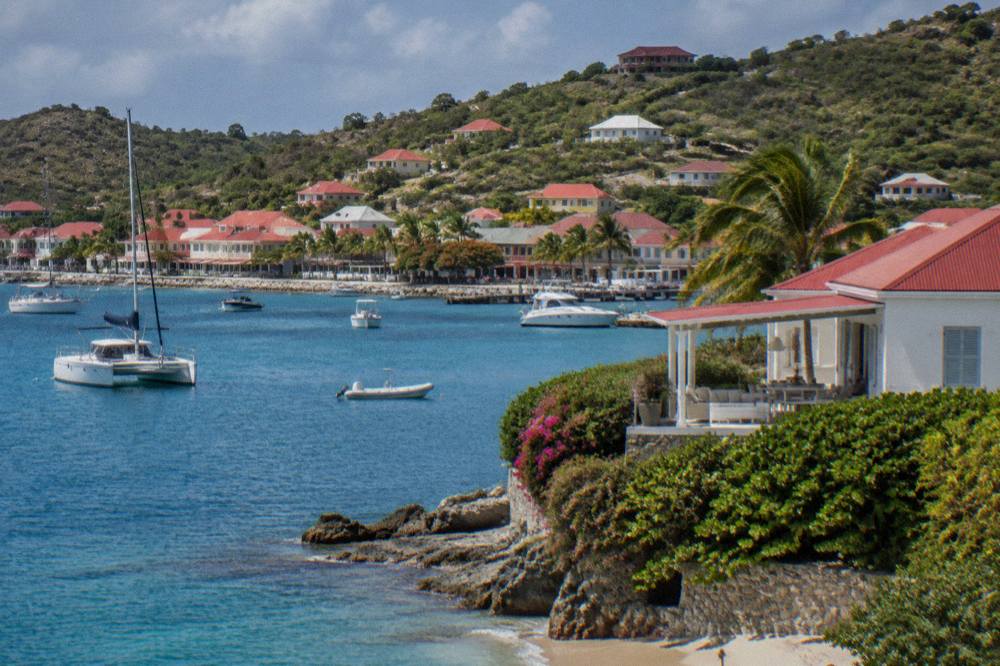
Villas are the format dog owners gravitate to in practice, for the obvious reason: a private garden versus a hotel lobby. The island has a large villa market, managed by established firms, and rates vary by season with the property's own booking page showing them. The St Barts villa rental guide covers how that market works. A villa with a fenced garden near a trail, not near a beach, is the configuration that fits the rules, since the beach ban starts at the sand.
Two cautions from the destination rules apply. Never book a property marketed as "pet friendly steps from the beach" on the strength of the marketing alone, because the beach half of that sentence runs into the island's dog ban the moment the dog reaches the sand. And confirm any pet fee with the property in writing.
How Do You Get Around St Barts With A Dog?
Rental cars are the standard way around the island: driving is on the right, roads are narrow, winding and steep with a 50 km/h island-wide limit and 30 km/h in Gustavia and St Jean, and the counters at SBH include Avis, Budget and Hertz alongside local agencies and Mini Moke specialists, so the pet question is a policy question for the rental company, asked at booking.
An open-sided Mini Moke, the island's emblematic rental, is a poor dog carrier on hot days; a small closed car is the practical choice for a dog in a climate where every month is warm. The St Barts car rental guide covers the companies and vehicle types, and the getting around St Barts page covers taxis and the road network. Taxis exist, but a car booked for the whole stay is the format that makes a dog workable, since the alternative is negotiating taxi after taxi with an animal.
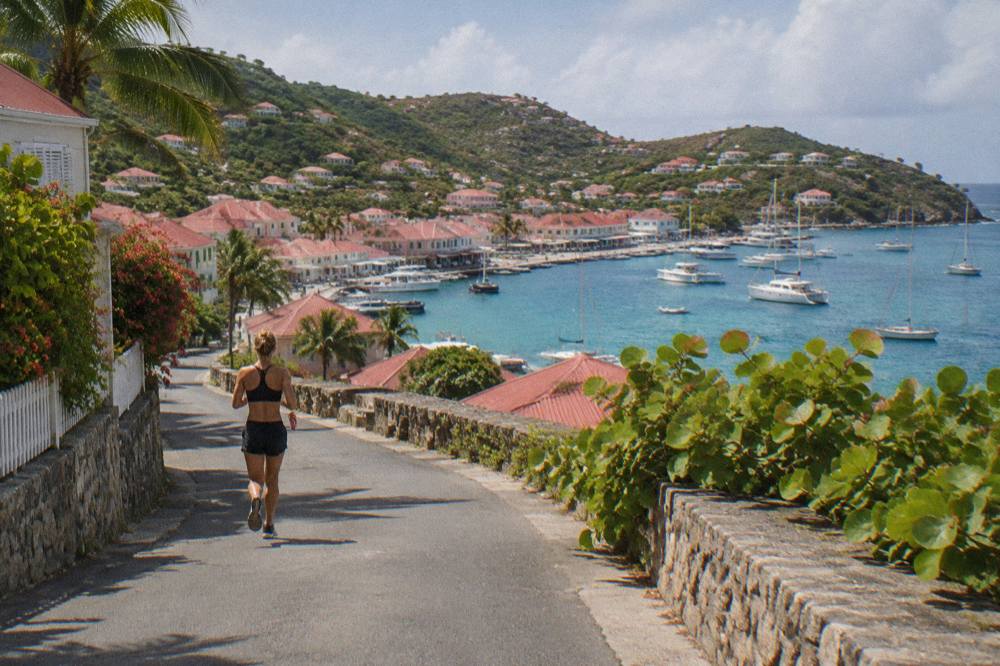
Parking in Gustavia is limited in high season, so plan town visits with the dog outside the busiest hours, and note that leaving a dog in a parked car is not an option in any month on this island. The rhythm that works is the one local dog owners use: exercise early on the trails or quiet streets, town in the morning, and the warmest hours at the villa or under shade with water.
| Transport | Pet Fit | Note |
|---|---|---|
| Rental car (closed compact or small SUV) | Good fit | Policy confirmed with the company; never leave a dog parked |
| Mini Moke (open-sided) | Poor fit in heat | Exposed sun, minimal protection |
| Taxi | Possible | Confirm carriage when booking |
| Boat tours | Not listed for pets | Ask the operator before booking |
| Beaches on foot | Not available | Island-wide dog ban |
What Day Trips Work Around A Dog-Free Beach Day?
The bookable day trips to St Barts all depart from St Martin or Sint Maarten and visit exactly the reserve bays a dog cannot enter, so the workable pattern is a split trip: the dog stays at the villa or hotel for the boat day, and the dog-free traveller joins a group sail or private charter from the St Martin side, returning the same evening or the next day for the second catamaran option.
The Boomerangs group sail and snorkel is the per-person product, running 12 May to 31 August 2027 on its listing, and it visits Gustavia, Colombier and Ile Fourchue in one day. Because it is a St Martin departure, a traveller staying on St Barts either bases the dog-free day on an overnight in St Martin or arranges the logistics around the ferry schedule. The St Barts to St Martin guide covers the reverse direction for planning the St Martin night.
The private alternatives are per-group products: a private charter and a private charter from St Martin, each with its own listing terms. A private charter is also the format where, if a pet were ever to go to sea, the conversation happens, though no pet carriage is listed on any product here and the marine reserve's no-dog rules apply in its zones regardless.
For travellers who want more island context around the boat day, the site's overview at things to do in St Barts collects the full set, and this page's companion pieces on St Barts with kids and the first-timer itinerary cover the non-pet planning a mixed group still needs.
Is St Barts Worth Visiting If You Cannot Take The Dog To The Beach?
Yes, provided the trip is planned around the rules rather than against them: St Barts offers public trails, hillside viewpoints, a walkable harbour capital in Gustavia, warm sea for the humans, and a villa market with gardens, while the dog-free beach and boat days are covered by tours that depart from St Martin, so a dog owner splits the trip between island days with the dog and water days without it.
The honest framing for a dog owner is that St Barts rewards a traveller who accepts the constraint early. The island's beauty is not only on the sand: the road over the hills above Flamands, the view down to Colombier from the trail, the late light on the harbour from the sunset spots the island is known for. A dog on a leash at a viewpoint misses nothing a dog on a beach would gain, and the humans swim on their own schedule.
The failure mode is the traveller who arrives with a dog assuming a French Caribbean island runs on loose beach norms and discovers the signs at the first beach entrance. The rules here are stated on primary pages, and they are enforced. Planning within them, a dog and St Barts coexist comfortably, on the trails, in the villages and in the garden of a villa, while the beach days belong to the rest of the party.
Common Questions About Traveling To St Barts With A Dog
Are dogs allowed on beaches in St Barts?
No. Municipal order 86-27 bans dogs from all beaches on the island, on a leash or off, with signs at entrances and fines for violations, and the environment agency restates the ban on its beach page.
Can I take my dog on the ferry to St Barts?
The two scheduled operators are Great Bay Express from Philipsburg and Voyager from Marigot, and each sets its own pet policy. Confirm pet carriage, carrier requirements and French territorial animal-health paperwork with the operator when booking.
Can I fly to St Barts with a dog?
In principle yes, but Gustaf III Airport's 646 m runway is served only by small STOL turboprops with limited pet space, and entry follows French overseas rules. Confirm with the carrying airline and the Collectivité de Saint-Barthelemy before booking.
Where can I walk my dog on St Barts?
Public roads, hillside viewpoints, walking trails outside reserve restrictions, and the streets of Gustavia and the villages. No beach, and no marine reserve zone, is open to dogs.
Are there pet-friendly hotels in St Barts?
Pet policies are set property by property across the island's hotel and villa market. Ask each hotel or villa manager directly, and get any pet fee in writing before booking.
Can my dog join a boat tour to St Barts?
No tour listed here lists pet carriage, and the marine reserve bars dogs from its zones, including Colombier Bay. A private charter is the only format where the question is worth asking, and always before payment.