Parking In St Barts
St Barthelemy, usually written St Barts, is a small French Caribbean island where the car you rent is almost always small, the roads are narrow and steep, and the question of where to leave the car shapes every day of the trip. This guide covers parking, driving and the alternatives.
St Barts is about 21 square kilometres with a compact capital in Gustavia, right-hand driving, a reported 50 km/h island speed limit and 30 km/h in Gustavia and Saint-Jean, and rental fleets built around small cars. Parking is mostly street parking and public lots, with no published tariff; the practical answer is a small vehicle, early planning on harbour days, and walking inside Gustavia's centre.
St Barthelemy, written St Barts in every heading on this site, is a French overseas collectivity in the Caribbean covering about 21 square kilometres, with Gustavia as its harbour capital and roughly 10,700 residents. It is an island of hills, public beaches and narrow roads, which makes the question of parking less about finding a garage and more about what you drive, when you drive it, and whether you need to drive at all. This page covers the driving rules reported by villa managers and rental guides, the rental brands confirmed at the airport, the climate figures from Meteo-France, and the boat-based alternatives that remove the car question completely. For the wider picture of vehicles themselves, see the companion guide to renting a car on St Barts, and for the arrival routes that put you behind the wheel in the first place, how to get to St Barts.
How Does Parking In St Barts Actually Work?
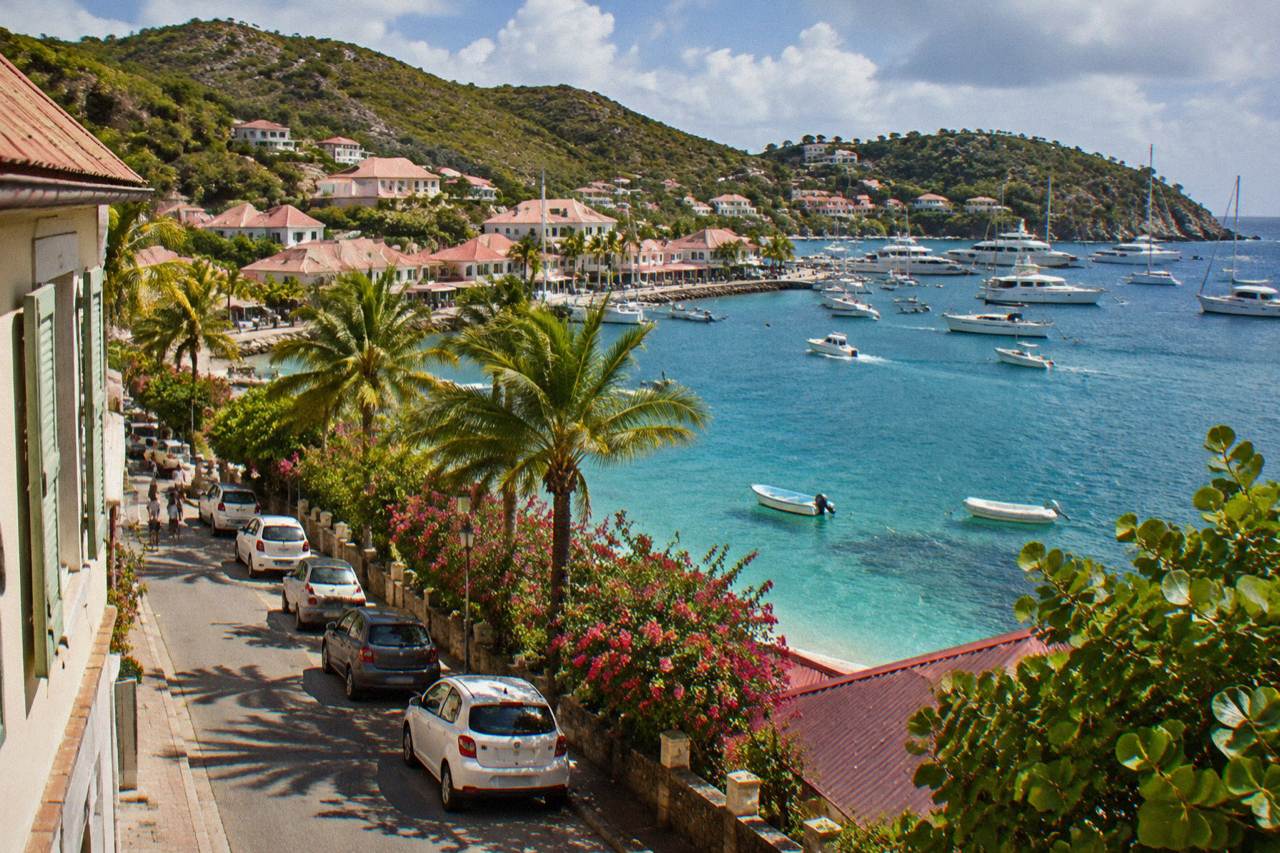
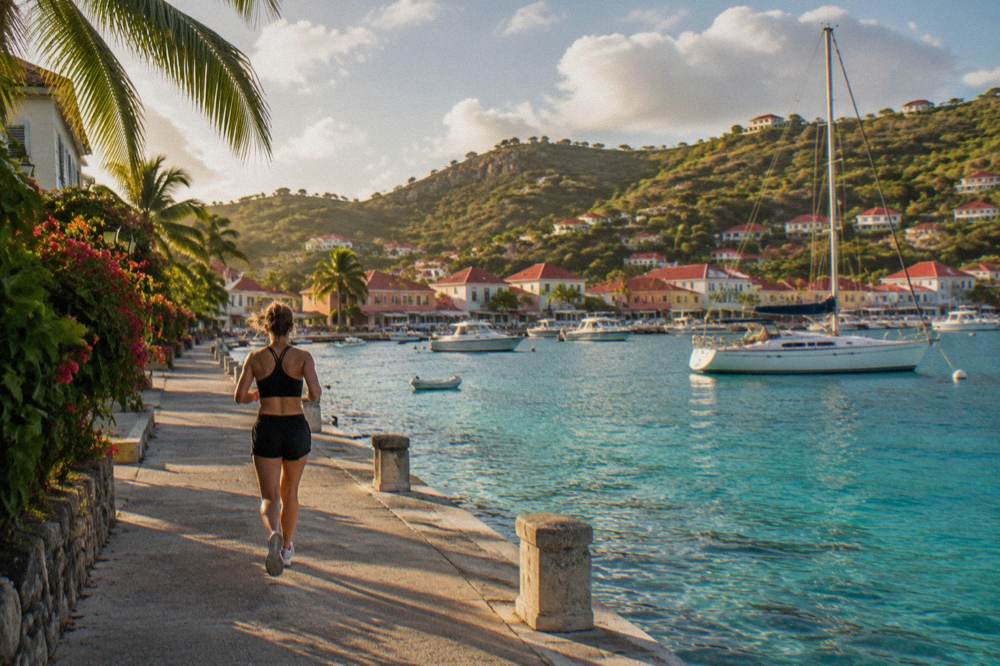
Parking on St Barts is mostly street parking and open public areas rather than multi-storey structures, without any published tariff, and the layout of the island pushes cars toward small vehicles and short stays in town. The centre of Gustavia is compact enough to cover on foot, which is the single most useful fact for anyone worried about a car. There is no indication that parking is scarce or easy.
The substance here is structural. Gustavia is the island's capital and harbour town, a ring of streets around a bay, and its centre is walkable in the plain sense that distances between the harbour, the shops and the shell of the old waterfront are short. No walking time appears here. Rental and villa-manager guides describe street parking in town and public lots, including an open area near the stadium, as the practical options, and they advise arriving earlier in the day for harbour-side spots in the winter season. That is advice from those guides, not a measured figure, and it is the honest version of what a first page of search results usually oversells.
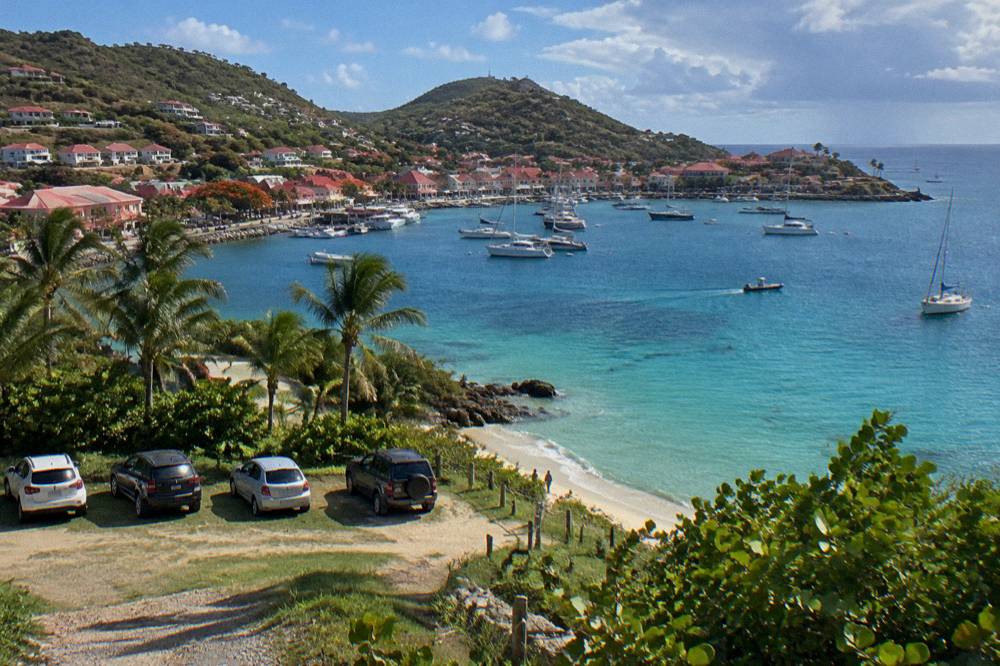
The rest of the island is a different problem. Beaches such as Gouverneur, Saline and Colombier sit at the ends of roads that climb over hills, and each has an area at the trailhead or road end where cars gather. The environment agency's beach rules apply once you leave the vehicle: dogs are prohibited on all beaches island-wide under a long-standing municipal order, even on a leash. So the car question and the beach question are linked, and the answer to both starts with choosing the right vehicle, which the next section covers.
What Kind Of Car Makes Parking On St Barts Easiest?
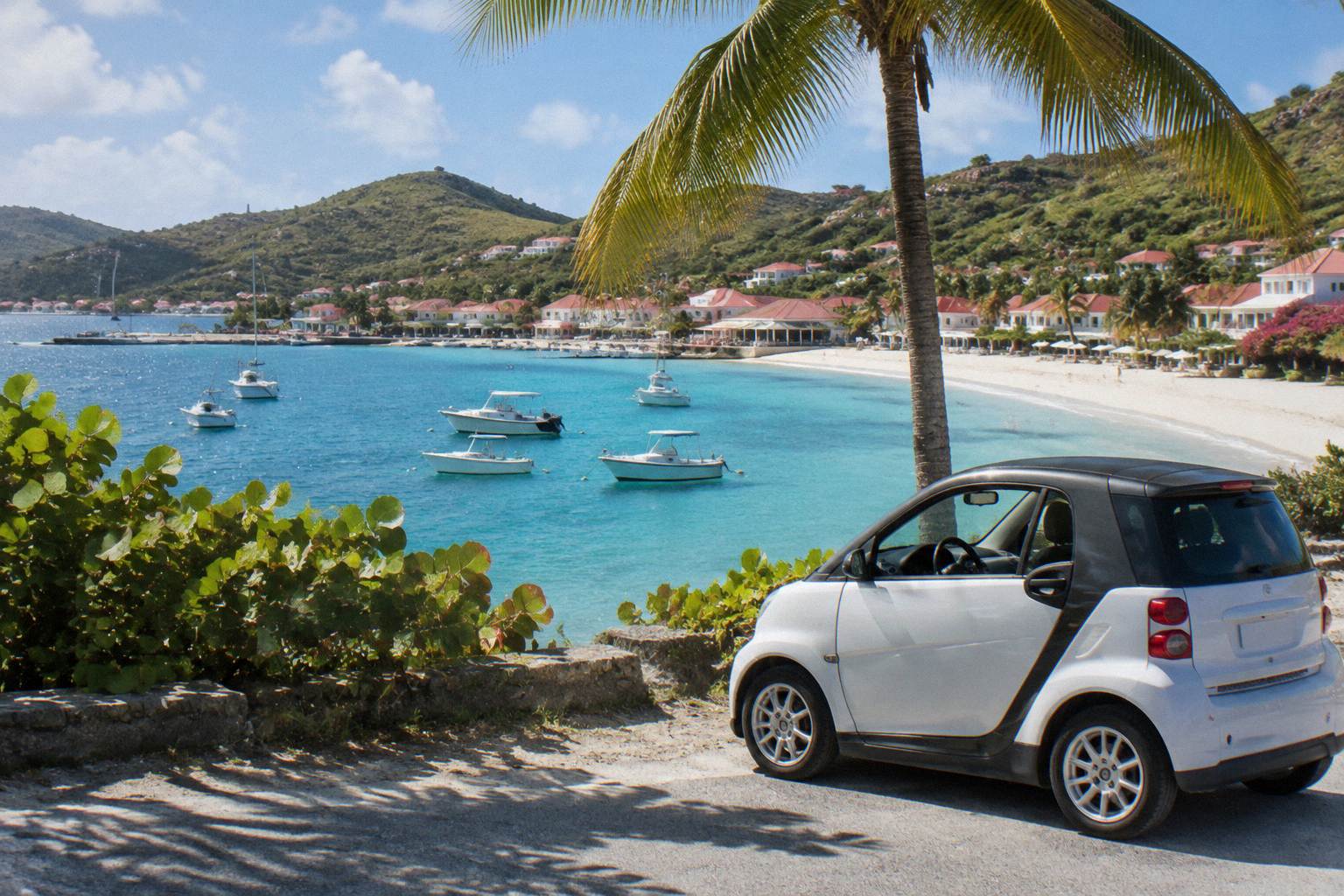
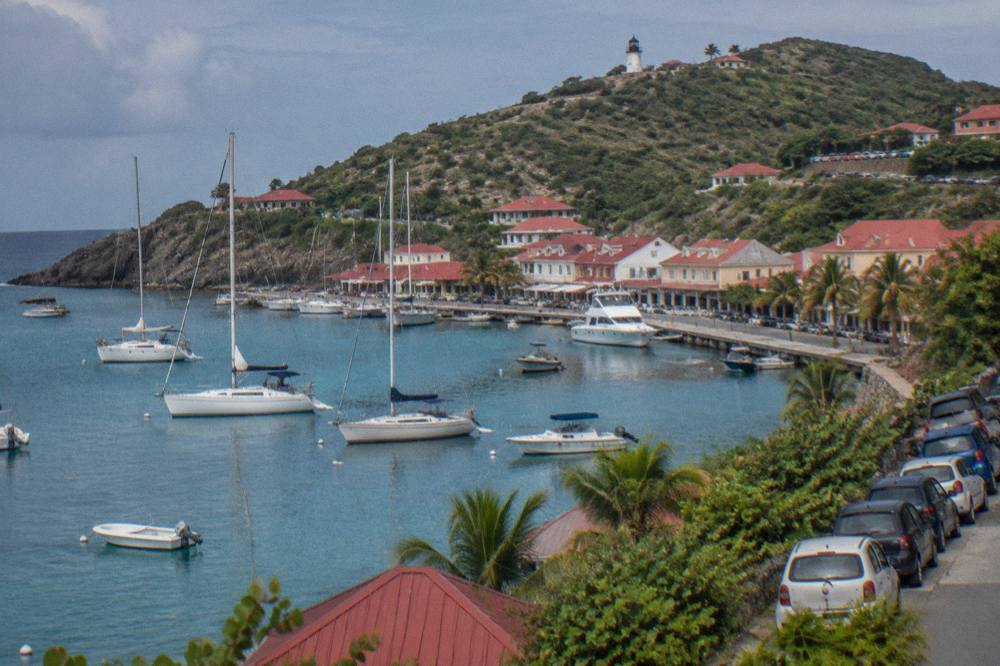
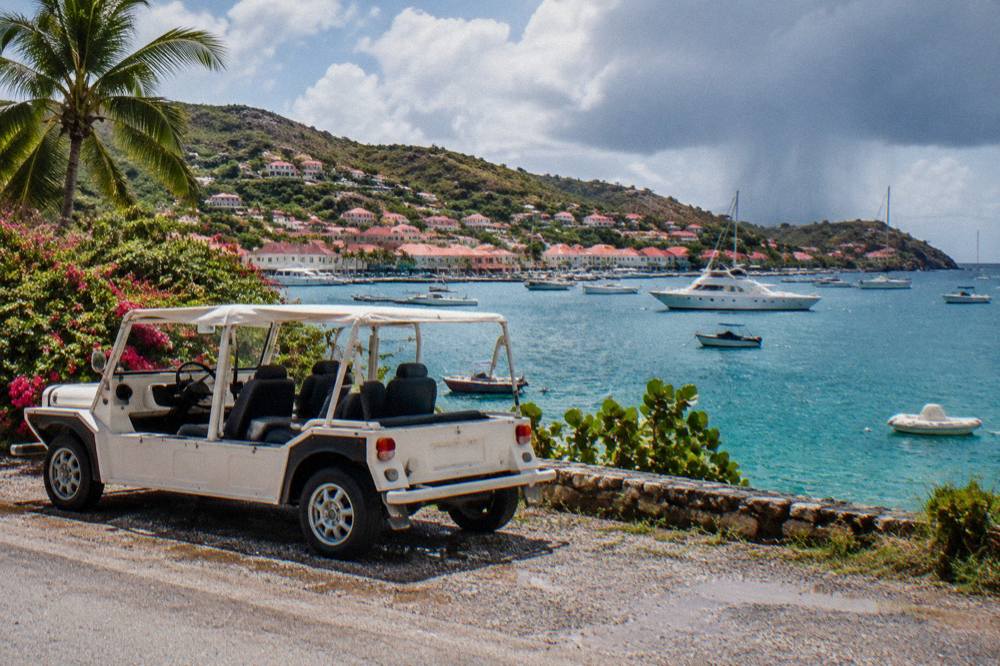
Small vehicles dominate St Barts rental fleets because roads are narrow, winding and steep, higher clearance helps on island surfaces, and compact dimensions matter wherever cars are left at road ends and along streets. Reported typical rentals include the open-air Mini Moke, Smart cars, small compacts such as the Kia Picanto and Fiat 500, and small SUVs such as the Suzuki Jimny. Automatics predominate. The rental guides recommend smaller, higher-clearance vehicles for these conditions.
Avis, Budget and Hertz all have counters at Gustaf III Airport. Local agencies operate alongside them, and Mini Mokes come mostly through those local operators rather than the international brands. Rental prices, minimum driver ages and deposit requirements in St Barts are not standardized, and the minimum age varies by company, so the right move is to confirm terms directly with the chosen agency before travel.
A practical note on licences: rental guides state that a valid licence from your home country is generally accepted, with an International Driving Permit typically needed only for licences in non-Roman alphabets, and that a passport and a credit card in the renter's name are standard requirements. Delivery to hotels and villas is commonly available from local companies, which matters for parking because a delivered car can be handed back before you spend an evening in Gustavia on foot.
| Rental factor | Notes |
|---|---|
| Brands at SBH airport | Avis, Budget and Hertz confirmed on a supplier page |
| Local agencies | Operate alongside the brands, main source of Mini Mokes |
| Typical vehicles | Mini Moke, Smart Fortwo, Kia Picanto, Fiat 500, Suzuki Jimny |
| Transmission | Automatics predominate, manuals sometimes available |
| Recommended type | Smaller, higher-clearance vehicles per rental guides |
| Delivery | Commonly available to hotels and villas |
What Are The Driving Rules That Shape St Barts Parking?
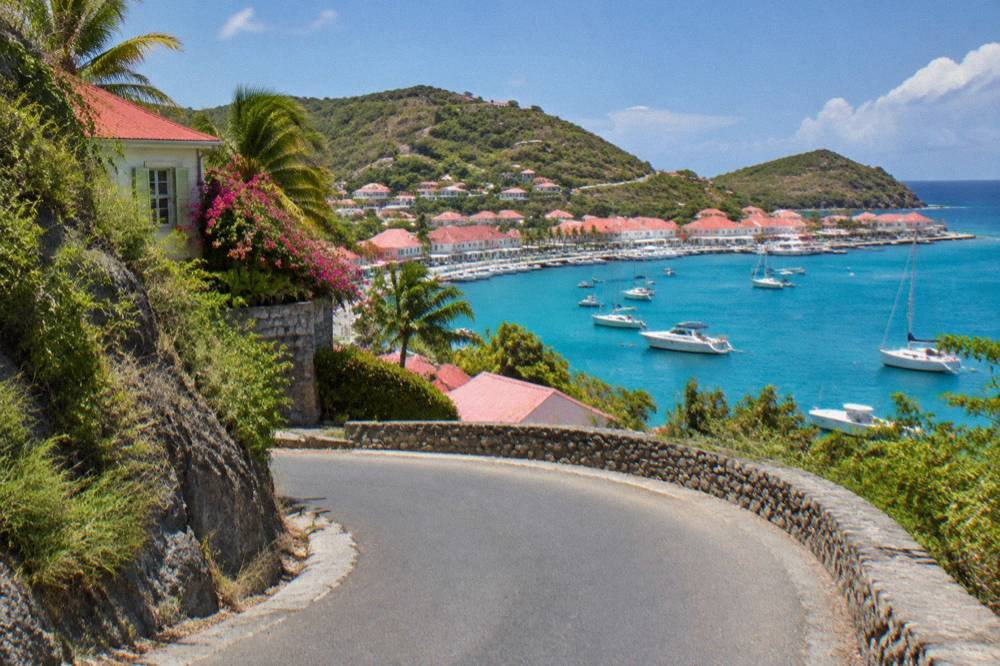
Traffic on St Barts drives on the right, the island speed limit is reported at 50 km/h with 30 km/h in the populated areas of Gustavia and Saint-Jean, and there is one roundabout near the airport with minimal traffic lights. French right-of-way rules apply at unsigned intersections, the priorite a droite rule that surprises drivers from left-hand-drive-by-habit jurisdictions. Roads are narrow, winding and hilly, with steep grades that the guides say can call for low gear.
Those rules matter for parking because they explain behaviour on the road's edges. On a road barely wide enough for two small cars, where you stop and how you stop affects everyone. The guides' advice is consistent: park clear of bends and crests, never block a gate or an access track, and respect signed prohibitions, which use French wording. That is not legal advice from this site, it is what the rental and villa-manager guides report, and French traffic rules govern as a matter of the island's status.
| Driving rule on St Barts | Reported figure or status |
|---|---|
| Side of the road | Right |
| Island speed limit | Reported 50 km/h |
| Town speed limit | Reported 30 km/h in Gustavia and Saint-Jean |
| Roundabouts | One, near the airport |
| Traffic lights | Minimal on the island |
| Right of way | French rules, priorite a droite at unsigned junctions |
The airport itself deserves a mention here, because the arrival sets the tone. Gustaf III Airport, also called Remy de Haenen, has a 646 m runway serving small STOL turboprops only, in daylight and visual conditions. No jets land there. The practical chain is: a gateway flight into St Martin, San Juan, Guadeloupe or Antigua, then a small plane or the ferry. The St Barts airport guide covers the arrival, and the ferry operators and schedule page covers the sea alternative, with Great Bay Express from Philipsburg at about 45 minutes and Voyager from Marigot at about 50 to 60 minutes, figures given as approximate by the operators. The crossing can be rough, and no source promises otherwise.
There is a category of traveller for whom none of this applies: the day visitor arriving by boat. Cruise ships tender into Gustavia, there is no cruise pier, and the tender passengers of the small luxury vessels that call in winter step ashore into a walkable town, as the cruise port guide explains. For them, parking is somebody else's problem, and the pattern of regulated, tender-only arrivals is part of why the town stays as compact as it is.
That idea, arriving without a car at all, is worth taking seriously, and the next two sections do.
Can You Visit St Barts Without Ever Parking A Car?
Yes, and the list of boat products makes the case: every bookable tour on this site departs from St Martin or Sint Maarten and visits St Barts by sea, so a visitor based on the Dutch or French side of the shared lagoon can spend a full day on the island without renting anything. The featured option is the Boomerangs group sail and snorkel, a day trip from St Martin calling at Gustavia, Colombier Beach and Ile Fourchue, with all figures on the operator's live listing.
The route is a genuine answer to the parking question. Colombier is the island's most storied beach for boat arrivals, reached by water or on foot, and Ile Fourchue sits inside the marine reserve. The environment agency's regulatory-zones page lists the rules that govern both: a 5-knot speed limit inside reserve zones, a ban on jet skis and other motorized and electric water devices, no anchoring or fishing in the enhanced-protection areas, no collecting of coral, shells or sand, and no touching or chasing turtles. Those rules apply to the boats too, and a sail under them is a quieter way to see the coast than any road.
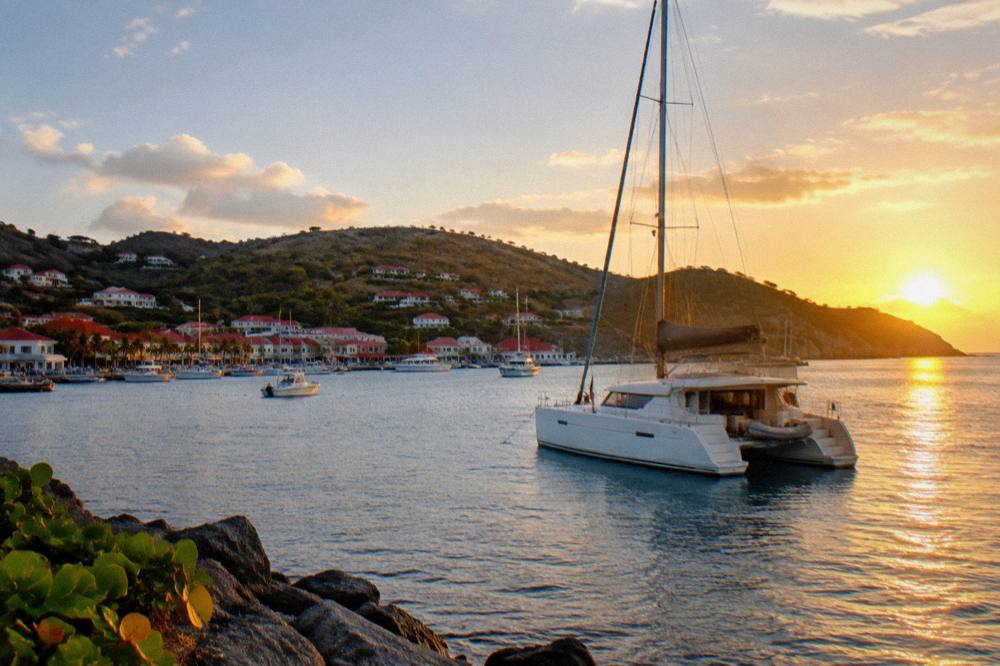
For a private version of the same day, the 7.5-hour private sailboat from St Maarten carries up to 8 guests on its listing, and the overnight catamaran stretches the idea across two days and one night, which turns the St Barts visit into an anchorage rather than a parking run. Neither involves a car on the island at all.
| Marine reserve rule | Source |
|---|---|
| 5-knot speed limit in reserve zones | Environment agency regulatory-zones page |
| No jet skis, seabobs or towed devices | Environment agency regulatory-zones page |
| No touching turtles, corals or protected species | Environment agency regulatory-zones page |
| No dogs on beaches or in the water | Environment agency beach rules, municipal order |
| No collecting coral, shells, sand or rocks | Environment agency regulatory-zones page |
| Vessels over 25 m excluded from Colombier and Fourchue bays | Environment agency regulatory-zones page |
Where Does A Rental Car Fit Into A St Barts Trip?
A rental car fits best in the middle of a St Barts stay rather than at its edges: arrival and departure already run through St Martin or a small plane, and the days that genuinely need wheels are the beach-hopping days when you want Gouverneur, Saline, Flamands and Colombier's trailhead in one loop. The rental guides recommend booking well in advance for the December to April period and confirming terms directly with the company. No price, deposit or age figure is printed.
The pattern of the island's year matters for planning. High season runs roughly November to April, and the event calendar concentrates attention in that window: the St Barth Gourmet Festival runs 9 to 15 November 2026, the Music Festival runs 8 to 18 January 2027, and the Bucket Regatta falls in mid-March. On those dates the island's population of cars, yachts and visitors swells together, and the villa-manager guides' advice about early starts for harbour-side spots in Gustavia is at its most relevant. None of this is a prediction; it is the calendar the organisers publish.
Autumn is the counterweight. Many hotels and restaurants close each year in the late-August to October window and reopen between mid-October and early November, a recurring pattern rather than a dated notice, and villas stay available year-round. A visitor in that quieter period faces gentler conditions on the same roads, though the Meteo-France normals for St Barts show why October is the low point of the calendar: it is the wettest month in the 1991-2020 normals at 135.6 mm, against 38.4 mm in February, the lowest month in the table.
| Month | Mean daily high C | Mean daily low C | Rain mm |
|---|---|---|---|
| January | 28.5 | 23.5 | 52.6 |
| February | 28.6 | 23.3 | 38.4 |
| April | 29.8 | 24.2 | 50.9 |
| July | 31.2 | 26.0 | 80.4 |
| October | 31.4 | 25.8 | 135.6 |
| December | 28.9 | 24.1 | 79.2 |
Figures are Meteo-France climate normals, 1991-2020, for the St Barthelemy station. Hurricane season runs 1 June to 30 November with its peak from mid-August to mid-October.
What Are The Alternatives To Driving And Parking On St Barts?
The alternatives are walking inside Gustavia's compact centre, taxis for point-to-point trips, and boat days that remove the car entirely. Gustavia's centre is described as compact and walkable with no distance or time figure attached. Taxis operate on the island, and the fare is a conversation with the driver or the stand. The boat list is complete.
Taxis deserve one honest paragraph. No taxi fare for any St Barts route appears in a primary source, the guides note surcharges in the evenings and on Sundays, and the advice that follows is procedural, not financial: agree the fare before the ride. That is the whole picture, and any page printing a euro figure for a Gustavia to Saint-Jean ride is guessing.
The boat alternative scales from a single day to an overnight. The 2-day, 1-night private catamaran from St Martin carries up to 4 guests per its listing and anchors the experience in the island's waters rather than its roads. For a fuller private day, the 8-hour private charter and the Nikki Beach private charter from Sint Maarten round out the trip list, all departing from the St Martin or Sint Maarten side. Every product listed here leaves from there, never from St Barts itself, which is the structural reason a boat day is a car-free day.
For visitors who do drive, the shopping dimension is worth flagging: Gustavia's boutiques sit inside that walkable centre, which is why the shopping guide pairs naturally with a park-once, walk-all-day approach. Leave the car at the edge of town, buy what you like, and carry it back on foot.
What Should You Know Before You Drive On St Barts?
Four things carry the weight: drive on the right with French right-of-way rules in force, respect the reported 50 km/h island limit and 30 km/h in Gustavia and Saint-Jean, choose the smallest vehicle that suits your group because the roads are narrow and steep, and plan town visits around walking rather than moving the car. No source gives a parking tariff, a fine amount or a scarcity statistic for St Barts.
Insurance and inspection are the two practical items the rental guides emphasise. Inspect the vehicle thoroughly at pickup, photograph any existing damage, and confirm what the coverage includes, because on an island of steep grades and tight passing places, small contact events are the ordinary insurance claim. Booking well in advance matters most for the December to April window, when fleets are fully committed. These are the guides' recommendations, reported as such.
The seasonal rhythm of the island's calendar is the last planning layer. Beyond the dated events already listed, the New Year period draws a large yacht fleet to Gustavia, covered in the New Year's Eve guide, and winter's clear days are when the island's roads carry the most traffic. The summer window, including the per-person group sail that runs only from 12 May to 31 August 2027 on its listing, is the quieter counterpart. Wedding parties, covered separately in the weddings guide, often solve transport for guests as a group rather than car by car.
| Arrival and car-free option | Route | Basis |
|---|---|---|
| Great Bay Express ferry | Philipsburg, Bobby's Marina, to Gustavia, about 45 minutes | Operator figure, approximate |
| Voyager ferry | Marigot terminal to Gustavia, about 50 to 60 minutes | Operator and port figure, approximate |
No ferry timetable, no flight time in minutes beyond the approximate ferry figures above, and no fare for any of these appears in a primary source, so none is printed. Timetables are dynamic; the operators' own booking systems are the current word.
Common Questions About Parking In St Barts
Is parking free in St Barts?
No parking tariff for St Barts appears in any available source, so this page prints none. Villa-manager and rental guides describe street parking and open public areas, including a lot near the stadium in Gustavia, and report that timed disc zones exist in town, with the disc available locally. Confirm the current rules on arrival rather than relying on a figure from any website.
Is it hard to park in Gustavia?
Gustavia's centre is compact and walkable, and the guides advise arriving earlier in the day for harbour-side spots in the high season. No scarcity statistic is available. The reliable strategy is to park once at the edge of town and cover the centre on foot.
Do I need a car in St Barts at all?
Not necessarily. A visitor based in St Martin can take a boat day trip to St Barts, a visitor arriving by ferry or small plane can walk Gustavia, and taxis cover point-to-point trips with no fare published. A car earns its keep for beach-hopping loops to Gouverneur, Saline, Flamands and the Colombier trailhead. See choosing a rental car on St Barts for the vehicle side.
What side of the road does St Barts drive on?
The right. St Barts follows French traffic rules as an overseas collectivity of France, with a reported 50 km/h island speed limit and 30 km/h in Gustavia and Saint-Jean, one roundabout near the airport, minimal traffic lights, and the priorite a droite rule at unsigned intersections.
Can I park at the beaches on St Barts?
All beaches on St Barts are public, and the beach roads end in informal areas where cars gather, such as at Gouverneur, Saline and the Colombier trailhead. The environment agency's beach rules apply from the moment you leave the car: dogs are prohibited on all beaches island-wide, even on a leash, under a long-standing municipal order.
Are there parking garages on St Barts?
St Barts has no multi-storey parking structure. The picture is street parking in town, open public lots, and road-end areas at the beaches, all of which favours the small vehicles that dominate the island's rental fleets.
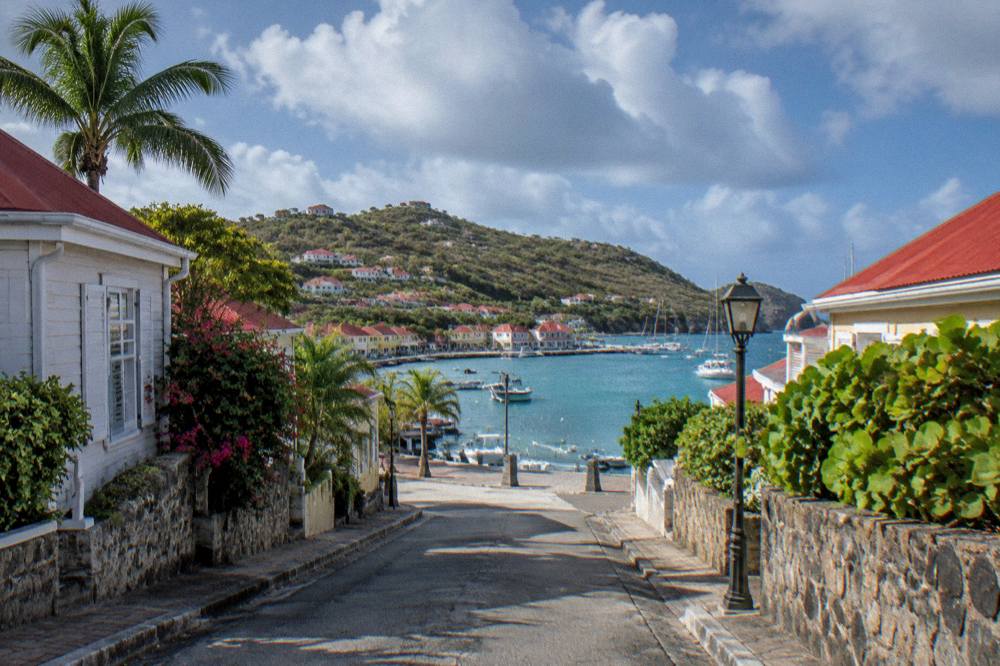
The honest summary from St Barthelemy Travel: parking on St Barts is a small-island question with a small-island answer. Choose a small car if you drive, respect the reported speed limits and the French right-of-way rule, walk the compact centre of Gustavia rather than moving the car through it, and remember that every boat day listed here arrives from St Martin without a single parking decision on the island. See the operator's live listing for any of the sea options above, and confirm rental terms directly with the agency before you travel.