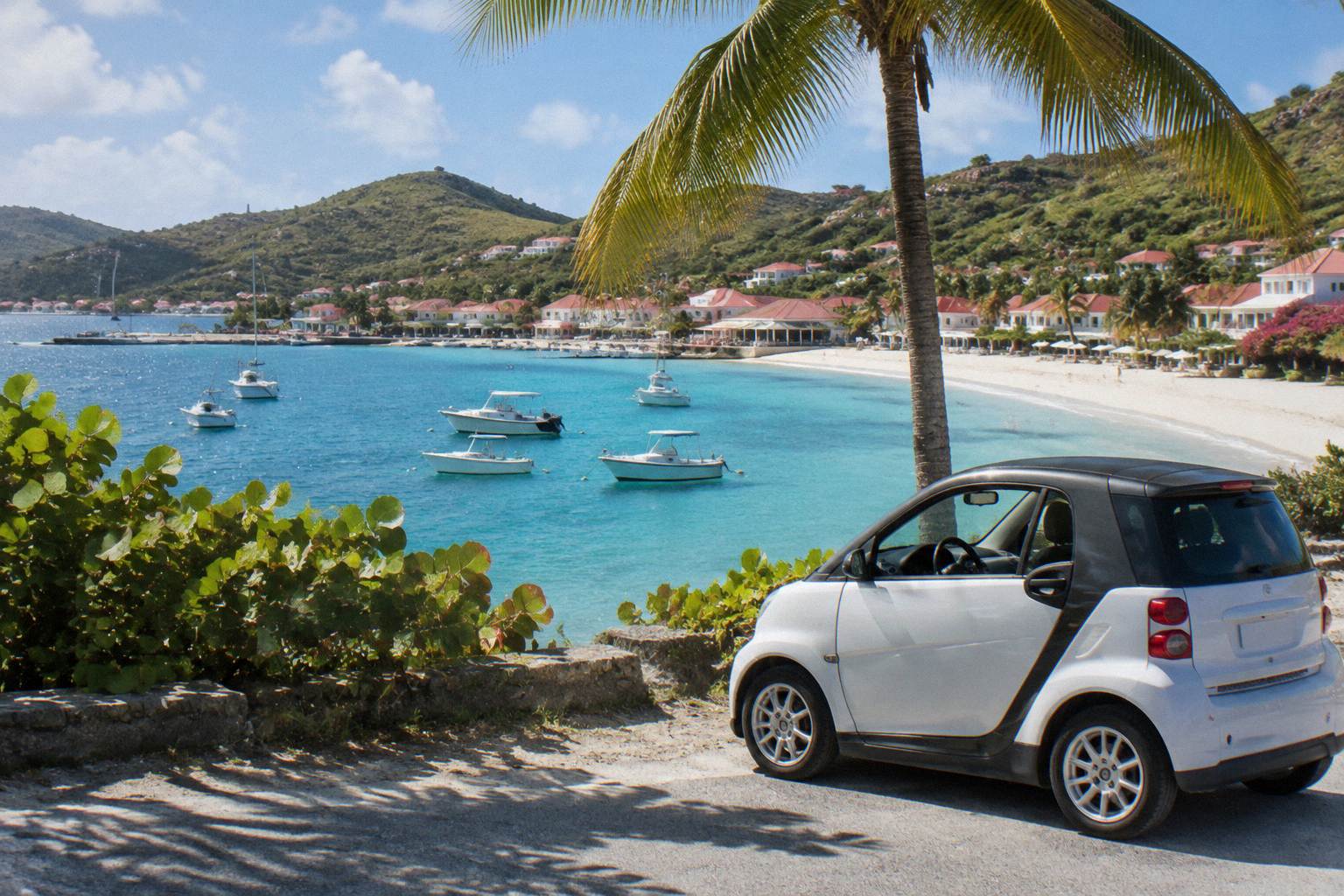
Driving In St Barts
St Barthelemy, better known as St Barts, is about 21 square kilometres of steep hills and public beaches, and driving it is a specific skill: right-side driving, reported 50 km/h limits, hairpin climbs and a compact walkable capital in Gustavia.
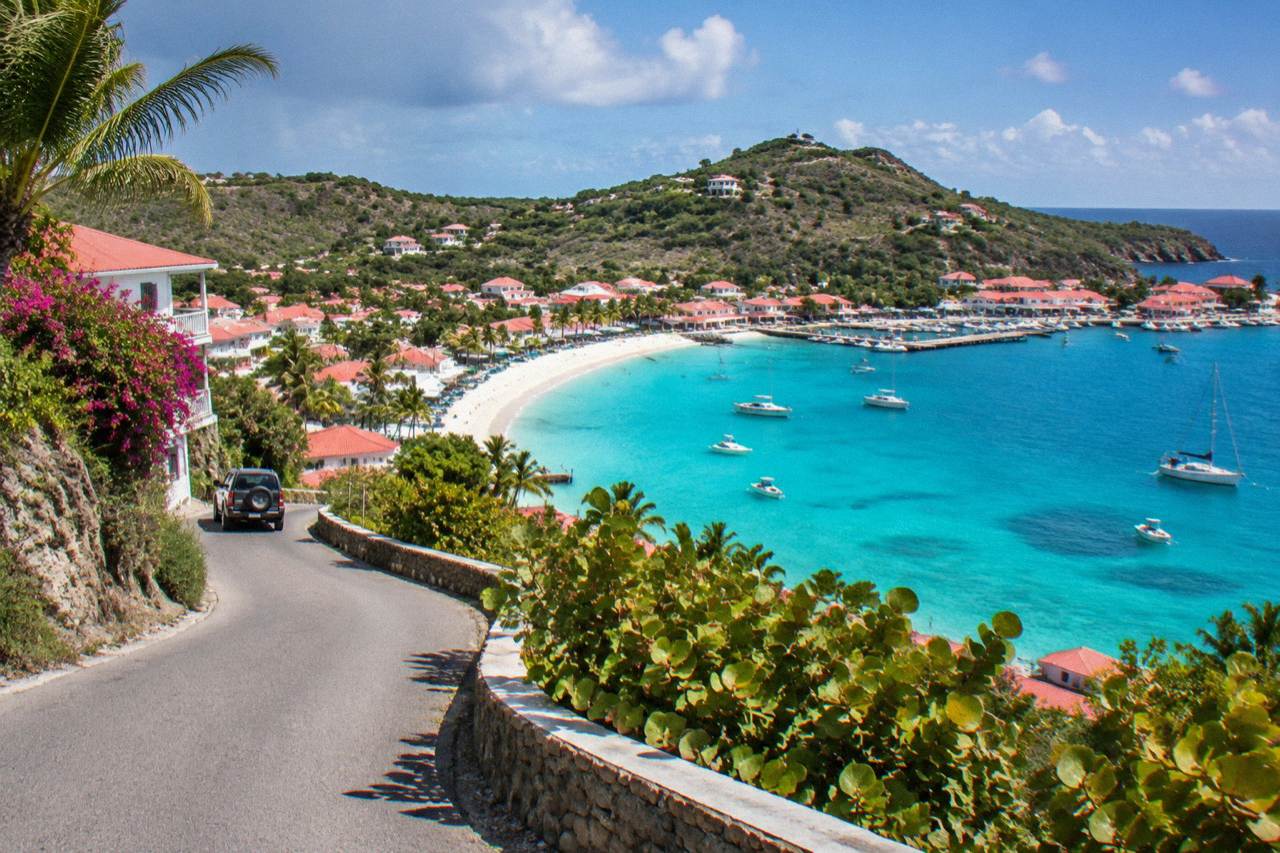
Driving in St Barts means right-side traffic on narrow, steep, winding roads, with speed limits reported at 50 km/h island-wide and 30 km/h in Gustavia and Saint-Jean. Avis, Budget and Hertz have counters at Gustaf III Airport, local agencies run Mini Mokes and small cars, and no age minimum, fare or tariff is fixed island-wide, so terms come from the company you book.
St Barthelemy, written St Barts on every road sign worth reading twice, is a small French island in the Caribbean of about 21 square kilometres, roughly 10,700 residents and one harbour capital, Gustavia. It is also an island of hills, which is the single fact that shapes driving here more than anything else: the roads climb, bend and narrow with the terrain, the airport runway is only 646 m long, and the whole place can be crossed by car in a morning of careful driving. This guide from St Barthelemy Travel covers st barts driving, from road rules to rental counters, parking discs and the boat-based alternatives that skip the wheel entirely.
What Is Driving In St Barts Really Like?
Driving in St Barts is right-side traffic on narrow, winding, steep roads across an island of about 21 square kilometres, with speed limits reported at 50 km/h island-wide and 30 km/h in the populated areas of Gustavia and Saint-Jean. There is one roundabout, near the airport, and French right-of-way rules apply at unsigned intersections. The centre of Gustavia is compact enough to cover on foot.
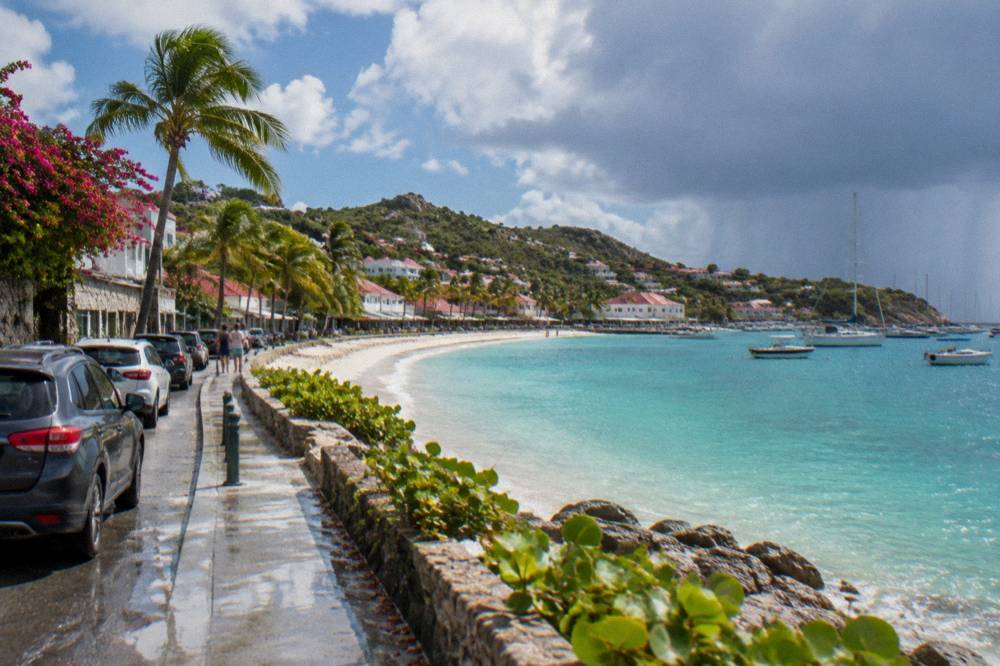
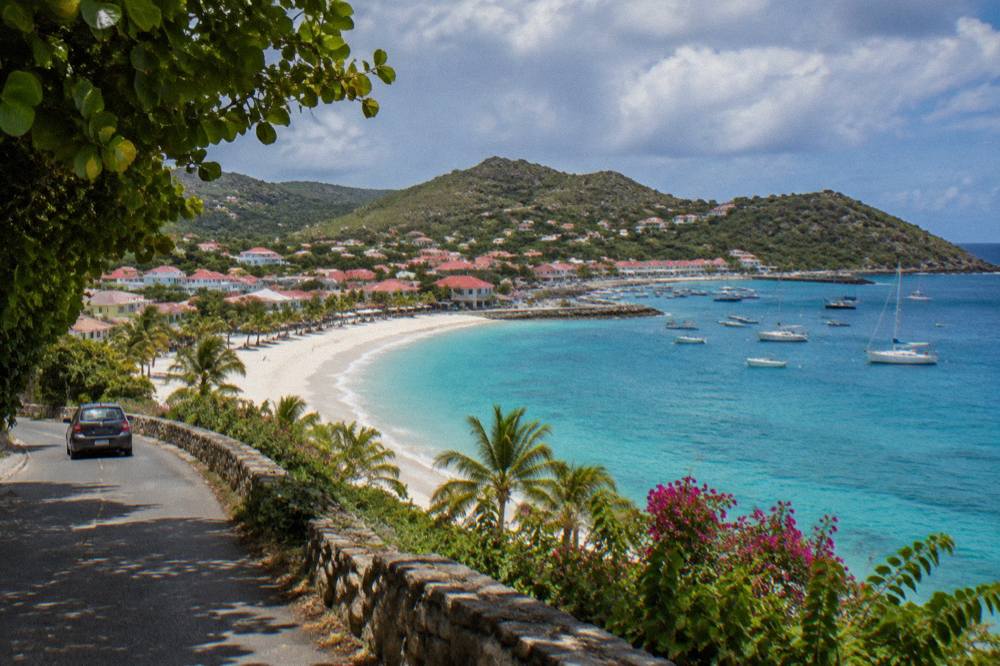
The island's geography does the talking. Hills run down to public beaches on every coast, and the roads follow them, which means tight bends, steep grades and stretches where two vehicles pass with inches to spare. Villa-manager and local-operator pages describe the network as narrow, winding and hilly, with grades that can call for low gear on the descents. That is a description of the road, not a warning about danger: confident, unhurried driving is the norm, and the limits, 50 km/h across the island and 30 km/h in the two built-up areas, suit exactly that style.
A few structural facts help. Traffic drives on the right, following French rules as an overseas collectivity of France since 2007. There is one roundabout, at the airport end of Saint-Jean, and very few traffic lights anywhere. At unsigned junctions, French right-of-way convention gives priority to traffic coming from the right, which surprises drivers from places where the main road always has priority. Road markings can be sparse on the smaller routes between areas like Corossol, Colombier and Toiny.
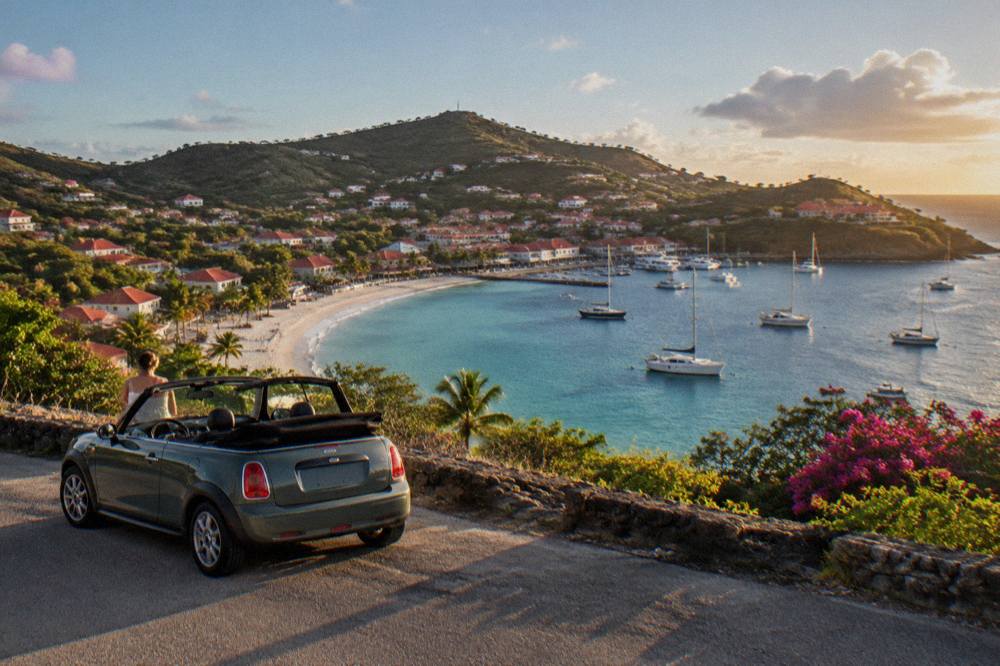
Key numbers for driving and arriving in St Barts
Island size, speed limits, runway length, ferry time and emergency numbers
Speed limits from villa-manager and local driving pages; ferry times from operators
Do You Need A Car In St Barts?
A car helps on St Barts because the beaches and areas sit on different coasts of a hilly 21-square-kilometre island, but it is not strictly required: Gustavia's centre is compact and walkable, taxis exist, and every bookable boat tour on this site departs from St Martin or Sint Maarten and visits St Barts without needing an island car at all. The decision rests on where you stay and how many beaches you plan to reach.
The case for a car is spatial. Saline, Colombier, Flamands, Grand Cul-de-Sac and Lorient are public beaches spread around the coastline, connected by exactly the winding roads described above. Staying in Gustavia and walking covers the harbour, the shops and Shell Beach (Grand Galet); staying in Saint-Jean covers that bay; anything beyond that means wheels of some kind. The St Barts car rental guide covers the booking side in detail.
The case against is real too. Taxis operate on the island, and arriving by cruise tender or for a single day via the ferry makes a car pointless: ships tender into Gustavia and there is no cruise pier, so a day ashore is naturally a walking day. Day visitors arriving by boat from St Martin can spend the whole trip on the water and ashore in Gustavia without driving a metre. For a fuller picture of the arrival options, the how to get to St Barts guide lays out the small-plane and ferry routes.
Not every day on or around the island needs a steering wheel. The Boomerangs Group Sail and Snorkel, listed as the St. Barths: Gustavia, Colombier Beach, and Ile Fourchue Tour, runs from St Martin and spends its day on the water rather than the road, with its own page at the Gustavia, Colombier and Ile Fourchue sail and live dates via the operator's live listing.
What Are The Road Rules On St Barts?
St Barts follows French traffic rules: drive on the right, observe speed limits reported at 50 km/h island-wide and 30 km/h in Gustavia and Saint-Jean, yield to traffic from the right at unsigned intersections, and use the single roundabout near the airport in the normal counterclockwise manner. Emergency numbers are the French ones, 15 for medical, 17 for police, 18 for fire and 112 as the European general number.
The reported limits deserve their label. The 50 km/h island-wide figure and the 30 km/h town figures come from villa-manager and local driving pages, not from a posted national code, and individual streets can carry their own signed limits that override the general rule. The practical reading is simple: on an island this small and this hilly, the general limit is rarely the constraint, the road is.
Right-of-way is the rule most likely to catch a visitor. France's priorite a droite gives priority to vehicles entering from the right at junctions without signage, and St Barts inherits it. Combined with narrow stretches and blind crests, the local convention is slow approach and willingness to reverse to a passing place, which is ordinary driving here rather than an incident.
| Rule | What Applies On St Barts |
|---|---|
| Side of the road | Right, under French traffic rules as an overseas collectivity |
| General speed limit | Reported at 50 km/h island-wide |
| Town speed limits | Reported at 30 km/h in Gustavia and Saint-Jean |
| Unsigned junctions | French right-of-way: traffic from the right has priority |
| Roundabouts | One, near the airport |
| Emergency numbers | 15 medical, 17 police, 18 fire, 112 general |
Where Do You Rent A Car On St Barts?
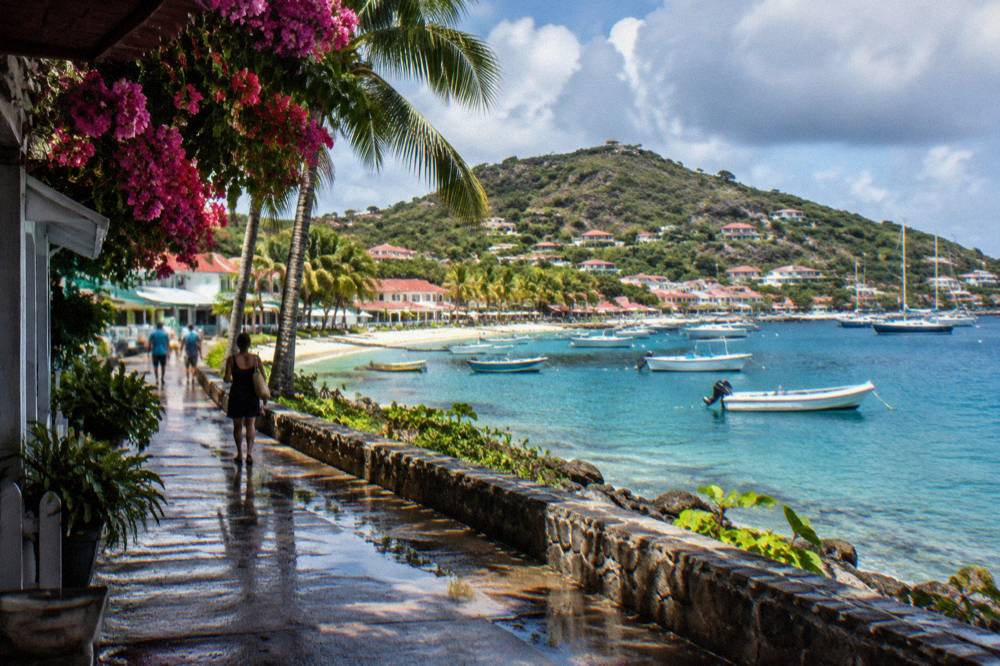
Rental counters at Gustaf III Airport include Avis, Budget and Hertz, confirmed on a supplier page for the airport, and a layer of local agencies operates across the island, including specialists in the open-air Mini Moke. Booking in advance matters for the December to April period, and delivery to hotels and villas is commonly available. Rental terms, prices and minimum ages vary by company and are confirmed at booking.
The airport is the main counter cluster, which is convenient because most arrivals land there after the short hop from St Martin, detailed in the St Barts airport guide. Beyond the three international brands, directory listings show local operators such as Gumbs and Turbe, along with other agency names that come and go; the local layer is where the characterful vehicles live. No price, minimum age or surcharge figure is fixed island-wide, so the terms of whichever company you choose are the ones that govern, and villa-manager pages advise confirming them directly before arrival.
Vehicle choice matters more here than on flat islands. The types commonly listed are the Mini Moke, Smart and small compacts such as the Kia Picanto and Fiat 500, Mini Coopers, and small SUVs like the Suzuki Jimny. Automatics predominate. Smaller vehicles suit the roads and the parking, and higher clearance suits the steeper lanes above areas like Vitet and Toiny. The Mini Moke is the open-air icon, with the obvious trade that it offers minimal protection from rain or sun, and it comes from the local agencies rather than the international counters.
| Rental Source | Where It Sits | What It Offers |
|---|---|---|
| Avis, Budget, Hertz | Counters at Gustaf III Airport | The international brands, bookable in advance |
| Local agencies | Gustavia, Saint-Jean and across the island | Small cars, compacts, delivery to hotels and villas |
| Mini Moke specialists | Local agencies island-wide | The open-air vehicle, through local operators |
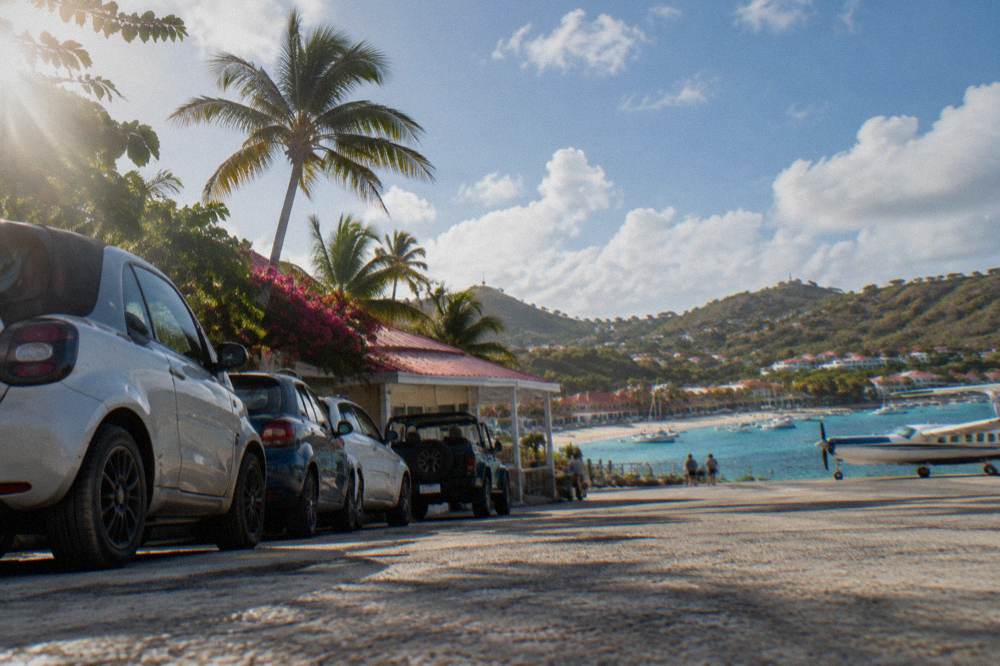
Licence requirements, as the rental pages describe them, call for a valid driving licence from your home country, typically held for at least a year, with an International Driving Permit generally only needed for licences not in the Roman alphabet, plus a passport or ID and a credit card in the driver's name. Inspecting the vehicle at pickup is standard advice in every local guide, and booking well ahead for the December to April high season is the consistent recommendation, alongside the general seasonal note that many hotels and restaurants close each autumn and reopen between mid-October and early November.
What Is Parking Like In Gustavia?
Parking in Gustavia is a mix of street spaces, public lots and timed Blue Zone spots that require a parking disc, the disque de stationnement, displayed on the dashboard. The timed zones are the one rule a visitor must actively operate: without a disc, a legal space becomes an infraction. Beyond that, parking arrangements vary by place and time of day, and the Blue Zone disc system is French and unforgiving of ignorance.
The disc system is the practical headline. Blue Zone spaces allow timed free parking with the disc set to your arrival time, in the French manner used across France's overseas territories. Discs come from rental companies, tourist information or local shops, and the rule is mechanical: display it, set it, move on when the time expires. Street parking outside the zones is untimed but can be tight and angled on slopes, and public lots include areas near the ferry terminal and a large free area by the stadium, as described in local driving pages. Other pages covering the same trip are gathered on St Barthelemy Travel.
Signs matter more than instinct. Defense de Stationner marks prohibited stretches, and blocking an access or a gate on a narrow street is both an infraction and an island-scale social error. Some rental companies offer valet or dedicated parking arrangements in and near Gustavia, which is worth asking about at booking if the stay centres on the harbour town, where the Gustavia shopping guide and the harbour itself sit within a compact walkable centre.
How Does Getting To St Barts Connect To Renting A Car?
Most arrivals reach St Barts through St Martin, either by small plane from Princess Juliana Airport into Gustaf III Airport, whose 646 m runway takes only small STOL turboprops in daylight, or by ferry, with Great Bay Express from Philipsburg taking about 45 minutes and Voyager from Marigot about 50 to 60 minutes. The airport counters make the plane route the fastest path from arrival to a rental car.
The gateway structure is described across the flights to St Barts guide. Long-haul flights end at St Martin, San Juan, Guadeloupe or Antigua; St Barth Commuter flies the SBH route from SXM, Grand Case and Pointe-a-Pitre, Tradewind flies from San Juan and Antigua, and Winair serves the island from SXM. No jet lands on St Barts, operations are daylight and visual only, and the runway's 646 m length is the reason. If a driving trip starts with the flight, the landing at St Barts airport guide covers the approach.
The ferry route lands you at the quayside in Gustavia rather than beside the rental counters. Great Bay Express runs from Bobby's Marina in Philipsburg, with check-in closing fifteen minutes before departure and a passport required, and the operator lists the crossing at about 45 minutes; Voyager runs from the Marigot terminal on the French side at about 50 to 60 minutes. Both are weather-dependent crossings that can be rough, and the ferry operators and schedule guide covers them in full. Rental agencies in Gustavia itself serve ferry arrivals, with delivery arrangements commonly available to wherever the stay begins.
| Arrival Route | Where You Land | First Wheels |
|---|---|---|
| Small plane via St Martin | Gustaf III Airport, Saint-Jean | Airport counters: Avis, Budget, Hertz |
| Ferry from Philipsburg | Gustavia quay | Gustavia agencies or delivered vehicle |
| Ferry from Marigot | Gustavia quay | Gustavia agencies or delivered vehicle |
| Cruise tender | Gustavia harbour, no cruise pier | Walking day ashore, taxis available |
What Are The Alternatives To Driving In St Barts?
The alternatives to driving on St Barts are taxis, walking the compact centres of Gustavia and the villages, and, for the coastal highlights, boats: every tour listed here departs from St Martin or Sint Maarten and visits St Barts by sea, including group sails, private charters and an overnight catamaran, none of which needs an island car. Cruise visitors tender into Gustavia and explore on foot.
Taxis operate island-wide with route-based tariffs and surcharges at night and on Sundays and holidays, according to local taxi pages, and drivers do not use meters, so agreeing the fare before the ride is the consistent local advice. Walking works well in Gustavia, whose centre is compact, and in the individual areas around their beaches, though the hills between areas make multi-village walking a serious undertaking.
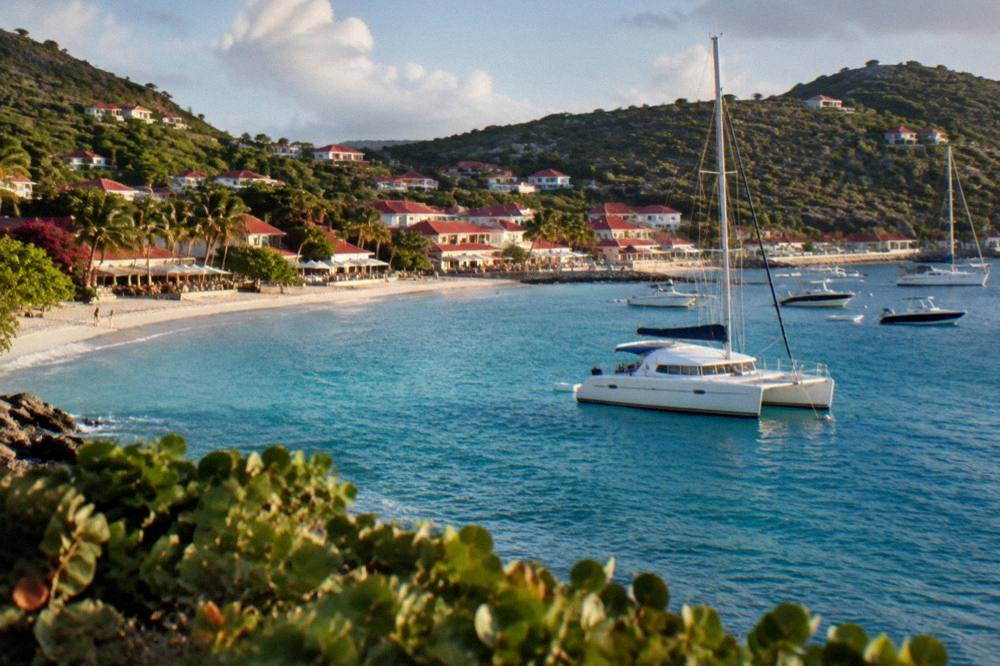
The boat alternative deserves more attention than it usually gets. A day on the water covers what a car cannot reach at all: Colombier's bay, Ile Fourchue and the coastline seen from the sea, all under the marine reserve's rules, which the environment agency's regulatory-zones page lists as a 5-knot limit in its zones, no jet skis, no dogs on the beaches and no touching of turtles. The group sail from St Martin is joined per person, while the private charters run per group; the distinction and the current listings are on each tour page.
| Car-Free Option | How It Works | Where It Starts |
|---|---|---|
| Group sail and snorkel | Per-person day trip by sea around St Barts | St Martin / Sint Maarten |
| Private day charter | Boat and crew for your group, per group | St Martin / Sint Maarten |
| Overnight catamaran | Two days and one night afloat | St Martin / Sint Maarten |
| Taxis | Route-based tariffs, no meters, agree the fare first | St Barts, island-wide |
| Walking | Gustavia centre and individual areas | Wherever you are standing |
For stays based in one area, a hybrid plan is the pattern the accommodation pages describe: a car for a few days of beach circuits, then taxis or feet for harbour evenings. Where you sleep shapes the maths, and the St Barts hotels guide covers the properties whose locations make a car optional.
How Do You Plan A Driving Day Around St Barts?
A driving day on St Barts works as a loop: start early from Gustavia or Saint-Jean, work the coasts in one direction so the hills are climbed once, and plan the middle of the day around one or two public beaches rather than all of them, because the roads between Saline, Colombier, Gouverneur and Flamands are the slow part. All beaches on the island are public.
The loop logic is geographical. The public beaches ring the island: Saint-Jean and Flamands to the north and west, Gouverneur and Shell Beach (Grand Galet) near Gustavia, Saline and Colombier to the south, Grand Cul-de-Sac, Lorient, Toiny and Corossol around the east. Driving them in a single clockwise or counterclockwise circuit avoids repeating the st inland climbs, and the areas each have their own character, described in the things to do in St Barts overview and the individual beach guides on this site.
Colombier is the one that punishes assumptions, because the beach sits at the end of a walking trail rather than a drivable road, which is exactly why the boat tours include its bay. The marine reserve rules apply on and around it. For the driving day itself, the practical additions from local pages are simple: fuel up before the far coasts, carry water, and treat the middle of the day as beach time rather than mileage, since the whole island is about 21 square kilometres and the point of driving it slowly is to see it.
Is Renting A Car In St Barts Worth It?
Renting a car in St Barts is worth it for stays of several nights that aim to reach beaches on several coasts, and it is worth skipping for short visits, cruise days and trips built around a boat tour from St Martin, where a car on the island adds nothing. The decision is length of stay times ambition, and the terms that make it worthwhile or not, price, age minimum, delivery, come from the individual company.
The worth-it calculation has honest components on both sides. On the yes side: an island of hills with beaches on every coast, a walkable capital that is easy to park outside of, and vehicle types, from Mokes to Jimnys, that make the driving itself part of the trip. On the no side: a compact Gustavia, taxis for evening dinners, and a set of sea-based days that leave from St Martin and cover the coastline the way a car never can. Visitors combining St Martin and St Barts, as the St Barts vs St Martin comparison page explores, can even split the trip: driving days on the bigger island, boat days to the smaller one.
Whatever the choice, the facts above stand: right-side driving, reported 50 and 30 km/h limits, French right-of-way, airport counters from Avis, Budget and Hertz, a local agency layer with the characterful vehicles, the Blue Zone disc in Gustavia, and no fare, price or age figure anywhere in the chain, which means every commercial term is confirmed at booking with the company itself.
Common Questions About Driving In St Barts
What side of the road do you drive on in St Barts?
You drive on the right. St Barts is an overseas collectivity of France and follows French traffic rules, including the priority-to-the-right rule at unsigned junctions.
What is the speed limit in St Barts?
Speed limits are reported at 50 km/h island-wide and 30 km/h in the populated areas of Gustavia and Saint-Jean. Signed limits on individual streets override the general figures.
Do I need an International Driving Permit for St Barts?
Generally not for licences in the Roman alphabet. Rental pages describe a valid home-country licence, typically held for at least a year, with an IDP usually needed only for non-Roman-alphabet licences, plus a passport or ID and a credit card in the driver's name.
Which rental companies are at St Barts airport?
Avis, Budget and Hertz have counters at Gustaf III Airport, and local agencies across the island, including Mini Moke specialists, complete the market. Terms, prices and age minimums vary by company.
Can you get around St Barts without a car?
Yes. Gustavia's centre is compact, taxis run island-wide with route-based tariffs, cruise visitors tender in and walk, and every boat tour on this site departs from St Martin or Sint Maarten and visits St Barts by sea.
What is the Blue Zone parking disc in Gustavia?
Blue Zone spaces allow timed free parking when a parking disc, the disque de stationnement, is displayed on the dashboard and set to your arrival time, in the French manner. Discs come from rental companies, tourist information or local shops.