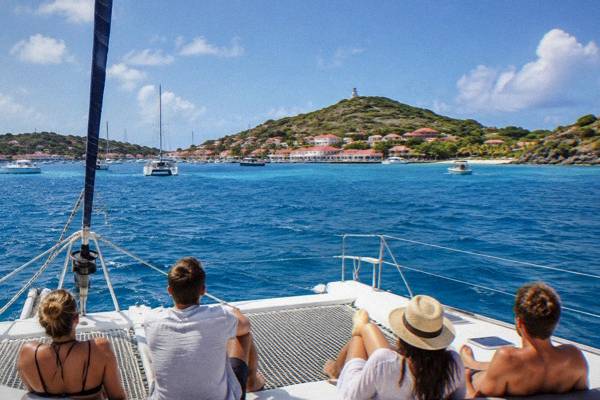
St Barts Versus St Martin
St Barthelemy, usually written St Barts, is a small French island of about 21 square kilometres, and its neighbour St Martin is the busy two-nation gateway most travellers pass through to reach it. Here is how the two islands actually compare on the facts that matter for planning.
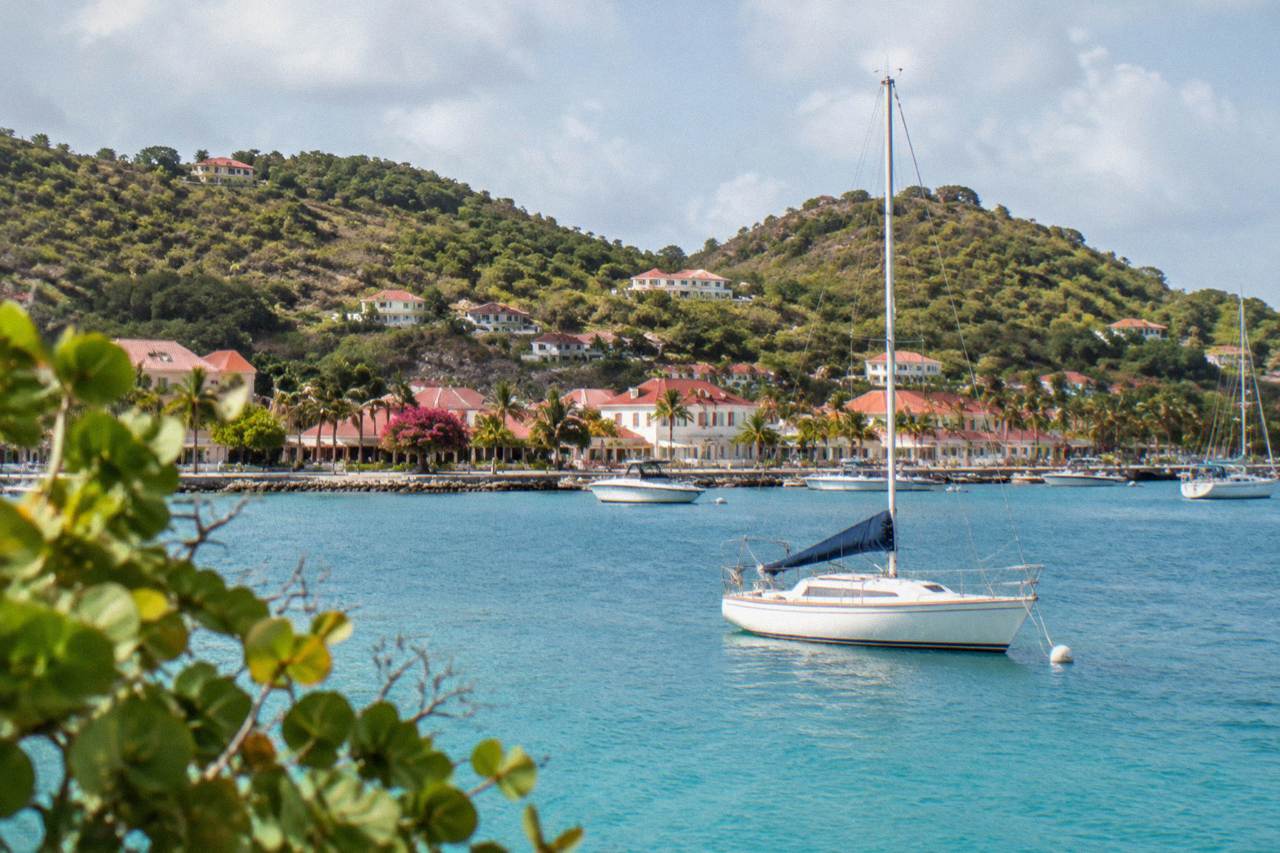
St Barts is smaller, quieter and harder to reach, a French overseas collectivity of about 21 square kilometres reached by small plane or ferry through St Martin; St Martin is the larger, busier gateway island split between France and the Netherlands, home to the main airport (SXM) that feeds nearly every St Barts trip.
St Barthelemy, usually written St Barts, is a French overseas collectivity of about 21 square kilometres with roughly 10,700 residents, and it sits directly beside St Martin, the larger island that functions as its gateway. The comparison is not really a competition: one island is small, quiet and reached only by small plane or ferry, while the other holds the region's main airport, two separate nations and most of the practical work of getting anywhere in the northern Leeward Islands. Almost every itinerary that includes St Barts also includes St Martin, whether for an hour at Princess Juliana airport or a night on either side. This page lays out how the two differ, and where each one fits in a trip.
What Is The Difference Between St Barts And St Martin?
The core difference is scale, governance and arrival: St Barts is a single French overseas collectivity of about 21 square kilometres with its capital at Gustavia, while St Martin is a larger island shared between French Saint Martin and Dutch Sint Maarten, and it holds the principal airport (SXM) that nearly all St Barts travellers pass through. St Barts has no jet airport and no cruise pier, so St Martin functions as its funnel.
St Barts has been a separate French overseas collectivity since 2007, with Gustavia as its harbour capital, the euro as currency, and French as the official language with English widely spoken. St Martin, by contrast, is two territories on one landmass: the French side, whose main town is Marigot, and the Dutch side of Sint Maarten, whose main town is Philipsburg. The island's airport, Princess Juliana (SXM), sits on the Dutch side and is the busier aviation hub of the pair by a wide margin.
The practical consequence is that the islands are not parallel choices. St Barts is a destination reached through St Martin or one of the other regional gateways, and the comparison is closer to a hub-and-spoke relationship than a rivalry. The fuller question of what the difference is between St Barts and St Martin has its own answer page, but the short version is that one island concentrates beaches and calm, and the other concentrates connections and traffic.
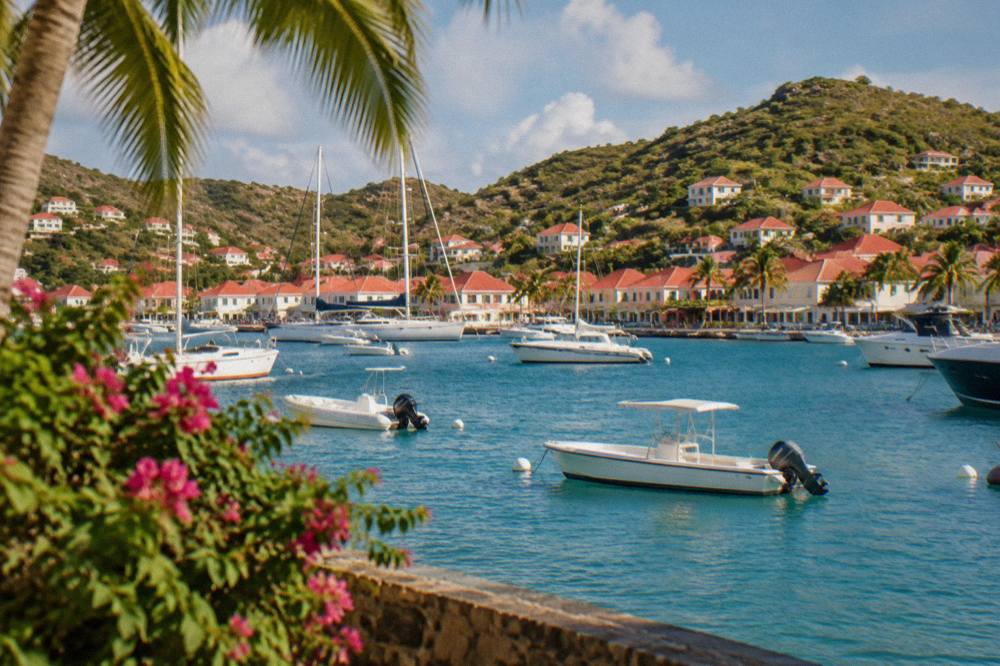
How Do The Two Islands Compare On Size And Basics?
St Barts covers about 21 square kilometres and has roughly 10,700 residents, with Gustavia as its capital; St Martin is the larger shared island around it, and the two are separated by a short sea crossing that the ferry operators list at about 45 minutes from Philipsburg and about 50 to 60 minutes from Marigot. St Barts is the smaller, lower-key of the two on every basic measure.
The table below holds the basics for St Barts side by side with what the same record establishes about St Martin's role. Where a figure exists only for St Barts, the St Martin column states its gateway function rather than inventing a number.
| Measure | St Barts | St Martin / Sint Maarten |
|---|---|---|
| Political status | French overseas collectivity since 2007 | Island split between French Saint Martin and Dutch Sint Maarten |
| Capital / main towns | Gustavia | Marigot (French side), Philipsburg (Dutch side) |
| Main airport | Gustaf III (SBH), 646 m runway, small turboprops only, no jets, daylight only | Princess Juliana (SXM), the regional hub on the Dutch side |
The airport row is the one that shapes every plan. Gustaf III, also called Remy de Haenen, has a single 646 m runway, operates in daylight and visual conditions only, and admits only small STOL turboprops: no jet lands on St Barts, and no direct flight from outside the region can. Princess Juliana on Sint Maarten takes the long-haul and regional jet traffic and hands passengers to the small carriers and ferries that complete the hop. The guide to flights from St Maarten to St Barts covers that final leg in detail.
How Do You Travel Between St Barts And St Martin?
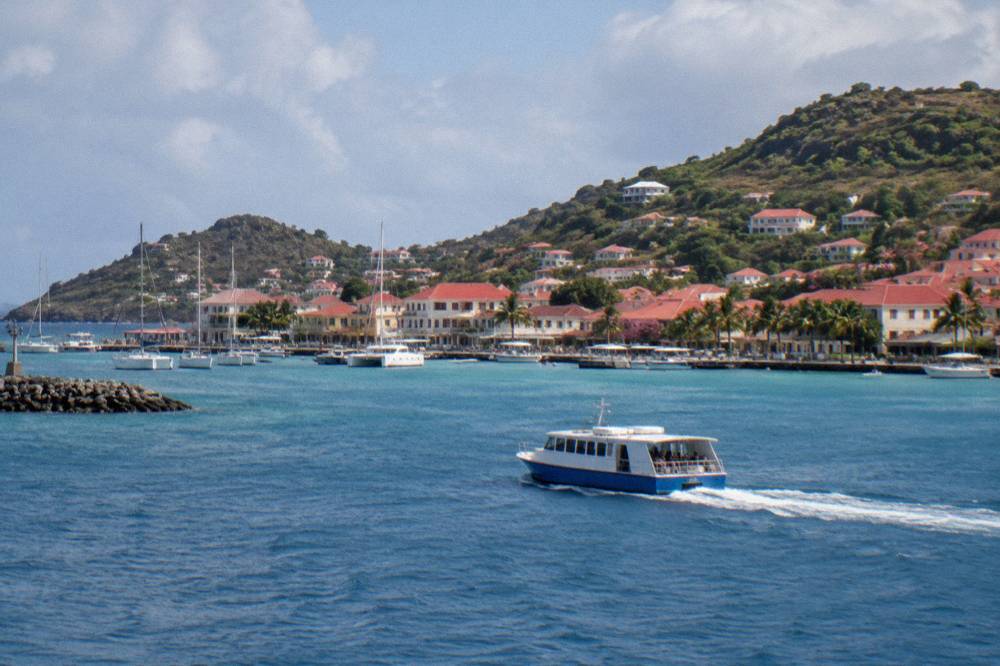
Two operators run scheduled ferries: Great Bay Express from Philipsburg (Bobby's Marina, Sint Maarten) to Gustavia in about 45 minutes, and Voyager from Marigot (French St Martin) to Gustavia in about 50 to 60 minutes with two to three sailings a day, and a passport is required; the alternative is a small plane from SXM or one of the other gateways. Sea conditions affect the crossing, and no operator promises a smooth one.
The ferry is the fixed link that makes the comparison concrete. Great Bay Express asks passengers to arrive about 45 minutes before departure and closes check-in about 15 minutes before the boat leaves, and both operators run subject to weather. The crossing is open water and can be rough; the only honest statement is that sea conditions govern it day to day. Fares, timetables and departure times change and belong to the operators' live pages.
By air, the small carriers connect the islands on a short hop: St Barth Commuter serves SBH from SXM, Grand Case (SFG) on the French side and Pointe-a-Pitre, while Tradewind flies from San Juan and Antigua, and Winair operates Twin Otters into St Barts. All of them land on the short strip at Gustaf III in daylight visual conditions only. The planning question of whether to see St Martin before or after St Barts usually resolves itself around these departure points.
To compare fares for the short hop, book a flight to St Barts.
For travellers who want the water rather than the airport, several day-trip products run the same corridor privately. The charters all depart from St Martin or Sint Maarten, never from St Barts itself, which means the comparison island doubles as the boarding point.
Which Island Has The Better Beaches For A Day Trip?
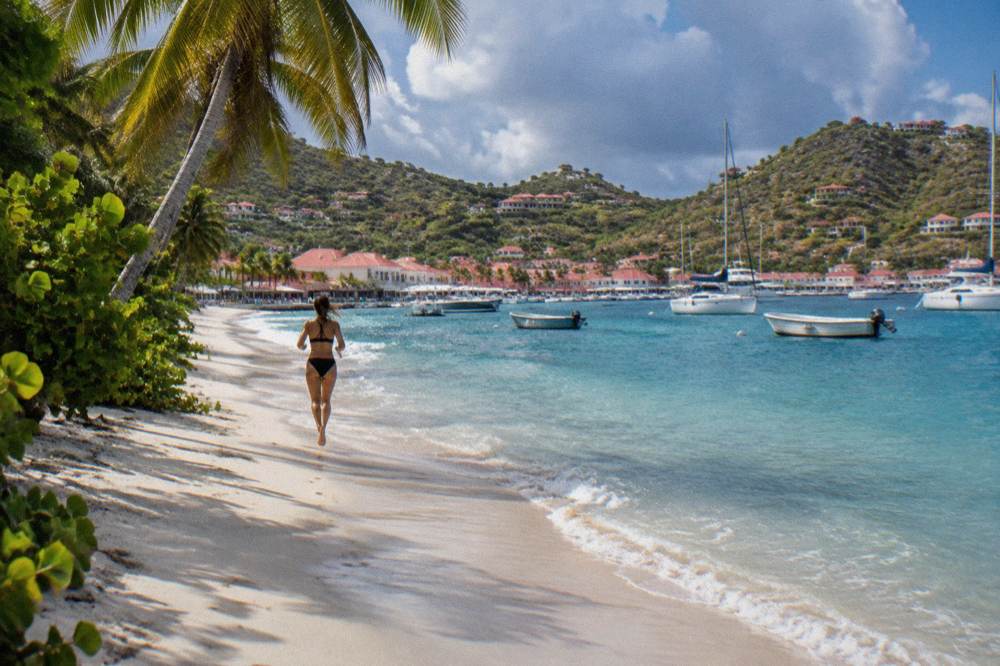
On the St Barts side the tourism committee names eleven public beaches, from Saint-Jean and Gouverneur to Saline, Shell Beach, Flamands, Colombier, Grand Cul-de-Sac, Lorient, Toiny, Marigot, Corossol and Anse des Cayes, all free to access, while no source in this site's pack verifies a single St Martin beach by name; the honest comparison is that St Barts' beaches are documented and public, and St Martin's role here is as the departure point.
Every beach on St Barts is public, an unusual arrangement worth knowing when the two islands are weighed against each other. The tourism committee lists them by name, and the environment agency adds the rules that govern them: dogs are banned from all beaches island-wide under a municipal order, and within the marine reserve's zones the agency's regulatory page sets a 5-knot speed limit on the water, bans jet skis and lists 23 dive sites. Turtles are strictly protected, and touching them is prohibited.
| St Barts beach | Position on the island | Access status |
|---|---|---|
| Saint-Jean | Near the airport on the north coast | Public |
| Gouverneur | South coast | Public |
| Saline | South coast | Public |
| Shell Beach (Grand Galet) | West of Gustavia | Public |
| Flamands | Northwest coast | Public |
| Colombier | Northwest, above the nature reserve | Public |
| Grand Cul-de-Sac | Northeast coast | Public |
| Lorient | North coast, east of Saint-Jean | Public |
| Toiny | Southeast coast | Public |
| Corossol | West of Gustavia | Public |
| Anse des Cayes | North coast | Public |
The pattern to note is that the beaches cluster on every coast, so a day trip arriving by ferry into Gustavia reaches several of them quickly. The dedicated pages on Shell Beach, Saline and Flamands cover individual shores. On the St Martin side, this site's record covers only the ports and the airport, so no beach comparison is made here.
How Does The Weather Compare Between St Barts And St Martin?
The two islands share one climate, and the station normals come from Meteo-France's 1991-2020 figures for St Barthelemy: a mean daily high of 28.5 C in January rising to 31.7 C in September, 891.3 mm of rain a year and October the wettest month at 135.6 mm; hurricane season runs 1 June to 30 November with its peak mid-August to mid-October, and it affects both islands identically.
The distance between the islands is small enough that separate weather planning is pointless. What differs is exposure and logistics: the ferry crossing and the STOL approach into St Barts both depend on conditions, and the airport operates only in daylight and visual conditions, so weather can close the short-hop options while the hub at SXM keeps running. In planning terms, St Martin is the weather-resilient side of the pair and St Barts the weather-sensitive one.
| Month | Mean daily high (C) | Mean daily low (C) | Rain (mm) |
|---|---|---|---|
| Jan | 28.5 | 23.5 | 52.6 |
| Feb | 28.6 | 23.3 | 38.4 |
| Mar | 29.0 | 23.5 | 41.4 |
| Apr | 29.8 | 24.2 | 50.9 |
| May | 30.7 | 25.1 | 61.7 |
| Jun | 31.2 | 25.9 | 56.0 |
| Jul | 31.2 | 26.0 | 80.4 |
| Aug | 31.6 | 26.3 | 79.6 |
| Sep | 31.7 | 26.2 | 96.9 |
| Oct | 31.4 | 25.8 | 135.6 |
| Nov | 29.9 | 25.0 | 118.6 |
| Dec | 28.9 | 24.1 | 79.2 |
These are Meteo-France normals, 1991-2020, for the St Barthelemy station. The autumn numbers matter for another reason: many St Barts hotels and restaurants close each autumn and reopen in waves between mid-October and early November, a pattern rather than a dated schedule, so shoulder-season planning on St Barts needs to account for both rain and closures in the same window. Hurricane Irma struck the region in September 2017, and the season's climatological peak sits near 10 September; no prediction of a storm is made or possible.
Can You Visit St Barts As A Day Trip From St Martin?
Yes, and every bookable day trip listed here does exactly that: all of them depart from St Martin or Sint Maarten, from the departure ports at Philipsburg, Marigot and the sailing harbours such as Simpson Bay and Anse Marcel, and none starts on St Barts. The ferry from either side of St Martin or a private charter makes the island a genuine day-trip target rather than a stop that requires an overnight.
The choice within the day-trip category is between the per-person sail and the private charters. The one per-person product listed here, a group sail and snorkel trip to Gustavia, Colombier and Ile Fourchue, runs only from 12 May to 31 August 2027 on its listing, which makes it a summer option. The private products run per group rather than per person, and the trip list includes full-day charters, a Nikki Beach charter, a private sailboat and an overnight catamaran for those who want the crossing to double as accommodation.
| Day-trip option from St Martin / Sint Maarten | Type | Pricing basis |
|---|---|---|
| Group sail and snorkel to Gustavia, Colombier and Ile Fourchue | Per-person day sail | Per person, summer listing dates only |
| Full-day private charter | Private day charter | Per group |
| Private charter from St Martin | Private day charter | Per group |
| Nikki Beach private charter | Private day charter | Per group |
| Private sailboat charter | Private day charter | Per group |
| Two-day one-night private catamaran | Overnight charter | Per group |
Group sizes and cabin details render on the live listings rather than in prose here, and every price comes from the operator's listing rather than from this page.
Which Island Should You Base Yourself On?
Base on St Martin if the priority is flight connections, lower-commitment logistics or a two-nation island with more through-traffic, and base on St Barts if the priority is the documented public beaches, the marine reserve, the quiet of a 21-square-kilometre collectivity and a harbour capital you can walk, with St Martin described here strictly as the gateway.
The honest structure of this comparison is asymmetric. St Barts has its beaches, its reserve rules, its airport limits, its ferry links, its hotels by name and its events. It does not verify what St Martin offers as a destination, so any statement that St Martin has better nightlife, cheaper food or bigger resorts would be invented. What is clear is that the two islands are joined by two ferry operators and several small-plane carriers, and that a plan can move between them within a day.
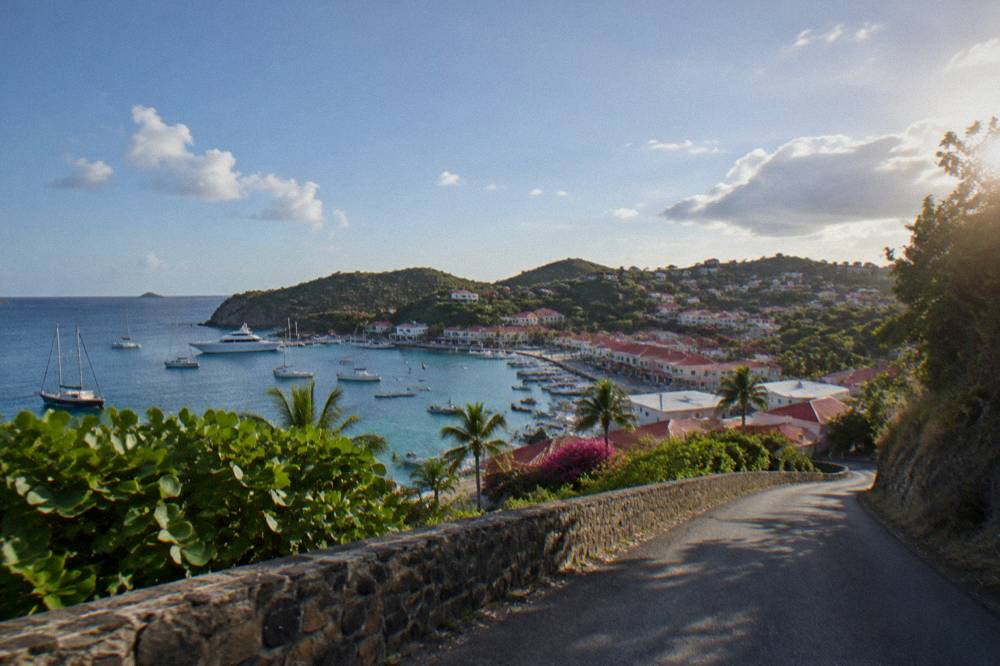
For basing decisions, three St Barts realities matter. First, the autumn closure pattern means the island thins out between late August and mid-October and refills from mid-October to early November, a rhythm St Martin's hotel market does not share in any documented way here. Second, the airport's daylight-only operation means late arrivals are impossible by air, which pushes late flights onto the St Martin side. Third, driving on St Barts means narrow, steep roads with a 50 km/h island-wide limit and 30 km/h in Gustavia and St Jean, and the rental counters at the airport include Avis, Budget and Hertz alongside local agencies and Mini Mokes.
What Does A Combined St Barts And St Martin Trip Look Like?
A combined trip uses St Martin as the entry and exit hub and St Barts as the destination core: fly into SXM, cross by ferry from Philipsburg in about 45 minutes or from Marigot in about 50 to 60 minutes, or hop by small plane, then spend the bulk of the stay on St Barts before returning through the same corridor; the itinerary pages on this site cover the sequencing question in full.
The standard shapes are well worn. A short version puts one or two nights on St Martin around a longer St Barts stay, which buffers the weather-sensitive crossing. A day-trip version bases entirely on St Martin or Sint Maarten and crosses once by ferry or charter. The longer island-hopping version chains St Barts with neighbours such as Anguilla or Saba, both of which have their own day-trip pages in this site's day-trips section, alongside Saba and the other island-hopping routes.
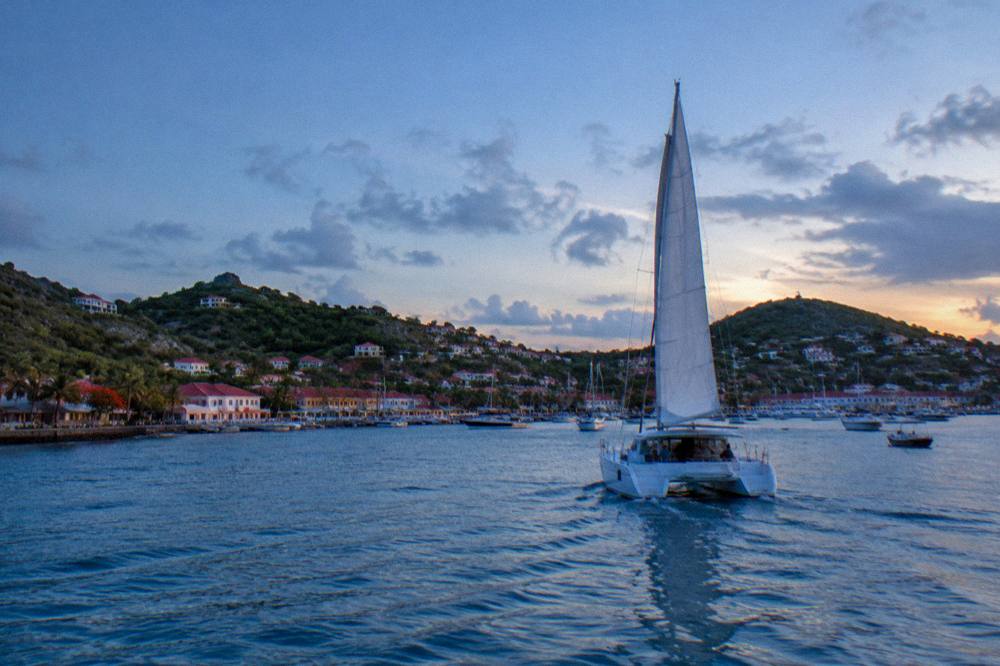
The overnight option deserves a line of its own weight: a two-day, one-night private catamaran from St Martin to St Barts turns the corridor itself into the accommodation, and it removes the return-time pressure that a day trip imposes. For a single-day plan, the guide to things to do in St Barts lays out how a ferry arrival at Gustavia converts into a walking, beach and harbour day without a car.
How Do St Barts And St Martin Compare Against Other Island Pairs?
St Barts against St Martin is a hub-and-spoke pair, unlike the parallel comparisons this site documents against Mustique, St Lucia, the British Virgin Islands and St John, where the islands compete as alternative destinations; St Martin's role is fixed as the gateway holding SXM and the ferry ports, while those other islands are weighed against St Barts directly on beaches, arrival and character.
The distinction matters for searchers. If the question is "which island should I choose", the true alternatives to St Barts are the ones in the comparison set: St Barts versus Mustique, St Barts versus St Lucia, St Barts versus the BVI and St Barts versus St John. If the question is "how do these two neighbours fit together", the answer is the corridor this page has already described: one airport that takes jets, one airstrip that does not, two ferries and a cluster of charters running between them.
| Comparison pair | Relationship type | What To Know |
|---|---|---|
| St Barts vs St Martin | Gateway and destination, joined by ferries and small planes | Ferry operators, flight links, St Barts detail in full |
| St Barts vs Mustique | Parallel private-island alternatives | St Barts side only, in detail |
| St Barts vs St Lucia | Parallel destination alternatives | St Barts side only, in detail |
| St Barts vs the BVI | Parallel sailing-destination alternatives | St Barts side only, in detail |
| St Barts vs St John | Parallel beach-park alternatives | St Barts side only, in detail |
The pattern in that table is deliberate and honest. Only the St Martin pairing has two-way logistics. Every other comparison is written from the St Barts side, with the other island named but not characterized.
Common Questions About St Barts Versus St Martin
Is St Barts or St Martin bigger?
St Martin is the larger island; St Barts covers about 21 square kilometres. St Barts is the smaller neighbour.
Can you do St Barts as a day trip from St Martin?
Yes. The ferries from Philipsburg and Marigot cross to Gustavia in about 45 minutes and about 50 to 60 minutes respectively, and every day-trip tour listed here departs from St Martin or Sint Maarten. A passport is required for the crossing.
Is there a ferry between St Barts and St Martin?
Two scheduled operators run the route: Great Bay Express from Philipsburg (Bobby's Marina) to Gustavia, and Voyager from Marigot to Gustavia with two to three sailings a day. Sea conditions affect the crossing, and schedules belong to the operators' live pages.
Which airport do you fly into for St Barts?
St Barts' own airport, Gustaf III (SBH), takes only small STOL turboprops in daylight conditions. Travellers fly into Princess Juliana (SXM) on Sint Maarten and complete the trip by small plane or ferry.
Do St Barts and St Martin use the same currency?
St Barts uses the euro. The French side of St Martin also uses the euro.
Which island is quieter, St Barts or St Martin?
On the documented facts, St Barts is the smaller and lower-key island: about 21 square kilometres, roughly 10,700 residents, no jet airport and no cruise pier, with ships tendering into Gustavia under a 1,200-passenger cap. St Martin holds the region's main airport and the through-traffic that comes with it.
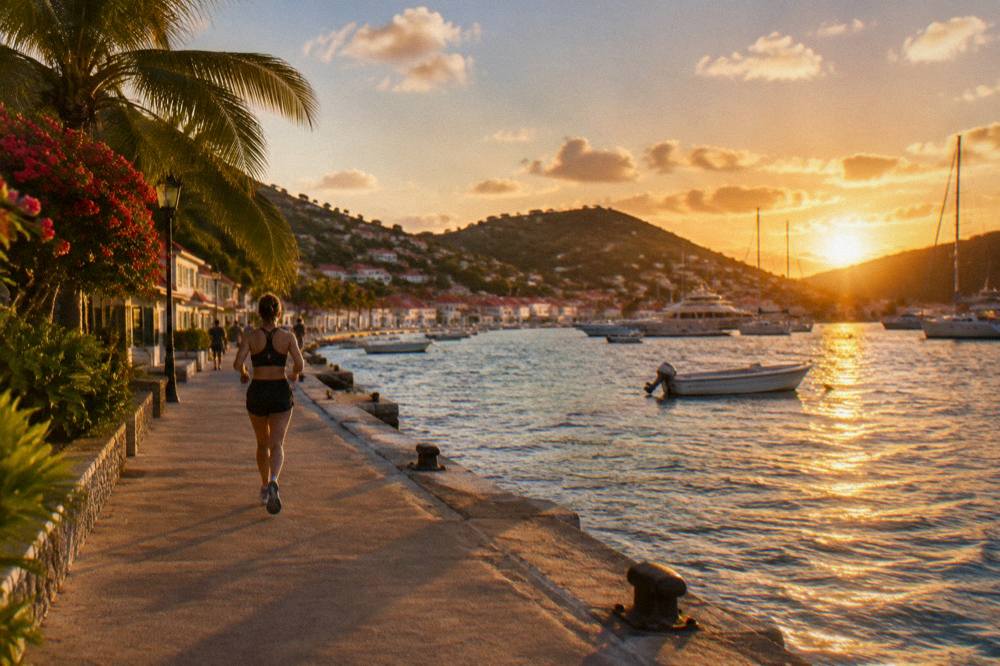
The choice between the two islands is really a choice about how much St Martin you want wrapped around your St Barts. The gateway island supplies the jets, the ferry ports and the buffer nights; the collectivity supplies the beaches, the reserve and the quiet. The corridor between them is short, well served and documented, and St Barthelemy Travel covers every leg of it in the guides linked above.