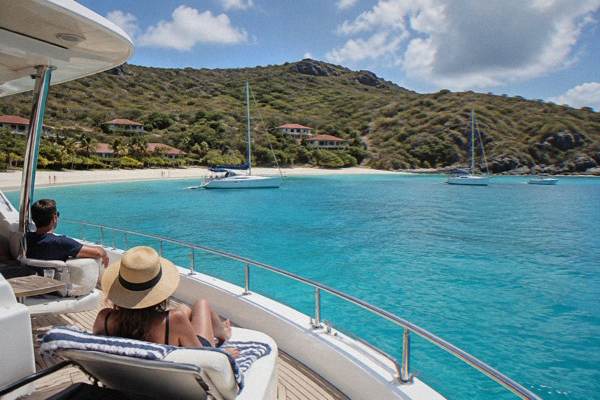
St Barts To Anguilla
St Barthelemy, usually written St Barts, is a small French island in the Caribbean, and Anguilla is one of the neighbours travellers ask about most when they start mapping day trips beyond the harbour town of Gustavia.
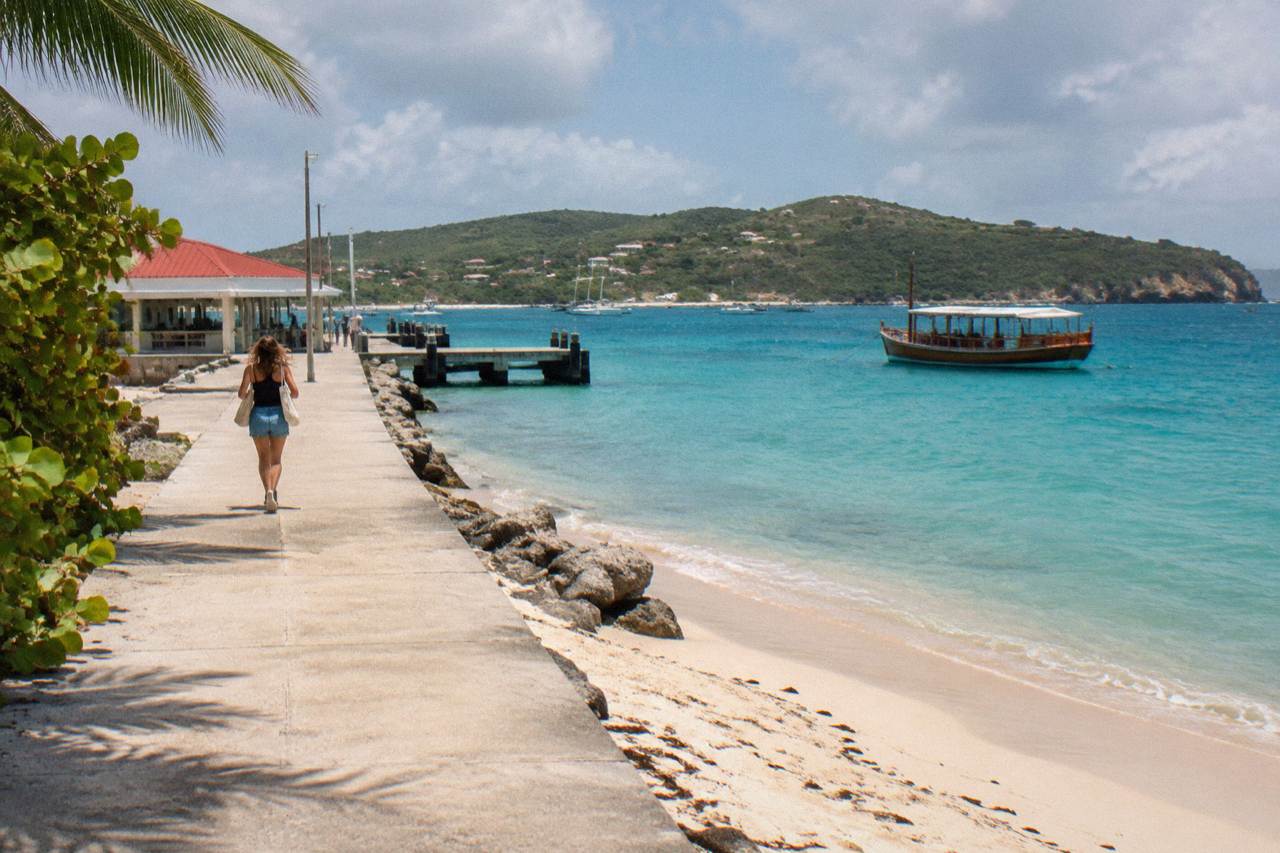
There is no direct scheduled link between St Barts and Anguilla: trips normally route through St Martin, which is the regional hub for ferries to Gustavia and small-plane flights to both islands.
St Barthelemy, usually written St Barts, is a small French island in the Caribbean of about 21 square kilometres, an overseas collectivity of France since 2007, with Gustavia as its harbour capital, the euro as currency and French as the official language alongside widely spoken English. Anguilla is the neighbouring island that comes up whenever a St Barts trip turns into a wider Caribbean plan. The honest starting point is that the two islands are not directly tied together by a scheduled service, and almost every realistic routing runs through St Martin, the French side, or Sint Maarten, the Dutch side, which together act as the transport hub for this corner of the Caribbean. This page lays out the practical picture: how the routing works, what documents matter, what the weather does, and which boat days from St Martin can be folded into the same itinerary.
Can You Do A Day Trip From St Barts To Anguilla?
A day trip from St Barts to Anguilla is possible in principle but awkward in practice, because the operator list shows no direct scheduled ferry or flight between the two islands, so the routing runs through St Martin or Sint Maarten, the regional hub. St Barts itself is reached by small plane from St Martin or by ferry from Philipsburg or Marigot, and the same hub is where connections toward Anguilla are made. That double-hop structure is what shapes every realistic plan: it favours travellers who treat Anguilla as part of a multi-island itinerary rather than a quick out-and-back from Gustavia.
The structural fact behind this is simple. St Barts has one airport, Gustaf III Airport, code SBH, also called Remy de Haenen, with a 646 m runway that admits only small STOL turboprops in daylight and visual conditions. No jet lands there, and every long-haul traveller passes through a gateway first: St Martin (SXM), San Juan (SJU), Guadeloupe (PTP) or Antigua (ANU).
What that means for planning is that the practical shape of an Anguilla add-on is usually one of two patterns. The first is to break the St Barts stay in the middle, return to St Martin, and cross to Anguilla from there before coming back for a final night or a flight home. The second is to build the whole trip around St Martin as a base, doing St Barts as a day trip by boat and Anguilla as a separate day, which is the pattern our own St Barts to St Martin guide walks through in detail. Both work; the choice mostly comes down to how much packing and unpacking a trip can absorb.
For readers who want the fuller picture on the reverse direction, the site also carries a dedicated Anguilla day trip from St Barts planning page and a guide to ferries between Anguilla and St Barts, plus a flights from Anguilla to St Barts reference. The rest of this page stays on the routing, the paperwork and the boat days that make the hub-and-spoke plan enjoyable rather than a logistics slog.
How Does The St Barts To Anguilla Routing Actually Work?
Every path from St Barts to Anguilla passes through St Martin or Sint Maarten: a ferry or small plane from Gustavia to the St Martin area first, then a separate connection on toward Anguilla, with the two legs booked independently because no operator sells them as one ticket. The ferry side of the first leg is run by Great Bay Express from Bobby's Marina in Philipsburg, about 45 minutes to Gustavia, and Voyager from the Marigot terminal, about 50 to 60 minutes. The small-plane side is flown by St Barth Commuter from SXM, Grand Case (SFG) and Pointe-a-Pitre, and by Tradewind from San Juan and Antigua.
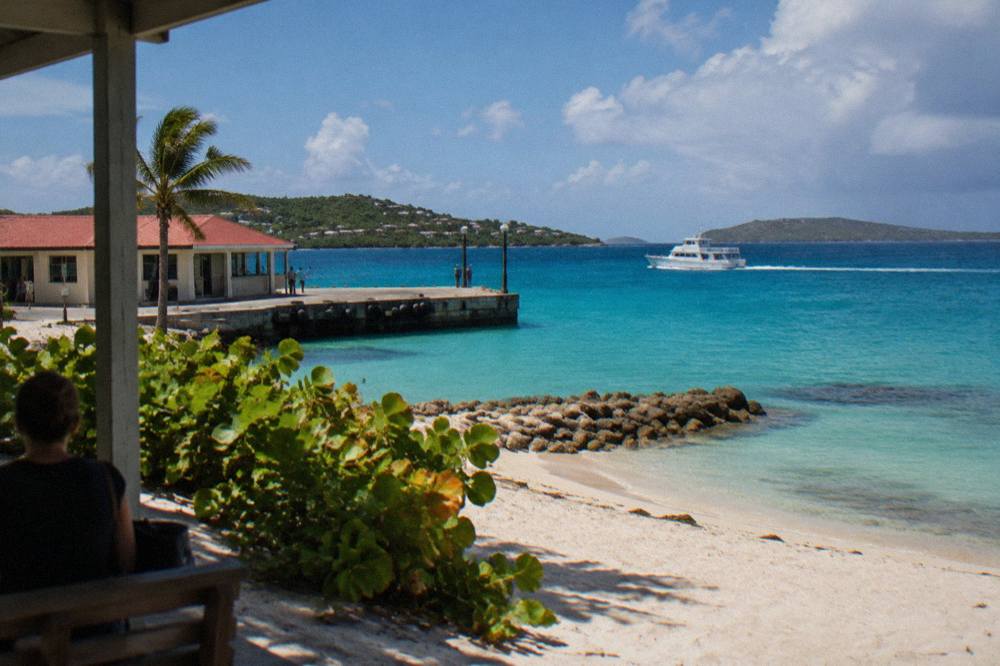
The ferry details matter because they are the piece travellers underestimate. The Great Bay Express operator page shows a crossing of about 45 minutes from Philipsburg, with check-in about 45 minutes before departure and check-in closing 15 minutes before the boat leaves, and a passport required. Voyager runs from the Marigot terminal on the French side, a crossing of about 50 to 60 minutes, with the port authority's page listing two to three sailings a day in each direction. Both are "about" figures from the operators, both are weather-dependent, and the crossing can be rough; anyone prone to seasickness should plan for that honestly rather than hope for a flat sea.
| Leg | Operator Or Carrier | From | To | Details |
|---|---|---|---|---|
| Ferry | Great Bay Express | Bobby's Marina, Philipsburg | Gustavia | About 45 minutes, check-in 45 minutes ahead, passport required |
| Ferry | Voyager | Marigot Ferry Terminal | Gustavia | About 50 to 60 minutes, two to three sailings a day each way |
| Small plane | St Barth Commuter | SXM, SFG, PTP | SBH | Scheduled flights and charters, Cessna turboprops |
| Small plane | Tradewind | SJU, ANU | SBH | Pilatus PC-12 service from San Juan and Antigua |
Two practical warnings follow from the table. First, ferry and flight prices change by season and date, and the operators' own booking pages show live figures. Second, the timetable is dynamic. Both ferry operators adjust frequency by season, and maintenance periods can cut sailings for weeks at a time, so a plan that fits comfortably in high season can be tight or impossible in the shoulder. Checking the operators' pages for the specific travel dates is not optional.
Because the hub pattern leaves time on St Martin, it helps to see that island as part of the trip rather than a corridor. The site's pages on whether to spend time in St Maarten before or after St Barts and things to do on St Martin before a St Barts trip cover how to use a connection day well.
Which Boat Days From St Martin Fit An Anguilla And St Barts Plan?
The bookable boat trips that visit St Barts all depart from St Martin or Sint Maarten, never from St Barts itself, and the group sail that anchors the trip list visits Gustavia, Colombier Beach and Ile Fourchue in a single day, which makes it the natural St Barts leg of a hub-based plan that also covers Anguilla. The listing shows it as a per-person day trip, running on its listing from 12 May to 31 August 2027, with the rest of the trip list made up of private charters priced per group. Nothing listed here departs from Gustavia, and nothing crosses to Anguilla.
That last point deserves emphasis because it is where plans go wrong. A traveller based in Gustavia who wants a boat to Anguilla will not find one listed here; the geography runs the other way, out of Simpson Bay, Cole Bay, Anse Marcel and Grand Case on the St Martin sides. The workable shape is therefore: stay on or near St Martin, do St Barts by boat on one day, Anguilla by ferry or plane on another, and let the hub do the work.
For the St Barts boat day, the featured option is the Boomerangs group sail and snorkel, which the listing shows is a seven-hour day. It stops at Colombier, a public beach on the island's northwest that is also inside the marine reserve, and at Ile Fourchue, another reserve island. The reserve's rules, set by the territorial environment agency, apply everywhere the boat anchors: a 5-knot speed limit in protected zones, no jet skis, no touching or chasing turtles, no collecting shells or coral, and no dogs on the beaches.
For groups, the trip list also carries a private charter from St Martin to St Barth and a 2-day 1-night private catamaran, which turns the St Barts leg into an overnight rather than a day trip. The catamaran is the one product that changes the shape of the whole plan, because a night at anchor off St Barts replaces a same-day return and pairs naturally with a second night or two on St Martin before the Anguilla leg.
What Documents Do You Need For St Barts And Anguilla?
St Barthelemy is outside the Schengen area, so a Schengen visa does not authorize entry and the ETIAS and EES systems do not govern arrival; US, UK, Canadian and EU citizens are generally visa-exempt for short tourist stays of up to 90 days, EU citizens may use a national ID card, and everyone else needs a valid passport, with onward travel required. Anguilla is a separate territory with its own entry rules, and because government advice differs by nationality, the reliable move is to check your own government's travel advice for both islands before booking anything.
The passport detail is where the routing bites. A St Barts to Anguilla trip crosses an international border in each direction, twice over, once between St Barts and the St Martin sides and once between St Martin and Anguilla. Documents get checked on every leg, and the ferry operators state plainly that a passport is required. The advice pages differ on how much remaining validity a passport should have; the UK, Canadian and US government advice pages for the region each state their own requirement, and those pages are the authority.
There is also a local tax worth knowing about on the St Barts side. The Collectivite levies a taxe de sejour, a tourist tax collected by accommodations rather than at the border, generally calculated as a percentage of the nightly room price and collected year-round, with exemptions for long-term rentals and seasonal workers. It is a lodging matter, not an entry matter, so a day tripper who sleeps elsewhere does not face it, but anyone spending nights on the island will see it on the bill.
| Step | Border Crossing | Documents named | Notes |
|---|---|---|---|
| St Martin or Sint Maarten to St Barts | France (outside Schengen) | Passport, or EU national ID card | Ferry operators require passport at check-in |
| Stay on St Barts | None | Accommodation registration | Tourist tax collected by lodging, year-round |
| St Barts back to St Martin sides | France to the French or Dutch side | Passport or ID | Checked on departure and arrival |
| St Martin area to Anguilla | Separate territory | Passport | Check your government's advice for validity rules |
One habit makes the whole plan calmer: keep the passport accessible, not buried in a checked bag, for every leg. The ferry check-in windows close before departure, 15 minutes before in the Great Bay Express case, and a document hunt at the gangplank is the kind of stress a two-island trip does not need.
What Is The Best Time Of Year For A St Barts And Anguilla Trip?
The climate data points to December through April as the core of the high season: Meteo-France normals for 1991 to 2020 show mean daily highs between 28.5 C in January and 29.8 C in April with the lowest monthly rainfall of the year in February at 38.4 mm, while the Atlantic hurricane season runs 1 June to 30 November with its peak from mid-August to mid-October. The trade-off is the usual Caribbean one: the driest, most dependable months are also the busiest and the ones when ferries and flights are fullest, while the late spring and summer months are warm, quieter and statistically deeper into hurricane season.
| Month | Mean Daily High C | Mean Daily Low C | Rain mm |
|---|---|---|---|
| Jan | 28.5 | 23.5 | 52.6 |
| Feb | 28.6 | 23.3 | 38.4 |
| Mar | 29.0 | 23.5 | 41.4 |
| Apr | 29.8 | 24.2 | 50.9 |
| May | 30.7 | 25.1 | 61.7 |
| Jun | 31.2 | 25.9 | 56.0 |
| Jul | 31.2 | 26.0 | 80.4 |
| Aug | 31.6 | 26.3 | 79.6 |
| Sep | 31.7 | 26.2 | 96.9 |
| Oct | 31.4 | 25.8 | 135.6 |
| Nov | 29.9 | 25.0 | 118.6 |
| Dec | 28.9 | 24.1 | 79.2 |
The table comes from the Meteo-France climate normals, 1991 to 2020, for the St Barthelemy station. Read it before generalising: October is the wettest month at 135.6 mm, February the lowest at 38.4 mm, and September has the highest mean daily high at 31.7 C while January has the lowest at 28.5 C. The island is warm year-round, and the sea is warm too, about 26 C in winter to about 29 C from August to October, so swimming is never the constraint; the scheduling constraint is the hurricane season overlap with the warmest, wettest months.
Two seasonal facts shape a two-island plan more than the rainfall totals. First, many St Barts hotels and restaurants close each autumn and reopen in waves between mid-October and early November, so an October trip may find the island quieter than expected, with villas the more reliable lodging. Second, the one per-person group sail listed here runs only from 12 May to 31 August 2027 on its listing, which places the easiest St Barts boat day squarely in the late-spring and summer window rather than the February crowd. Neither fact is a reason to cancel anything; both are reasons to check dates before committing to a fixed itinerary.
The site's wider season guide to the best time to go to St Barts unpacks the month-by-month trade-offs, and the hurricane season page covers what the official outlooks do and do not support. A storm-free week in any month cannot be guaranteed, and nothing on this page predicts one.
What Rules Apply On And Around The St Barts Water?
The St Barts marine reserve, run by the territorial environment agency, imposes a 5-knot speed limit inside its protected zones, bans jet skis, seabobs and towed sports outright, lists 23 dive sites, prohibits dogs on the beaches and forbids touching, chasing or feeding protected species including sea turtles. For a boat day that anchors at Colombier or Ile Fourchue, both inside the reserve, these are not fine print; they are the operating rules the crew follows and the reasons those bays still look the way they do.
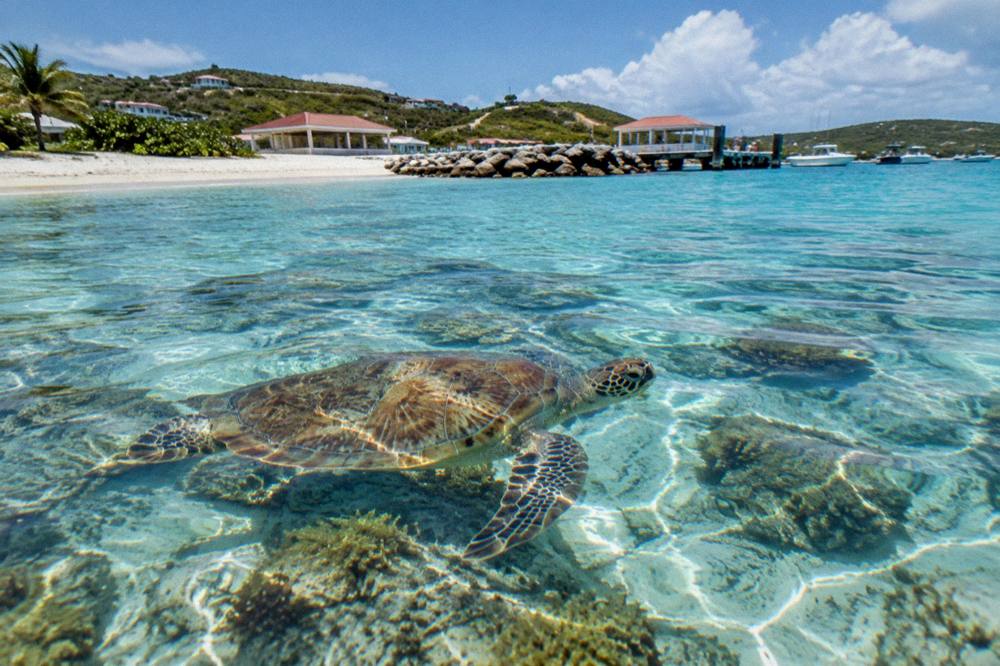
The turtle rule deserves its own sentence. Green and hawksbill turtles are common in the waters around St Barts, and the environment agency's beach and regulatory pages state plainly that touching or disturbing them, on the beach or in the water, is prohibited, with nest sightings to be reported rather than handled. Anchoring is restricted in places, ecological mooring buoys are preferred in Colombier and Fourchue bays, vessels over 25 m are barred from those bays, and drones are prohibited in or near the reserve without authorization.
| Reserve Rule | What The Environment Agency's Page Says |
|---|---|
| Speed | Maximum 5 knots in protected zones |
| Motorized sports | No jet skis, seabobs, electric surfboards or towed sports |
| Wildlife | No touching, chasing or feeding turtles, corals, sharks or rays |
| Collecting | No taking coral, shells, sand, rocks or plants |
| Dogs | Not allowed on beaches or in the water in reserve areas |
| Diving | 23 dive sites listed; some enhanced zones ban anchoring and scuba |
Anguilla has its own marine protected areas, and the same instincts travel well: look, do not touch, and follow whatever the local rules say on the day.
What Other Islands Can You Pair With St Barts?
St Martin is the obvious pairing because it is the transport hub, but the day-trip list around St Barts also includes Saba, Sint Eustatius, St Kitts and the wider island-hopping web, all reached through the same small-plane and ferry spokes that serve Anguilla. Saba in particular is a regular companion question: a distinct volcanic island with its own character, covered in the site's St Barts to Saba page and Saba day trip guide. The pattern repeats: hub first, spoke second, and separate tickets for each spoke.
For travellers comparing destinations rather than building one trip, the site carries head-to-head pages: St Barts versus St Martin, St Barts versus Mustique, St Barts versus St Lucia, St Barts versus the BVI and St Barts versus St John. The honest summary of all of them is that St Barts is small, French, beach-centred and reached through a hub, while its neighbours differ in language, scale and rhythm; which one suits a trip depends on what the trip is for.
| Island Pairing | How The Routing Works | Site Page |
|---|---|---|
| Anguilla | Via St Martin or Sint Maarten, separate ferry or flight legs | /day-trips/anguilla-day-trip-from-st-barts/ |
| Saba | Via the St Martin hub, small-plane spoke | /day-trips/st-barts-to-st-barts/ |
| Sint Eustatius | Multi-hop routing through the hub | /day-trips/sint-eustatius-st-eustatius-trip/ |
| St Kitts | Longer spoke from the hub region | /day-trips/st-kitts-from-st-barts/ |
| St Martin itself | Direct ferry or plane from Gustavia | /day-trips/st-barts-to-st-martin/ |
How Should You Build The Itinerary Day By Day?
A workable skeleton is four nights: two on St Martin or Sint Maarten as the hub, one full day on St Barts by boat or plane, and a separate day on Anguilla, with the St Barts boat day booked around the 12 May to 31 August window if the per-person group sail is the choice, and with every ferry and flight leg confirmed on the operators' pages for the exact dates. The alternative is a St Barts-centered stay of three or more nights on the island itself, with Anguilla handled as an overnight excursion through St Martin rather than a same-day dash.
The St Barts-centered version is the more relaxing and the more expensive in time. Waking in Gustavia, spending unhurried days among the public beaches, Saint-Jean, Flamands, Saline, Gouverneur and Shell Beach among them, and using a morning or afternoon for the ferry out through St Martin toward Anguilla turns the trip from a checklist into a stay. All St Barts beaches are public, which keeps the island leg flexible: no booking is needed to sit on any of them, and the site's beach pages, from Saline to Shell Beach, describe each one's position and access.
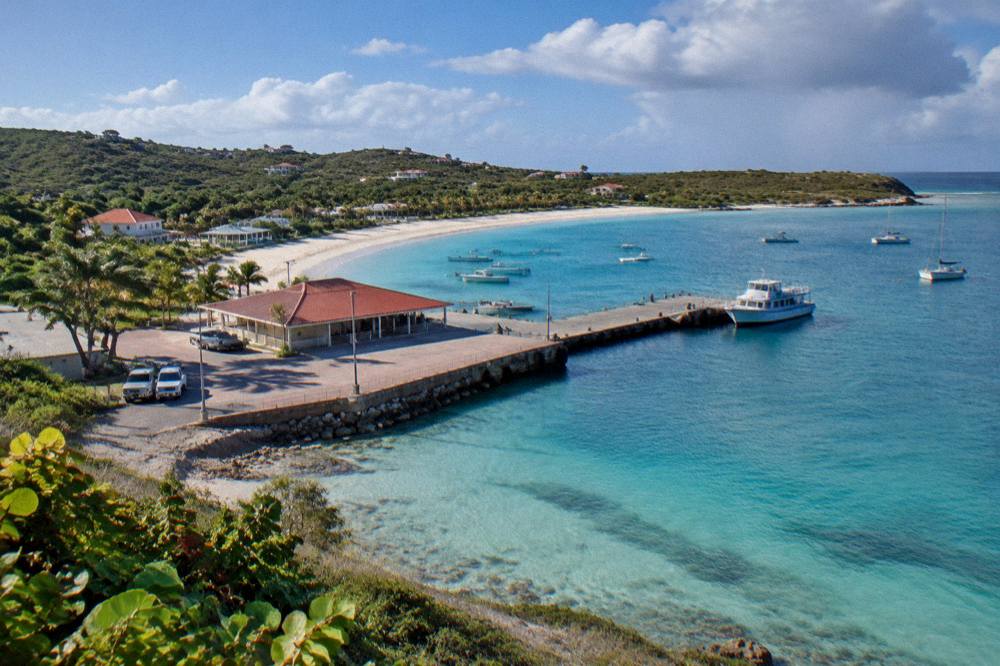
The hub-centered version suits a first visit that wants breadth. Its weakness is that each island day carries a transport cost in time, and a rough crossing can scrub a ferry day entirely, since both St Barts ferry services are weather-dependent. Building one slack day into the plan, a St Martin beach day or a slow morning in Philipsburg or Marigot, is the standard defence. Whatever the skeleton, the site's own St Barts itinerary guide and the things to do in St Barts overview carry the island leg in depth, and more of the site's day-trip routes sit under the St Barts island hopping page.
Money is the last planning layer. Local costs on St Barts are in euros, and no figure should be converted casually. Ferry fares, flight fares and hotel rates vary by season and date, and the operators' and properties' own booking pages are where live numbers live.
Common Questions About St Barts To Anguilla
Is there a direct ferry from St Barts to Anguilla?
Trips route through St Martin or Sint Maarten, using the Great Bay Express ferry from Philipsburg or the Voyager ferry from Marigot to reach Gustavia, and a separate connection on toward Anguilla from the St Martin area.
How long does it take to get from St Barts to Anguilla?
It depends on the connection, and no single total is printed because the legs are booked separately. The ferry from Philipsburg to Gustavia takes about 45 minutes and the ferry from Marigot about 50 to 60 minutes, but the onward leg toward Anguilla runs on its own schedule, so check the operators' pages for the exact travel date.
Do you need a passport to travel between St Barts and Anguilla?
Yes for most travellers. St Barts is outside the Schengen area, the ferry operators require a passport at check-in, and Anguilla is a separate territory with its own border. Government advice differs on passport validity, so check your own government's travel advice for both islands before booking.
Can you do a boat tour of St Barts on the same trip?
Yes. The bookable boat trips that visit St Barts depart from St Martin or Sint Maarten, and the group sail listed here visits Gustavia, Colombier Beach and Ile Fourchue in one day, running from 12 May to 31 August 2027 on its listing. Private charter options also run from the St Martin area.
When is the best time of year for this trip?
December through April brings the driest, most dependable weather, with Meteo-France normals for 1991 to 2020 showing mean daily highs of 28.5 C in January and February rainfall of just 38.4 mm. Hurricane season runs 1 June to 30 November, peaking mid-August to mid-October, and October is the wettest month at 135.6 mm.
Is the ferry crossing rough?
It can be. Both ferry services are weather-dependent and the operators publish no promise of a smooth crossing. Travellers prone to seasickness should plan remedies in advance and check the operators' notices on the day.
The plan that holds up is the one with slack in it: a hub night on St Martin, a boat day on St Barts inside the reserve rules, a separate day on Anguilla, and documents checked for every border. Build it that way and the two islands stop being a logistics puzzle and become what the map always suggested, neighbours worth crossing water for.