Things To Do In St Barts
St Barthelemy, known everywhere as St Barts, is a small French island in the Caribbean of about 21 square kilometres, and this page lays out what you can actually do there: public beaches, the harbour capital of Gustavia, boat tours that cross from St Martin, and how the seasons change the plan.
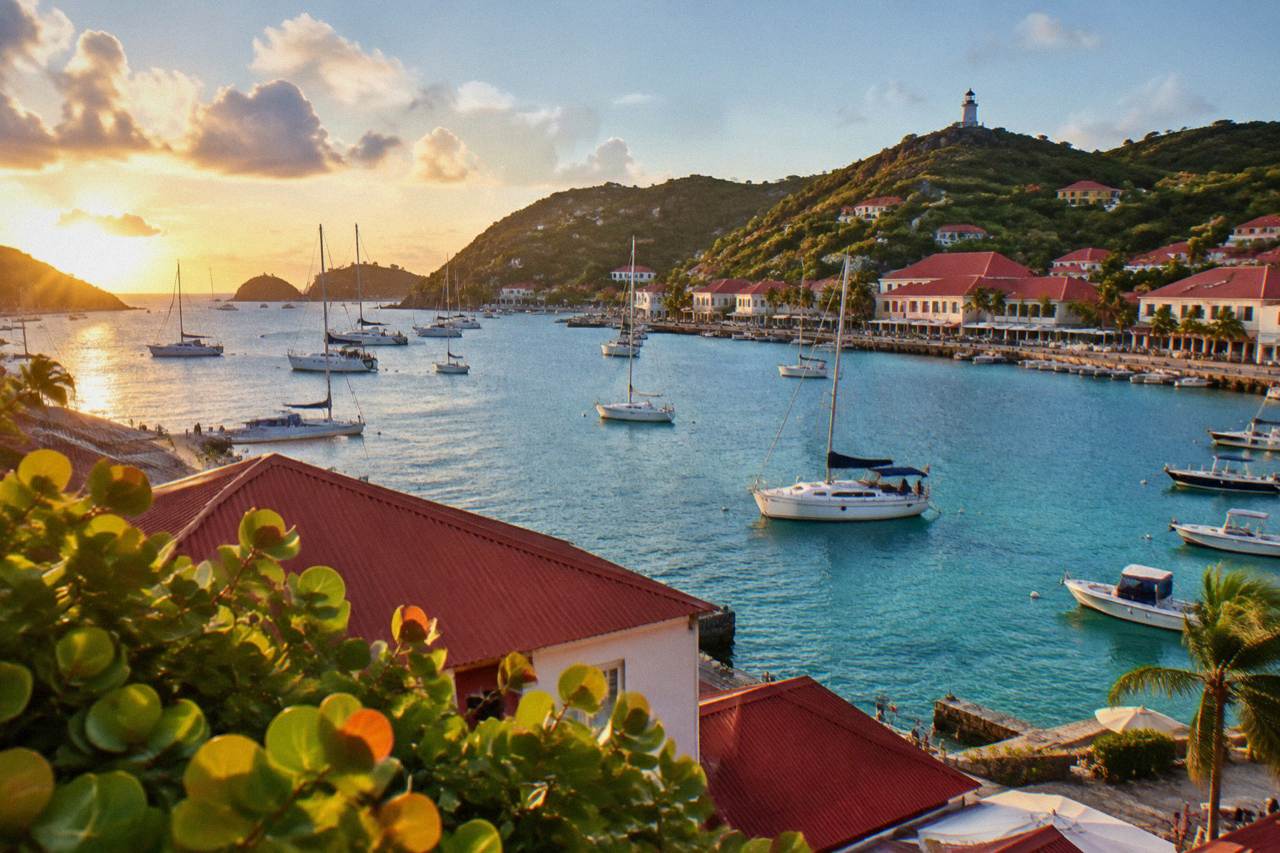
The core things to do in St Barts are its public beaches, the harbour town of Gustavia, coastal walks in the hills, and boat days on the water. There is no bookable on-island activity; every bookable tour departs from St Martin or Sint Maarten and visits St Barts by sea.
St Barthelemy, written St Barts, is a small French island in the Caribbean, an overseas collectivity of France since 2007, with about 21 square kilometres of hills, public beaches and turquoise water, and roughly 10,700 residents. Gustavia is its capital and harbour town. The island has no bookable on-island activities in the way larger destinations do: what it offers is beaches, walking, the harbour, and days on the water, with every bookable tour departing from St Martin or Sint Maarten across the channel. This page from St Barthelemy Travel walks through the whole picture, first day to final base.
Getting there shapes everything else. There are no jets at St Barts: the runway at Gustaf III Airport is 646 m, only small turboprops land, in daylight and visual conditions only. Most itineraries route through St Martin, either by small plane or by ferry, and the practical detail sits on How To Get To St Barts. If the ferry is your route, Great Bay Express runs from Philipsburg on the Dutch side, Sint Maarten, to Gustavia in about 45 minutes, and Voyager runs from Marigot on the French side in about 50 to 60 minutes; the operator asks ferry passengers to arrive about 45 minutes early, check-in closes about 15 minutes before departure, and a passport is required. The crossing is exposed to sea conditions, so it can be rough.
Things To Do In St Barts On Your First Day
A first day in St Barts works best as harbour, hill and beach: arrive through Gustavia or at Gustaf III Airport, walk the Gustavia waterfront with its shops and harbour views, drive or ride up into the hills for the panoramas, and finish on a public beach within easy reach of where you are staying. All of the island's beaches are public, the road network is short, and the whole place can be crossed by car in well under an hour, so nothing on a first-day list requires more than a morning or an afternoon. The only real constraint is daylight if you are flying in, since the airport closes shortly after sunset and small-plane schedules end with it.
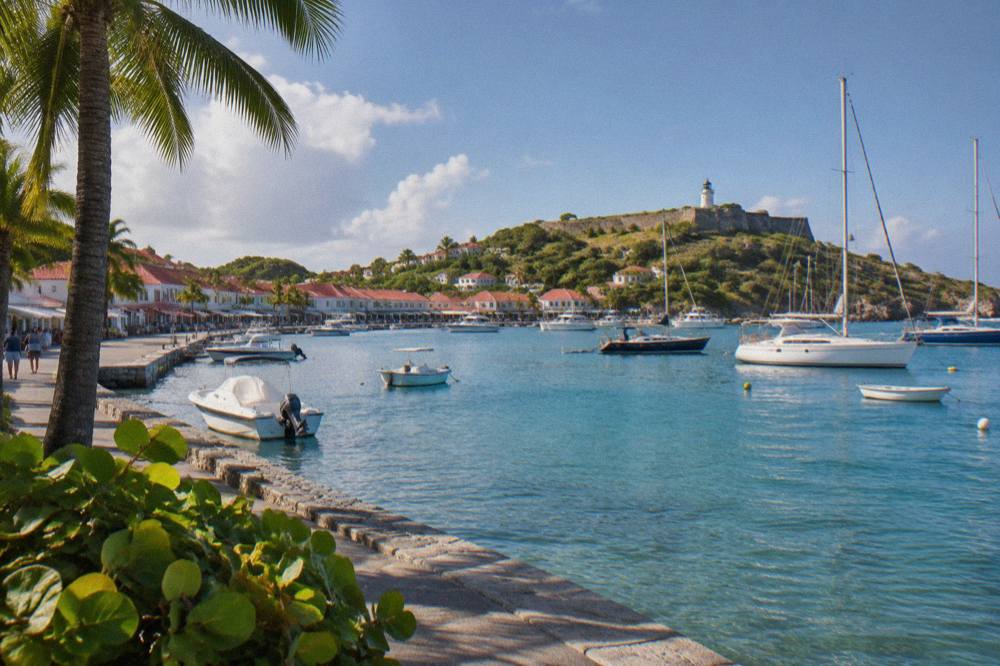
Start in Gustavia. The harbour capital sits on the leeward side, and its waterfront, the shell of its former forts on the headlands, and its shopping streets can be covered on foot in a slow loop. The Gustavia Harbor guide covers the quays and what ties up in them; Gustavia Shopping covers the retail side, from French labels to local trade. Above the town, Fort Karl and Fort Gustaf sit on the headlands, and the Wall House Museum tells the island's unusual Scandinavian chapter.
From town, the hills. The island's interior is a spine of small peaks and cactus scrub, and the roads over it, narrow and steep with a 50 km/h island-wide limit and 30 km/h in Gustavia and Saint-Jean, connect the named headlands and bays. A rental car is the usual answer; the counters at the airport include Avis, Budget and Hertz, alongside local agencies and Mini Mokes, and the details are on St Barts Car Rental. Taxis exist but a car gives you the beaches on your own clock.
End the day on sand. Shell Beach, also called Grand Galet, sits closest to Gustavia, a short hop from the town centre, which makes it the natural first-day beach for anyone staying in or near the capital. Every beach on the island is public and free to access; that is the standing rule, not a perk of any one stretch.
Free Things To Do In St Barts
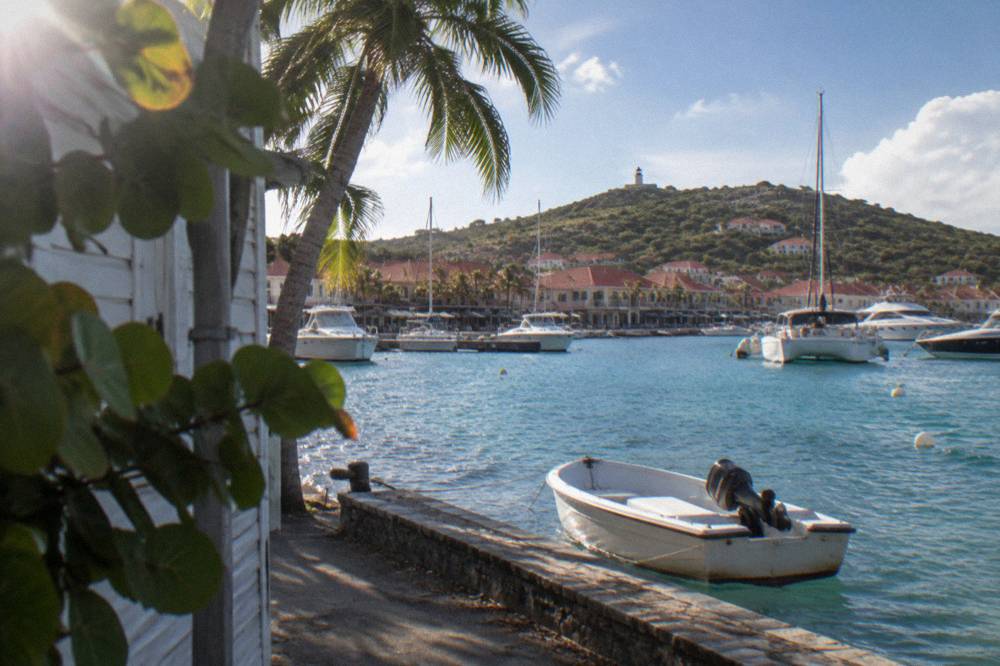
The free things to do in St Barts are the public beaches, the open public spaces of Gustavia, and the coastal hills and walking routes: all beaches are public and free to access, the harbour waterfront and its headland paths cost nothing, and no guided or tip-based walking tour exists on the island, so everything free is self-guided. The island's open places are the free product. That is the whole list, and it is a good one: about a dozen named beaches, a walkable capital, and hill paths with sea views in every direction.
There is no free walking tour on St Barts and no set of guided walks; if a site offers one, treat it with suspicion. What exists instead is public space. The beaches carry no entry charge and no membership; the tourism committee lists them as public and free. The hills above Colombier and the headlands around Gustavia are open to walk, so plan conservatively and carry water.
| Free activity | Where | Notes |
|---|---|---|
| Public beaches | Island-wide, all named beaches | All public, free access |
| Gustavia waterfront | Gustavia harbour | Open public quays and streets |
| Village wandering | Corossol and others | Public roads and shoreline |
The marine reserve adds a free dimension: the environment agency's regulatory-zones page lists a 5-knot speed limit in its zones, a ban on jet skis, 23 dive sites, a rule that dogs are not allowed on beaches, and a strict instruction not to touch turtles. Swimming and snorkelling from shore over the reserve's waters cost nothing beyond your gear, and the turtle sightings the reserve protects are a genuine free experience. Report nests or sightings to the environment agency rather than interfering.
The Best Beach Things To Do In St Barts
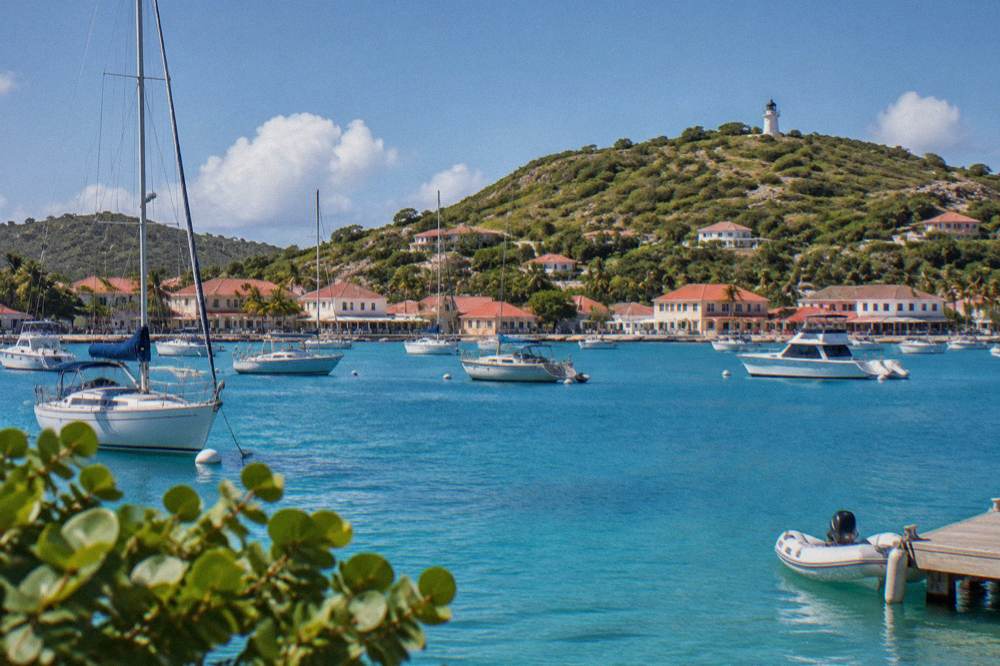
The named beaches of St Barts are Saint-Jean, Gouverneur, Saline, Shell Beach (Grand Galet), Flamands, Colombier, Grand Cul-de-Sac, Lorient, Toiny, Marigot and Corossol, and every one of them is public. Which beach is best depends on what you want: a beach close to the airport, a bay near Gustavia, or an Atlantic-facing stretch. Colombier stands apart: it is reached by boat or by a walk. This page names the beaches and places them on the map, and links to the individual beach guides for position and access. The boat version is the island's classic day on the water.
| Beach | Map position | Access note |
|---|---|---|
| Saint-Jean | North coast, by the airport | Public; airport road runs above it |
| Gouverneur | South coast | Public |
| Saline | South coast, east of Gouverneur | Public |
| Shell Beach (Grand Galet) | West, by Gustavia | Public; closest to the capital |
| Flamands | Northwest coast | Public |
| Colombier | Northwest tip | Public; boat or walk only |
| Grand Cul-de-Sac | Northeast coast | Public |
| Lorient | North coast, east of Saint-Jean | Public |
| Toiny | Southeast coast | Public |
| Marigot | East coast | Public |
| Corossol | West coast, north of Gustavia | Public, by the village |
For the individual profiles, see Colombier Beach, Saline Beach, Gouverneur Beach and Shell Beach. The one beach the boat tours converge on is Colombier, inside the marine reserve's protected zones, which is why the group sail from St Martin makes it the anchor stop. The day-by-day version of a beach circuit is on St Barts Beach Hopping Itinerary.
Since no boat tour departs from St Barts itself, the sea days are bought from the other side of the channel, and they are worth booking before you commit to travel dates.
All three are private charters priced per group, and all depart from St Martin or Sint Maarten. The group sail, the only per-person product, runs only from 12 May to 31 August 2027 on its listing. The solo card below is the Colombier and Ile Fourchue sail, the natural companion to a beach-first plan.
Things To Do In St Barts When It Rains
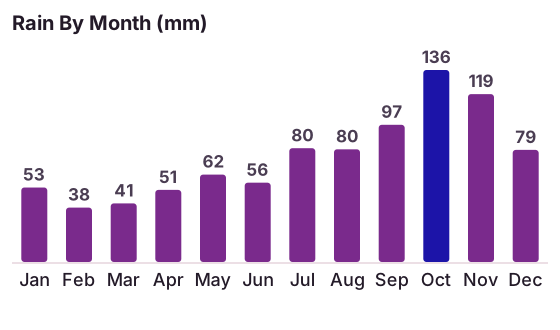
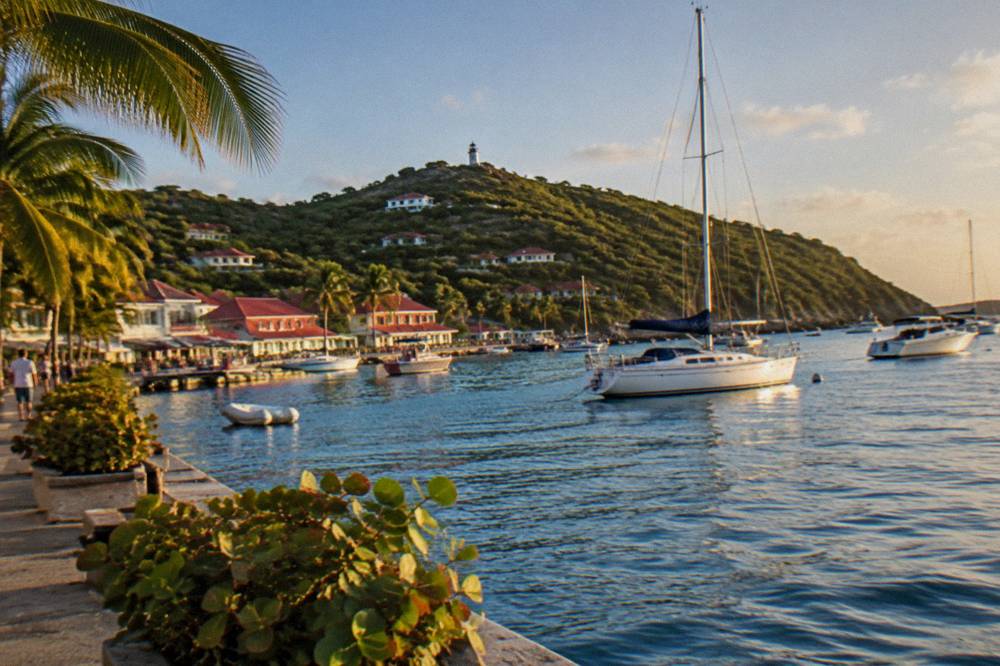
When it rains in St Barts the options narrow to Gustavia's shops and museums, the island's galleries and spa culture, and food, since the free product is mostly outdoors; the museums in and around Gustavia cover the island's Swedish period and shell collecting, and the retail streets sit under roofs. Rain in the tropics is often a shower rather than a day, but October, the wettest month in the Meteo-France normals at 135.6 mm, can produce long grey stretches, and the autumn overlaps with the period when many hotels and restaurants close for their annual break.
The indoor list is short but real. Gustavia's shopping is concentrated enough to work as a rainy-day plan; the St Barts Shopping guide maps it. The Wall House Museum, whose collections cover the Swedish period, and the Corossol shell museum are the cultural stops. Galleries sit across St Barts Art And Galleries, and the spa side of the island is covered on St Barts Spas. A fuller rainy-day structure is on St Barts Rainy Day Itinerary.
One rain-adjacent caution: sea conditions, not just sky conditions, govern the ferries. A rough crossing day is a bad boat-tour day, and the operators' cancellations follow the sea, so build a spare day into any St Martin-based boat plan. The full picture of crossing conditions is on St Barts Ferry Seasickness.
| Rainy-day option | Location | Detail |
|---|---|---|
| Shopping streets | Gustavia | Concentrated retail area |
| Wall House Museum | Gustavia | Name and map position |
| Shell museum | Corossol | Name and map position |
| Galleries | Island-wide | See art and galleries guide |
| Spas | Hotel-based | See spas guide |
Things To Do In St Barts At Night
At night St Barts is a harbour, restaurant and beach-club island: Gustavia's quays and tables are the centre of gravity, the hotels and beach clubs host the late seats, and the calendar's big nights are event nights, with New Year's Eve fireworks over Gustavia harbour the annual fixture. The evening is dinner-heavy, French-influenced, and concentrated in Gustavia, Saint-Jean and the hotel addresses.
The event calendar supplies the exceptions. The St Barth Music Festival runs 8 to 18 January 2027 for its 43rd edition, the Gourmet Festival runs 9 to 15 November 2026, and the Bucket Regatta fills the harbour with classic superyachts in mid-March. New Year's Eve is the island's famous night, fireworks over Gustavia with the fleet lit at anchor; the planning page is St Barts New Year's Eve, and the general evening angle is on St Barts Nightlife. For 2027 specifics beyond the Music Festival dates, treat details as unconfirmed until organizers publish them.
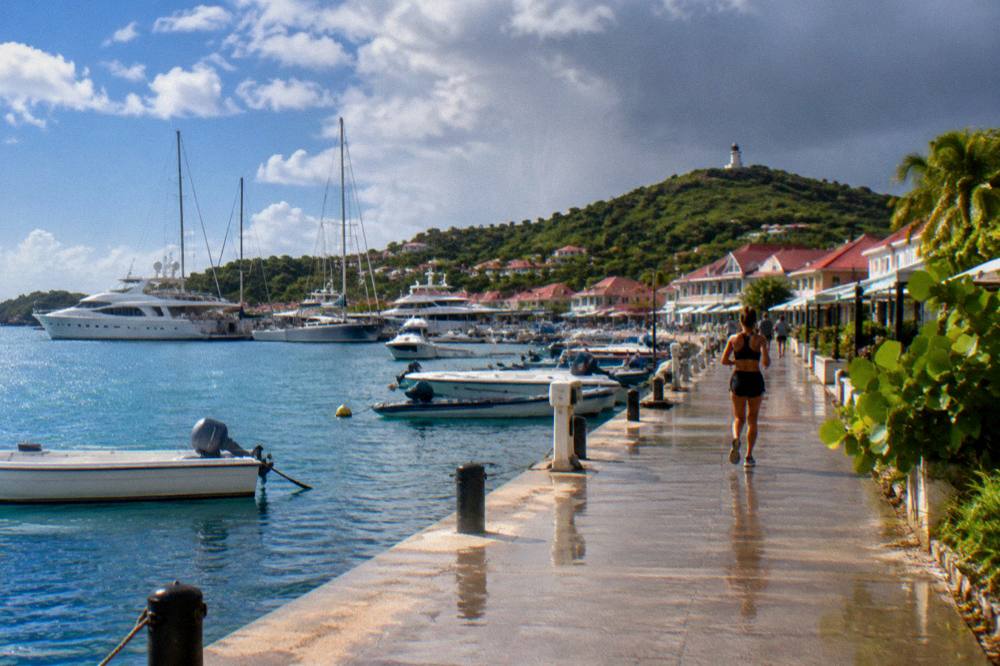
Sunset is the fixed evening event, and it is free. The west-facing stretches around Gustavia and Shell Beach catch the day's end, and the viewpoints are mapped on St Barts Sunset Spots.
What Do St Barts Boat Tours From St Martin Cost?
The trip list holds one shared group sail priced per person and five private charters priced per group, every one departing from St Martin or Sint Maarten, with capacities of up to 8 or 10 depending on the boat, and the overnight version is a two-day, one-night catamaran. Each card below prints its own current price, rating and duration from the listing. Pricing is per person for the group sail and per group for the charters, with group capacities of up to 8 or 10 depending on the boat.
The decision usually comes down to two questions. First, per person or per group: a party of six or eight often tips toward a charter once the per-person arithmetic is done on the reader's side. Second, day trip or overnight: the two-day, one-night catamaran turns the crossing into the trip itself. The card below is the per-person sail for parties of one or two, or anyone who prefers a shared day on the water.
| Product | Structure | Departure | Group capacity |
|---|---|---|---|
| Gustavia, Colombier, Ile Fourchue sail | Per person | St Martin / Sint Maarten | Shared sail |
| Private charter from St Martin | Per group | St Martin | Up to 8 |
| Full-day private charter | Per group | St Martin / Sint Maarten | Up to 10 |
| Nikki Beach private charter | Per group | Sint Maarten | Per group |
| Private sailboat charter | Per group | Sint Maarten | Up to 8 |
| Overnight private catamaran | Per group | St Martin | Up to 4 |
For a stay built around the water rather than around land, the overnight version is the distinctive one.
Things To Do In St Barts By Season
By season, St Barts runs warm all year, with mean daily highs from 28.5 C in January to 31.7 C in September in the Meteo-France normals 1991-2020, annual rain of 891.3 mm, October the wettest month at 135.6 mm and February the least rainy at 38.4 mm; the Atlantic hurricane season runs 1 June to 30 November with its peak from mid-August to mid-October. High season is the dry winter, anchored by the regattas and the New Year; the autumn is the low season, when many hotels and restaurants close and reopen in waves between mid-October and early November.
| Month | Mean daily high (C) | Rain (mm) | Season note |
|---|---|---|---|
| January | 28.5 | 52.6 | Music Festival, 8 to 18 Jan 2027 |
| February | 28.6 | 38.4 | Carnival period |
| March | 29.0 | 41.4 | Bucket Regatta, mid-March |
| April | 29.8 | 50.9 | Les Voiles de St Barth regatta, April |
| May | 30.7 | 61.7 | Group sail listing starts 12 May 2027 |
| June | 31.2 | 56.0 | Hurricane season begins 1 June |
| July | 31.2 | 80.4 | Hurricane season |
| August | 31.6 | 79.6 | Fete de Saint-Barthelemy, 24 Aug |
| September | 31.7 | 96.9 | Peak storm period |
| October | 31.4 | 135.6 | Wettest month; reopenings mid-month |
| November | 29.9 | 118.6 | Gourmet Festival, 9 to 15 Nov 2026 |
| December | 28.9 | 79.2 | High season begins; hurricane season ended 30 Nov |
The sea is warm throughout, about 26 C in winter to about 29 C from August to October from a secondary, rounded source. Hurricane Irma struck in September 2017, and the season's climatological peak sits near 10 September, but no prediction of a storm, a closure or a crowd belongs on any date; the seasonal picture is on Best Time To Go To St Barts and St Barts Hurricane Season. The monthly pages, from St Barts In December to St Barts In November, carry the month-by-month detail.
Day Trips From St Barts To Anguilla, Saba And St Martin
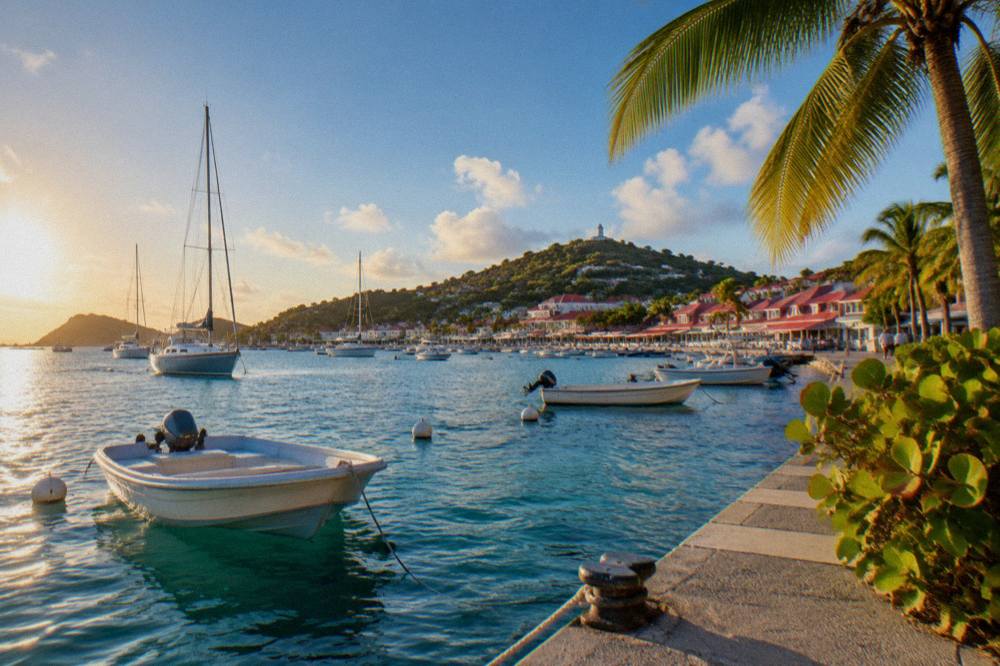
Day trips from St Barts run outward to Anguilla, Saba and St Martin, and they run by sea or by air through the same small-plane and ferry network that brings you in, with St Martin the practical hub because it holds the big airport, SXM, and the ferry terminals at Philipsburg and Marigot. Anguilla and Saba are the island-hopping extensions; St Martin is the one you will pass through in both directions unless you arrive by private boat. The full comparison of the two sides of the channel is on St Barts Vs St Martin, and the outward pages are St Barts To Anguilla and St Barts To Saba.
The direction that matters commercially here is inbound. A St Barts day trip from St Martin is the single most popular structure for visitors who are staying on the larger island: ferry across or sail across in the morning, beaches and Gustavia through the day, back by evening boat. The mechanics of that crossing, terminals and all, are on St Barts Ferry Operators And Schedule and SXM Airport To St Barts Ferry. Cruise passengers do the same thing by tender: ships anchor off Gustavia and land passengers by boat, there being no cruise pier, and that arrival is covered on St Barts Cruise Port.
| Direction | Route | Mode | Note |
|---|---|---|---|
| Inbound | Philipsburg to Gustavia | Ferry, about 45 min | Great Bay Express |
| Inbound | Marigot to Gustavia | Ferry, about 50 to 60 min | Voyager, 2 to 3 sailings a day |
| Inbound | SXM to SBH | Small plane | Turboprops only, daylight |
| Outbound | St Barts to Anguilla | Island hop | See day-trip guide |
| Outbound | St Barts to Saba | Island hop | See day-trip guide |
The wider island-hopping set, including St Kitts and the BVI comparisons, starts at St Barts Island Hopping.
Where To Base Yourself In St Barts
The base decision in St Barts is Gustavia against Saint-Jean against the quiet bays: Gustavia for the harbour, shops and restaurants; Saint-Jean for the airport-side beach life; Flamands, Grand Cul-de-Sac, Lorient, Colombier's side, Toiny or Corossol for slower, beach-first stays, with villas available year-round across a large villa market. There is no wrong answer geographically, the island is small and one road links everything, but the character differs sharply between the capital and the outer villages. The full breakdown is on Best Area To Stay In St Barts.
| Base | Character | Suits |
|---|---|---|
| Gustavia | Harbour capital, shops and tables | First-timers, no-car stays |
| Saint-Jean | Airport-side beach and retail | Beach-first visitors |
| Flamands | Northwest bay, quieter | Quieter beach stays |
| Grand Cul-de-Sac | Northeast lagoon side | Calm-water seekers, families |
| Lorient | North-coast village | Low-key stays |
| Toiny | Southeast, most secluded | Seclusion seekers |
| Corossol | West-coast fishing village | Quiet village stays |
Accommodation is hotel or villa; rates vary by season and each property's own booking page shows them. The property landscape, named hotels only, is on St Barts Hotels and St Barts Luxury Hotels; the villa alternative, and the year-round availability that makes villas the autumn option, is on St Barts Villas. One structural fact worth carrying: many hotels close each autumn and reopen between mid-October and early November, and Le Guanahani at Grand Cul-de-Sac becomes Airelles Le Guanahani on 1 November 2026, so confirm the name and the opening status of any specific property before booking a shoulder-season stay.
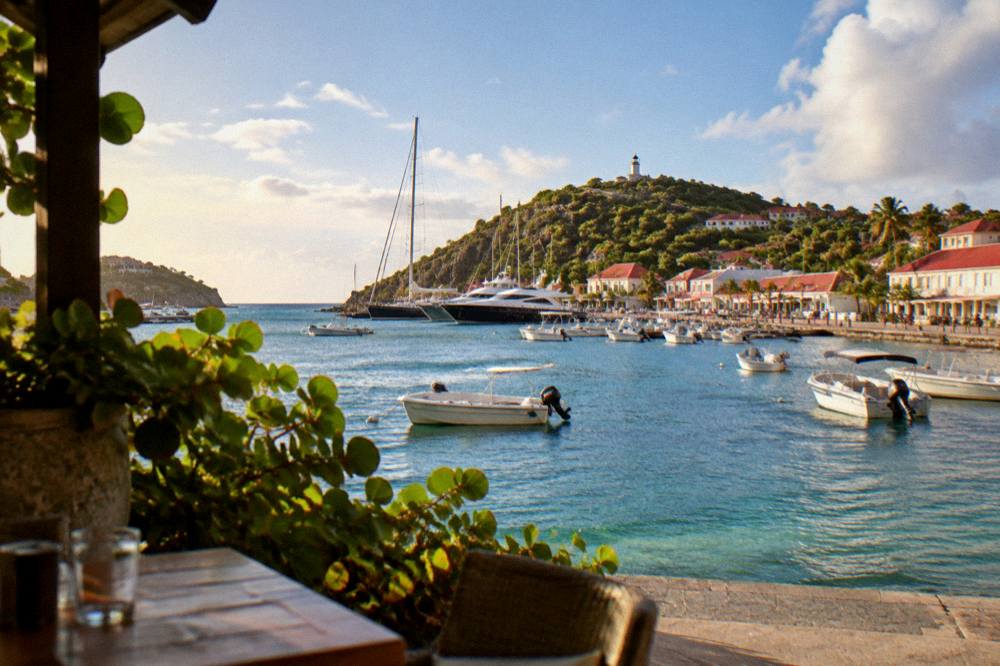
If the water is the point of the trip rather than the backdrop, the strongest structure is a St Martin stay with a St Barts boat day or overnight built around it, since every bookable tour leaves from that side.
Common Questions About Things To Do In St Barts
What is there to do in St Barts?
The core activities are the public beaches, walking Gustavia and the coastal hills, snorkelling in the marine reserve's waters, and boat days on the water. Every beach is public, and every bookable tour departs from St Martin or Sint Maarten.
Do boat tours leave from St Barts itself?
No. All six bookable St Barts tours listed here depart from St Martin or Sint Maarten, from points including Simpson Bay, Cole Bay, Anse Marcel and Grand Case, and none is based in Gustavia.
What free things are there to do in St Barts?
The free things are the public beaches, Gustavia's waterfront and open public spaces, and the coastal hill walks. There is no free or tip-based guided walking tour on the island.
What is the wettest month in St Barts?
October, at 135.6 mm of rain in the Meteo-France normals for 1991 to 2020, with November second at 118.6 mm. February is the least rainy month at 38.4 mm.
Can you visit St Barts as a day trip?
Yes. The standard structure is a day trip from St Martin, by ferry from Philipsburg or Marigot, by small plane from SXM, or on a booked boat tour. Cruise ships also tender passengers into Gustavia.
Are the beaches in St Barts private?
No. All beaches on the island are public and free to access, including those in front of hotels. Dogs are banned on beaches island-wide, and jet skis are banned in the marine reserve's zones.