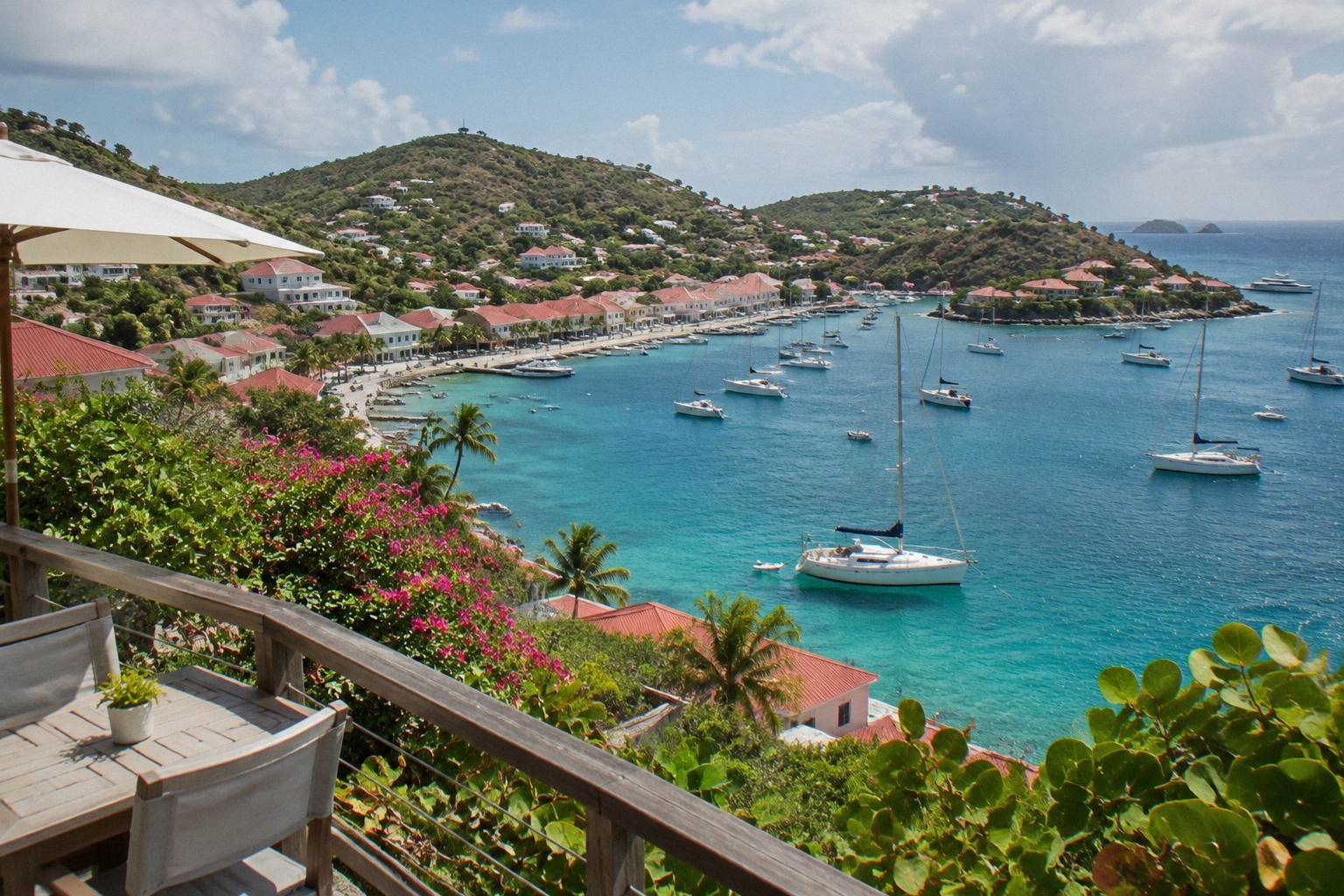
Art Galleries In St Barts
St Barthelemy, the small French collectivity in the Caribbean better known as St Barts, packs a surprising number of art galleries into about 21 square kilometres, most of them in Gustavia and Saint-Jean. This guide covers where the galleries cluster, what the island museums hold, when the cultural calendar peaks and how to build an art trip around the island's beaches and harbours.
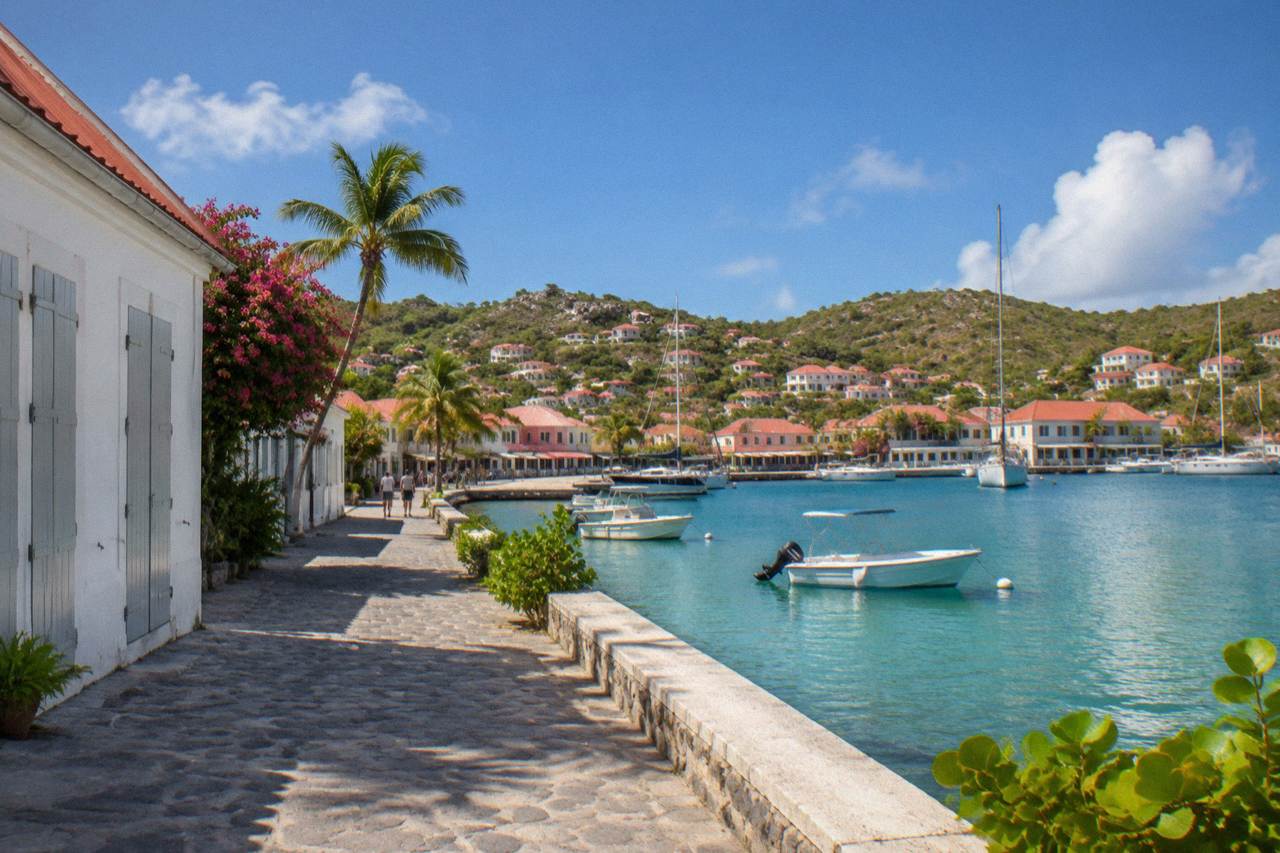
The art galleries of St Barts cluster in Gustavia and Saint-Jean, steps from the harbour, and the island adds museums and a cultural calendar that peaks from December through April. Most visitors reach the island via St Martin, by small plane or ferry, since the runway at Gustaf III Airport takes only small turboprops.
St Barthelemy, written St Barts on this site, is a French overseas collectivity in the Caribbean with about 10,700 residents, a harbour capital called Gustavia and a gallery scene far larger than its about 21 square kilometres suggest. The tourism committee's own materials present the island as much through its craftsmen, designers and painters as through its beaches, and the shopping streets of Gustavia and Saint-Jean carry that idea into practice. This guide from St Barthelemy Travel lays out where the galleries sit, what the small museums hold, when the cultural calendar peaks, and how the coastline itself became the island's recurring subject. An art trip here is a walking-scale trip: the core of the scene fits between the harbour front of Gustavia and the strip of Saint-Jean, with the rest of the island as the backdrop.
What Kind Of Art Scene Does St Barts Have?
The art scene of St Barts is a compact, commercially driven gallery scene centred on Gustavia and Saint-Jean, selling painting, photography, sculpture and jewellery to a seasonal clientele, supported by a small set of museums and a winter cultural calendar. The tourism committee presents the island's craftspeople and designers as part of its official offer, alongside the beaches, rather than as a separate attraction.
The scale matters. This is an island of roughly 10,700 people, and its retail core sits in two walkable pockets. Galleries here behave like the island's other shops: they open with the season, they cluster where the footfall is, and they close or reduce hours during the autumn lull. The general pattern on the island is that many hotels and restaurants close each autumn and reopen between mid-October and early November, and retail follows the same rhythm in a looser way. Planning an art visit around that pattern matters more than any single address.
What the galleries sell reflects the customer base. Painting and photography of the island itself dominate, alongside contemporary sculpture, designer jewellery and works brought in from the French mainland and the wider Caribbean. The subject matter, over and over, is the one this guide returns to below: turquoise water, red roofs, hulls at anchor in Gustavia and the long light of the late afternoon. If a first page of search results suggests a single famous museum, the reality is broader and thinner: many small rooms, a handful of museums, and a landscape that does most of the work.
Cultural Calendar For An Art Trip To St Barts
Galleries, museums and events share the same mid-October to April window
| Reopenings after autumn closure Reopen in waves to early November; galleries expand hours | Mid-October |
|---|---|
| St Barth Gourmet Festival Island at full energy; book rooms early | 9 to 15 November 2026 |
| St Barth Music Festival, 43rd edition Concerts plus gallery season at its peak | 8 to 18 January 2027 |
| Carnival around Mardi Gras Costumes and parades as subject matter | February |
| St Barths Bucket Regatta Superyachts fill Gustavia harbour | Mid-March |
| Film festival Or early May; 2027 dates to be confirmed | Late April |
Dates from the cultural calendar table in this guide.
Where Are The Art Galleries In St Barts Concentrated?
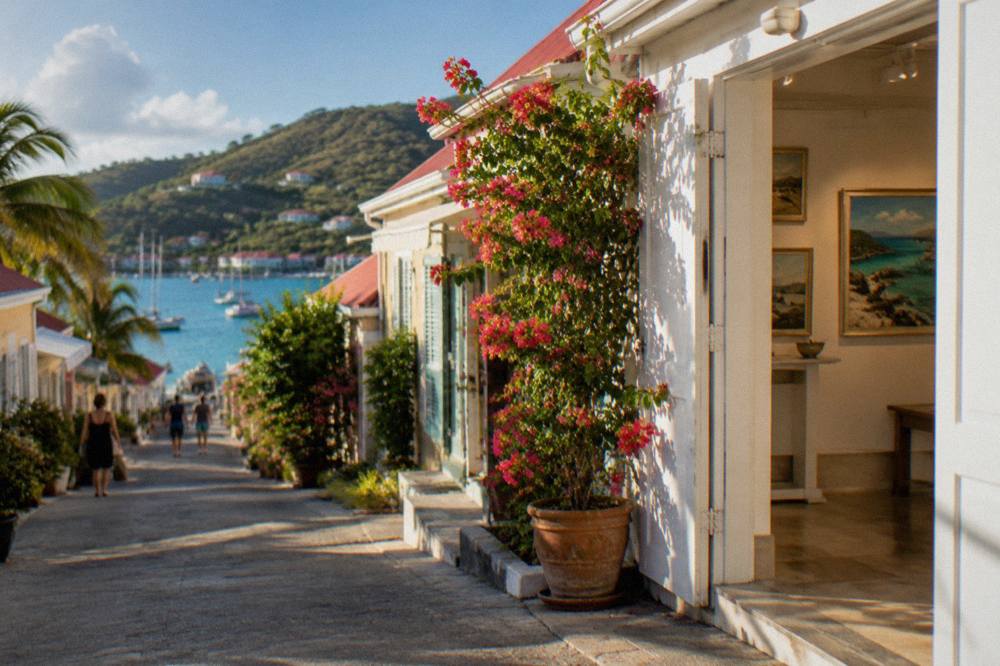
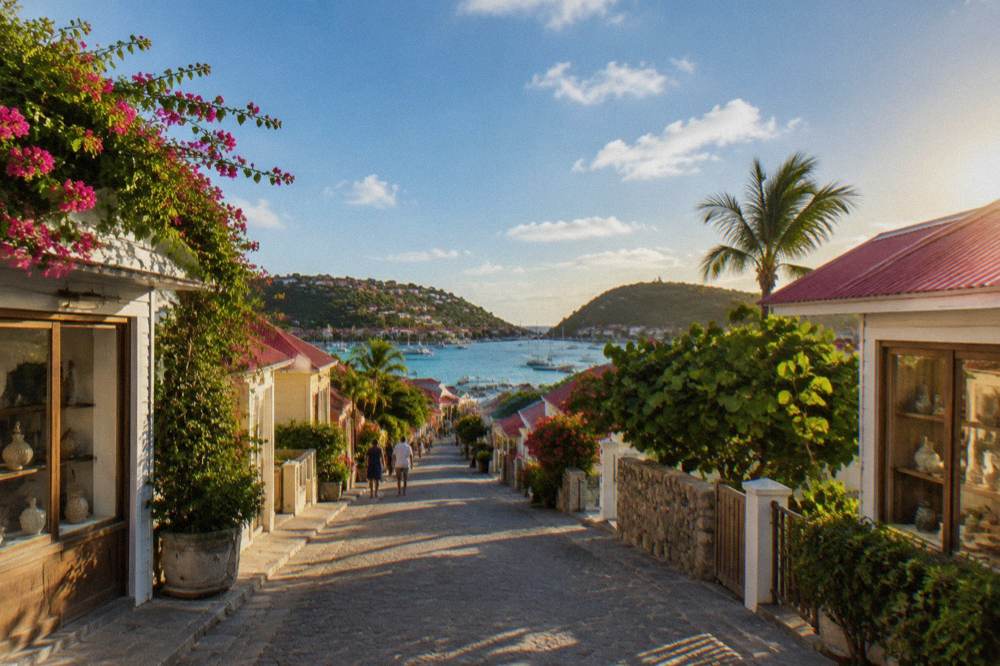
Gustavia holds the densest cluster of galleries and art-facing shops on St Barts, spread along the streets that run up from the harbour, with a second, smaller concentration in Saint-Jean around the airport and the beach road. Both areas are flat, walkable and minutes apart by car, so a gallery day needs no planning beyond a morning in each.
Gustavia is the natural starting point. The town wraps its harbour, Quai du General de Gaulle along the water and the streets rising behind it, and the same blocks that carry the island's fashion and jewellery boutiques carry its art. The St Barts shopping guide on this site covers those streets in detail, including how the duty-free arrangement shapes what the shops stock. Galleries sit among them rather than in a separate arts district, so the honest advice is to walk the harbour blocks and the two or three streets behind them and let the doors announce themselves. Harbourside parking fills early in high season, so arriving before late morning makes the walk calmer.
Saint-Jean is the second pocket. The area around the airport and the beach road mixes boutiques with galleries, and the tourism committee's destination materials treat Saint-Jean and Gustavia together as the island's retail pair. Between the two, a visitor covers the commercial heart of the scene without a map. Outside these two areas, art appears in hotel lobbies and villa agencies rather than in dedicated rooms, which is why the museums and the landscape, covered next, carry the rest of an art trip.
Which Museums And Small Collections Does St Barts Offer?
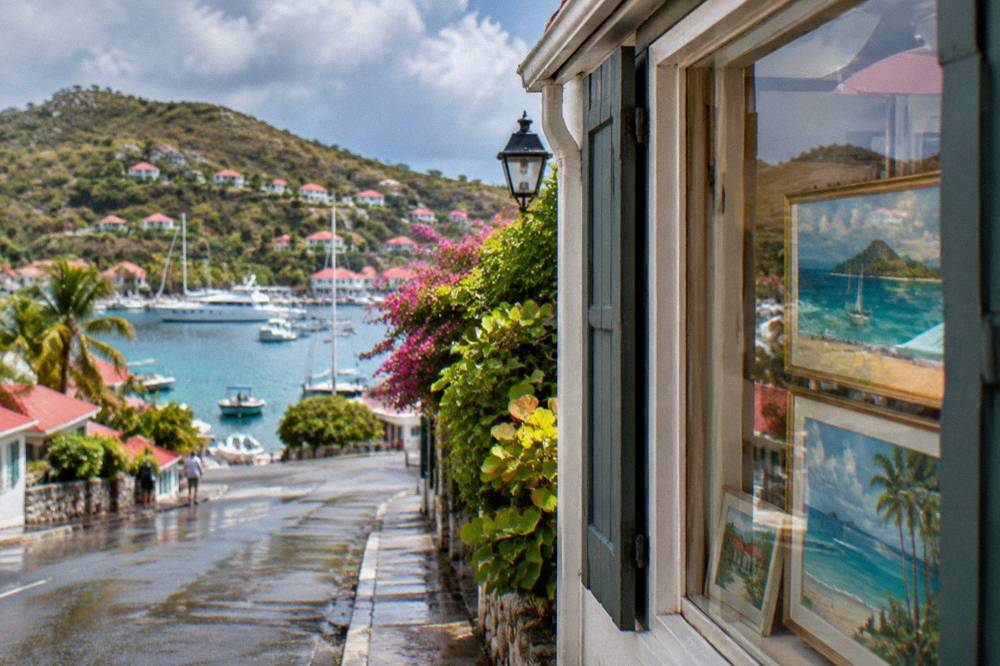
St Barts offers a handful of small museums rather than a single large one: island-history and heritage collections in Gustavia, a shell collection at Corossol on the windward side, and heritage sites including the fort ruins above the harbour. None is large, and together they frame the island's Swedish and French past, which is the context behind much of what the galleries sell.
The heritage thread is genuinely unusual for a Caribbean island this size. St Barts was Swedish for nearly a century before returning to France, and the island's buildings, street names and museum collections reflect that layered past. The collectivity status itself dates only from 2007, when St Barts separated from Guadeloupe, a detail that surprises visitors who assume a longer standalone history. For an art traveller, that history explains the recurring motifs: Scandinavian building forms, French port architecture and the vocabulary of a working harbour that still hosts superyachts and regattas.
The collections are close together and short visits by design. A museum morning in Gustavia pairs naturally with the gallery afternoon described above, and the fort sites above the town double as viewpoints for the harbour panoramas that fill the island's paintings. The tourism committee's site lists the heritage sites among the island's official attractions, and the pattern to plan around is seasonal: hours expand with the winter season and contract in the autumn lull, so checking locally on arrival is the reliable method.
When Does The Cultural Calendar Peak On St Barts?
The cultural calendar on St Barts peaks between December and April, anchored by the Music Festival from 8 to 18 January 2027, the Gourmet Festival from 9 to 15 November 2026, carnival around Mardi Gras in February, the Bucket Regatta in mid-March and a film festival in late April or early May. Art galleries ride the same season, at their fullest when the events bring the island to life.
The two festivals with confirmed dates are the St Barth Music Festival, whose 43rd edition runs 8 to 18 January 2027, and the St Barth Gourmet Festival, running 9 to 15 November 2026 with guest chefs across the island's restaurants. The Bucket Regatta sits in mid-March, when superyachts fill Gustavia's harbour, and the film festival falls in late April or early May with its 2027 dates still to be confirmed. Carnival falls around Mardi Gras in February, and the island celebrates its patron saint, Saint-Barthelemy, on 24 August with a Corossol celebration the following day.
For an art-focused visit, the logic is simple: the galleries, museums and events all run at their fullest in the same window, from the reopenings in mid-to-late October through the April regatta season. The Meteo-France normals, 1991-2020, show why: the mean daily high runs 28.5 C in January against 31.7 C in September, and rain totals climb through the autumn, with October the wettest month at 135.6 mm of the annual 891.3 mm. Culture here follows the weather and the sailing calendar together.
| Period | What happens | Relevance to an art trip |
|---|---|---|
| Mid-October to early November | Hotels, restaurants and shops reopen in waves after autumn closure | Galleries restock and expand hours |
| 9 to 15 November 2026 | St Barth Gourmet Festival | Island at full energy; book rooms early |
| 8 to 18 January 2027 | St Barth Music Festival, 43rd edition | Concerts plus gallery season at its peak |
| February | Carnival around Mardi Gras | Costumes and parades as subject matter |
| Mid-March | St Barths Bucket Regatta | Superyachts fill Gustavia harbour |
| Late April or early May | Film festival, dates to be confirmed | Quieter town, late-season light |
Why Does The Landscape Dominate St Barts Art?
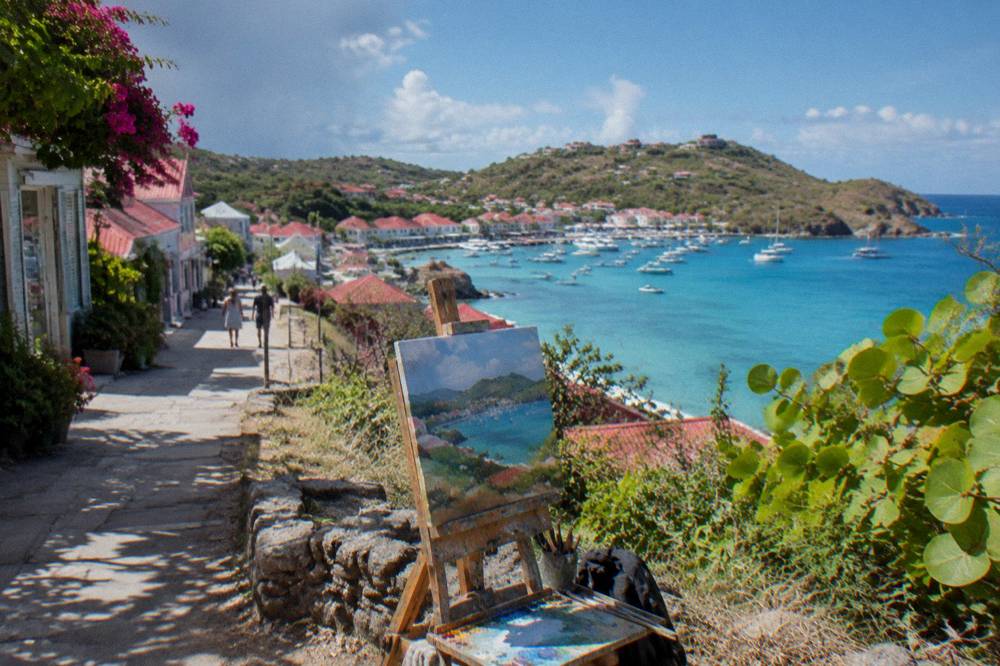
The landscape dominates St Barts art because the island is almost nothing but landscape: about 21 square kilometres of green hills dropping to some fourteen named public beaches, a horseshoe harbour at Gustavia and shallow turquoise flats at Grand Cul-de-Sac. Every beach on the island is public by law, which means the raw material of the island's imagery is free to walk into, camera or sketchbook in hand.
The public-beach rule deserves emphasis because it shapes the relationship between artists and the shore. From Saint-Jean, with its famous airport approach, to Colombier, reachable on foot or by boat, the beaches carry no gate and no entry fee. The full list the tourism materials work from runs Saint-Jean, Gouverneur, Saline, Shell Beach (Grand Galet), Flamands, Colombier, Grand Cul-de-Sac, Lorient, Toiny, Marigot, Corossol and the Anse des Cayes stretch, every one public. A photographer or painter on St Barts has the same access to the same views as the postcard trade.
| Public beach | Position on the island | What it gives a view of |
|---|---|---|
| Saint-Jean | North coast at the airport | The airstrip, the bay and Eden Rock |
| Shell Beach (Grand Galet) | Walkable from Gustavia | Sea shells and sunset water |
| Flamands | North-west coast | A long curve of sand below the hills |
| Colombier | North-west tip | Unspoiled bay inside the nature reserve |
| Gouverneur | South coast | A wide protected bay and green headlands |
| Saline | South coast | Dunes, ponds and a broad open beach |
| Grand Cul-de-Sac | East coast | Shallow turquoise flats and the reef |
| Lorient | North-east coast | A village beach with a reef barrier |
The marine nature reserve adds a layer. The environment agency's regulatory-zones page lists the rules that keep the bays the way painters like them: a 5-knot speed limit inside reserve zones, a ban on jet skis and other motorised water devices, 23 dive sites, no dogs on any beach and no touching of sea turtles. Those rules protect exactly the water colour and the turtle population that appear, over and over, in the island's canvases and prints.
How Do Photography And The Harbour Shape The Island's Imagery?
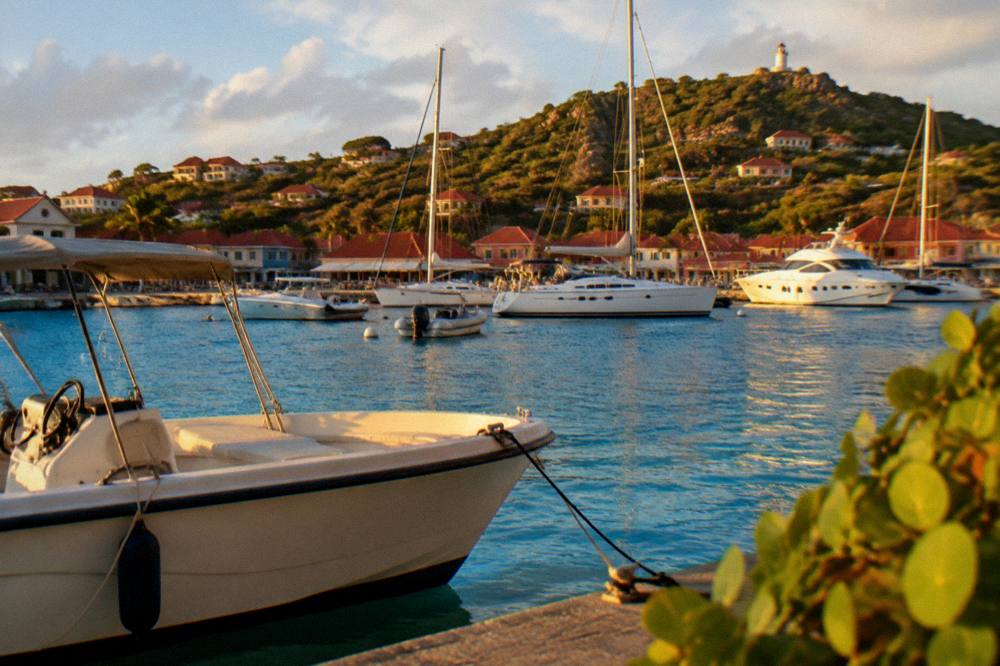
Gustavia harbour shapes the island's imagery more than any single gallery does, because the harbour is where the island's visual identity concentrates: red and white hulls, superyacht masts, the Shell Beach cliffs at one end and the fort ruins above. Photography of St Barts, from postcards to gallery prints, keeps returning to this one amphitheatre of water and roofs, especially during the regatta weeks.
The harbour works at two speeds. Through most of the year it holds a mix of fishing boats, sailing yachts and tenders, and the town reads as a small French port. During the Bucket Regatta in mid-March and the April sailing weeks, the same water fills with superyachts and classic racing hulls, and the photography changes character entirely. Cruise ships add a third layer: they anchor offshore and tender their passengers in, since the port has no cruise pier, and the collectivity caps participating ships at 1,200 passengers, keeping the waterfront on a human scale.
For a visitor with a camera, the practical points are few and firm. The light is strongest early and late, the town is small enough to walk end to end, and the viewpoints from the fort sites above the harbour give the classic panorama. No permit system governs casual photography on public land, though the environment agency restricts drone use in and near the reserve zones, so aerial work needs prior authorisation. The turtles that appear in so many island images are strictly protected: the rule is observation only, never touch.
Can You Combine St Barts Art With A Day On The Water?
Yes, and it is the most natural pairing on the island, because every bookable boat tour listed here departs from St Martin or Sint Maarten and crosses to St Barts for the day, combining the crossing with stops at Colombier and Ile Fourchue, the two anchorages inside the nature reserve that appear most often in the island's art. The group sail option runs from 12 May to 31 August 2027 on its listing, and the rest are private charters priced per group.
The logic for an art traveller is straightforward. The views that fill the galleries, Colombier's unspoiled bay, the cliffs of Ile Fourchue, the approach to Gustavia from the water, are seen properly from the water, and the tours deliver exactly that set. The Gustavia, Colombier Beach and Ile Fourchue tour is the group-sail option, a full day with snorkelling stops, and it doubles as a floating photography platform: the reserve's 5-knot zones mean boats glide, not roar, through the bays. See the live listing.
The private options suit travellers building the day around light and timing rather than a fixed schedule. A private sailboat charter from St Maarten and a full-day private charter both cover the same coastline on the client's own clock, and the two-day, one-night catamaran puts an overnight in St Barts itself into the itinerary. All of them leave from the St Martin side, Simpson Bay, Cole Bay, Anse Marcel or Grand Case, never from Gustavia, so the crossing is part of the product. Inside the reserve, the environment agency's rules govern everything: no touching wildlife, no dogs, and ecological moorings at Colombier and Ile Fourchue where vessels over 25 m are excluded.
| Option | Departure | Style |
|---|---|---|
| Gustavia, Colombier and Ile Fourchue sail | St Martin / Sint Maarten | Group day sail with snorkelling, 12 May to 31 August 2027 on its listing |
| Full-day private charter | St Martin / Sint Maarten | Private day charter, priced per group |
| Private charter from St Martin | St Martin / Sint Maarten | Private day charter, priced per group |
| Nikki Beach private charter | Sint Maarten | Private charter with a beach-club stop |
| Two-day one-night private catamaran | St Martin | Overnight, priced per group |
| Private sailboat charter | St Maarten | Private sailing day, priced per group |
How Do You Get To St Barts For An Art Trip?
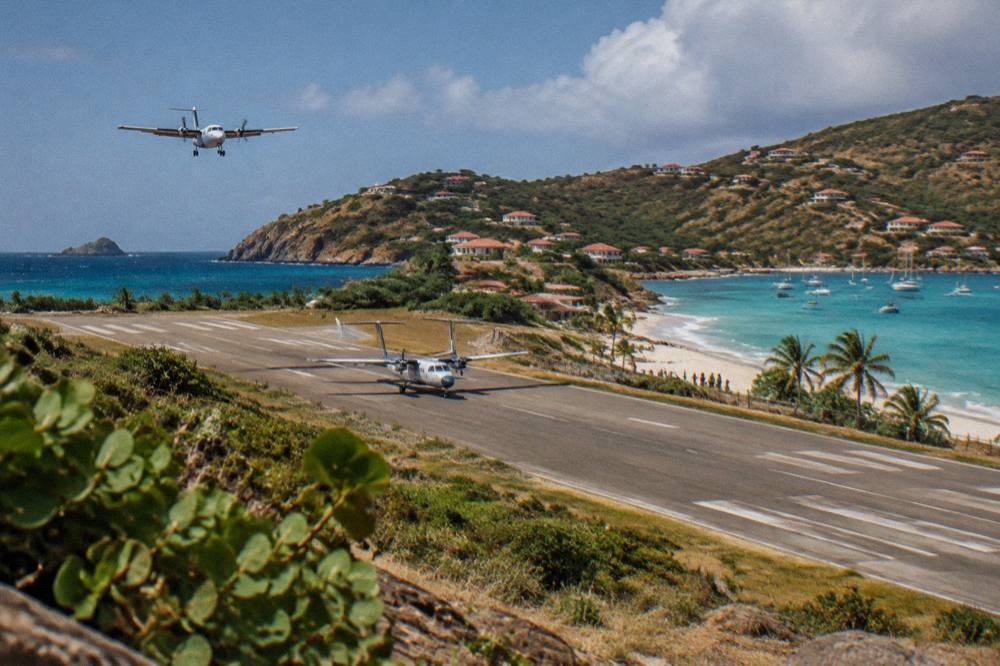
Nearly everyone reaches St Barts through St Martin: flights land at Princess Juliana Airport on the Dutch side, then a small turboprop of St Barth Commuter, Winair or Tradewind makes the short hop to Gustaf III Airport, whose 646 m runway excludes jets entirely and operates in daylight only. The alternative is the ferry, Great Bay Express from Philipsburg in about 45 minutes or Voyager from Marigot in about 50 to 60 minutes, both arriving at Gustavia.
The airport is part of the island's iconography, the approach over the hill at Saint-Jean being one of the most photographed landings anywhere. That fame has limits: no jet lands here, operations stop at dusk, and weather can shift schedules. The small-plane carriers divide the gateways between them, St Barth Commuter flying from SXM, Grand Case and Guadeloupe, Tradewind from San Juan and Antigua, and Winair from SXM. The how to get to St Barts guide and the St Barts airport guide cover the mechanics in full, and the ferry operators and schedule page handles the sea option.
| Route | Mode | Operator |
|---|---|---|
| SXM (Sint Maarten) to SBH | Small turboprop | St Barth Commuter, Winair |
| San Juan (SJU) to SBH | Small turboprop | Tradewind |
| Antigua (ANU) to SBH | Small turboprop | Tradewind |
| Guadeloupe (PTP) to SBH | Small turboprop | St Barth Commuter |
| Philipsburg to Gustavia | Ferry, about 45 minutes | Great Bay Express |
| Marigot to Gustavia | Ferry, about 50 to 60 minutes | Voyager |
Two cautions from the island's own rules. The crossing can be rough, and neither operator promises a calm one, so seasensitive travellers should read the ferry seasickness considerations before choosing the boat. And St Barts sits outside the Schengen area, so a Schengen visa does not by itself authorise entry; passport requirements differ by nationality and each traveller should check their own government's advice before flying.
Where Should You Stay To Be Near The Galleries?
Gustavia is the answer for a gallery-first trip, since the densest cluster of art rooms sits in its harbour blocks, while Saint-Jean suits visitors who want the boutiques, the beach and the airport strip in one walk, and the quieter areas, Flamands, Grand Cul-de-Sac, Toiny and Corossol, trade convenience for space and sea views. All of them are within a short drive of the harbour on an island this size.
The trade-off is real but small. An island of about 21 square kilometres with one main road ring means nowhere is far, and the practical questions are traffic in Gustavia at peak hours and parking near the harbour, which fills early in season. Car rental counters for Avis, Budget and Hertz operate at the airport alongside local agencies and the island's Mini Moke specialists, and a car makes the gallery-plus-beach day easy in a way taxis cannot quite match, though taxi service does exist island-wide. The car rental guide covers the details.
Accommodation follows the seasonal pattern described above: many of the major hotels close from mid-August and reopen between mid-October and early November, while villas and a set of smaller properties stay available year-round. The St Barts hotels overview and the boutique hotels guide lay out the choices, and rates vary by season, with each property's own booking page showing current figures. For an art trip timed to the Music Festival in January or the Bucket in March, booking early is the standing advice for the island as a whole.
| Area | Character | Distance logic |
|---|---|---|
| Gustavia | Harbour capital, shops and galleries at the door | Walk to the gallery cluster |
| Saint-Jean | Beach, airport strip, boutiques | Short drive or walk to its own shops |
| Flamands | Long beach, quieter, hotel-led | Short drive to Gustavia |
| Grand Cul-de-Sac | Shallow east-coast bay, family-friendly water | Cross-island drive to Gustavia |
| Corossol | Traditional fishing village feel | Close to Gustavia by the north coast road |
| Toiny | Wild south-east coast, private and quiet | Furthest from the harbour core |
Common Questions About Art Galleries In St Barts
Are there art galleries in St Barts?
Yes. St Barts has a compact commercial gallery scene concentrated in Gustavia and Saint-Jean, selling painting, photography, sculpture and jewellery, alongside a small set of island museums and heritage sites.
Where are the art galleries in St Barts located?
Mostly in Gustavia, in the streets rising from the harbour, with a second cluster in Saint-Jean around the beach road and airport. Both areas are flat and walkable, and a morning in each covers the scene.
When is the best time to visit St Barts for art?
December through April, when the galleries and museums run at full hours and the cultural calendar peaks with the Music Festival from 8 to 18 January 2027, carnival in February and the Bucket Regatta in mid-March.
Does St Barts have museums?
Yes, several small ones. Island-history and heritage collections sit in Gustavia, with a shell collection at Corossol and fort ruins above the harbour. None is large; together they cover the island's Swedish and French past.
Can you buy art in St Barts?
Yes. Galleries in Gustavia and Saint-Jean sell original painting, photography, sculpture and designer jewellery, and the island's wider shopping offer, covered in the St Barts shopping guide, includes duty-free boutiques in the same streets.
How do you get to St Barts for a gallery visit?
Through St Martin. A small turboprop from SXM, San Juan, Antigua or Guadeloupe lands at Gustaf III Airport, or ferries run from Philipsburg in about 45 minutes and Marigot in about 50 to 60 minutes, arriving at Gustavia a short walk from the gallery streets.
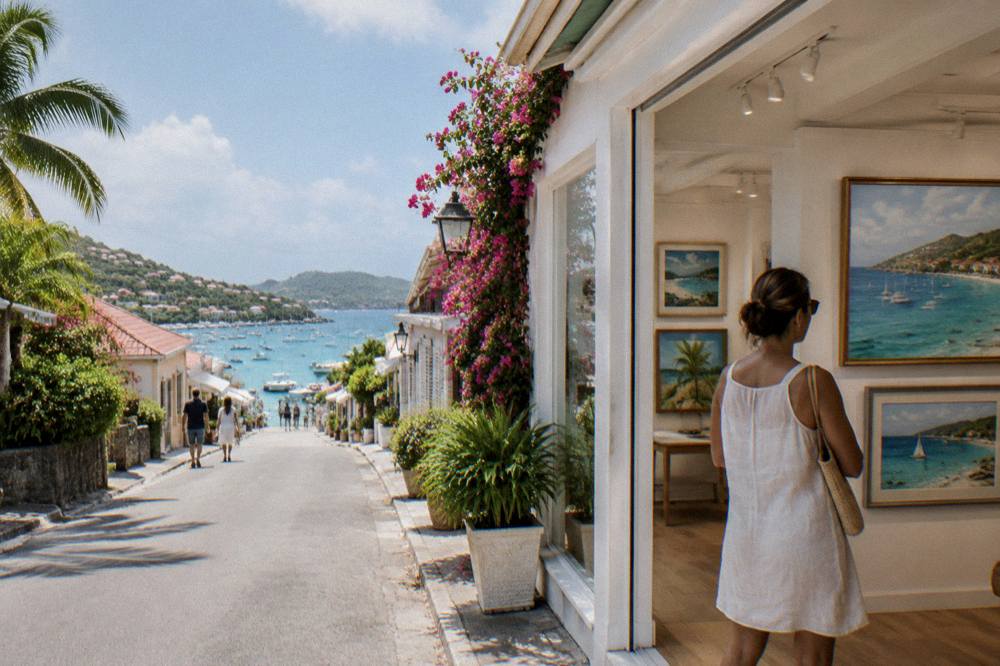
An art trip to St Barts ends up being an island trip: two walkable gallery pockets, a handful of small museums, a cultural calendar that peaks with the winter season, and a public, protected coastline that supplies most of the imagery in between. Pair the harbour mornings with a day on the water out of St Martin, time the visit against the St Barts New Year's Eve season or the spring regattas if energy matters, and the full things to do in St Barts roundup fills any gaps the galleries leave.