St Barts Airport Guide (SBH)
St Barthelemy's airport, Gustaf III, is a 646 m strip of runway squeezed between a hillside and Saint-Jean beach, served only by small turboprops in daylight. This guide covers the airlines, the gateways, the ferry alternative and what happens after you land.
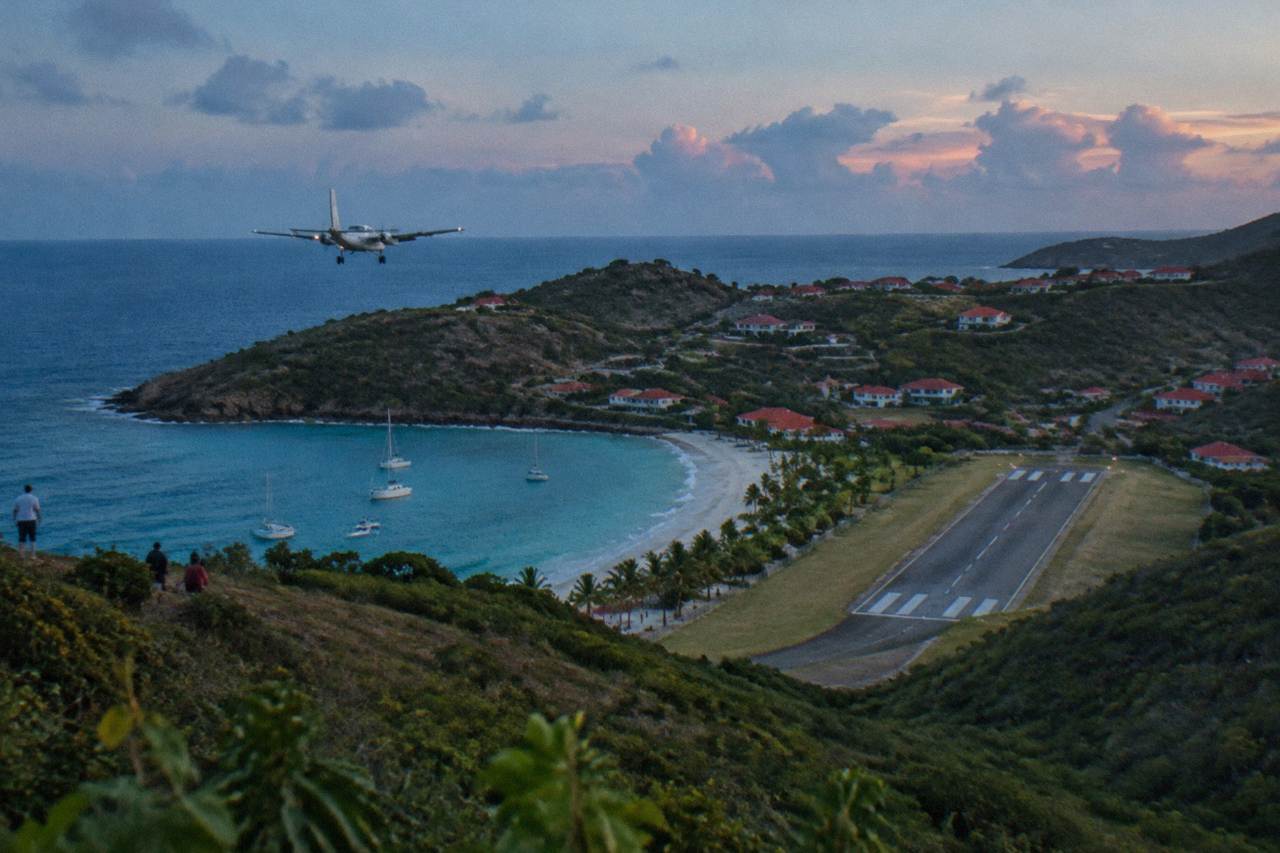
St Barts Airport is Gustaf III, also called Remy de Haenen, code SBH. Its runway is 646 m, so only small STOL turboprops land, in daylight and visual conditions only. Travelers fly to St Martin (SXM), San Juan (SJU), Pointe-a-Pitre (PTP) or Antigua (ANU), then take a small plane or the ferry.
St Barthelemy, usually written St Barts, is a small French island in the Caribbean with about 21 square kilometres of hills, public beaches and turquoise water, and its airport is one of the most distinctive in the region. Gustaf III Airport, also called Remy de Haenen, carries the code SBH and sits at the edge of Saint-Jean, a short strip of runway wedged between a traffic circle, a hillside and the sand. The island is an overseas collectivity of France since 2007, its harbour capital is Gustavia, and the euro is the currency, facts that shape everything about how the airport looks and runs. This guide covers what the airport is, who flies there, how connections work, and what to do after landing, in a research-and-reporting voice drawing on official and operator pages rather than personal anecdote.
What Is The St Barts Airport?
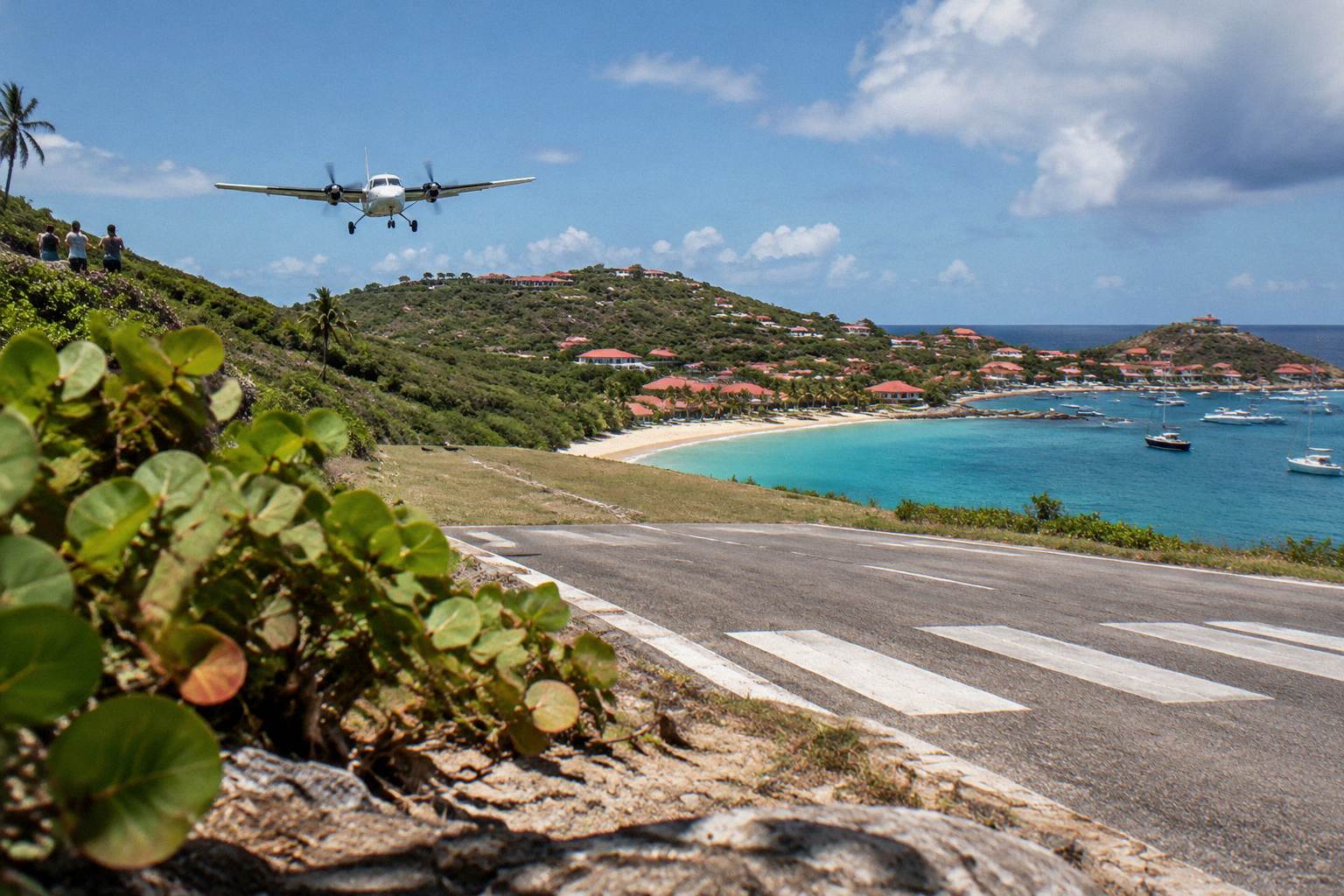
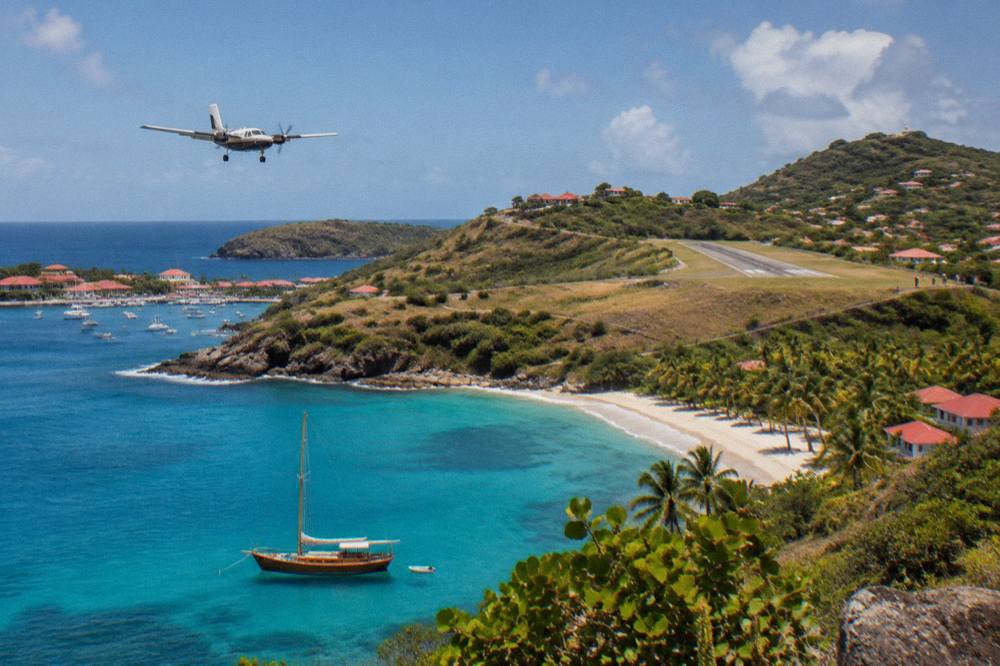
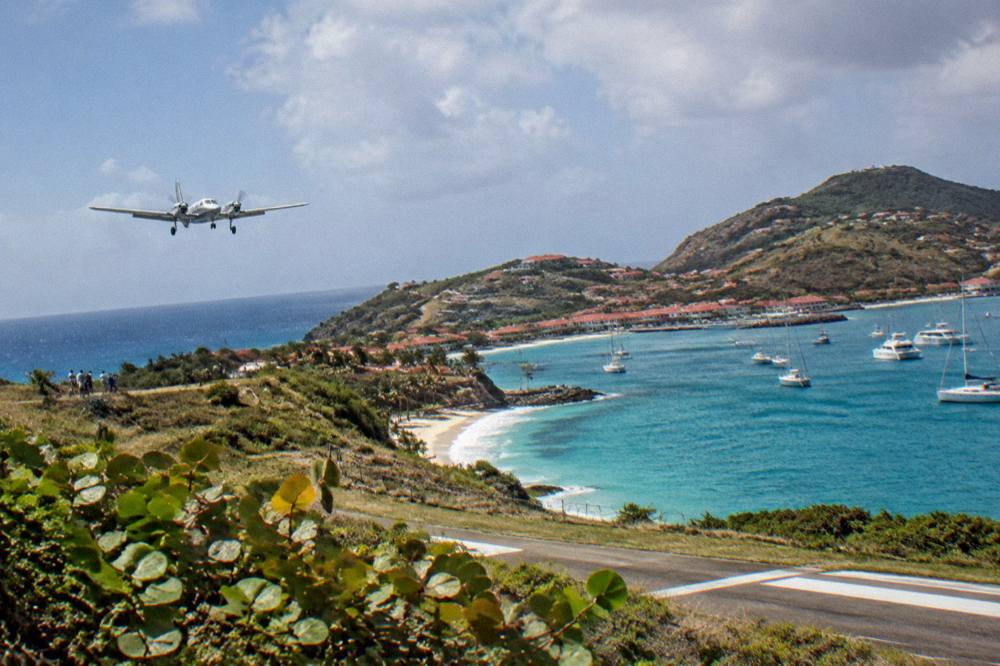
The St Barts airport is Gustaf III, also named Remy de Haenen, with the IATA code SBH and the ICAO code TFFJ. Its single runway, 10/28, is 646 m (2,119 ft) long, which restricts the field to small STOL turboprops. No jets land at St Barts, and operations are limited to daylight and visual flight conditions. The airport sits beside Saint-Jean beach on the island's north shore, next to the island's only roundabout.
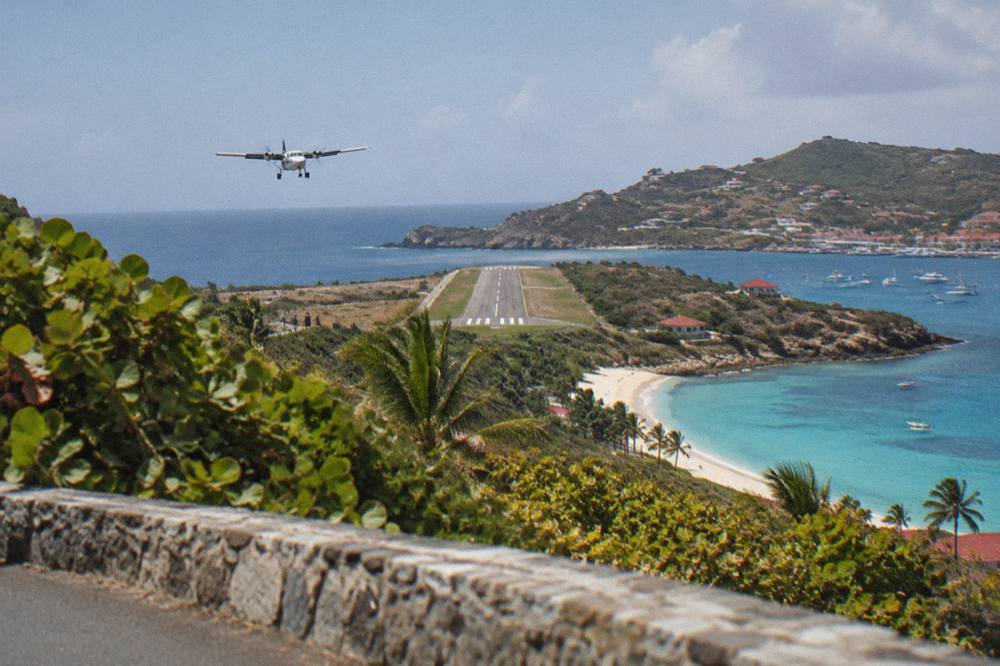
Those bare facts explain most of what surprises first-time visitors. A 646 m runway is short by any commercial standard, so only aircraft with short takeoff and landing performance can use it, types such as the DHC-6 Twin Otter, Cessna 208B Grand Caravan, Pilatus PC-12 and Tecnam P2012 STOL. The approach demands a special pilot qualification because it passes over terrain near the Col de la Tourmente before a steep, compressed descent. There are no runway lights, so the field opens in the morning and closes shortly after sunset, and any disruption to visibility or wind can shift the day's schedule. For more on the code itself and how it is used in bookings, see the companion page on the SBH airport code.
| Item | Detail |
|---|---|
| Airport name | Gustaf III, also called Remy de Haenen |
| IATA / ICAO codes | SBH / TFFJ |
| Runway | 10/28, 646 m (2,119 ft) |
| Aircraft types | STOL turboprops only, no jets |
| Operating window | Daylight, visual conditions only |
| Location | Beside Saint-Jean, near the island's single roundabout |
| Serves | Gustavia (harbour capital) and the whole island |
Which Airlines Fly Into St Barts?
Four carriers dominate scheduled service into St Barts: St Barth Commuter flies from St Martin (SXM), Grand Case on the French side (SFG) and Pointe-a-Pitre, Guadeloupe (PTP); Tradewind Aviation flies from San Juan (SJU) and Antigua (ANU); Winair operates Twin Otters from St Martin; and St Barth Executive also serves the field with STOL aircraft. Every one of these operators flies small propeller aircraft only.
The pattern to understand is that SBH has no long-haul service of its own. St Barth Commuter's route page lists its St Martin, Grand Case and Guadeloupe services, while Tradewind's destination page lists San Juan and Antigua. Winair is present at St Martin as a Twin Otter operator, but its specific route and frequency details for St Barts are not confirmed on a primary page, so the safe summary is that Winair is among the Twin Otter operators working the corridor. The hop from St Martin to St Barts is short, a few minutes in the air over open water, and it is the most common final leg for travelers arriving on wide-body jets into Princess Juliana Airport. Booking directly with each operator's own site is the standard route, and schedules tighten or loosen with the season, so confirm dates close to travel.
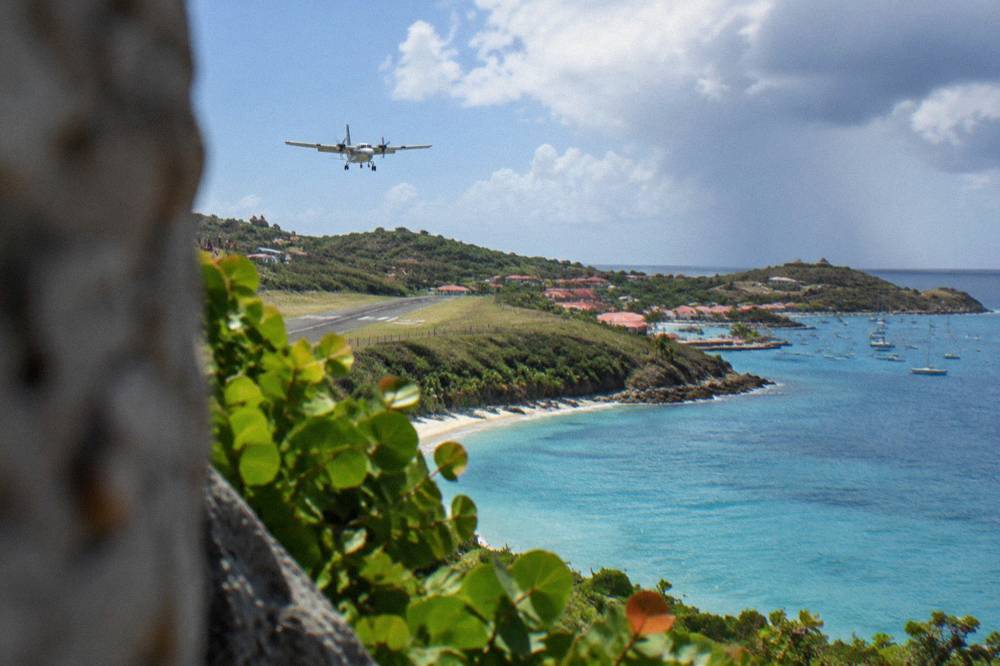
the list of day trips that visit St Barts by water, for travelers structuring a trip around the St Martin gateway rather than flying the last leg, is worth a look at this decision point.
How Do You Connect To St Barts From St Martin?
The standard connection is a short hop by small plane from Princess Juliana Airport (SXM) on Sint Maarten to St Barts, flown by St Barth Commuter and other turboprop operators, or the ferry from the Dutch or French side, Great Bay Express from Philipsburg or Voyager from Marigot. No jet flies the last leg, so every traveler changes aircraft or vessel at a gateway.
Princess Juliana receives the intercontinental flights, and the transfer to a STOL turboprop is part of the experience: luggage limits shrink, boarding is on the apron, and the flight runs only in daylight. The two ferry options are the other main route, Great Bay Express from Bobby's Marina in Philipsburg with a crossing of about 45 minutes, and Voyager from the Marigot terminal on the French side with a crossing of about 50 to 60 minutes, both operators' own pages carrying current times. The crossing can be rough depending on conditions, so travelers prone to seasickness should weigh the small-plane hop instead; the pair of pages on the ferry operators and schedule and on seasickness on the crossing cover that trade-off. A question heading belongs here: which gateway suits your trip?
| Gateway | Airport code | Final leg to St Barts |
|---|---|---|
| Princess Juliana, Sint Maarten | SXM | STOL turboprop hop, or ferry from Philipsburg |
| Grand Case, St Martin | SFG | STOL turboprop hop with St Barth Commuter |
| Pointe-a-Pitre, Guadeloupe | PTP | STOL turboprop with St Barth Commuter |
| San Juan, Puerto Rico | SJU | Tradewind Aviation turboprop |
| Antigua | ANU | Tradewind Aviation turboprop |
The ferry-versus-plane decision often comes down to where the long flight lands. Travelers already booked into SXM can choose either mode on the day; travelers arriving at San Juan or Antigua are effectively choosing the turboprop, since those gateways connect by air. The page on [SXM airport to the St Barts ferry] walks through the transfer between terminals and the ferry docks.
What Is Landing At St Barts Like?
Landing at St Barts is a steep, visual approach over a hill col followed by a short-field touchdown on a 646 m runway, flown only by specially qualified pilots in daylight conditions. The airport publishes no lights and no instrument approaches for routine scheduled use, so the day's weather window governs everything, and diversions back to St Martin happen when conditions close in.
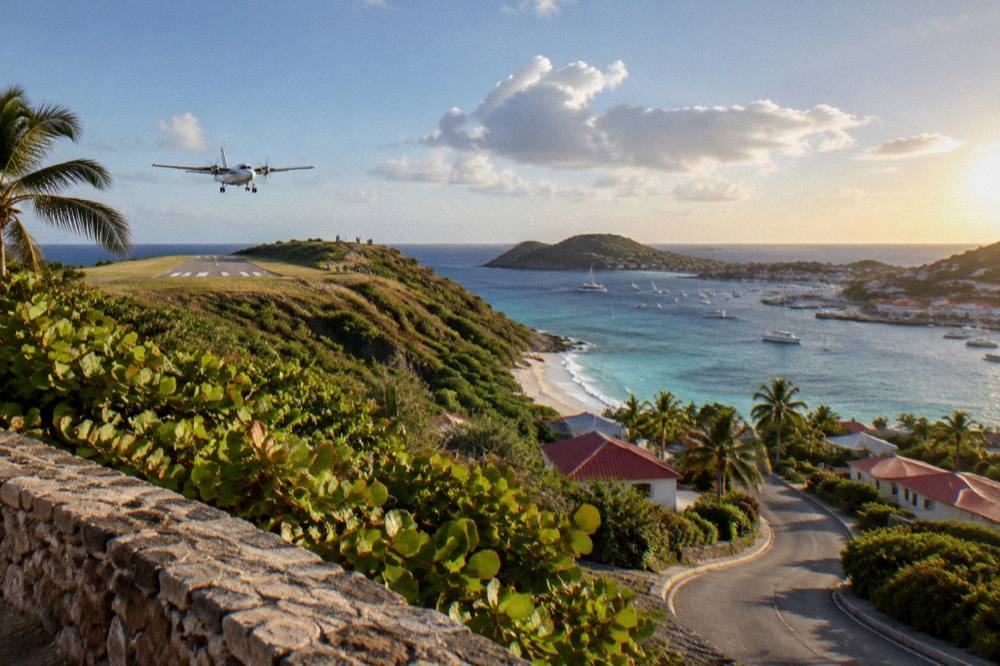
The descent is the part people talk about. The aircraft crosses the Col de la Tourmente low, then drops quickly onto the runway threshold, with Saint-Jean beach and its turquoise water off to one side. Because operations are visual only, fog, haze or low cloud can stop the day's flying, and airlines rebook onto later flights or the following morning. Pilots need specific certification for the field, which is why only a handful of carriers serve it. The takeoff is equally compact: full power, rotation, and a turn out over the bay. A dedicated read of the landing at St Barts Airport page prepares first-timers better than any generic Caribbean airport advice. Plane spotters gather at points near the runway approach, a small ritual covered on the airport spotting page elsewhere on this site.
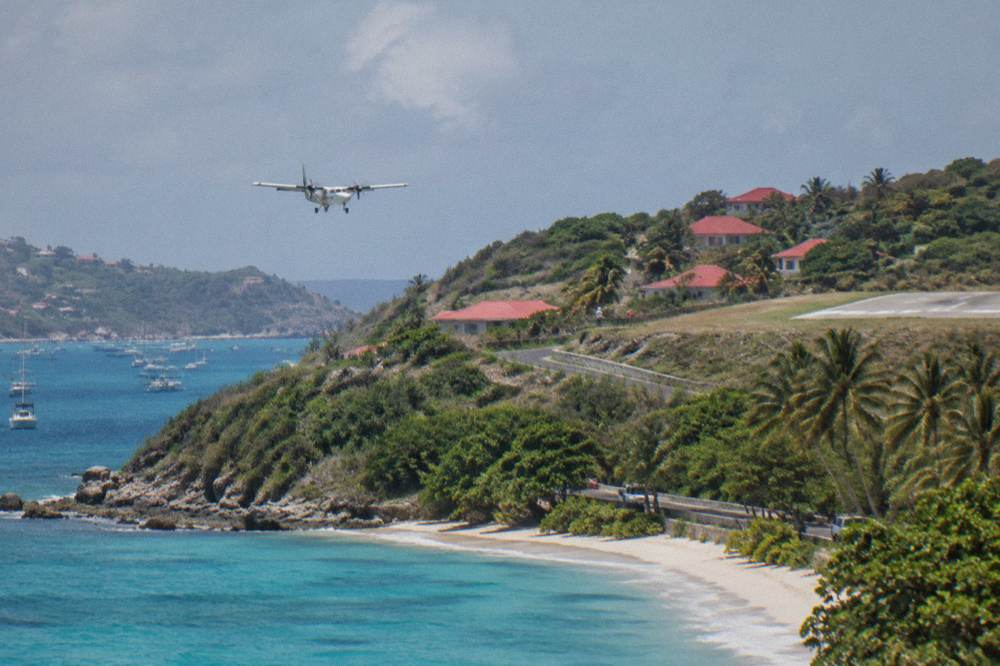
Do Any Jets Or Direct Flights Reach St Barts From Outside The Caribbean?
No. The 646 m runway at St Barts physically excludes jets, so no direct flight from outside the Caribbean ever lands there. Every long-haul traveler connects through a gateway, most commonly Princess Juliana on Sint Maarten (SXM), then finishes by small plane or ferry. San Juan, Pointe-a-Pitre and Antigua are the other recognized gateways.
This is the single most common planning error: searching for a nonstop from the US or Europe to SBH. The route does not exist and cannot, given the runway. What exists instead is a two-step journey with a change of aircraft. Travelers from the American East Coast typically fly into SXM or SJU and connect the same day or the next morning; the daylight-only rule at SBH means late arrivals at the gateway usually mean an overnight before the final hop. The pages on [flying to St Barts from the US] and on [flights from Miami to St Barts] break the gateway choice down by origin. The full how-to-get-to-St-Barts guide holds the complete picture, including the ferry routes.
| Belief | Reality at SBH |
|---|---|
| "You can fly nonstop from the US" | No, connect via SXM, SJU, PTP or ANU |
| "There are night flights" | No, daylight and visual conditions only |
| "It works like a normal regional airport" | No, special pilot qualification required |
| "Bad weather just delays flights" | Closures divert flights back to St Martin |
What Facilities Are At St Barts Airport?
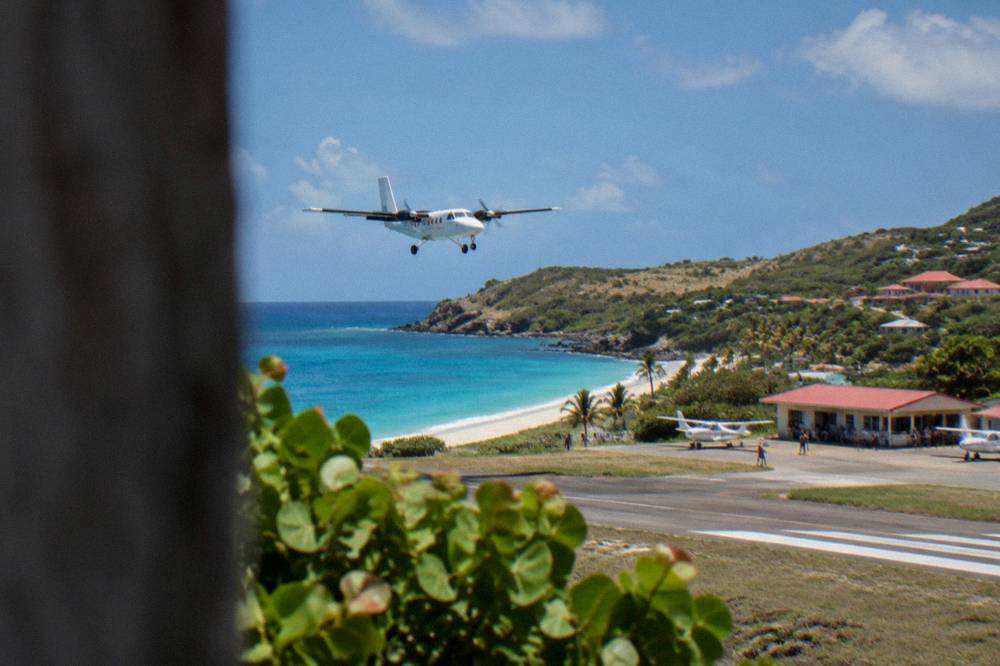
St Barts Airport is a compact single-terminal field with a small arrivals hall, a departure lounge, a bar and restaurant area, rental-car counters and taxi services, all within a few steps of the aircraft. There are no jet bridges, no lounges of the hub kind and no overnight facilities, and the terminal closes with the day's flying.
The scale is the point. The walk from the aircraft to the terminal is measured in seconds, baggage comes off a cart, and the rental counters, which include Avis, Budget and Hertz alongside local agencies and Mini Moke specialists, sit within the same small building. Taxis meet scheduled arrivals. The airport's own character, a low building facing the beach end of Saint-Jean, makes it a place people photograph rather than hurry through. Practical details on renting a vehicle, and on the open-air Mini Mokes the island is known for, live on the St Barts car rental page. For transfers to hotels and villas, the airport transfer guide lists the options.
How Do You Get From St Barts Airport To Gustavia And Saint-Jean?
Arrivals at St Barts Airport step straight onto the island's road network: taxis meet flights, rental cars are collected at the terminal counters, and hotels and villa agencies commonly arrange transfers. The island drives on the right, roads are narrow and steep with a 50 km/h limit island-wide and 30 km/h in Gustavia and Saint-Jean, and no journey on the island is long.
The airport's position between Gustavia and Saint-Jean makes the transfer almost incidental. Gustavia, the harbour capital with its red roofs and duty-free shopping, sits at the head of the island's west coast; Saint-Jean and its beach begin at the runway's doorstep. Because the island covers about 21 square kilometres, the practical question is not distance but terrain: steep grades, tight corners and limited markings in places. Travelers who prefer not to drive can rely on taxis and pre-arranged transfers, with details on the [Gustavia where-to-stay page] and the transfer guide. Those planning a full island loop can move on to the shopping and dining basics on the St Barts shopping page.
| Transport from SBH | What to know |
|---|---|
| Taxi | Meets scheduled arrivals; agree the fare before setting off |
| Rental car | Counters at the terminal, including Avis, Budget and Hertz |
| Mini Moke | Open-air vehicles through local agencies |
| Hotel or villa transfer | Commonly arranged by the property |
| On foot | Possible for Saint-Jean addresses only |
Is The Ferry A Real Alternative To Flying Into St Barts?
Yes. Two scheduled ferry operators serve Gustavia from the neighboring island: Great Bay Express from Bobby's Marina in Philipsburg on the Dutch side, a crossing of about 45 minutes, and Voyager from the Marigot terminal on the French side, about 50 to 60 minutes. Both run roughly two to three sailings a day in each direction, more in the winter season, subject to weather.
The ferry suits travelers who land at SXM with time to spare, who travel with more luggage than a STOL turboprop welcomes, or who prefer to skip the small-plane experience. The trade-off is the sea state: the crossing can be rough, and sailings are weather-dependent, exactly as flights are. Check-in for the ferry typically opens well before departure and closes shortly before sailing, and a passport is required. The operator pages carry live times, and frequencies thin in the low season, so confirming the specific travel date matters. For the full comparison, see [the ferry operators and schedule page] and the St Maarten airport to ferry guide.
| Route | Operator | Crossing time | Departure point |
|---|---|---|---|
| Philipsburg to Gustavia | Great Bay Express | About 45 minutes | Bobby's Marina, Philipsburg |
| Marigot to Gustavia | Voyager | About 50 to 60 minutes | Marigot Ferry Terminal, St Martin |
| SXM to SBH by air | St Barth Commuter and others | A short hop | Princess Juliana Airport |
What Can You Do Once You Have Landed In St Barts?
Once the airport formalities are done, St Barts opens into a compact island of public beaches, the harbour town of Gustavia, the marine reserve's protected waters and a calendar anchored by sailing events in spring and festivals from November onward, with the St Barth Gourmet Festival set for 9 to 15 November 2026 and the Music Festival for 8 to 18 January 2027. All beaches on the island are public and free to access.
The rhythm of a first day usually follows the geography: settle into a hotel or villa, then either Gustavia's shops and harbour front or the nearest beach. Colombier, Saline and Gouverneur are the names that come up for quieter sand, Grand Cul-de-Sac for shallow water on the windward side, and Saint-Jean for the beach the airport shares its shore with. The things to do on St Barts page holds the full inventory. One angle worth flagging: because every bookable boat excursion that visits St Barts departs from St Martin or Sint Maarten, the airport-and-ferry structure of a trip can be reversed, basing in St Martin and visiting St Barts by water for a day.
That reversed structure is exactly what the day sails and private charters listed here do, running from St Martin across to Colombier, Ile Fourchue and Gustavia. The per-person group sail listed here runs only from 12 May to 31 August 2027 on its listing, so midsummer travelers get the per-person option and the rest of the year belongs to private charters priced per group.
The marine reserve's rules shape any day on the water: the environment agency's regulatory-zones page lists a 5-knot speed limit inside its zones, a ban on jet skis, 23 dive sites, no dogs on beaches and no touching of turtles. Those rules apply to visitors arriving by air or sea alike.
When Is The Best Time To Fly Into St Barts?
The November to April window is the island's high season, aligned with the sailing regattas and the festival calendar, while May to August is warmer and quieter on the water, and the June to November hurricane season peaks from mid-August to mid-October. Meteo-France normals, 1991 to 2020, put the mean daily high at 28.5 C in January and 31.7 C in September, with October the wettest month at 135.6 mm.
Daylight-only flying gives the weather an outsized role at SBH: morning flights are the most protected part of the day, and any tropical wave in the area can compress the schedule. The seasonal pattern of hotel closures matters too, since many properties and restaurants close each autumn and reopen between mid-October and early November, so a September or early October arrival meets a quieter island with fewer tables open. The [best time to go season guide] carries the month-by-month detail.
| Month | Mean daily high | Rain (mm) |
|---|---|---|
| January | 28.5 C | 52.6 |
| April | 29.8 C | 50.9 |
| July | 31.2 C | 80.4 |
| September | 31.7 C | 96.9 |
| October | 31.4 C | 135.6 |
Common Questions About St Barts Airport
What airport do you fly into for St Barthelemy?
You fly into a gateway, most commonly Princess Juliana on Sint Maarten (SXM), then take a small turboprop or the ferry to St Barts. The island's own field, Gustaf III (SBH), only accepts small STOL aircraft. The full answer lives on the page answering what airport you fly into for St Barthelemy.
Can you fly direct to St Barts from the US or Europe?
No. The 646 m runway excludes jets, so no flight from outside the Caribbean ever lands at SBH. Every traveler connects through SXM, SJU, PTP or ANU.
Do jets land at St Barts Airport?
No jets land at SBH. The runway is 646 m and operations are daylight and visual conditions only, restricted to STOL turboprops flown by specially qualified pilots.
Which airlines serve St Barts Airport?
St Barth Commuter flies from SXM, Grand Case and Pointe-a-Pitre; Tradewind Aviation flies from San Juan and Antigua; Winair operates Twin Otters from St Martin; and St Barth Executive also serves the field.
Is there an alternative to flying into St Barts?
Yes, two ferries run to Gustavia: Great Bay Express from Philipsburg, about 45 minutes, and Voyager from Marigot, about 50 to 60 minutes. Both are weather-dependent and require a passport.
Does St Barts Airport operate at night?
No. The airport has no runway lights and operates in daylight under visual flight rules only, opening in the morning and closing shortly after sunset.
Planning the rest of the journey is straightforward once the gateway logic is clear: book the long leg into SXM or SJU, hold the small-plane or ferry leg for daylight, and let St Barthelemy Travel pages on flights, ferries and transfers fill in the specifics. The runway at Gustaf III is short, but the island it serves rewards the extra step.