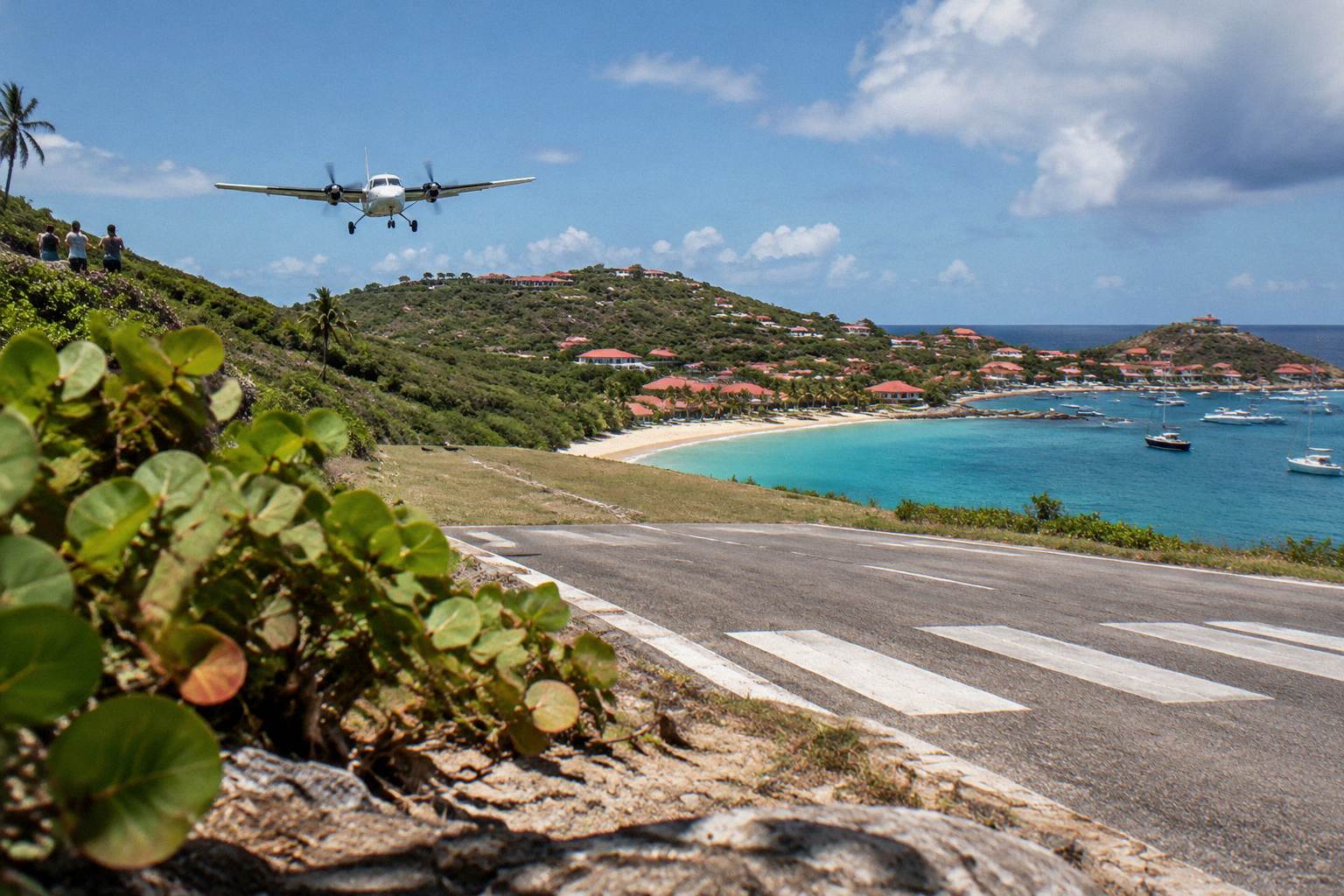
Seasickness On The St Barts Ferry
St Barthelemy sits a short crossing from St Martin, and the ferry link is one of two main ways onto the island. The crossing is open water, sea conditions vary, and motion sensitivity decides how it feels.
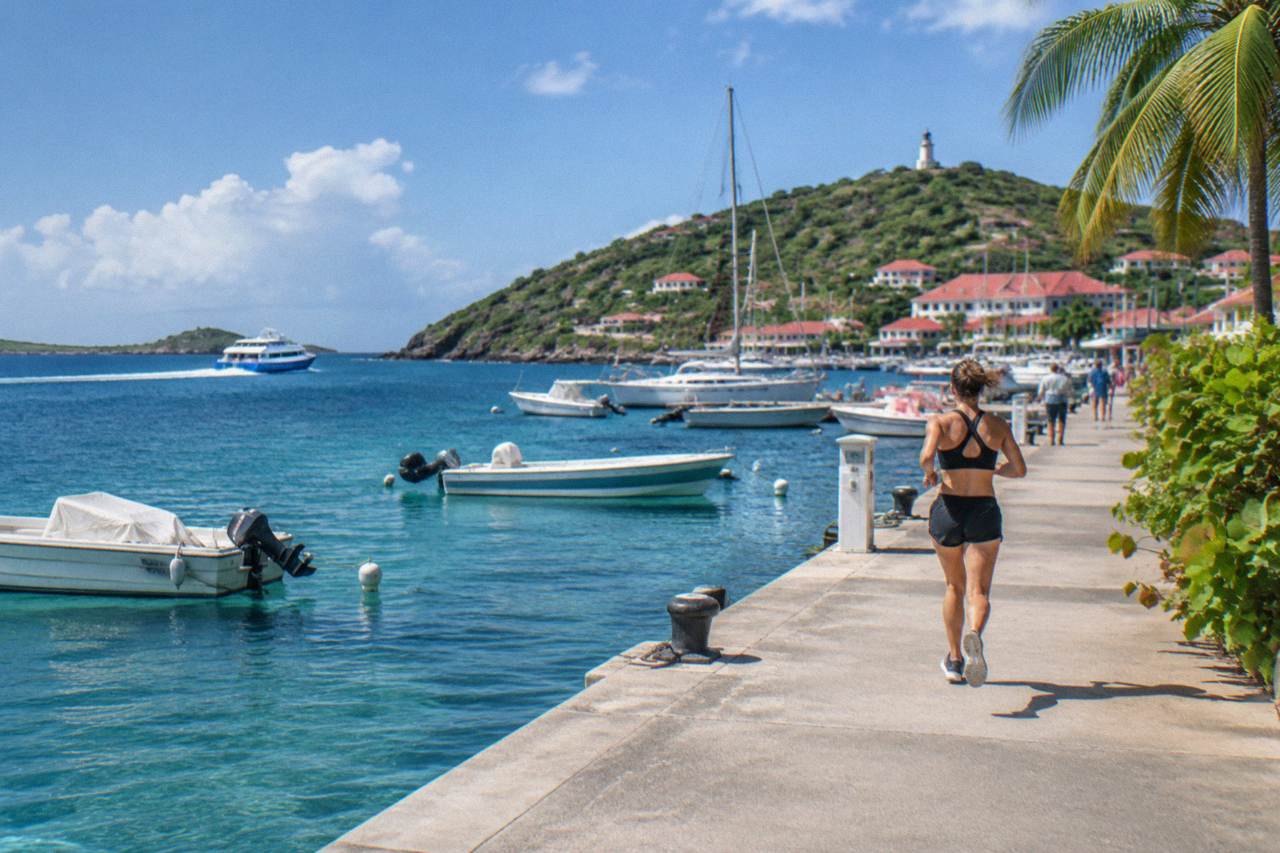
The ferry to St Barts crosses open Caribbean water in about 45 minutes from Philipsburg or about 50 to 60 minutes from Marigot, and sea conditions affect the ride. Seasickness is manageable with timing, positioning on the boat, medication taken before departure, and the small-plane alternative from St Martin.
St Barthelemy, usually written St Barts, has no bridge and no jet runway for long-haul aircraft: almost everyone arrives either by small plane or by ferry from neighbouring St Martin or Sint Maarten. The ferry is the affordable and popular option, and it crosses open Caribbean water for the better part of an hour. That raises the one question every motion-sensitive traveller types into a search bar: will the St Barts ferry make me seasick? The honest answer is that sea conditions on this crossing vary, the operators say so themselves, and a mix of preparation, positioning and timing makes the crossing far more manageable. This guide sets out what the operators' own pages say about the crossing, how seasickness prevention actually works, and what the alternatives cost in time and planning.
For the full operator picture, including schedules and how the two ferry companies differ, the companion page on St Barts ferry operators and schedule covers it in detail, and getting from SXM airport to the St Barts ferry explains the connection from the international airport on the Dutch side.
Is The Ferry To St Barts Rough?
The St Barts ferry crosses open water between St Martin and Gustavia, and the operators themselves state that sea conditions affect the crossing, with services subject to weather cancellations. Great Bay Express runs from Philipsburg in about 45 minutes and Voyager from Marigot in about 50 to 60 minutes, two to three sailings a day on the Voyager route. Neither operator promises a smooth ride, and both treat weather as a live factor in every departure.
That is the core fact, and it comes from the operators' own pages rather than from traveller folklore. The channel between the two islands is open Caribbean sea, not a sheltered bay, and a wind against swell combination can produce a choppy hour even on a bright day. In the other direction, plenty of crossings are calm enough that passengers sit on the open deck the whole way. The point for a nervous traveller is that roughness is a condition of the day, not a fixed property of the route.
Two structural things matter. First, the boats are fast craft, not giant slow ferries: they cover the crossing quickly, and fast hulls meet short chop differently from heavy displacement ships. Second, the departure points sit on opposite sides of St Martin, so the length of open water differs slightly between the Philipsburg and Marigot services, about 45 minutes versus about 50 to 60 minutes of sea time according to the operators' pages.
Season adds a broad pattern, though no one can predict a given day. Hurricane season runs from 1 June to 30 November with its peak from mid-August to mid-October, and that window overlaps the months when tropical waves and early-season blow-ups are more common in the eastern Caribbean. The Meteo-France climate normals for 1991 to 2020 show the wettest months are October at 135.6 mm of rain and November at 118.6 mm, against February's 38.4 mm, and windier, wetter weather systems generally bring livelier seas. None of that forecasts your crossing. It just explains why a February sailing and an October sailing can feel like different routes.
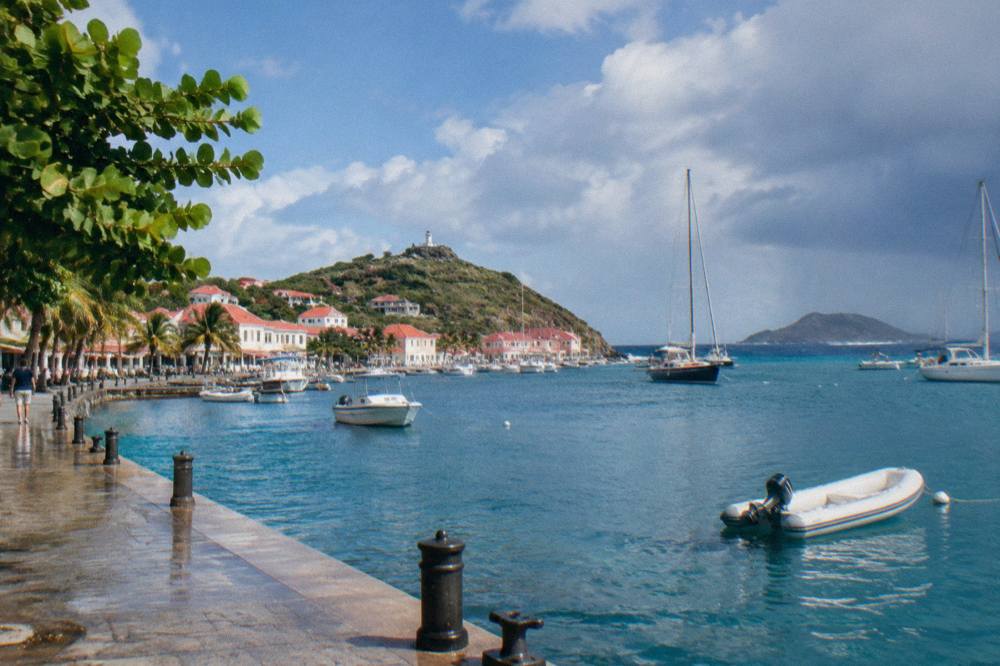
If you are still choosing how to reach the island at all, the overview page on how to get to St Barts lays out the plane and ferry options side by side.
Which St Barts Ferry Route Is The Better Pick For Sensitive Stomachs?
Both current operators land at Gustavia, but they start on opposite sides of St Martin: Great Bay Express departs Philipsburg on the Dutch side for a crossing of about 45 minutes, while Voyager departs Marigot on the French side for about 50 to 60 minutes, two to three sailings a day. For a motion-sensitive passenger the practical difference is minutes of exposure, not comfort, since both cross the same open water.
The realistic advice is to choose the departure that fits where you are staying or landing, not the one you hope will be calmer. If you fly into Princess Juliana airport on the Dutch side, the Philipsburg departure at Bobby's Marina is the closer start. If you are coming from the French side or from Grand Case, Marigot's terminal is the natural choice. A shorter land transfer before a rough crossing is worse planning than five extra minutes on the water.
Great Bay Express asks passengers to arrive about 45 minutes before departure, and check-in closes about 15 minutes before the boat leaves, with a passport required. Voyager's Marigot operation runs two to three sailings a day in each direction. Both operators adjust frequency with the season, and both are subject to weather cancellations, which is the honest signal that the crossing is treated as weather-sensitive by the people who run it.
| Route | Operator | Departure Point | Arrival | Crossing Time (Operator Figure) |
|---|---|---|---|---|
| Philipsburg to Gustavia | Great Bay Express | Bobby's Marina, Philipsburg, Sint Maarten | Gustavia harbour | About 45 minutes |
| Marigot to Gustavia | Voyager | Marigot ferry terminal, St Martin | Gustavia harbour | About 50 to 60 minutes |
Check-in discipline matters for the queasy for a practical reason: rushing raises stress, and stress worsens motion sickness. Arriving with the buffer the operator asks for, about 45 minutes on the Great Bay Express service, means you board calmly, pick a seat deliberately and settle before the engines start.
There is also a ferry connection from Anguilla, covered on the page about the St Barts ferry from Anguilla, which matters if your itinerary starts further north.
If reading about the crossing has you reconsidering boats entirely, there is a middle path that keeps you on the water but on your own terms: a charter from St Martin crosses to St Barts privately, and the day-trip options below show what that looks like.
How Do You Prevent Seasickness On The St Barts Ferry?
Prevention works best when it starts before boarding: take medication 30 to 60 minutes before departure rather than once you feel ill, choose a mid-boat seat low and central near the waterline, face forward, fix your eyes on the horizon or the distant shoreline, and skip alcohol and heavy greasy food beforehand. None of this is St Barts specific, it is standard motion-sickness physiology, and every element of it is under your control on a crossing of about an hour.
Start with timing. The commonest mistake on any ferry is treating the symptom after it arrives. Oral motion-sickness tablets need time to absorb, so the window before boarding, while you wait in the marina, is exactly when they should be taken. The operator's own check-in guidance, arriving about 45 minutes early, conveniently creates that window.
Then use the boat's geometry. A vessel pitches and rolls least near its centre, and vertical motion grows toward the bow and stern. The middle of the passenger deck, on a lower level if there is one, is the steadiest place to sit. Facing the direction of travel helps, because your inner ear and your eyes then agree about the direction of motion. Looking at a phone or a book, where the eyes lock onto a near object while the body moves, is the classic trigger, so keep your gaze on the horizon, and on this crossing there is a genuine horizon reward: St Martin behind you and St Barts ahead.
Eating is a real variable. A light meal an hour or two before boarding, not a huge breakfast on the dock, is the standard recommendation from every travel-medicine source. Alcohol the night before or at the terminal is a known aggravator. Strong smells, engine fumes and stuffy cabins also rank high, which is why many motion-sensitive passengers prefer an open-air seat aft or midships where the breeze moves.
| Prevention Step | When To Do It | Why It Works |
|---|---|---|
| Take oral seasickness medication | 30 to 60 minutes before departure | Absorption needs lead time; late dosing misses the window |
| Choose a mid-boat, low, central seat | At boarding | The centre of the hull moves least in pitch and roll |
| Face forward, eyes on the horizon | Throughout the crossing | Keeps visual and inner-ear signals in agreement |
| Eat a light meal beforehand | 1 to 2 hours pre-departure | A full stomach worsens nausea; an empty one does too |
| Avoid alcohol | The night before and at the terminal | Alcohol disturbs the inner ear and worsens nausea |
| Stay in fresh air, away from fumes | Throughout | Stuffiness and diesel smell are common triggers |
Acupressure wristbands are a drug-free option many travellers carry; controlled evidence on them is mixed, but they have no side effects and nothing stops you combining them with medication. Ginger, as sweets, tea or capsules, is another traditional remedy with a modest evidence base and no downside on an hour-long crossing. If you use prescription patches, apply them well in advance, as their own instructions specify hours of lead time, far more than the ferry check-in window allows.
What Should You Do If Seasickness Starts Mid-Crossing?
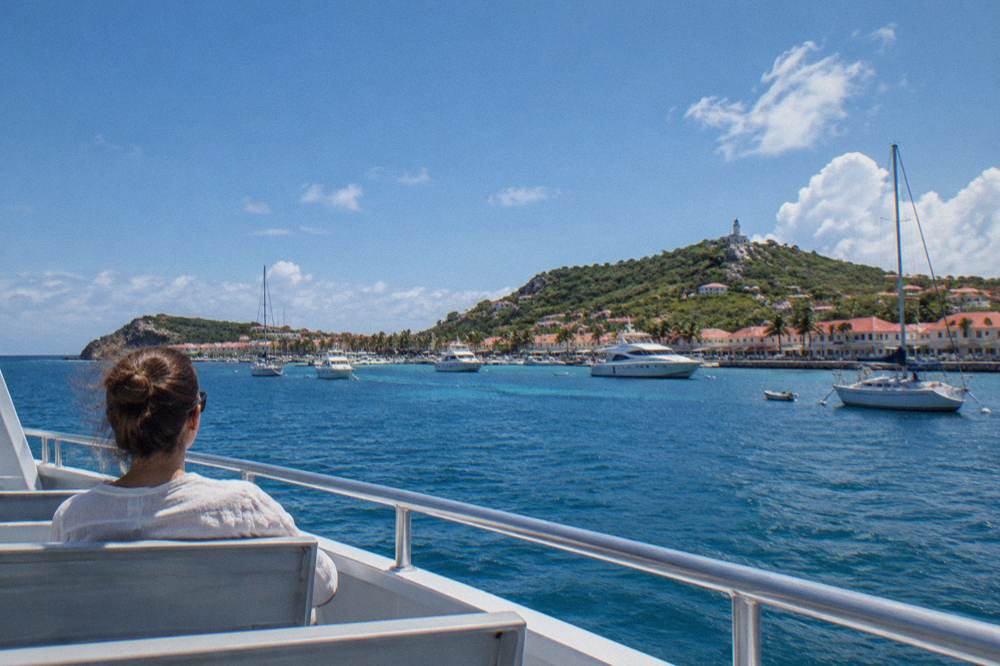
Move to the steadiest part of the deck, mid-boat and low, face forward and fix your eyes on the horizon or the approaching island, breathe slowly and steadily in fresh air, and stop reading or looking at screens immediately. If nausea builds, vomiting relieves it, and the crew on a scheduled ferry sees this on every crossing, so asking them for help is routine, not embarrassing, on a crossing of under an hour.
The first minutes matter. Motion sickness often announces itself with cold sweat, yawning, pallor and unease before actual nausea, and acting at that stage, getting out of a stuffy cabin into moving air and onto a horizon sightline, frequently stops the progression. Sipping water helps, as does closing your eyes and letting your head rest against a fixed surface if you cannot keep your eyes open and on the horizon at the same time.
Position beats willpower. If you started at the bow or in an enclosed forward cabin, walk midships when it is safe to do so. On the St Barts crossing, the aft open deck is usually the practical spot: it is where the breeze is, it is away from the engines' smell on most fast craft, and St Barts itself appears ahead as a fixed visual anchor, which the inner ear badly wants.
One thing not to do is fight through it in a bathroom. Many medical advisories note that sitting in an enclosed, smells-heavy toilet area is among the worst places for a motion-sick passenger. On a fast ferry the crew will direct you somewhere better if you ask; on this route the crossing lasts about 45 to 60 minutes, so even a bad spell has a hard ceiling.
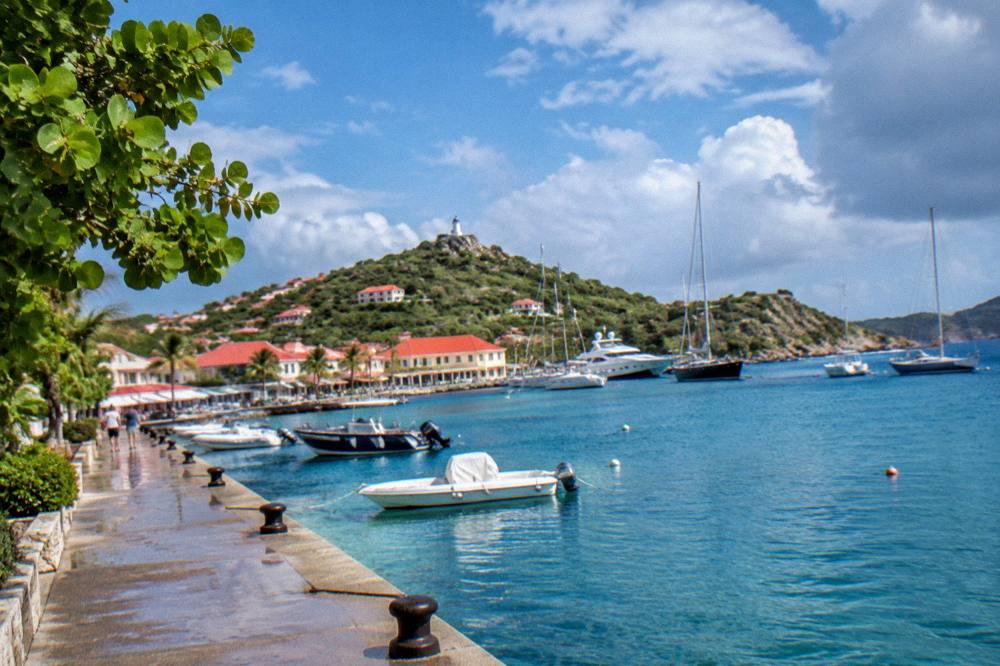
Afterwards, recovery on land is usually quick. Once the boat docks in Gustavia and the motion stops, residual queasiness typically fades within minutes to a couple of hours. Plan a gentle first hour ashore: the walk along the harbour in Gustavia, a seat in the shade with water, and no immediate winding drive. If you have rented a car or plan to, note that driving St Barts' steep roads right after a rough crossing is the moment a sensitive stomach least needs it, a point the St Barts car rental page puts in the context of the island's narrow, hilly roads.
Is Flying From St Martin To St Barts Better If You Get Seasick?
Yes, structurally: the alternative to the ferry is a small STOL turboprop flight from St Martin to Gustaf III Airport, a short hop that replaces about an hour of open sea with minutes in the air, operated by St Barth Commuter from SXM, Grand Case and Pointe-a-Pitre, and Tradewind from San Juan and Antigua. No jets land at St Barts, the 646 m runway takes only small turboprops, and flights run in daylight and visual conditions only.
The trade is motion of a different kind. The ferry produces sustained roll and pitch; a small aircraft produces turbulence, short bumps and, on the St Barts approach, a famously steep descent over a col to a short runway. Some seasickness-prone travellers find the flight trivially easy, others find the approach more alarming than any swell. Neither is an absolute answer, but the flight removes the sea entirely, and for many people that settles it. The full index of guides sits on St Barthelemy Travel.
Practicalities are straightforward. Winair and St Barth Commuter serve the hop from Princess Juliana on the Dutch side, and St Barth Commuter also flies from Grand Case on the French side, so both ferry departure areas have an airport alternative nearby. Weather governs the flight side too, since operations at SBH are daylight and visual only, and fog, heavy rain or strong crosswinds can delay or cancel a flight just as swell can cancel a sailing. The St Barts airport guide covers what to expect on arrival, and the page on landing at St Barts airport describes the approach itself.
Cost is where the two options genuinely diverge, and this site prints no fare for either: the ferry price question is treated on the ferry cost answers page, and flight fares vary by date and carrier. As a planning statement only, the flight is the premium option and the ferry the standard one, and that difference is consistent across the Caribbean.
| Factor | Ferry From St Martin | Small Plane From St Martin |
|---|---|---|
| Motion type | Sustained roll and pitch on open water | Short turbulence and a steep visual approach |
| Sea conditions matter | Yes, crossings can be rough and are weather subject | Not applicable, but flights need daylight and visual conditions |
| Departure points | Philipsburg (Great Bay Express), Marigot (Voyager) | Princess Juliana (SXM) and Grand Case (SFG) |
| Aircraft or vessel | Fast passenger ferry | STOL turboprops only, 646 m runway, no jets |
| Documentation | Passport required at check-in | Standard airport check-in and ID |
When Is The Crossing Most Likely To Be Unsettled?
The eastern Caribbean's hurricane season runs from 1 June to 30 November with its activity peak from mid-August to mid-October, and the Meteo-France climate normals for St Barthelemy show the wettest months as October at 135.6 mm and November at 118.6 mm, against February's 38.4 mm, so the roughest-seas probability broadly tracks the wettest, windiest part of the year.
The right way to use seasonal data is as a risk shape, not a forecast. A July crossing can be glassy and a February one lumpy; the norms simply say that the atmospheric ingredients for wind and swell cluster in the late summer and autumn months. The dry months from February through April, with monthly rainfall between 38.4 mm and 50.9 mm in the normals table, statistically come with more settled trade-wind weather, which typically means a moderate, predictable sea rather than a dead calm one.
| Month | Mean Daily High (C) | Rain (mm) | Seasonal Context For The Crossing |
|---|---|---|---|
| February | 28.6 | 38.4 | Dry season, lowest monthly rainfall in the normals |
| April | 29.8 | 50.9 | Late dry season, popular travel window |
| July | 31.2 | 80.4 | Early hurricane season, 1 June onset passed |
| September | 31.7 | 96.9 | Peak hurricane season window, climatological peak near 10 September |
| October | 31.4 | 135.6 | Wettest month in the Meteo-France normals |
| November | 29.9 | 118.6 | Wet month, season ends 30 November |
The Meteo-France normals, 1991 to 2020, are station averages for St Barthelemy. What a motion-sensitive traveller should take from them is a planning nudge: if your dates are flexible and the ferry worries you, the February to April window statistically offers the most benign conditions, while an autumn trip calls for the full prevention kit and a backup plan. Checking the marine forecast the day before, through any official weather service, is the single most useful pre-departure step, because swell and wind on the day outrank every seasonal average.
One seasonal footnote specific to this island: many hotels and restaurants close each autumn and reopen between mid-October and early November, so an autumn ferry traveller arrives in a quieter Gustavia. That is a pattern, not a promise about any property, and it does not change the sea.
Does The Return Ferry From St Barts Feel Different?
The return crossing from Gustavia runs over the same open water to Philipsburg or Marigot with the same operators and the same weather exposure, so the physics do not change, but two practical differences do: the departure time of day differs from your outbound sailing, and the direction of swell relative to the hull can reverse, which sometimes makes one leg noticeably calmer than the other even on the same day.
Morning departures are the traditional choice of experienced coastal travellers, and on many Caribbean routes the wind builds through the day as the sun heats the islands, so an early sailing more often meets a gentler sea than a late afternoon one. That is a general marine pattern rather than a guarantee for this channel, but it costs nothing to book the earlier of the Voyager's two or three daily departures if your stomach has opinions.
The other practical lever is what you do before boarding. A return ferry after a full day in the sun, dehydrated and tired from swimming, is a harder start for a sensitive system than a fresh morning crossing. Water through the day, a modest lunch rather than a heavy one in Gustavia, and shade instead of a final hour of direct sun all lower the baseline before you step aboard. The crossing itself is the same about 45 minutes to Philipsburg or about 50 to 60 minutes to Marigot.
Luggage and heat are worth a sentence. On fast ferries the passenger cabin can be warm and airless while boats sit at the dock, and that stationary period is when many people first feel wrong. Board late rather than early if check-in rules allow, stay in the open air until the gangway is about to close, and take your seat only when departure is imminent.
Can You Cross To St Barts By Boat Without The Scheduled Ferry?
Yes: private charter boats run day trips from St Martin and Sint Maarten to St Barts, departing from marinas such as Simpson Bay, Cole Bay, Anse Marcel and Grand Case, and they cross the same water on your own schedule with a crew. These are bookable products listed from the St Martin side, not from Gustavia, so they solve the schedule problem and the crowd problem, but they do not cancel the sea: the crossing is the crossing.
For a motion-sensitive group, a charter has one genuine advantage beyond comfort: timing. A private departure can be set for the calmest part of the day rather than the operator's fixed sailing, and the crossing can be paused or rerouted if conditions change. The marine reserve rules around St Barts still apply on arrival, the environment agency's regulatory-zones page lists a 5-knot limit in protected zones, a ban on jet skis, and no touching of turtles, and responsible crews operate inside those rules.
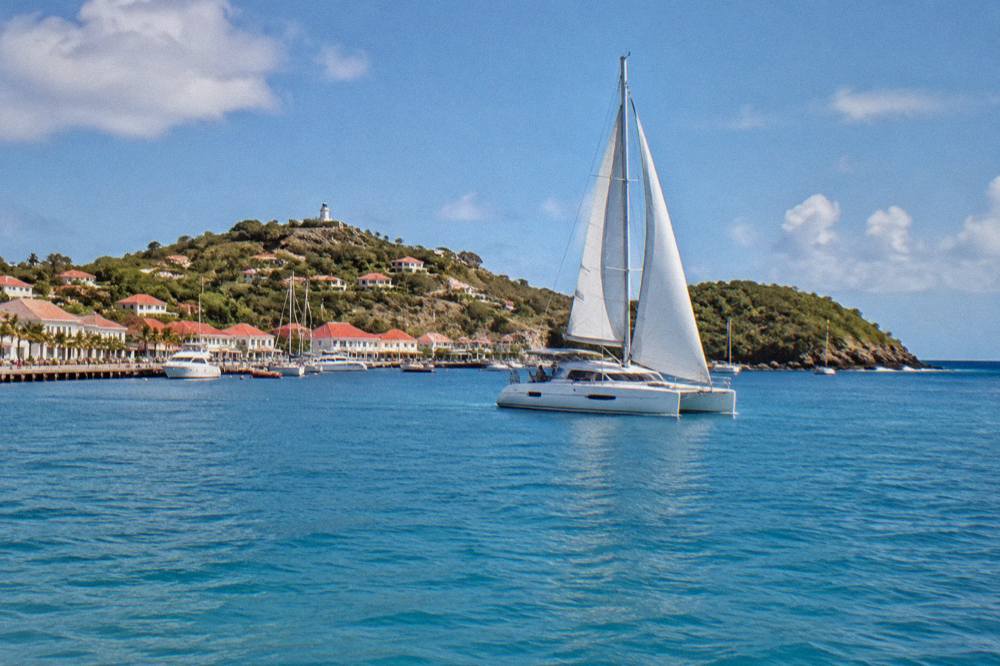
The flagship alternative to a ferry-and-back day is the group sail that this site features across its pages: the Gustavia, Colombier Beach and Ile Fourchue tour departs from St Martin, spends a full day around St Barts' leeward coast, and its live listing shows the current price, rating and dates. A one-way ferry plus a day on the water is not everyone's seasickness plan, but for travellers whose stomach settles once a boat is under sail rather than motoring into chop, it is a different motion profile worth knowing about. The tour's own listing carries the details, and availability is on See the live listing.
For groups, the private options stack up differently, and the choice is mostly about duration and budget rather than motion.
What Should You Pack In A Ferry Seasickness Kit?
A working kit for this crossing is small: your chosen medication taken at the right time, ginger sweets or capsules as a gentle backup, water, a light snack, acupressure bands if you use them, and clothing for an open deck, including a light layer against wind and spray. Everything on the list fits in a day bag, and every item is usable on the about one hour crossing or in the marina beforehand.
The kit is really a decision made in advance. Motion-sick people make worse decisions once symptoms start, so the medication that needs a 30 to 60 minute head start must be in your hand luggage, not buried in a checked holdall, and the decision to take it must be made at the dock rather than debated mid-channel. That is also why the operator's early-arrival guidance, about 45 minutes before departure on the Great Bay Express service, is genuinely useful: it builds the lead time into your morning.
| Kit Item | Purpose | Notes |
|---|---|---|
| Oral seasickness medication | Prevention | Take 30 to 60 minutes before departure, not after symptoms |
| Ginger sweets or capsules | Mild backup remedy | No side effects, can combine with other items |
| Acupressure wristbands | Drug-free pressure option | Evidence mixed, zero downside on a short crossing |
| Water bottle | Hydration | Dehydration worsens nausea and follows a sun day |
| Light snack | Steadies the stomach | Bland crackers or bread travel better than pastry |
| Light wind layer | Comfort on an open deck | Wind chill and spray on a fast ferry are real even in the tropics |
One packing note that is specific to St Barts rather than generic: whatever you carry aboard the ferry has to be carried off in Gustavia and then into your day or your onward transport. The island is about 21 square kilometres of hills, and taxis and rental cars are the standard onward moves from the ferry quay, so a compact kit bag that fits in a car boot beats a sprawling luggage pile if the crossing ends badly.
Common Questions About The St Barts Ferry And Seasickness
How long is the ferry crossing to St Barts?
The operators' own pages give about 45 minutes for Great Bay Express from Philipsburg and about 50 to 60 minutes for Voyager from Marigot. Sea conditions can extend the passage, and both services are subject to weather.
Do I need a passport for the ferry to St Barts?
Yes. Great Bay Express states that a passport is required, and the crossing is an international one between Sint Maarten or St Martin and a French overseas collectivity that sits outside the Schengen area.
What is the best seat on the ferry if you get seasick?
Mid-boat, low and central, facing the direction of travel, with your eyes on the horizon. The centre of the hull moves least, and fresh air on an open deck beats a stuffy enclosed cabin for most motion-sensitive passengers.
Is the St Barts ferry cancelled when the sea is rough?
Services are subject to weather cancellations, as both operators state. If a sailing is cancelled, the operator's own booking channels are the source for rebooking, and the small-plane hop from St Martin is the usual fallback.
Does chewing ginger or taking tablets before the ferry actually help?
Standard travel-medicine advice is that oral medication works when taken 30 to 60 minutes before departure, and ginger has a modest evidence base as a mild remedy. Neither helps much once nausea is established, which is why timing is the whole game.
Is flying to St Barts from St Martin better than the ferry for seasickness?
It removes the sea entirely: the hop from SXM or Grand Case is a short flight by STOL turboprop to the 646 m runway at Gustaf III. Some sensitive travellers prefer it unreservedly; others find the small aircraft and its steep visual approach their own challenge.
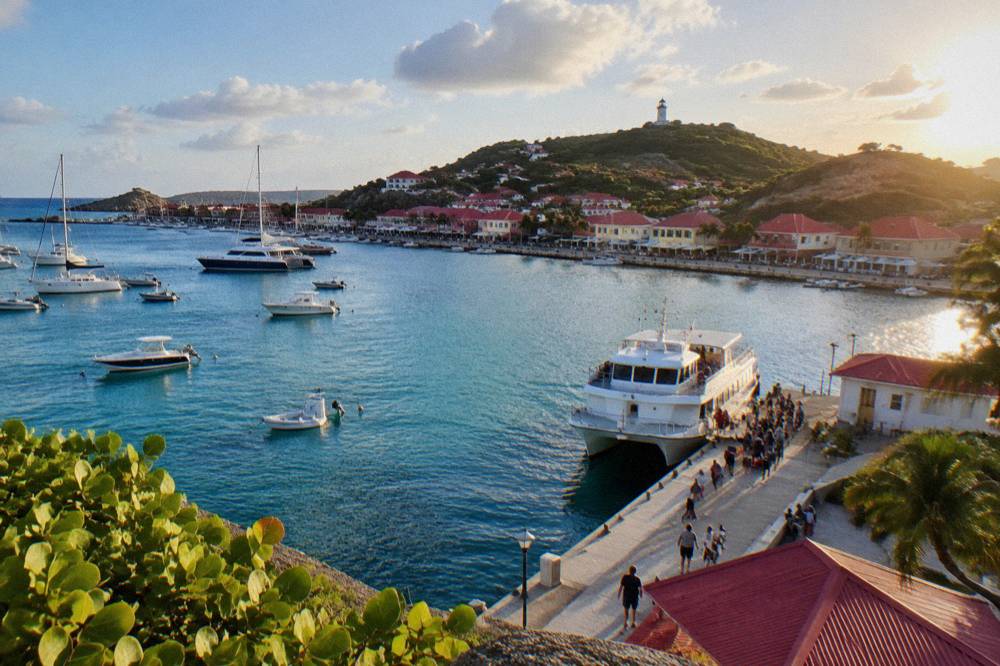
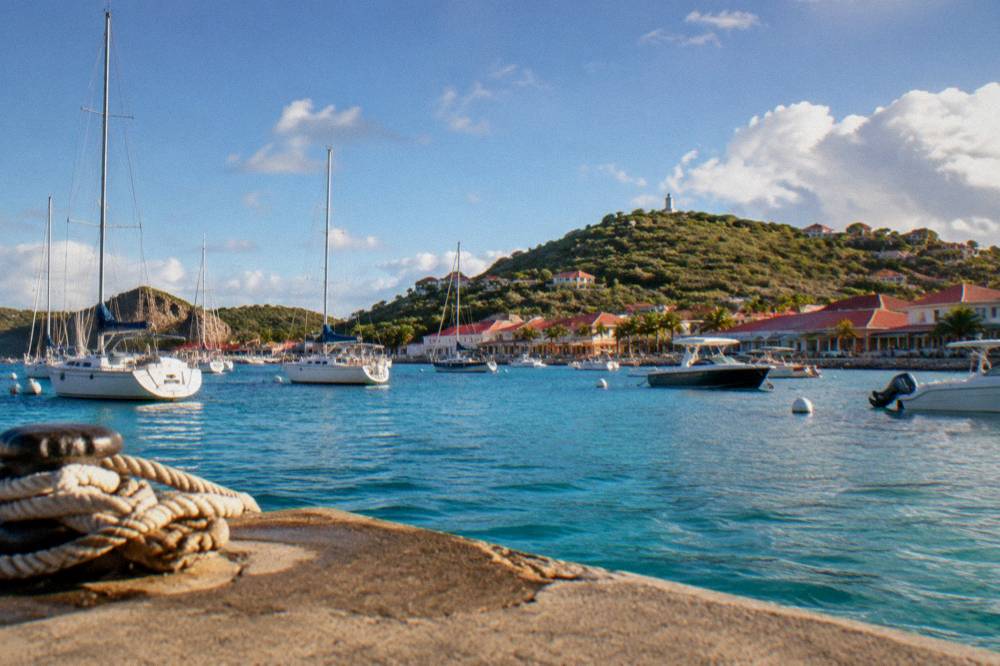
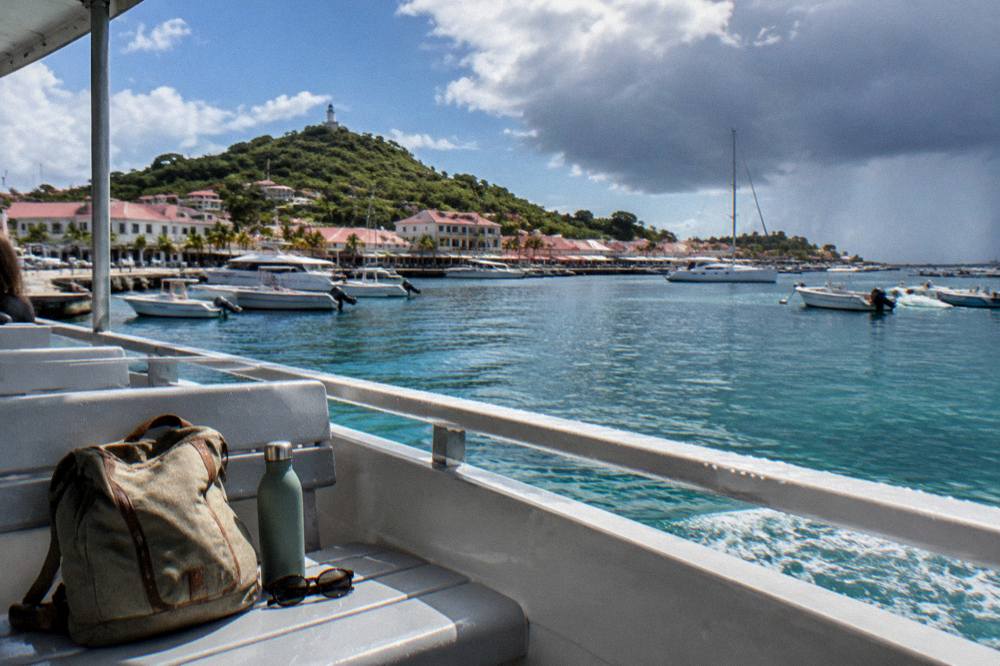
The crossing to St Barts is short, weather-shaped and entirely manageable with an hour of preparation: medication timed to the check-in window, a seat chosen for physics rather than the view, eyes on the horizon, and a backup plan in the form of the small-plane hop if the day turns against you. Arriving in Gustavia by sea remains one of the great approaches in the Caribbean, red roofs rising behind the harbour as the ferry slows, and a calm stomach makes it better.