Getting From SXM Airport To The St Barts Ferry
St Barthelemy, better known as St Barts, has no jet airport, so many travellers fly into Princess Juliana Airport (SXM) on Sint Maarten and finish the journey by boat. This guide explains the two ferry operators, where each one leaves from, and how the connection from the airport works.
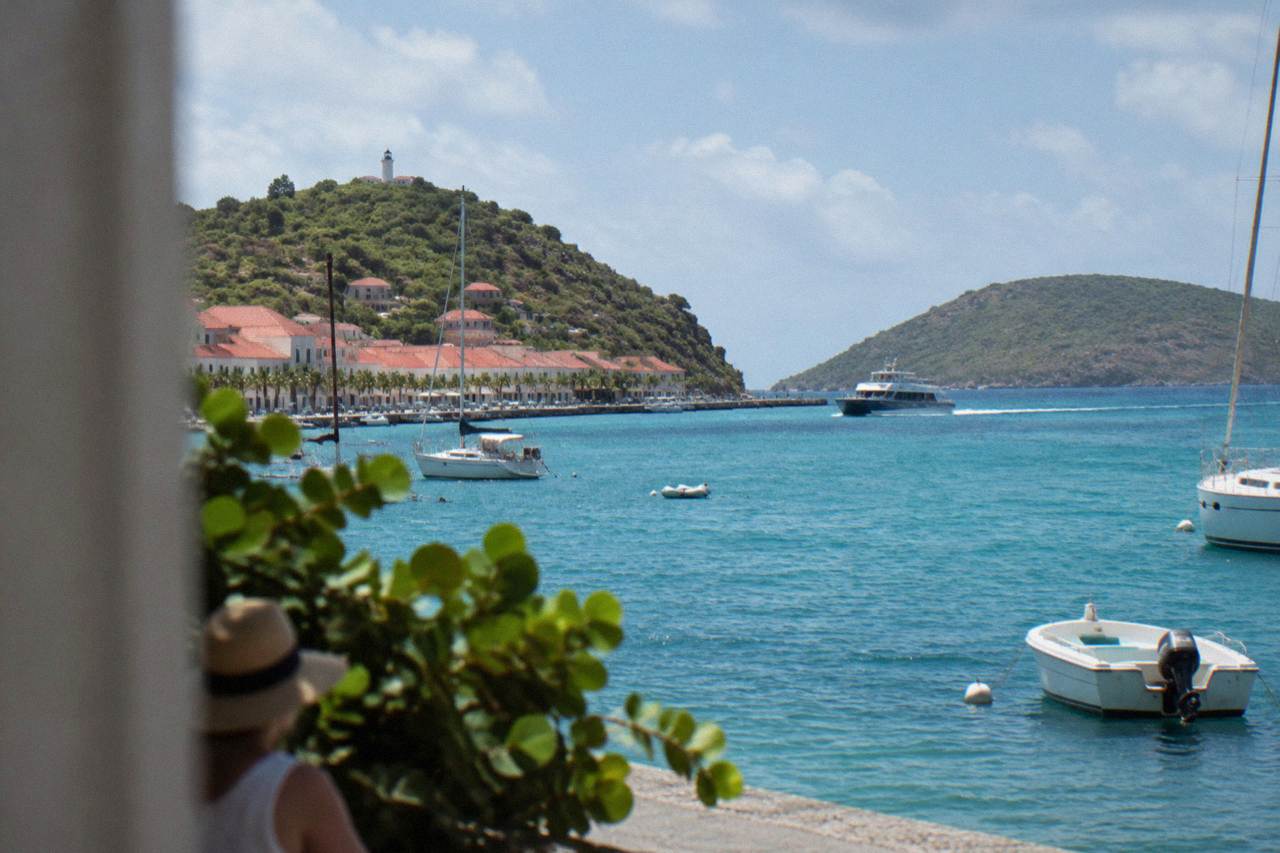
Two ferry operators serve Gustavia from St Martin and Sint Maarten: Great Bay Express from Philipsburg on the Dutch side, about 45 minutes, and Voyager from Marigot on the French side, about 50 to 60 minutes. Both require a passport, both ask passengers to arrive well before departure, and both run daily subject to sea conditions.
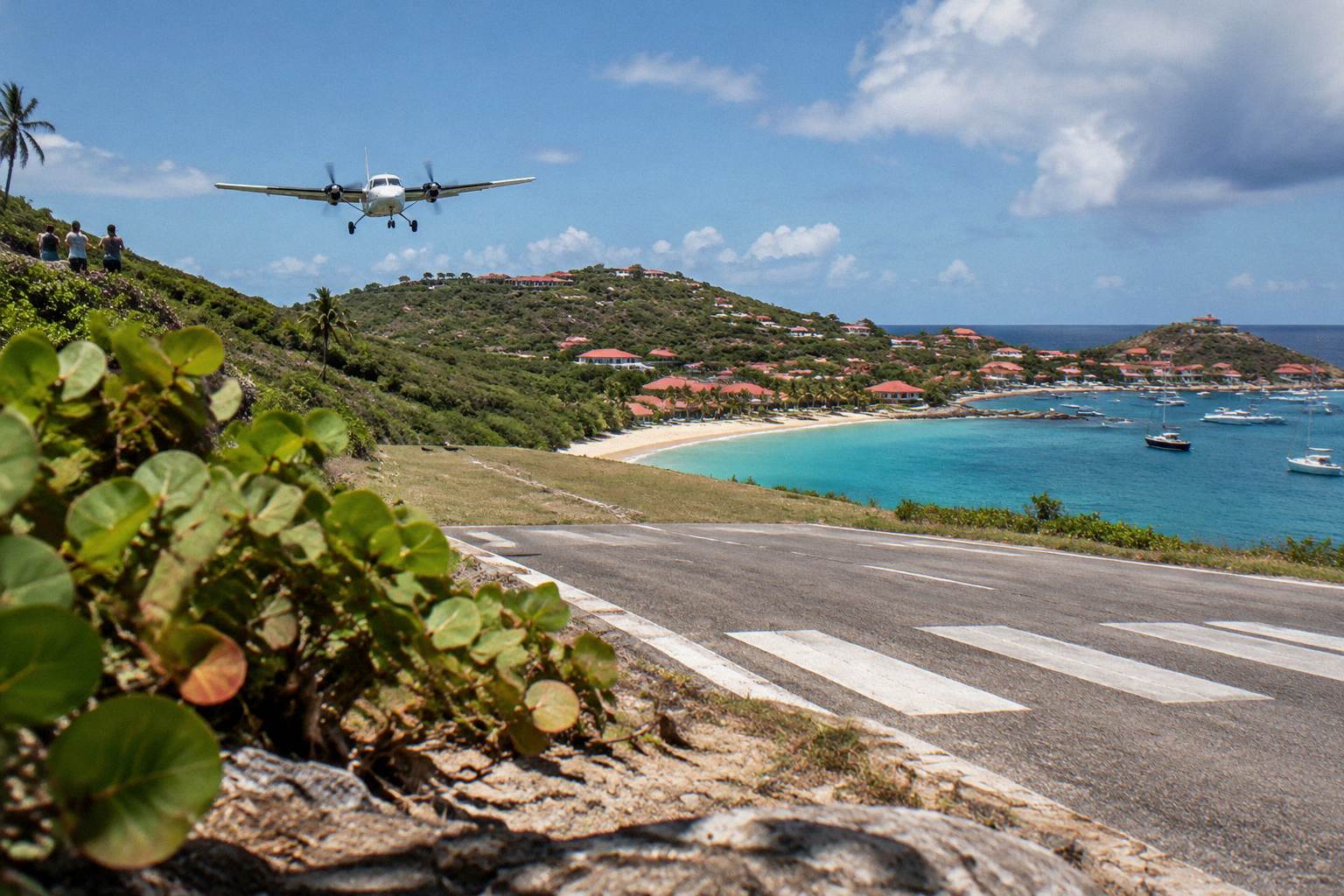
St Barthelemy, written St Barts, is a small French island in the Caribbean with a harbour capital at Gustavia and an airport runway of just 646 m, long enough for small turboprops only. That is why a large share of arrivals route through Princess Juliana Airport, code SXM, on the Dutch side of St Martin and Sint Maarten, and finish the trip either by a short hop in a small plane or by ferry across the channel. This page covers the ferry option end to end: which operators run, where their terminals sit relative to the airport, what documents and check-in rules apply, and what to expect on arrival in Gustavia. The wider route picture, including the flight alternative, is laid out in the site's guide to reaching St Barts.
What Is The SXM To St Barts Ferry Route?
The SXM to St Barts ferry route connects Princess Juliana Airport on Sint Maarten with the harbour at Gustavia on St Barts by way of two scheduled operators: Great Bay Express from Philipsburg, about 45 minutes of crossing, and Voyager from Marigot on the French side, about 50 to 60 minutes. There is no ferry terminal inside the airport itself, so the journey always includes a transfer by taxi to one of the two departure ports. Both operators run daily subject to weather, and both require a passport. The route exists because the island's runway cannot take jets, giving travellers arriving on long-haul flights a same-day sea connection rather than a wait for a small plane.
St Barts is an overseas collectivity of France since 2007, with the euro as its currency and French as its official language, though English is widely spoken. Sint Maarten and St Martin, the island next door, sit outside St Barts' own administration, so the ferry crossing is an international one in practical terms even though the distances are short. That is the reason a passport is required on every sailing rather than just photo identification.
The two operators are described in detail on the site's page about St Barts ferry operators and schedules, and the question of cost is handled separately in how much the ferry from SXM to St Barts costs. This page sticks to the airport-to-terminal connection and the crossing itself.
| Route element | Detail |
|---|---|
| Arrival airport | Princess Juliana Airport (SXM), Sint Maarten |
| Ferry operator 1 | Great Bay Express, from Philipsburg (Bobby's Marina), Dutch side |
| Ferry operator 1 crossing | About 45 minutes |
| Ferry operator 2 | Voyager, from Marigot Ferry Terminal, French St Martin |
| Ferry operator 2 crossing | About 50 to 60 minutes |
| Voyager frequency | Two to three sailings a day |
| Document required | Passport |
| Arrival port in St Barts | Gustavia harbour |
Where Do The St Barts Ferries Leave From Near SXM Airport?
Great Bay Express departs from Bobby's Marina in Philipsburg, on the Dutch side of Sint Maarten, roughly the same side of the island as SXM airport, while Voyager departs from the Marigot Ferry Terminal on the French side of St Martin. Both terminals are a taxi ride from the airport, and neither is inside the airport itself. The choice between them usually comes down to sailing times that fit a flight arrival, and to which side of the shared island a traveller prefers to wait on.
Bobby's Marina sits on the waterfront at Philipsburg, the Dutch-side capital known for its cruise tender pier and its shopping street. The terminal position matters for timing: Great Bay Express asks passengers to arrive about 45 minutes before departure, and check-in closes about 15 minutes before the boat leaves, so a late landing that clears the airport slowly can turn a comfortable connection into a missed sailing. The operator's own ferry page shows current sailings and booking, and it is the only reliable source for times, since schedules shift with season and demand.
Marigot is the capital of French St Martin, and its ferry terminal, the gare maritime, is where Voyager berths. Voyager runs two to three sailings a day in each direction, per the port's own terminal page. Marigot itself has a market square and a strip of cafes facing the marina, which makes a delayed connection easier to absorb than a bare dock, though the site names no specific venue. The French side uses the euro; the Dutch side uses a different currency environment, and cards are accepted widely on both.
| Departure point | Operator | Island side | Terminal | Notes from the operator's page |
|---|---|---|---|---|
| Philipsburg | Great Bay Express | Sint Maarten (Dutch) | Bobby's Marina | About 45 minute crossing, arrive 45 minutes early, check-in closes 15 minutes before departure |
| Marigot | Voyager | St Martin (French) | Marigot Ferry Terminal (gare maritime) | About 50 to 60 minute crossing, two to three sailings a day |
Great Bay Express Or Voyager: Which St Barts Ferry Suits An SXM Arrival?
For an SXM airport arrival, Great Bay Express from Philipsburg is usually the simpler connection because Bobby's Marina is on the same side of the island as the airport, while Voyager from Marigot suits travellers who land early, stay overnight on the French side, or prefer its sailing times. Both take a passport, both cross to Gustavia, and neither offers a smoother guarantee: sea conditions affect every sailing on this channel. The honest answer is that the timetable that fits the flight decides, not the boat.
Neither operator publishes a fare, and this article prints none; the cost question has its own treatment at the ferry price answer page. What can be compared is the structure of each option: crossing length, departure port, and check-in discipline. Great Bay Express holds an edge in raw crossing time at about 45 minutes; Voyager's two to three daily sailings from Marigot make it the natural choice for anyone already committed to the French side.
There is a third way to cross that skips the scheduled ferry entirely. The bookable boats listed here all depart from St Martin or Sint Maarten and visit St Barts, among them a per-person group sail whose listing shows a season from 12 May to 31 August 2027, plus a set of private charters priced per group. For a group of friends or a family landing at SXM, a private boat can cost out competitively against multiple ferry seats, and it leaves when the flight lands rather than when the timetable says.
For travellers weighing the sea against the air, the small-plane alternative has its own page: the St Barts airport guide explains the 646 m runway, the daylight-only operations and the turboprop-only rule. The full route set, including flights from Miami to St Barts, shows why SXM works as the main gateway.
How Do You Get From SXM Airport To The Ferry Terminals?
The connection from SXM airport to either ferry terminal is by taxi, since no rail link exists on Sint Maarten and this site prints no bus or shuttle detail it cannot verify; both terminals are a taxi ride away, and the practical planning move is to build the transfer, plus the operator's requested 45-minute early arrival, into the connection time after landing. A taxi from the airport to Philipsburg runs to the Dutch-side waterfront; a taxi to Marigot crosses the invisible border onto the French side of the shared island. Immigration formalities for entering St Martin and Sint Maarten happen at the airport on arrival, not at the land border between the two sides.
Two numbers drive the plan. First, the check-in window: Great Bay Express closes check-in about 15 minutes before departure and asks for arrival about 45 minutes ahead, so the taxi needs to deliver a passenger a full 45 minutes before the intended sailing. Second, the flight itself: a delayed inbound aircraft eats the buffer from the front, and a missed sailing usually means waiting for the next one, not a refund, which is why many travellers book an overnight on St Martin and take a morning boat. The site's St Maarten before or after St Barts page covers the layover in reverse, for the departure leg.
| Step | Action | Timing rule |
|---|---|---|
| 1 | Land at SXM, clear immigration and bags | Allow for flight delay before committing to a sailing |
| 2 | Taxi to chosen terminal | Philipsburg for Great Bay Express, Marigot for Voyager |
| 3 | Check in at the terminal | Great Bay Express asks for arrival about 45 minutes early |
| 4 | Boarding closes | About 15 minutes before departure on Great Bay Express |
| 5 | Cross to Gustavia | About 45 minutes from Philipsburg, about 50 to 60 minutes from Marigot |
Do You Need A Passport For The St Barts Ferry?
Yes, a passport is required for the ferry to St Barts on both operators, because St Barts is a French overseas collectivity that sits outside the Schengen area and the crossing from St Martin or Sint Maarten is treated as an international arrival. A driving licence or national ID card that works for some Caribbean hops does not substitute here for non-EU travellers, and EU citizens should carry the document their own government's advice specifies. The same document discipline applies in both directions, on the return from Gustavia as well.
Entry rules for the territory are set by French authorities, and the rule text is reported rather than guaranteed, so the site's advice is to check your own government's travel guidance before flying. The broader entry picture, including what Schengen visas do and do not cover, is on the page about St Barts customs and entry, and the airport-side equivalent is covered under flying to St Barts from the US. What matters at the ferry dock is simple: no passport, no boarding, on either operator.
One subtlety catches returning travellers. Sint Maarten and St Martin are two different jurisdictions sharing one island, so a round trip that enters through SXM, ferries to Gustavia and ferries back to Marigot has crossed three borders in a day. Each crossing wants the passport presented again. Build that into the day plan rather than packing the document deep in a checked bag that went ahead on a plane.
What Happens When You Arrive In Gustavia By Ferry?
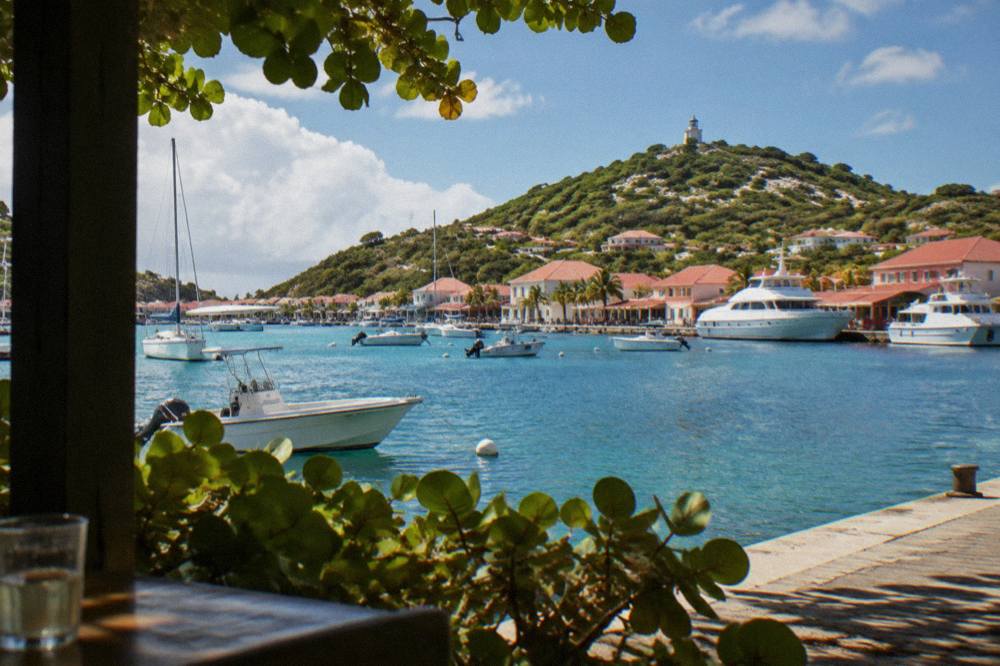
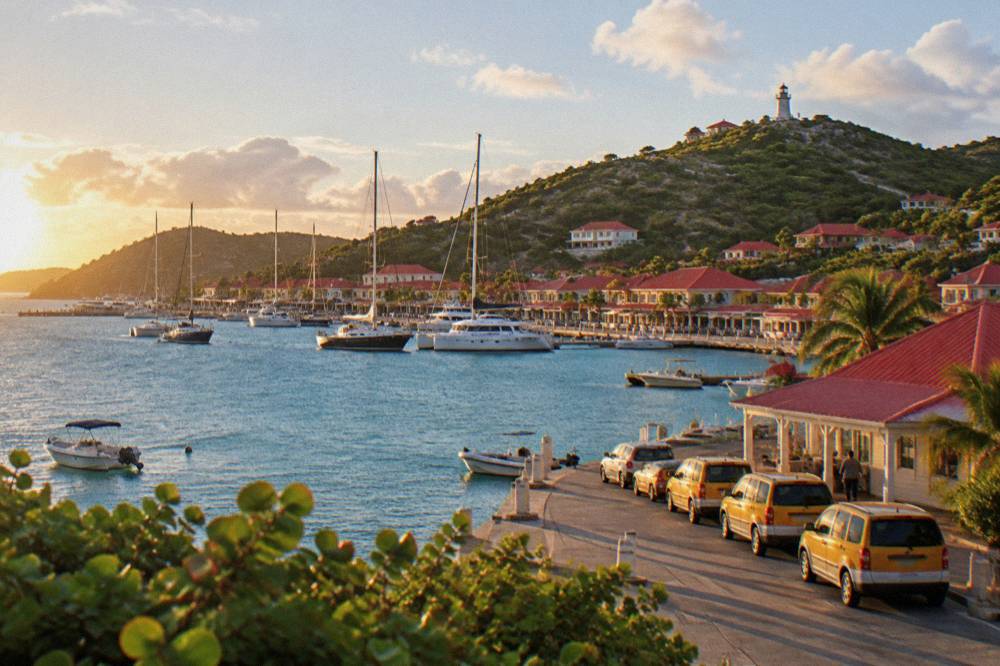
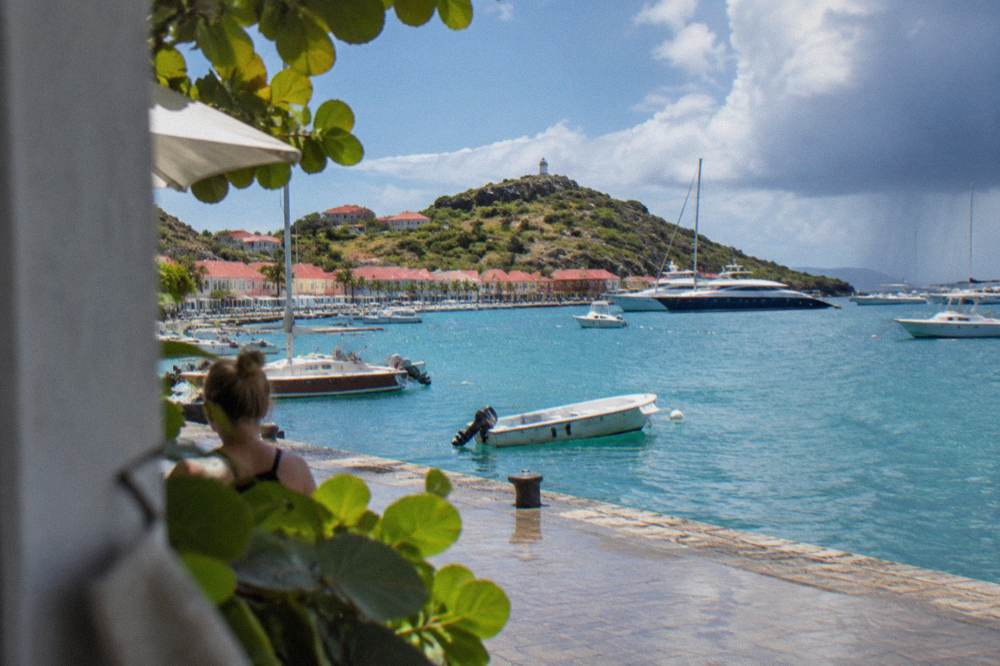
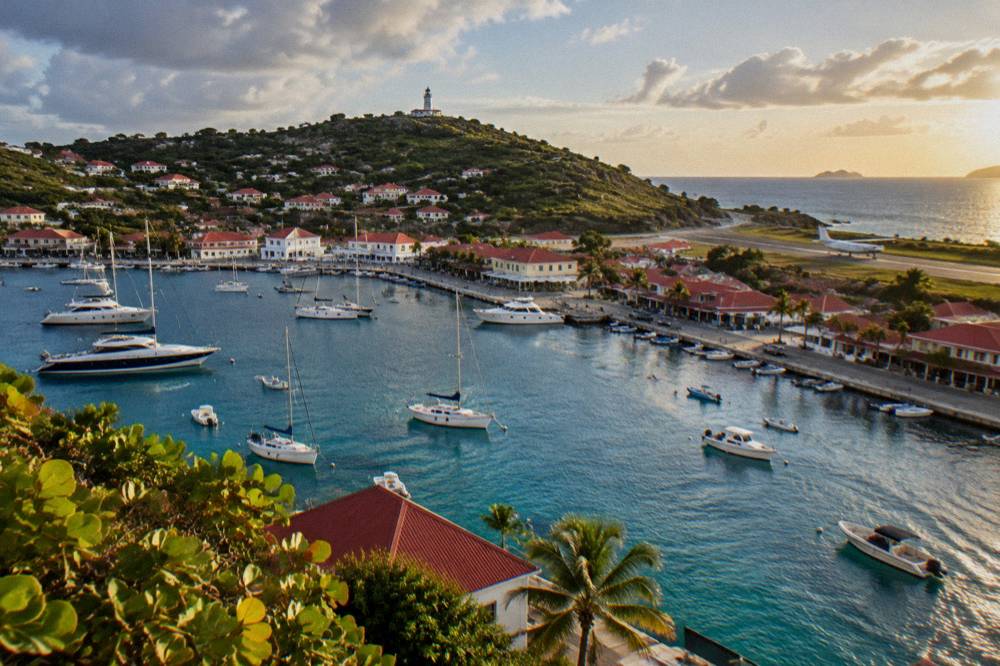
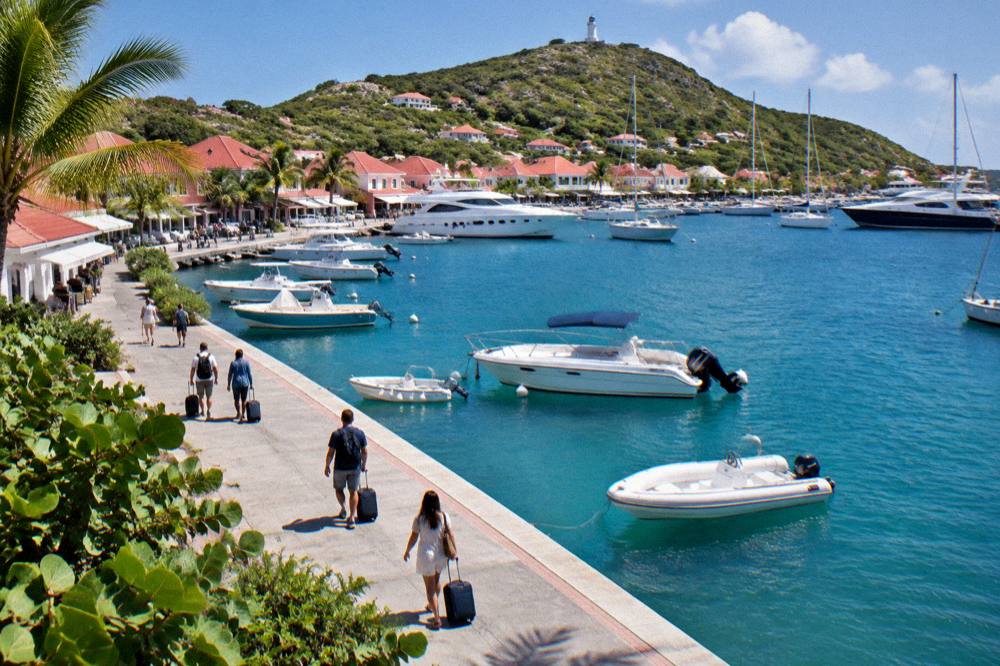
Both ferries dock in Gustavia harbour, the capital of St Barts, a red-roofed town wrapped around a bay filled with yachts, and from the dock the town is immediately walkable, with the island's taxis, rental-car counters and the road network to every beach starting from there. Arriving by sea also delivers the classic first view of the island: the hills of the south coast closing around the anchorage as the boat rounds the harbour head. Formalities are light but real: passport control for the territory happens at the port, and luggage comes off the boat by hand.
Gustavia is small. The harbour front, the shops and the shell museum cluster within a compact area, and the site's own Gustavia harbor guide profiles the anchorage in detail. Getting onward without a car is covered in getting around St Barts, while travellers who want wheels waiting can read the site's page on St Barts car rental, which notes counters including Avis, Budget and Hertz near the airport at SBH and local agencies offering Mini Mokes.
Two arrival realities deserve a line each. First, sea conditions occasionally force sailings to be held or cancelled, and in that case the small-plane hop from SXM or Grand Case is the fallback, space permitting. Second, Gustavia on a day when cruise ships tender ashore, which they do by boat since the island has no cruise pier, is busier along the waterfront than on a quiet weekday, though the port publishes no public call schedule and this page predicts nothing.
| Arrival item | What to expect |
|---|---|
| Dock location | Gustavia harbour, walking distance to the town centre |
| Formalities | Passport check for St Barts at the port |
| Luggage | Offloaded by hand at the dock |
| Onward transport | Taxis and pre-arranged rentals; the island road network starts here |
| Cruise-day note | Ships tender ashore, no pier exists, no public call schedule is published |
Is The SXM To St Barts Crossing Rough?
The crossing between St Martin or Sint Maarten and St Barts crosses an open channel where sea conditions vary, and both operators' sailings are subject to weather, so the honest framing is that some days are flat and others are lumpy, with no prediction possible for any date. The site does not promise a smooth crossing and no operator does either. Travellers prone to seasickness should take their usual precautions and read the site's dedicated page on St Barts ferry seasickness before booking, and anyone booking a sailing day with flexibility should keep the small-plane fallback in mind.
The channel behaviour follows a seasonal rhythm tied to the trade winds rather than to a calendar guarantee, and hurricane season, which runs from 1 June to 30 November with its peak from mid-August to mid-October, brings the months when swell and storm systems are more likely to disrupt sailings. None of that predicts any specific day. The Meteo-France normals for St Barts, 1991-2020, show the island is warm year round, with a mean daily high of 28.5 C in January rising to 31.7 C in September, and October the wettest month at 135.6 mm of rain across the year's 891.3 mm total.
Practical preparation beats prediction. Book the sailing that fits the flight with a buffer, keep documents in hand luggage, carry water, and treat a cancelled departure as a St Martin afternoon rather than a ruined trip, since both sides of the island have beaches and both ferry terminals sit in towns worth an unplanned hour.
Ferry Or Small Plane From SXM To St Barts?
The choice between ferry and small plane from SXM comes down to cost sensitivity, sea state and flight arrival time: the ferry takes longer door to door but runs whatever the plane queue looks like, while the small-plane hop is a short ride in a turboprop that flies only in daylight and visual conditions, because the 646 m runway at Gustaf III Airport admits STOL aircraft only. No jet flies to St Barts, and no direct flight from outside the Caribbean lands there, so every air arrival also connects through a gateway.
If the plane wins that comparison, book a flight to St Barts.
The air side of the comparison is documented across the site: St Barth Commuter flies to SBH from SXM, Grand Case and Pointe-a-Pitre, and Tradewind flies from San Juan and Antigua. Winair operates Twin Otters at SXM, though this site prints no Winair route or frequency. The flights from St Maarten to St Barts page and the landing at St Barts airport guide cover the experience, including why weather sometimes diverts a plane back to St Martin while the ferry still runs.
| Factor | Ferry from St Martin | Small plane from SXM |
|---|---|---|
| Departure points | Philipsburg or Marigot terminals | SXM airport itself |
| Journey character | Open-channel crossing, weather dependent | Short hop, daylight and visual conditions only |
| Aircraft or vessel rule | Scheduled passenger ferries | STOL turboprops only, no jets at SBH |
| Documents | Passport | Passport |
| Weather fallback | Small plane, space permitting | Ferry from either terminal |
How Should You Plan The Day Of The Crossing?
Plan the crossing day backwards from the sailing, not forwards from the flight: pick the ferry that fits the flight's arrival plus a generous buffer, book seats ahead in high season, keep the passport in hand luggage, and hold a fallback, either a later sailing or the small-plane hop, in reserve. The single most common failure on this route is a tight connection built on an on-time landing that did not happen, followed by a missed check-in that closed 15 minutes before departure.
Overnighting on St Martin or Sint Maarten the night before an early sailing removes almost all of the risk and adds an evening on a shared island with two capitals. The alternative is a same-day connection with a wide margin, ideally a sailing several hours after the flight lands. Travellers who book the group sail that departs from St Martin, whose listing runs 12 May to 31 August 2027, sometimes treat the boat day itself as the transfer and the excursion combined; its full description is on the Gustavia, Colombier and Ile Fourchue sail page, and current dates and prices show on See the live listing.
| Planning step | Rule of thumb |
|---|---|
| Choose the sailing | One that leaves several hours after the flight lands |
| Book ahead | Especially in the December to April high season |
| Documents | Passport in hand luggage, not checked baggage |
| Buffer | Taxi ride plus the operator's 45-minute early arrival |
| Fallback | A later sailing, or the small-plane hop from SXM |
| Risk-free version | Overnight near the terminal and take a morning boat |
Common Questions About The SXM To St Barts Ferry
Is there a ferry from SXM airport directly to St Barts?
No ferry leaves from inside the airport. Travellers take a taxi to either Bobby's Marina in Philipsburg for Great Bay Express or the Marigot Ferry Terminal for Voyager, both on the island shared by Sint Maarten and St Martin.
How long is the ferry from St Maarten to St Barts?
The Great Bay Express crossing from Philipsburg takes about 45 minutes, and the Voyager crossing from Marigot takes about 50 to 60 minutes, both subject to sea conditions.
Do you need a passport for the St Barts ferry?
Yes. Both operators require a passport on every sailing, because St Barts is a French overseas collectivity outside the Schengen area and the crossing counts as an international arrival.
How early should you arrive at the ferry terminal?
Great Bay Express asks passengers to arrive about 45 minutes before departure, and check-in closes about 15 minutes before the boat leaves. Building the taxi transfer plus that window into a flight connection is the safe plan.
Can the ferry be cancelled for weather?
Yes. Both operators' sailings are subject to sea conditions, and the crossing can be rough. The small-plane hop from SXM or Grand Case is the usual fallback when space allows, though those flights run in daylight and visual conditions only.
Which is better, the ferry or the plane from SXM to St Barts?
Neither is universally better. The ferry is the slower, sea-level option that runs from two terminals; the plane is a short hop in a small turboprop limited by the 646 m runway and daylight hours at St Barts. Flight arrival time, budget and sea state usually decide.
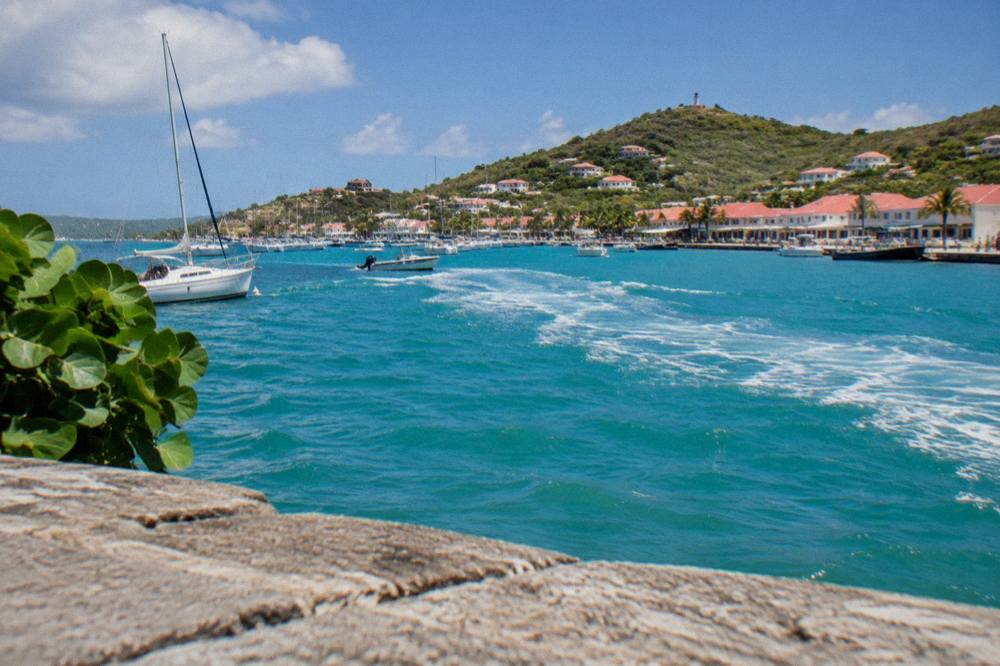
The ferry from St Martin to St Barts is a working part of the island's transport rather than a scenic add-on, and it rewards travellers who treat it that way: booked with margin, documented correctly and planned with a fallback. Anyone wanting the sea crossing without the scheduled timetable can compare the private charter options above, all departing from St Martin or Sint Maarten, while the wider route context sits in the site's coverage of things to do in St Barts once the boat has docked in Gustavia.
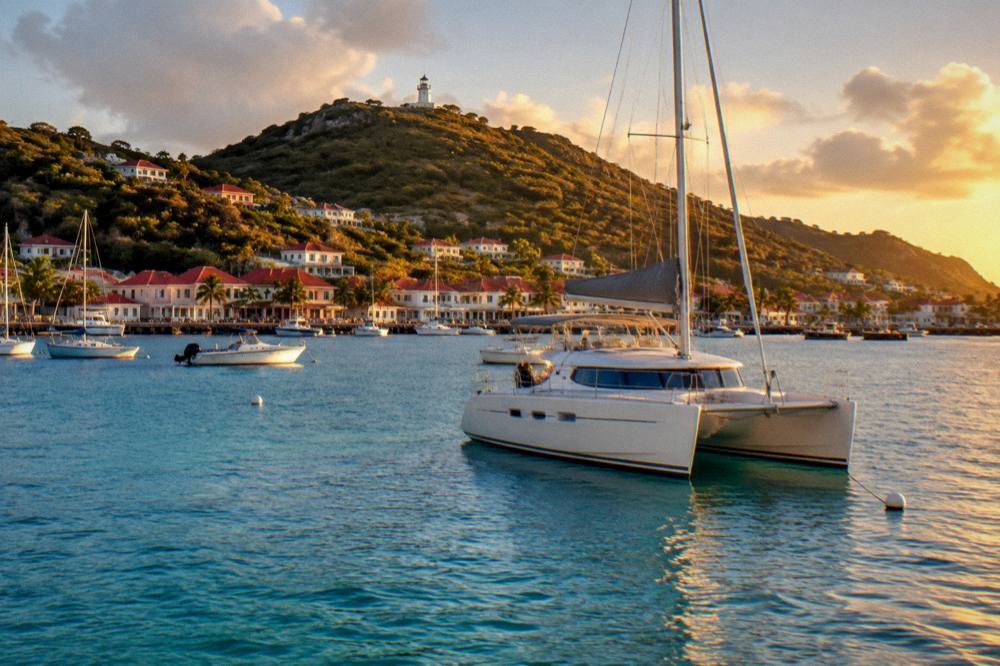
Whatever the final choice, one page of this site, St Barthelemy Travel, holds the full picture: ferries, small planes, beaches and itineraries for an island of about 21 square kilometres that stays warm from January's 28.5 C mean daily high to September's 31.7 C, per the Meteo-France normals 1991-2020, and that greets almost every visitor the same way, across the water.