Flights To St Barts
Every flight to St Barts lands on a 646 m runway at Gustaf III Airport, which means small turboprops, daylight hours and a gateway stop on St Martin, San Juan, Guadeloupe or Antigua.
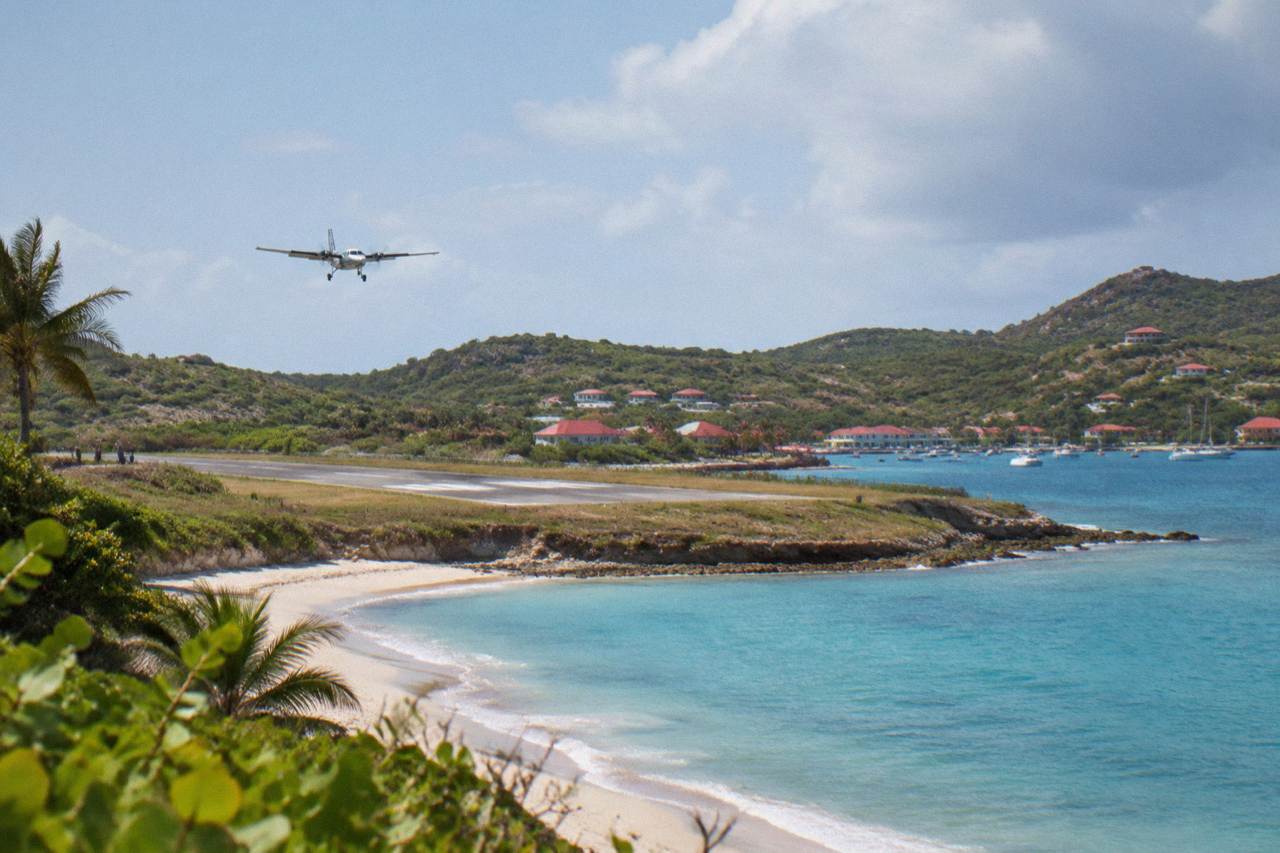
There are no jets at St Barts. St Barth Commuter flies from St Martin, Grand Case and Pointe-a-Pitre, Tradewind flies from San Juan and Antigua, and Winair operates Twin Otters from the St Martin hub; everyone else connects through a gateway.
St Barthelemy, written St Barts, is a small French island in the Caribbean, and its airport is one of the reasons the island feels the way it does. Gustaf III Airport, also called Remy de Haenen, carries the code SBH and has a single runway just 646 m long, built for small STOL turboprops in daylight and visual conditions only. No jet reaches the island from anywhere, so every St Barts flight is a short final hop from a Caribbean gateway, usually St Martin. That single fact shapes everything on this page: which airlines fly there, which airports you connect through, and why many travellers mix the plane with a ferry or a boat day. The full arrival picture, including the sea routes, is covered in the St Barts getting here guide, and this page goes deep on the air side.
Which Airlines Fly To St Barts?
The airlines serving St Barts are St Barth Commuter, Tradewind Aviation and Winair, all flying small STOL aircraft: St Barth Commuter from St Martin, Grand Case and Pointe-a-Pitre, Tradewind from San Juan and Antigua, and Winair with Twin Otters from the St Martin hub. No large aircraft of any kind lands at SBH. Each carrier's own route page lists its current schedules, which rise in the winter months and thin out in the autumn low season.
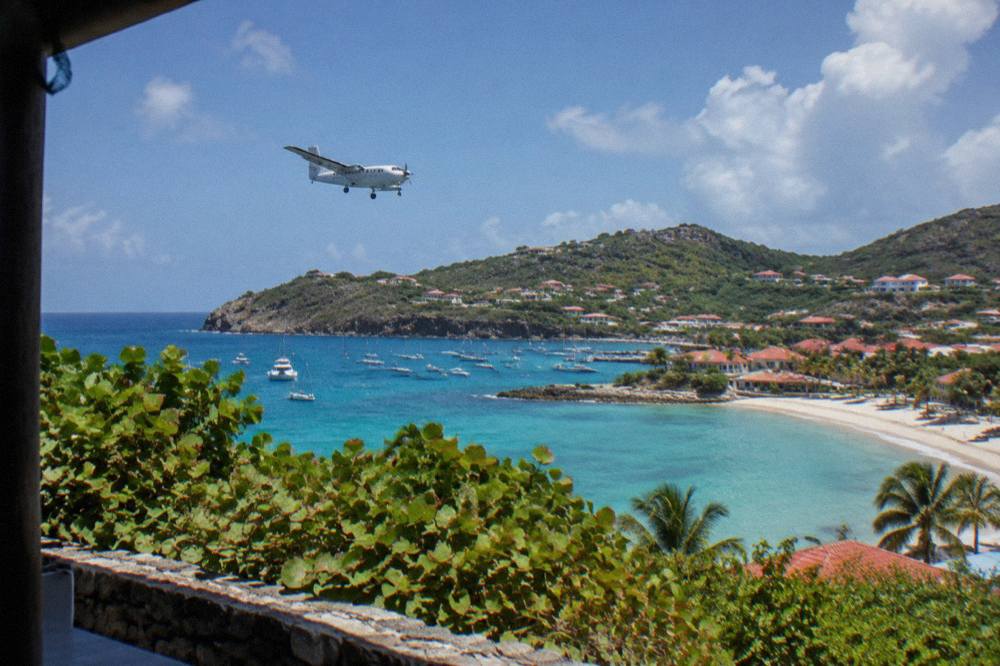
St Barth Commuter is the island's local scheduled operator. Its flight pages show service from Princess Juliana on Sint Maarten (SXM), from Grand Case on the French side of St Martin (SFG), and from Pointe-a-Pitre in Guadeloupe (PTP). It flies Cessna 208B Grand Caravans, high-wing single-engine turboprops built for short strips, and it also runs charters. Tradewind Aviation is the carrier that reaches furthest afield: its destination pages list scheduled Pilatus PC-12 service to St Barts from San Juan, Puerto Rico (SJU) and from Antigua (ANU), which opens one-stop routings from the United States that avoid Sint Maarten entirely.
Winair is the third name in the mix. It operates DHC-6 Twin Otters, the classic 19-seat STOL twin, out of the Sint Maarten hub. Its role on the St Barts corridor is well established, but route and frequency details change with the season, so the practical move is to treat SXM as the hub and let the booking systems show which of the local carriers has seats on your date. Frequencies on all carriers climb through the December-to-April high season and drop during the autumn closure window, when many island hotels shut their doors anyway.
| Carrier | Aircraft | Serves SBH from | Notes |
|---|---|---|---|
| St Barth Commuter | Cessna 208B Grand Caravan | SXM, SFG, PTP | Local scheduled operator, also runs charters |
| Tradewind Aviation | Pilatus PC-12 | SJU, ANU | Longest scheduled hops into SBH |
| Winair | DHC-6 Twin Otter | SXM hub | Classic STOL twin; check current schedules |
Why Do No Jets Land At St Barts?
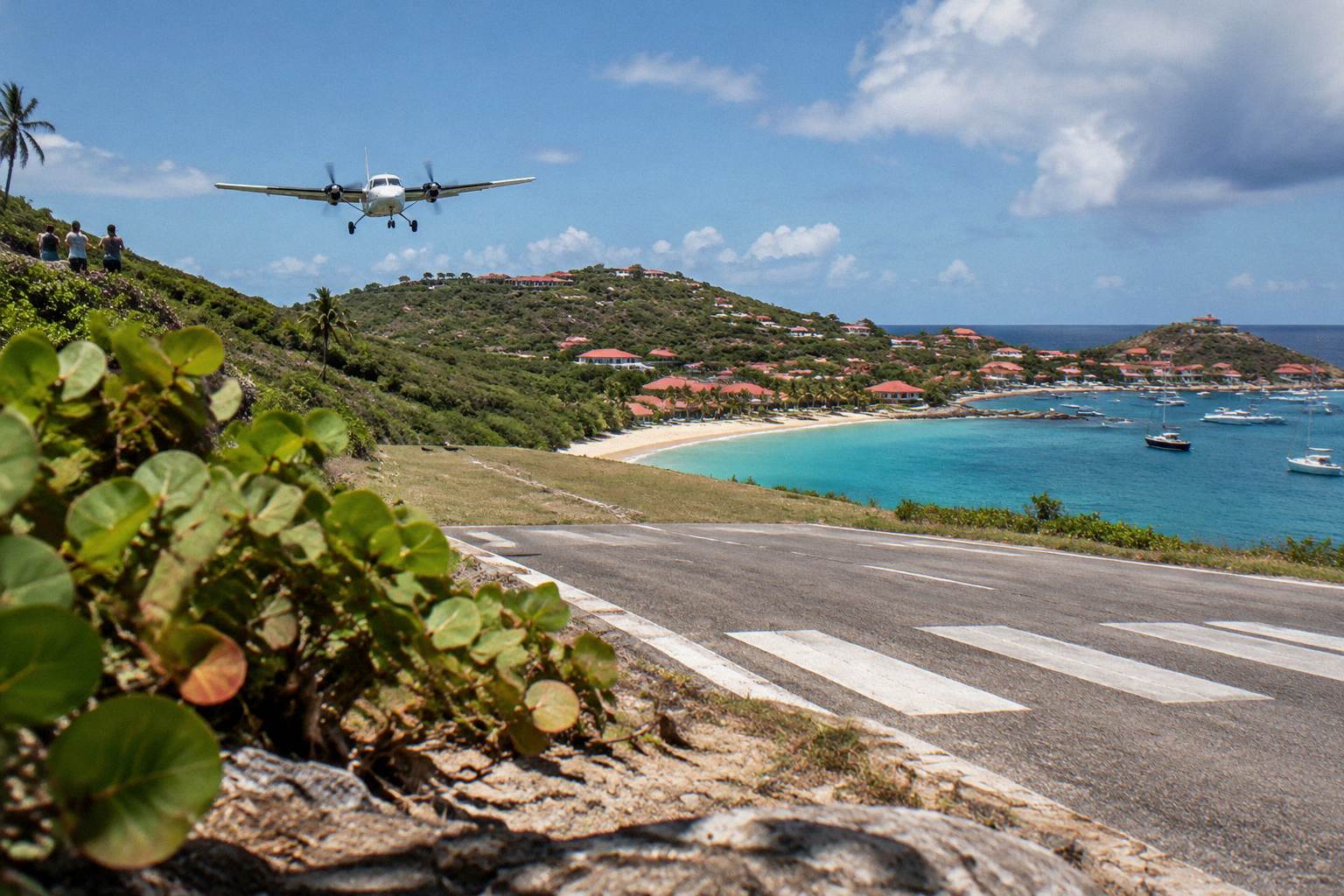
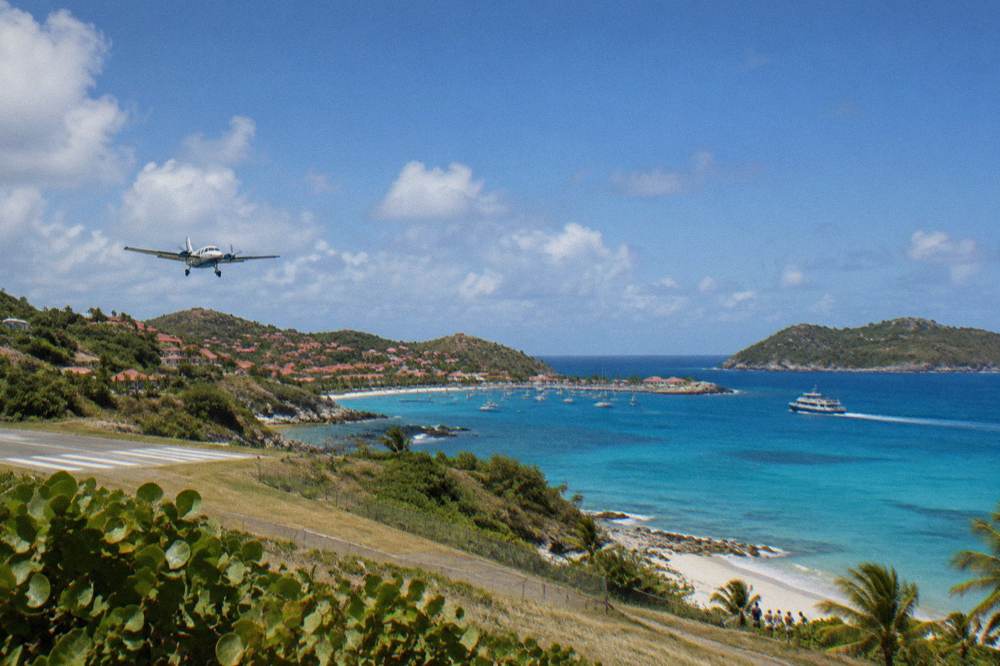
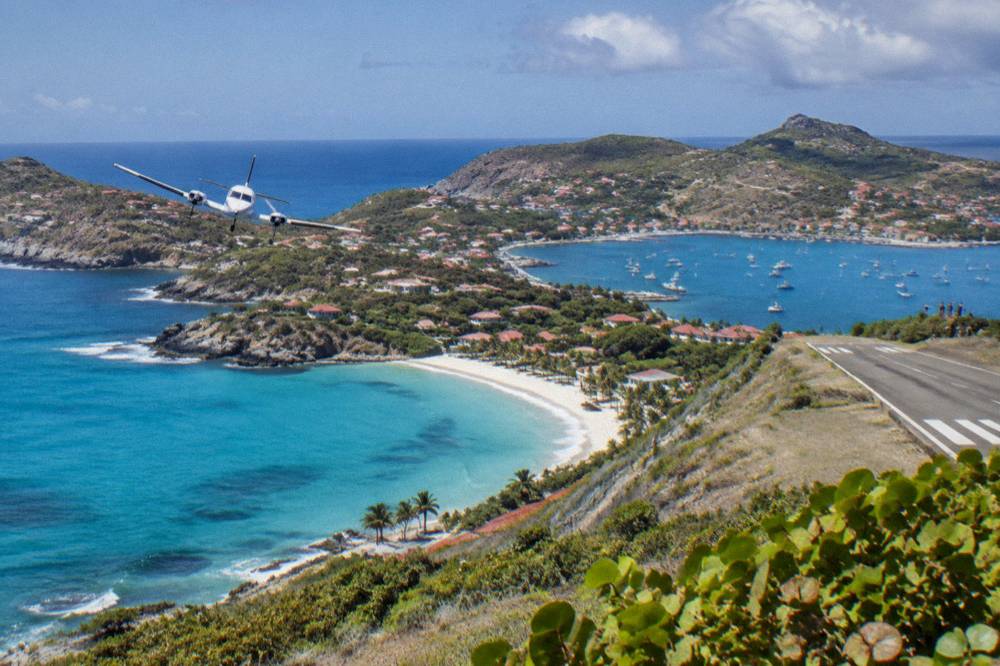
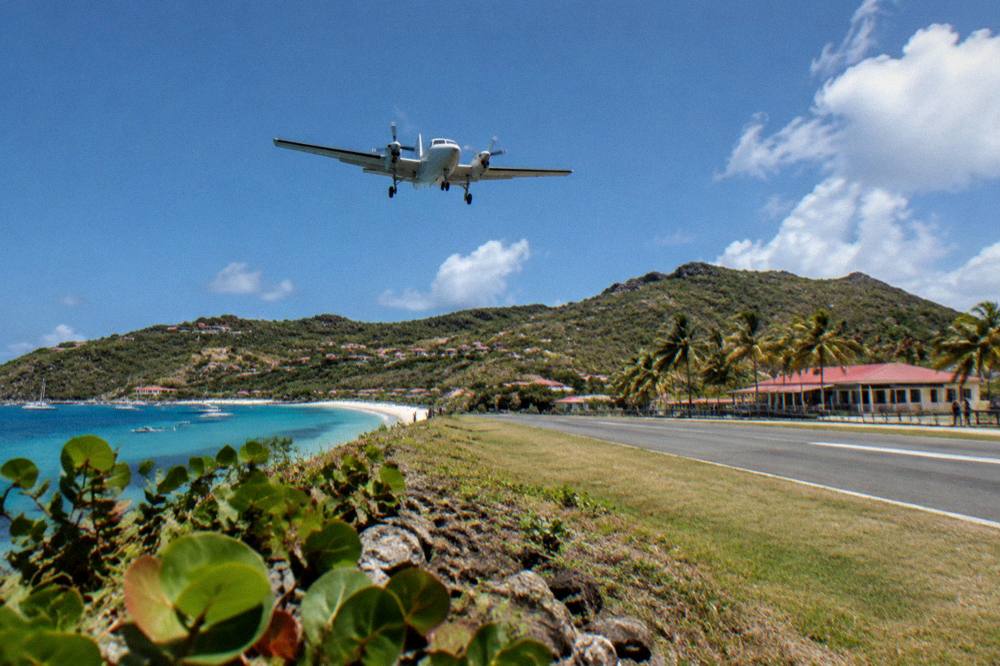
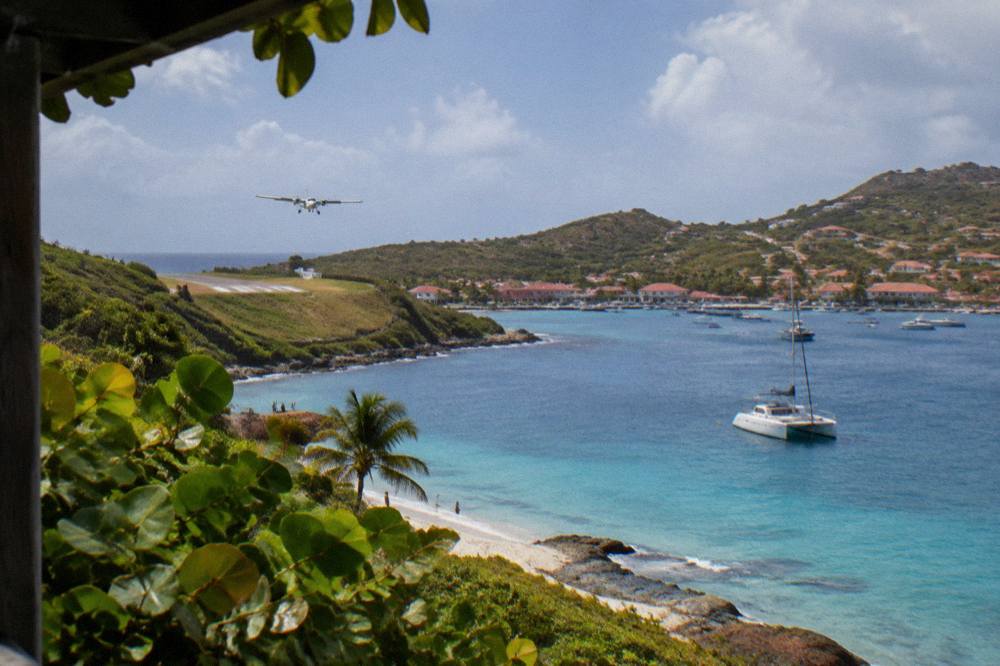
Gustaf III Airport's runway is 646 m long, roughly a fifth of a normal international runway, and the approach descends over a hill called Col de la Tourmente onto a strip that ends near Saint-Jean beach. Only specially certified STOL turboprops can use it, operations are daylight and visual-conditions only, and the airport closes shortly after sunset. Jets of any size, private or scheduled, physically cannot land there.
The numbers explain the rest of the island's transport geography. A runway of 646 m rules out anything larger than a Twin Otter, a Grand Caravan or a Pilatus PC-12. Pilots need a special qualification for the steep approach over the ridge, and the absence of runway lighting means the whole airport goes quiet at dusk. The airport typically opens around 07:00 and closes about 15 minutes after sunset, which is why the last arrivals of the day always land in good light and why an evening flight into St Barts simply does not exist.
That constraint is why every itinerary from outside the Caribbean includes a gateway. If you are crossing an ocean to reach St Barts, the plan is a jet into St Martin (SXM), San Juan (SJU), Pointe-a-Pitre (PTP) or Antigua (ANU), followed by a short hop on a small plane or a ferry across the channel. Travellers coming from the United States can work through the routings in the flying to St Barts from the US guide. The landing itself, over the hill and down to the strip at Saint-Jean, is famous enough that the St Barts airport guide and the landing at St Barts airport page cover it in detail, and the airport code questions are answered on the SBH airport code page.
Which Gateway Airports Connect To St Barts Flights?
Four gateways feed St Barts by air: Princess Juliana on Sint Maarten (SXM), the busiest and closest hub; Grand Case on French St Martin (SFG); San Juan in Puerto Rico (SJU); and Pointe-a-Pitre in Guadeloupe (PTP), with Antigua (ANU) as a seasonal Tradewind gateway. SXM is the default connection point, served by St Barth Commuter and Winair, while SJU and ANU are Tradewind territory.
Sint Maarten works as the main feeder because the big transatlantic and North American jets land there all day, and the St Barts shuttle aircraft rotate through continuously in season. Grand Case is the quiet French-side alternative, a small airfield at the north end of St Martin served by St Barth Commuter, and it suits travellers staying on the French side or arriving by regional flight into SFG itself. San Juan is the pick for anyone routing through Puerto Rico, since Tradewind's PC-12s bridge SJU to SBH directly, and the San Juan flights page covers that pairing. Antigua sits at the edge of the network with seasonal Tradewind service.
A useful way to think about the choice is what each gateway does to the rest of your trip. St Martin gives you the option of swapping the last flight for a ferry, a possibility laid out in the St Maarten flights guide and the ferry operators and schedule page, and it leaves room for a day or two of exploring, ideas for which sit in the things to do on St Martin before St Barts roundup. Anguilla also connects to the island by air, covered separately in the Anguilla flights guide.
| Gateway airport | Code | Carriers to SBH | Where it fits |
|---|---|---|---|
| Princess Juliana, Sint Maarten | SXM | St Barth Commuter, Winair | Main hub, most connections |
| Grand Case, St Martin | SFG | St Barth Commuter | French-side alternative |
| San Juan, Puerto Rico | SJU | Tradewind | US one-stop routings |
| Pointe-a-Pitre, Guadeloupe | PTP | St Barth Commuter | French Caribbean connections |
| Antigua | ANU | Tradewind | Seasonal gateway |
How Does The St Martin To St Barts Hop Work In Practice?
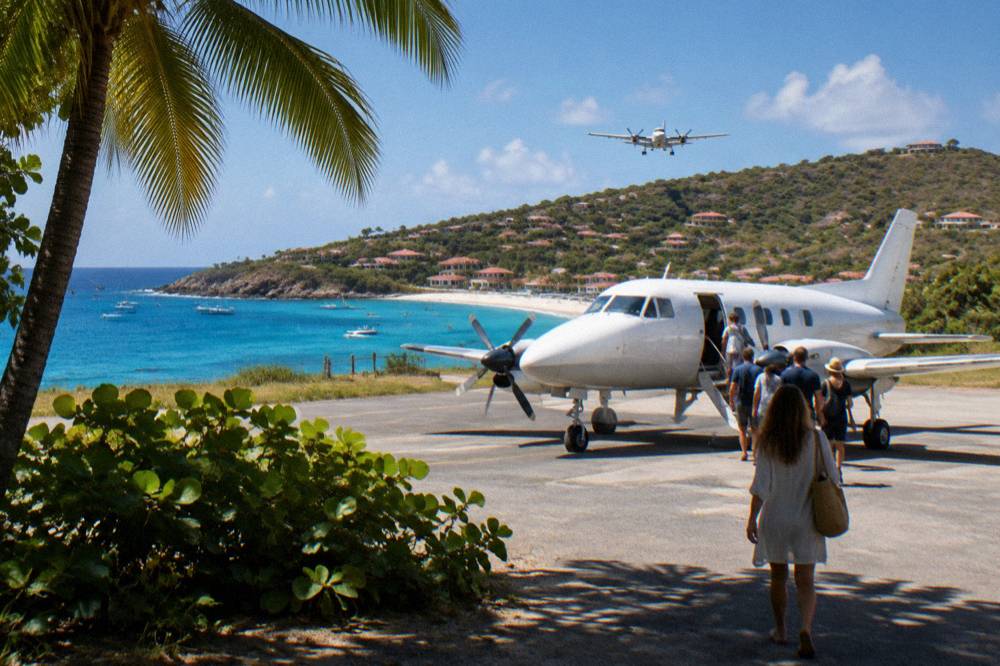
The St Martin to St Barts flight is a short hop on a small turboprop, with the SXM departure sitting in the same terminal complex as the arriving international jets, a walk to the commuter counter, and a flight measured in minutes rather than hours. Grand Case offers a quieter French-side version of the same trip. Both flights land on the same short strip and both run only in daylight.
In practice the hop is the easiest part of a long journey. The Twin Otters and Grand Caravans that fly the corridor cruise low over the channel between St Martin and St Barts, and the whole experience is closer to a scenic flight than to a conventional airline sector. Because the aircraft are small, seats per departure are few, and in the high season the little planes run back and forth all day. The operators' own booking pages show live times, and those are the only schedules worth trusting, since timings shift between winter and the quiet autumn weeks.
One planning note that saves trouble: build slack into the connection. If a long-haul flight into SXM runs late, the small aircraft will not wait, and because SBH closes at dusk there is no night flight to fall back on. Many travellers therefore overnight on St Martin or Sint Maarten and fly across the next morning, which turns a rushed transfer into a relaxed start. If you do end up with spare hours on either side of the crossing, the St Barts layover itinerary shows how to spend them well, and the getting from SXM to the ferry page covers the sea alternative if the flights are full.
| Air route | Aircraft used | Who flies it | Character of the trip |
|---|---|---|---|
| SXM to SBH | Twin Otter, Grand Caravan | St Barth Commuter, Winair | Main shuttle corridor |
| SFG to SBH | Grand Caravan | St Barth Commuter | Quiet French-side hop |
| PTP to SBH | Grand Caravan, PC-12 class | St Barth Commuter | French Caribbean link |
| SJU to SBH | Pilatus PC-12 | Tradewind | Longest scheduled hop |
| ANU to SBH | Pilatus PC-12 | Tradewind | Seasonal service |
Is The Ferry A Better Option Than A Flight To St Barts?
Two scheduled ferry operators link St Martin and Sint Maarten to Gustavia: Great Bay Express from Bobby's Marina in Philipsburg, with a crossing of about 45 minutes, and Voyager from the Marigot ferry terminal on the French side, taking about 50 to 60 minutes. Neither is faster than the plane, but both avoid the baggage limits of the small aircraft, and both can be rough when the channel is windy.
The ferry question usually comes down to luggage and stomach. The ferries take more bags than a Grand Caravan will happily carry, they cost less than a charter, and they run two to three crossings a day in each direction in normal conditions. Against that, the channel between the islands is open water, and the operators themselves flag weather cancellations: a rough day grounds the small planes at SBH and can stop the ferries too, so neither mode is guaranteed. The operator pages are the place to check both the day's sailings and the sea state before committing.
There is a third path that blurs the categories: the boat day trip that doubles as transport. Several full-day products listed here, all departing from St Martin or Sint Maarten, spend a long day on the St Barts coast, which suits a traveller who wants a taste of the island without an overnight stay. The group sail to Gustavia, Colombier and Ile Fourchue is the per-person option in that family, running from 12 May to 31 August 2027 on its listing, and See the live listing if the dates line up with your trip.
| Sea route | Operator | Departure point | Crossing |
|---|---|---|---|
| Sint Maarten to Gustavia | Great Bay Express | Bobby's Marina, Philipsburg | About 45 minutes |
| St Martin to Gustavia | Voyager | Marigot ferry terminal | About 50 to 60 minutes |
When Is The Best Time Of Year To Fly To St Barts?
The busiest flying months are December through April, when hotel occupancy, event calendars and flight frequencies all peak, while the quietest stretch is September and October, when many hotels close for the autumn and the hurricane season reaches its height. The island stays warm year-round, with mean daily highs from 28.5 C in January to 31.7 C in September according to the Meteo-France normals, 1991-2020.
The calendar matters more on St Barts than on most islands because of the annual rhythm of closures. Many hotels and restaurants shut in late August and reopen between mid-October and early November, so an autumn flight can land you in a Gustavia that is half asleep, while a January flight coincides with the Music Festival, running 8 to 18 January 2027, and a November trip overlaps the Gourmet Festival from 9 to 15 November 2026. The regatta calendar pulls its own crowd in spring. None of this changes the flight itself, but it changes what is waiting on the ground.
Weather is the second filter. The Atlantic hurricane season runs from 1 June to 30 November, with the peak of activity from mid-August to mid-October, and a storm-free week in that window can never be guaranteed. October is the wettest month in the Meteo-France normals at 135.6 mm of rain, against 38.4 mm in February, though rain on a tropical island tends to arrive in short bursts rather than all-day grey. Whatever the month, flight schedules at SBH are hostage to daylight, so winter's earlier sunsets tighten the afternoon arrival window.
| Month | Mean daily high | Rain |
|---|---|---|
| January | 28.5 C | 52.6 mm |
| February | 28.6 C | 38.4 mm |
| April | 29.8 C | 50.9 mm |
| July | 31.2 C | 80.4 mm |
| September | 31.7 C | 96.9 mm |
| October | 31.4 C | 135.6 mm |
How Strict Is Baggage On St Barts Flights?
Baggage on St Barts flights is limited by the size of the aircraft, not by an airline policy you can argue with: a Twin Otter or a Grand Caravan has small holds and low per-passenger allowances, and soft bags beat hard shells. Each carrier publishes its own allowance, so check the operator's page before packing, and plan for the ferry if your bags are genuinely large.
The honest framing is that nobody flies to St Barts with a family's worth of checked luggage. The aircraft that serve the island were designed for short island hops with minimal holds, and the carriers enforce their limits at the counter. Practical packing for the island makes this easier than it sounds: beachwear, light clothing and a sweater for evening winds cover almost every scenario, and the St Barts luggage page goes through the details. If your trip involves gear beyond the norm, golf bags, dive equipment or a month of provisions, the ferry's generous hold or a villa delivery service is the more sensible route.
It is also worth remembering that the same small-aircraft logic applies on the way out. Departures from SBH are quick and informal, but every kilo is accounted for. Travellers who shop seriously in Gustavia, a habit the St Barts shopping guide makes entirely understandable, sometimes plan the ferry home with the purchases and the flight back with light bags.
What Happens Once You Land At St Barts?
Landing at SBH puts you on the tarmac at Saint-Jean within minutes of touchdown, with a tiny terminal, a short walk to taxis and rental counters, and the whole island reachable by road in well under an hour. Car rental counters at the airport include Avis, Budget and Hertz alongside local agencies, and taxis serve the strip outside.
The arrival is famously quick. There is no jet bridge and no long march: you step off the aircraft, the terminal handles the formalities at island pace, and the road network fans out from the airport between Saint-Jean and Gustavia. Roads are narrow, winding and steep, driving is on the right, and the island-wide speed limit is 50 km/h with 30 km/h in the built-up areas, so the drive itself demands attention rather than speed. The St Barts car rental page runs through vehicle choices, from small compacts to the open Mini Mokes several local agencies offer.
From the airport the island opens up fast. Gustavia, the harbour capital with its red roofs and shell of a Swedish past, sits a short drive west, while the beaches ring the coastline: Saint-Jean nearest the strip, then Flamands, Colombier at the end of its trail, Grand Cul-de-Sac, Lorient, Gouverneur and Saline to the south, and quieter Corossol on the lee side. All beaches on the island are public, which makes a rental car less a luxury than a key. The things to do in St Barts collection maps the possibilities, and St Barthelemy Travel covers each beach, area and arrival route in its own guide.
Can You Charter A Plane Or A Boat Instead Of A Scheduled Flight?
Yes: St Barth Commuter runs charters alongside its scheduled flights from the St Martin area, Tradewind sells semi-private and charter seats from San Juan, and a large private-boat market connects St Martin and Sint Maarten to Gustavia for the day or overnight. None of these is cheap, and every one of them departs from the St Martin area or a regional gateway, never from St Barts itself.
The charter route suits two kinds of traveller: groups whose numbers make a private plane or boat sensible per person, and anyone whose dates collide with a full flight schedule. On the water, the trip list on this site covers the spread. The full-day St Barts private charter, the private charter from St Martin and the Nikki Beach private charter are all day trips priced per group, while the 2-day 1-night private catamaran turns the crossing into a short voyage with a night at anchor. Every one of them leaves from St Martin or Sint Maarten, and Look at the one that matches your dates.
Common Questions About Flights To St Barts
Can you fly direct to St Barts from the US?
No. No jet lands at St Barts, and no flight from outside the Caribbean reaches the island nonstop. Every US itinerary connects through a gateway, usually San Juan with Tradewind or Sint Maarten with St Barth Commuter or Winair.
What airport do you fly into for St Barts?
Flights land at Gustaf III Airport, also called Remy de Haenen, code SBH, on the coast at Saint-Jean. Its runway is 646 m long and serves only small STOL turboprops in daylight conditions.
Which airlines fly to St Barts?
St Barth Commuter from St Martin (SXM), Grand Case (SFG) and Pointe-a-Pitre (PTP), Tradewind from San Juan (SJU) and Antigua (ANU), and Winair with Twin Otters from the Sint Maarten hub.
Is the flight to St Barts scary?
The approach descends over a hill onto a short strip, and pilots need special certification for it, but the aircraft and crews that fly the route do so daily in daylight and visual conditions only. Passengers who prefer to skip it entirely can take the ferry from Philipsburg or Marigot.
Do flights to St Barts operate at night?
No. The runway has no lighting, the airport opens around 07:00 and closes about 15 minutes after sunset, so all arrivals and departures happen in daylight.
Is the ferry cheaper than flying to St Barts?
Fares change with season and operator and are published on each operator's own booking page, so compare live prices for your date. The ferries from Philipsburg and Marigot take about 45 to 60 minutes and accept more luggage than the small aircraft.
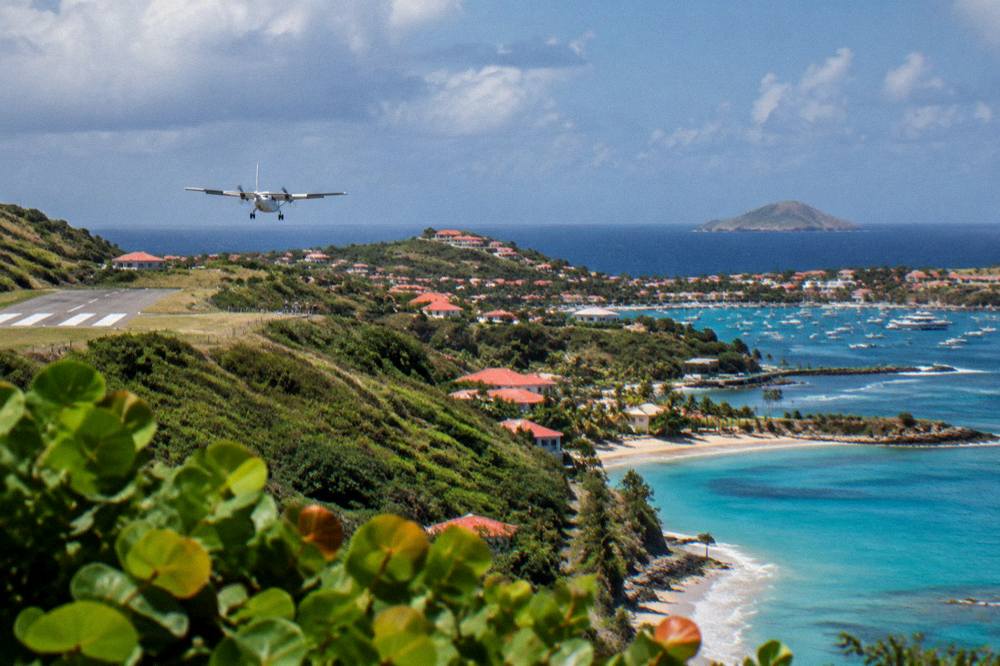
The short version of every St Barts flight question: small planes, short hops, daylight only, and a gateway that is almost always St Martin. Book the hop early in high season, pack light, keep slack in the connection, and treat the ferry and the boat charters as genuine alternatives rather than fallbacks. That is the whole system, and it has been carrying the island's guests across the channel for decades.