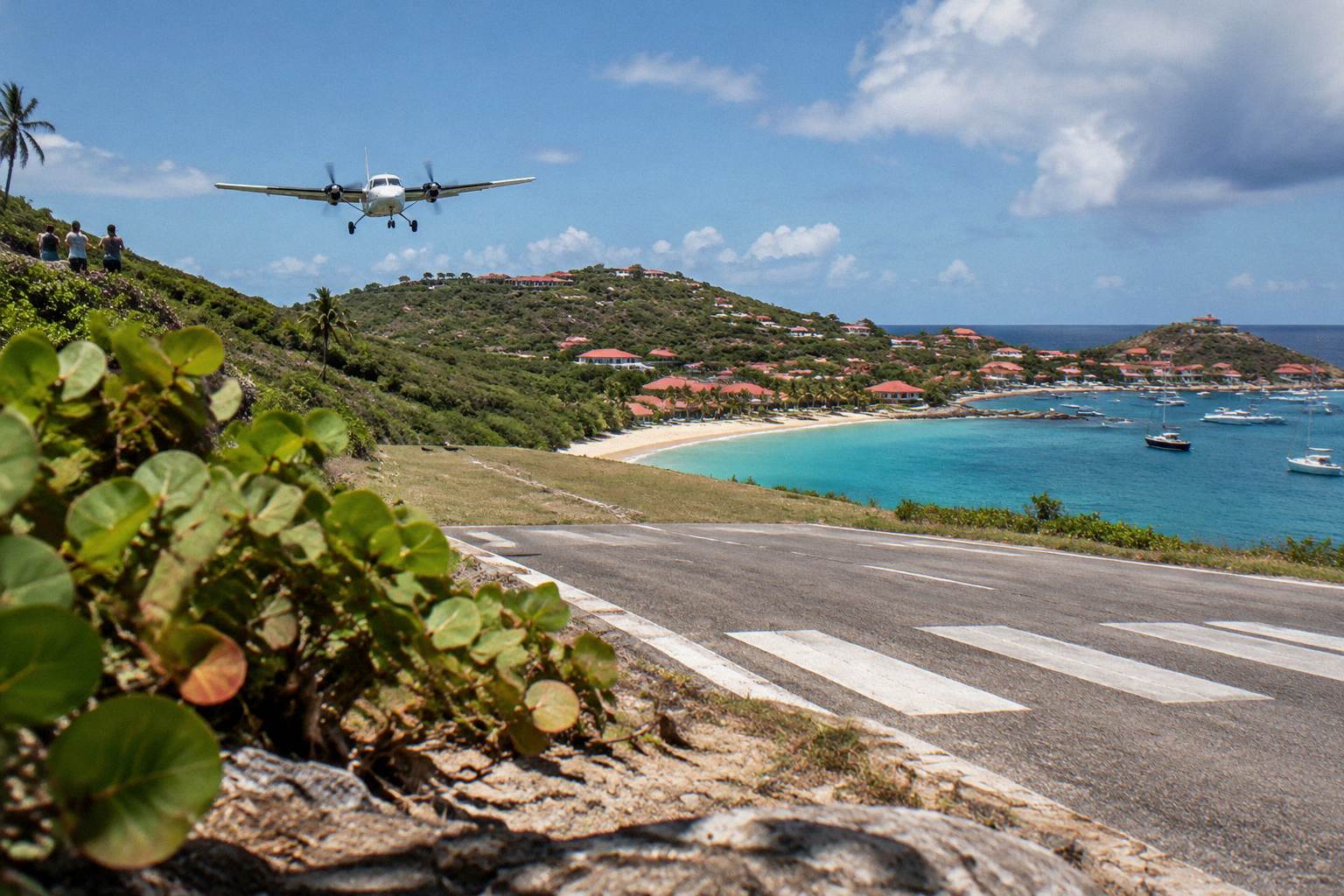
Flights From St Maarten To St Barts
St Barthelemy, the small French Caribbean island known as St Barts, has no jet airport, so nearly everyone flying in changes planes at St Maarten first. Here is how that short hop works.
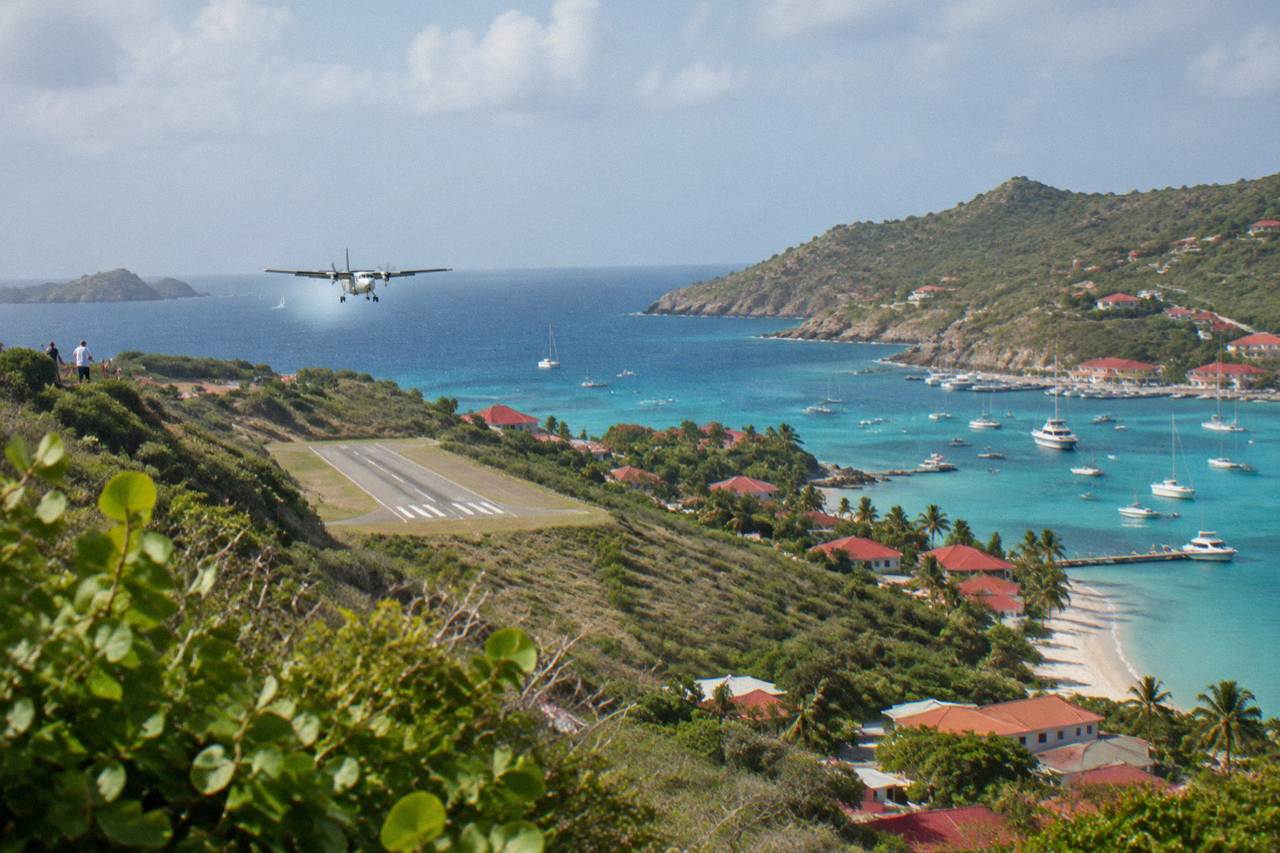
Small STOL turboprops fly the short hop from St Maarten's Princess Juliana airport (SXM) to Gustaf III airport (SBH) on St Barts. St Barth Commuter is the scheduled carrier on the route; the runway at SBH is 646 m, jets cannot land, and flights operate in daylight and visual conditions only.
St Barthelemy, better known as St Barts, is a French island in the Caribbean of about 21 square kilometres, and its airport is one of the reasons the island feels the way it does. The runway at Gustaf III airport, also called Remy de Haenen, is 646 m long. Only small STOL turboprops can use it, no jet lands there, and operations are daylight and visual-conditions only. That single fact shapes almost every journey to the island: long-haul flights end somewhere else, and the last leg from St Maarten is a short hop in a small aircraft. This page from St Barthelemy Travel explains the airlines, the airports, the ferry alternative and how to choose between them.
Which Airlines Fly From St Maarten To St Barts?
St Barth Commuter is the scheduled small-plane carrier connecting St Maarten's Princess Juliana airport (SXM) with Gustaf III airport (SBH) on St Barts, alongside its flights from Grand Case (SFG) on French St Martin and Pointe-a-Pitre, Guadeloupe (PTP). Tradewind flies to SBH from San Juan (SJU) and Antigua (ANU). Winair operates Twin Otter aircraft from St Maarten, though its exact routes and frequencies are not published here.
St Barth Commuter's own flight pages list SXM, SFG and PTP as its gateways, and its aircraft are the Cessna 208B Grand Caravan type, a single-engine high-wing turboprop built for short strips. Tradewind's destination pages list San Juan and Antigua, flown on Pilatus PC-12 aircraft. The two networks meet at St Barts rather than competing on the same corridor: Tradewind serves travellers arriving from the northern Caribbean and the US connection at San Juan, while St Barth Commuter covers the St Maarten, Grand Case and Guadeloupe side.
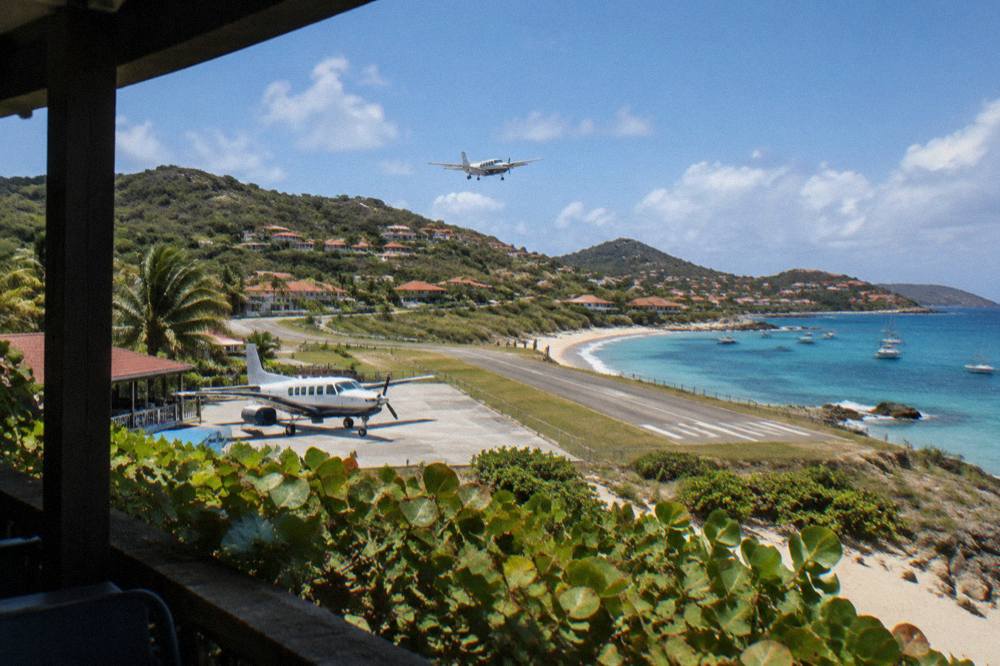
Winair is also present at St Maarten with its distinctive Twin Otter aircraft, a type closely associated with the St Barts approach. Its route details and schedules are not something this site prints, because a reliable primary listing was not confirmed, so check the airline's own site for what it currently flies. The practical takeaway is simpler than the airline map: the St Maarten to St Barts leg is always a small aircraft, always in daylight, and always weather-dependent at the visual-conditions-only airport at the other end.
A note on names: the island of St Martin is divided between a French side, called St Martin, and a Dutch side, called Sint Maarten, and travel writing mixes the spellings freely. Princess Juliana airport, coded SXM, sits on the Dutch side at Simpson Bay, and this page writes "St Maarten" loosely for the whole island when describing the departure side of the route. Grand Case airport, coded SFG, sits on the French side and gives St Barth Commuter a second, smaller gateway for travellers already staying on that side of the island. Knowing which side your hotel or connection is on saves a drive across the island with luggage.
| Carrier | Aircraft type | Gateways listed on its pages | Serves St Barts (SBH) |
|---|---|---|---|
| St Barth Commuter | Cessna 208B Grand Caravan | SXM, SFG, PTP | Yes, scheduled |
| Tradewind | Pilatus PC-12 | SJU, ANU | Yes, scheduled |
| Winair | DHC-6 Twin Otter | SXM (aircraft listed, route unconfirmed) | Check the airline's site |
For the wider picture of reaching the island from further afield, see the site's guide to flights to St Barts and, for US travellers, flying from Miami to St Barts.
What Is Landing At St Barts Airport Like?
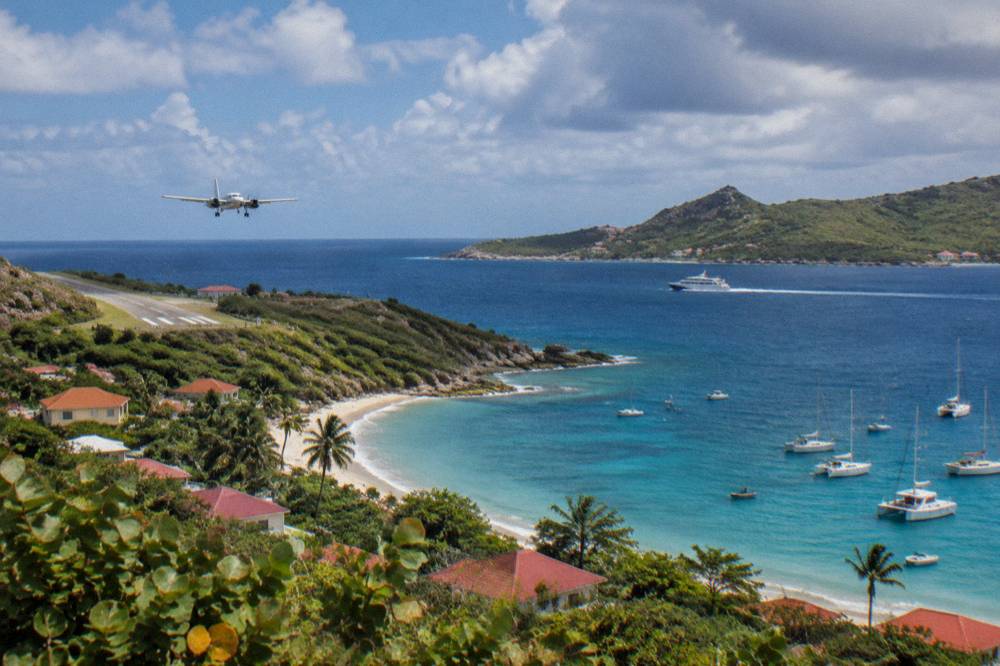
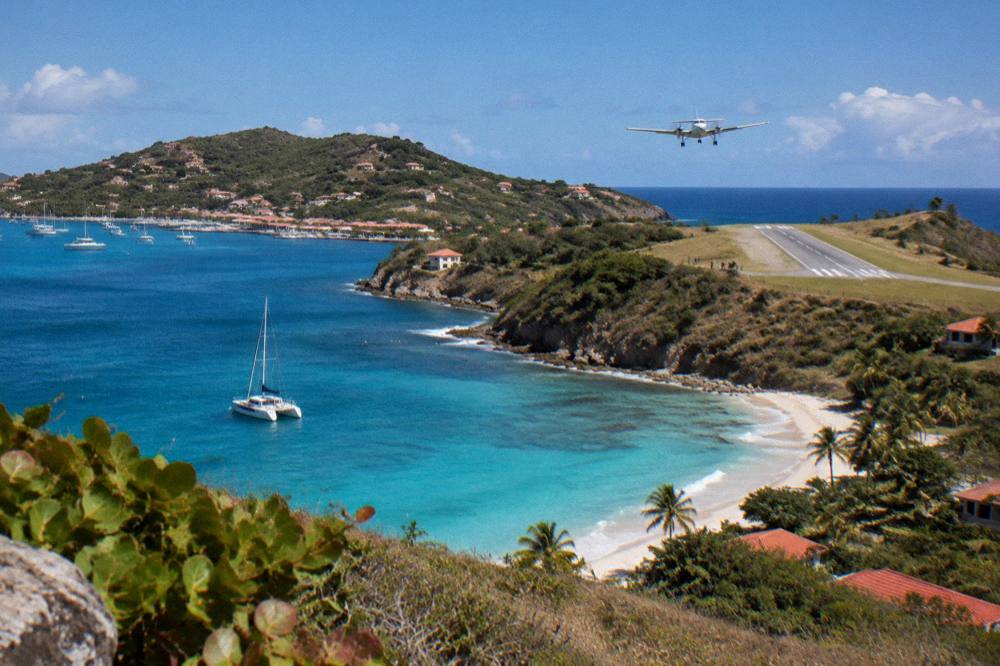
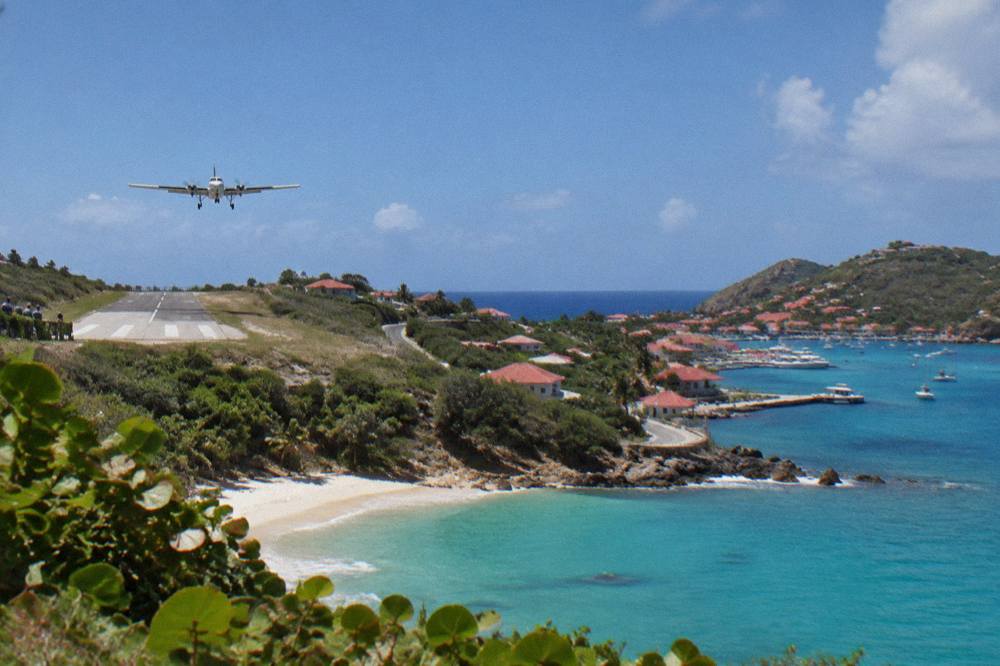
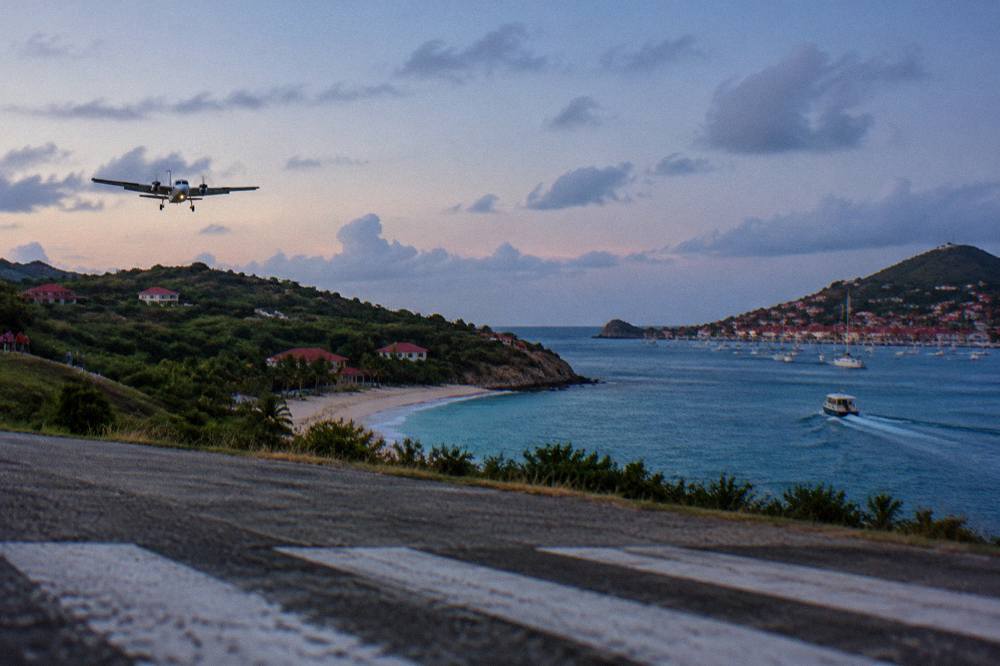
Landing at St Barts is a steep, circling descent over a hilltop pass called Col de la Tourmente onto a 646 m runway that ends near Saint-Jean beach, flown only in daylight and visual conditions by pilots who need special qualification for the approach. No jets operate at SBH, and the airport closes shortly after sunset because the runway has no lights.
The approach is the reason the aircraft types are so limited. The runway, 10/28, measures 646 m, about 2,119 ft, and the descent clears a hill before dropping quickly to the strip, with the beach and turquoise water at the end of it. The French aviation authority requires pilots flying into SBH to hold a specific qualification for the terrain and the short-field technique, which is why the list of operators is short and the fleet is made of STOL-capable types: Twin Otters, Grand Caravans, PC-12s and similar.
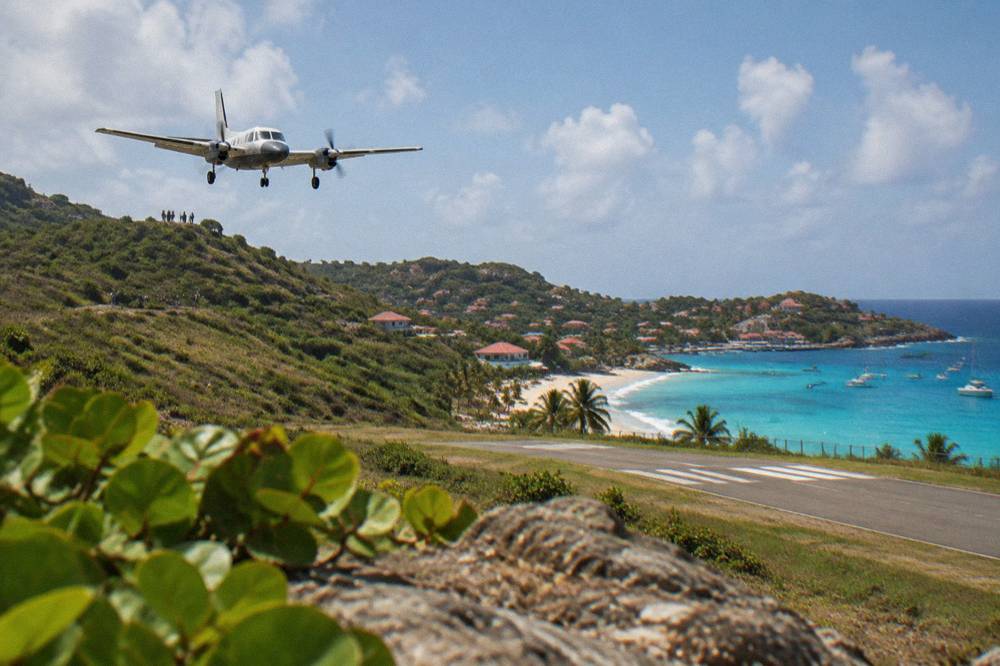
The daylight rule matters for planning. A flight cancelled late in the afternoon for cloud or visibility cannot be replaced after dark, because SBH does not run night operations. Early departures from St Maarten leave more of the day as a buffer, and in unsettled weather the ferry from St Martin becomes the fallback rather than another flight. The site's airport guide covers the terminal and transfer side, and the landing at St Barts airport page describes the approach in detail.
How Do You Connect At St Maarten For St Barts?
Princess Juliana airport (SXM) on the Dutch side of St Martin is the main connection point for St Barts: arriving jets park at the large terminal, and the small-plane operators board from dedicated commuter areas for the short hop across to SBH. Leave generous connection time, because the St Barts flight only departs in daylight and visual conditions.
SXM is one of the busiest airports in the northeastern Caribbean, receiving long-haul jets from North America and Europe. None of those aircraft can continue to St Barts, so every itinerary ends with a change of plane, a change of terminal area, and often a change of baggage handling. The connection is the part of the journey most worth protecting with time: if weather at St Barts delays the last small flight of the day, an overnight on St Martin is the usual outcome, and the island is well set up for that with hotels on both the Dutch and French sides.
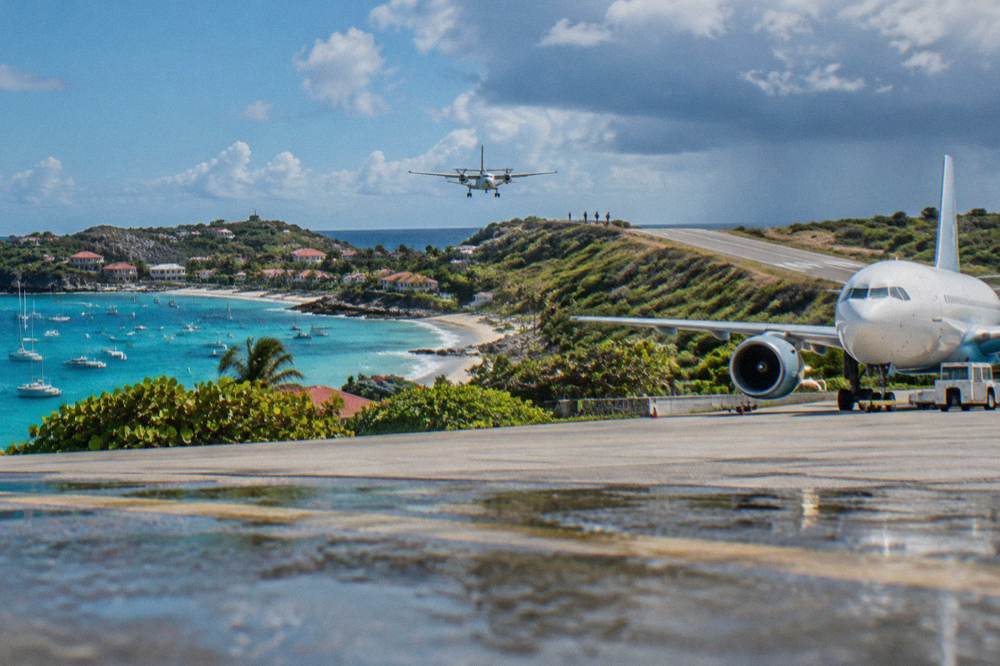
Baggage is the detail that catches people out. Small STOL aircraft have small holds and strict weight limits, so a case that flew free across the Atlantic may not fit the last leg. The site's page on St Barts luggage covers what to check and what to do with bags that will not travel with you. The day-trip pages on SXM airport to the St Barts ferry and on what to do on St Maarten before or after St Barts help if the connection turns into a longer stay.
| Step at SXM | What happens | What to allow for |
|---|---|---|
| Arrival on a jet | Long-haul or regional jet parks at the main terminal | Immigration and baggage reclaim time |
| Transfer to commuter departures | Move to the small-aircraft area used by the SBH carriers | A walk or shuttle between areas |
| Check-in for SBH | Small-plane boarding, usually weight-checked | Light bags, daylight closing time |
| The hop itself | Short flight, visual approach over the hill at St Barts | Weather contingency, no night flights |
Plane Or Ferry From St Maarten To St Barts?
Two scheduled ferry services also link St Martin to Gustavia: Great Bay Express from Philipsburg, Sint Maarten, in about 45 minutes, and Voyager from Marigot, French St Martin, in about 50 to 60 minutes with two to three sailings a day. The plane is quicker door to door and costs more; the ferry is the weather fallback when the airport's visual-only rules ground the small planes.
The two services sit on opposite sides of the island, which decides the choice as much as anything. Great Bay Express leaves from Bobby's Marina in Philipsburg on the Dutch side, closest to SXM airport and the Simpson Bay hotel strip. Voyager leaves from the Marigot ferry terminal on the French side, closest to Grand Case and the French-side villages. The operators' own pages carry the current schedules, and this site prints no departure times or fares for either, because both change by season and demand.
Great Bay Express asks passengers to arrive about 45 minutes before departure, with check-in closing about 15 minutes before the boat leaves, and a passport is required, because St Barts is outside the Schengen area and entry is controlled. Voyager runs two to three sailings a day between Marigot and Gustavia, per the port of Saint-Martin's terminal page. Sea conditions affect the crossing at any time of year, and the crossing can be rough, so travellers prone to seasickness should prepare for it; the site's page on the ferry from SXM airport and the operator comparison in the ferry operators guide cover the practical detail. For the comparison shoppers, St Barts versus St Martin and the plain-language difference between St Barts and St Martin explain what each island offers.
| Route | Mode | Typical crossing | Operator notes |
|---|---|---|---|
| Philipsburg (Bobby's Marina) to Gustavia | Fast ferry | About 45 minutes | Arrive about 45 minutes early, check-in closes about 15 minutes before departure, passport required |
| Marigot ferry terminal to Gustavia | Fast ferry | About 50 to 60 minutes | Two to three sailings a day, per the port of Saint-Martin's terminal page |
| SXM airport to SBH | Small turboprop | A short hop | Daylight and visual conditions only, no jets |
| Grand Case (SFG) to SBH | Small turboprop | A short hop | St Barth Commuter lists SFG among its gateways |
Can You Take A Day Trip From St Maarten To St Barts?
Yes, and the boat is often the better way to do it: several day trips depart from St Maarten and St Martin, including a per-person group sail to Gustavia, Colombier Beach and Ile Fourchue, and private charters that cross with a full day on and around the island. None of the bookable tours departs from St Barts itself, every one leaves from the St Martin side.
If a private crossing with a full day ashore appeals, book a private day charter.
The group sail runs as a per-person product on its listing, with a season noted there, and it pairs the crossing with snorkelling stops on the St Barts coast. Colombier Bay and the waters around Ile Fourchue sit inside the island's marine nature reserve, where the environment agency's regulatory-zones page lists a 5-knot speed limit in protected zones, a ban on jet skis and other motorised water devices, and a strict no-touching rule for turtles, corals and other protected species. Boat operators work within those rules, and visitors swimming from the boat are asked to respect them too.
For travellers already booked through SXM, a boat day trip avoids the small-plane leg entirely and still delivers the island: a morning crossing, time ashore in Gustavia or at a public beach, and an afternoon return. All beaches on St Barts are public, which makes a day trip straightforward once you are ashore. The site's things to do in St Barts page rounds up the options, and the St Barts layover itinerary works for a single long day between flights.
It is worth being clear about what a day trip by air can and cannot do. A same-day return by small plane means two daylight weather windows, one out and one back, and a tight afternoon cutoff at SBH before the airport closes shortly after sunset. A boat day trip runs on one weather window and one clock, the operator's, and the return crossing leaves from Gustavia on the operator's schedule rather than the airport's. Travellers who want the flight experience without the schedule pressure sometimes fly over in the morning and let a private charter carry the whole day instead, combining the aerial arrival with a boat around the coast.
What Should You Know Before Booking The Hop?
Book the St Maarten to St Barts leg early in high season, keep the connection generous, pack light for the small aircraft, and hold a ferry fallback, because flights to SBH run only in daylight and visual conditions and end shortly after sunset. A passport is required for the crossing either way, since St Barts is outside the Schengen area.
High season on St Barts runs broadly from December into April, anchored by events such as the Bucket Regatta in mid-March and the year-end holidays, when the island's hotels fill and seats on small aircraft are the scarcest commodity in the itinerary. Outside that window the island quiets, many hotels and restaurants close for their autumn break and reopen between mid-October and early November, and both flight seats and ferry berths are easier to come by. Weather planning matters most from 1 June to 30 November, the Atlantic hurricane season, whose peak of activity runs mid-August to mid-October; no one can predict a storm for a date, and this site never tries.
The climate is tropical year-round, which keeps the packing simple. The Meteo-France normals for 1991-2020 show a mean daily high of 28.5 C in January rising to 31.7 C in September, with February the lowest-rainfall month at 38.4 mm and October the wettest at 135.6 mm. Sea temperature is warm throughout, about 26 C in winter to about 29 C from August to October.
| Month | Mean daily high (C) | Mean daily low (C) | Rain (mm) |
|---|---|---|---|
| January | 28.5 | 23.5 | 52.6 |
| February | 28.6 | 23.3 | 38.4 |
| April | 29.8 | 24.2 | 50.9 |
| July | 31.2 | 26.0 | 80.4 |
| September | 31.7 | 26.2 | 96.9 |
| October | 31.4 | 25.8 | 135.6 |
| Planning item | Why it matters for this route |
|---|---|
| Passport | Required for the ferry and for entry to St Barts, which is outside the Schengen area |
| Connection time at SXM | Small-plane flights end at dusk; a missed connection can mean a night on St Martin |
| Baggage weight | STOL turboprops have small holds and strict limits |
| Ferry fallback | Great Bay Express and Voyager both run when visual-only flights are grounded |
| Season | Seats and berths tighten from December to April; many hotels close in autumn |
Is There Any Other Way To Reach St Barts?
Yes, though every route ends the same way: by small plane from a Caribbean gateway or by ferry from St Martin, or by private boat. Charter flights and seaplane options exist, other gateways include San Juan, Antigua, Guadeloupe and Anguilla, and private boat transfers cross from St Maarten, but no jet and no direct long-haul flight lands at SBH.
The seaplane and charter guide covers the private-flying options, and flights from Anguilla to St Barts covers that northern gateway. For the broader question of how the whole journey fits together, how to get to St Barts is the site's overview page, and the airport code and spotting pages, St Barts airport code, explain the SBH designation and where the famous views of the approach are found. Travellers with time on the St Martin side can also browse things to do on St Martin before St Barts to turn a forced connection into part of the trip.
Common Questions About St Maarten To St Barts Flights
Can you fly direct to St Barts from the US?
No jet service reaches St Barts, because the runway at Gustaf III airport is 646 m long. Travellers from the US connect through a Caribbean gateway such as St Maarten (SXM) or San Juan (SJU) and complete the journey on a small STOL turboprop or the ferry from St Martin.
How long is the flight from St Maarten to St Barts?
It is a short hop in a small aircraft, one of the shortest scheduled legs in the Caribbean. The ferry alternative from Philipsburg takes about 45 minutes and from Marigot about 50 to 60 minutes, per the operators' pages.
Do you need a passport to fly from St Maarten to St Barts?
Yes. St Barts is a French overseas collectivity outside the Schengen area, and a valid travel document is required for the small-plane crossing and for the ferry alike, with the ferry operators explicitly requiring a passport at check-in.
Which airlines fly into St Barts?
St Barth Commuter flies to SBH from St Maarten (SXM), Grand Case (SFG) and Pointe-a-Pitre (PTP), and Tradewind flies from San Juan (SJU) and Antigua (ANU). Winair operates Twin Otter aircraft from St Maarten, though its route details should be checked on its own site.
Is the ferry from St Maarten to St Barts an alternative to flying?
Yes. Great Bay Express runs from Philipsburg to Gustavia in about 45 minutes and Voyager runs from Marigot in about 50 to 60 minutes, two to three sailings a day. Sea conditions affect the crossing and it can be rough, so it suits travellers prepared for open water.
Why do no jets land at St Barts?
The runway at Gustaf III airport measures 646 m, which only STOL-certified turboprops can use, and the airport operates in daylight and visual conditions only, with no runway lighting and a steep approach over terrain that requires specially qualified pilots.
The short hop from St Maarten to St Barts is the last leg of nearly every itinerary to the island, and it is also the leg with the least flexibility: small aircraft, daylight hours, weather-dependent operations. Book the connection with room to spare, pack light, know the two ferry services as a fallback, and the arrival over the hilltop pass into Gustavia is the moment the island begins.