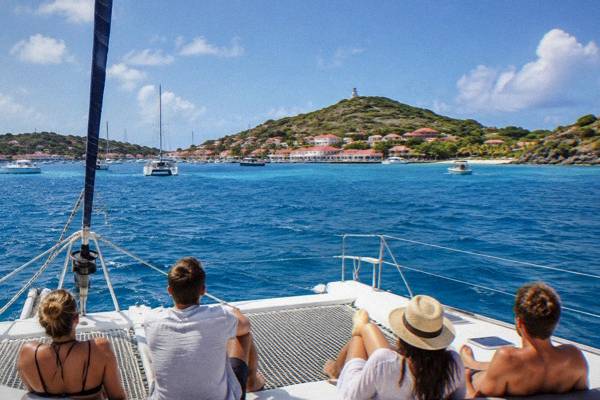
St Maarten Before Or After St Barts
St Barthelemy, better known as St Barts, has no direct long-haul flights, so almost every trip passes through St Maarten first. The order you choose shapes the whole journey.
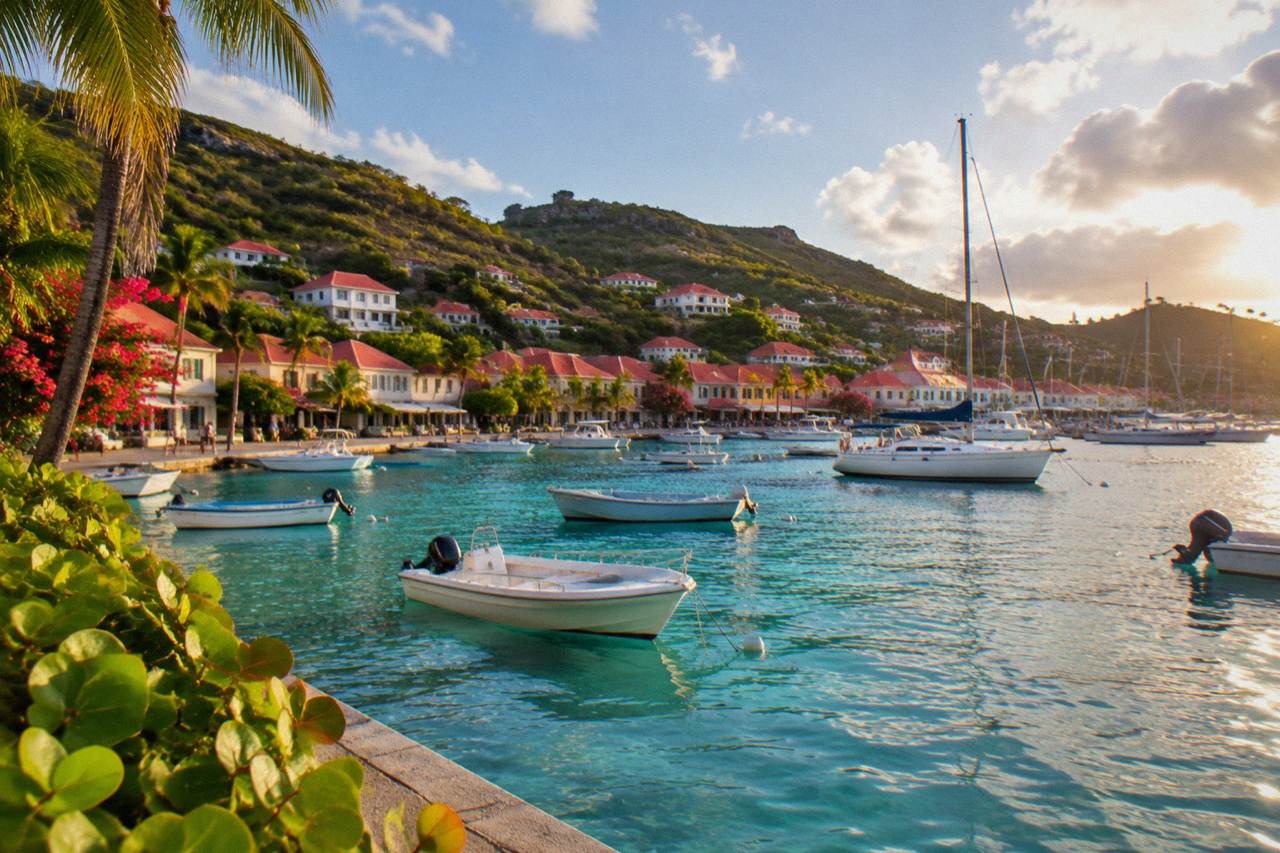
Staying in St Maarten before St Barts works best for most itineraries, because the airport at Sint Maarten and the ferry ports sit on that side of the crossing, and arriving on St Barts by boat or small plane in the morning gives a full first day. Adding St Maarten afterwards suits travellers ending a trip with shopping, dining and a relaxed departure.
St Barthelemy, the small French Caribbean island known as St Barts, has a 646 m runway at Gustaf III Airport that accepts only small turboprops in daylight, so there is no way to fly there directly from outside the region. Nearly every itinerary runs through St Maarten: Princess Juliana Airport on the Dutch side, Sint Maarten, is the main gateway, and the French side, St Martin, holds the Marigot ferry terminal. The practical question for any two-island trip is not whether to pass through St Maarten but which side of the St Barts stay it should fall on, and the answer depends on flight times, ferry sailing days and what each island does best. A boat day between the two is also a trip in itself, and the group sail from St Martin around St Barts is one way to see Gustavia, Colombier and Ile Fourchue in a single run.
The case for booking St Maarten first is mechanical. Transatlantic and US flights land at Sint Maarten at almost any hour, while the last connections to St Barts, by plane or ferry, end in the afternoon. A night or two on St Maarten absorbs a late arrival, and the morning crossing becomes part of the holiday instead of a race against a departure cut-off. The reverse order, St Barts first and St Maarten at the end, has its own logic: the island getaway sits at the start of the trip when energy is highest, and the final night near the airport removes all connection risk on the way home. Both work. This guide lays out the ferries, the flights, the charters and the trade-offs so the choice fits the itinerary rather than the other way round.
Why St Maarten Is The Gateway To St Barts?
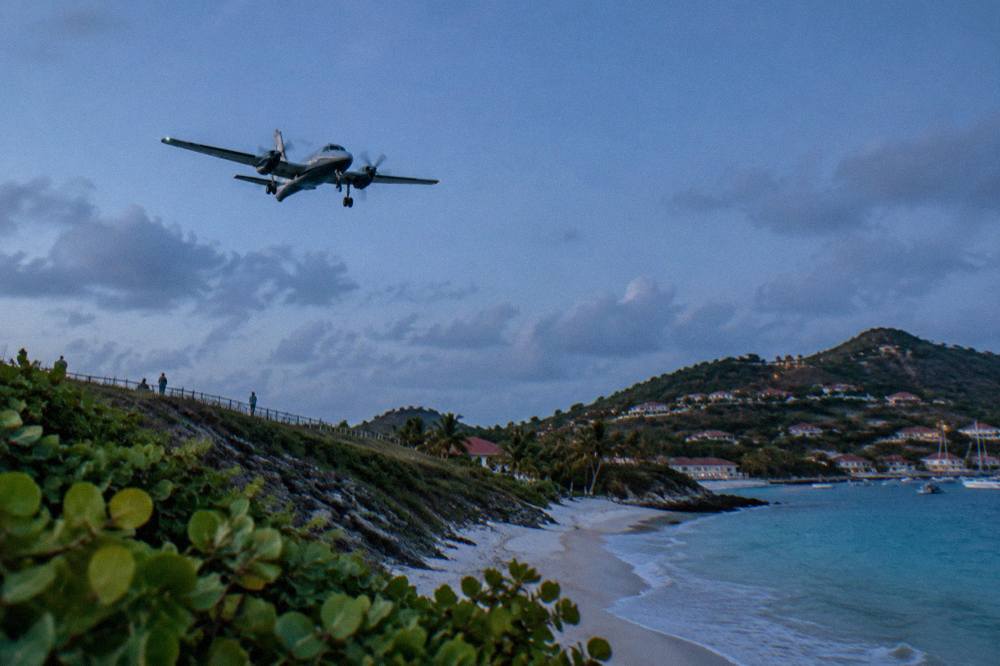
St Barts has no jet airport and no long-haul service, so nearly all arrivals connect through St Maarten or one of three other regional gateways. The runway at Gustaf III Airport is 646 m long, serves small STOL turboprops only, and operates in daylight and visual conditions, which is why the island is reached by a short hop from Sint Maarten or by ferry from the St Martin side.
The airport constraint defines the whole journey. Princess Juliana Airport on the Dutch side receives the wide-body flights from North America and Europe, and from there the options split: a small plane to St Barts, or a transfer to the French side and the ferry from Marigot. St Barth Commuter flies from SXM and also from Grand Case on the French side and from Pointe-a-Pitre in Guadeloupe, while Tradewind serves St Barts from San Juan in Puerto Rico and from Antigua, according to the operators' own route pages. San Juan and Antigua are the alternatives for travellers coming from those hubs, but Sint Maarten remains the busiest feeder by a wide margin. The distance question is answered in detail at how far St Barts is from St Maarten.
To compare fares for that final leg, book a flight to St Barts.
The gateways stack up like this.
| Gateway | Airport Code | Carrier To St Barts | Connection Type |
|---|---|---|---|
| Sint Maarten | SXM | St Barth Commuter | Small plane, short hop |
| St Martin, Grand Case | SFG | St Barth Commuter | Small plane, short hop |
| Guadeloupe, Pointe-a-Pitre | PTP | St Barth Commuter | Small plane |
| San Juan, Puerto Rico | SJU | Tradewind | Small plane |
| Antigua | ANU | Tradewind | Small plane |
No jet lands on St Barts, and no flight from outside the Caribbean does either. The physical limit is the reason the two-island itinerary exists at all, and it is also the reason the order question matters: the last leg of any trip to St Barts is a daylight operation with a hard evening cut-off, while St Maarten runs a full international schedule late into the night.
Should You Stay In St Maarten Before Or After St Barts?
Staying in St Maarten before St Barts suits most itineraries, because late inbound flights land at SXM after the last connections to the island have finished, and a morning ferry or small plane gives a full first day on St Barts. Putting St Maarten after St Barts works well when the St Barts stay comes first and the final night needs to sit beside the departure airport.
The deciding factor is the arrival time of the long-haul flight. A flight that lands at SXM in the late afternoon or evening cannot connect onward the same day: the ferry sailings thin out by early evening and the small planes stop at dusk. In that case a night in Philipsburg or near the airport is not a compromise, it is simply the schedule. Arriving on St Barts the next morning by boat also happens to be the more scenic entry, with the harbour of Gustavia appearing well before the ferry docks.
The reverse order has a quieter advantage. Ending on St Maarten means the last morning has no boat and no small plane in it, just a short drive to the airport, and Philipsburg's shopping and the Dutch side's casinos and beaches fill the final day. Travellers who want the untouched, car-free calm of St Barts at the peak of the trip and the convenience of the gateway at the end will prefer St Barts first. The comparison of the two islands as destinations is set out in St Barts vs St Martin.
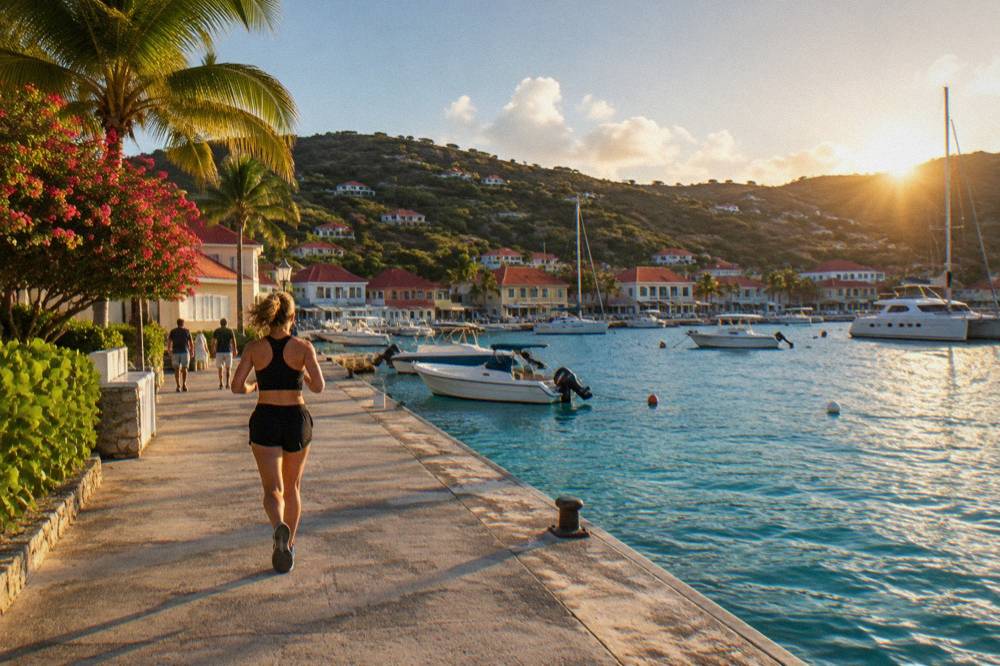
The trade-offs in short:
| Order | Best For | Main Risk | Mitigation |
|---|---|---|---|
| St Maarten first | Late arrivals at SXM | None, buffer built in | Book an afternoon ferry or plane next morning |
| St Barts first | Early arrivals, direct regional feed | Same-day connection misses | Allow a full day for the transfer |
| St Maarten last | Stress-free departure morning | Final night away from St Barts | Keep last night near the airport |
| Day trip only | Short stays on St Maarten | Weather cancels a sailing | Build a spare day |
Sea conditions can affect any crossing, and the operators themselves note that sailings are subject to weather, so a buffer day on the St Maarten side protects both orders.
A boat day built around the crossing is also the most direct way to answer the before-or-after question, because it puts St Barts and the water between the two islands into a single experience. The trips below leave from St Martin or Sint Maarten, never from St Barts itself.
The per-person group sail in that set runs only from 12 May to 31 August 2027 on its listing, which makes it a low-season option; the private charters run as booked departures for a whole group.
How Do The Ferries Between St Martin And St Barts Work?
Two operators run scheduled ferries to Gustavia: Great Bay Express from Philipsburg on the Dutch side, about 45 minutes, and Voyager from Marigot on the French side, about 50 to 60 minutes with two to three sailings a day. Great Bay Express asks passengers to arrive about 45 minutes before departure, check-in closes about 15 minutes before, and a passport is required on both services.
The two ports sit on opposite sides of the island, which matters for choosing a hotel on the St Maarten side. Great Bay Express leaves from Bobby's Marina in Philipsburg, a short transfer from the airport and the Dutch-side hotels. Voyager leaves from the Marigot Ferry Terminal on the French side, convenient for Grand Case and the French-side stays. Both take roughly an hour of sea time, both can be bumpy when the swell is up, and neither promises a smooth crossing, because conditions in the channel between the islands change with the weather. The full operator detail is in the guide to St Barts ferry operators and the schedule, and the airport-side logistics are covered at SXM airport to the St Barts ferry.
| Operator | Departure Port | Side Of St Maarten | Crossing (Operator Figure) | Check-In Rule |
|---|---|---|---|---|
| Great Bay Express | Philipsburg, Bobby's Marina | Dutch, Sint Maarten | About 45 minutes | Arrive 45 minutes early, closes 15 minutes before |
| Voyager | Marigot Ferry Terminal | French, St Martin | About 50 to 60 minutes | Passport required, arrive early |
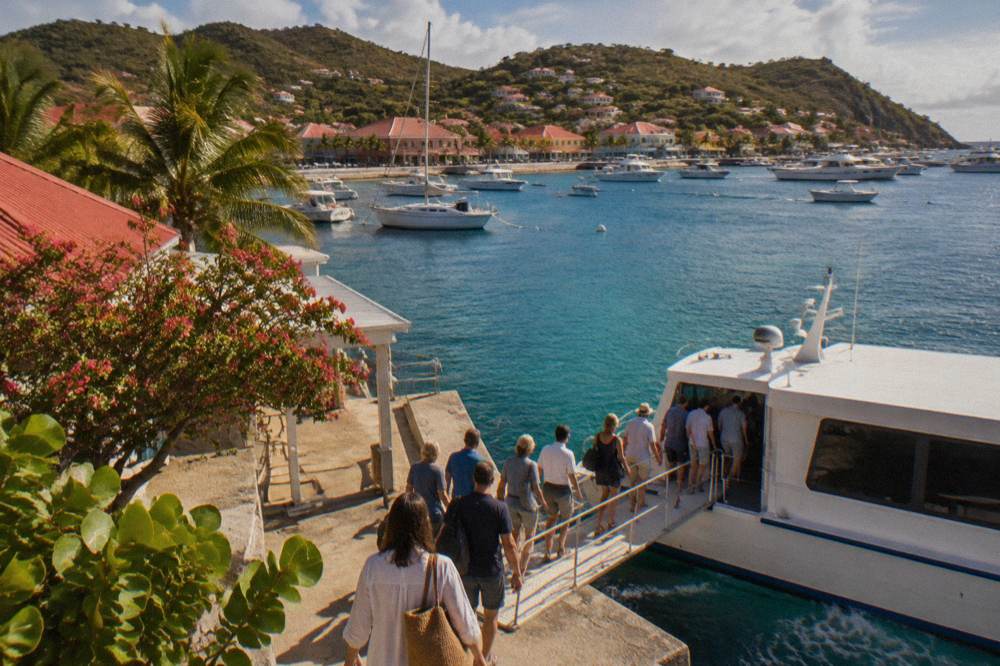
No fare, timetable or time of day appears here, because the operators change sailing times by season and publish current schedules on their own booking pages. What stays fixed is the shape of the decision: the Dutch-side port pairs with an SXM arrival and a Philipsburg hotel, the French-side port pairs with Grand Case or Marigot, and the choice of where to sleep on the gateway night usually decides the ferry before anything else does. Anyone prone to seasickness should know that the channel is open water and the ride varies; planning detail is in the ferry seasickness guide linked from the operators page.
What Can You Do On St Maarten Before The Crossing?
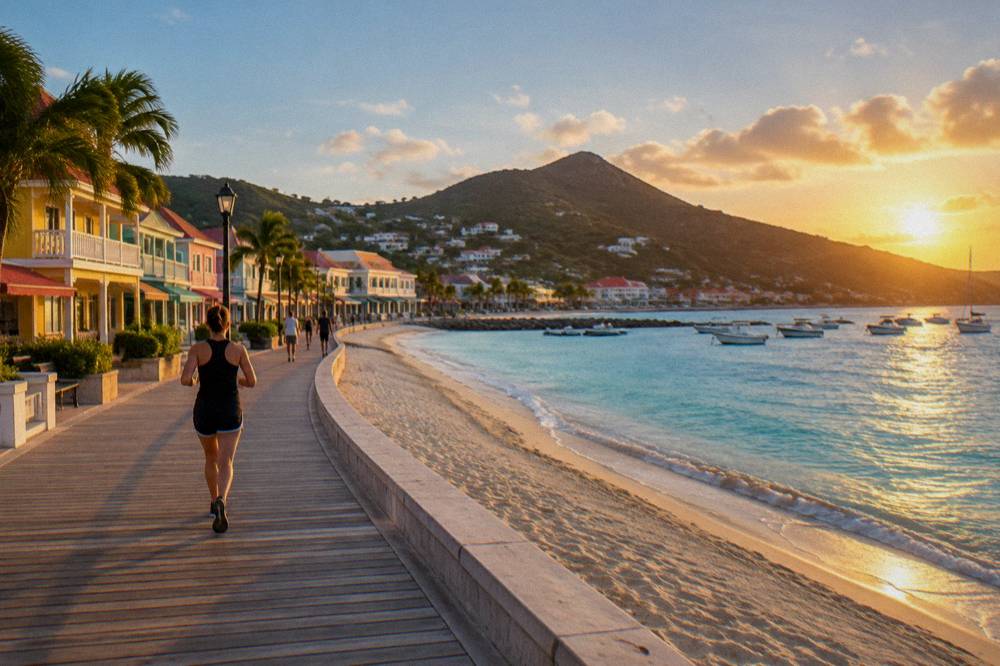
The Dutch side offers Philipsburg's waterfront shopping and Great Bay beach, the French side offers Marigot's market square and the restaurants of Grand Case, and both sit within a short drive of the airport, so a gateway night can hold a real evening rather than an airport hotel room. The beach choices, the lagoon and the short crossing to Anguilla fill longer stays.
A single night is enough for dinner in Philipsburg and a walk along the Great Bay waterfront; two nights open up more. The French side's village of Grand Case is the dining concentration of the island, Marigot holds the market and the ferry terminal, and the beaches run along both coasts. A useful overview of options on the gateway side is the guide to things to do in St Martin before St Barts, which pairs the stops with the transfer logistics.
St Maarten also works as a base for other islands once the St Barts leg is done. Anguilla sits a short ferry ride from the French side, and Saba is a smaller, wilder option for a second hop. Those routes are laid out in St Barts to Anguilla and St Barts to Saba, and the wider possibilities in St Barts island hopping.
| St Maarten Stop | Side | Best For | Pairs With |
|---|---|---|---|
| Philipsburg waterfront | Dutch | Shopping, Great Bay beach | Great Bay Express ferry |
| Marigot | French | Market, ferry terminal | Voyager ferry |
| Grand Case | French | Dining village | A French-side hotel night |
| Simpson Bay | Dutch | Marinas, departure docks for charters | Boat trips to St Barts |
| Orient Bay area | French | Long beach | A two-night gateway stay |
The charter boats listed here leave from the St Martin and Sint Maarten docks at Simpson Bay, Cole Bay, Anse Marcel and Grand Case, so a boat day can begin from either side depending on the operator.
Which Order Gives You A Better Boat Day To St Barts?
A boat day works from the St Maarten side in either order, because every charter listed here departs from St Martin or Sint Maarten and visits St Barts by sea, so the before-or-after choice does not limit the options. What changes is the shape: before the St Barts stay, a boat day is the introduction; after it, the day becomes a farewell run along a coast already known.
The practical differences are small but real. A charter before the stay builds the arrival into the trip: the boat crosses to Gustavia or drops at Colombier, and the island appears from the water first. After a stay, the same route reads differently, with familiar headlands and moorings, and the return to a St Maarten hotel closes the loop. The private options below are priced per group, and the per-person group sail only runs its listed season from 12 May to 31 August 2027.
The group sail covers Gustavia, Colombier Beach and Ile Fourchue in a day from the St Martin side. For a private version of the same idea:
And for a trip that turns the gateway into part of the itinerary rather than a transit point, the overnight catamaran spends a night on the water between the two islands.
How Does The Weather Affect The Order Of The Two Islands?
The Atlantic hurricane season runs 1 June to 30 November with a peak from mid-August to mid-October, and October is the wettest month on the Meteo-France 1991-2020 normals at 135.6 mm of rain, so a September or October two-island trip carries more weather risk in both directions, while the December-to-April stretch is drier and busier on both islands.
The climate table does not change the order of the islands, but it changes the buffers. In the peak hurricane months a missed ferry or a cancelled small-plane flight is more likely, and the same-day-connection plan that works in February needs a spare day in September. October's 135.6 mm monthly rain total is the highest of the year on the Meteo-France normals, 1991-2020, against 38.4 mm in February, the lowest. Temperatures barely move: the mean daily high runs from 28.5 C in January to 31.7 C in September, so warmth is never the variable, water is.
| Month | Mean Daily High C | Rain mm | Two-Island Planning Note |
|---|---|---|---|
| January | 28.5 | 52.6 | Peak season, firm schedules |
| February | 28.6 | 38.4 | Driest month on the normals |
| April | 29.8 | 50.9 | End of high season |
| July | 31.2 | 80.4 | Hurricane season underway |
| September | 31.7 | 96.9 | Peak storm-risk window, add a buffer day |
| October | 31.4 | 135.6 | Wettest month, many hotels closed |
| November | 29.9 | 118.6 | Reopening month, schedules rebuild |
| December | 28.9 | 79.2 | High season returns |
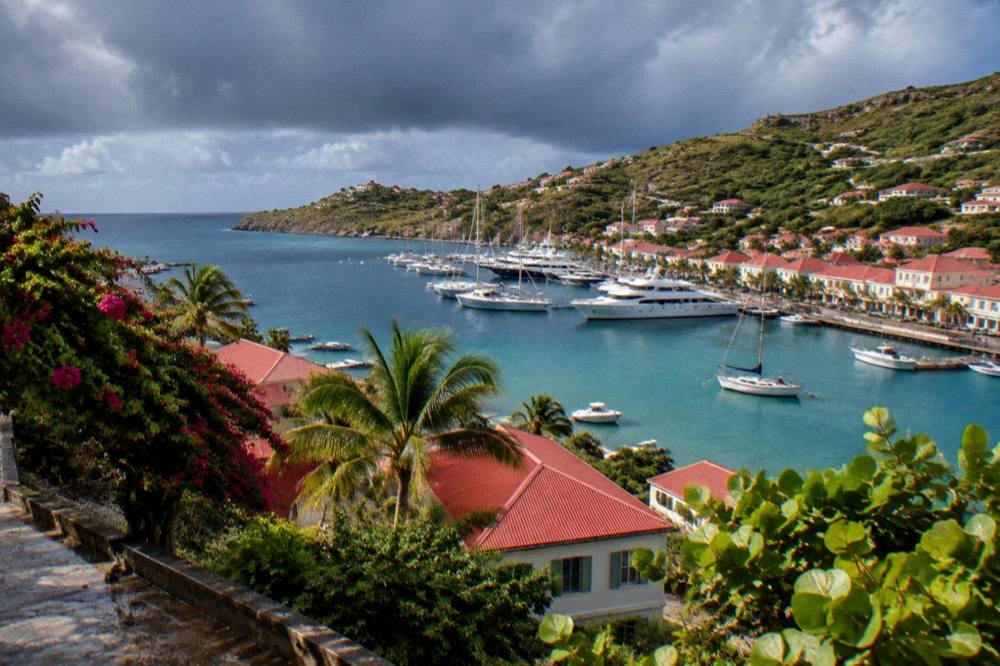
The autumn also reshapes the St Barts side of the trip. Many hotels and restaurants on the island close each year in the late-summer low period and reopen in waves between mid-October and early November, so a two-island trip in late September finds the gateway side fully open and the St Barts side partly shut. The pattern, not any single reopening date, is the planning fact: by mid-November the island is largely back, and the Gourmet Festival, dated 9 to 15 November 2026 by its organisers, marks the start of the season.
How Many Days Should Each Island Get?
A workable split for a week is two nights on St Maarten and four or five on St Barts, with the gateway nights at the start, the end, or split one at each end; a long weekend does better as one gateway night plus two on St Barts, because each crossing and each transfer eats half a day.
The arithmetic comes from the transfer cost in time. Every move between the islands involves a hotel checkout, a port or airport transfer, the crossing itself and the check-in on the far side, and on a short trip two moves out of four days is half the holiday spent in transit. Fewer, longer blocks on each island beat a ping-pong. The itineraries on this site follow that logic: the St Barts long weekend keeps transfers to one, and the one-week and five-day versions assume a single gateway night.
| Trip Length | St Maarten Nights | St Barts Nights | Shape |
|---|---|---|---|
| Long weekend | 1 | 2 | Gateway night first, ferry next morning |
| 5 days | 1 | 3 | Or reverse with final night at SXM |
| One week | 2 | 4 to 5 | Split or both nights up front |
| 10 days or more | 2 to 3 | 6 to 8 | Add a boat day each side |
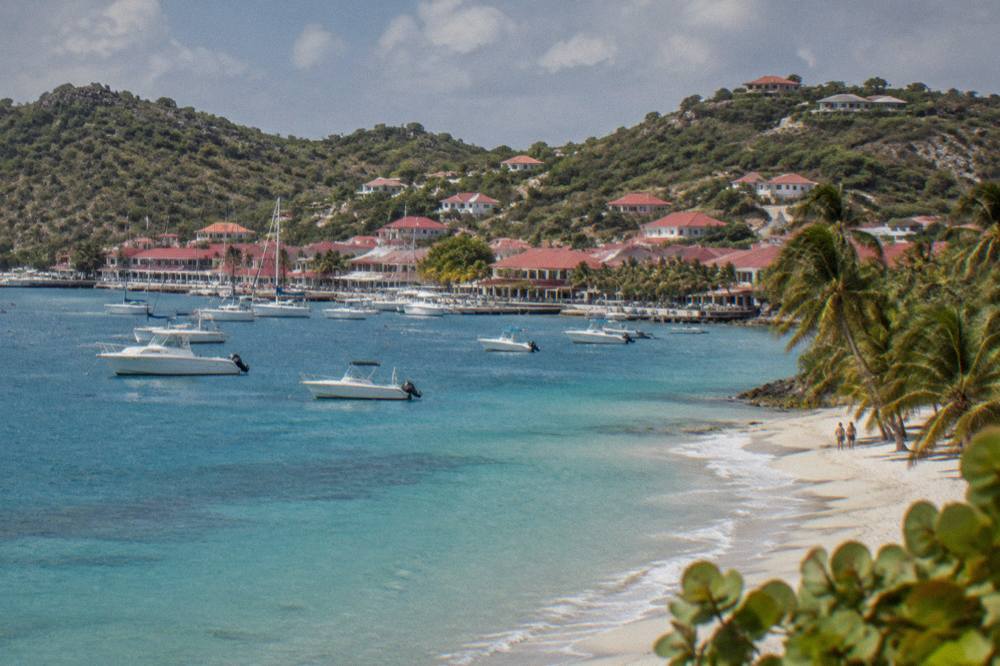
Longer trips reward a different structure again: a boat day or an overnight charter between the islands turns the transfer itself into one of the trip's anchor experiences, which is the logic behind the catamaran option in the tour set above.
What Does A St Barts First, St Maarten After Itinerary Look Like?
The St-Barts-first order runs early arrival into SXM, an immediate small plane or afternoon ferry to Gustavia, the full stay on the island, then a final morning ferry back and a last night near Philipsburg or Marigot, so the departure day carries no boat and no small-plane connection at all.
This order spends the risk budget where it belongs. Any delay on the way in, a late long-haul or a cancelled ferry, simply costs a St Barts evening rather than a flight home, because the last night sits on the gateway island within a short drive of Princess Juliana Airport. The final day on St Maarten also lands well: shopping in Philipsburg, dinner in Marigot or Grand Case, and an unhurried morning before check-in. The weakness is the arrival day, which needs an inbound flight early enough to make an afternoon ferry or a daylight small-plane hop; a flight landing at SXM in the evening forces either a first night on St Maarten anyway or a next-morning transfer.
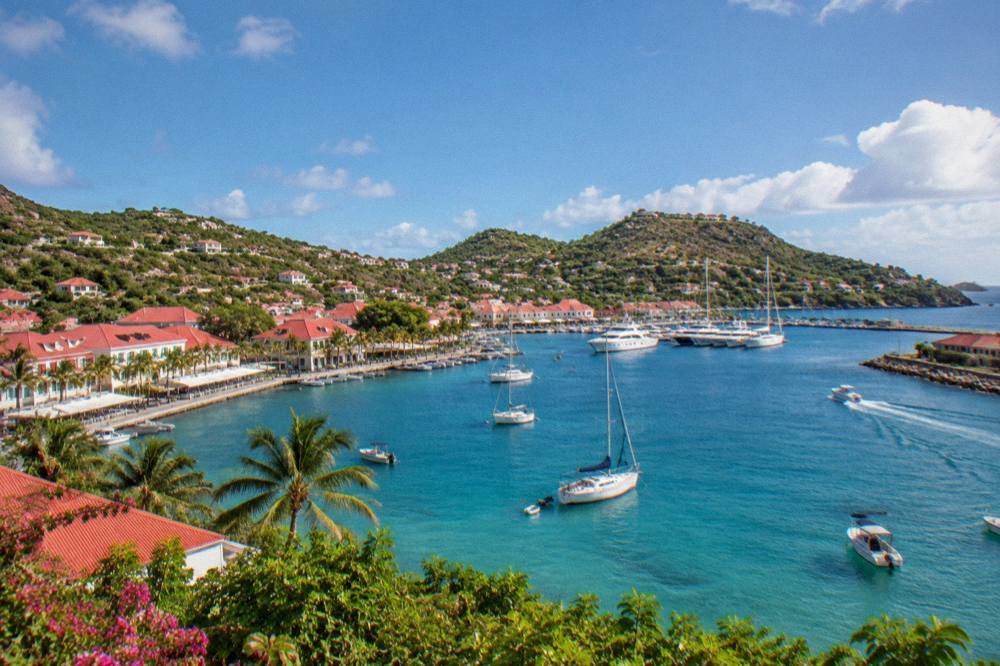
For travellers who land midday or earlier, the order is hard to beat, and it pairs naturally with a farewell boat day: the private charters below leave from the St Martin side and can be booked for the transfer day itself.
The charter above runs as a full-day private option; the St-Martin-to-St Barth version below is a like-for-like alternative on a different boat.
Common Questions About Ordering The Two Islands
Should you stay in St Maarten before or after St Barts?
Before suits late arrivals at SXM, because the last connections to St Barts end in daylight hours and an evening flight cannot connect onward. After suits travellers who want a final night beside the departure airport with no boat or small plane in the morning.
How long is the ferry from St Maarten to St Barts?
Great Bay Express from Philipsburg crosses in about 45 minutes and Voyager from Marigot in about 50 to 60 minutes, according to the operators' own pages. Sea conditions affect the crossing and no sailing is guaranteed smooth.
Do you need a passport for the ferry to St Barts?
Yes, a passport is required on both ferry operators, and St Barts sits outside the Schengen area, so entry is governed by French overseas rules rather than Schengen systems.
Can you fly directly from St Maarten to St Barts?
Yes, St Barth Commuter flies the short hop from Princess Juliana Airport to St Barts, along with services from Grand Case and Pointe-a-Pitre, while Tradewind serves the island from San Juan and Antigua. Only small STOL turboprops land at St Barts, in daylight conditions.
Is one night on St Maarten enough before the ferry?
One night is enough to absorb a late arrival and make a morning ferry, and it is the standard shape of a long-weekend trip. Two nights allow a boat day from the St Martin side before the stay on St Barts begins.
Do St Barts hotels close in autumn?
Many hotels and restaurants close each year in the late-summer low period and reopen in waves between mid-October and early November, so a September or early-October trip finds fewer places open on the island than the gateway side.
Whichever order the itinerary takes, the geography does not change: St Barts stays a daylight-only, small-plane, ferry-or-boat island, and St Maarten stays the door. Choosing before or after is really choosing where the trip's risk sits, at the start on the water or at the end beside the runway, and both answers make a fine two-island holiday.