Island Hopping From St Barts
St Barthelemy, usually written St Barts, sits inside a ring of small islands that ferries and small planes stitch together, and that closeness is what makes a multi-island trip realistic.
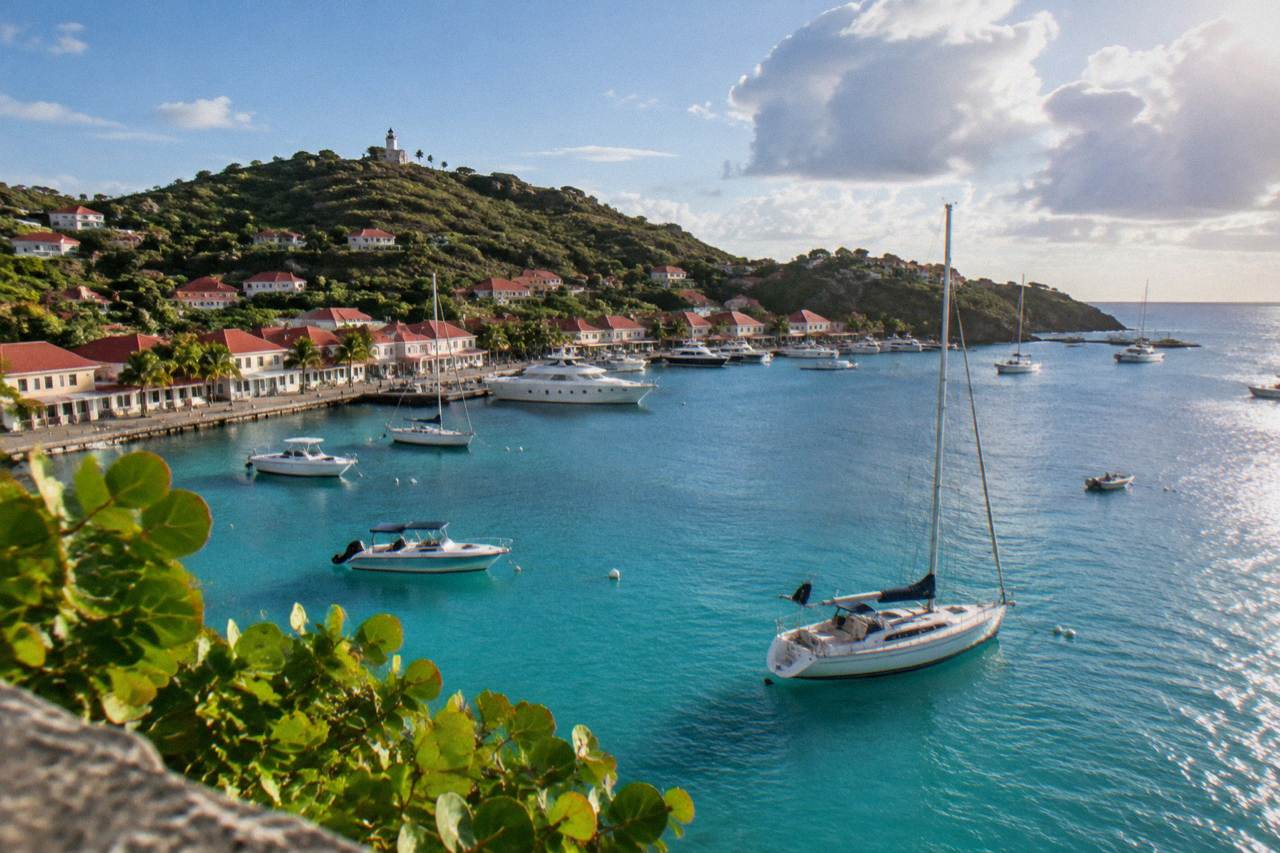
Island hopping from St Barts works because the island sits minutes from St Martin, Anguilla and Saba by ferry or small plane: Great Bay Express runs from Philipsburg and Voyager from Marigot into Gustavia, St Barth Commuter and Tradewind fly the short hops, and chartered boats out of St Martin make the whole circuit a single day on the water.
St Barthelemy, usually written St Barts, is a small French island in the Caribbean of about 21 square kilometres and roughly 10,700 residents, and its best-kept travel fact is geographic: it does not sit alone. St Martin and Sint Maarten lie close by to the northwest, Anguilla sits north of the Dutch side, Saba rises farther south, and the whole cluster is stitched together by two ferry operators and a handful of small STOL airlines. Island hopping here is not an ambitious phrase. It is a routine way to see three flags in one week, or even one long day on the water.
This guide lays out the whole circuit: which islands you can realistically reach, how the ferries and flights connect, what the marine reserve allows on the water, when to go, and how the bookable boat trips from St Martin can anchor a multi-island itinerary. The island hopping routes around St Barts overview on this site collects the on-island side of the trip if the boat day is only one part of a longer stay.
What Is Island Hopping From St Barts?
Island hopping from St Barts means combining the French island with its neighbors in one trip, usually through St Martin as the hub: two scheduled ferries link Gustavia with Philipsburg and Marigot, small STOL turboprops fly the short hops from St Martin, San Juan, Guadeloupe and Antigua, and private charters out of St Martin and Sint Maarten visit St Barts by sea for the day. No jet lands on the island itself, so every hop runs through a gateway.
The shape of a hop is simple. Long-haul flights land at Princess Juliana airport on Sint Maarten, code SXM, which serves the whole island group. From there the traveler either takes a small plane to St Barts or a ferry across the channel. Once installed in St Barts, day trips run outward to Anguilla, Saba, or back around St Martin, and boats circle the island itself to Colombier and Ile Fourchue. The reverse also works: a stay on St Martin with a St Barts boat day bolted on, a pairing this site covers in what to do on St Martin before or after St Barts.
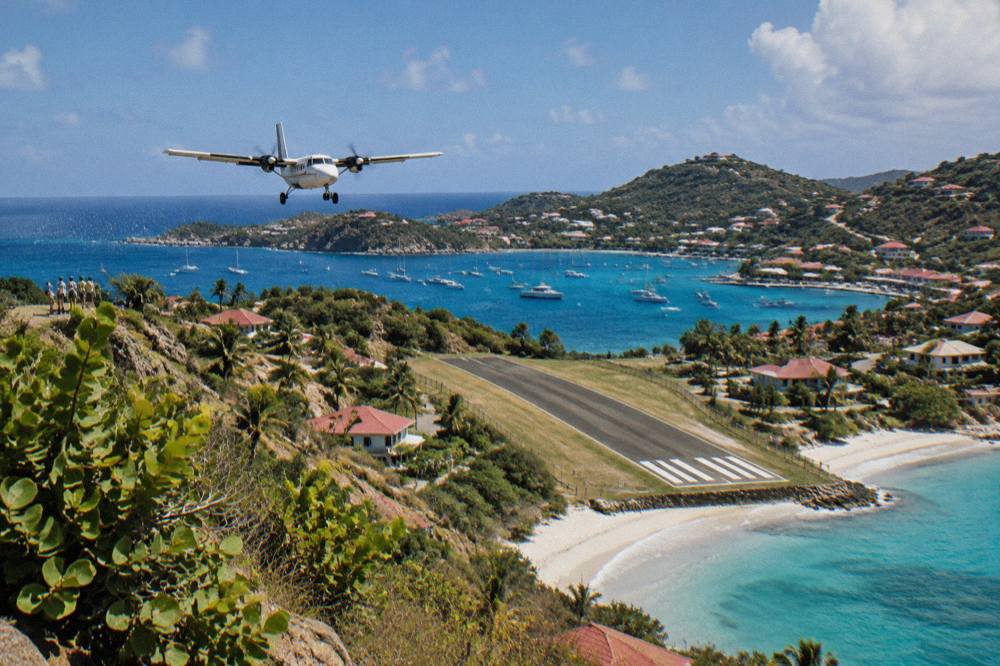
What makes the circuit unusual is scale. St Barts is about 21 square kilometres, and the whole island group fits inside a single morning of sailing. The airport at Gustavia, Gustaf III, also called Remy de Haenen, has a 646 m runway that admits only small turboprops in daylight and visual conditions, which keeps every movement local and small. That constraint pushes travelers toward the water, and the water is where this island group is at its best.
The site's own St Barts versus St Martin comparison covers which base suits which kind of trip, but the short version is that St Martin is the transport hub and St Barts is the destination you hop to. A week that uses both is the classic version of the itinerary.
Which Islands Can You Reach From St Barts?
Four neighbors dominate every realistic St Barts island hop: St Martin and Sint Maarten, the shared French and Dutch island that holds the region's main airport; Anguilla, a British territory to the north reached by ferry from the French side; Saba, a Dutch volcanic island to the south with ferry links through St Martin; and Saint Eustatius, farther still, usually a deliberate add-on rather than a day trip. Each is a separate customs territory, so passports travel with you on every leg.
Here is the practical map of the group:
| Island | Status | How it connects to a St Barts trip | What it adds |
|---|---|---|---|
| St Martin / Sint Maarten | Divided French and Dutch island | Main air gateway, code SXM, plus ferries from Philipsburg and Marigot | The hub: flights, duty-free shopping in Philipsburg, French-side Marigot |
| Anguilla | British territory | Ferry from the French side of St Martin, then onward connections | Long sandy beaches, a slower British-Caribbean rhythm |
| Saba | Dutch municipality | Ferry links through St Martin | A steep volcanic island with hiking and diving |
| Saint Eustatius (Statia) | Dutch municipality | Scheduled links from St Maarten and Saba | Quiet history and diving, rarely a day trip from St Barts |
| St Kitts | Independent federation | A onward hop from Statia or Saba | A larger island, usually its own trip |
The neighbor-island pages on this site go deeper on each leg: the Anguilla day trip from St Barts, the Saba day trip, the Statia trip, and the St Kitts routing each break down their own leg. What matters at the planning stage is that each island is a separate entry point, and the ferry and airline operators are the ones who manage that reality, not the hotels.
A note on expectations: this is a quiet corner of the Caribbean, and the boats are correspondingly small. The ferries carry dozens, not hundreds, and the crossing can be rough when the channel swell is up. Nobody should book a tight same-day connection through a ferry without a buffer, and nobody should promise a smooth crossing, because the operators themselves do not.
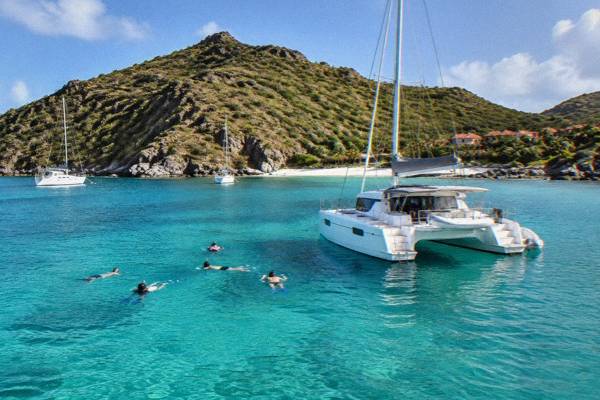
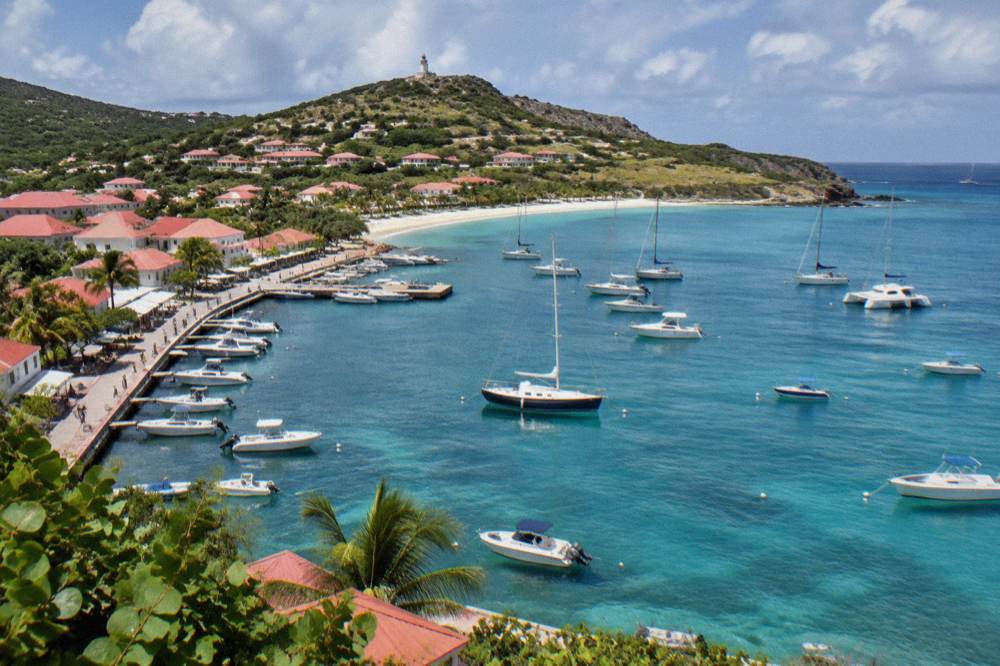
The single most popular boat day in the group does not even leave St Barts waters. The trip from St Martin that circles Gustavia, Colombier Beach and Ile Fourchue in one outing is the featured tour on this page, and the trio below shows how it sits beside the private alternatives.
Colombier deserves its spot on that route. The beach is public, like every beach on St Barts, and it sits on the island's northwestern tip inside the marine reserve, reachable by boat or on foot rather than by a direct road. The Colombier hike guide covers the land approach for travelers who would rather earn the anchorage than sail into it.
How Do You Get To St Barts To Start An Island Hop?
Almost every island hop into St Barts runs through St Martin: a long-haul flight lands at SXM on the Dutch side, then either a small STOL turboprop from St Barth Commuter or Tradewind makes the short hop to Gustavia, or a scheduled ferry crosses from Philipsburg or Marigot to Gustavia in under an hour. No jet lands at St Barts: the 646 m runway admits only small aircraft, daylight, visual conditions only.
The flight side is small and specific. St Barth Commuter serves SBH from St Martin (SXM), Grand Case on the French side (SFG) and Pointe-a-Pitre on Guadeloupe (PTP), and Tradewind serves SBH from San Juan (SJU) and Antigua (ANU). Winair operates Twin Otters in the region, but this site prints no Winair route or frequency. A traveler coming from the United States or Europe connects through one of those gateways, and the last leg is always a small aircraft or a boat. This site's flying to St Barts from the US guide covers the gateway choice in detail, and the airport guide explains what the famous short runway actually means for a travel day.
Ready to compare fares for the short hop to Gustavia? Book a flight to St Barts.
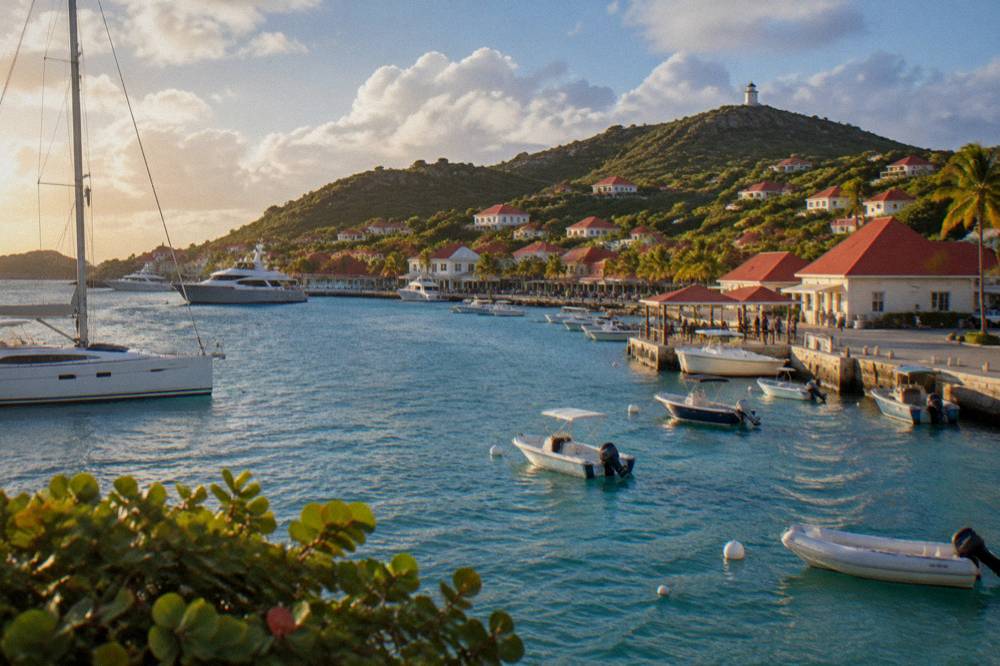
The boat side is a scheduled, year-round service. Two operators hold the corridor, and both require a passport and an early check-in at the dock:
| Ferry operator | Departure port | Arrival | Crossing | Notes |
|---|---|---|---|---|
| Great Bay Express | Bobby's Marina, Philipsburg, Sint Maarten | Gustavia | About 45 minutes | Passport required, arrive about 45 minutes early, check-in closes about 15 minutes before departure |
| Voyager | Marigot Ferry Terminal, St Martin | Gustavia | About 50 to 60 minutes | Two to three sailings a day each way in normal conditions |
Neither operator publishes a fare this site can print, and neither promises a calm channel. Both run subject to weather, and both reduce or adjust sailings in the low season and around maintenance periods. The site's ferry operators and schedule guide and the Great Bay Express page hold the practical detail, including the seasickness question, which the operators themselves take seriously enough to warn about.
The reverse routing matters too. Travelers who stage the trip from the Dutch side should read getting from SXM airport to the St Barts ferry, and the broader question of whether to spend time on St Maarten before or after St Barts shapes whether the island hop runs outward from St Barts or inward toward it.
Can You Charter A Private Boat Around The St Barts Islands?
Yes, and listed here every bookable charter departs from St Martin or Sint Maarten rather than from St Barts itself: private day charters and a private sailboat run the crossing and the island circuit, an overnight catamaran stretches the same route into two days, and a Nikki Beach-focused charter pairs the crossing with a beach club stop. Five of the six products listed here are private charters priced per group rather than per person.
The economics differ from the ferries in kind, not just degree. A private charter is a boat for one party, priced for the whole group, with the route discussed with the operator in advance. A ferry is a scheduled service priced per seat. For a family or a group of friends doing an island hop, a charter can cover the St Martin to St Barts leg, the loop around the northwestern anchorages, and the return in a single booked day, with no timetable to chase.
Here is how the private options differ:
| Charter | Type | Group basis | Season note |
|---|---|---|---|
| Full-day private charter | Day trip from St Martin or Sint Maarten | Priced per group of up to 10 | Runs on the operator's calendar |
| Private charter from St Martin | Day trip from St Martin | Priced per group of up to 8 | Runs on the operator's calendar |
| Nikki Beach private charter | Day trip from Sint Maarten, 6 to 8 hours | Priced per group | Pairs the crossing with the St Jean beach club, whose Nikki Beach St Barts page this site covers separately |
| Private sailboat charter | Day trip from St Maarten | Priced per group of up to 8 | Sail rather than power |
| Overnight private catamaran | Two days, one night | Priced per group of up to 4 | The only overnight product listed here |
| Group sail and snorkel | Day trip from St Martin or Sint Maarten | Priced per person | The one per-person product, running 12 May to 31 August 2027 on its listing |
Prices, ratings and durations render from the live listings rather than from this page, because those figures change and the operator's listing is the source of truth. What a planner should take from the table is the structural choice: per person on a scheduled group sail, or per group with the route in your own hands.
The featured tour for this page is the per-person option, the group sail that visits Gustavia, Colombier Beach and Ile Fourchue from St Martin.
For parties who want the boat to themselves, the private alternatives are below. The full-day private charter takes up to 10, and the private charter from St Martin up to 8:
The Nikki Beach variant adds the beach club stop on St Jean, which makes it a different day rather than a different boat:
When Is The Best Season For St Barts Island Hopping?
The most reliable window for island hopping around St Barts runs from December through April, when the Meteo-France normals, 1991-2020, show mean daily highs of 28.5 to 29.8 C and the lowest monthly rain totals of the year, and when the ferries and small planes run their fullest schedules. Hurricane season runs from 1 June to 30 November with its peak from mid-August to mid-October, and October is the wettest month at 135.6 mm of rain in the normals.
The climate table tells the story month by month:
| Month | Mean daily high C | Mean daily low C | Rain mm |
|---|---|---|---|
| Jan | 28.5 | 23.5 | 52.6 |
| Feb | 28.6 | 23.3 | 38.4 |
| Mar | 29.0 | 23.5 | 41.4 |
| Apr | 29.8 | 24.2 | 50.9 |
| May | 30.7 | 25.1 | 61.7 |
| Jun | 31.2 | 25.9 | 56.0 |
| Jul | 31.2 | 26.0 | 80.4 |
| Aug | 31.6 | 26.3 | 79.6 |
| Sep | 31.7 | 26.2 | 96.9 |
| Oct | 31.4 | 25.8 | 135.6 |
| Nov | 29.9 | 25.0 | 118.6 |
| Dec | 28.9 | 24.1 | 79.2 |
Figures are Meteo-France climate normals, 1991-2020, for the St Barthelemy station. The sea stays warm year round, about 26 C in winter to about 29 C from August to October. The island is warm in every month; the difference between seasons is rain, swell and what is open. The full index of guides sits on St Barthelemy Travel.
Two seasonal realities shape a hop. First, many St Barts hotels and restaurants close each autumn and reopen in waves between mid-October and early November, so an October hop finds a quieter island than a February one, by pattern rather than by published schedule. The site's best time to go season guide and the hurricane season page unpack both points, and no source lets this site predict a storm, a crowd or a swell for any date.
The event calendar gives the hop structure if the dates align. The St Barth Music Festival runs 8 to 18 January 2027, the St Barths Bucket Regatta falls in mid-March, Les Voiles de St Barth returns in April, the Film Festival lands in late April or early May, and the Gourmet Festival runs 9 to 15 November 2026. A January or March hop can catch a regatta or a festival; a November hop arrives as the restaurants reopen.
What Rules Apply On The Water Around St Barts?
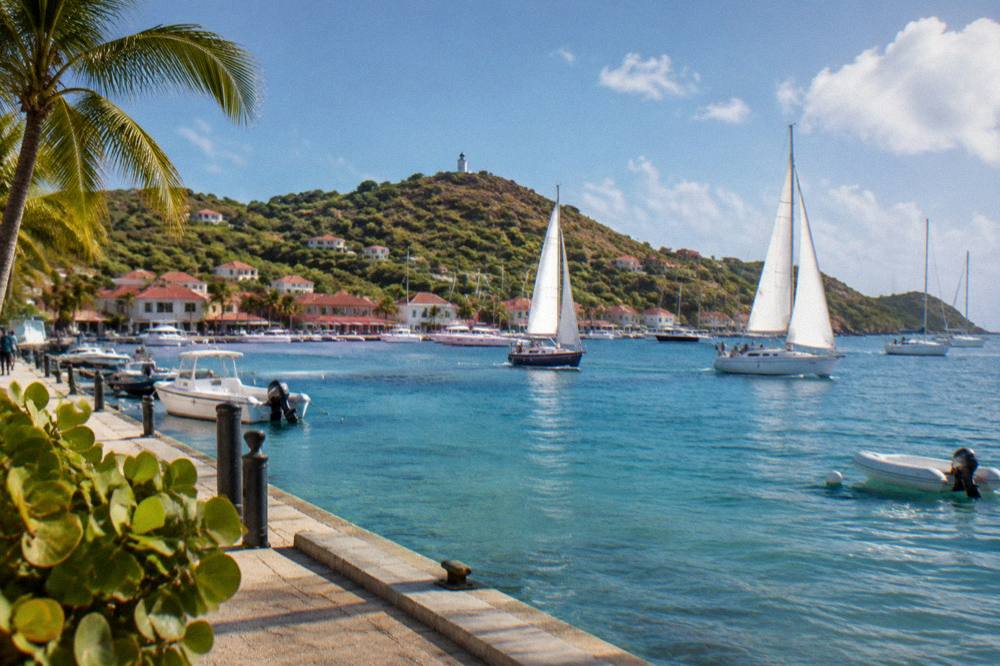
The St Barts marine reserve, run by the environment agency, imposes a 5-knot speed limit in its zones, bans jet skis and other motorized and electric water devices, lists 23 dive sites, forbids dogs on the beaches and asks visitors not to touch turtles, corals or any protected species; its regulatory-zones page also restricts anchoring in Colombier and Ile Fourchue bays, where ecological mooring buoys are preferred and vessels over 25 m are excluded.
The full rule set, from the environment agency's regulatory-zones and beach pages:
| Rule zone | What the reserve says |
|---|---|
| Speed | Maximum 5 knots on the water inside protected zones |
| Wildlife | No touching, chasing or feeding protected species, including turtles, corals, urchins, starfish, sharks and rays; no gloves in the water |
| Collecting | No collecting coral, plants, shellfish, crustaceans, sand, rocks or shells |
| Dogs | Dogs are prohibited on all beaches island-wide, even on leash, under a municipal order the environment agency's beach page cites |
| Motorized devices | No jet skis, seabobs, electric surfboards or towed sports in the reserve |
| Diving | 23 dive sites are listed within the reserve's protections |
| Anchoring | Restrictions in Colombier and Fourchue bays; ecological mooring buoys preferred; no vessels over 25 m |
For an island-hopping itinerary these rules are practical, not decorative. A charter that anchors at Colombier uses a buoy, not an anchor. A dog does not join a beach stop anywhere on St Barts. A drone stays packed unless the environment agency has authorized it. And a snorkeler keeps hands off everything, which is the single rule that most protects what everyone came to see. The site's nature reserve guide and the sea turtles page cover the ecology in depth.
The rules also explain why the boat list looks the way it does. Jet ski, seabob and towed-sport products are not offered where the trips go. What the trip list sells instead is sailing, snorkeling and the crossing itself.
How Do The Day Trips To Anguilla And Saba Actually Work?
The Anguilla day trip runs by ferry: a crossing from the French side of St Martin to Anguilla, with passports checked at both ends because Anguilla is a British territory, usually staged as an add-on to a St Martin stay rather than a direct hop from Gustavia. The Saba day trip also routes through St Martin's ferry links, reaching the steep Dutch island for hiking or diving. Neither is a St Barts departure: both run through the hub.
The practical consequence is itinerary order. A traveler based in St Barts who wants Anguilla typically ferries to St Martin, crosses to Anguilla, and returns the same way, which is a full day and needs a passport and a buffer for the connections. The site's St Barts to Anguilla page and the dedicated Anguilla day trip guide map the sequence, while the Saba route and Statia routing do the same for the southern islands.
The gentle warning is the same one the ferry operators give: the channel decides the day. Ferries in this group run subject to weather, and a rough swell can slow or cancel a sailing on any route. A same-day chain of two ferries plus a flight is a plan with no slack, and a smart hop builds an overnight or a full free day around each water leg. The site's ferry seasickness guide is honest about the channel for exactly this reason.
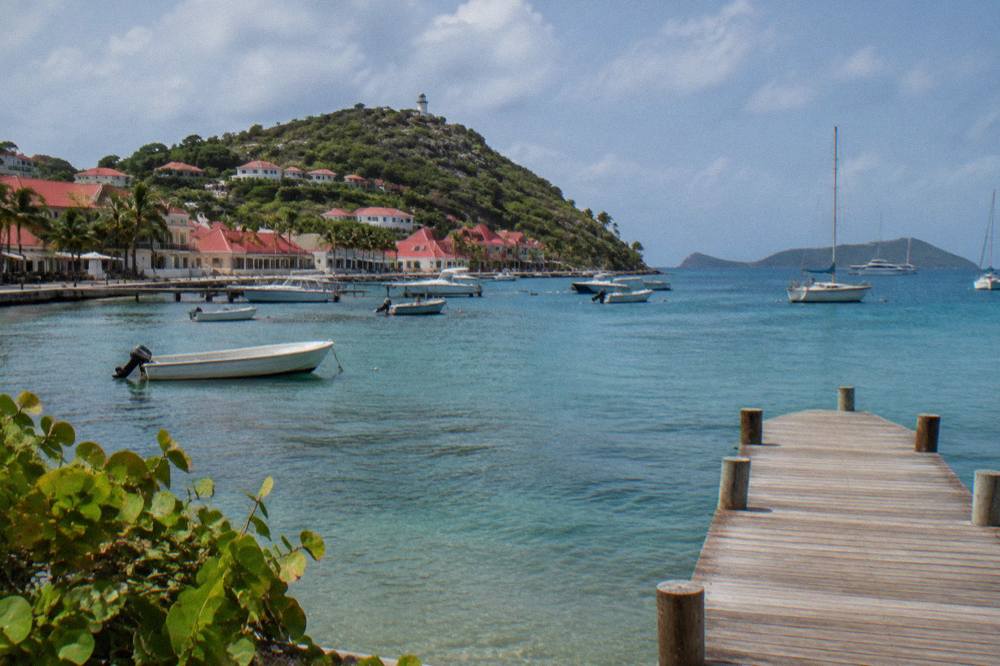
For travelers who would rather stay on St Barts and hop its own coastline, the beach hopping itinerary strings the public beaches together by land, and the attractions pages for Shell Beach, Saline, Flamands and St Jean cover each stop. All beaches on the island are public, which makes the land-side hop free at the point of entry.
How Do You Plan A Multi-Island Itinerary Around St Barts?
The reliable pattern is hub-and-spoke: stage the trip on St Martin or Sint Maarten where the flights land, use the ferries and small planes for the spokes, spend the core nights on St Barts, and let one booked boat day carry the water circuit; passports travel on every leg because each island is a separate territory, and every sea crossing gets a weather buffer because every operator reserves the right to reschedule.
A worked skeleton looks like this:
| Day | Base | Leg |
|---|---|---|
| 1 | St Martin / Sint Maarten | Arrive SXM, overnight near the ferry port or airport |
| 2 | St Barts | Ferry or small-plane hop to Gustavia |
| 3 | St Barts | Island day: Gustavia harbor, the public beaches |
| 4 | St Barts waters | Booked boat day: Colombier and Ile Fourchue circuit |
| 5 | St Barts | Free day, or the Anguilla spoke if the schedule allows |
| 6 | St Martin | Return hop, overnight on either side |
| 7 | Departure | Fly out of SXM |
The skeleton flexes at three joints. The boat day can run from either side of the channel, since every trip departs from St Martin or Sint Maarten. The Anguilla spoke needs a full day and a passport. And the return leg should never share a calendar day with a long-haul departure, because a cancelled ferry plus a missed flight is the classic way an island hop ends badly. The site's St Barts itinerary guide and the long weekend and one week versions scale the same skeleton to different trip lengths.
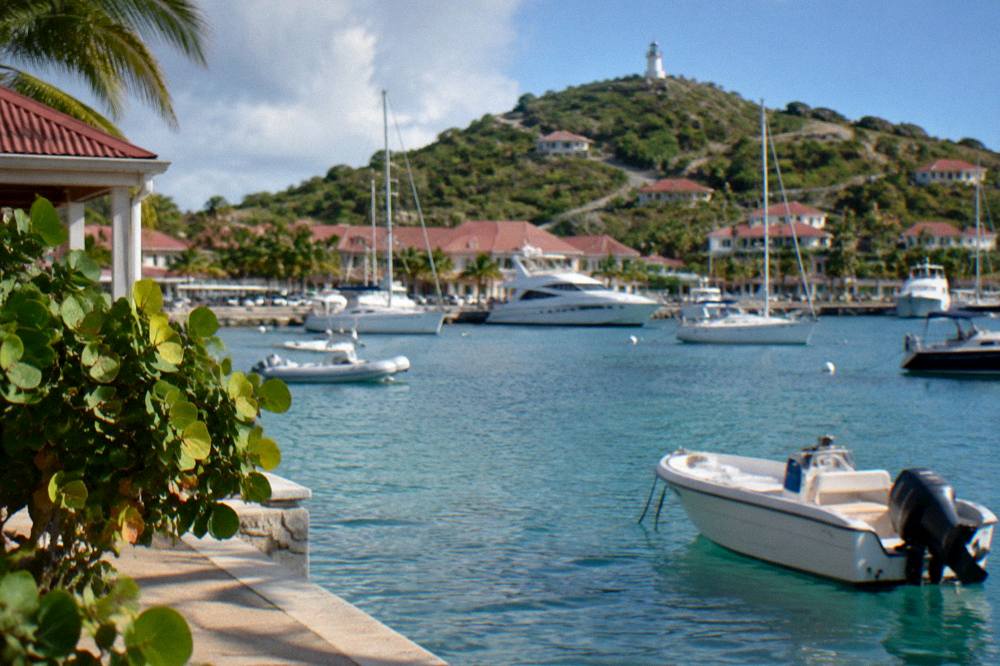
One structural choice finishes the plan: the overnight catamaran. It turns the St Martin to St Barts leg into the accommodation itself, two days and one night on the water, priced per group of up to four. For a hop built around the sea rather than around hotels, it is the version of the trip where the journey and the destination are the same thing, and it anchors the final trio below alongside the sailboat and the group day sail.
Common Questions About St Barts Island Hopping
Can you do island hopping from St Barts in one day?
Partly. A one-day circuit of St Barts' own waters, including Gustavia, Colombier and Ile Fourchue, runs as a booked boat day from St Martin or Sint Maarten. Reaching a second territory such as Anguilla and returning to St Barts the same day is a ferry chain through St Martin that leaves no slack for weather, so an overnight buffer is the safer plan.
Do you need a passport for island hopping around St Barts?
Yes. A passport is required for the ferries between St Martin or Sint Maarten and Gustavia, and every neighbor island is a separate customs territory. Travelers should also check their own government's travel advice for the French and Dutch islands before the trip, because entry rules are set by France and the Netherlands for their respective sides.
Is there a ferry from St Martin to St Barts?
Two scheduled operators hold the corridor: Great Bay Express from Bobby's Marina in Philipsburg on the Dutch side, about a 45 minute crossing, and Voyager from the Marigot Ferry Terminal on the French side, about 50 to 60 minutes. Both require an early check-in, both run subject to weather, and neither crossing is promised to be smooth.
Why can't you fly direct to St Barts from the US or Europe?
The runway at Gustaf III airport is 646 m long and admits only small STOL turboprops in daylight and visual conditions. No jet lands at St Barts. Long-haul travelers connect through St Martin (SXM), San Juan (SJU), Guadeloupe (PTP) or Antigua (ANU) and finish the trip on a small aircraft or a ferry.
Which island should you pair with St Barts?
St Martin and Sint Maarten is the practical pairing because it holds the region's main airport and the ferry ports. Anguilla suits a beach-focused add-on reached by ferry from the French side, and Saba suits hikers and divers willing to route through St Martin's links. The choice is really between more beaches and a volcano.
When is hurricane season for a St Barts island hop?
Hurricane season runs from 1 June to 30 November, with the peak from mid-August to mid-October. October is the wettest month in the Meteo-France normals, 1991-2020, at 135.6 mm of rain. No source supports predicting a storm for any date, so the planning answer is simply to know the window and buy flexible arrangements inside it.