Great Bay Express St Barts Ferry Guide: Routes, Schedules, And Booking Tips
Great Bay Express is the Dutch-side ferry link to St Barts, running from Philipsburg on Sint Maarten across to Gustavia harbour in about 45 minutes.
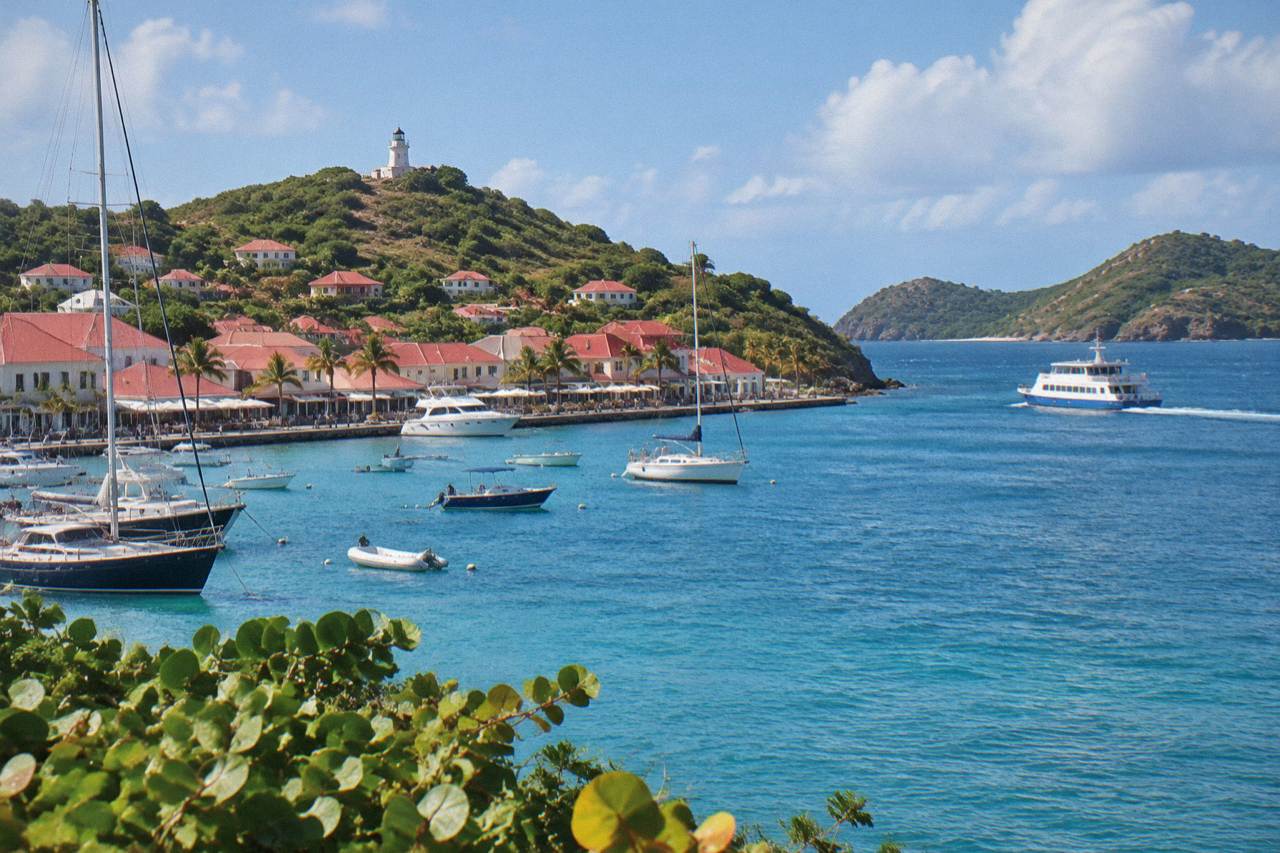
Great Bay Express runs from Bobby's Marina in Philipsburg, Sint Maarten, to Gustavia, St Barts, in about 45 minutes. Passengers need a passport, should arrive about 45 minutes early, and check-in closes about 15 minutes before departure.
Great Bay Express is the Dutch-side ferry link to St Barthelemy, the small French Caribbean island usually written St Barts, and for many travellers arriving through Sint Maarten it is the simplest way to reach Gustavia without boarding a small plane. The service runs from Bobby's Marina in Philipsburg, on the Dutch side of the shared island of St Martin and Sint Maarten, and the operator's own page gives the crossing as about 45 minutes each way. This guide covers what the operator publishes, how the crossing compares with the French-side alternative from Marigot, and what to expect once the ferry ties up in Gustavia harbour.
What Is The Great Bay Express St Barts Ferry?
Great Bay Express is a scheduled passenger ferry between Philipsburg, the capital of Dutch-side Sint Maarten, and Gustavia, the harbour capital of St Barts, with the crossing given as about 45 minutes each way on the operator's page. It departs from Bobby's Marina on the Philipsburg waterfront, carries foot passengers only, and requires a valid passport for every traveller, including children. It is one of two scheduled ferry links to the island, the other being the Voyager service from Marigot on the French side.
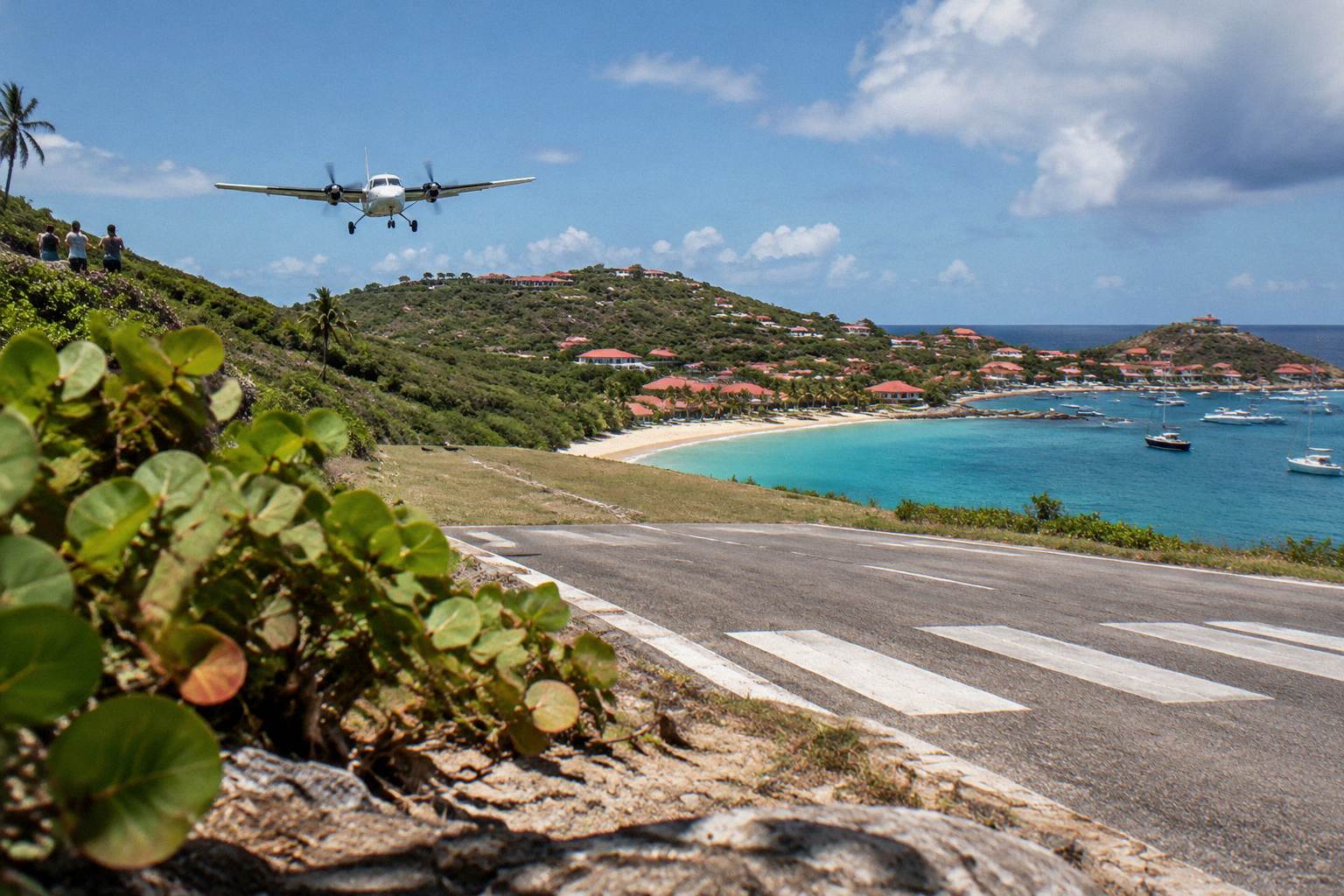
The service matters because of geography. St Barts has no direct flights from outside the Caribbean: its airport at Gustaf III has a 646 m runway served only by small STOL turboprops, in daylight and visual conditions only. Long-haul travellers almost always pass through a gateway first, and Sint Maarten's Princess Juliana Airport is the busiest of them. From that gateway the choice is a small plane or a boat, and the ferry from Philipsburg is the boat option on the Dutch side.
The operator's page states the practical rules plainly. A passport is required. Sailings are subject to sea conditions, and the channel between the two islands is open water for part of the way, so the crossing time is an about figure, not a promise.
For anyone weighing the wider options, the site's guide to getting to St Barts by plane or ferry lays out every route, and the overview of ferry operators and schedules to St Barts compares both ferry companies side by side.
| Route leg | Operator | Departure point | Arrival point | Crossing (operator figure) |
|---|---|---|---|---|
| Sint Maarten to St Barts | Great Bay Express | Bobby's Marina, Philipsburg | Gustavia harbour | about 45 minutes |
| St Martin to St Barts | Voyager | Marigot Ferry Terminal | Gustavia harbour | about 50 to 60 minutes |
Where Does The Great Bay Express Depart From And Arrive?
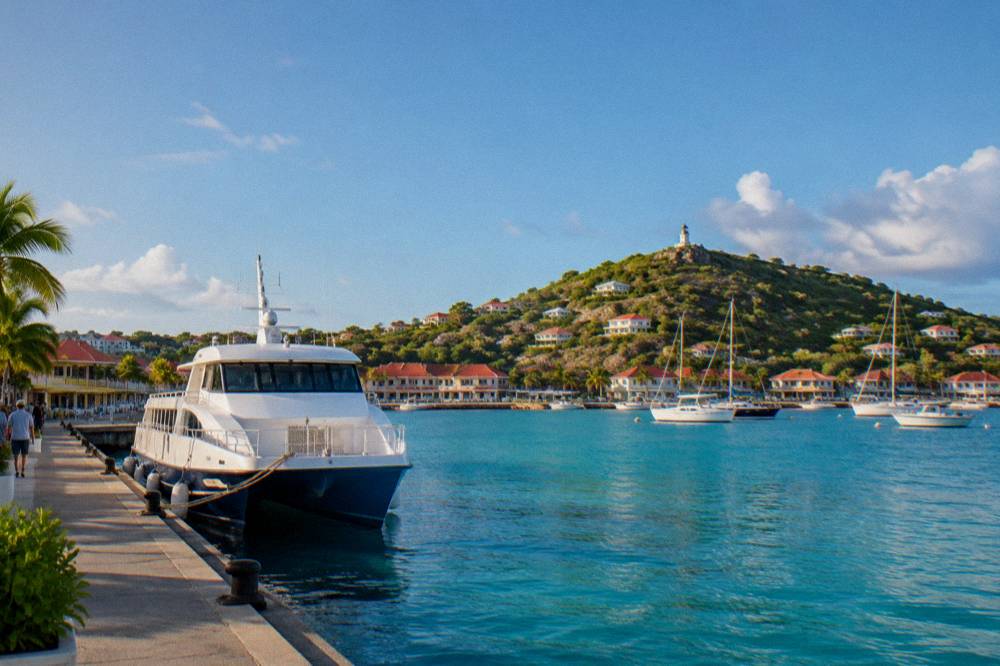
Great Bay Express departs from Bobby's Marina on the waterfront at Philipsburg, the Dutch-side capital of Sint Maarten, and arrives at the ferry quay in Gustavia, St Barts, the island's harbour capital. The operator asks ferry passengers to check in about 45 minutes before sailing, with check-in closing about 15 minutes before departure. Both ends are town-centre locations, so the walk into Gustavia from the quay is short.
Philipsburg sits on Great Bay, the sweep of sand and waterfront that gives both the bay and the ferry company their name. Bobby's Marina is on that waterfront. Travellers flying into Princess Juliana Airport on the Dutch side reach Philipsburg by taxi or rental vehicle; the airport sits on the western side of the island and Philipsburg on the south coast. For anyone planning the connection in detail, the site's page on getting from SXM airport to the St Barts ferry covers the link.
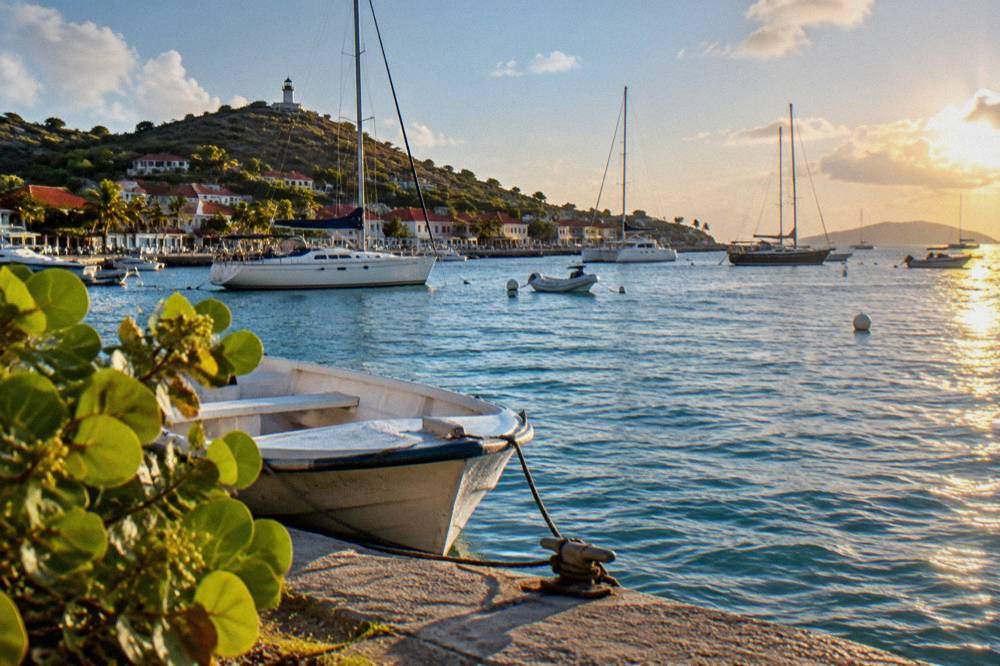
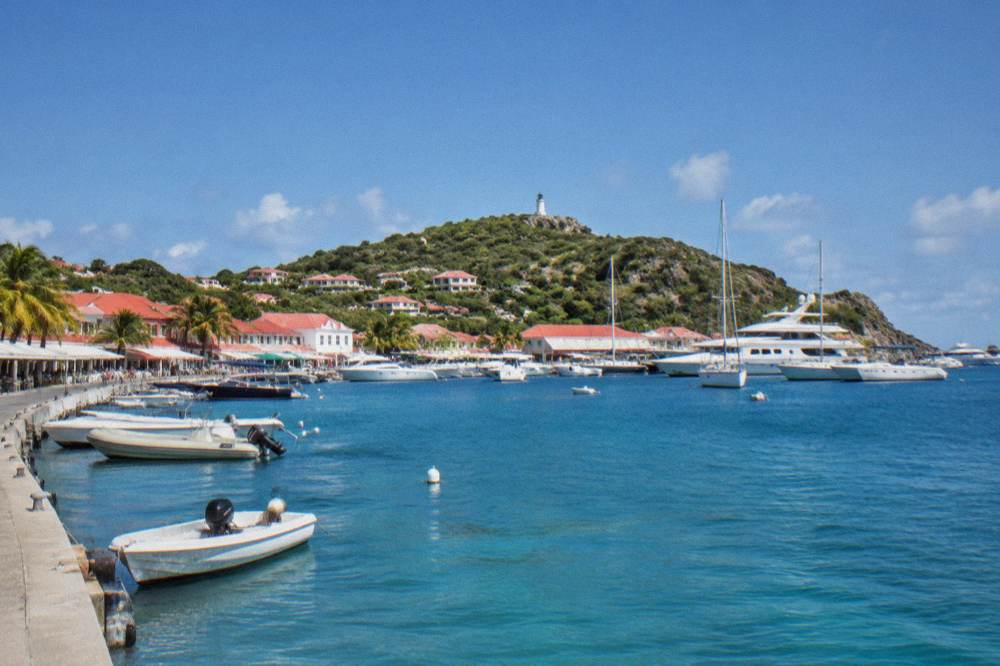
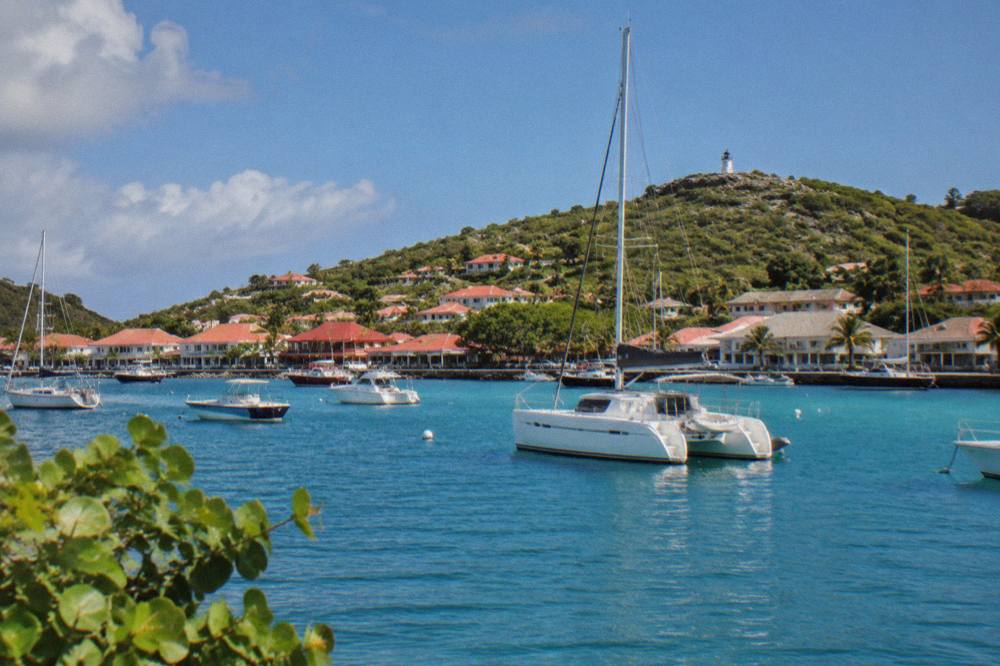
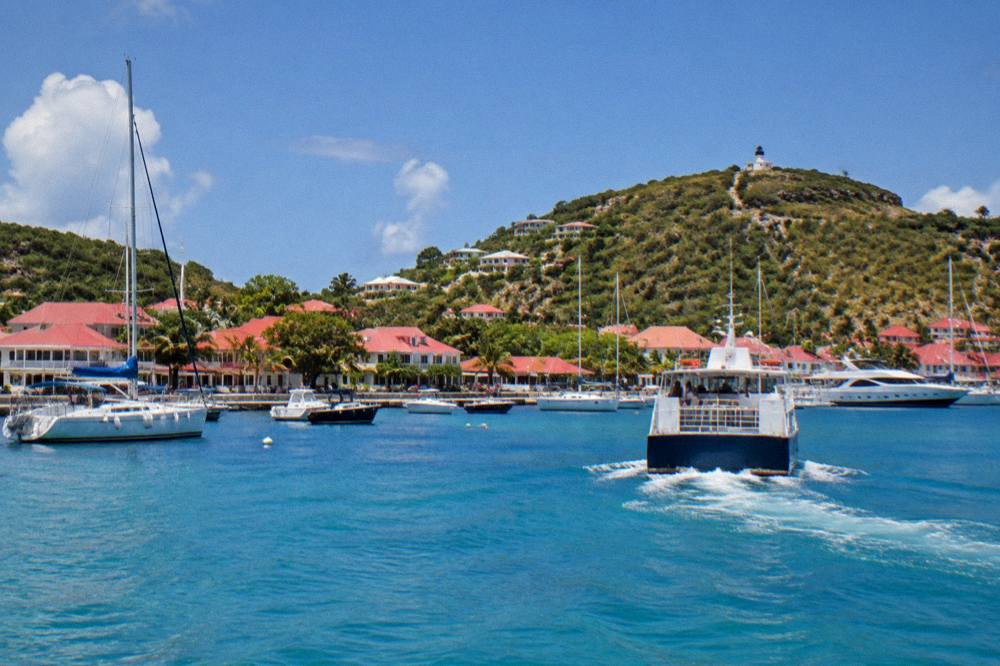
Gustavia is the island's capital and its working harbour, ringed by hills with red roofs. The ferry quay sits close to the harbour front where yachts moor and where cruise tenders also land, since cruise ships anchor offshore and tender passengers in: there is no cruise pier on the island. From the quay, Gustavia's shops, the harbour front and the Shell Beach (Grand Galet) path are all within easy reach on foot.
One practical note shapes arrival planning: there is no ferry terminal building of any scale on the St Barts side, and onward travel from Gustavia is by taxi or a rental vehicle picked up on the island. The site's guide to getting around St Barts explains the rental counters at the airport and in town, and the guide to Gustavia as a place to stay covers the accommodation side.
What Are The Check-In Rules And Passport Requirements?
The operator's page states that passengers should arrive about 45 minutes before the scheduled departure and that check-in closes about 15 minutes before the boat sails, and that a valid passport is required for the crossing. St Barts is outside the Schengen area, so the ferry is a genuine international border crossing between Dutch Sint Maarten and French St Barthelemy, not a domestic hop. Travellers should check their own government's travel advice on document validity before travel.
The passport point catches some travellers out. Sint Maarten and St Barts are politically separate territories: the Dutch side is part of the Kingdom of the Netherlands and St Barts is a French overseas collectivity. The short boat ride between them is an international journey, and the operator applies document checks accordingly. EU citizens can generally use a national ID card, but a passport is the safe default, and the operator's own requirement is a passport.
Because entry rules are set by French authorities and are periodically amended, this site's page on St Barts customs and entry and the dedicated passport requirements page set out what published advice says for US, UK, Canadian and EU citizens, including the onward-ticket requirement. The ferry asks for proof of onward or return travel like any other entry point.
The 45-minute arrival window is a real operational rule, not a suggestion. Boats leave on schedule, check-in closes firmly, and late arrivals are left on the quay. Building the buffer into a day plan matters most on the return leg from Gustavia, where a missed ferry can cascade into a missed flight on Sint Maarten.
For travellers who prefer the air route, the guides to Winair's St Barts flights and flying to St Barts cover the small-plane alternatives from Sint Maarten.
How Rough Is The Crossing From Sint Maarten To St Barts?
The crossing between Sint Maarten and St Barts is a genuine open-water passage, and sea conditions affect it: the operator runs subject to weather, and services can be cancelled or delayed when the sea is unfavorable. About 45 minutes is the operator's crossing figure in normal conditions, but the channel can produce swell, and travellers prone to seasickness should plan for it. No source promises a smooth crossing, and neither does this page.
The boat leaves the shelter of Great Bay and crosses the Saint-Martin Channel, where Atlantic swell can run before it reaches the lee of the St Barts hills. Conditions vary by day and by season, and the operator's own terms make sailings weather-dependent. When a sailing is cancelled, the booking is handled by the operator directly.
Practical preparations are the same as for any small-craft crossing: take motion-sickness remedies in advance rather than during the trip, sit toward the centre of the boat if the option exists, and keep passports and valuables in a bag that stays with you rather than in hold luggage. The site's page on ferry seasickness between the islands goes deeper on the subject.
The return leg deserves the same respect. Afternoon sailings from Gustavia can meet freshening trade winds, and the check-in discipline applies in both directions. Anyone with a same-day flight out of Princess Juliana Airport should leave generous margin, because a delayed or cancelled ferry is a real possibility, however small on any given day.
Great Bay Express Or Voyager From Marigot: Which Ferry To St Barts?
The two scheduled ferries to St Barts divide by island side: Great Bay Express runs from Philipsburg on Dutch Sint Maarten with a crossing of about 45 minutes, while Voyager runs from Marigot on French St Martin with a crossing of about 50 to 60 minutes and two to three sailings a day, per the port of Saint-Martin's page. Neither prints a fare on this site, and the right choice usually follows where a traveller is staying or which airport they flew into.
The deciding factors are logistical. Travellers arriving at Princess Juliana Airport on the Dutch side, or staying in Simpson Bay, Philipsburg or the Dutch-side resorts, are closest to Bobby's Marina. Travellers staying on the French side, in Grand Case, Orient Bay or Marigot itself, are closer to the Marigot Ferry Terminal, and the Voyager crossing from there is the natural fit.
Both services land at the same quay in Gustavia, both require passports, and both are weather-dependent. The differences are the departure port, the crossing length as published by each operator, and the daily sailing pattern. Frequency rises in the high season, roughly November to April, and drops in the low season, with maintenance periods occasionally disrupting either service, as occurred in September 2026.
| Factor | Great Bay Express | Voyager |
|---|---|---|
| Departure island side | Sint Maarten (Dutch) | St Martin (French) |
| Departure point | Bobby's Marina, Philipsburg | Marigot Ferry Terminal |
| Crossing figure | about 45 minutes | about 50 to 60 minutes |
| Sailings | varies by season | two to three a day, per the port page |
| Passport required | yes | yes |
| Weather dependent | yes | yes |
A third way exists for travellers who want the channel crossing as part of the day rather than as a commute: the boat products listed here, every one of which departs from St Martin or Sint Maarten. The per-person group sail, the Boomerangs group sail and snorkel to Gustavia, Colombier and Ile Fourchue, runs in the warmer months on its listing, and the private charters run year-round departures from the Dutch-side docks. The operator's live listing shows current dates and pricing.
What Is Arrival In Gustavia Like?
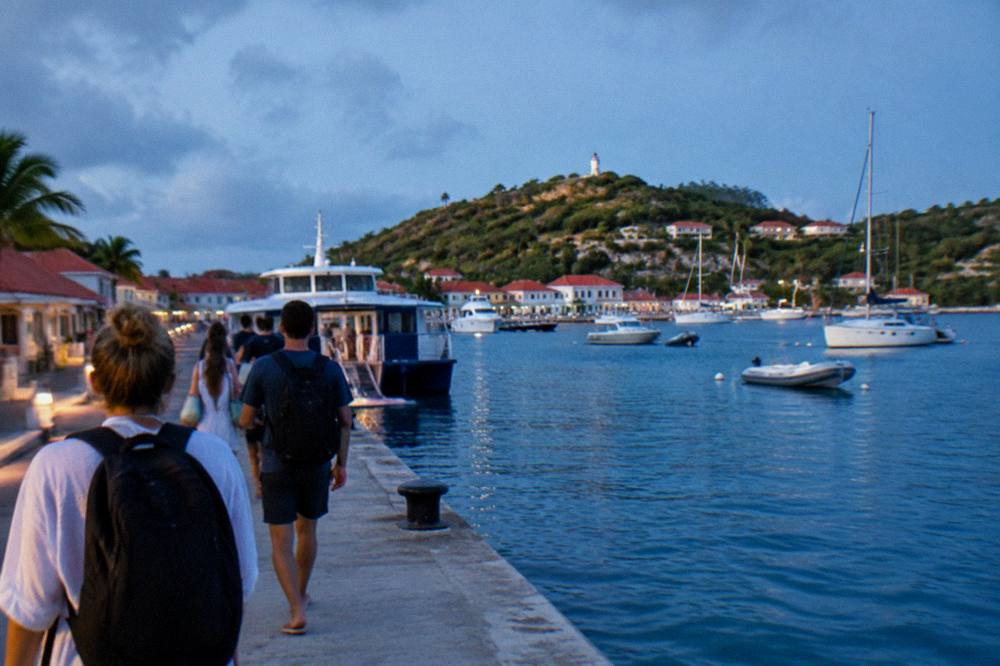
Arrival in Gustavia is a small-scale harbour event: the ferry berths at the town quay, passengers step off into the harbour front of St Barts' capital, and formalities are handled dockside with passport checks. Gustavia is a compact town of red roofs around a working harbour where yachts, tenders and fishing boats share the water, and everything in town is within walking distance of the quay.
The harbour is the island's front door in every sense. Cruise passengers arrive by tender at the same stretch of waterfront, as the site's page on the St Barts cruise port at Gustavia explains, and yacht arrivals follow their own procedure, covered in the guide to arriving in St Barts by yacht. The ferry passenger simply joins the flow.
From the quay, the practical first stops are taxis, which wait near the waterfront, and the island's beaches. Every beach on St Barts is public, from Saint-Jean and Gouverneur to Saline and Colombier, and each has its own guide on this site. For a first visit, the site's first-timer itinerary for St Barts sequences a day or more around the island, and the one-week itinerary scales it up.
Shopping is close at hand too. Gustavia's boutiques cluster within a few streets of the harbour, and the guide to shopping in St Barts maps what is where. For day-trippers on a ferry turnaround, the honest frame is this: Gustavia itself, one beach, and a drive over the hills is a realistic day, and the St Barts layover itinerary is built around exactly that.
Can You Day-Trip To St Barts On The Great Bay Express?
Yes, a day trip to St Barts using the Great Bay Express ferry is a common pattern: the sailing pattern in high season allows an outward morning crossing of about 45 minutes from Philipsburg and a return from Gustavia in the late afternoon or evening, giving most of a day on the island. Frequency drops in low season, so the day-trip window narrows then, and the operator's booking system shows the day's real times. Sailing times shift by season, so no fixed timetable applies.
The day-trip arithmetic matters. Check-in closes about 15 minutes before sailing and the operator asks for arrival about 45 minutes ahead, so each leg needs nearly an hour of buffer on top of the crossing itself. A realistic day trip is built on the morning outward sailing, a full day ashore, and the last return, with a margin for weather.
What to do with the day is well covered elsewhere on this site. The root guide to things to do in St Barts is the full menu. Beach-wise, Shell Beach near Gustavia is the closest to the quay, while Gouverneur and Saline are the classic south-coast pair reached by taxi or rental car.
For travellers who want the crossing and the sightseeing combined, a charter is the alternative that skips the ferry timetable entirely. The 8-hour private charter from St Martin to St Barts includes stops in the bays the ferry passes at speed, and the guide to day trips from St Martin to St Barts covers the planning in depth.
How Does The Ferry Compare With Flying To St Barts?
The choice between the ferry and the flight is a choice between a 646 m mountain-top runway served by small STOL turboprops in daylight only, and a weather-dependent boat crossing of about 45 minutes from Philipsburg. Both routes funnel through St Martin or Sint Maarten for most travellers, both need a passport, and neither runs around the clock: the airport closes shortly after sunset and the ferry sails only in workable sea conditions.
The flight is the famous option. Gustaf III Airport, also called Remy de Haenen, sits at the foot of a hill on the Saint-Jean side, and its runway length rules out jets entirely: only STOL-certified turboprops and similar aircraft operate there, in visual conditions, during daylight. The approach over the Col de la Tourmente ridge is the reason aviation enthusiasts watch it, and the site's guides to the airport itself, the SBH airport code and landing at St Barts cover every angle.
The carriers are small specialists: St Barth Commuter flies from SXM, Grand Case and Pointe-a-Pitre, Tradewind flies from San Juan and Antigua, and Winair connects from Sint Maarten. The flights from St Maarten to St Barts guide compares them, and pages for US departures, Miami and San Juan cover the gateways.
The ferry suits travellers who prefer the sea, who find small aircraft unappealing, or who are staying on either side of St Martin anyway. The flight suits tight connections and travellers who want the shortest possible time in transit. Luggage limits on the small planes are stricter than on the ferry, which is one honest differentiator for travellers packing for a week.
| Factor | Ferry from Philipsburg | Small plane from SXM |
|---|---|---|
| Operator type | Great Bay Express (scheduled ferry) | St Barth Commuter, Winair and other STOL carriers |
| Crossing figure | about 45 minutes | a short hop (no time printed) |
| Documents | passport | passport |
| Weather dependency | sea conditions | daylight and visual conditions only |
| Airport constraint | none | 646 m runway, no jets |
When Does The Great Bay Express Run, And How Does Season Change It?
Sailings run year-round, but frequency rises in the high season from roughly November to April and drops in the low season, and the operator's booking system is the only live source of a given day's times. Maintenance periods can briefly disrupt either ferry. The island's own rhythm follows the same curve: hotels and restaurants close in autumn and reopen between mid-October and early November.
The seasonal shape of St Barts travel is consistent. The high season runs from late in the year through winter into spring, anchored by events: the Gourmet Festival from 9 to 15 November 2026, the Music Festival from 8 to 18 January 2027, the Bucket Regatta in mid-March and Les Voiles in April. The site's guide to the best time to go to St Barts and the month pages, including St Barts in December and St Barts in November, set out the trade-offs.
Hurricane season runs from 1 June to 30 November, with the peak from mid-August to mid-October, and the quietest ferry and hotel period sits inside it. The page on hurricane season in St Barts explains the window without predicting any season. What it means for ferry planning is simple: fewer sailings, more weather variability, and the widest buffer against missed connections.
Booking behaviour follows. In high season, the day's sailings fill and advance booking is the norm, especially around New Year, whose Gustavia fireworks and superyacht crowds are covered in the New Year's Eve guide. In low season a same-day ticket is usually realistic, though nothing on this page promises availability on any date.
| Season | Roughly | Ferry pattern | Island rhythm |
|---|---|---|---|
| High | November to April | more daily sailings | festivals, full hotel lineup |
| Shoulder | May to August | moderate frequency | quieter, beaches still warm |
| Low, before peak cyclone | September to mid-October | reduced sailings, maintenance possible | many hotels and restaurants closed |
What Should You Bring On The Ferry To St Barts?
Bring a valid passport, the booking reference, proof of onward travel, sun protection, and any motion-sickness remedy taken in advance of the about-45-minute crossing; keep documents and valuables in a bag that stays with you rather than in stowed luggage. The ferry is a foot-passenger service, so luggage is carried on board or stowed per the crew's direction, and the same documents that opened the trip will be checked at the Gustavia quay.
The packing logic for St Barts shapes the bag itself. The island is informal: the dress code page on this site describes a beach-and-boutique register rather than formality, and the St Barts packing list covers it. Flat shoes matter more than anything tailored, because Gustavia's streets rise into hills within a block of the quay, and beach paths are unpaved.
Money is the other basic. The currency on St Barts is the euro, French is the official language and English is widely spoken, and credit cards are broadly accepted in town, as the guides to currency in St Barts and language explain. A small amount of cash is still useful for beach vendors and taxis, and the tipping guide covers the conventions.
Electrical plugs on the island are types C and E, so European travellers need no adapter and North American travellers do, and the electricity guide covers the details. Mobile data questions are answered on the eSIM page, and connectivity generally on the internet guide.
| Item | Why it matters on this crossing |
|---|---|
| Passport | required by the operator; the crossing is an international border |
| Booking reference | check-in closes about 15 minutes before sailing |
| Onward travel proof | standard entry requirement |
| Motion-sickness remedy | open-water channel, conditions vary |
| Sun protection | open decks and quay waiting areas |
| Cash in euros | taxis and small vendors on arrival |
Is The Great Bay Express The Best Way To Reach St Barts?
For travellers staying on, or flying into, the Dutch side of St Martin, the Great Bay Express ferry is the most direct sea route to St Barts: a single leg from Bobby's Marina in Philipsburg to Gustavia in about 45 minutes, with no airport transfer and no small-plane flight.
For travellers coming from the French side, the Voyager from Marigot is the equivalent, and for travellers who want the channel crossing to be part of the day rather than a commute, the charter boats listed here depart from St Martin and Sint Maarten.
There is no single best route, only the best fit. A family with a week of luggage may prefer the ferry's looser limits. A traveller with a tight flight connection may prefer the plane. A couple planning a wedding week, covered in the site's guide to weddings in St Barts, may book the charter that doubles as a day on the water. Each of those pages is on this site, and each is honest about the trade-offs.
What this page can state firmly is what the operator states: the departure point, the arrival point, the about-45-minute crossing, the check-in rules and the passport requirement. Everything schedule-shaped belongs to the operator's live listing, because sailings shift with the season and the sea.
What Else Should You Know Before Booking The Ferry?
Five things shape a smooth ferry day: the passport requirement, the 45-minute arrival window with check-in closing about 15 minutes before sailing, the weather dependency of a roughly 45-minute open-water crossing, the seasonal swing in sailing frequency, and the fact that arrival in Gustavia is on foot, with taxis and rental vehicles as the onward options. Each of those comes from the operator's page or the port's, and none is negotiable on the day.
Beyond the ferry itself, St Barts rewards a little arrival planning. There is no resort-style all-inclusive scene on the island, as the site's page on all-inclusive options in St Barts makes clear; the stay is hotels and villas, and the eating is restaurants and beach clubs. The hotel guide and the villa rental guide cover both, with named properties and no rates.
The island is safe and welcoming by the standard measures, and the page on safety in St Barts addresses the common questions, including travel-advice framing. Family travel is straightforward, per the St Barts with kids guide, and the island's accessibility picture is covered honestly on its own page.
For the return journey, the same rules apply in reverse: passport, buffer, weather. And for travellers whose hearts are set on the water rather than merely on arriving across it, the overnight option below turns the crossing itself into the trip. The 2-day 1-night private catamaran from St Martin to St Barth is the fullest version of that idea listed here.
Common Questions About The Great Bay Express St Barts Ferry
How long is the Great Bay Express ferry to St Barts?
The operator's page gives the crossing between Bobby's Marina in Philipsburg and Gustavia as about 45 minutes each way, in normal sea conditions.
Where does the Great Bay Express leave from?
It departs from Bobby's Marina on the Philipsburg waterfront on Sint Maarten, the Dutch side of the shared island, and arrives at the ferry quay in Gustavia, St Barts.
Do you need a passport for the Great Bay Express to St Barts?
Yes. The operator requires a valid passport for every passenger, because the crossing is an international journey between Dutch Sint Maarten and French St Barthelemy, which is outside the Schengen area.
How early should you arrive for the Great Bay Express ferry?
The operator asks passengers to arrive about 45 minutes before departure, and check-in closes about 15 minutes before the boat sails.
Is there another ferry to St Barts from St Martin?
Yes. Voyager runs from the Marigot Ferry Terminal on the French side to Gustavia, with the port of Saint-Martin's page giving the crossing as about 50 to 60 minutes and two to three sailings a day.
Can the Great Bay Express ferry be cancelled?
Yes. Sailings are subject to sea conditions on the open channel between the islands, and services can be delayed or cancelled in unfavorable weather, with bookings handled by the operator directly.
For everything else about the island beyond the quay, start with the site's root guide to things to do in St Barts and the full how to get to St Barts overview on St Barthelemy Travel.