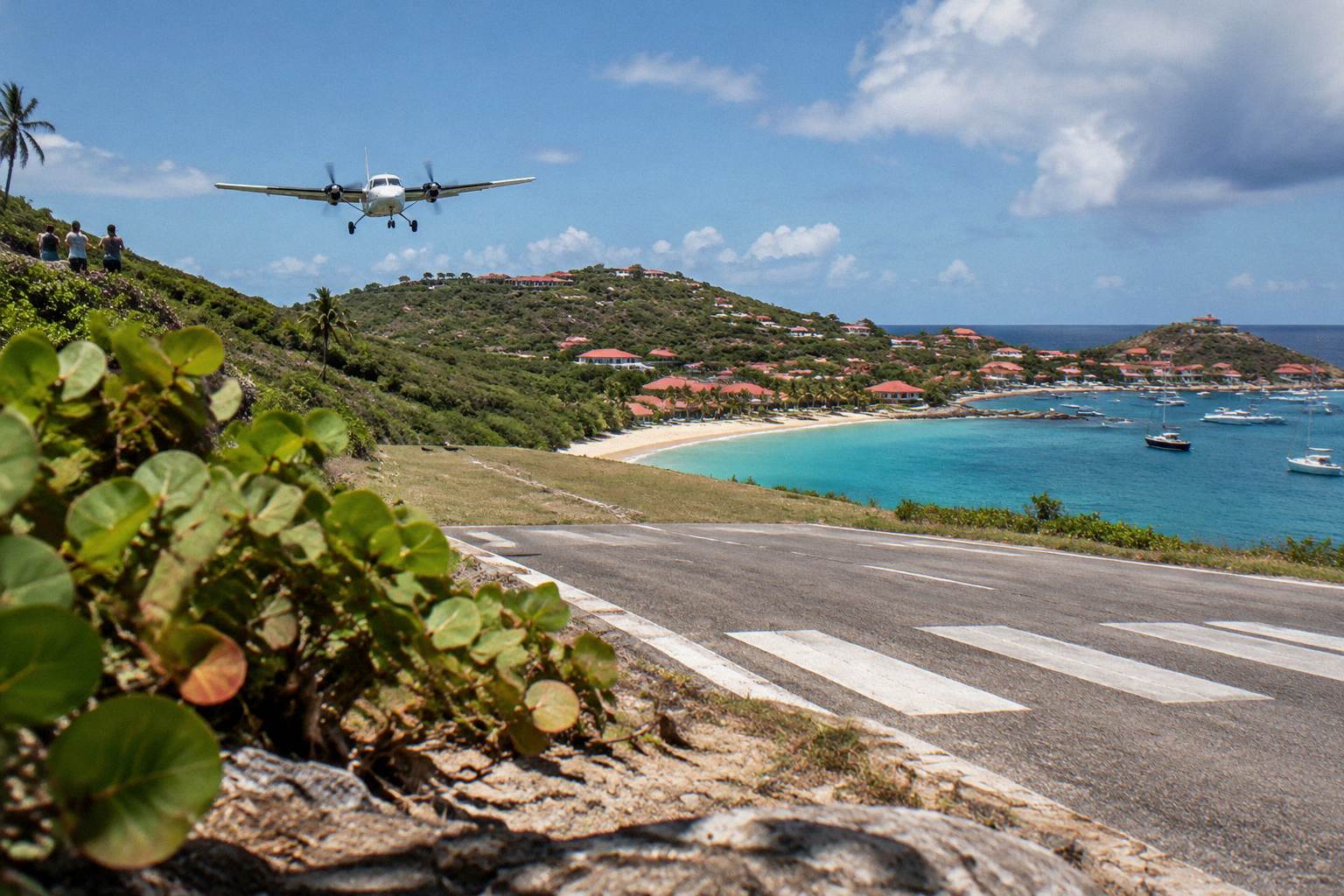
Winair To St Barts
St Barthelemy, usually written St Barts, has no jet airport, so nearly everyone flying in changes somewhere first, and Winair is one of the names that finishes the journey with a short hop from St Maarten.

Winair operates small STOL turboprops into Gustaf III Airport (SBH) in St Barts from Princess Juliana Airport (SXM) on Sint Maarten. The 646 m runway means no jets land on the island, flights run in daylight and visual conditions only, and the hop from St Martin is short. Schedules, fares and baggage rules are shown on the operator's own booking pages.
St Barthelemy, usually written St Barts, is a small French island in the Caribbean of about 21 square kilometres, and its airport is one of the reasons the trip feels different from anywhere else. The runway at Gustaf III Airport, also called Remy de Haenen, is 646 m long, which rules out jets entirely and limits the field to small STOL turboprops flown by specially qualified pilots, in daylight and visual conditions only. That constraint shapes the whole route network: anyone arriving on a wide-body or a transatlantic service connects through a gateway, and the most common gateway is Princess Juliana Airport (SXM) on the Dutch side of St Martin, Sint Maarten. Winair is one of the operators that finishes that last leg, and this page on St Barthelemy Travel sets out how the connection works, what the airline operates, what awaits on the ground, and how the ferry compares.
What Is Winair And Where Does It Fly To St Barts?
Winair is a regional airline based at Princess Juliana Airport (SXM) on Sint Maarten that operates small STOL turboprops, including Twin Otter aircraft, on short inter-island routes, and St Barts is one of its destinations. The 646 m runway at Gustaf III Airport (SBH) means only aircraft of this type can land there, so the airline's role on this corridor is finishing journeys that begin on larger aircraft at SXM. No jet lands at SBH, and operations are limited to daylight and visual flight conditions.
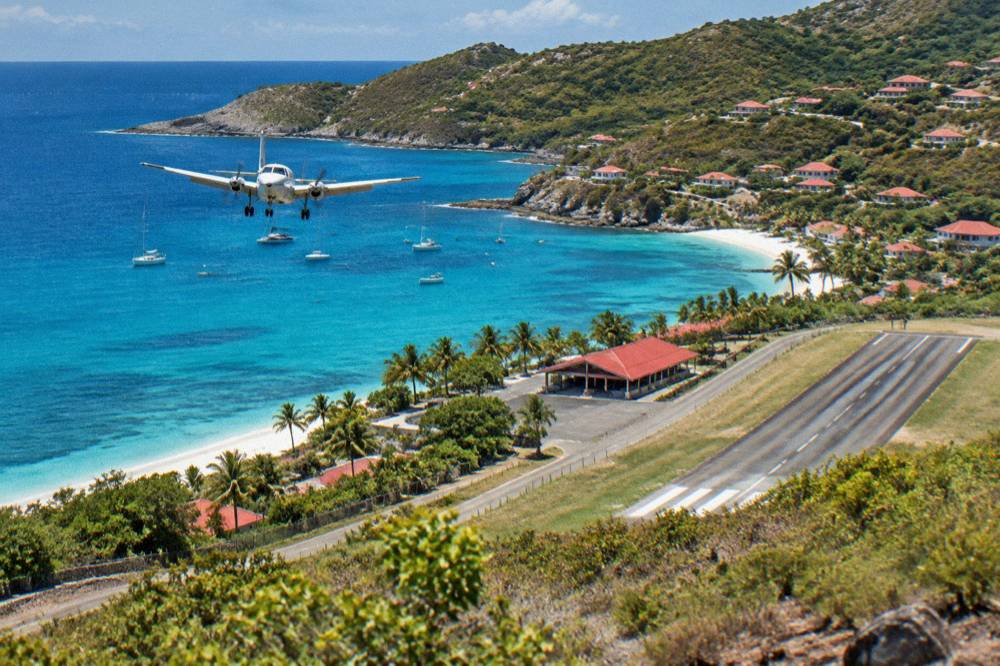
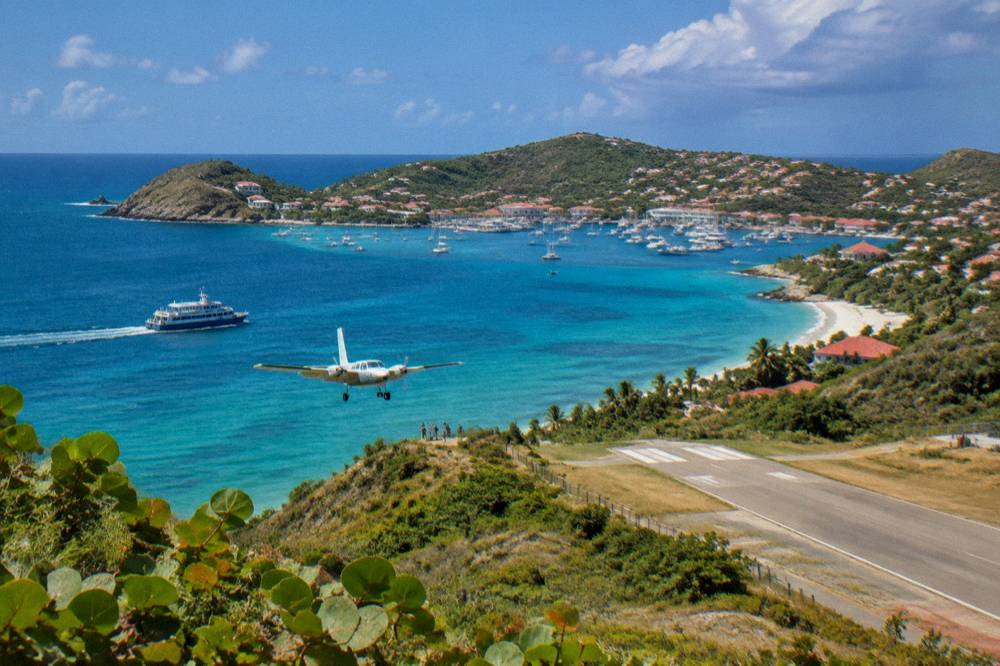
The airline's history sits in the Dutch Caribbean, and its network exists precisely because so many of the smaller islands in the region, St Barts above all, cannot take mainstream jets. Its Twin Otters are high-winged, twin-engine aircraft built for short runways and steep approaches, which is what the terrain around Gustavia demands. The approach descends over a col between hills before a compressed touchdown on a strip that ends near Saint-Jean beach. Every pilot flying the route holds a specific qualification for it.
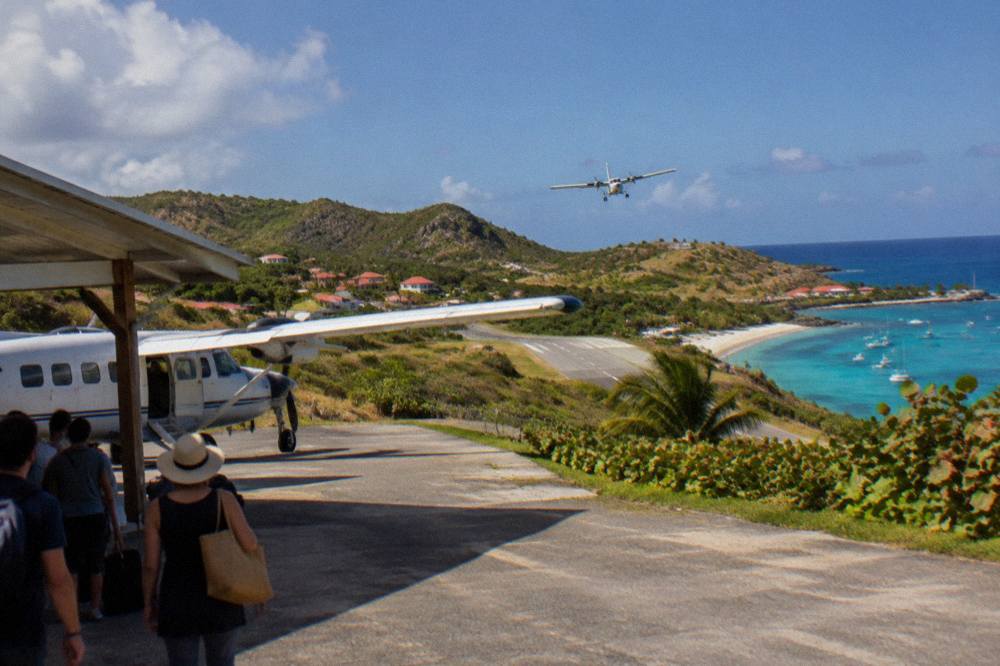
The practical meaning for a traveller is simple. A long-haul flight ends at a gateway such as SXM, and the journey to St Barts finishes on an aircraft with fewer than two dozen seats, boarding sometimes across the tarmac by foot. The St Barts airport guide covers the terminal, arrivals and the walk into Saint-Jean, and the airport code page explains the SBH and TFFJ designations and how the two are used.
A note on what this page will not tell you. Fares, timetables, frequencies and baggage rules change constantly and are shown on the operator's live listing and booking pages, so treat those as the authority for a specific date. What follows is the structure: which airline does what, from where, and how to plan around it.
How Does The Winair Connection From St Maarten To St Barts Work?
The connection works as a change of aircraft at Princess Juliana Airport (SXM) on Sint Maarten: a traveller arrives at SXM on a jet service, then boards a Winair STOL turboprop for a short hop across the channel to Gustaf III Airport in St Barts. Because SBH operates in daylight and visual conditions only, the flying day ends after sunset, so late arrivals at SXM can mean an overnight on St Martin rather than a same-day transfer.
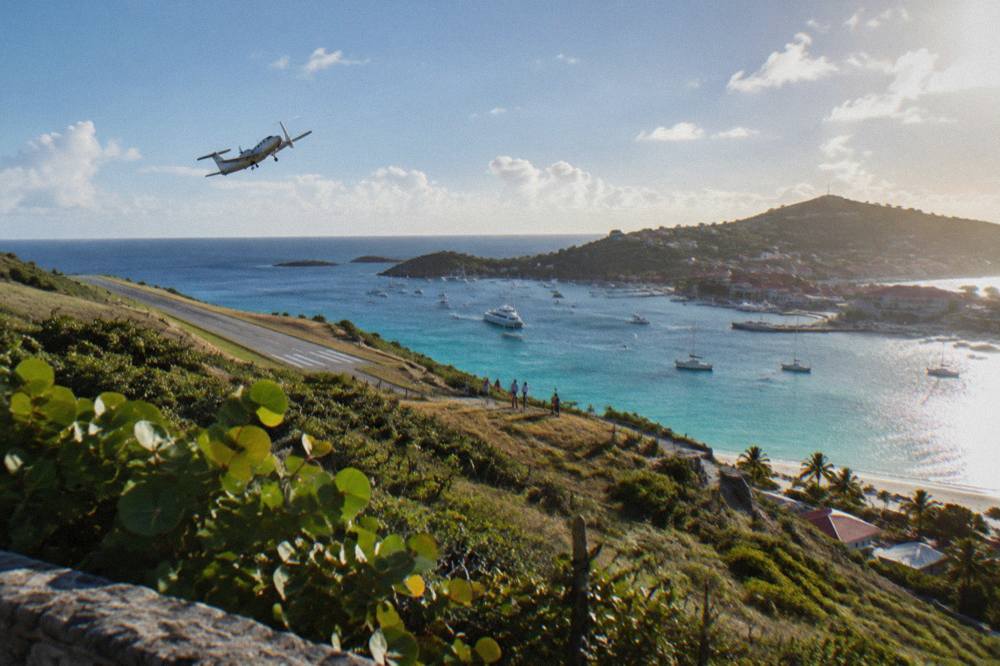
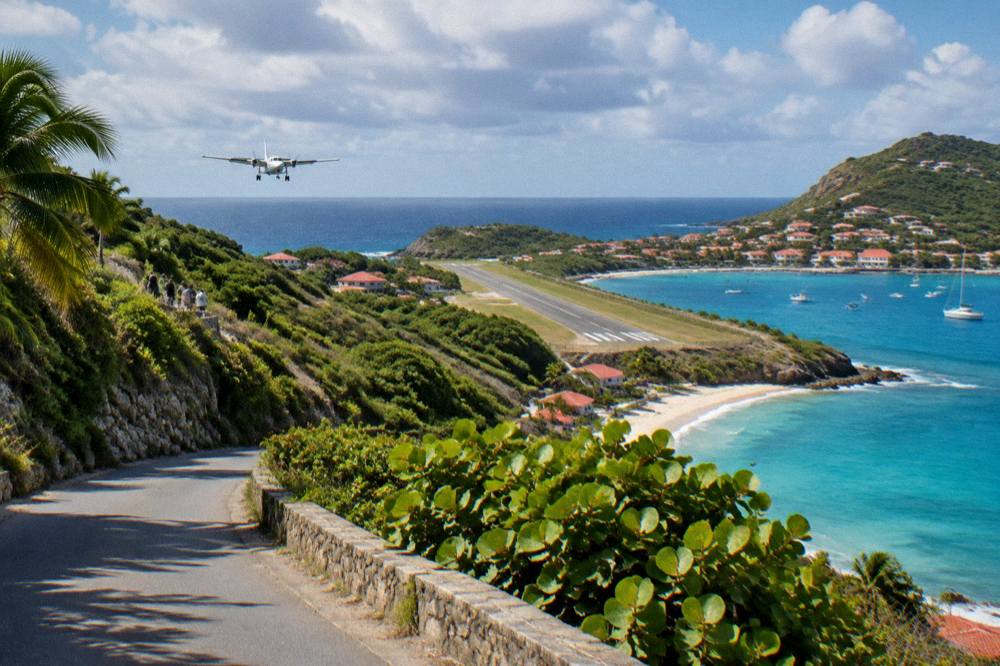
SXM is the busiest gateway for St Barts precisely because of this feed. Long-haul and regional jets from North America and Europe land there, and the smaller operators, Winair among them, distribute passengers onward to the islands whose runways cannot take them. The hop itself is short; the two islands are close neighbours, and the flight is one of the briefest scheduled services in the Caribbean. The descent into SBH, skimming low over a saddle of land, is widely photographed from the road below, and the landing at St Barts airport page describes what the approach involves.
Booking usually happens in one of two ways. Many travellers book the SXM to SBH leg as part of a single itinerary through the airline that brought them across the ocean, which protects the connection if the long-haul flight runs late. Others book the two legs separately, which can widen the choice of small-plane operators but leaves the transfer risk with the traveller. Either way, the day's schedule at SBH is bounded by daylight, and the weather in the channel, whether swell, haze or wind, can affect the flying programme on any given afternoon.
For anyone with time on the Dutch side before departure, the St Maarten before or after St Barts question is worth settling early, because an overnight on either side of the channel changes the shape of the trip. The same page covers the full set of gateways, including San Juan, Pointe-a-Pitre and Antigua, for travellers whose routing does not pass through SXM at all.
For travellers who would rather arrive by water, the alternatives below are all bookable day trips and transfers that leave from St Martin or Sint Maarten, never from St Barts itself.
What Should You Expect At Gustaf III Airport In St Barts?
Gustaf III Airport is a single-runway STOL field on the Saint-Jean side of St Barts with one small terminal, no jet bridges and no night operations, so arrival is a short walk from aircraft to landside in a matter of minutes. The runway is 646 m long and ends close to the road and the beach, and the whole facility exists at village scale rather than airport scale. Luggage is delivered by hand, and taxis and rental-car counters sit a few steps away.
The terminal handles arrivals and departures in the same compact space. There is a check-in area, a small waiting room, a bar-style refreshment spot and the car-rental counters, which include Avis, Budget and Hertz alongside local agencies. The getting around St Barts page covers the vehicle options, from small compacts to the open Mini Mokes available through local agencies. No fare or rate appears anywhere on this site, because rental pricing moves with season and demand and belongs on each company's own page.
Departures deserve a small amount of planning. Because every flight is a small aircraft, seating is limited and check-in generally closes well before the aircraft moves, so arriving with margin matters, particularly in the busy winter months when several aircraft rotate through the field in quick succession. Weather holds happen, not because the aircraft cannot fly the route but because the field requires visual conditions, and a hold at SBH usually means waiting for a cloud base over the col to lift. The flights to St Barts page goes deeper on the arrival and departure experience.
| Airport Fact | Detail |
|---|---|
| Name | Gustaf III Airport, also called Remy de Haenen |
| Codes | SBH (IATA), TFFJ (ICAO) |
| Runway | 10/28, 646 m (2,119 ft), concrete |
| Aircraft types | STOL turboprops only, no jets |
| Operating hours | Roughly 07:00 to about 15 minutes after sunset |
| Night operations | None, no runway lights |
| Position | Saint-Jean, beside the beach and the main road |
One quirk worth knowing before you go: the airport is a spectator sport. The road over the col passes directly beside the approach path, and a pull-off above the field fills with onlookers whenever aircraft are on frequency. The airport spotting page describes where people gather and what they see, and it is one of the free pleasures of the island, alongside the public beaches and open public spaces.
Which Airlines Besides Winair Fly To St Barts?
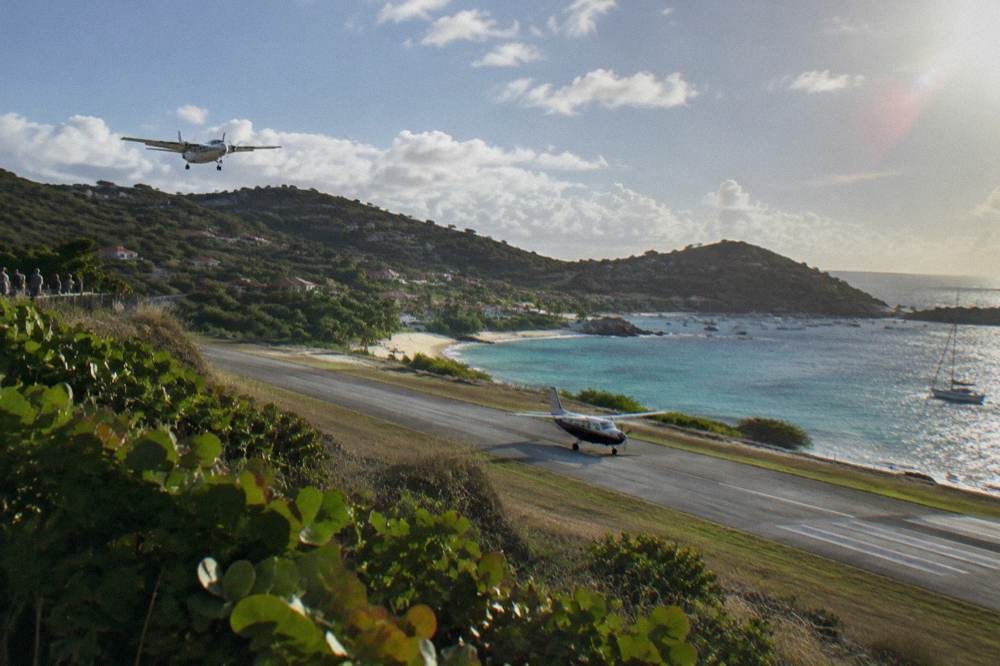
Besides Winair, St Barts is served by St Barth Commuter from St Martin (SXM), Grand Case (SFG) and Pointe-a-Pitre in Guadeloupe (PTP), and by Tradewind from San Juan (SJU) and Antigua (ANU). All of them fly STOL turboprops, because the 646 m runway admits nothing larger, and all of them operate in daylight only. Together these carriers define the full set of gateways a jet traveller can connect through.
St Barth Commuter is based on the island itself and runs a fleet of Cessna 208B Grand Caravans, a single-engine turboprop designed for short fields. Its network gives the French side of the channel a role as well as the Dutch side: Grand Case (SFG) on St Martin is a small French airfield with its own services to SBH, which can suit travellers staying on the French side or arriving via regional flights into SFG. The Guadeloupe link, from Pointe-a-Pitre, is the connection for itineraries routed through the French Caribbean.
Tradewind, a United States operator flying Pilatus PC-12s, owns the San Juan gateway, which is the natural routing for travellers from the US East Coast who prefer a single change of aircraft in a US territory. San Juan is also where the Antigua link joins, useful for itineraries that pair St Barts with other Caribbean islands. The flying to St Barts from the US page compares the gateways in detail, and the Miami routing has its own breakdown.
| Carrier | Gateway Airports | Aircraft Family | Notes For Planning |
|---|---|---|---|
| Winair | SXM (Sint Maarten) | DHC-6 Twin Otter | Twin-engine STOL type, Dutch-side gateway |
| St Barth Commuter | SXM, SFG, PTP | Cessna 208B Grand Caravan | Island-based operator, French and Dutch gateways |
| Tradewind | SJU, ANU | Pilatus PC-12 | US operator, San Juan and Antigua gateways |
No flight time in minutes appears in that table, and none appears anywhere on this site. What can be said is that the hop from St Martin is short, that the ride from San Juan is longer, and that the Guadeloupe leg is the longest of the common scheduled hops. Every frequency and timetable question should be answered from the operator's live listing, since schedules shift with the seasons and with the November to April high season in particular.
The choice between carriers at SXM often comes down to schedule fit rather than aircraft, because both Winair and St Barth Commuter fly the same corridor from the same airport. Travellers connecting the same day from a long-haul arrival generally pick whichever departure has the safest margin, and travellers overnighting on St Martin can afford either.
How Should You Plan Baggage And Check-In For A Winair Flight To St Barts?
Baggage on any small-plane service to St Barts is planned around the aircraft, not around the passenger: a STOL turboprop has limited weight and space, so checked and cabin allowances are set by the operator and shown on its booking pages, and soft bags generally stow more easily than rigid cases. Check-in on these aircraft types closes well before departure, so arriving with time in hand matters. Specific allowances and closing times belong to the operator's own pages and can change.
The honest framing is that a flight to SBH is a flying bus service in the physical sense: seats are few, the cabin is small, and everything brought aboard has to fit. Travellers who pack light, in bags that can be reshaped, have an easier morning than travellers with hard-shell cases, and this is the one piece of advice that holds true across every carrier on the route, whatever their published allowances say this season.
Check-in logistics at SXM are straightforward but separate from the main terminal flow: the regional operators have their own counters, and the walk from a jet arrival gate to the small-plane departure area is part of the connection. Allow a generous margin, not because the walk is long but because a missed small-plane departure can mean a wait measured in hours, given how few seats each flight carries. Anyone connecting the same day should look at the last scheduled departure of the afternoon before booking the inbound jet.
On the St Barts side, departure is calmer. The terminal is small, the walk is short, and the rental-car return sits beside the building. The airport's daylight-only rule sets a hard edge to the day: there is no late-evening departure from SBH under any circumstances, because the field has no runway lights and operations close shortly after sunset.
| Planning Item | What Applies | Where To Confirm |
|---|---|---|
| Checked allowance | Set by operator, limited by aircraft weight | Operator's booking page |
| Cabin baggage | Small cabin, soft bags stow best | Operator's booking page |
| Check-in closing | Earlier than jet norms, per operator | Booking confirmation |
| Last departure of day | Bounded by daylight at SBH | Day's schedule on the operator's site |
| Aircraft seats | Fewer than two dozen per aircraft | Operator's site |
Is The Ferry From St Martin An Alternative To Flying Winair To St Barts?
Yes: two scheduled ferry operators run to Gustavia, Great Bay Express from Philipsburg on the Dutch side and Voyager from Marigot on the French side, with crossings of about 45 and about 50 to 60 minutes respectively, per the operators' own pages. The ferry is the usual fallback when weather or schedule grounds the small planes, and it suits travellers who prefer not to fly, though the crossing can be rough and is never a promise of calm water.
The two services occupy different sides of the channel. Great Bay Express departs from Bobby's Marina in Philipsburg, the Dutch capital, which pairs naturally with an SXM arrival or a stay on the Dutch side. Voyager departs from the Marigot ferry terminal on the French side, which pairs with Grand Case or Marigot itself. Both require a passport and ask passengers to check in well ahead of departure, and both are subject to weather cancellations, since the same swell that troubles aircraft also troubles boats. The ferry operators and schedule page compares the two in full, and the SXM airport to ferry connection covers the transfer between the airport and the docks.
A useful pattern for a flight day is to hold the ferry in mind as the backup rather than the plan. If the small-plane programme at SBH is affected by conditions, the ferries are often still running, and a same-day arrival by water beats an unplanned night on St Martin for most itineraries. In the other direction, a morning ferry from Gustavia can catch an afternoon jet from SXM with margin to spare.
There is also the private-boat option, which sits between the scheduled ferry and the scheduled flight. The trip list on this site includes day and overnight charters from St Martin and Sint Maarten, and the day trip overview sets out how a boat-based St Barts day works for travellers who never fly the hop at all. Every one of those products departs from St Martin or Sint Maarten, never from St Barts.
When Is The Best Season To Fly Winair To St Barts?
The busiest flying season runs from November to April, when the island's hotels, restaurants and events are in full swing, and the Meteo-France normals for 1991-2020 show the most settled months: February records the lowest monthly rainfall at 38.4 mm and January a mean daily high of 28.5 C. Hurricane season runs 1 June to 30 November with its peak from mid-August to mid-October, overlapping the warmest and wettest months, and October is the wettest at 135.6 mm.
The seasonal trade-off is between condition and atmosphere. In the November to April window, the marine environment around St Barts is at its most predictable, the island is fully open, and the sailing calendar, from the Bucket Regatta in mid-March to the April regatta weeks, fills Gustavia harbour. The cost is demand: seats on the small planes and beds on the island both tighten, and early booking is the standard advice for the December to January holiday peak in particular. The New Year's Eve guide covers that period.
From May onward the island quiets. Sea temperature sits at about 26 C in winter and rises to about 29 C from August to October, and the Meteo-France normals show mean daily highs climbing from 30.7 C in May to 31.7 C in September. Rainfall rises through the same stretch, from 61.7 mm in May to 96.9 mm in September and 135.6 mm in October. None of this predicts a storm on any date, and the official hurricane-season definition, 1 June to 30 November, is a planning window rather than a forecast. The best time to go guide and the season pages carry month-by-month detail.
| Month | Mean Daily High (C) | Rain (mm) | Planning Note |
|---|---|---|---|
| January | 28.5 | 52.6 | High season, Music Festival 8 to 18 January 2027 |
| February | 28.6 | 38.4 | Lowest monthly rainfall in the normals |
| March | 29.0 | 41.4 | Bucket Regatta in mid-March |
| April | 29.8 | 50.9 | Regatta weeks in April, season easing |
| July | 31.2 | 80.4 | Low season, within hurricane season |
| October | 31.4 | 135.6 | Wettest month in the normals, autumn closures |
One seasonal detail matters specifically for flyers. The airport's daylight-only rule bites hardest in December and January, when the sun sets early and the last departures of the afternoon come sooner than summer travellers expect. A jet arriving at SXM in the late afternoon in winter can find the SBH flying day already over, which is a routing problem, not a weather problem, and it is avoided by choosing a morning or midday gateway arrival.
The autumn closure pattern also shapes the calendar. Many hotels and restaurants close each autumn and reopen in waves between mid-October and early November, so a late-October trip can coincide with a half-awake island, while the St Barth Gourmet Festival, 9 to 15 November 2026, marks the point at which the season is reliably running again.
What Does A Winair Day Look Like From Door To Door In St Barts?
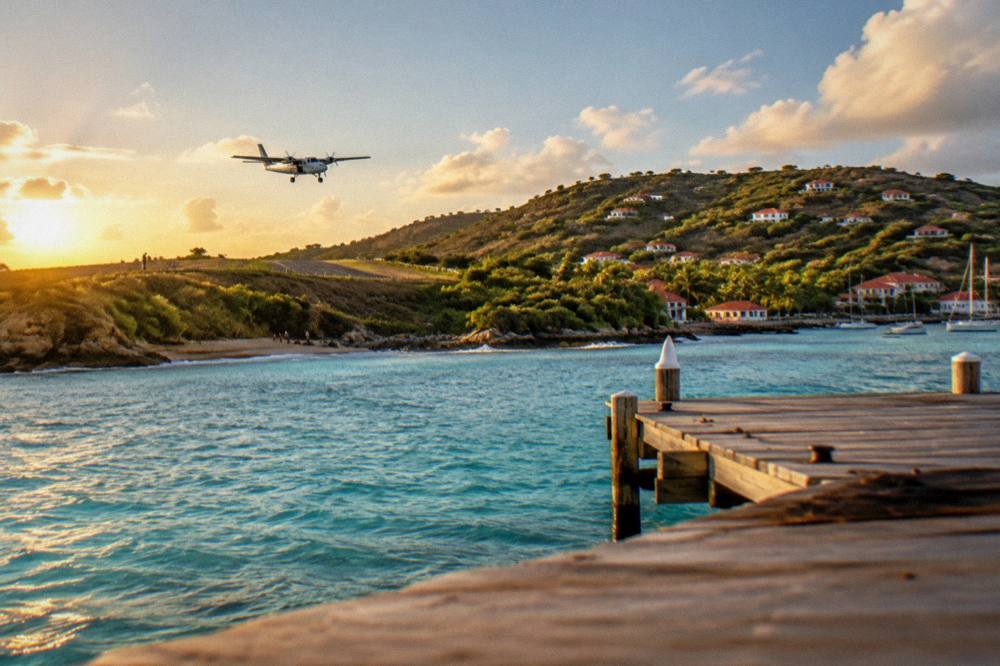
A typical day starts with a jet arrival at Princess Juliana Airport on Sint Maarten, a walk to the regional departures area, check-in with a small-plane operator, and a short STOL hop that lands at Gustaf III beside Saint-Jean beach. From the SBH terminal, taxis and rental cars sit steps away, Gustavia is a short drive over the col, and the island's beaches and harbour fill the rest of the day. Everything depends on the inbound jet landing early enough to beat the daylight limit at SBH.
The door-to-door shape of the trip is worth sketching in advance because so much of it is compact. The airport sits on the north shore of Saint-Jean, so a traveller landing mid-morning can be on a beach before noon, at a rented villa or hotel by early afternoon, and in Gustavia for the evening. The one day itinerary sequences a full first day, and the itineraries hub extends the same logic to longer stays.
On the return, the same compactness works in reverse but with a sharper edge. The last small-plane departures of the day leave while the sun is still well up in winter, and a missed departure means an overnight, so the standard pattern is a morning SBH departure with hours of margin at SXM before the jet home. Travellers who hate margin can book an afternoon jet and accept the risk, but the daylight rule at SBH makes the morning pattern the safe one.
For travellers whose St Barts visit is a day trip rather than a stay, the whole calculus changes: the boat products on this site leave from St Martin and Sint Maarten in the morning and return in the evening, which removes the flying day's edges entirely. The group sail and snorkel tour is the per-person option listed here, running 12 May to 31 August 2027 on its listing, while the private charters run year-round per group. For anyone weighing the two shapes of day, the comparison below sets out the real differences.
| Trip Shape | Departure Point | Time Structure | Best Suited To |
|---|---|---|---|
| Fly in, stay on island | SXM to SBH | Daylight-bounded flying day at each end | Multi-day stays, hotel and villa trips |
| Scheduled ferry day trip | Philipsburg or Marigot | Fixed sailing times, about 45 to 60 minutes each way | Day visitors who prefer water |
| Private charter day trip | St Martin / Sint Maarten ports | Set with the operator, 6 to 8 hour days | Groups, flexible itineraries |
| Overnight catamaran | St Martin / Sint Maarten ports | 2 days, 1 night | Travellers who want the crossing as part of the trip |
What Are The Common Questions About Flying Winair To St Barts?
Beyond the mechanics, a handful of practical questions come up again and again, and they deserve straight answers before the FAQ. The routing through SXM is the default for most North American itineraries, San Juan serves as the alternative for the US East Coast, and the ferry exists as both backup and preference. The answers below hold for every carrier on the route, not only Winair, because the airport's constraints, not the airline's, set the rules.
Common Questions About Winair To St Barts
Does Winair fly direct to St Barts from the US or Europe?
No. No jet lands at St Barts, because the runway at Gustaf III Airport is 646 m long, so every itinerary connects through a Caribbean gateway. The common gateways are Princess Juliana (SXM) on Sint Maarten, San Juan (SJU), Pointe-a-Pitre (PTP) in Guadeloupe and Antigua (ANU), followed by a small-plane hop or the ferry. A service marketed as direct to St Barts from outside the Caribbean does not exist.
How long is the Winair flight from St Maarten to St Barts?
The hop from St Maarten to St Barts is short, one of the briefest scheduled flights in the Caribbean. The two islands are close neighbours across a narrow channel. Schedules and timings for a specific date are shown on the operator's live listing.
Can Winair flights to St Barts be cancelled for weather?
Yes. Gustaf III operates in daylight and visual conditions only, with no runway lights, so low cloud over the approach, haze or strong weather can hold flights even when the islands themselves are fine. Holds usually resolve within the day. When the planes are grounded, the scheduled ferries from Philipsburg and Marigot are often still running and serve as the practical backup.
Is flying Winair to St Barts safe?
The route is flown daily by STOL-certified aircraft flown by pilots who hold a specific qualification for the approach over the Col de la Tourmente and the short runway. Operations are limited to daylight and visual conditions, which is itself a safety margin: aircraft do not fly the route in conditions that would be routine at a larger airport. Winair operates the DHC-6 Twin Otter, a type built for exactly this kind of field.
Do you need a passport for the St Maarten to St Barts flight?
Yes. St Barts is a French overseas collectivity and is outside the Schengen area, so a valid travel document is required for the crossing, exactly as it is for the ferry. Entry rules are set by French authorities, and requirements can differ by nationality, so check your own government's travel advice before the trip. EU citizens may use a national ID card.
What happens if you miss the last Winair flight of the day?
The airport closes about 15 minutes after sunset because there are no runway lights, so a missed last departure means an overnight on St Martin or Sint Maarten rather than a late flight. In winter the sunset limit arrives early, which is why the standard advice is to arrive at SXM by midday at the latest for a same-day connection, or to book a through-ticket that protects the transfer.
The small-plane hop is the classic way to arrive in St Barts, and it exists because the island chose to keep its runway at 646 m and its airport at village scale. Plan around daylight, pack soft, hold the ferry as a backup, and the logistics take care of themselves.