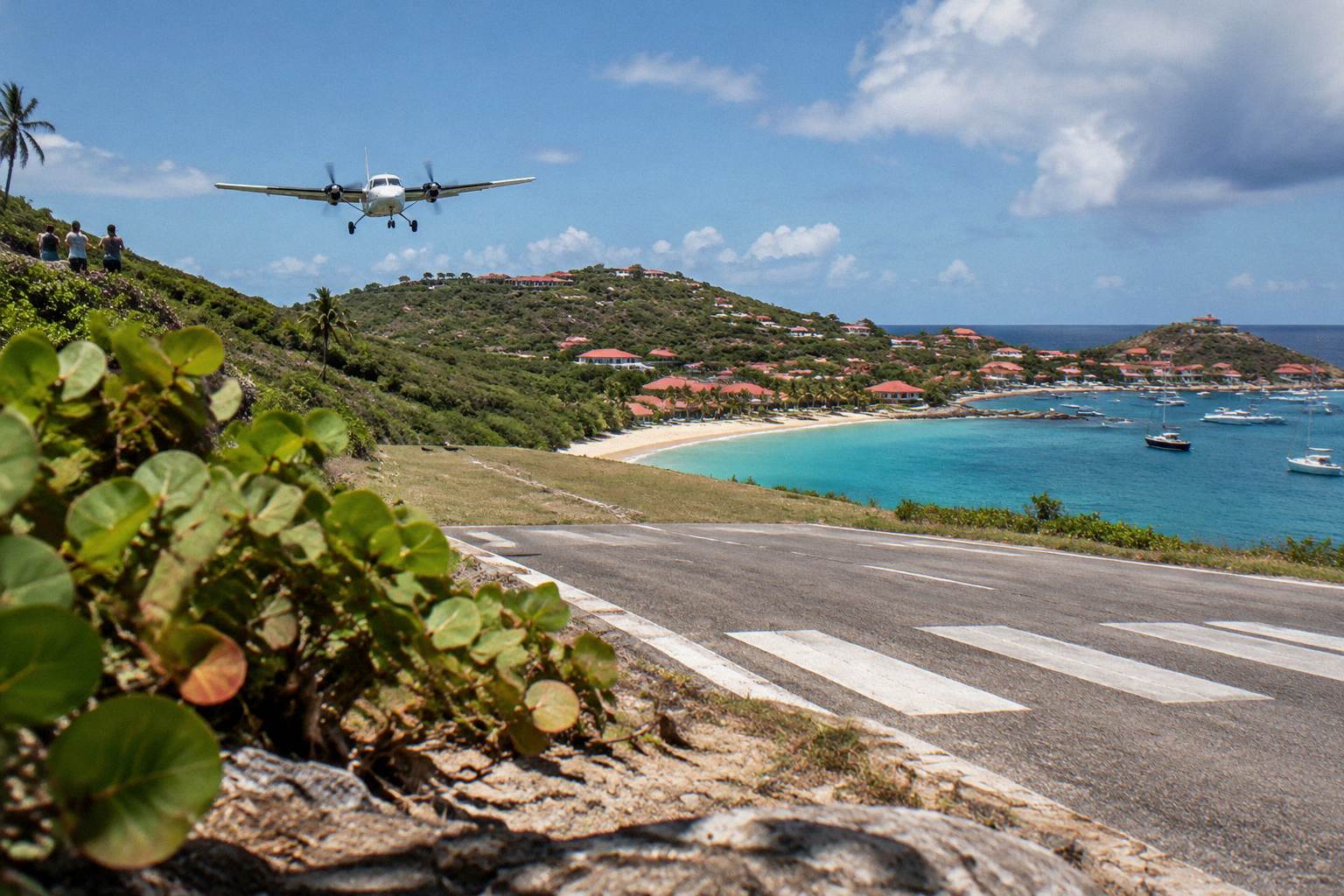
Flying To St Barts From The US
No jet lands on St Barthelemy. Here is how the routing through St Martin, San Juan, Guadeloupe or Antigua actually works, and what each step involves.
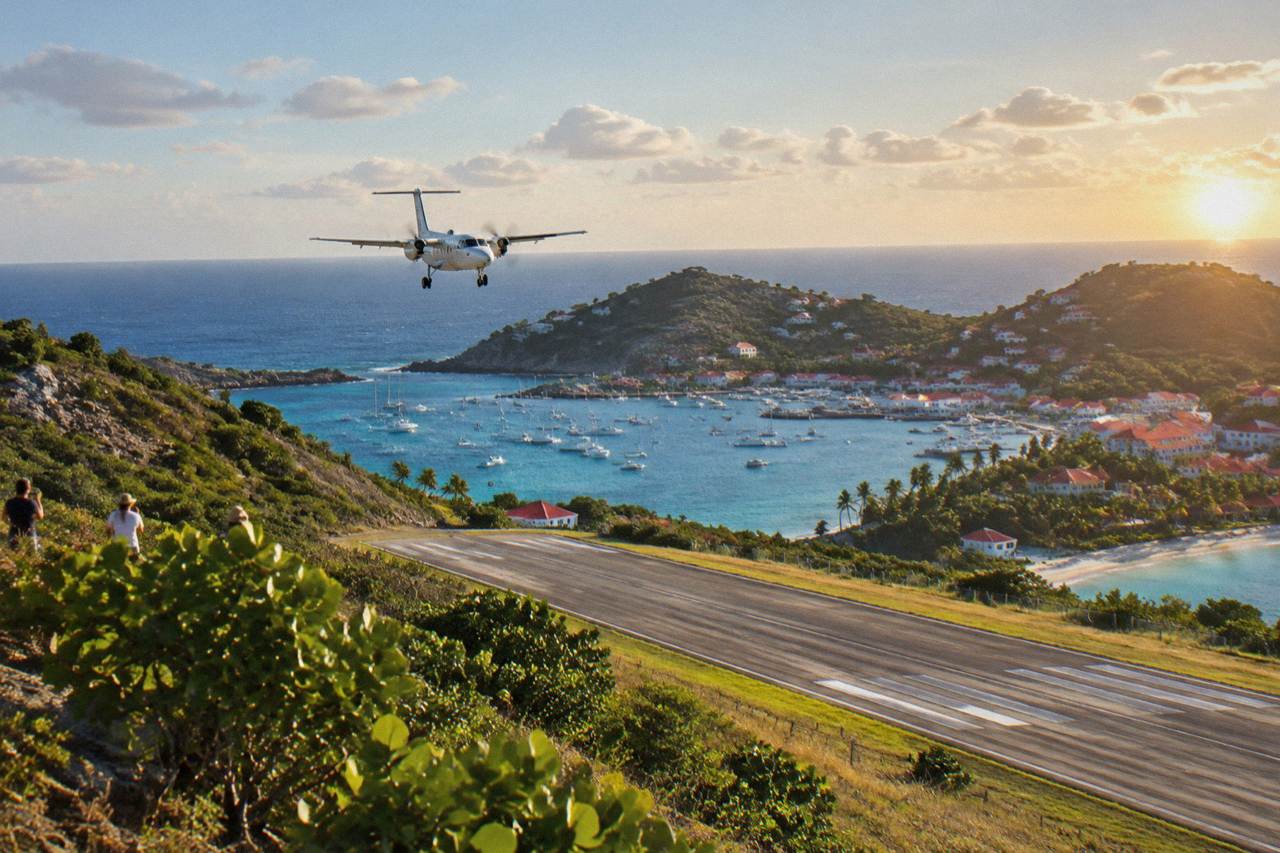
US travelers fly to a Caribbean gateway, usually St Martin (SXM) or San Juan (SJU), then reach St Barts on a small STOL turboprop or the ferry. No jet can land at Gustaf III Airport: its runway is 646 m and operations are daylight only.
St Barthelemy, usually written St Barts, is a small French island in the Caribbean with one of the shortest commercial runways in the region. That single fact shapes every itinerary from the United States: no widebody and no narrowbody jet can land there, so the journey always finishes on a small turboprop or a ferry. The good news is that the machinery for that last hop is mature and runs daily, and the approach into Gustavia is one of the best known in aviation. This guide walks through the gateways, the carriers, the entry rules and the timing, in the order a planner actually needs them.
What Does Flying To St Barts From The US Actually Involve?
Flying to St Barts from the US means two tickets in effect: a mainstream flight from a US hub to a Caribbean gateway, then a short onward leg to the island's Gustaf III Airport on a small STOL turboprop, or a ferry crossing from St Martin. The runway at St Barts is 646 m, jets cannot use it, and operations stop at dusk, so every itinerary has a daylight constraint built in.
The gateway decision is the whole game. St Martin (airport code SXM, on the Dutch side of that shared island) is the busiest feeder, with the most onward frequencies to St Barts. San Juan (SJU) in Puerto Rico works well from the US East Coast because it is a US territory airport, so the mainland-to-San Juan leg is a domestic arrival. Guadeloupe (PTP) and Antigua (ANU) are secondary gateways served into St Barts by Tradewind. The island's own airport page on this site, the St Barts airport guide, covers the terminal, the code and the famous approach in detail.
A practical rule: plan to be at the gateway by early afternoon at the latest. The small planes fly visual rules only, and the airport closes shortly after sunset. An evening gateway arrival means a night on St Martin, which many travelers enjoy anyway, and a morning hop across the following day.
Which Gateway Airports Work Best From US Cities?
St Martin (SXM) is the primary gateway for flying to St Barts, with the most onward seats and the ferry as a backup. San Juan (SJU) suits East Coast departures because the US-to-San Juan leg arrives domestically. Guadeloupe (PTP) and Antigua (ANU) work for specific routings, mainly from Europe or island-hopping itineraries. From the US, SXM and SJU carry the bulk of travelers.
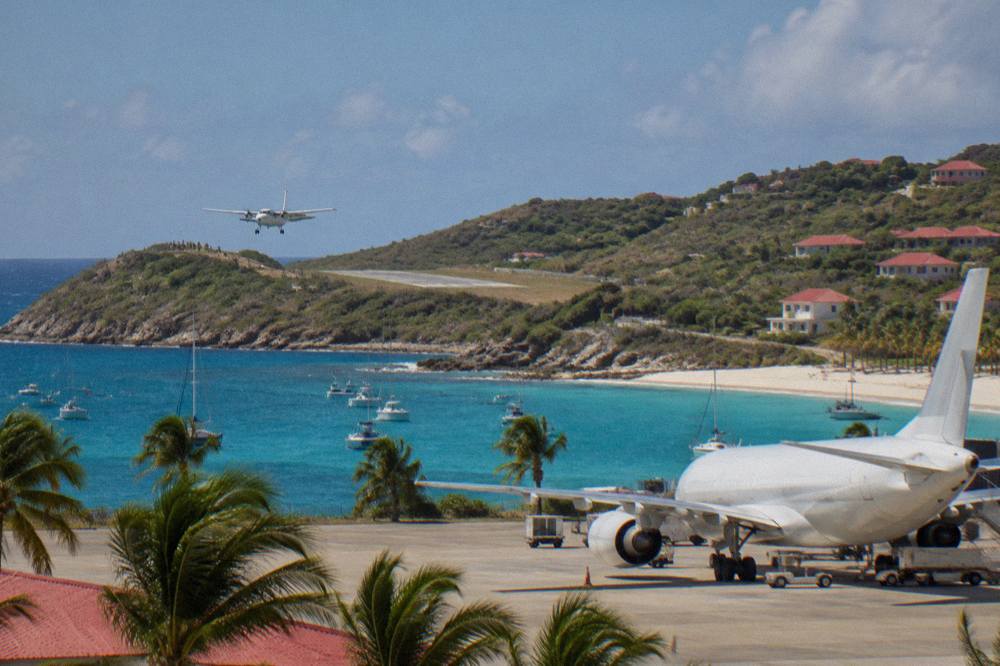
Which gateway wins depends on where in the US the trip starts. This site's answers pages on which US cities fly direct to St Barts gateways and how to get to St Barts from the US break the city-by-city detail down. In short: major US hubs fly nonstop to St Martin and to San Juan, and both gateways then offer a same-day connection to the island.
| Gateway | Code | Where It Is | Onward Carriers To St Barts | Onward Options |
|---|---|---|---|---|
| Princess Juliana | SXM | Sint Maarten (Dutch side) | St Barth Commuter, Winair, Tradewind connections | Small plane or two ferry operators |
| San Juan | SJU | Puerto Rico (US territory) | Tradewind | Small plane only |
| Pointe-a-Pitre | PTP | Guadeloupe | St Barth Commuter | Small plane only |
| Antigua | ANU | Antigua and Barbuda | Tradewind | Small plane only |
| Grand Case | SFG | St Martin (French side) | St Barth Commuter | Small plane only |
The choice also has a built-in safety net. If weather or a late inbound flight kills the last small-plane departure out of St Martin, the ferry from either side of that island is the fallback, which is why SXM is the gateway this site recommends for first-time visitors. San Juan has no ferry fallback, so a missed connection there means a hotel night.
What Airlines Fly The Final Hop Into St Barts?
Two specialist carriers dominate flying into St Barts: St Barth Commuter, which serves St Martin (SXM), Grand Case (SFG) and Pointe-a-Pitre (PTP), and Tradewind, which serves San Juan (SJU) and Antigua (ANU). Winair flies the SXM to SBH hop on Twin Otters. All of them fly small STOL turboprops because the 646 m runway, daylight-only operation and special pilot certification allow nothing larger.
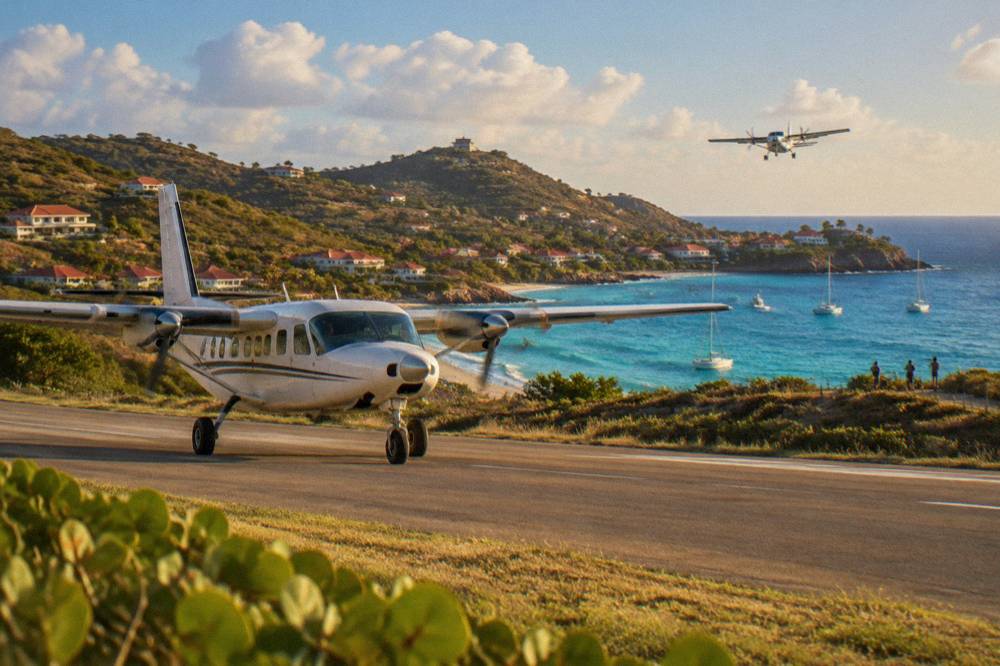
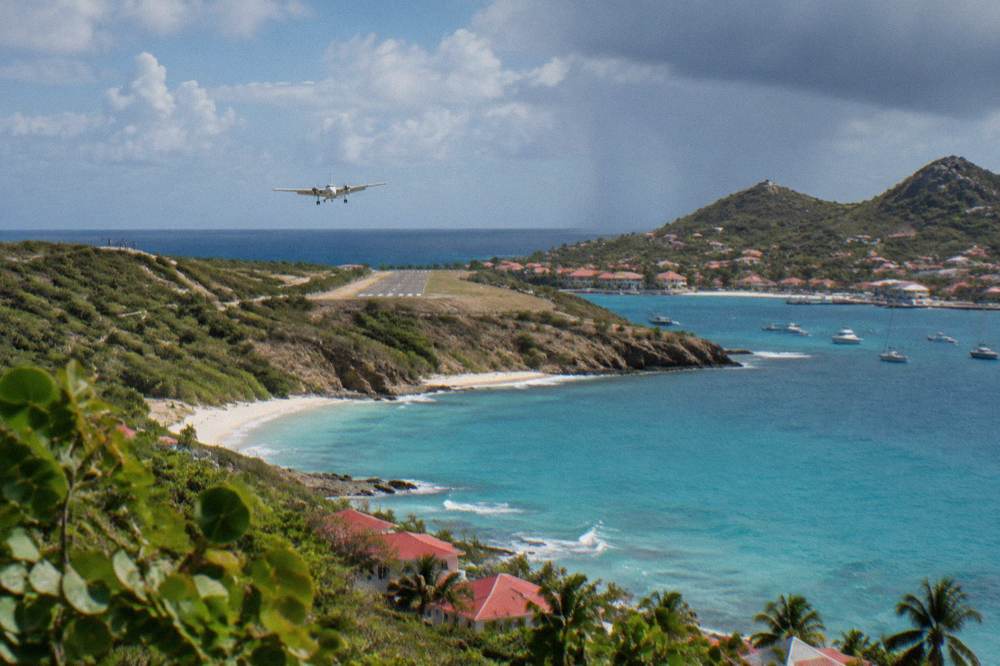
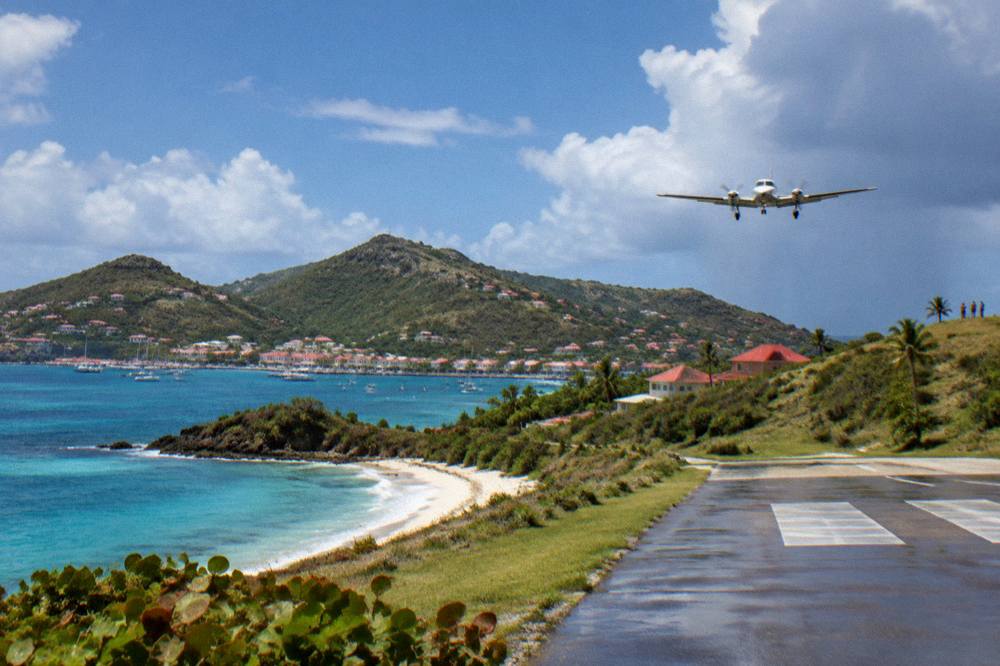
The aircraft themselves are part of the experience. St Barth Commuter flies Cessna 208B Grand Caravans, Tradewind flies Pilatus PC-12s, and Winair flies the classic de Havilland Twin Otter. The hop from St Martin is short, a few minutes in the air, with the famous descent over a low col and a slope at the top of the runway that has made the approach into SBH a fixture of aviation films. The landing at St Barts airport page describes what to expect from the right-hand window seat.
Booking advice is simple: reserve the inter-island leg as early as the long-haul, especially for December through April, because the small aircraft fill fast and seats are physically limited by aircraft size. Fares are on each operator's live listing. Baggage space is also tight by design on nine-to-ten-seat aircraft, so pack soft bags and check each operator's allowance when booking.
Can You Fly Direct To St Barts From The US?
No, there is no direct flight from any US city to St Barts, and there cannot be one with current aircraft. The runway at Gustaf III Airport is 646 m, only small STOL turboprops are certified to use it, and the airport operates in daylight and visual conditions only. Every US itinerary connects through a Caribbean gateway, most often St Martin or San Juan.
This is one of the most searched questions about the island, and the physics is unambiguous. A jet needs several times that runway length, and the terrain at the approach end adds a further constraint. The practical answer for a US traveler is to treat the trip as a two-leg booking and to build a buffer into the connection, because the second leg is weather-dependent in a way the first is not. This site's full answer page, can you fly direct to St Barts from the US, covers the same question from a search standpoint, and the St Barts airport code page explains the SBH and TFFJ identifiers.
What Is The St Martin Connection Like?
The St Martin connection is the classic routing: a mainstream flight into Princess Juliana (SXM), then a short hop to St Barts on a small turboprop, or the ferry if the flight schedule or the weather argues for it. St Barth Commuter and Winair both operate from SXM, the transfer between the terminals is short, and the whole connection is usually same-day.
SXM is a full international airport with US preclearance on departures toward the United States, which makes the return leg smooth. The inter-island operators have their own small departure areas, and check-in is nothing like a hub experience: arrive with time, weigh the bags, walk to the aircraft. The flights from St Maarten to St Barts page was not on this site's approved list, so the detailed sibling to read instead is Winair at St Barts and the general flights to St Barts guide.
One planning note matters more than any other: the last departures of the day leave well before sunset, because the St Barts airport has no runway lighting. A long-haul arrival into SXM in the late afternoon often means the hop cannot happen until the next morning. Building a St Martin night into the plan removes the stress entirely, and both sides of that island have enough to fill an evening. The full index of guides sits on St Barthelemy Travel.
Is The Ferry From St Martin An Alternative To Flying?
Yes, two ferry operators run scheduled crossings to Gustavia from St Martin: Great Bay Express from Philipsburg on the Dutch side, about 45 minutes, and Voyager from Marigot on the French side, about 50 to 60 minutes. The crossing can be rough, so travelers prone to seasickness should prepare, and schedules thin out in the low season.

The ferry is cheaper in most cases, more weather-flexible in one direction of risk (no fog of scheduling, but sea state matters), and lands passengers right in Gustavia harbor rather than at the airport on the hill above St Jean. The trade-off is comfort: the channel between the two islands is open water and the ride is often bouncy. The site's dedicated pages, St Barts ferry operators and schedule and SXM airport to the St Barts ferry, cover terminals, check-in windows and the planning detail; fares sit on the operators' live pages.
| Option | Departure Point | Arrival Point | Crossing | Operator Page |
|---|---|---|---|---|
| Great Bay Express | Bobby's Marina, Philipsburg | Gustavia harbor | About 45 minutes | greatbayexpress.com |
| Voyager | Marigot Ferry Terminal | Gustavia harbor | About 50 to 60 minutes | voy12.com |
| Inter-island flight | SXM or SFG airport | Gustaf III Airport (SBH) | A short hop | St Barth Commuter, Winair |
Check-in for the ferries closes before departure, passports are required, and sailings are subject to weather cancellation, so the same buffer logic applies. In hurricane season the sea state question is worth checking the day before rather than assuming.
What Entry Rules Apply To US Citizens?
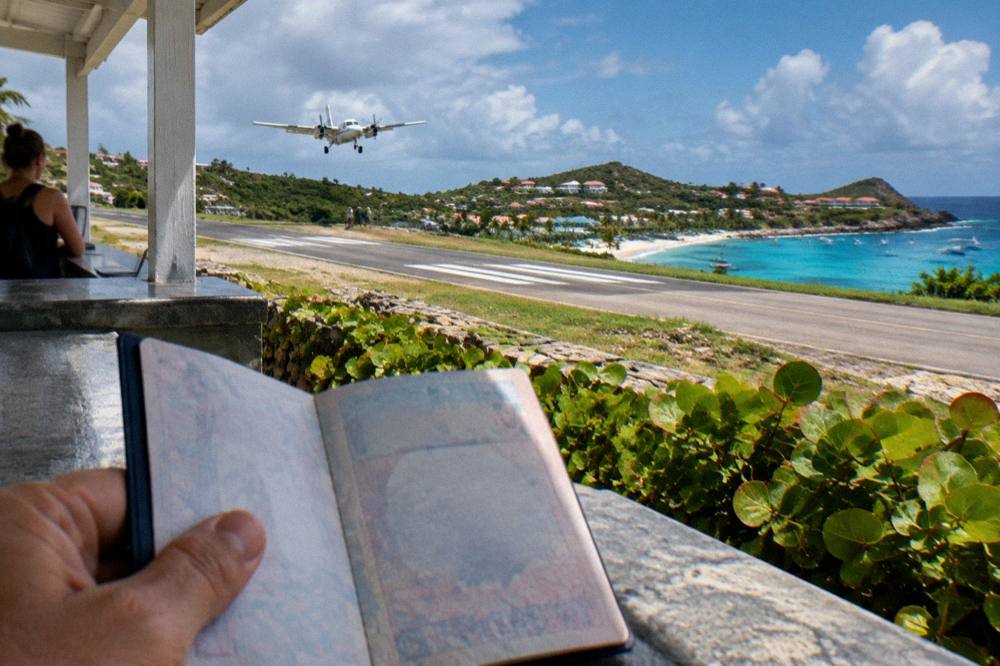
US citizens need a valid passport book, not a passport card, for entry to St Barts, and can stay visa-free for short tourist visits. St Barts is a French overseas collectivity outside the Schengen area, so the upcoming European systems do not govern entry. An onward or return ticket is required, and US citizens should confirm current passport validity guidance with their own government's travel advice before departure.
The island is French territory, but its entry regime is its own: an EU Schengen visa does not by itself authorize entry, and the European ETIAS system is not live and does not apply here. Details sit on the site's answer pages, do US citizens need a passport for St Barts and is St Barts a US territory, the latter a common confusion worth killing early: it is not US territory, and the euro is the local currency, though cards are widely taken, as the US dollars in St Barts page explains.
| Nationality | Document | Visa For Short Tourist Stay | Notes |
|---|---|---|---|
| United States | Passport book | Not required | Passport card not accepted for air travel |
| United Kingdom | Passport | Not required | Validity rules per UK travel advice |
| Canada | Passport | Not required | Confirm with Canadian travel advice |
| EU citizens | National ID card or passport | Not required | French overseas entry rules apply |
When Is The Best Season To Fly To St Barts?
The December-to-April window is the classic season for flying to St Barts: the Meteo-France normals for St Barthelemy show mean daily highs of 28.5 C in January against 31.7 C in September, with the wettest months from August to November and October the wettest of all at 135.6 mm. Hurricane season runs 1 June to 30 November, peaking mid-August to mid-October, which shapes both fares and hotel availability.
The trade-off is straightforward. Winter brings the driest, most temperate weather and the full calendar of events, along with peak demand for the small inter-island planes and the ferry seats. May and June sit in a quieter shoulder with the climate normals still warm, sea temperatures warm, and the island green. Late August through October is the deepest low season, when many hotels and restaurants close for their annual break and reopen between mid-October and early November. The site's best time to go to St Barts season guide is not on this article's approved link list, so for month-by-month depth use the things to do in St Barts hub and the island calendar pages it links.
| Month | Mean Daily High (C) | Mean Daily Low (C) | Rain (mm) |
|---|---|---|---|
| January | 28.5 | 23.5 | 52.6 |
| February | 28.6 | 23.3 | 38.4 |
| April | 29.8 | 24.2 | 50.9 |
| July | 31.2 | 26.0 | 80.4 |
| September | 31.7 | 26.2 | 96.9 |
| October | 31.4 | 25.8 | 135.6 |
Figures are Meteo-France climate normals, 1991-2020, for the St Barthelemy station. The island is warm all year and the sea stays warm, about 26 C in winter to about 29 C from August to October, so the season choice is really about rain odds, closures and crowds rather than temperature.
What Can You Do Once You Land In St Barts?
Once landed, St Barts delivers a compact island of public beaches, the harbor capital Gustavia, and boat days on protected water: all beaches are public, the marine reserve's regulatory-zones page lists 23 dive sites with a 5-knot limit inside its zones and a jet-ski ban, and green and hawksbill turtles are common in the bays. A car or a Mini Moke is the usual way to move between them, with rental counters at the airport.
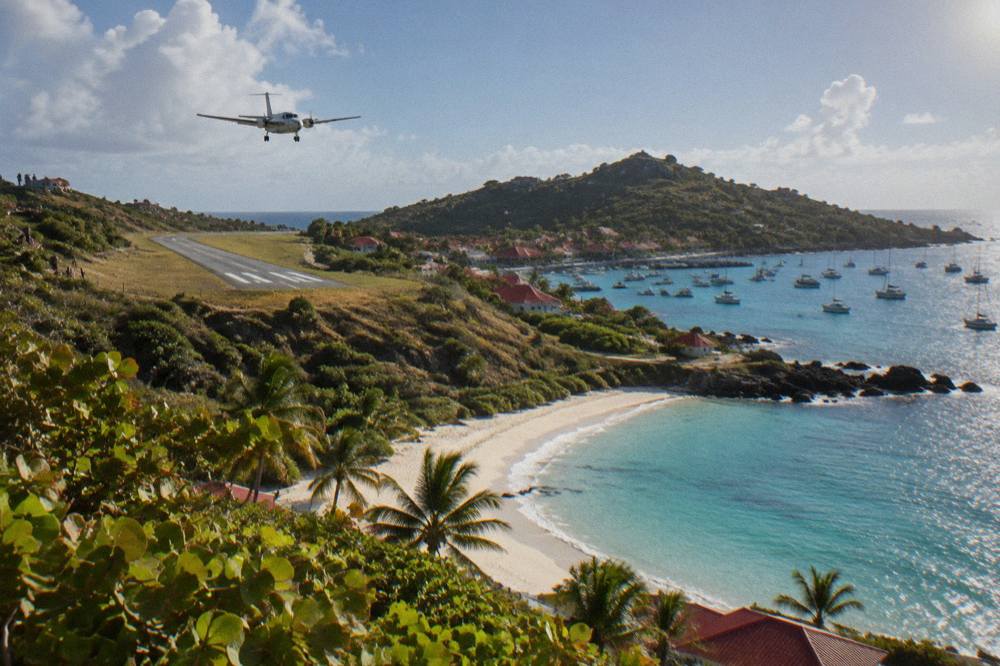
The airport sits effectively above St Jean, so the first beach is minutes from the runway. From there the loop is short: Gustavia for the harbor, the shops and the St Barts shopping scene, then the south-coast beaches, Gouverneur and Saline, then Colombier at the western end, reached on foot or by boat. The environment agency's rules shape the water side of the island: no touching turtles, no dogs on the beaches, and no jet skis anywhere in the reserve zones. For moving around, the St Barts car rental guide covers the counters at SBH, which include Avis, Budget and Hertz, plus local agencies and the Mini Moke options; no rate appears on this site.
For a first day with almost no planning effort, a boat day that departs from St Martin also works as an arrival-day plan in reverse: some travelers fly into St Martin, sleep there, and take a day on the water to St Barts before or after their island stay. The group sail listed here, the Gustavia, Colombier Beach and Ile Fourchue tour, is exactly that shape: it departs from St Martin or Sint Maarten, never from St Barts, and anchors at the two bays that best show the marine reserve. See the live listing if that fits the routing.
What Should The Full Itinerary Look Like?
A reliable US-to-St-Barts itinerary runs: day one, fly to St Martin or San Juan, with an overnight if the arrival is late; day two, the small-plane hop or ferry in the morning and a beach afternoon; days three onward, the island itself by rental car; and the return through the same gateway with a wide buffer, because the small-plane leg is daylight-only and weather-dependent. Build one slack day on each end.
The buffer is not pessimism, it is arithmetic. The inter-island aircraft fly only in daylight and visual conditions, so fog, haze or a storm cell ends the day's flying early, and the ferries cancel in heavy swells. Travelers who must be at work on a Monday should not plan a Sunday-evening arrival through a single tight connection. Two internal links carry the deeper planning: how to get to St Barts for the full routing picture, and the St Barts cruise port page for how the tender harbor works if a cruise-and-stay combination is on the table.
Common Questions About Flying To St Barts From The US
Can you fly direct to St Barts from the US?
No. No jet can land at Gustaf III Airport: the runway is 646 m, only small STOL turboprops are permitted, and operations are daylight and visual conditions only. Every US itinerary connects through a Caribbean gateway such as St Martin or San Juan.
What airport do you fly into for St Barts?
Travelers fly into a gateway, usually Princess Juliana (SXM) on St Maarten or San Juan (SJU), then take a small plane or the ferry to St Barts. The island's own airport is Gustaf III, also called Remy de Haenen, code SBH.
Which airlines fly into St Barts?
St Barth Commuter flies to the island from St Martin (SXM), Grand Case (SFG) and Pointe-a-Pitre (PTP). Tradewind flies from San Juan (SJU) and Antigua (ANU). Winair flies the SXM to SBH hop on Twin Otters.
Do US citizens need a passport for St Barts?
Yes, a valid passport book is required; a passport card is not accepted for air travel. A visa is not needed for short tourist stays. St Barts is outside the Schengen area, so ETIAS does not govern entry.
Is the ferry cheaper or easier than flying from St Martin?
Both work. Great Bay Express runs from Philipsburg in about 45 minutes and Voyager from Marigot in about 50 to 60 minutes, while the flight is a short hop. The ferry can be rough; the flight is daylight-only. Fares for each sit on the operators' live pages.
When should you book the inter-island flight?
As early as the long-haul flight, especially for December through April. The aircraft are small and seats are limited by aircraft size, so peak dates fill well ahead. Booking the island hop and the US flight together in one plan avoids a stranded connection.
The routing to St Barts from the United States is more steps than a normal beach trip, and every step is a known quantity: a gateway with daily US service, a small plane or a ferry that runs on a published rhythm, and an island that repays the effort the moment the wheels touch the short runway above St Jean. Plan the daylight constraint, buffer the connection, and the rest of the trip behaves like any Caribbean island, only smaller, Frencher and surrounded by warmer water.