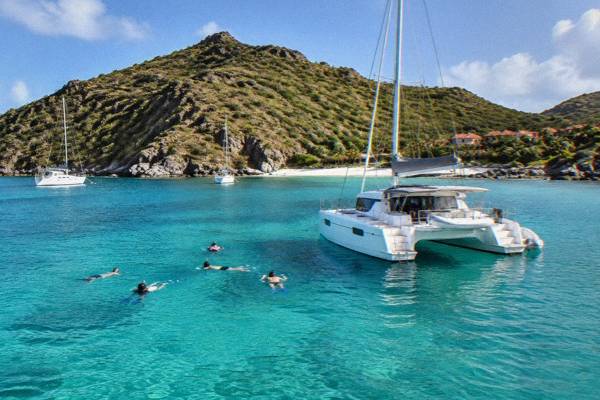
Colombier Beach St Barts: How To Reach The Island's Famed Northwest Cove
Colombier Beach sits in the northwest corner of St Barthelemy inside the marine nature reserve, reachable only by boat or on foot. Here is what to know about access, rules and ways to see it.
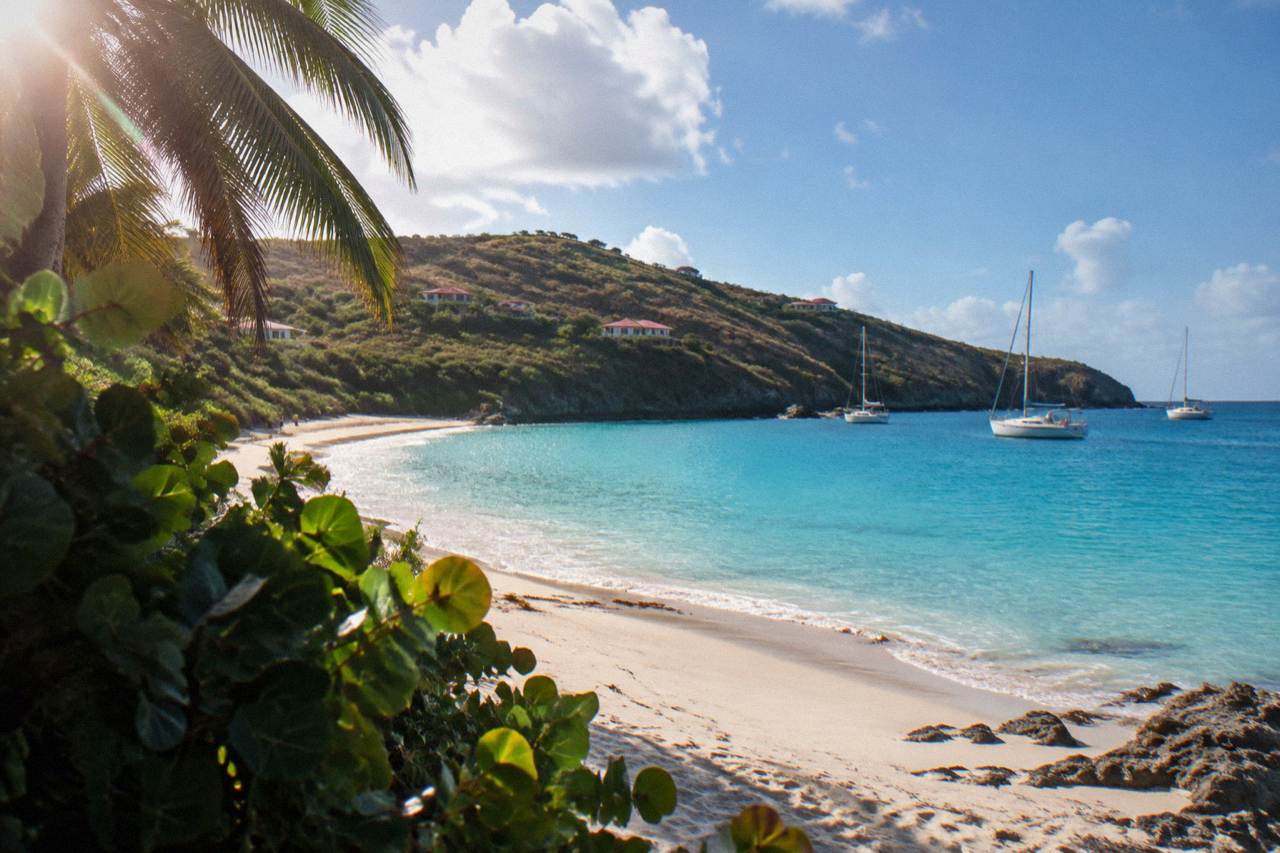
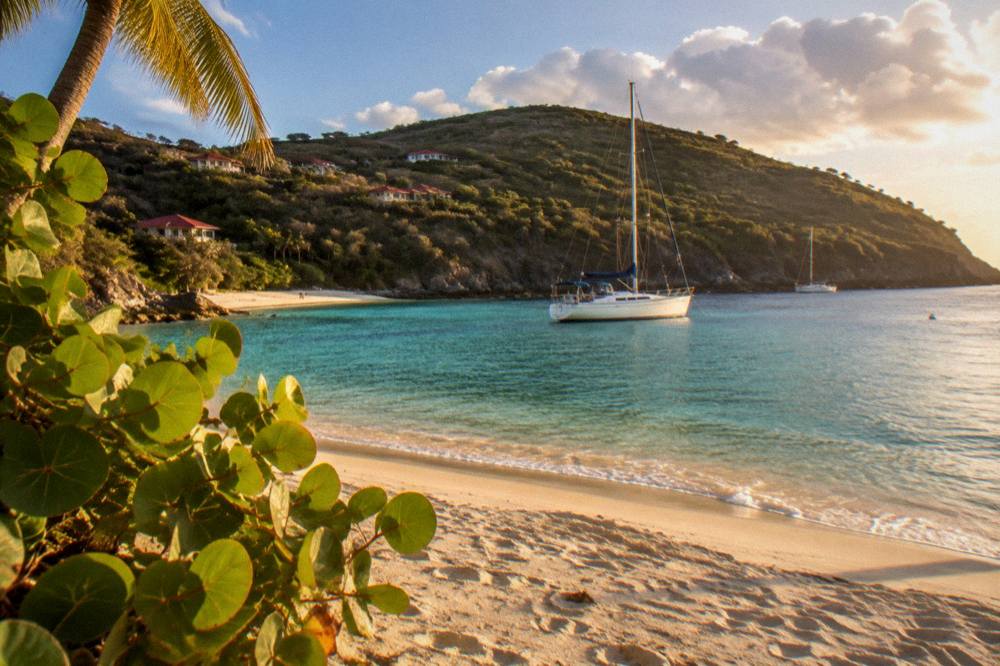
Colombier Beach is a public beach in a protected cove on the northwest coast of St Barts, inside the Saint-Barthelemy Marine Nature Reserve. There is no road access: visitors arrive by boat, including scheduled sailing day trips from St Martin, or by walking one of the island trails described in local hiking guides. The reserve bans jet skis and dogs and imposes a 5-knot speed limit on boats in its zones.
Colombier Beach, on the northwest coast of St Barthelemy, is the island's best known boat-access beach: a public cove inside the Saint-Barthelemy Marine Nature Reserve, with no road reaching it. The tourism committee lists Colombier among the island's public beaches, and the environment agency's regulatory-zones page places its bay inside the protected area, which shapes everything about how it is visited. This page sets out how the beach is reached, which rules apply on the water and the sand, and which sailing day trips from St Martin call there.
Where Is Colombier Beach On St Barts?
Colombier Beach sits in a cove on the northwest coast of St Barts, west of Flamands and north of the Pointe de Colombier headland, inside the marine nature reserve. The tourism committee's beach list names it Plage de Colombier and marks it as public, like every beach on the island. No road reaches the sand, which is why the cove is associated with arriving by boat or on foot.
The island is small, about 21 square kilometres, and Colombier occupies one of its quietest corners, away from Gustavia's harbour and the busier bays of Saint-Jean and Grand Cul-de-Sac. The cove opens to the northwest, and the environment agency's zone maps include both Colombier Bay and nearby Ile Fourchue within the reserve's regulated waters. That geography is the whole story of the beach: protected, roadless, and reached the way the reserve allows.
For context on the island's layout, the Colombier area guide covers the surrounding headlands and how the cove fits into the island's west coast, while the St Barts beach guide by best-for compares it with the other public beaches. The island as a whole is an overseas collectivity of France since 2007, with Gustavia as its harbour capital, the euro as currency, and French as the official language with English widely spoken. About 10,700 residents live on those 21 square kilometres, which is why distances between bays are short once a road exists. At Colombier, the defining fact is that no road does.
How Do You Get To Colombier Beach?
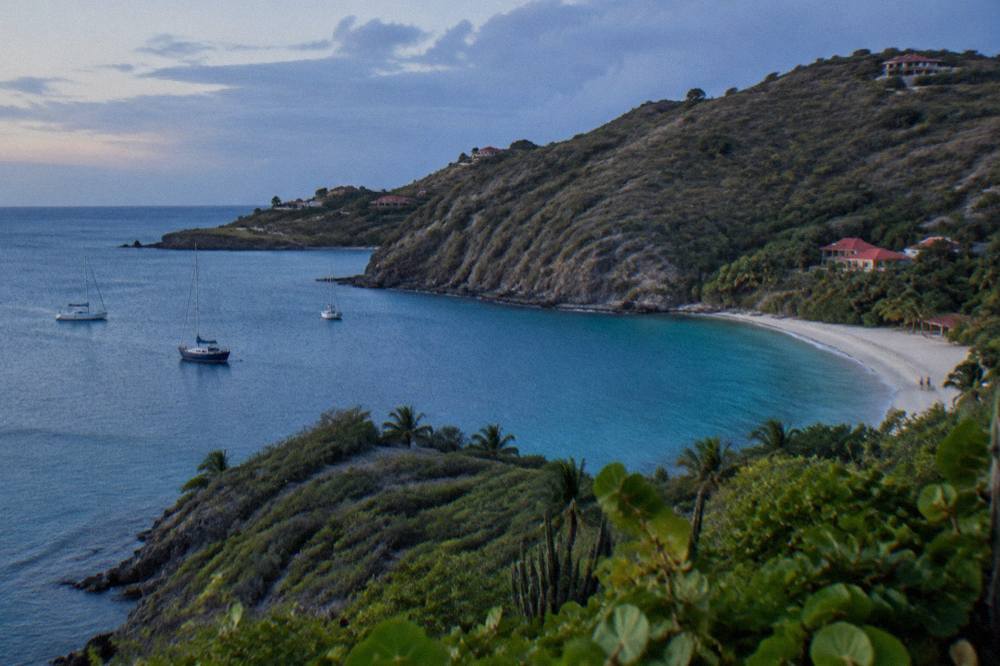
There is no road to Colombier Beach: visitors arrive by boat or on foot. The two practical routes are a walk over the headland trails described in the island's hiking guides, or a boat, which ranges from private and group sailing day trips from St Martin to vessels anchoring in the bay under the reserve's mooring rules. Every bookable tour listed here departs from St Martin or Sint Maarten, never from St Barts itself.
The walk is covered in detail on the Colombier hike page, which describes the trail network over the headland from the Flamands side; no walking time or trail length is given here. The trail country is dry, hilly and exposed in places, so water, sun protection and sturdy shoes are the sensible kit, and the island's hiking overview on the trails page describes the terrain in general terms. The alternative is the water. Because the bay lies inside the reserve, boats use the ecological mooring buoys the environment agency prefers, and the agency's regulatory-zones page sets the limits that follow.
For most travellers staying on St Martin or Sint Maarten, the simplest packaged way to stand on Colombier's sand is a sailing day trip that includes the bay on its route. The Boomerangs group sail from St Martin visits Gustavia, Colombier and Ile Fourchue in one day, and its details render from the live listing below.
The trio above shows the three sailing options that include St Barts anchorages on their routes: the per-person group sail, an overnight private catamaran, and a private Nikki Beach charter. Each departs from the St Martin or Sint Maarten side, and each is priced on its own live listing.
What Rules Apply In Colombier Bay?
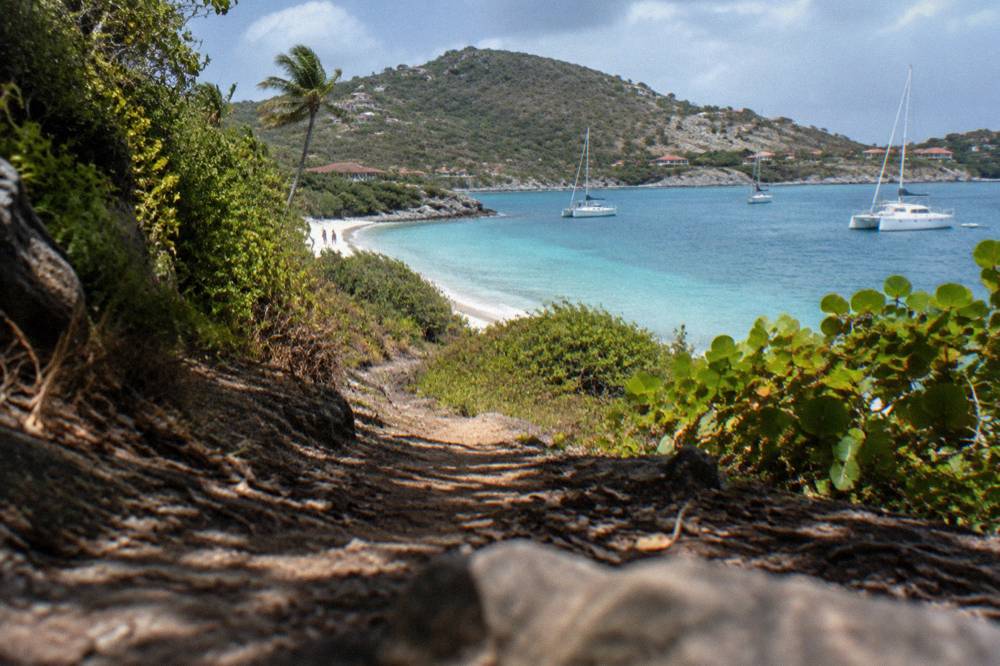
The environment agency's regulatory-zones page lists the rules for the marine reserve that contains Colombier Bay: a 5-knot speed limit in the protected zones, a ban on jet skis and other motorized water devices, no dogs on beaches or in the water in reserve areas, no touching or feeding of protected species including sea turtles, and no collecting coral, shells or sand. Vessels over 25 metres are excluded from the bay, and ecological mooring buoys are preferred over anchoring.
These are not etiquette suggestions. The dog ban is island-wide under a standing municipal order, enforced on every beach even on a leash, and the reserve rules carry fines. For sailors and charter guests the practical items are the speed limit, the buoy preference, and the list of prohibited gear: jet skis, seabobs, electric surfboards and towed sports are all named. Drones are prohibited in or near the reserve without authorization, which matters for anyone filming a boat day. The full set of rules and the zone maps are published by the Agence Territoriale de l'Environnement.
The reserve covers five zones in total, and Colombier's inclusion is what gives the bay its character. Enhanced protection zones carry additional bans on fishing, anchoring and scuba in some areas, so a charter captain's choice of where to stop inside the bay is not free-form: it follows the zone map. For guests, that means the trip is shaped by the same rules that protect what is under the water. Nothing needs to be negotiated on the day; the skipper holds to the zones, and the swimmers hold to the no-contact rules.
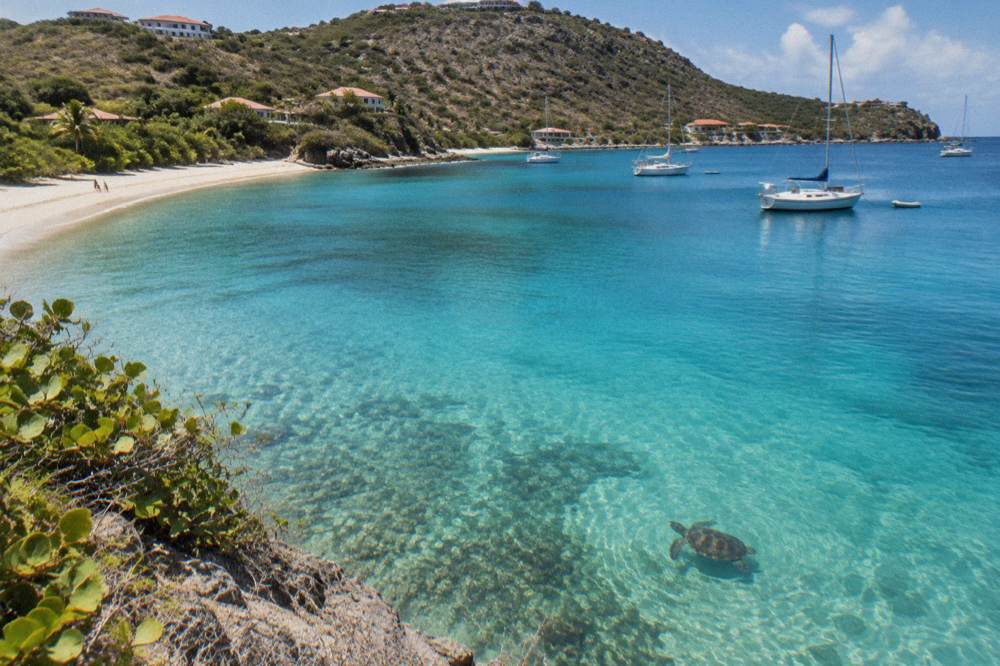
The reserve's turtle protections deserve a line of their own. Green and hawksbill turtles are present in the island's waters, and the agency asks that nests and sightings be reported to its on-island number, that light and noise be reduced near nesting areas, and that turtles never be touched or chased. Snorkellers in Colombier Bay are asked to look and leave: no gloves in the water, nothing collected, nothing disturbed.
Can You Snorkel At Colombier Beach?
Snorkelling at Colombier is permitted and the bay is inside the marine reserve, so the reserve's conduct rules are the ones that govern it: no touching turtles, corals, urchins or starfish, no gloves, and no collecting anything from the water or the sand. The environment agency's pages name sea turtles among the protected species commonly present in the island's bays and set the no-contact rule in plain terms.
What is left unsaid is equally important. No per-beach claim exists about visibility, current strength, or what a snorkeller will see on a given day. What can be said is structural: the bay is a protected anchorage inside the reserve, the boats that visit it hold to the 5-knot limit in its zones, and the sailing trips that call there include snorkel stops as part of their itineraries, with gear arrangements shown on each live listing.
A useful frame for expectations is the reserve's own logic. The zones exist because the bay holds living reef and protected species, and the agency's turtle pages note that green and hawksbill turtles are common around the island, including in its sheltered bays. Sightings are never promised by any rule or any listing, and this page does not promise them either. What the rules do tell a visitor is that whatever is in the water stays in the water, and that the experience of swimming in a protected bay is the product itself.
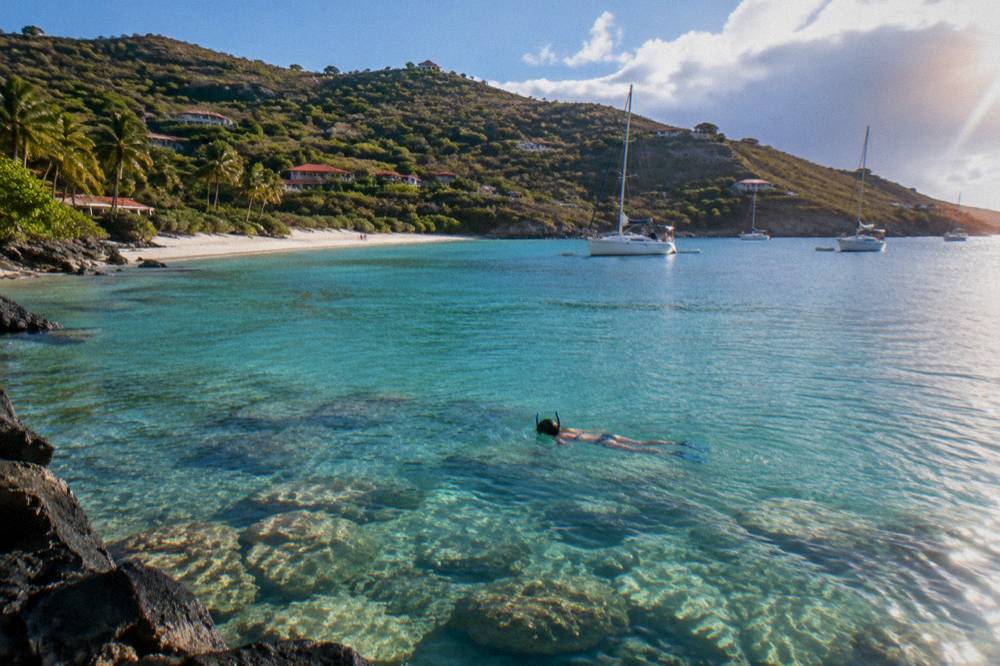
For comparison with shore-access snorkelling elsewhere on the island, the best-snorkeling-beaches-by-coast coverage sits in the wider things to do in St Barts overview, and the protected-species rules above apply island-wide, not only at Colombier.
Which Boat Trips Visit Colombier From St Martin?
Every bookable boat trip listed here departs from St Martin or Sint Maarten, from the departure points of Simpson Bay, Cole Bay, Anse Marcel and Grand Case, and several include St Barts bays on their routes. The Boomerangs group sail names Gustavia, Colombier Beach and Ile Fourchue in its itinerary. The private charters and the overnight catamaran sail to St Barts with itineraries shown on their own listings.
The practical distinction is per-person versus per-group. The group sail is the one product priced per person, and its listing shows it operating only from 12 May to 31 August 2027, a seasonal window worth checking before planning around it. The other five products listed here are private charters priced per group, where a party books the whole boat. None of them departs from St Barts, so a traveller already staying on the island would look to local arrangements rather than this trip list.
| Trip | Type | Departs From | Itinerary Includes Colombier |
|---|---|---|---|
| Boomerangs group sail | Per-person day sail | St Martin / Sint Maarten | Yes, named in itinerary |
| 8-hour private charter | Private, per group | St Martin / Sint Maarten | St Barts route, on listing |
| Private charter from St Martin | Private, per group | St Martin | St Barts route, on listing |
| Nikki Beach charter | Private, per group | Sint Maarten | Nikki Beach stop, on listing |
| 2-day 1-night catamaran | Private, per group | St Martin | Overnight at St Barts, on listing |
| 7.5-hour private sailboat | Private, per group | St Maarten | St Barts route, on listing |
The Boomerangs sail is the natural fit for this page: it is the product whose published route names Colombier itself, alongside the Gustavia harbour stop and the Ile Fourchue anchorage, both of which sit in the same reserve-protected corner of the island. Its dates, price and rating render from the token below, not from prose. For a party weighing private options against the group product, the deciding factors are usually schedule control and budget shape: the group sail sells seats on fixed dates, while the charters price the whole vessel and set the route with the skipper.
How Does Colombier Compare With Other St Barts Beaches?
Colombier is the island's roadless reserve cove; the other named public beaches are road-linked bays distributed around the coast. The tourism committee's list names Saint-Jean, Gouverneur, Saline, Shell Beach, Flamands, Grand Cul-de-Sac, Lorient, Toiny, Marigot and Corossol alongside Colombier, all public. What distinguishes each on the map is position and access, and for Colombier the distinguishing fact is the combination of reserve status and no road.
The comparison that matters for planning is effort against access. A beach-hopping day by car or taxi reaches the road-linked bays; Colombier asks for either a walk over the headland or a boat. The St Barts beach hopping itinerary builds a day around that trade-off, and the individual beach pages carry each bay's map position: Gouverneur and Saline on the south coast, Flamands and Saint-Jean on the north, Lorient and Grand Cul-de-Sac on the east, Shell Beach beside Gustavia.
To drive between the bays and reach the trailhead, book a rental car.
| Beach | Coast | Road Access | Notable Constraint |
|---|---|---|---|
| Colombier | Northwest | No | Inside marine reserve |
| Gouverneur | South | Yes | Public beach |
| Saline | South | Yes | Public beach |
| Shell Beach | Near Gustavia | Yes | Public beach |
| Flamands | North | Yes | Public beach |
| Saint-Jean | North | Yes | Public beach, by the airport |
| Grand Cul-de-Sac | East | Yes | Public beach, reserve lagoon rules |
No per-beach claim about sand, waves, calm water or family suitability is printed anywhere in this table. What the file does support is access and position, which is what a planner needs first.
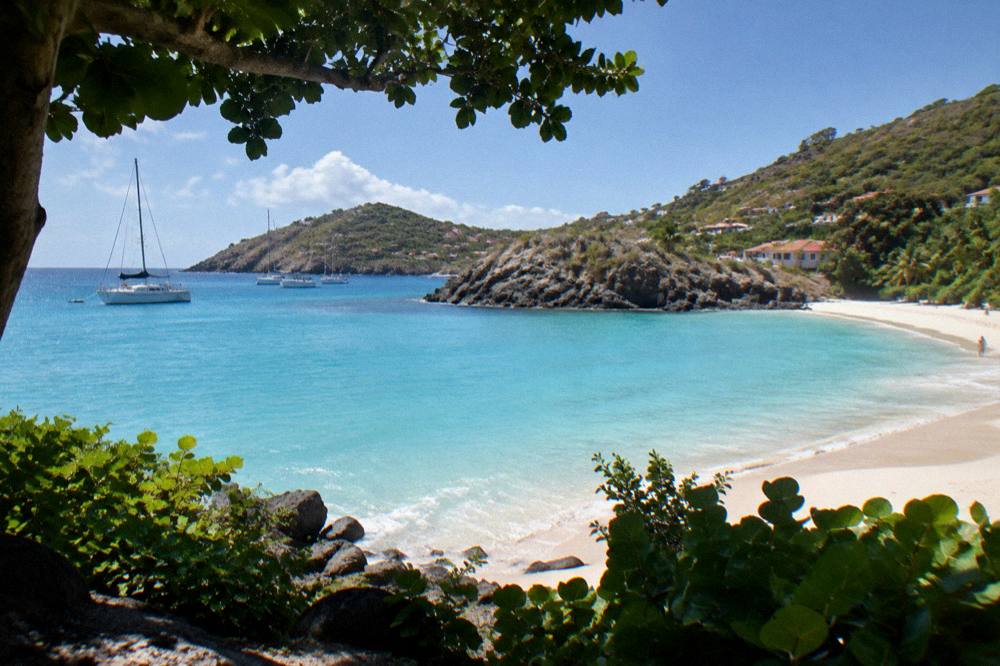
Readers weighing the whole island can compare candidates in the answers to what is the most beautiful beach in St Barts and what is the nicest beach in St Barts, which take the question island-wide.
When Is The Best Time Of Year To Visit Colombier Beach?
The climate is warm year round: Meteo-France normals for 1991 to 2020 show mean daily highs from 28.5 C in January to 31.7 C in September, with 891.3 mm of rain across the year and October the wettest month at 135.6 mm. Hurricane season runs 1 June to 30 November with its peak from mid-August to mid-October. No month can be promised dry or storm-free, and no prediction of crowds or conditions is made here.
Two seasonal facts bear directly on a Colombier plan. First, the one per-person group sail that names Colombier in its route operates only from 12 May to 31 August 2027 on its listing, a window that sits partly inside hurricane season. Second, the island's hotels and restaurants follow an autumn closure pattern, reopening in waves between mid-October and early November, which affects shore-based planning more than the beach itself. The sea stays warm all year, about 26 C in winter to about 29 C from August to October.
| Month | Mean Daily High (C) | Rain (mm) |
|---|---|---|
| January | 28.5 | 52.6 |
| February | 28.6 | 38.4 |
| March | 29.0 | 41.4 |
| April | 29.8 | 50.9 |
| May | 30.7 | 61.7 |
| June | 31.2 | 56.0 |
| July | 31.2 | 80.4 |
| August | 31.6 | 79.6 |
| September | 31.7 | 96.9 |
| October | 31.4 | 135.6 |
| November | 29.9 | 118.6 |
| December | 28.9 | 79.2 |
A note on how to read the table: these are station normals, averages across three decades, not a forecast for any given week. February's 38.4 mm average does not mean a dry February, and October's 135.6 mm does not mean a washed-out one. What the normals do establish is that the island is warm in every month, that rain falls year round in varying amounts, and that the late-year months carry the higher averages.
Can You Stay Near Colombier Beach?
There is no accommodation on Colombier itself; the beach sits inside the protected area with no road access. Stays cluster in the island's other areas, with Gustavia, Saint-Jean, Flamands and Grand Cul-de-Sac among the named resort and hotel locations. Villas are available year round, unlike many hotels, which follow the autumn closure pattern and reopen between mid-October and early November.
The nearest named area to Colombier on the file is the Colombier headland country covered in the area guide, but the practical lodging bases for a beach-and-boat trip are the bays with road access. The St Barts beach hotels guide covers properties by bay, and the beach club scene, where it exists, is covered in the St Barts beach clubs guide and the answer to what is the best beach club in St Barts. No rate, star rating or amenity is printed for any property.
For a boat-first plan the lodging question partly dissolves. A traveller booked on a day sail from St Martin sleeps on St Martin and reaches Colombier by sea, so the closure calendar that matters is the St Martin one plus the sail's own operating window. An overnight private catamaran makes the boat the lodging, with the crossing to St Barts and a night at anchor built into the product. Both approaches bypass the autumn hotel closures on St Barts entirely, which is worth knowing for a shoulder-season trip.
What Should You Know Before You Go?
Bring what you carry: the file verifies no facilities, no vendor, no toilet and no parking claim for Colombier, and the beach's roadless position means anything needed on the sand travels by foot or by boat. Dogs are prohibited on every beach on the island. Reserve rules ban collecting shells, sand and coral, so the cove leaves with nobody. A hat, water and reef-safe sense are the standard kit for a reserve beach in the tropics.
The final set of decisions is usually about the boat. A day trip from St Martin packs Gustavia, Colombier and Ile Fourchue into one route; a private charter sets its own schedule; the overnight catamaran turns the crossing into the trip itself. The trio below renders the three options this page covers, each with its live listing behind it.
Common Questions About Colombier Beach St Barts
Is Colombier Beach public?
Yes. The tourism committee lists Colombier among the island's public beaches, and all beaches on St Barts are public.
Can you drive to Colombier Beach?
No. No road reaches the beach. Access is by boat or on foot via the trails over the headland, described on the Colombier hike page.
Are dogs allowed on Colombier Beach?
No. Dogs are prohibited on all beaches on St Barts, even on a leash, under a standing municipal order, and the reserve rules reinforce the ban in its zones.
Can you anchor a boat in Colombier Bay?
The reserve prefers ecological mooring buoys over anchoring, and vessels over 25 metres are barred from the bay. The environment agency's regulatory-zones page sets the full rules.
Are jet skis allowed at Colombier?
No. The marine reserve bans jet skis, seabobs, electric surfboards and towed sports in its zones.
Do tours to Colombier leave from St Barts?
The bookable tours listed here depart from St Martin or Sint Maarten and visit St Barts by sea, including Colombier on the group sail's route. None departs from the island itself.
Colombier rewards the small effort of arrival: a public cove, a protected bay, and a set of rules that keeps it that way. Plan the walk or the boat, respect the reserve, and the rest of the island's beaches sit within a short drive of wherever you base yourself. For the wider picture, St Barthelemy Travel covers every bay, area and crossing on the island.