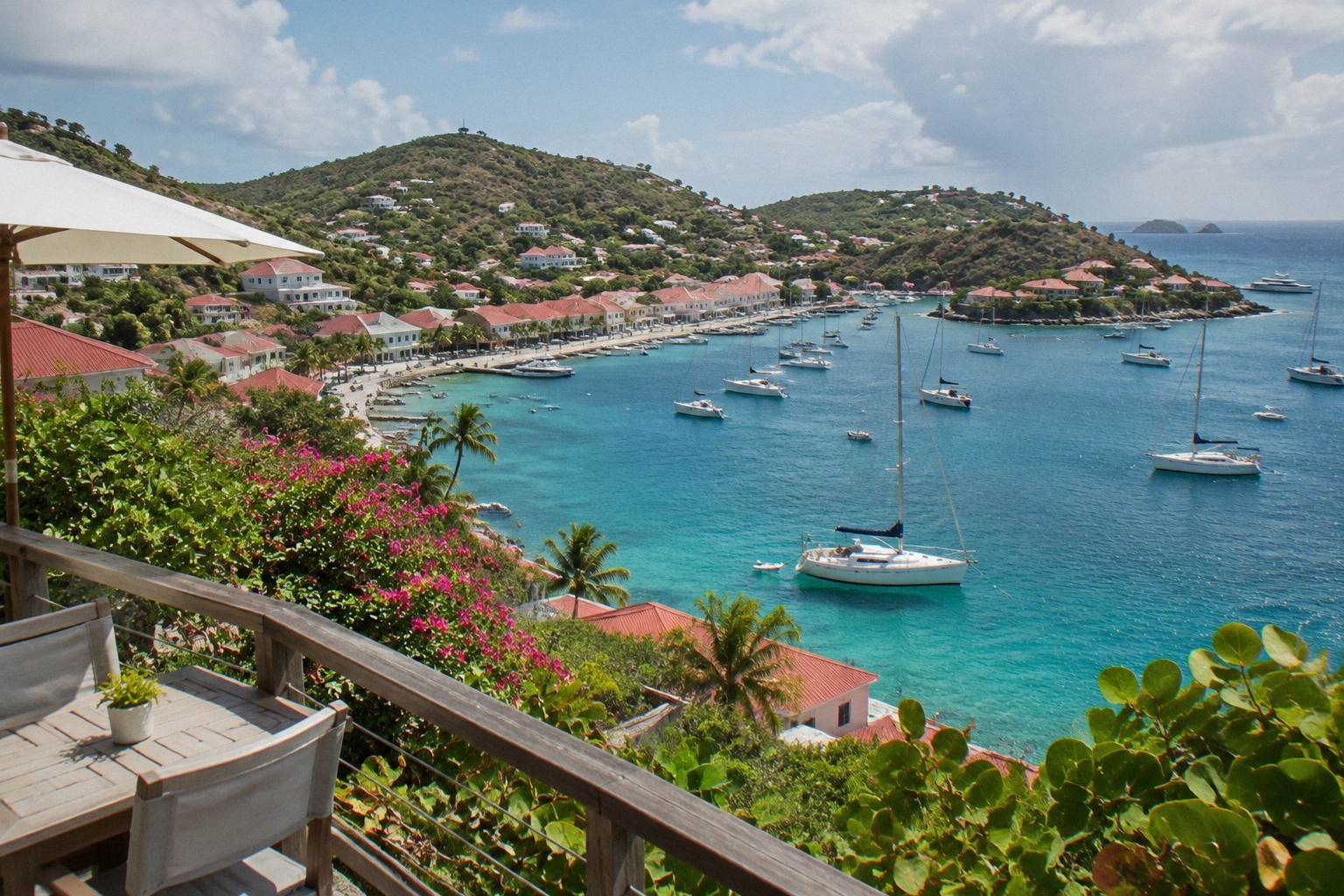
Grand Cul-De-Sac Beach And Lagoon
Grand Cul-de-Sac is the long public beach and shallow lagoon on the northeast coast of St Barts, a French Caribbean island, and one of the few bays on the island where the water sits inside a reef-protected lagoon that sea turtles use year round.
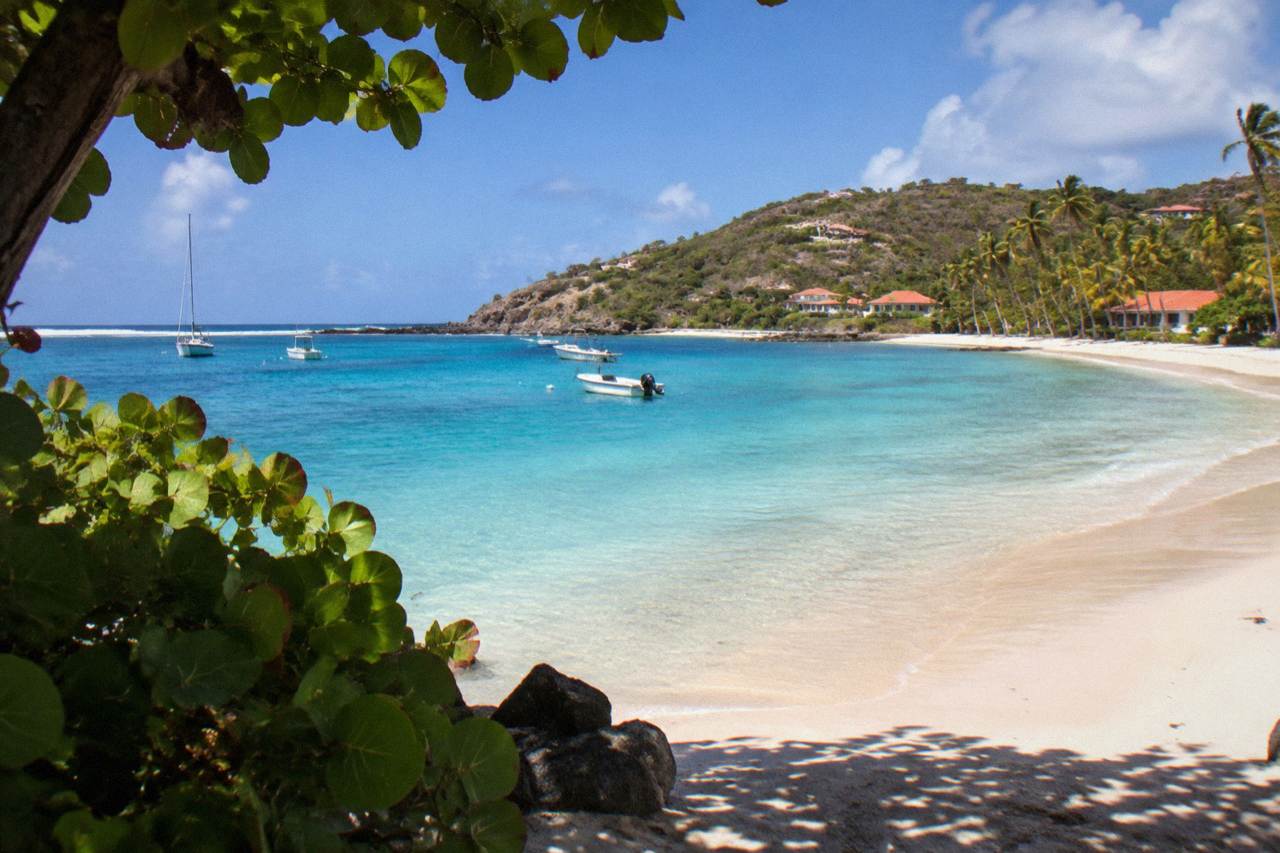
Grand Cul-de-Sac is a public beach and shallow lagoon on the northeast coast of St Barts, about a short drive from Gustavia, backed by two hotels and water-sports operators, with green and hawksbill turtles regularly seen in the lagoon according to the territorial environment agency.
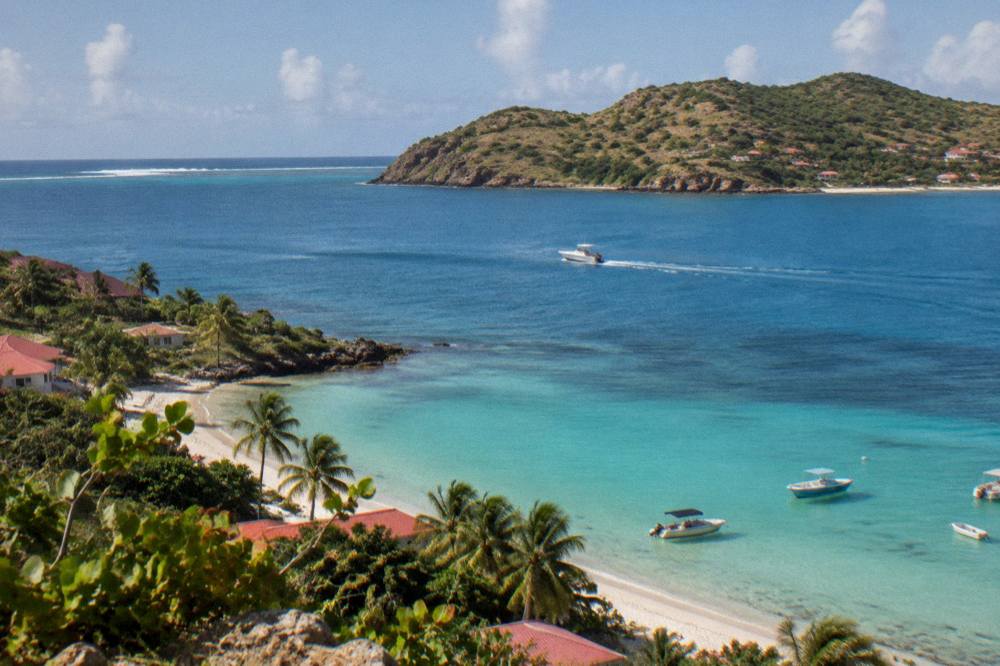
Grand Cul-de-Sac is the long, curving public beach and shallow lagoon on the northeast coast of St Barts, the small French Caribbean island of St Barthelemy, about 21 square kilometres of hills and turquoise water with roughly 10,700 residents. The bay opens north, the beach is public like every beach on the island, and behind the sand the shoreline flattens into a lagoon where the territorial environment agency reports green and hawksbill turtles are commonly seen. The bay also holds two of the island's resort hotels, Le Barthelemy and Le Guanahani, which becomes Airelles Le Guanahani on 1 November 2026, and a cluster of water-sports operators that base themselves on the sand. This page covers where the beach sits, how to reach it, the marine reserve rules that govern the lagoon, and how it compares with the island's other public beaches.
Where Is Grand Cul-De-Sac Beach In St Barts?
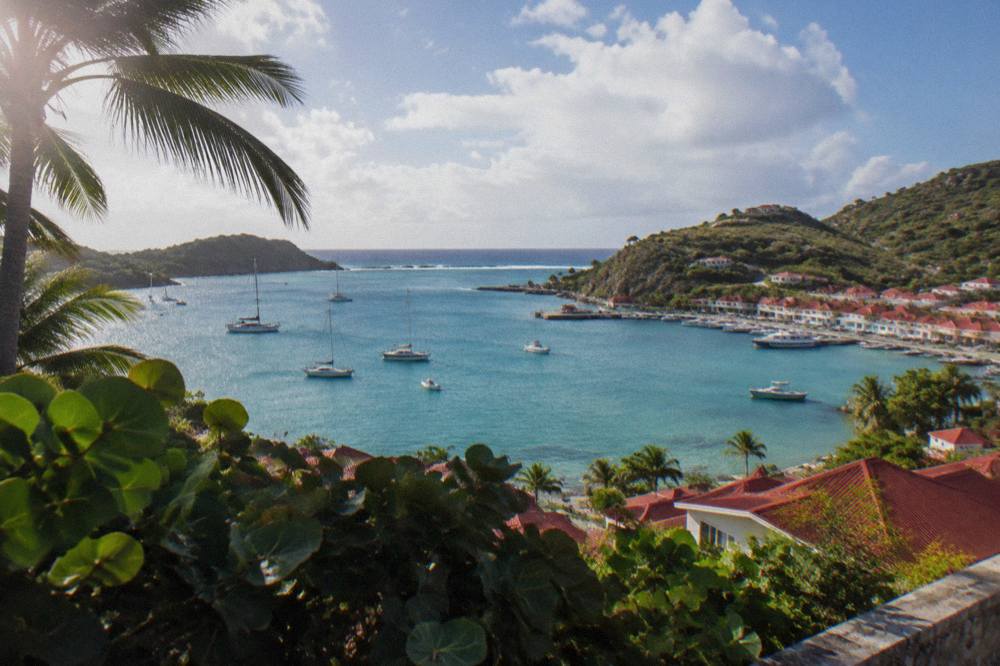
Grand Cul-de-Sac sits on the northeast coast of St Barts, opening onto a shallow lagoon between Pointe Milou to the west and the Toiny headland to the east, a short drive from Gustavia along the island's coastal road. The beach is public, like every beach on the island, and the bay is one of the named stops on the tourism committee's beach list. Neighbouring Petit Cul-de-Sac sits just inside the same headland.
The bay is a deep indentation in the coast, which is what the French name describes: a "cul-de-sac" is a dead end, and the road wraps around the head of the bay before climbing back toward Pointe Milou and Toiny. The beach runs along the head of that indentation, with the lagoon spreading out in front of it. On the island's map the bay faces north, toward the channel between St Barts and Saint-Martin.
Two named areas sit beside it. Petit Cul-de-Sac, covered in the Petit Cul-de-Sac guide, occupies the smaller cove to the east of the headland, and the wider neighbourhood around the bay is covered in the Grand Cul-de-Sac area guide. Pointe Milou, a residential headland with hotel and villa accommodation, rises to the west and is covered separately in the Pointe Milou area pages.
| Place | Position relative to Grand Cul-de-Sac | Notes from the map |
|---|---|---|
| Petit Cul-de-Sac | East of the headland | Smaller adjacent cove, public |
| Pointe Milou | West, uphill | Residential headland with hotels and villas |
| Toiny coast | Southeast | Headland and beach, public |
| Lorient | West along the coast | Village and public beach |
| Gustavia | Southwest across the island | Capital and harbour town |
What Makes The Grand Cul-De-Sac Lagoon Different In St Barts?
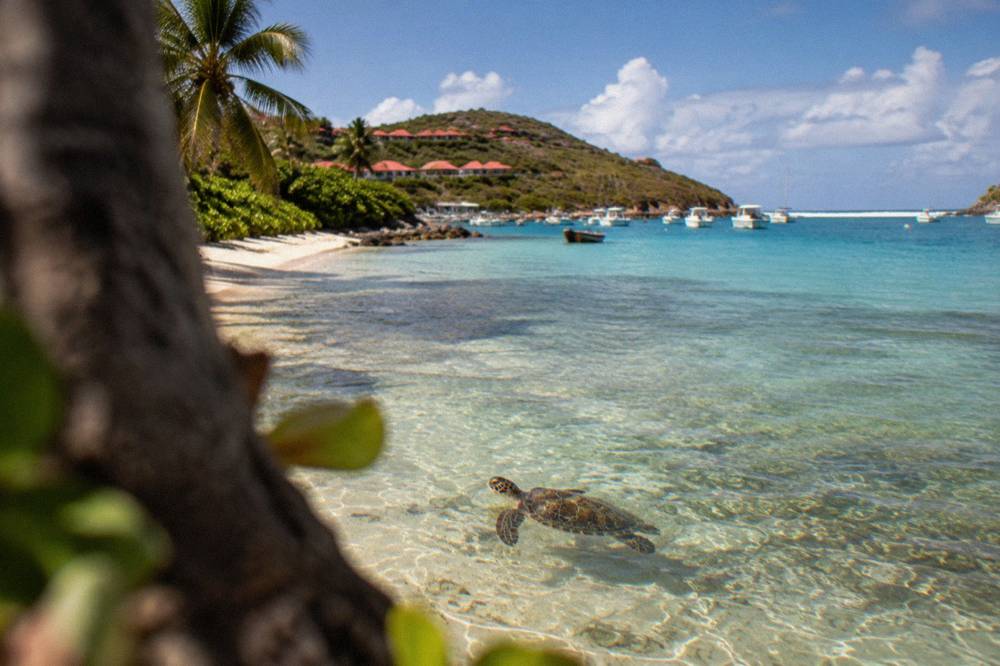
The lagoon is what separates Grand Cul-de-Sac from the island's other beaches: instead of open ocean meeting sand directly, the bay holds a wide stretch of shallow water that sits inside the St Barts marine nature reserve's protected zones, where the environment agency's regulatory-zones page lists a 5-knot speed limit, a ban on jet skis and protected species including green and hawksbill turtles, which the agency reports are commonly seen in this lagoon.
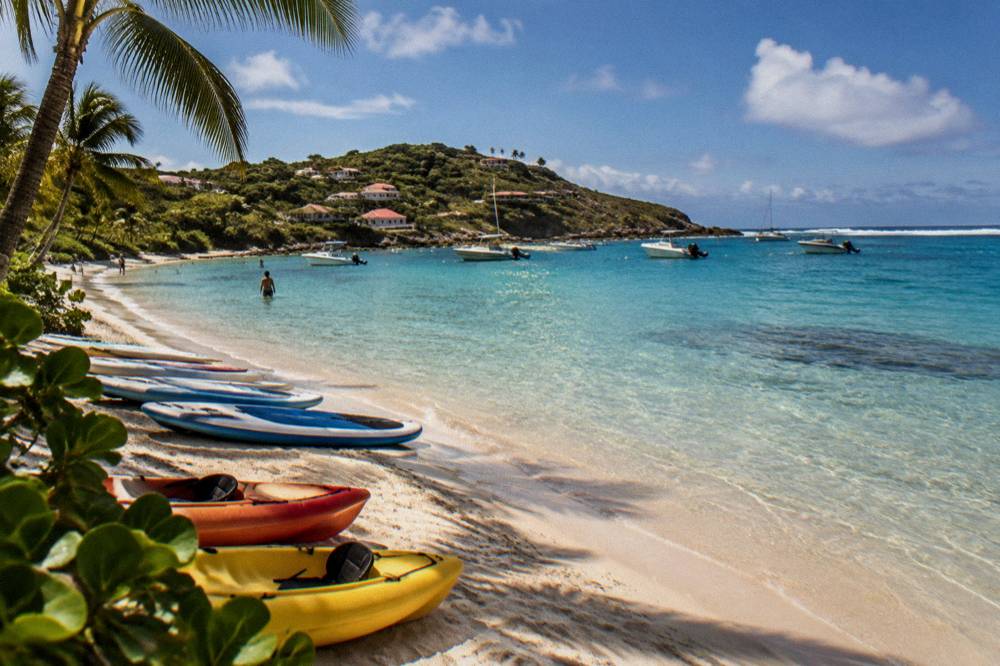
That combination, shallow water inside a protected bay, is why water-sports operators base themselves here. Stand-up paddleboards and kayaks work well in flat lagoon water, and the snorkelling interest centres on the turtles and the sea grass they feed on. The environment agency's beach guidance asks visitors not to touch, chase or feed turtles, not to wear gloves in the water, and not to collect coral, shells, sand or rocks, and it asks anyone who finds a nest or a sighting to report it to the agency.
The same agency page reminds visitors that dogs are banned from the beaches under a standing municipal order, an island-wide rule, and that drones are prohibited in or near the reserve without authorization. These rules shape the lagoon more than most bays on the island, because the reserve's protection extends across the water the beach looks onto.
For visitors who want to see St Barts' protected waters from a boat, the one per-person group sail listed here runs from 12 May to 31 August 2027 on its listing and departs from St Martin, calling at Gustavia, Colombier and Ile Fourchue. It does not call at Grand Cul-de-Sac, but it covers the same marine reserve from the water, and the Colombier Beach guide covers the anchorage it uses.
| Rule | Source | What it means at Grand Cul-de-Sac |
|---|---|---|
| 5-knot speed limit in reserve zones | Environment agency regulatory-zones page | Boats in the bay travel slowly |
| No jet skis or towed motorized devices | Environment agency regulatory-zones page | No jet ski rental in the lagoon |
| No touching, chasing or feeding turtles | Environment agency regulatory-zones page | Watch, do not pursue |
| No dogs on beaches or in the water | Environment agency beach guidance, municipal order | Island-wide ban, fines apply |
| No collecting coral, shells or sand | Environment agency regulatory-zones page | Take nothing from the lagoon |
| Drones prohibited without authorization | Environment agency regulatory-zones page | Applies in and near the reserve |
How Do You Get To Grand Cul-De-Sac Beach In St Barts?
The beach is reached by road from Gustavia or from St Jean, along the coastal routes that wrap the north of the island, with parking on the sand's edge at the head of the bay; the drive is on the right, the island's speed limit is 50 km/h with 30 km/h in built-up areas such as Gustavia and St Jean, and car rental counters at the airport include Avis, Budget and Hertz alongside local agencies and Mini Moke specialists.
The road into the bay descends from the surrounding hills and flattens at the head of the lagoon, where the hotels and the water-sports operators sit. Drivers should expect the conditions the island is known for: narrow, winding, steep sections, one roundabout near the airport, and French right-of-way rules at unsigned intersections. Visitors who prefer not to drive can take a taxi; the island's taxis work on route-based tariffs rather than meters.
Visitors arriving from St Martin or Sint Maarten, which is how most of the island's visitors reach it, connect either by small plane into Gustaf III Airport or by ferry. The airport's 646 m runway takes only small STOL turboprops in daylight and visual conditions, and St Barth Commuter flies the route from St Martin, Sint Maarten and Guadeloupe while Tradewind flies from San Juan and Antigua. The scheduled ferries are Great Bay Express from Philipsburg, about 45 minutes, and Voyager from Marigot, about 50 to 60 minutes; both operators' pages carry current sailings, and the crossing can be rough. The how to get to St Barts guide and the ferry pages on this site cover those connections in detail.
What Rules Apply In The St Barts Marine Reserve?
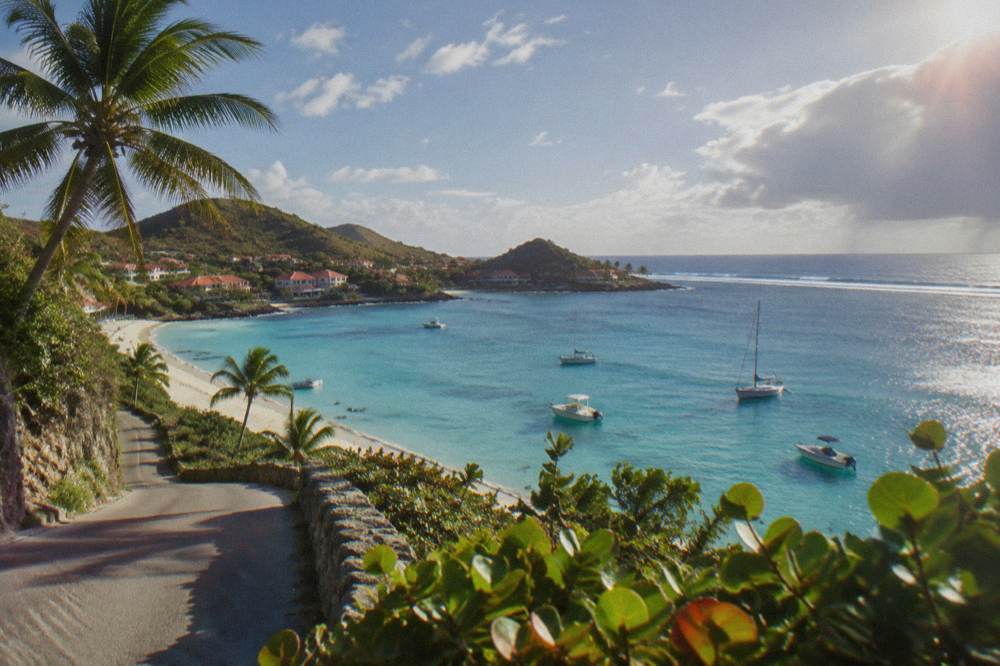
The St Barts marine reserve sets a 5-knot speed limit in its zones, bans jet skis, seabobs, electric surfboards and towed sports, lists 23 dive sites, prohibits dogs on beaches, asks visitors never to touch turtles or collect anything, and restricts drones without authorization, according to the national environment agency's regulatory-zones page, which covers the waters off Grand Cul-de-Sac and the bays of Colombier and Ile Fourchue.
The reserve covers five zones, including enhanced-protection areas where fishing, anchoring and scuba are further restricted. For a beach day at Grand Cul-de-Sac the practical points are simple: nothing leaves the water, nothing is fed or chased, and boats in the zone travel at walking pace. The turtle guidance matters here more than anywhere else on the island, because the lagoon's sea grass is a feeding area the agency monitors.
Anchoring rules apply in the neighbouring bays rather than the lagoon itself: in Colombier and Ile Fourchue no vessels over 25 m are allowed and ecological mooring buoys are preferred, with anchoring restricted. The St Barts nature reserve guide and the sailing pages on this site cover those rules for visitors arriving by boat.
What Can You See Around Grand Cul-De-Sac In St Barts?
Around the bay the map shows the lagoon itself, the public beach at its head, the smaller public cove of Petit Cul-de-Sac over the eastern headland, the residential headland of Pointe Milou above the bay, and the island's turtles feeding in the shallow water, with the tourism committee listing all of the island's beaches as public and free to access, so every cove in this corner of St Barts can be walked onto without a fee or a club membership.
A morning at the bay can run from the sand to the water and back. The water-sports operators on the beach rent paddleboards and kayaks for the lagoon, and the flat water makes the bay the island's natural base for both. Snorkellers come for the turtles, which the environment agency says are common here, and the agency's guidance on watching them without disturbing them is the rule that matters. The wider set of guides lives on St Barthelemy Travel.
The walk or drive over the headland to Petit Cul-de-Sac adds a quieter cove, and the road west climbs to Pointe Milou, whose hotels and villas look back across the whole bay. Beyond Pointe Milou the coast continues to Lorient, one of the island's established village beaches, and the Lorient Beach guide covers it.
| Activity at the bay | Where it happens | What governs it |
|---|---|---|
| Paddleboard and kayak rental | On the beach, operators on the sand | Operator's own listing for pricing |
| Turtle watching | In the lagoon over the sea grass | Environment agency: no touching or feeding |
| Snorkelling | Lagoon shallows | No gloves, no collecting |
| Beach time | The public sand at the head of the bay | All beaches public, dogs banned |
| Boat trips | Departing from St Martin, not the bay | Reserve rules: 5 knots, no jet skis |
When Is The Best Time To Visit Grand Cul-De-Sac In St Barts?
The best time for a beach day at Grand Cul-de-Sac falls in the dry, cooler stretch from December through April, when the Meteo-France normals for St Barthelemy show mean daily highs of 28.5 C in January rising to 29.8 C in April and the lowest monthly rainfall of the year in February at 38.4 mm, though the bay is warm year round and the sea stays at about 26 C in winter, rising to about 29 C from August to October.
The full normals tell the story of the island's year. Rainfall runs low in the northern-hemisphere winter, builds through summer and peaks in October at 135.6 mm, with the island's total at 891.3 mm across the year. Mean daily highs sit between 28.5 C in January and 31.7 C in September, so warmth is never the variable; rain and the Atlantic hurricane season, which runs 1 June to 30 November with its peak from mid-August to mid-October, are what shape the calendar.
One seasonal pattern matters for this bay specifically: many hotels and restaurants on the island, including properties around Grand Cul-de-Sac, close each autumn and reopen in waves between mid-October and early November. Villas generally stay available year round. Visitors planning a shoulder-season trip should confirm directly with the property.
| Month | Mean daily high (C) | Mean daily low (C) | Rain (mm), Meteo-France normals 1991-2020 |
|---|---|---|---|
| January | 28.5 | 23.5 | 52.6 |
| February | 28.6 | 23.3 | 38.4 |
| March | 29.0 | 23.5 | 41.4 |
| April | 29.8 | 24.2 | 50.9 |
| May | 30.7 | 25.1 | 61.7 |
| June | 31.2 | 25.9 | 56.0 |
| July | 31.2 | 26.0 | 80.4 |
| August | 31.6 | 26.3 | 79.6 |
| September | 31.7 | 26.2 | 96.9 |
| October | 31.4 | 25.8 | 135.6 |
| November | 29.9 | 25.0 | 118.6 |
| December | 28.9 | 24.1 | 79.2 |
Where To Stay Near Grand Cul-De-Sac In St Barts?
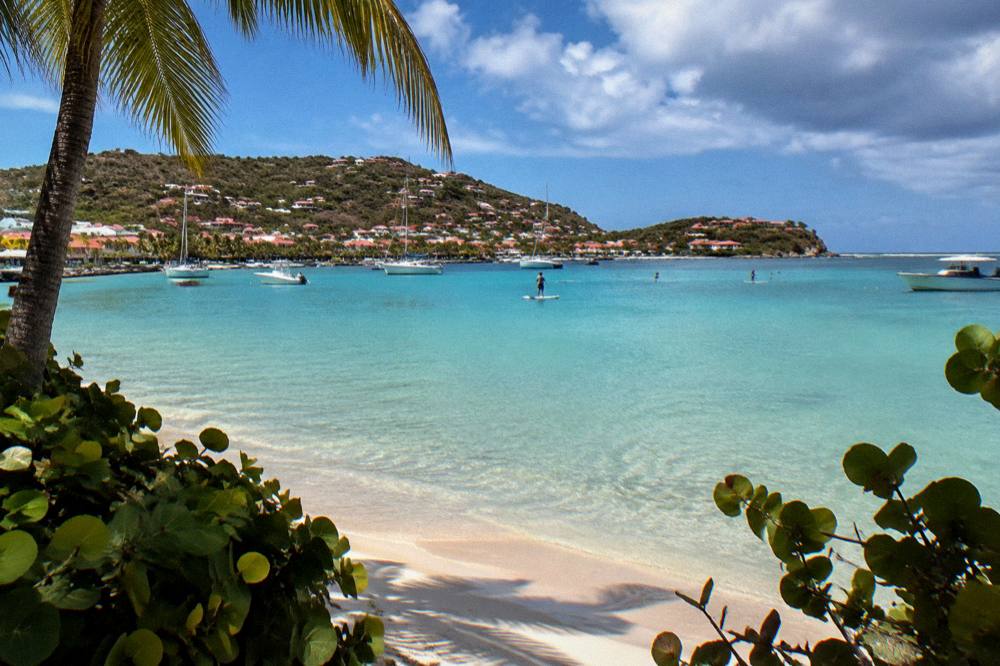
Two resort hotels sit on the bay itself, Le Barthelemy and Le Guanahani, which becomes Airelles Le Guanahani on 1 November 2026, with rates varying by season and each property's own booking page showing them, while the surrounding headlands hold villa accommodation managed by firms including WIMCO, Sibarth and St Barth Properties, and the island's hotels broadly follow an autumn closure pattern with reopenings between mid-October and early November.
The bay is one of the island's two concentrated resort settings, the other being the stretch around St Jean and Flamands. Properties around the bay follow the seasonal pattern described above: quiet in September and early October, back in operation for the high season. The beach hotels guide covers the island's beachfront properties and their locations, and the area guide covers the neighbourhood in detail.
Villa rental is the other main option, and the island has a large villa market with no reliable count; the managers are WIMCO, Sibarth and St Barth Properties, all of which take direct bookings with local concierge service. Villas generally remain available year round, which makes them the practical choice in the weeks when hotels are closed.
How Does Grand Cul-De-Sac Compare With Other St Barts Beaches?
Grand Cul-de-Sac differs from the island's other public beaches in one clear way: it is a shallow lagoon bay on the northeast coast with reef-protected water and turtle sea grass, where beaches such as Saline, Gouverneur and Flamands are open bays facing the Caribbean, Colombier sits at the end of a headland reachable by boat or a walk, and Shell Beach sits a few minutes from Gustavia, so the choice between them is a choice between lagoon water and open bay.
Every beach on the island is public, which removes the question of access entirely: the difference is geography, not ownership. The lagoon bays, this one and Petit Cul-de-Sac, hold the island's flat-water activities. The great open bays of the south coast, Saline and Gouverneur, are the ones visitors picture when they picture the island, and both have their own guides on this site. Colombier, on the northwest, pairs a public beach with a marine reserve anchorage, and the Colombier walk guide covers the access path without promising a time for it.
The beach guide by best-for page matches each of these to a visitor type, and the nicest beach in St Barts answer addresses the question directly, with the caveat that this site names no beach the best.
| Beach | Side of the island | Character from the map | Covered on this site |
|---|---|---|---|
| Grand Cul-de-Sac | Northeast | Shallow lagoon bay | This page |
| Petit Cul-de-Sac | Northeast | Smaller adjacent cove | Petit Cul-de-Sac guide |
| Saline | South | Large open bay | Saline Beach guide |
| Gouverneur | South | Open bay below the hills | Gouverneur Beach guide |
| Flamands | Northwest | Long bay below the hotels | Flamands Beach guide |
| Colombier | Northwest | Headland beach, boat or walk access | Colombier Beach guide |
| Shell Beach | West, by Gustavia | Small cove by the capital | Shell Beach guide |
Can You Visit Grand Cul-De-Sac On A Day Trip From St Martin?
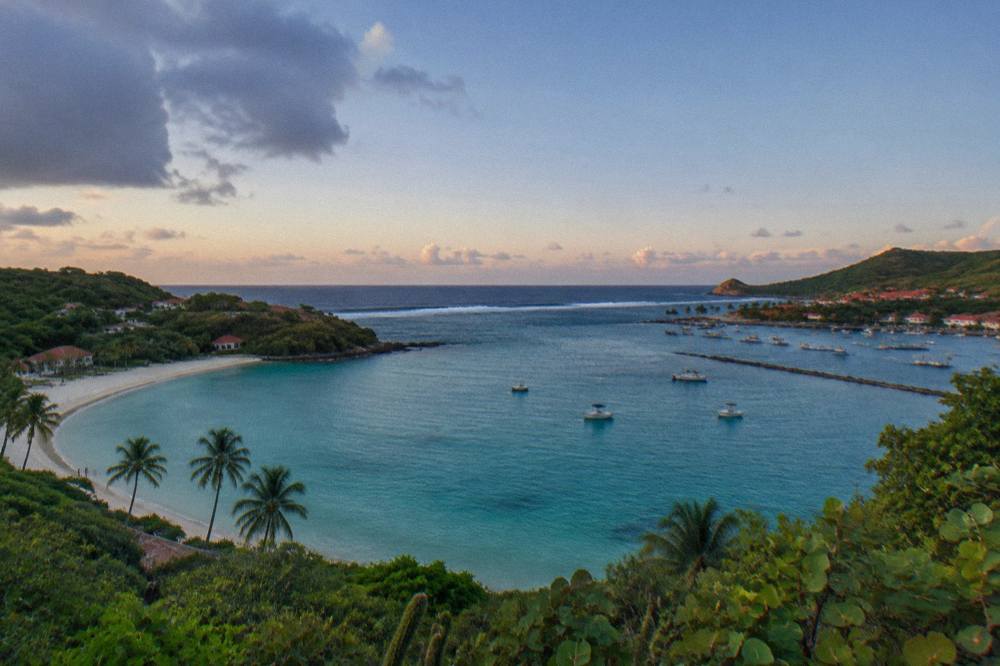
Yes, a day trip from St Martin or Sint Maarten can include Grand Cul-de-Sac, either by taking the ferry or a small plane to St Barts and a taxi or rental car to the bay, or by booking one of the boat charters listed here, all of which depart from St Martin or Sint Maarten ports such as Simpson Bay, Cole Bay, Anse Marcel and Grand Case and spend their day on St Barts' coasts, with the group sail calling at Gustavia, Colombier and Ile Fourchue.
The practical arithmetic is straightforward. The ferry crossing runs about 45 minutes from Philipsburg or 50 to 60 minutes from Marigot, and a day-tripper arriving in Gustavia can reach the bay by taxi or rental car for a few hours on the lagoon before returning on an afternoon or evening sailing. The operators' own pages carry current timetables, and both operators run reduced or adjusted schedules in the low season, so confirming the day's sailings before committing is the standard advice.
The charter route suits visitors who want St Barts' water more than its roads. Five of the six products listed here are private charters priced per group, departing from St Martin or Sint Maarten; the Nikki Beach charter pairs a boat day with the beach club at St Jean, and the full-day options can anchor in the reserve's bays under its rules. None of them departs from St Barts itself.
Between the two, the group sail is the per-person option and the charters are the per-group ones, and the Nikki Beach St Barts guide covers the beach club the private charter option ties into. Whichever route a day-tripper chooses, the bay itself asks nothing but the reserve's rules: nothing collected, nothing chased, dogs left at home, and the turtles watched from a respectful distance.
Common Questions About Grand Cul-De-Sac Beach In St Barts
Is Grand Cul-de-Sac Beach public?
Yes. Every beach on St Barts is public and free to access, and Grand Cul-de-Sac is on the tourism committee's list of the island's named beaches. No club membership or hotel stay is needed to use the sand.
Can you see sea turtles at Grand Cul-de-Sac?
Yes. The territorial environment agency reports that green and hawksbill turtles are commonly seen in the Grand Cul-de-Sac lagoon. The agency's rules prohibit touching, chasing or feeding them, and ask that nests or sightings be reported.
Are dogs allowed on Grand Cul-de-Sac Beach?
No. Dogs are banned from all beaches on St Barts, on the sand and in the water, under a standing municipal order, even on a leash. Violations are subject to a fine.
Can you rent paddleboards or kayaks at Grand Cul-de-Sac?
Water-sports operators base themselves on the beach at the head of the bay, and the lagoon's shallow water is the island's natural setting for paddleboards and kayaks. Pricing appears on each operator's own listing.
How do you get to Grand Cul-de-Sac from Gustavia?
By road along the island's coastal routes, driving on the right, with a 50 km/h island-wide limit and 30 km/h in built-up areas. Taxi service runs on route-based tariffs, and rental car counters at the airport include Avis, Budget and Hertz alongside local agencies.
Which hotels are on Grand Cul-de-Sac?
Le Barthelemy and Le Guanahani sit on the bay, and Le Guanahani becomes Airelles Le Guanahani on 1 November 2026. Rates vary by season and each property's own booking page shows them. Hotels on the island broadly close each autumn and reopen between mid-October and early November.