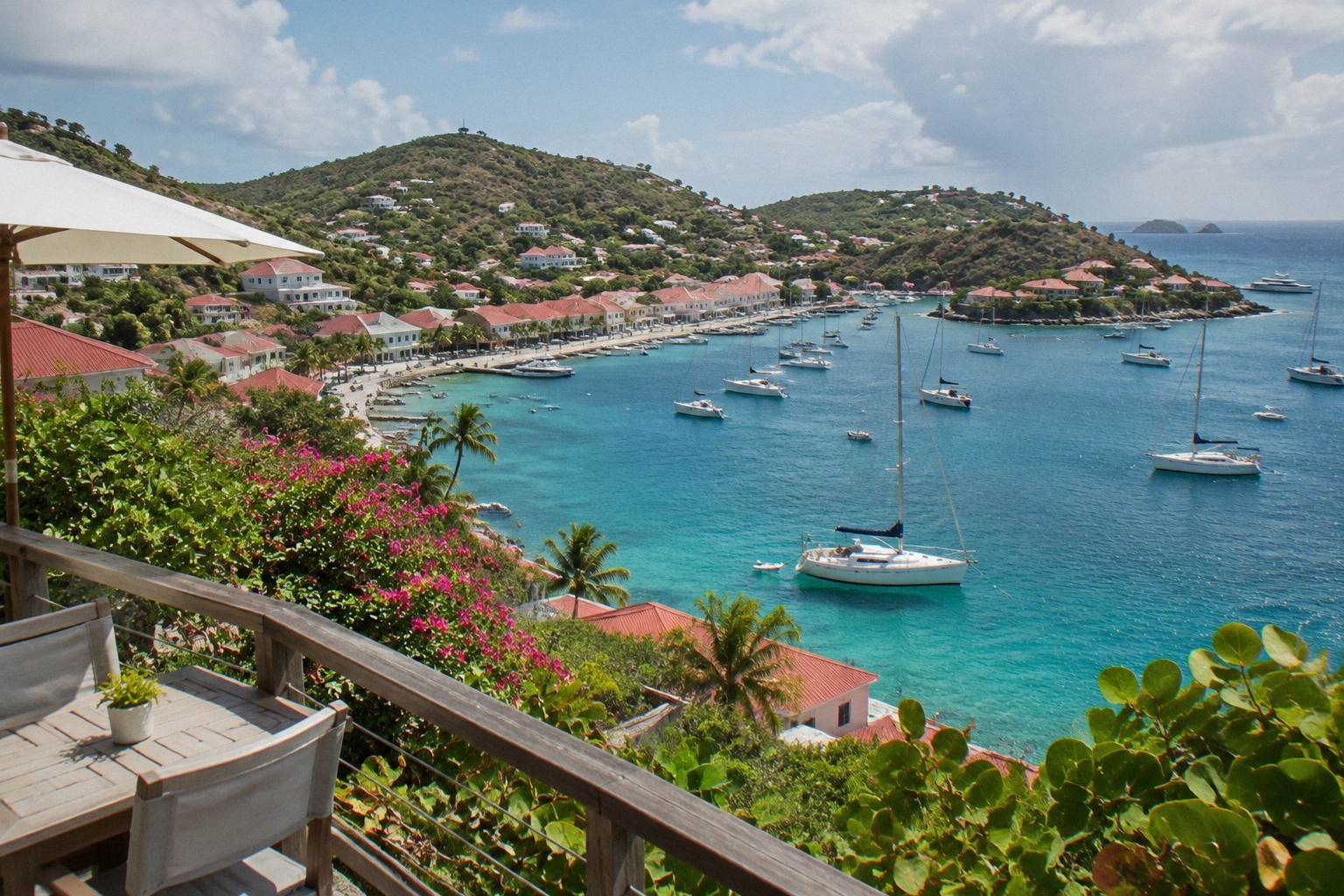
Pointe Milou
Pointe Milou is a rocky headland on the north shore of St Barts, known for its elevation, its ocean views and the quiet residential lanes that run out to it.
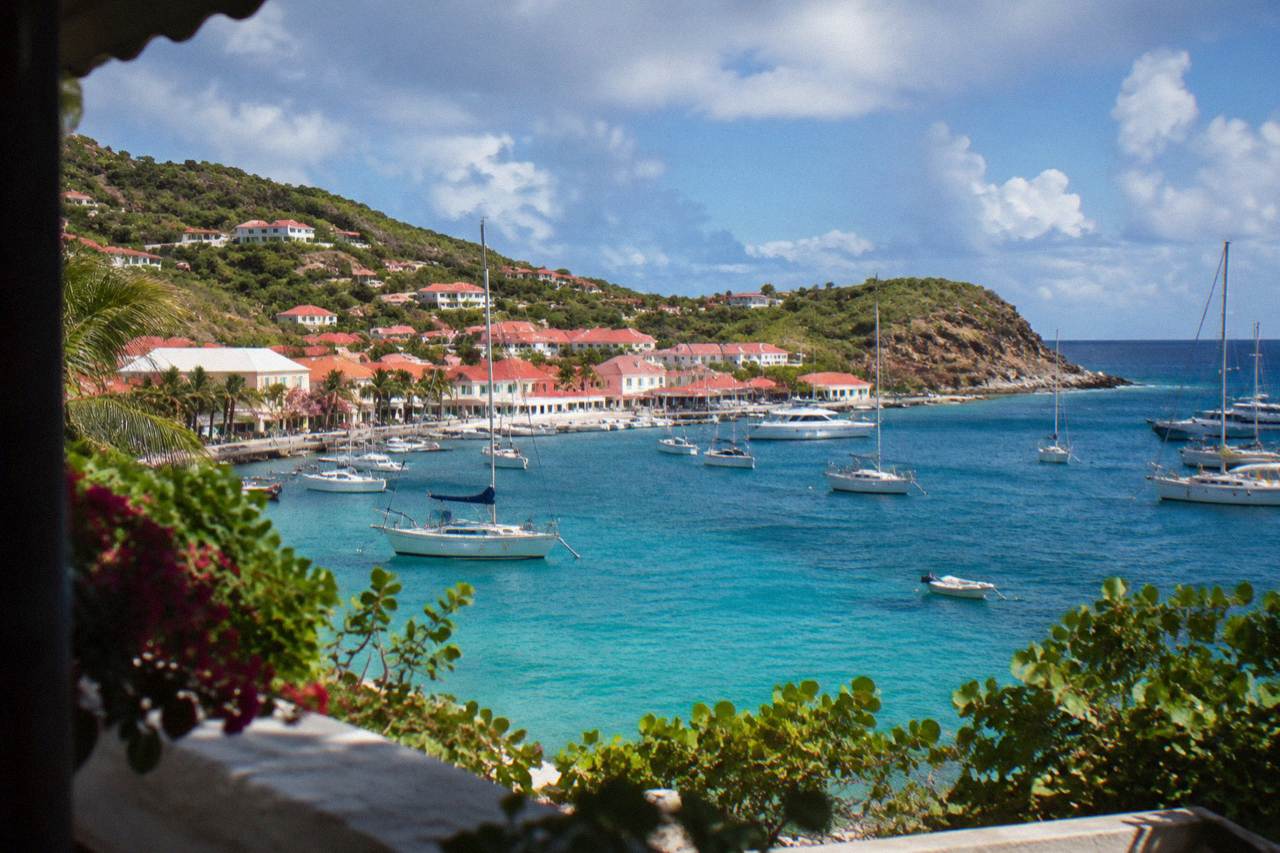
Pointe Milou is a headland on St Barts' north shore between Saint-Jean and Grand Cul-de-Sac, reached by steep narrow roads, with sea views toward the outer islands and a small concentration of hotels and villas on its slopes.
Pointe Milou is a headland on the north shore of St Barthelemy, the small French Caribbean island usually written St Barts, sitting between the Saint-Jean bay and the Grand Cul-de-Sac lagoon on the island's Atlantic-facing side. It is a residential peninsula of steep lanes, dry hillside scrub and villas set at an angle to the trade winds, and it earns its place on the map for one reason above all: elevation. The point stands high enough that the sea is visible in two directions from many spots along its rim, which has made it one of the island's favored settings for sunset viewing and for hotels and villas that want a panorama without being in town. This page from St Barthelemy Travel covers what the headland is, what you actually see from it, the beaches and places to stay around it, and how a visit fits into a wider St Barts plan.
Where Is Pointe Milou In St Barts?
Pointe Milou sits on the north shore of St Barts, roughly between Saint-Jean beach to the west and Grand Cul-de-Sac to the east, forming the headland that separates those two bays on the island's northeastern side. It sits inland of the small outer islets and reefs that line this coast, and it belongs to the same stretch of elevated shoreline as Vitet and Devet further east. The island is only about 21 square kilometres in total, so nothing on it is far from anything else, but Pointe Milou feels deliberately apart: it has no village center, no shops of its own and no harbour, just residential roads climbing over the spine of the headland. Gustavia, the capital, lies on the opposite, leeward side of the island.
The headland is part of the island's hilly interior meeting the sea. St Barts is an island of hills throughout, and the north shore is where those hills drop most steeply to the water. Pointe Milou's position means it faces the open Atlantic to the north and the protected bays on either side, which is why the views from its lanes shift between rolling open water and the calm turquoise of the lagoon side as you move around it.
For trip planning, the point is usually grouped with the eastern north-shore areas. It sits close to the Pointe Milou area guide coverage on this site, which goes deeper into staying there, and it pairs naturally with a day spent on the beaches of Saint-Jean and Grand Cul-de-Sac on either side of it.
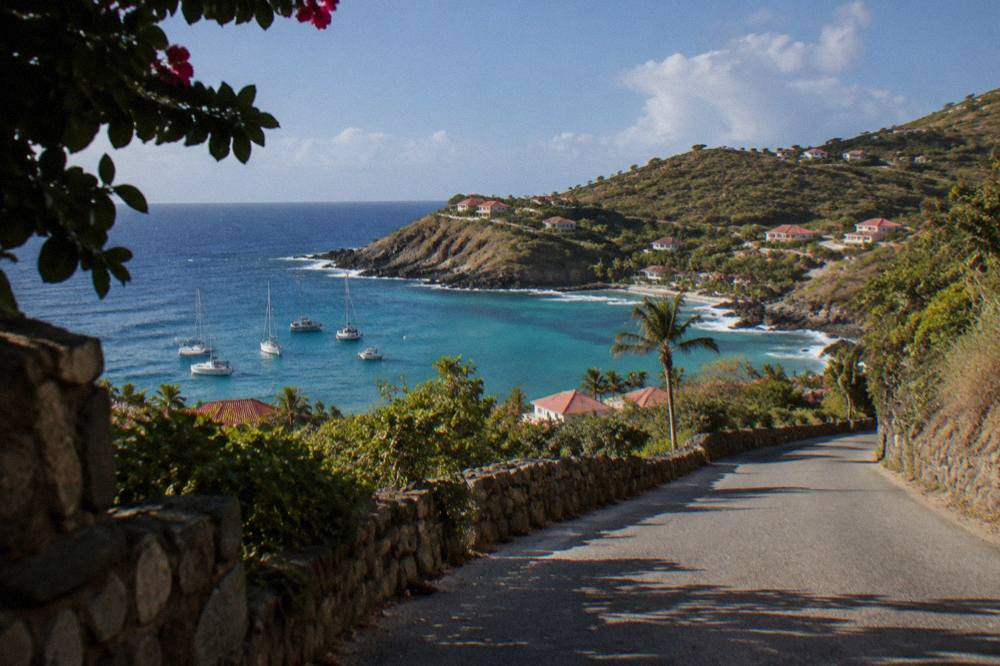
What Can You See From Pointe Milou In St Barts?
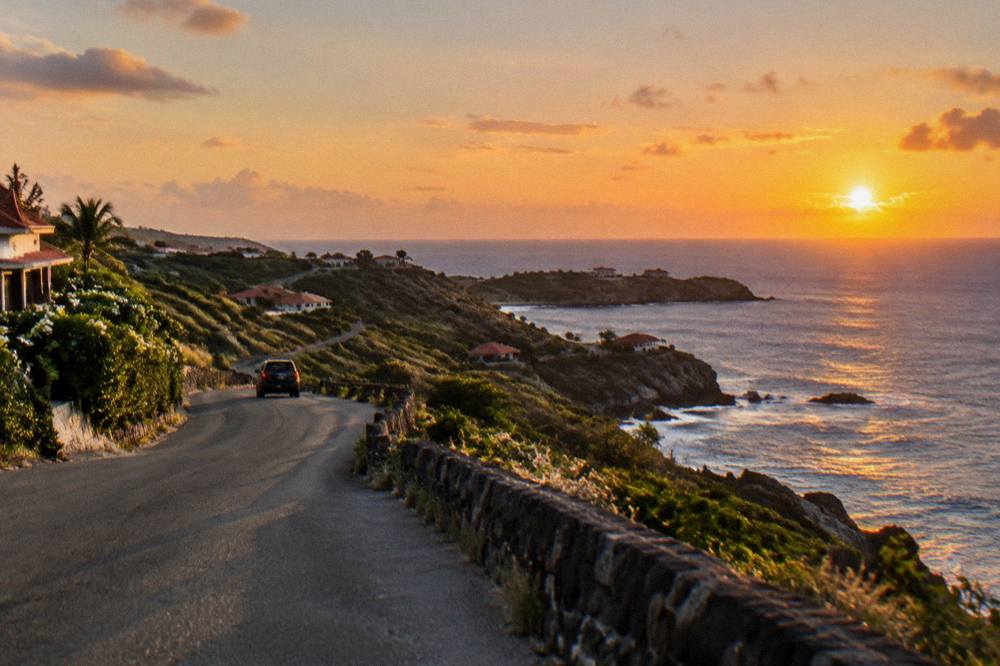
From the lanes and terraces of Pointe Milou you can see the open Atlantic to the north, Saint-Jean bay and its curve of sand to the west, the Grand Cul-de-Sac lagoon to the east, and on clear evenings the sun setting over the water toward the Dutch and French sides of St Martin on the horizon. The headland's height is the whole point: because the point rises above both bays, the view changes character within a few hundred metres of driving, from open ocean with breaking swells to the flat turquoise of the lagoon side. Sunsets over the water are the headland's signature, and the tourism committee's material lists the island's west-facing and elevated spots, Pointe Milou among them, as the places where the sun drops into the sea.
The morning view runs the other way. Looking east and north from the rim, the outer reefs and small islets that protect Grand Cul-de-Sac sit close in, and the line of the Atlantic horizon stretches beyond them. The trade winds that shape this coast also shape what you see: the water off the point is usually moving, with wind texture visible from above even when the bays on either side are still.
There is no formal viewing platform or marked lookout on the point. The views are had from the roads themselves, from the hotel and villa terraces built to catch them, and from the small pull-offs where the lane widens. Nothing on the point is gated, but almost all of it is residential, so the etiquette is the obvious one: stay on the road, take the view and move on.
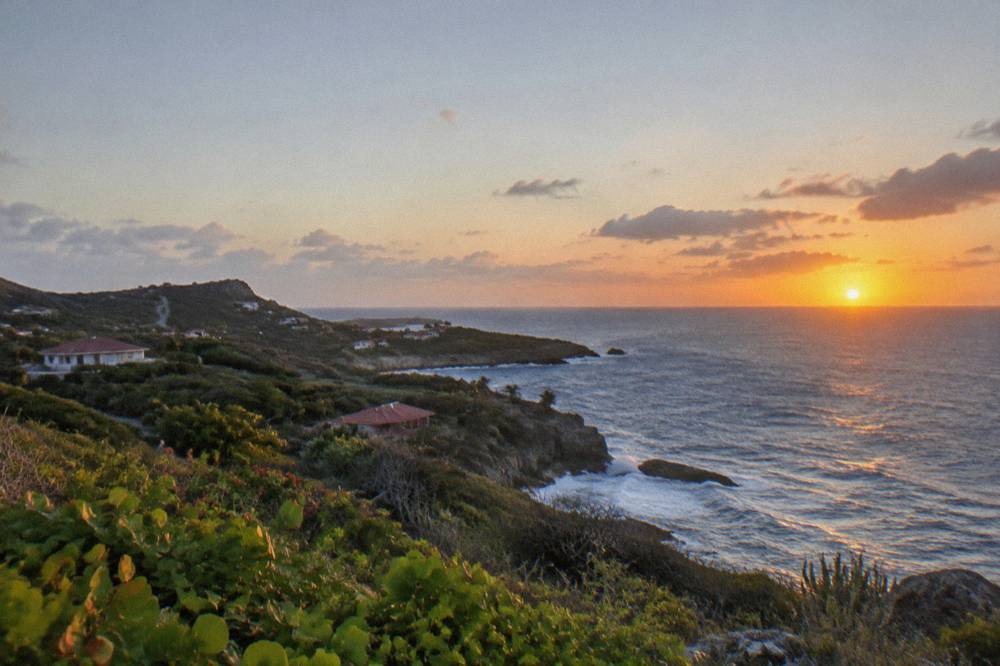
What Is There To Do Around Pointe Milou In St Barts?
The honest answer is that Pointe Milou itself is a place to drive, look and stay rather than a place of activities: its attractions are the views, the quiet roads and the hotels on its slopes, while the actual doing happens on the beaches and bays on either side, at Saint-Jean and Grand Cul-de-Sac, or down the coast at Lorient and Toiny. There is no walking tour listed here, no jet ski operation, no dive shop on the point itself, and the marine reserve's rules listed by the environment agency, a 5-knot limit in protected zones and a ban on jet skis, would forbid motorized water toys off this coast in any case. What the point offers is position, and position on St Barts is best spent on slow evenings.
A day built around the headland works from the outside in. Morning belongs to the beaches: Saint-Jean for the classic crescent under the airport's approach, Grand Cul-de-Sac for the calm of the lagoon side, or further afield the long sands of Flamands and the walk-in cove of Colombier on the western end of the island. Afternoon can be Gustavia, the harbour capital with its shops and waterfront, reached back over the island's central spine. Evening is when the point earns its keep: the sun sets over open water from this shore, and the headland's terraces are angled for exactly that.
For visitors who want the sea perspective rather than the land one, the bookable day trips listed here all depart from St Martin or Sint Maarten and cross to St Barts by boat, which means they are a different kind of day out: a sailing that calls at Gustavia, Colombier and Ile Fourchue in a single run. The related trip for this page is the St Barts Gustavia, Colombier and Ile Fourchue sail, which circles the island's leeward highlights, and See the live listing if a water-based day appeals more than a driving one.
Which Beaches Are Closest To Pointe Milou?
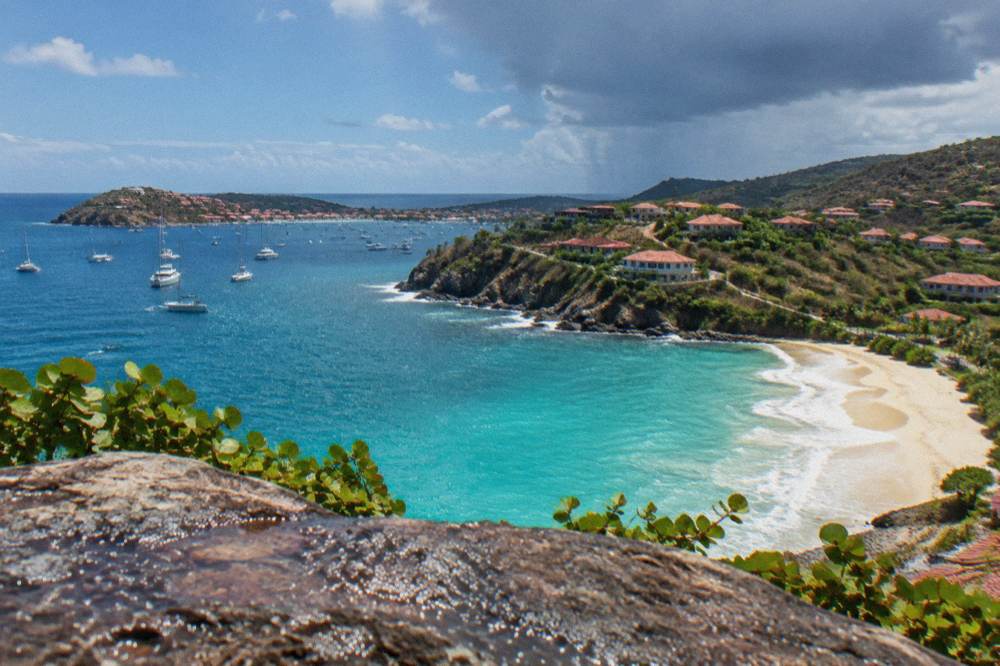
The beaches nearest Pointe Milou are Grand Cul-de-Sac to the east and Saint-Jean to the west, both a short drive down from the headland on the island's north shore, with Lorient, Flamands and the protected cove of Colombier all within easy reach on an island of only about 21 square kilometres. All beaches on St Barts are public, a rule that holds island-wide, so every strand listed below is free to walk onto regardless of what hotel or villa sits above it. The table gives the geography; the choice between them is a matter of which side of the point you want to be on.
| Beach | Direction from Pointe Milou | Character of the setting |
|---|---|---|
| Grand Cul-de-Sac | East, at the foot of the headland | Shallow lagoon side, protected by outer reefs |
| Saint-Jean | West, below the airport approach | Crescent bay under the Gustaf III flight path |
| Lorient | West, past Saint-Jean | Long bay with a village feel |
| Flamands | Southwest, over the central spine | Wide strand on the leeward side |
| Colombier | Far northwest | Walk-in cove inside the marine reserve |
Grand Cul-de-Sac is the natural swimming choice from the point because it is the closest and sits on the sheltered lagoon side of the north shore, with the reef breaking the Atlantic swell before it reaches the bay. Saint-Jean is the postcard: a tight curve of sand with the airport's runway immediately behind it, which makes it one of the few beaches in the world where small turboprops pass low overhead on approach to the 646 m strip at Gustaf III. Both are covered in depth on their own pages, at Saint-Jean beach and Grand Cul-de-Sac beach, along with Lorient and Flamands further along the shore.
Colombier deserves its own note because it is the marine reserve's flagship: the environment agency's regulatory-zones page lists it among its protected zones with a 5-knot speed limit in its waters, a ban on jet skis and a no-dogs rule, and access is on foot, which keeps it quieter than the drive-to beaches. Turtles are present in the reserve's waters and touching or disturbing them is forbidden. For swimmers who want to combine the point's views with an easy swim, though, the lagoon side at Grand Cul-de-Sac is the pairing most planners settle on.
Where To Stay Near Pointe Milou In St Barts?
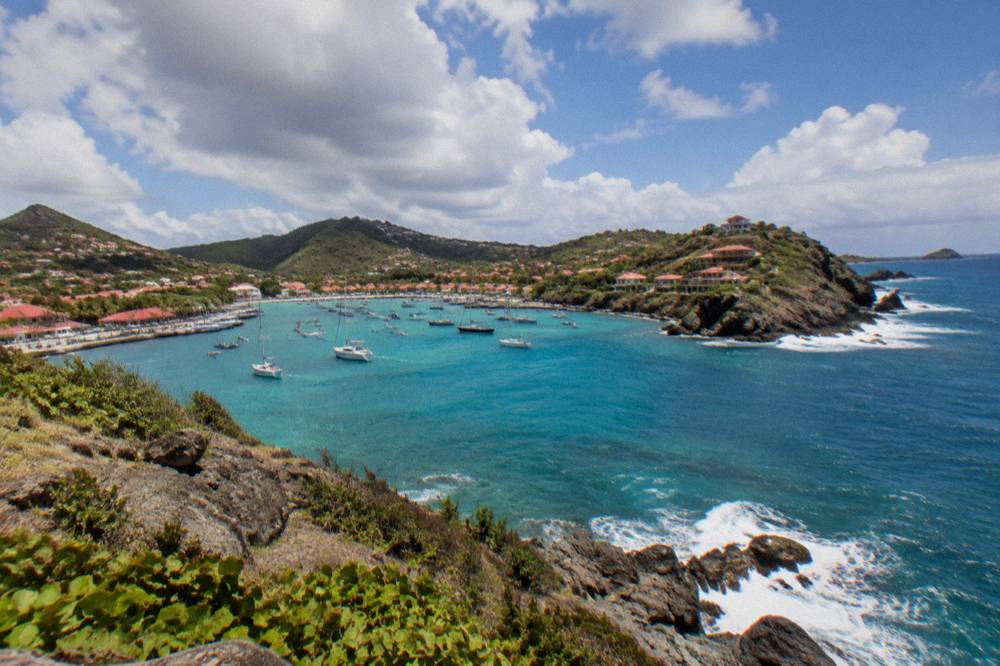
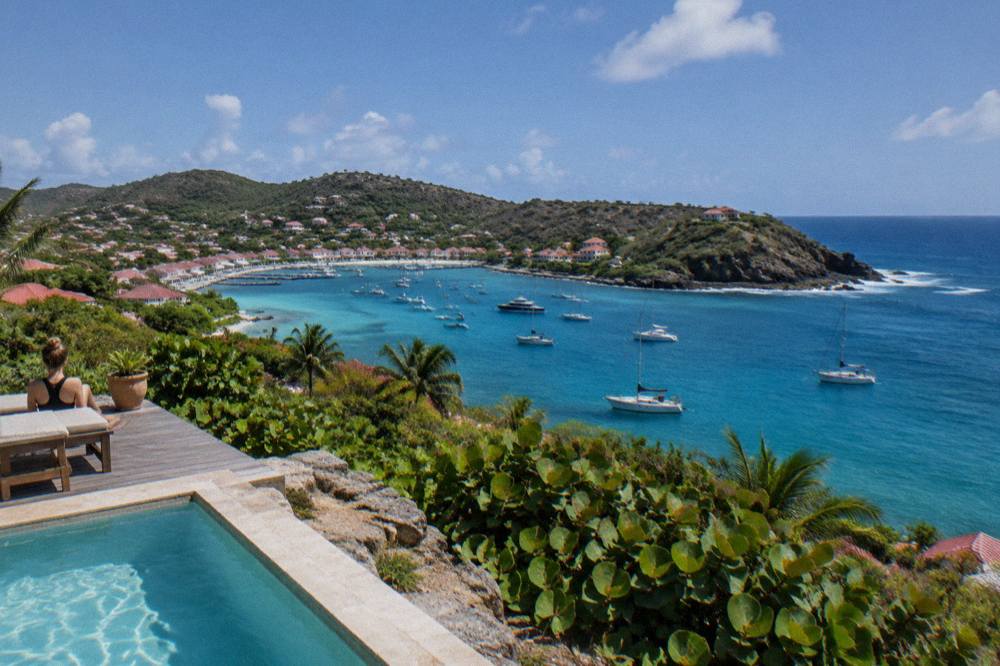
The best-known property on the headland itself is Hotel Christopher, a hotel set on the point's slopes with its tables reopening each season in the autumn cycle, while the surrounding headland carries one of the island's densest concentrations of private villas, bookable through the island's specialist villa managers such as WIMCO and Sibarth. St Barts has no hostels and no large resorts; its accommodation runs from boutique hotels to a large villa market, and Pointe Milou sits at the villa-and-view end of that spectrum. Rates vary by season and each property's own booking page shows them.
| Option type on or near the point | What it is | Notes from the season pattern |
|---|---|---|
| Hotel Christopher | Hotel on the headland | Closes in late summer, reopens in the late October wave |
| Villas on the headland | Private homes with sea views | Available year-round through villa managers |
| Saint-Jean hotels | Short drive west of the point | Village-side and beachside options |
| Grand Cul-de-Sac hotels | Short drive east | Lagoon-side settings |
Two patterns matter when booking this coast. First, the autumn closure: many St Barts hotels close each year in the late-summer low period and reopen in waves between mid-October and early November for the high season, a rhythm that holds for the point's own hotel as much as anywhere else on the island. Second, the villa alternative: villas generally remain available through the low season, which makes them the flexible option if the trip falls outside the December-to-April peak. The differences between the two styles, and the trade-offs of staying on the point versus in town, are laid out in the site's wider where to stay coverage planning material and the area guide linked above.
What the headland offers that town does not is quiet with a view. Gustavia puts you beside the harbour, the shops and the evening scene; Pointe Milou puts you above the water with the trade winds and a ten-minute sense of removal from all of it. Visitors who want both often split a week, or simply drive in for dinner, since the island's size makes the crossing trivial.
How Do You Get To Pointe Milou In St Barts?
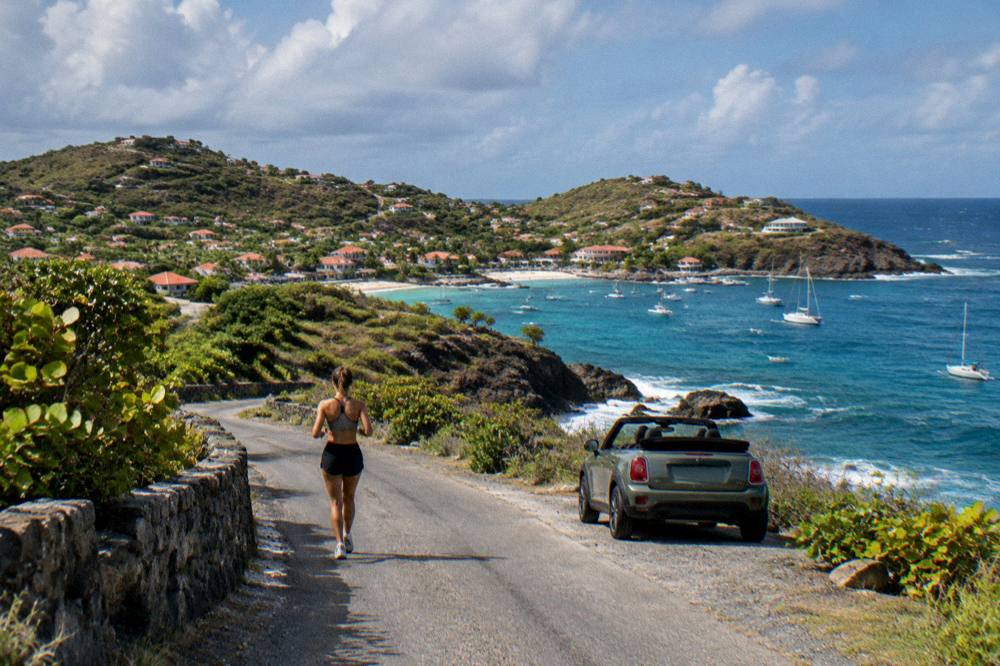
You reach Pointe Milou by car or taxi from either Gustavia or Saint-Jean via the island's narrow, steep and winding north-shore roads, driving on the right under French traffic rules, with an island-wide speed limit of 50 km/h dropping to 30 km/h in built-up areas such as Gustavia and Saint-Jean; there is no bus and the point is a residential headland, not a stop on any service. The roads up and over the point are among the steepest on the island, with tight bends and limited markings in places, which is why small, high-clearance vehicles and the open Mini Mokes of local agencies are the rental staples here.
Car rental counters at the airport include Avis, Budget and Hertz, alongside local agencies and Mini Moke specialists, and the practical advice is uniform: book ahead for the December-to-April high season, and inspect the vehicle on pickup because island roads are hard on cars. The getting around planning material on this site covers rental, taxis and parking in detail, including the island's single roundabout near the airport and the French right-of-way rules at unsigned junctions.
For arrivals, the pattern is the one every St Barts visitor shares. The island's airport at Saint-Jean takes only small STOL turboprops on its 646 m runway, in daylight and visual conditions only, so long-haul travelers fly first to a Caribbean gateway, most often St Martin (SXM), then complete the trip either by small plane with a carrier such as St Barth Commuter from SXM, or by ferry: Great Bay Express from Philipsburg or Voyager from Marigot across to Gustavia. From Gustavia or Saint-Jean it is a short drive up to the point. The crossing by ferry can be rough; no operator promises otherwise.
When Is The Best Time To Visit Pointe Milou In St Barts?
The most settled weather on St Barts runs from December through April, outside the Atlantic hurricane season, when the Meteo-France normals for 1991 to 2020 show mean daily highs of 28.5 C in January and 28.9 C in December against the wettest months of October and November, which carry 135.6 mm and 118.6 mm of rain respectively; May and early June offer the same warmth with fewer visitors before the season turns. The island is warm all year, with mean daily highs never falling below 28.5 C, so the decision is less about temperature than about rain, the autumn hotel closures and the calendar of the sailing season.
| Month | Mean daily high (C) | Rain (mm) |
|---|---|---|
| January | 28.5 | 52.6 |
| February | 28.6 | 38.4 |
| March | 29.0 | 41.4 |
| April | 29.8 | 50.9 |
| May | 30.7 | 61.7 |
| June | 31.2 | 56.0 |
| Month | Mean daily high (C) | Rain (mm) |
|---|---|---|
| July | 31.2 | 80.4 |
| August | 31.6 | 79.6 |
| September | 31.7 | 96.9 |
| October | 31.4 | 135.6 |
| November | 29.9 | 118.6 |
| December | 28.9 | 79.2 |
The figures above are Meteo-France climate normals for the St Barthelemy station, 1991 to 2020, which is the only basis on which this site states the island's climate. Hurricane season runs from 1 June to 30 November with its peak from mid-August to mid-October, and the autumn low season overlaps it: this is when many hotels and restaurants close and reopen between mid-October and early November. It is also the quietest, warmest-water stretch, with sea temperatures of about 29 C from August to October, and travelers who accept the trade-offs often have the headland's roads and views to themselves.
The event calendar pulls in the other direction. The Bucket Regatta fills the harbour with superyachts in mid-March, Les Voiles de St Barth follows in April, and the Music Festival runs 8 to 18 January 2027, with the Gourmet Festival on 9 to 15 November 2026 marking the island's full return to high-season form. For a point built around its views, any of these weeks adds a spectacle on the water below.
Is Pointe Milou Worth Visiting In St Barts?
Pointe Milou is worth visiting for anyone who wants the island's elevation and its sunset views without staying in town, and it is best treated as a stop or a base rather than a destination: pair it with Saint-Jean or Grand Cul-de-Sac for swimming, with Gustavia for the evening, and with a boat day for the coast you cannot see from the road. Travelers who base themselves elsewhere should still make the drive once, in the late afternoon, because the two-bay panorama from the rim is one of the island's signature sights and costs nothing to see.
The point also suits a particular kind of visitor better than others. It is a quiet, residential, car-dependent headland: strong for couples, villa parties and anyone who wants to cook, swim and watch the sun go down, weaker for travelers who want to walk to dinner or be in the middle of things. For that second group, Gustavia harbour or Saint-Jean is the better base and the point is the excursion.
For a fuller island plan that slots the headland into a sequence of beaches, towns and boat days, the site's things to do in St Barts page is the starting point, and the itineraries built off it cover everything from a first-timer's three days to a full week with the point's sunsets as the nightly finale.
What Should You Know Before Driving Pointe Milou's Roads?
The roads on and around Pointe Milou are narrow, steep and winding, with tight bends, limited markings in places and drops to the side, so the essentials are a small vehicle, low speeds, use of low gear on the descents and an expectation that you will meet oncoming traffic on a lane built for one car; the island-wide limit is 50 km/h and 30 km/h in Gustavia and Saint-Jean. French rules apply, including the priority-to-the-right convention at unsigned junctions, and the island has one roundabout, near the airport, and almost no traffic lights.
Parking on the point is informal: there is no lot and no formal viewpoint, only the roadsides and pull-offs, so treat any stop as temporary. In Gustavia, by contrast, parking is limited and competitive in high season, with timed Blue Zone disc parking in parts of town, which matters if the evening plan is dinner in the capital after the sunset. The site's coverage of rental cars and parking goes into this in more depth.
A final practical note on timing: the airport operates in daylight only, the ferries can be weather-affected, and the point's views are at their best in the hour before sunset, which in the tropics arrives close to 6 pm year-round since St Barts sits at UTC-4 with no daylight saving. Building the day backwards from that hour, with a swim before and dinner after, is the simplest way to use the headland well.
Common Questions About Pointe Milou In St Barts
Where is Pointe Milou in St Barts?
Pointe Milou is a headland on the north shore of St Barts between Saint-Jean bay and Grand Cul-de-Sac, reached by steep roads from either side. It is a residential peninsula with no village center of its own.
Are the beaches near Pointe Milou public?
Yes. Every beach on St Barts is public, including Saint-Jean, Grand Cul-de-Sac and all the strands on either side of the point, regardless of what hotel or villa sits above them.
Can you swim at Pointe Milou?
The headland itself is rocky and has no beach of its own. Swimming happens at the bays on either side, most commonly Grand Cul-de-Sac on the sheltered lagoon side or Saint-Jean to the west.
Do you need a car for Pointe Milou?
In practice yes. The point is reached by steep, narrow roads, there is no bus service, and taxis on the island work best when arranged rather than flagged. Small rental cars and Mini Mokes are the standard choice for this coast.
What is the best time of day to visit Pointe Milou?
Late afternoon into sunset. The headland faces open water to the north and west, and its elevation makes it one of the island's recognized spots for watching the sun drop into the sea toward St Martin.
Are there tours of Pointe Milou?
No walking or land tour of the headland exists on the island. The bookable day trips on this site depart from St Martin or Sint Maarten and visit St Barts by boat, calling at Gustavia, Colombier and Ile Fourchue.