St Barts Car Rental
Renting a car is the standard way to explore St Barthelemy, a French island of steep hills and scattered beaches where the roads are narrow and the distances feel longer than the map suggests. This guide covers the companies at the airport, the driving rules, and how a rental compares with the alternatives.
Yes, a rental car is the usual way to get around St Barts. Counters for Avis, Budget and Hertz sit at Gustaf III Airport alongside local agencies, traffic drives on the right, the reported speed limit is 50 km/h island-wide and 30 km/h in Gustavia and Saint-Jean, and small vehicles with high clearance suit the steep, narrow roads best.
Renting a car is the standard way to see St Barthelemy, a French island in the Caribbean of about 21 square kilometres, roughly 10,700 residents and beaches spread along every coast. The island has no trains, and the terrain is a lattice of steep hills between red-roofed Gustavia and coves such as Colombier, Saline and Grand Cul-de-Sac. A rental puts all of it within reach, and the counters sit at Gustaf III Airport in Saint-Jean. This guide from St Barthelemy Travel covers companies, roads, rules and alternatives, without inventing a single price, because rental rates on St Barts vary sharply by season and only a company's own booking page shows the real figure.
Do You Actually Need A Rental Car In St Barts?
A rental car is the usual and most flexible way to get around St Barts, but it is not strictly required: Gustavia's centre is compact and walkable, taxis exist, and a traveler staying in one place with a single beach nearby can manage without one. For anyone moving between beaches, villages and viewpoints across the island's steep terrain, a car is what makes the island practical, and villa managers describe it as the default choice for their guests.
The honest framing is in the two questions this site already answers in depth: is it worth renting a car in St Barts and do you need a car in St Barts. The short version is that need scales with ambition. The island's public beaches are, every one of them, free and open, and several sit at the end of steep access roads that reward having wheels. Colombier, one of the most written-about beaches on the island, is reachable on foot by a hiking trail as well as by boat, which is a real alternative for active travelers.
Details about buses, ride-hailing or how taxis charge remain unclear. Villa manager guides describe taxis as available and recommend confirming rates with the driver. No figure for a taxi fare, a ride-hailing service or a public bus appears here for that reason. If a trip involves more than Gustavia and one beach, the answer from every getting-around source points the same way: rent the car.
For a different reason, the answer can also be "no": several of the island's signature experiences happen on the water, not on the road. The St Barts day sail from St Martin reaches Gustavia, Colombier Beach and Ile Fourchue in a single trip, which covers three of the island's highlights without touching a gearstick.
St Barts Driving And Parking Numbers
Speed limits, parking caps and the airport runway at a glance
From the St Barts car rental guide's driving, parking and airport sections.
Which Car Rental Companies Operate At St Barts Airport?
Gustaf III Airport (SBH) hosts counters for Avis, Budget and Hertz, and a wider set of local agencies operates on the island, including firms specializing in Mini Mokes and small compacts. Together they cover the island's whole range: international brands at the terminal and local specialists delivering to hotels and villas, a service villa managers describe as common practice.
The international presence matters for a practical reason: travelers arriving on the small STOL turboprops from St Martin can walk from the arrivals area to a branded counter. The airport itself is tiny, with a 646 m runway serving small turboprops only, in daylight and visual conditions, so the rental operation is small too. The full arrival picture, including the famous landing approach, is covered in the site's St Barts airport guide.
Local agencies fill the rest of the market. Directory listings for the island name additional operators beyond the three airport brands, and Mini Mokes come specifically through local specialists rather than the international companies. Delivery to hotels and villas is commonly offered, according to villa-manager getting-around pages, which is worth requesting when staying outside Saint-Jean.
No rental price appears on this page for any company, on any date, in any season. Rates on St Barts swing hard between the December-to-April peak and the quieter months, and only each company's own booking page shows a live figure. A table of invented averages would be worse than no table at all.
| Company Type | Where You Find Them | Vehicles Associated With Them | Practical Notes |
|---|---|---|---|
| Local agencies | Island-wide, offices and delivery | Mini Mokes, small compacts, automatics | Delivery to hotels and villas commonly available per villa-manager guides |
One more practical note: the same hills that make a car useful make an automatic preferable, and automatics predominate in the island's fleets according to rental guides. Confirm the transmission when booking rather than assuming.
A car solves the land; boats solve the rest. Every bookable trip listed here departs from St Martin or Sint Maarten, so the pattern that suits many itineraries is a rental car on St Barts itself paired with a sailing day trip that reaches the island's offshore spots, such as Colombier and Ile Fourchue, from the water side.
What Is Driving In St Barts Actually Like?
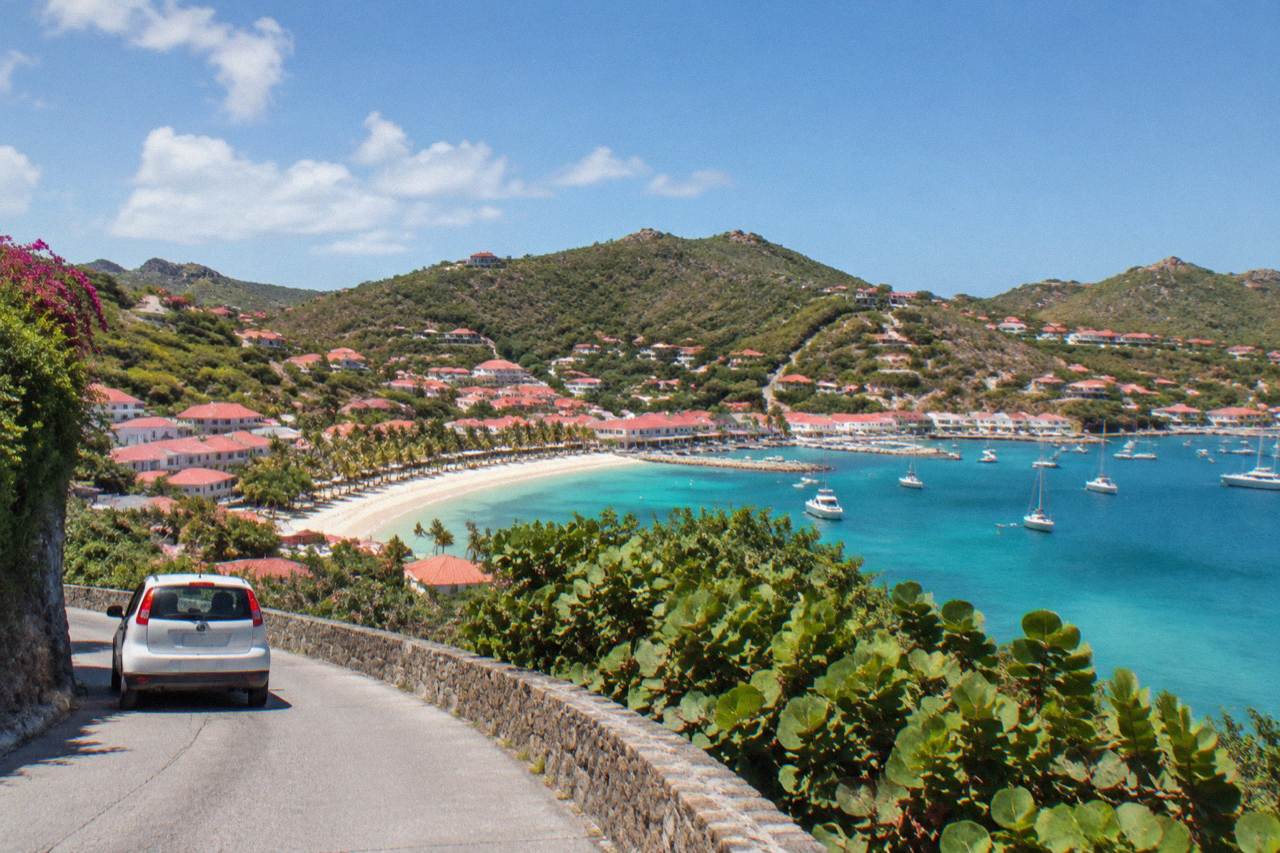
Driving in St Barts means narrow, winding, steep roads with tight passing, driving on the right under French rules, a reported speed limit of 50 km/h island-wide and 30 km/h in Gustavia and Saint-Jean, one roundabout near the airport, and French priority-to-the-right conventions at unsigned intersections. The terrain demands low gears on climbs and confident use of the horn on blind corners, per getting-around guides.
The single most repeated piece of advice across villa-manager and rental sources is that the island's roads are not like mainland resort roads. They climb. A route that looks flat on the map can involve sustained steep grades where a small engine labors and descents require engine braking. Road markings are limited in places, and two vehicles passing on a narrow stretch is a cooperative exercise.
| Rule Or Condition | What To Know |
|---|---|
| Side of the road | Right, under French traffic rules |
| Island-wide speed limit | Reported as 50 km/h |
| Gustavia and Saint-Jean | Reported as 30 km/h in these populated areas |
| Roundabouts | One, near the airport |
| Unsigned intersections | French priority-to-the-right applies |
| Road character | Narrow, winding, steep, tight passing, limited markings in places |
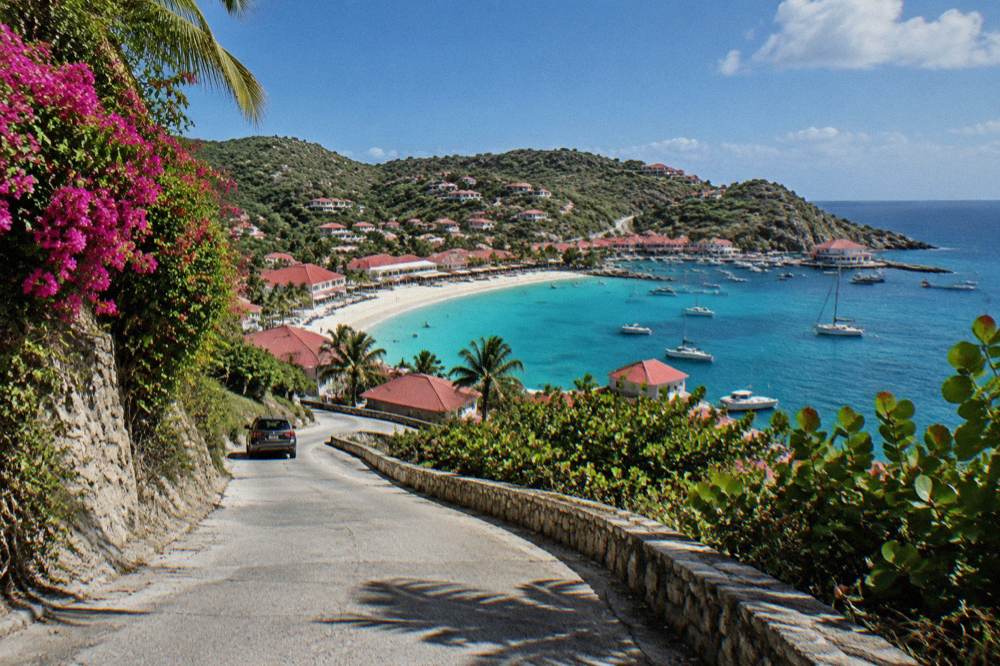
A few habits make the adjustment easier. Take the blind-crest corners slowly. Expect scooters, which the island also rents and which have their own guide at St Barts scooter rental. And treat the drive as part of the sightseeing: several roads cross the island's spine with open views over both coasts, which is one of the quiet pleasures of having a car here. This page prints no single drive time between any two points on the island; the island is small, but the roads are slow by design.
Mini Moke Or Compact Car: Which Vehicle Suits St Barts Best?
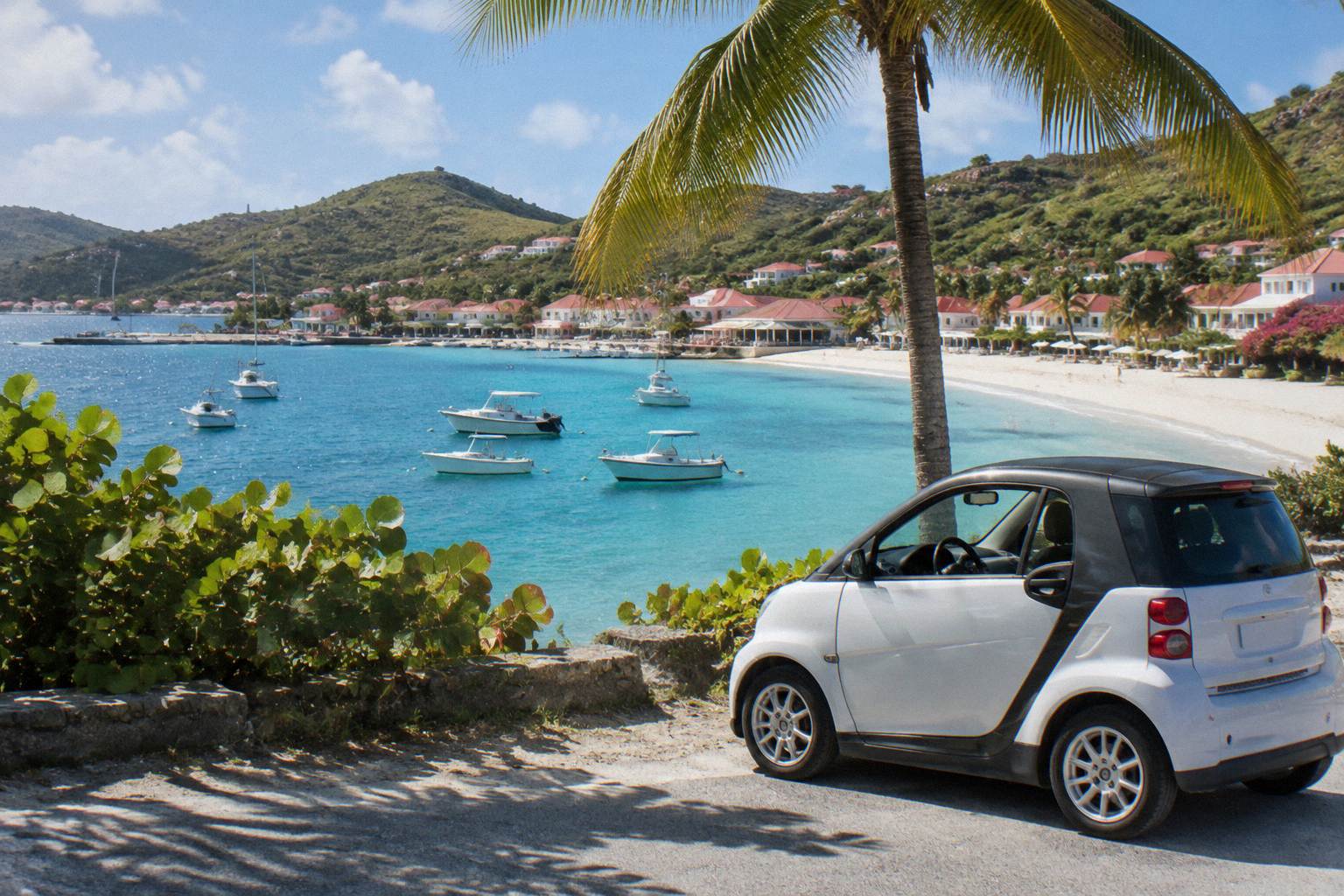
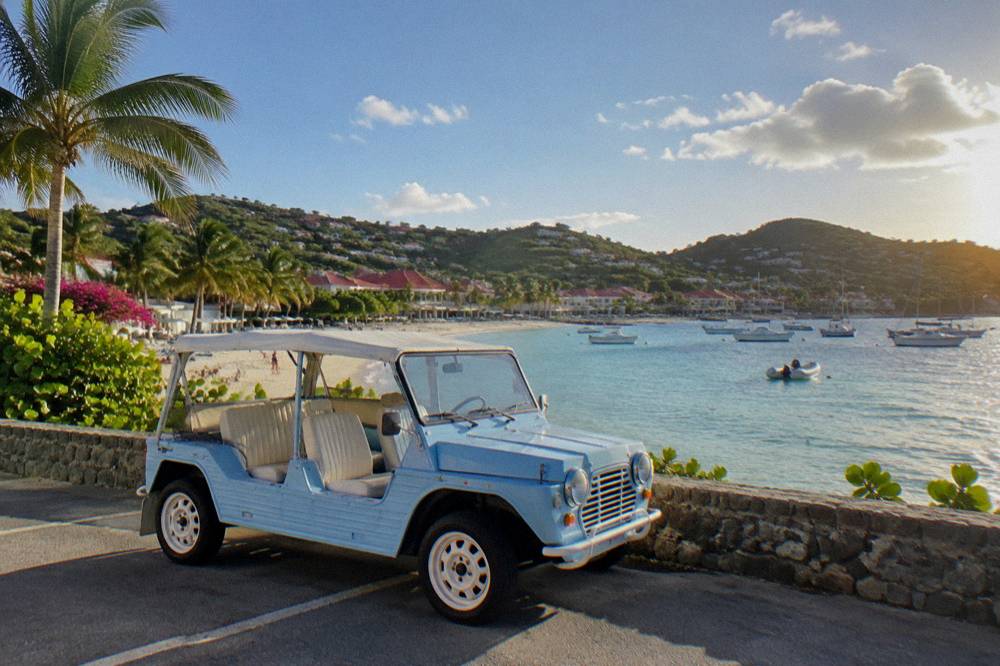
Small vehicles with high clearance suit St Barts best, according to rental and villa-manager guides: Mini Mokes for their open-air character, Smart cars and small compacts such as city cars for agility, small SUVs like the Suzuki Jimny for the steeper roads, and small compacts with automatic transmission as the general recommendation given the terrain and the tight parking in town. The Moke trades protection for style; the choice is character versus shelter.
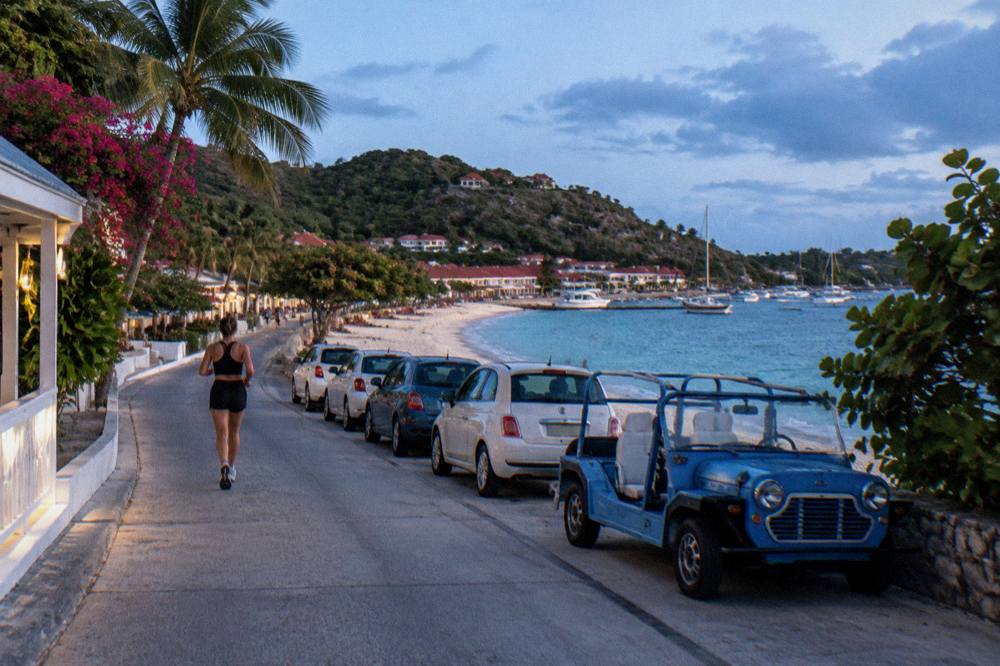
The Mini Moke is the island's signature vehicle, an open-air machine that matches the climate and the mood, available through local agencies. Rental guides note its limitation honestly: minimal protection, which matters in one of the occasional sharp Caribbean showers and on the island's dusty back roads. A Moke is a choice about how the drive feels.
| Vehicle Type | Strengths Cited In Rental Guides | Trade-Offs Cited |
|---|---|---|
| Mini Moke | Open-air island character, iconic status | Minimal protection from weather |
| Smart car / small compact | Agile on narrow roads, easy to park | Limited space for beach gear |
| Small SUV (e.g., Suzuki Jimny) | High clearance, handles steep grades | Slower, heavier on narrow passing |
| Small hatchback, automatic | General recommendation for conditions, automatics predominate | Less ground clearance than an SUV |
Automatics predominate across the fleets, with manuals sometimes available, so the transmission question is worth settling at booking. Rental sources also recommend inspecting the vehicle thoroughly at pickup, photographing existing marks, and confirming terms directly with the company, since policies such as the minimum driver age vary from firm to firm. No age number and no young-driver surcharge figure appears in any source; the company's own terms are the only reliable place for those details.
How Does Pick-Up Work At Gustaf III Airport?
Pick-up at Gustaf III Airport is short-distance and simple: the terminal is a single small building serving small STOL turboprops, the Avis, Budget and Hertz counters are at or immediately beside it, and most arriving travelers clear the aircraft, collect bags and reach a counter in a matter of minutes rather than a shuttle ride. Local agencies without airport counters instead deliver vehicles to hotels and villas by arrangement.
The airport context shapes everything. SBH, also called Remy de Haenen, has a 646 m runway on the shore at Saint-Jean, handles small turboprops only, and operates in daylight and visual conditions only. No jets land there, and the arrivals flow is correspondingly modest. Travelers connecting through St Martin Princess Juliana, San Juan, Guadeloupe or Antigua step off a Twin Otter or a Cessna Caravan-class aircraft into a compact terminal. The how to get to St Barts guide covers the full gateway picture.
| Pick-Up Route | What Happens | Best For |
|---|---|---|
| Airport counter (Avis, Budget, Hertz) | Counter at or beside the single terminal, no shuttle | Arrivals by air wanting to drive straight off |
| Local agency delivery | Vehicle delivered to hotel or villa by arrangement | Villas, longer stays, Moke specialists |
| Hotel or villa handover arranged in advance | Keys and paperwork at accommodation | Travelers arriving by ferry from St Martin |
Travelers arriving by ferry from St Martin or Sint Maarten dock at Gustavia, on the other side of the island from the airport, which is exactly why delivery to an accommodation or an agency with a town presence is the smoother route. Either way, the two documents rental sources consistently list are a valid driving licence from the renter's home country, typically held for at least a year, plus a passport or ID and a credit card in the renter's own name. An International Driving Permit is generally only relevant for licences not in the Roman alphabet. The wider set of guides lives on St Barthelemy Travel.
What Are The Parking Rules In St Barts?
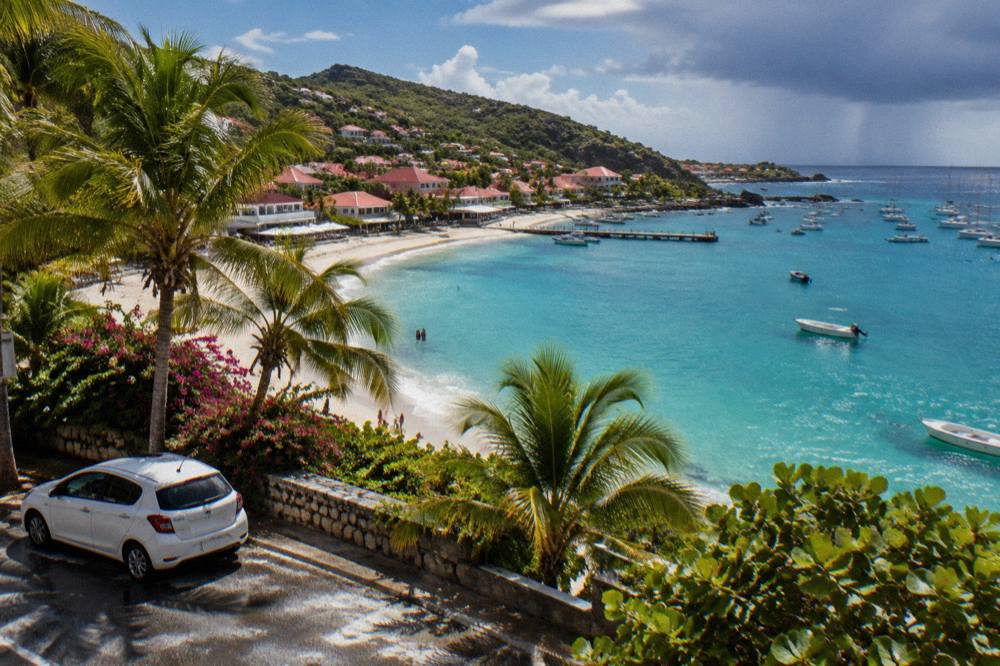
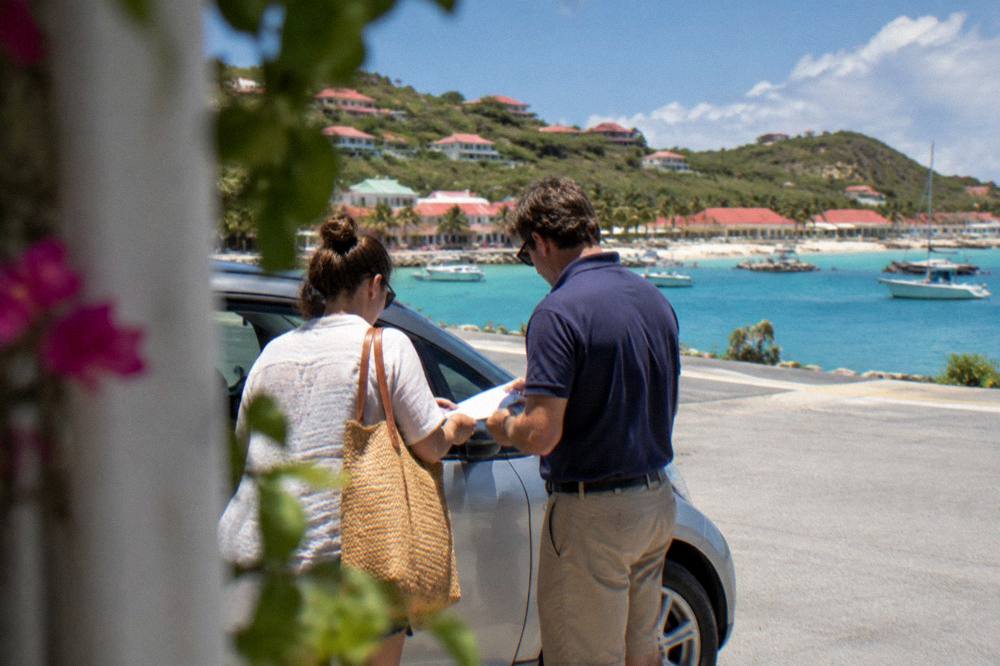
Parking in St Barts is governed by French conventions: street parking in Gustavia includes Blue Zone spots that require a parking disc for timed free stays, public lots exist including a large free area by the stadium, and prohibited zones are marked with signs reading Defense de Stationner. Blocking an access road is an offence, and the guidance across sources is to arrive early in the harbor area in high season to find a spot.
The Blue Zone system is the detail visitors most often miss. A disque de stationnement, the standard French parking disc, sets the arrival time on the dashboard and permits a timed free stay, typically up to about one and a half hours. Discs are inexpensive and available locally; without one displayed, a Blue Zone spot is being used incorrectly.
| Parking Option | How It Works |
|---|---|
| Street parking in Gustavia | Tight, often on inclines; arrive early near the harbor in high season |
| Blue Zone spots | Timed free parking with a dashboard disc, typically up to about 1.5 hours |
| Public lots | Include an area near the ferry terminal and a large free area by the stadium |
| Prohibited zones | Marked Defense de Stationner signs; blocking access is an offence |
No parking tariff exists; most parking is described as free but in limited supply. The seasonal reality is the honest version: in the December-to-April peak, and during the island's signature events such as the St Barts New Year's Eve period, harbor-side spots in Gustavia fill early in the day. The workaround is simple. Park once on the edge of town and walk: Gustavia's centre is compact, and the harbor, the shops and the forts are all reachable on foot from a central spot, with the details in the site's St Barts shopping guide.
Renting A Car Versus The Other Ways Around St Barts
A rental car compares well against every alternative on flexibility: taxis exist without published rates, Gustavia alone is genuinely walkable, boats reach beaches such as Colombier that roads serve poorly, and scooters trade weather protection for ease of parking, while a car alone covers every public beach, village and viewpoint on the traveler's own schedule. The right answer depends on whether the trip is one base or many.
The comparison is not really price versus price, since none of the fares are verifiable. It is structure versus freedom. A traveler based in Gustavia or Saint-Jean who wants one beach a day can live without a car, walk the town, and take taxis for the exceptions. A traveler chasing Gouverneur, Saline, Flamands, Corossol and Colombier in a week will spend the trip either renting or regretting.
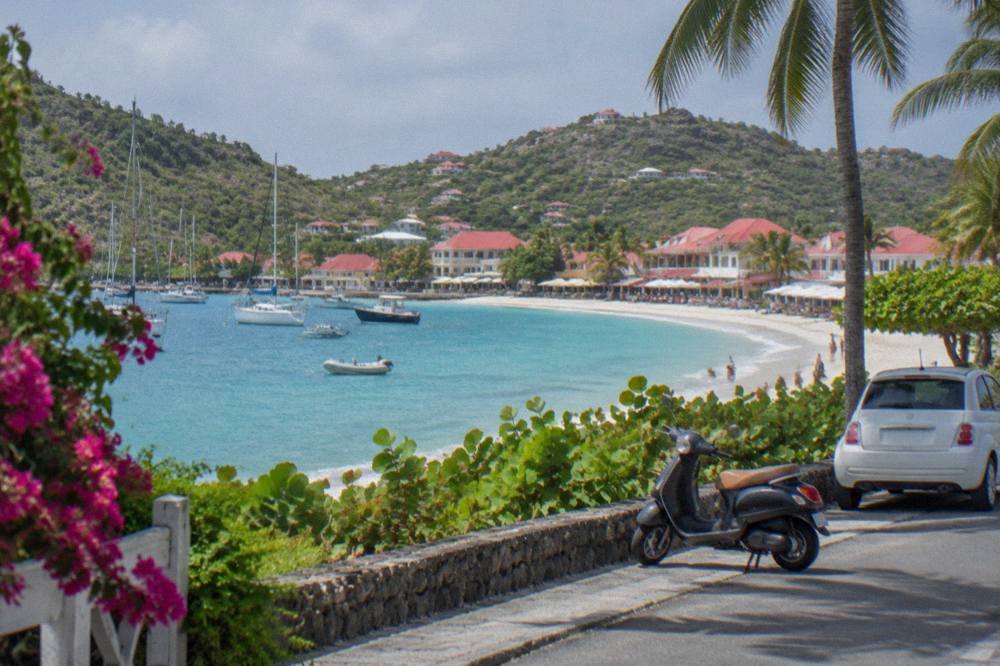
The water deserves equal billing in this comparison. The island's marine reserve rules, set by the environment agency, impose a 5-knot limit in protected zones, ban jet skis and list turtles among the species that must not be touched, and the beaches most affected by those rules, Colombier Bay among them, are as much boat territory as road territory. That is why the pairing of a rental car with a boat day is the strongest pattern: the car for the island's spine, the boat for its edges.
When Should You Book A St Barts Car Rental?
Book a St Barts car rental as far ahead as the accommodation, and above all before the December-to-April high season: rental sources consistently recommend booking well in advance for that window, since the island's fleet is small, automatics are in demand on its steep roads, and Mini Mokes through local specialists are a limited supply. For travel between May and November, earlier booking still helps but the pressure is lower.
The seasonal logic mirrors the island's hotel calendar. Many hotels and restaurants close each autumn and reopen between mid-October and early November, and the season builds from there toward the December peak. Rental demand follows the same curve. A car booked alongside the flight is a car secured; one booked on arrival in January is a negotiation with whatever is left.
| Season Window | Booking Pressure | Why |
|---|---|---|
| December to April | Highest | Peak season; sources advise booking well in advance |
| May to August | Lower | Quieter season; the group sail's per-person dates, 12 May to 31 August 2027 on its listing, fall here |
| September to mid-October | Lowest | Deepest low season; many hotels and restaurants closed for their annual break |
| Late October to November | Rising | Reopening wave between mid-October and early November rebuilds demand |
Two practical booking notes close this out. First, confirm the transmission, the delivery option and the fuel policy in writing with the company, since policies vary between the international counters and the local agencies. Second, if the itinerary includes a boat day, book that early too: the most popular departures leave from St Martin and Sint Maarten, and their calendars are independent of the island's car fleet. The full set of options is on the site's things to do in St Barts page.
Common Questions About St Barts Car Rental
Do you need a car in St Barts?
Not strictly, but it is the default: Gustavia's centre is compact and walkable, taxis exist, and a single-base trip with one nearby beach can work without wheels. For visiting multiple beaches and villages across the island's steep terrain, a rental car is what the island's getting-around guides recommend.
Which rental car companies are at St Barts airport?
Avis, Budget and Hertz have counters at Gustaf III Airport, and a wider set of local agencies operates island-wide, including Mini Moke specialists that deliver to hotels and villas.
What is the speed limit in St Barts?
The reported speed limit is 50 km/h island-wide, dropping to 30 km/h in the populated areas of Gustavia and Saint-Jean. Traffic drives on the right under French rules, with one roundabout near the airport and priority to the right at unsigned intersections.
What kind of car is best for St Barts roads?
Small vehicles with high clearance: rental guides point to small compacts, Smart cars, small SUVs such as the Suzuki Jimny, and the open-air Mini Moke through local agencies. Automatics predominate in the fleets, so confirm the transmission when booking.
Is parking difficult in St Barts?
Gustavia's harbor-area parking fills early in the December-to-April high season, per the island's getting-around guides. Options include street parking, public lots including a large free area by the stadium, and Blue Zone spots requiring a parking disc for timed free stays.
Can you rent a Mini Moke on St Barts?
Yes, through local agencies rather than the international brands. The Moke is the island's signature rental, with the trade-off of minimal weather protection, which is worth weighing against the island's occasional sharp showers.