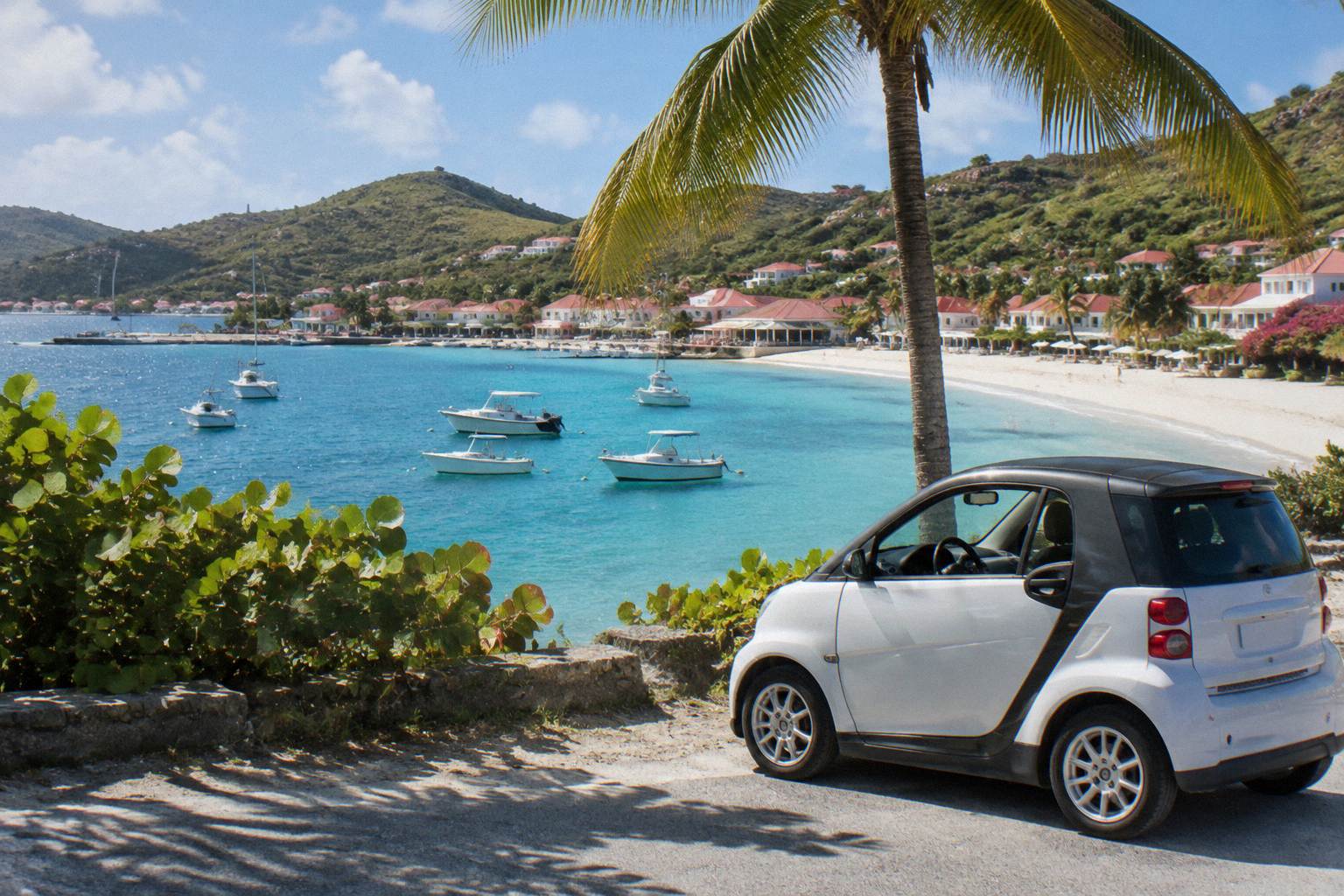
Do You Need A Car In St Barts?
Whether a rental car is essential on St Barts, what the roads and rules are like, and how to see the island car-free, including boat day trips that skip driving entirely.
St Barthelemy, better known as St Barts, is a French overseas collectivity in the Caribbean covering about 21 square kilometres, with Gustavia as its harbour capital and roughly 10,700 residents. On an island that small, the car question feels like it should have a simple answer, and in a sense it does: the terrain, not the distance, is what decides. The roads are narrow, winding and steep, the beaches sit at the ends of descents that punish optimism, and the tourism committee's own materials describe the island through its scattered bays rather than one connected strip. This page sets out what rental companies, villa managers and local authorities actually publish, so the decision can be made on evidence rather than on forum folklore. For a broader look at the island's options, see things to do in St Barts.
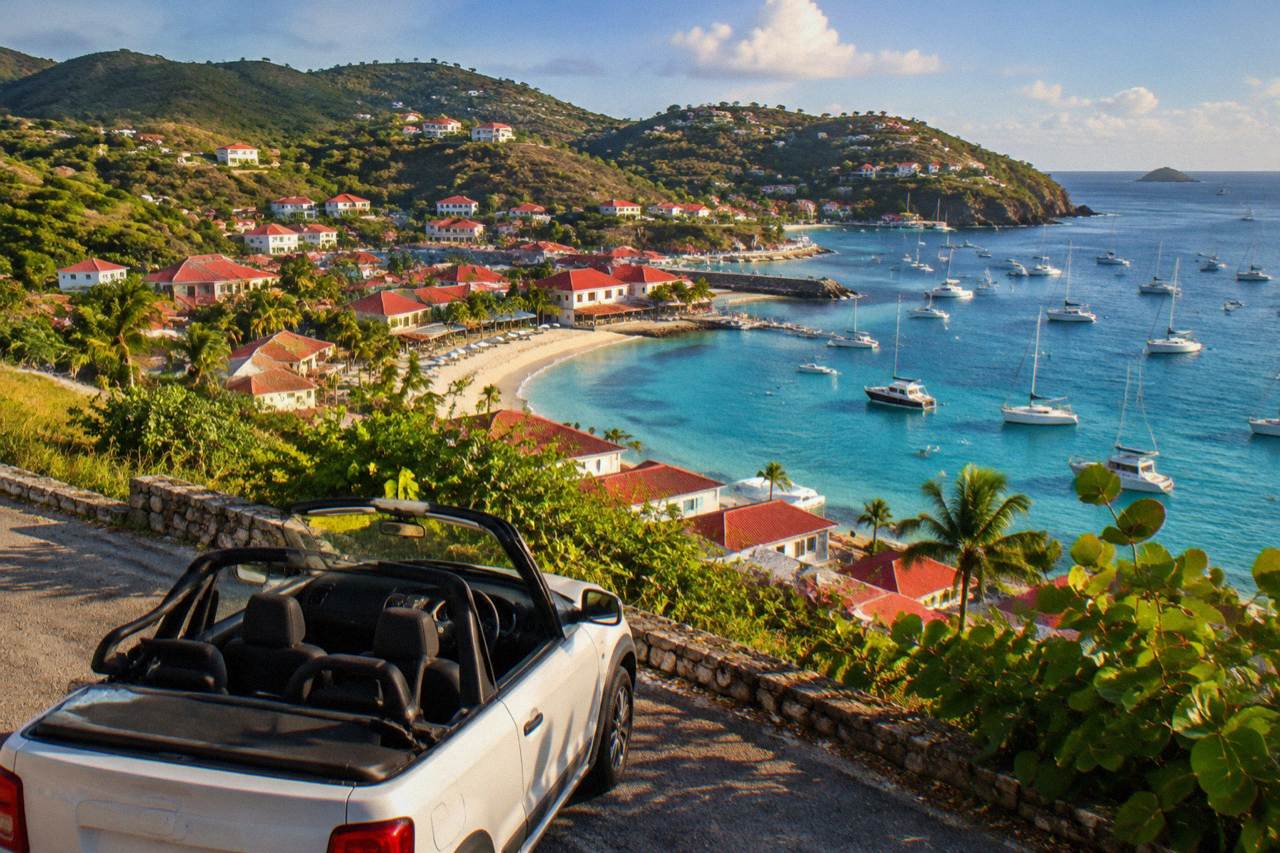
Travellers will find a car useful for at least part of a St Barts stay, because the island's beaches, villages and viewpoints are spread across steep hills with no rail and no island-wide public bus network, but a car is not strictly essential. If you stay in Gustavia or Saint-Jean and plan a slow beach-and-harbour week, or if you book boat day trips from St Martin, you can manage without one. Renting simply widens the map.
That is the honest shape of it. Villa rental managers such as WIMCO, whose getting-around guidance is drawn on here, treat a rental car as the default for villa guests and describe the island's roads as narrow and hilly with steep grades. Nothing in the published material claims a car is mandatory, and nothing claims the island is comfortably walkable end to end. The decision splits by trip style: a harbour-based short stay can skip the wheel, a beach-hopping week benefits from it.
One structural point tilts the maths. Every bookable boat tour listed here departs from St Martin or Sint Maarten, not from St Barts, so the headline day trips to Colombier and Ile Fourchue do not require a car on the island at all. That removes one of the biggest reasons people think they need one.
| Trip style | Car genuinely needed? | Why |
|---|---|---|
| Short stay based in Gustavia | No | The harbour centre is compact, with shops and restaurants close together |
| Stay in Saint-Jean or Lorient | Helpful | Beaches and villages sit a drive or taxi ride apart across hilly roads |
| Villa stay in Vitet, Devet or Toiny | Yes | Hillside villas sit at the end of steep, winding access roads |
| Boat day trips from St Martin | No | Tours depart from St Martin or Sint Maarten, not St Barts |
How Do You Get Around St Barts Without A Car?
The car-free options on St Barts are taxis, your own feet in the compact Gustavia centre, and boat day trips that depart from St Martin or Sint Maarten and visit the island's harder-to-reach bays. There is no island-wide public bus on St Barts, no ride-hailing service is confirmed, and taxi fares are not published here. Walking works in town, not between beaches.
Start with what is verifiable. Taxis exist on the island; the airport's own transfer pages reference them. But no fare schedule is available, so the honest advice is to agree the fare with the driver before setting off, which local taxi pages themselves recommend. No claim is made here about meters, availability by season or waiting times.
Walking is a real option in exactly one context: Gustavia's centre. The harbour town is compact, its shops and quays sit close together, and the tourism committee's materials present it as a town you browse on foot. The materials list no walking time between points. Outside Gustavia, the island's steep roads and the absence of sidewalks on many stretches make walking between beaches a project rather than a plan.
The third car-free route is the one people forget. Because the tours all leave from the other island, a visitor flying into St Martin can spend a day sailing to Colombier and Ile Fourchue without ever renting anything on St Barts. The one per-person group sail listed here runs only from 12 May to 31 August 2027 on its listing, so timing matters for that specific product.
For readers weighing the rental question itself rather than the workaround, the deeper comparison lives in is it worth renting a car in St Barts.
What Does Renting A Car In St Barts Involve?
Rental counters at Gustaf III Airport include Avis, Budget and Hertz, according to a supplier page read for this site, and local agencies also rent the island's iconic open Mini Mokes. Traffic drives on the right, roads are reported as narrow and steep, and the speed limit is reported as 50 km/h island-wide and 30 km/h in Gustavia and Saint-Jean. Rental prices, minimum driver ages and surcharges vary from agency to agency.
The mechanics are otherwise familiar French-territory practice. Villa-manager guidance says a licence from your home country, a credit card and a passport or ID are the usual requirements, and that delivery to hotels and villas is commonly available. The minimum driver age varies by company, so confirm with the agency you book. Booking ahead for the December to April peak is the standard recommendation across the rental sources. The full index of guides sits on St Barthelemy Travel.
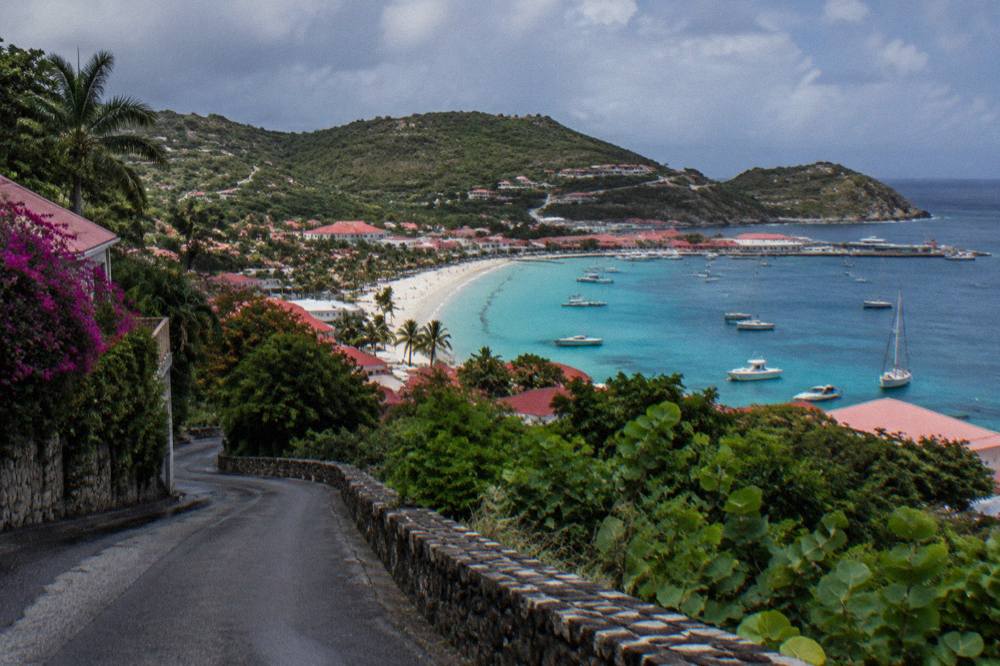
What surprises drivers is not the paperwork but the topography. The island is a ridge of hills, and the roads follow it: tight switchbacks, short steep climbs and descents, and limited passing room. The one roundabout sits near the airport. French right-of-way rules apply, including priority from the right at unsigned junctions, which the rental guidance flags as the rule visiting drivers most often miss. Small vehicles with higher clearance, compacts and small SUVs, are the repeated recommendation, and automatics predominate in the fleets.
| Rental basic | What To Know |
|---|---|
| Where | Counters at Gustaf III Airport (SBH), plus local agencies including Mini Moke specialists |
| Side of the road | Right |
| Speed limit | Reported as 50 km/h island-wide, 30 km/h in Gustavia and Saint-Jean |
| Typical vehicles | Small compacts, small SUVs, Mini Mokes; automatics predominate |
A practical note on entry paperwork sits alongside the driving rules: the island is outside the Schengen area, and passport requirements depend on nationality. The details are covered in do US citizens need a passport for St Barts.
Which Parts Of St Barts Work Best Without A Car?
Gustavia is the clear car-free base: the tourism committee presents it as a compact harbour capital where shops, quays and sights cluster together, and the island's two fort ruins and its museums sit in or near the town. Saint-Jean and Lorient come next, each a beach-and-village pocket that works on foot locally, though the roads between pockets are steep and exposed. Hillside areas such as Vitet, Devet, Pointe Milou and Toiny effectively require a vehicle.
The pattern is geographic. St Barts' beaches ring the coast while the interior rises between them, so car-free ease is really a question of how many bays you intend to visit in a day. A visitor anchored to one beach village and making one or two taxi journeys a week lives differently from a visitor circling the island daily. Both exist; only the second needs wheels.
For the full area-by-area breakdown, including where each sits on the map, see what part of St Barts is best to stay in. The dedicated planning page for the rental itself is the St Barts car rental guide.
Can Boat Trips Replace The Car On St Barts?
For the island's headline water destinations, yes. Colombier Beach and Ile Fourchue are reached most easily by boat, and every bookable tour listed here departs from St Martin or Sint Maarten, meaning those days need no St Barts car at all. The marine reserve's rules shape what those days look like: a 5-knot limit inside its zones, no jet skis, and no touching of turtles, according to the environment agency's regulatory-zones page.
This is the quiet answer to the car question that first pages of search results tend to miss. Colombier, repeatedly named among the island's standout beaches, sits at the end of a hike or a sail; arriving by boat from St Martin converts the island's least drivable highlight into a no-car trip. The same logic covers a Nikki Beach charter day and an overnight catamaran, both of which put the sea, not the road, at the centre of the itinerary.
The trade-off is simple: boat days from St Martin are full days committed to one operator's route, while a rental car buys spontaneity across St Barts' whole coastline. A week that mixes both, a harbour or village base plus two or three scheduled boat days, covers more of the island than either approach alone.
Common Questions About Needing A Car In St Barts
Do You Need A Car In St Barts?
Not strictly. A stay based in Gustavia or Saint-Jean with taxi trips and boat day tours from St Martin can work without one. A rental car is recommended for villa stays in the hills and for anyone who wants to move between beaches freely each day.
Is It Hard To Drive In St Barts?
The roads are reported as narrow, winding and steep, with a speed limit of 50 km/h island-wide and 30 km/h in Gustavia and Saint-Jean. Traffic keeps to the right and French right-of-way rules apply. Small vehicles are the common recommendation.
Are There Taxis And Buses In St Barts?
Taxis exist and are the standard car-free alternative outside town. No island-wide public bus network is described, and no fare or timetable is given, so agree taxi fares with the driver in advance.
Can You Walk Everywhere In Gustavia?
Gustavia's centre is compact, with shops, quays and the harbour sights close together, which is why a harbour-based stay is the standard car-free option. No walking time is given.
Do The Boat Tours Leave From St Barts?
No. Every bookable tour listed here departs from St Martin or Sint Maarten and visits St Barts, including the group sail to Gustavia, Colombier and Ile Fourchue and the private charter options.
In the end, the car decision on St Barts is a decision about pace. A wheel unlocks every bay on about 21 square kilometres of steep, beautiful ground; skipping it confines a stay to one walkable pocket plus whatever the sea can carry you to, and the sea, on this island, carries you to the places worth going.