What Part Of St. Barts Is Best To Stay In?
A district by district guide to where to stay in St Barts: Gustavia, Saint-Jean, Flamands, Grand Cul-de-Sac, Lorient, Toiny and Corossol, and what each area suits.
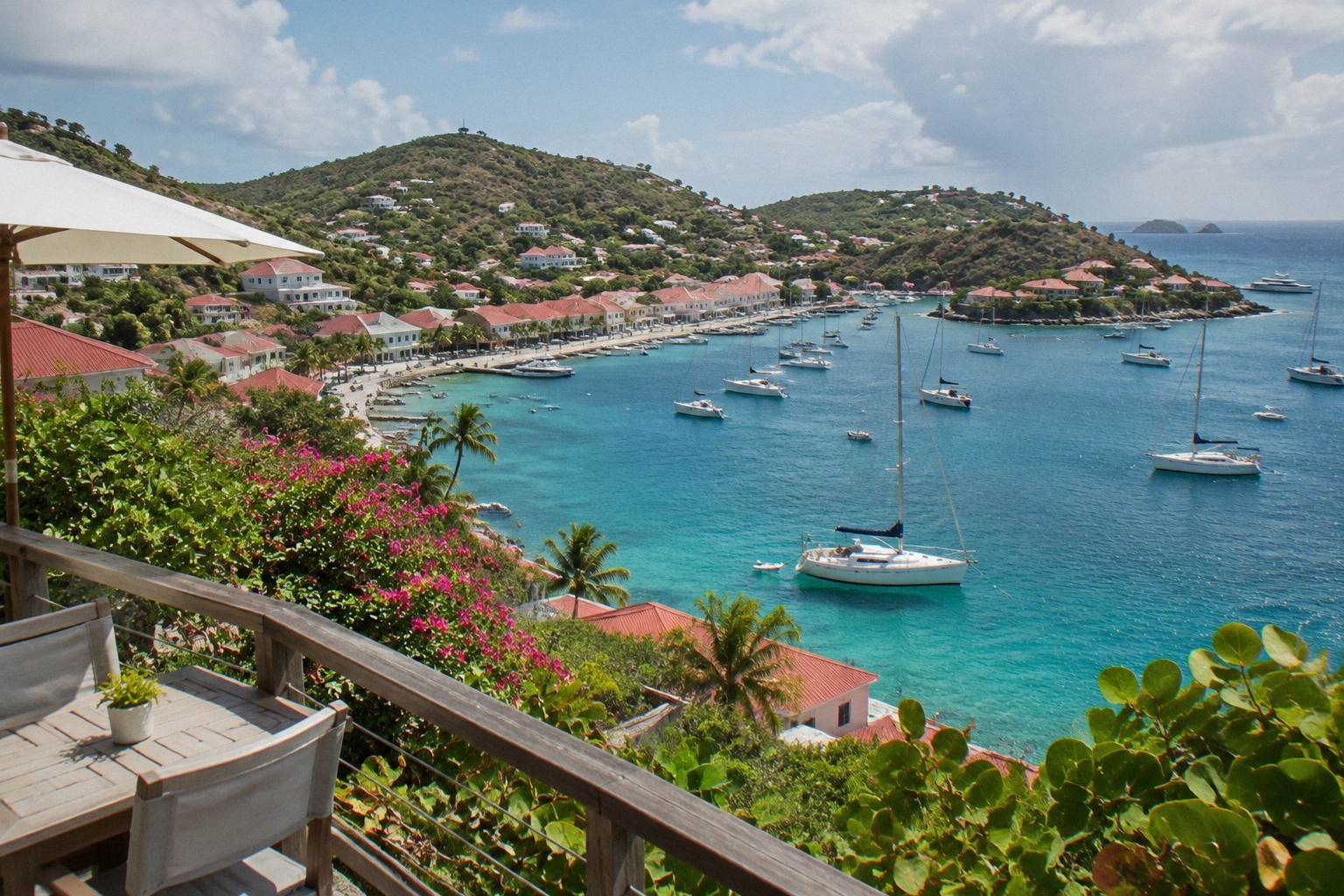
St Barthelemy, written St Barts on this page, is a small French island in the Caribbean of about 21 square kilometres, roughly 10,700 residents, one harbour capital and a ring of public beaches. Because everything is close to everything else, the question of what part of St Barts is best to stay in is less about distance and more about character: the harbour town of Gustavia, the airport-side buzz of Saint-Jean, the villa slopes above Flamands, the shallow-water calm of Grand Cul-de-Sac, and the quiet residential stretches of Lorient, Toiny and Corossol each suit a different kind of trip. All of them sit within a short drive of each other on narrow, steep, right-hand-drive roads, and none is more than a few turns from a public beach.
This article walks the island area by area, reports what each is like without printing a single rate, and closes with the pairings that usually decide it: harbour or beach, walking or driving, high season or autumn quiet. Rates vary by season, and each property's own booking page shows what a given week costs. For a wider look at the island's accommodation landscape, the companion guide to where to stay in St Barts covers hotels and villas across all of these areas.
The best part of St Barts to stay in depends on the trip: Gustavia suits a walkable harbour stay near shops and the tender quay, Saint-Jean suits beach-and-airport convenience, Flamands and Grand Cul-de-Sac suit hotel-based beach holidays, and Lorient, Toiny and Corossol suit quieter villa stays. No area is far from another on an island of about 21 square kilometres, so the choice is about character rather than distance.
That one-sentence answer hides the real decision, which is usually between town and shore. Gustavia, the capital, is the only genuinely walkable base: the harbour, the boutiques, the Shell Beach cove and the ferry quay all sit in a compact bowl of steep streets. Saint-Jean, on the north coast, wraps around the island's most photographed bay and the runway of Gustaf III Airport, whose 646 m strip receives only small turboprops in daylight hours. Grand Cul-de-Sac, on the sheltered northeast, holds a shallow lagoon that the tourism committee's own materials single out for calm water and turtle sightings. Flamands, on the northwest, is a wide public beach backed by a hotel cluster on the slopes above it.
The rest of the island is residential and quieter. Lorient, on the north coast east of Saint-Jean, mixes a public beach with a village feel. Toiny, on the southeast, is a stretch of villas above a wilder coast. Corossol, west of Gustavia on the leeward side, is a small traditional village near the island's working, non-tourist beach. Each of these appears again below with its own section.
A useful shortcut: decide first whether the trip is hotel-based or villa-based. St Barts has a large villa market with no reliable count, managed by firms such as WIMCO, Sibarth and St Barth Properties, and villas sit in every area, while the named hotels cluster in Flamands, Grand Cul-de-Sac, Saint-Jean, Pointe Milou and Gustavia. Villa renters pick the slope; hotel guests pick the property, and the property picks the area.
If the trip starts from St Martin or Sint Maarten, arriving by water is a second way to preview the island before choosing a base. Three day-trip options below all depart from the St Martin side.
Want a first look at the island from the water? Book a group sail and snorkel tour.
Is Gustavia The Best Place To Stay In St Barts?
Gustavia is the best place to stay in St Barts for a short, walkable, town-based trip: the harbour capital concentrates the island's shopping, its waterfront restaurants, the Shell Beach cove and the ferry quay within steep walking streets, and it is the only base where a car is genuinely optional. The trade-off is that it is the busiest, most built-up part of a small island.
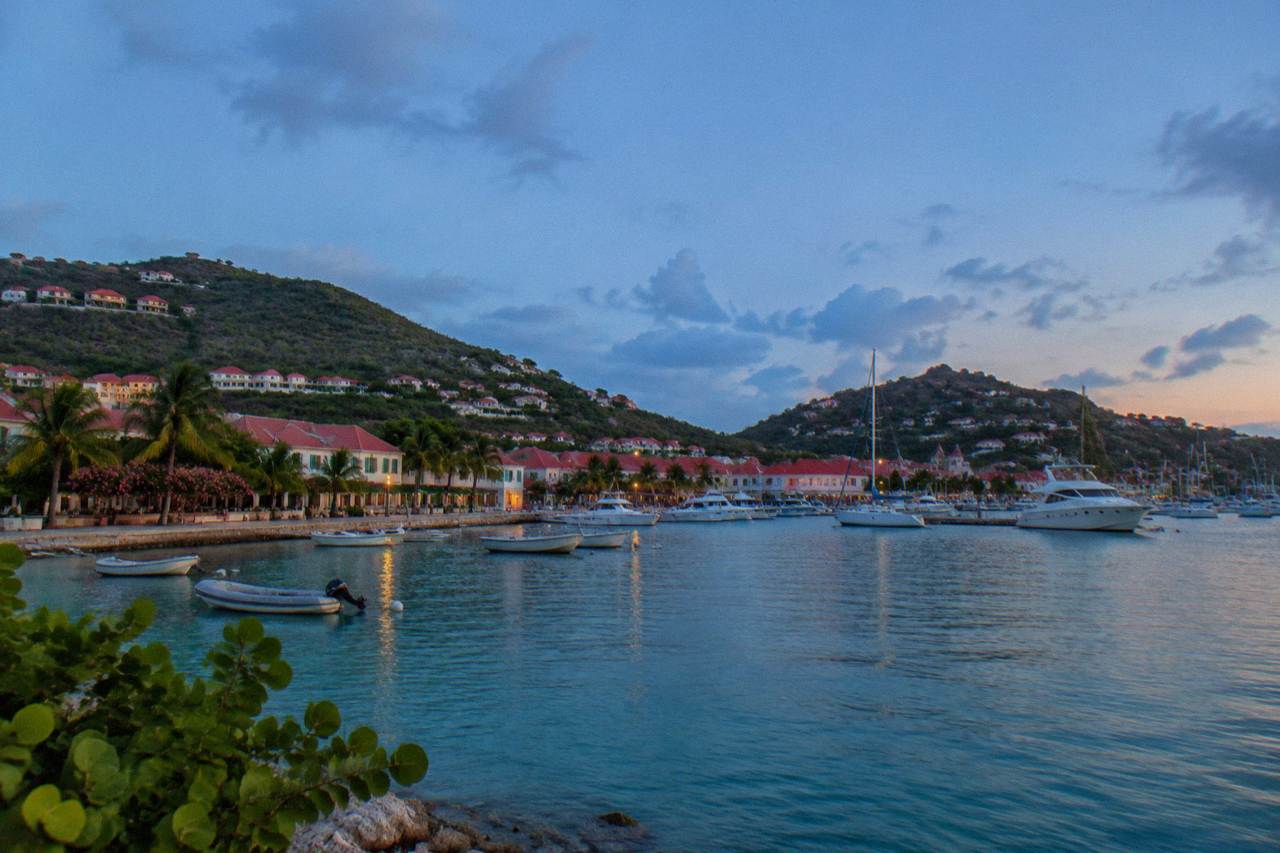
Gustavia is the island's capital and harbour town, a bowl of red roofs around a marina where superyachts dock in season and cruise passengers tender ashore, since the port has no cruise pier. Streets rise steeply from the waterfront, the Shell Beach cove sits a short walk from the centre, and two historic forts, Karl and Gustaf, frame the harbour. The tourism committee lists the town's attractions, museums and shopping together, which reflects how compact it all is: the Wall House Museum and the small Swedish-history museum are part of the same town fabric.
For staying, the practical case is simplicity. Ferries from Philipsburg and Marigot dock at the quayside, the island's taxi hub is here, and everything from bakery to boutique is on foot. The counter-case is atmosphere: Gustavia is a working port town that fills with day visitors and empties somewhat in the evenings, and its accommodation stock is smaller than the beach areas'. Readers curious about the celebrity angle can cross-check the answer on where celebrities stay in St Barts, which points away from town and toward the villa slopes.
Two practical notes shape a Gustavia stay. First, the autumn pattern applies here as everywhere: many businesses close in the low weeks and reopen between mid-October and early November each year, so an October or early November trip meets a town still waking up. Second, a car is optional in town but useful beyond it, and the island's roads are steep and narrow with a 50 km/h limit and 30 km/h through Gustavia itself, as local getting-around guides describe.
Saint-Jean Or Grand Cul-De-Sac: Which Suits A Beach Holiday?
Saint-Jean suits a lively beach holiday centred on the island's iconic bay, the airport overflight and a cluster of hotels and beach clubs, while Grand Cul-de-Sac suits a calmer, shallow-water holiday on the northeast lagoon where the tourism committee highlights turtle sightings. Saint-Jean is the more central and social base; Grand Cul-de-Sac is the more relaxed and family-shaped one.
Saint-Jean wraps around a wide public beach split by the Eden Rock promontory, with the Gustaf III runway immediately behind the village. The airport is famous for its short 646 m strip and its STOL turboprop approach over a hillside road, and plane spotting from the beach is a recognized island pastime, covered in the site's own airport spotting guide. Hotels on and above the bay include Eden Rock, Isle de France on Flamands' edge of the area, Le Village and Pearl Beach Hotel, all named here without any rate, which varies by season and appears on each property's booking page.
Grand Cul-de-Sac, by contrast, sits on the island's northeast shore along a shallow lagoon protected by a reef. Le Barthélemy and Le Sereno, plus the Guanahani resort at the head of the bay, whose Rosewood management ends in autumn 2026 with a rebranding to Airelles reported in the French press, line this shore. The marine reserve's rules apply in the surrounding waters: a 5-knot limit in protected zones, no touching of turtles, no jet skis anywhere in the reserve. The nature reserve context is covered in full in the St Barts nature reserve guide.
The two areas trade blows on practicality. Saint-Jean is minutes from the airport and close to Gustavia; Grand Cul-de-Sac is farther from town but closest to the leeward water sports. Neither has the depth of dining that Gustavia has, and both lean on a short drive for groceries and restaurants. A beach-by-beach comparison across the whole island, including the quiet contenders, sits in the answer to what is the nicest beach in St Barts.
Where To Stay In St Barts For Quiet: Lorient, Toiny, Corossol?
For quiet, the best parts of St Barts are Lorient on the north coast, Toiny on the southeast and Corossol west of Gustavia: three residential stretches with public beaches, villa stock and little through-traffic, where the trade-off is a mandatory car and a longer drive to shops and dinner. Corossol is the most traditional; Toiny the most secluded; Lorient the most balanced.
Lorient, east of Saint-Jean, is a village-scale area with a public beach, a small grocery scene and a mix of houses and villas set back from the shore. It is the area that returning renters often settle on precisely because it splits the difference: a quiet base with an easy run into both Saint-Jean and Gustavia. Other pages covering the same trip are gathered on St Barthelemy Travel.
Toiny, on the southeast coast, is the most secluded of the three. Its shore faces open Atlantic, the beach is public and undeveloped, and Hotel Le Toiny sits alone above the bay. The area's villa slopes are among the island's most private, and the drive to anywhere is the longest on an island where every drive is short. Pointe Milou, nearby on the northeast headland, is a fourth quiet option, a residential cluster around the Christopher hotel with wide water views.
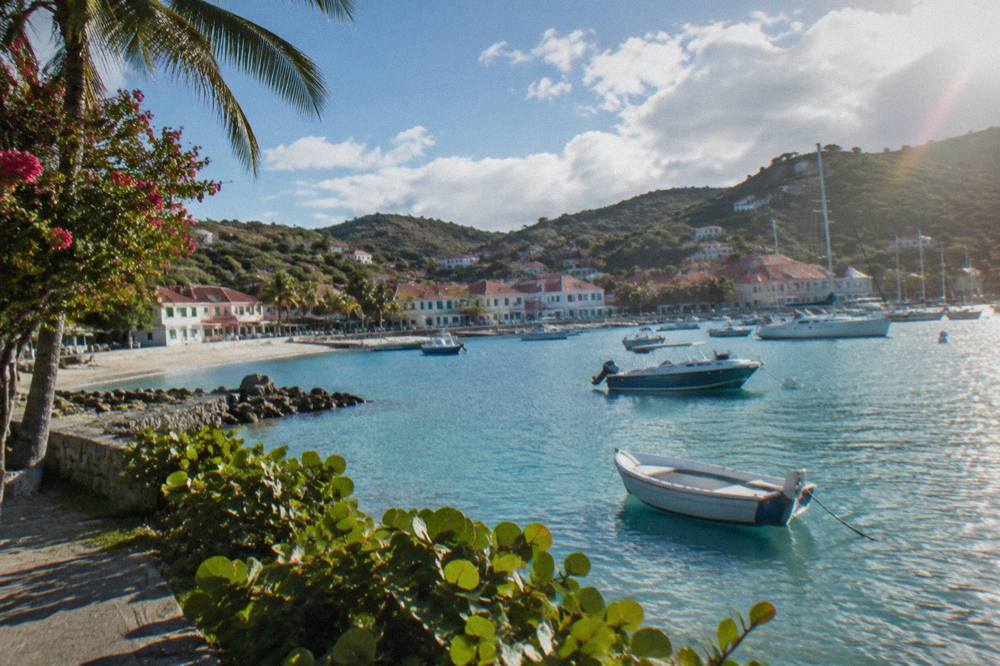
Corossol, on the leeward side west of Gustavia, is the island's most traditional village, home to the shell museum and a small working beach where fishing boats still come in. Accommodation here is limited and modest in scale, and the area suits travelers who want the slow, local side of the island within sight of the capital's lights.
How Does The Season Change Which Part Of St Barts Is Best?
The season changes the answer more than any map does: from December through April the hotels, restaurants and beach clubs of Saint-Jean, Flamands and Gustavia run at full tilt, while each autumn many close for weeks and reopen between mid-October and early November, which pushes a low-season stay toward Gustavia's year-round core, the villa market, or Lorient and Corossol's residential quiet. The villas stay available year-round.
The island's rhythm follows the calendar closely. High season runs through the northern winter, anchored by events the tourism committee and organizers publish: the St Barth Music Festival from 8 to 18 January 2027, the Gourmet Festival from 9 to 15 November 2026, and the St Barths Bucket Regatta in mid-March. Hurricane season runs 1 June to 30 November with its peak mid-August to mid-October, and the closure pattern tracks it: the major hotels shut in late August and reopen in the October wave, with a few holding to early November.
Weather barely moves the needle by comparison. The Meteo-France normals for 1991 to 2020 show mean daily highs of 28.5 C in January and 31.7 C in September, and October is the wettest month at 135.6 mm of the annual 891.3 mm. The sea stays warm, about 26 C in winter to about 29 C from August to October.
| Month | Mean Daily High | Rainfall | Season Note |
|---|---|---|---|
| January | 28.5 C | 52.6 mm | Music Festival 8 to 18 Jan 2027 |
| March | 29.0 C | 41.4 mm | Bucket Regatta, mid-March |
| September | 31.7 C | 96.9 mm | Hurricane-season peak, many closures |
| October | 31.4 C | 135.6 mm | Wettest month; reopening wave mid-month to early November |
| November | 29.9 C | 118.6 mm | Gourmet Festival 9 to 15 Nov 2026 |
How The Areas Compare At A Glance?
Gustavia wins on walkability and shopping, Saint-Jean on beach-and-buzz convenience, Flamands on hotel-backed beach calm, Grand Cul-de-Sac on shallow, sheltered water, and Lorient, Toiny and Corossol on residential quiet, with the villa slopes of Vitet and Devet between them. Every area is public-beach adjacent, every area needs a car except Gustavia, and no area puts a visitor far from any other on a 21-square-kilometre island.
| Area | Character | Best Suits | Named Properties (No Rates) |
|---|---|---|---|
| Gustavia | Harbour capital, walkable, shopping and dining | Short trips, ferry arrivals, no-car stays | Carl Gustaf (reported rebranding to Fouquet's) |
| Saint-Jean | Beach bay, airport, beach clubs, nightlife | Social beach holidays, first-timers | Eden Rock, Le Village, Pearl Beach Hotel |
| Flamands | Wide beach, hotel slopes, quieter than Saint-Jean | Hotel beach stays | Cheval Blanc Isle de France, Isle de France, Taiwana |
| Grand Cul-de-Sac | Shallow lagoon, calm water, turtles | Families, water-based stays | Le Barthélemy, Le Sereno, Guanahani |
| Pointe Milou | Headland views, residential | View-seekers, quiet | Christopher |
| Lorient | Village scale, balanced position | Repeat visitors, villa renters | Manapany |
| Toiny | Secluded southeast coast, wild shore | Privacy, villas | Le Toiny |
| Corossol | Traditional fishing village | Slow travel, local life | Small-scale options only |
Two honesty notes on that table. Rosewood Le Guanahani is reported in the French press to become Airelles Le Guanahani in late 2026; the property's own pages confirm current branding. And no area carries a price tag here: rates vary by season, and each property's own booking page is the place to look.
For the many visitors who arrive from the St Martin side rather than sleep on the island at all, the day-trip question runs alongside the stay question, and the overnight catamaran option below splits the difference.
Should You Stay In St Barts At All, Or Day-Trip From St Martin?
Staying on St Barts suits travelers who want the island's mornings and evenings, its beaches at quiet hours and its restaurant dinners, while a day trip from St Martin or Sint Maarten suits a first look, a budget-conscious visit or a fixed stay on the Dutch or French side; the bookable day trips all depart from St Martin ports and marinas and spend a day around Gustavia, Colombier and Ile Fourchue before returning.
The day-trip route is well established. Private charters and one per-person group sail run from Simpson Bay, Cole Bay, Anse Marcel and Grand Case on the St Martin side, cross to St Barts, and spend the day on the water and in Gustavia. The Nikki Beach private charter, for instance, ties its stop to the Saint-Jean shore on the island's northeast edge, which is one of the areas profiled above; its live listing carries the current price and dates, and the operator's listing shows them. The comparison between the two islands, including cost of living and pace, is covered in the guide to St Barts versus St Martin.
For overnight decisions, the honest summary of this whole page: pick Gustavia for a town trip, Saint-Jean for a social beach trip, Grand Cul-de-Sac or Flamands for a hotel beach holiday, and Lorient, Toiny or Pointe Milou for a quiet villa week. The deeper dive on the trade-offs, including hotel-versus-villa math, is in the site's best area to stay in St Barts guide, and the harbour town gets its own treatment in Gustavia: where to stay.
For travelers weighing the island against its neighbors before committing, the question of whether the trip is worth it at all is answered separately in is it worth going to St Barts.
Common Questions About Where To Stay In St Barts
What Part Of St. Barts Is Best To Stay In?
Gustavia for a walkable town stay, Saint-Jean for a social beach base, Flamands or Grand Cul-de-Sac for hotel beach holidays, and Lorient, Toiny or Corossol for quiet villa stays. On an island of about 21 square kilometres the choice is about character, not distance.
Is Gustavia walkable without a car?
Yes. The harbour capital's shops, restaurants, the Shell Beach cove and the ferry quay sit within steep walking streets, making it the one area where a car is genuinely optional. Roads elsewhere are narrow and steep, with a 50 km/h island limit and 30 km/h through Gustavia and St Jean.
Which area of St Barts is best for families?
Grand Cul-de-Sac, on the island's northeast shore, where a shallow lagoon holds calm water and the tourism committee highlights turtle sightings in the area. The marine reserve's rules apply there: no touching turtles, no jet skis in protected zones, and dogs are banned from beaches island-wide.
Do hotels in St Barts close in autumn?
Many do. The island's hotels and many restaurants close in the late-summer low weeks and reopen in waves between mid-October and early November each year. Villas generally remain available year-round, which makes them a common low-season choice.
Can you stay in St Barts without booking a hotel?
Yes. The island has a large villa market managed by firms including WIMCO, Sibarth and St Barth Properties, with villas available in every area from Lorient to Toiny. Rates vary by season and appear on each manager's own site.
Which part of St Barts is closest to the airport?
Saint-Jean. The Gustaf III runway, a 646 m strip served only by small turboprops in daylight hours, sits directly behind Saint-Jean bay, and the approach passes over the road at the head of the beach, one of the island's known plane-spotting spots.