Where To Stay In St Barts
St Barthelemy is a small French Caribbean island of about 21 square kilometres, and the question of where to stay in St Barts comes down to a handful of distinct areas, each with its own character, from the harbour capital of Gustavia to the quiet hills above Toiny.
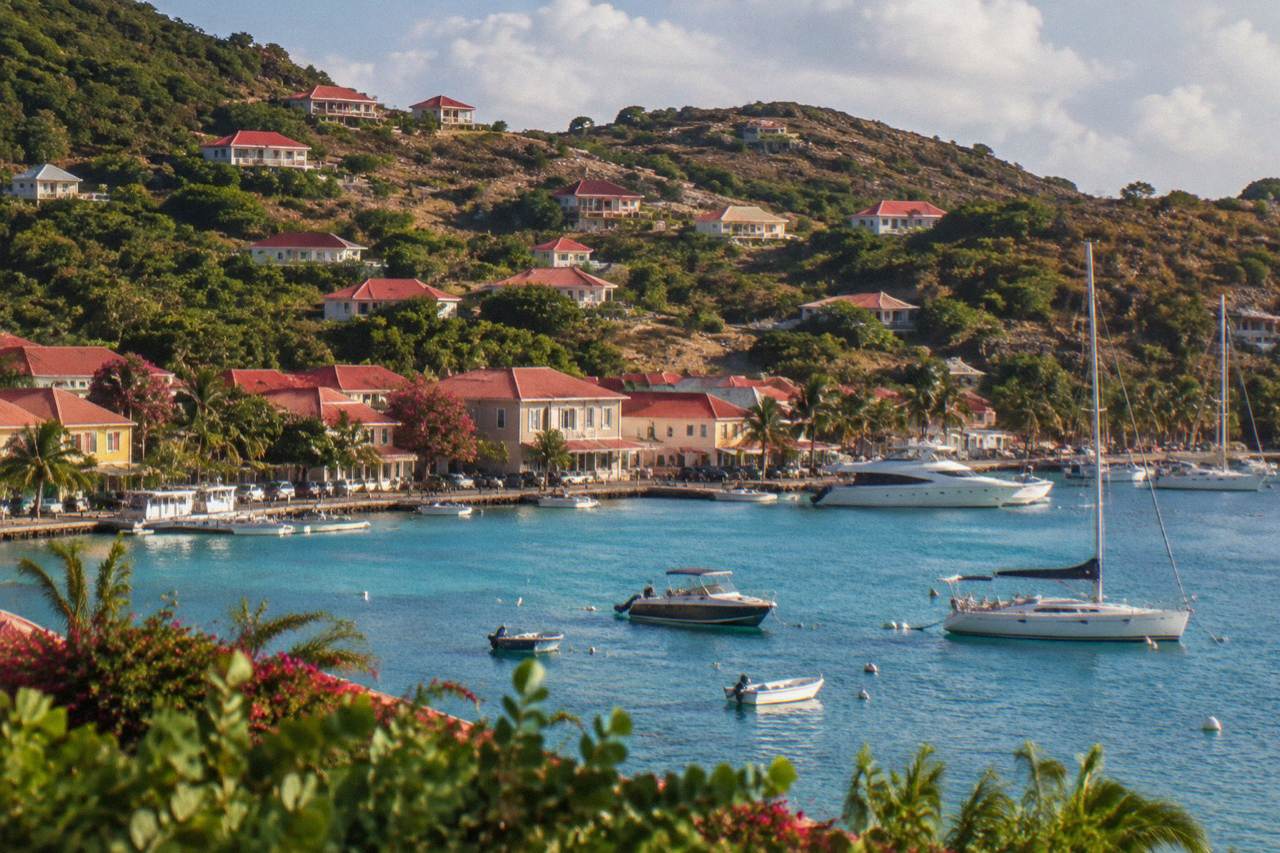
Most first-time visitors base themselves around Gustavia, St Jean or Flamands for access to shops, restaurants and beaches, while Grand Cul-de-Sac suits calm-water family stays, Colombier and Gouverneur offer seclusion with no hotels on the sand, and a large villa market spread across the hills serves groups and longer stays. Every beach on the island is public regardless of where you sleep.
St Barthelemy, written St Barts, is a French overseas collectivity in the Caribbean with about 10,700 residents, and deciding where to stay in St Barts is less about finding a district you like than about matching an area to the kind of trip you want. The island spans roughly 21 square kilometres of hills and coves, so nowhere is far from anywhere, yet the character of a stay shifts noticeably between the harbour capital of Gustavia, the airport-side bustle of Saint-Jean, and the near-silent hills above Toiny. Every beach is public, which means the choice of bed matters for views and convenience rather than for beach access itself.
The island's lodging scene splits into two broad shapes: a compact set of hotels, most of them small and upscale, and a large villa market managed by specialist agencies such as WIMCO, Sibarth and St Barth Properties, with villas available year-round. Hotels follow a strong seasonal rhythm, with many closing in late August and reopening in waves between mid-October and early November for the high season. Villas, by contrast, largely stay open, which makes them the backbone of autumn and late-summer stays. This guide walks through each area, the lodging types you will find there, and the practical constraints, from the marine reserve rules on the water to the arrival routes through St Martin, that shape any stay on the island.
Where To Stay In St Barts For A First Visit?
For a first visit, Gustavia, Saint-Jean and Flamands are the three areas most often recommended as a base, because they put the harbour shops, the airport-side village and one of the island's longest beaches within a short drive of each other, and the island is small enough that nothing on it is remote. Gustavia suits visitors who want restaurants and boutiques at the door, Saint-Jean puts you beside the airport and its famous curved bay, and Flamands offers a quieter beachside stay on the north-west coast.
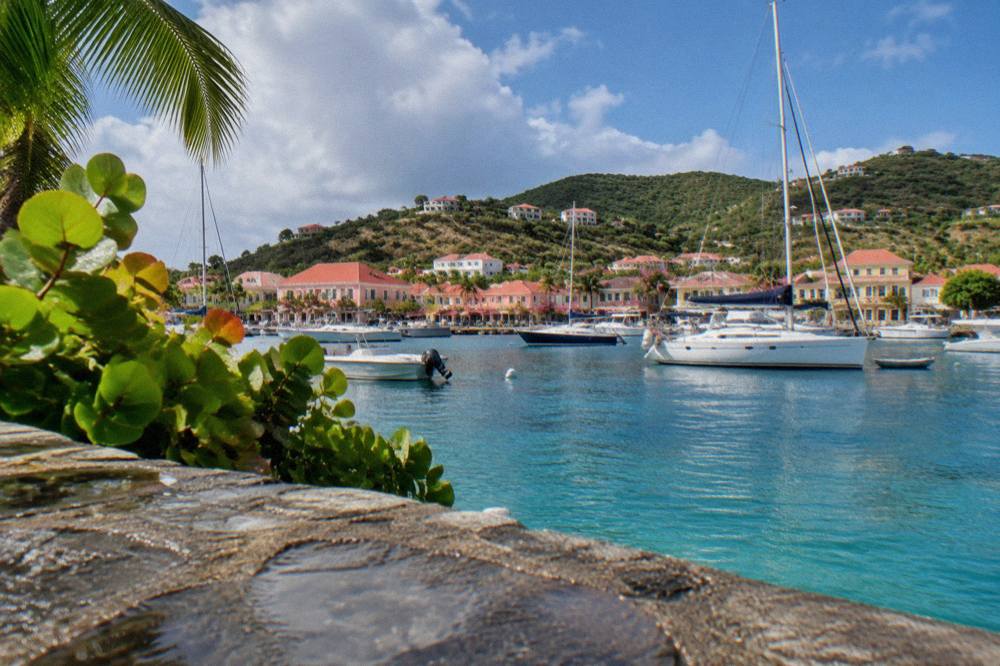
Gustavia is the capital, a harbour town of low pastel buildings wrapped around a bay that fills with yachts in season. Staying here means the shops, the harbour restaurants and the Shell Beach (Grand Galet) cove are all walkable, and the town is the tender point for cruise ships, which anchor offshore because the island has no cruise pier. The town's own area guide, at Gustavia where to stay, covers the neighbourhood street by street.
Saint-Jean, on the northern coast, sits around the bay that frames the runway of Gustaf III Airport. The airport's 646 m runway accepts only small STOL turboprops in daylight conditions, so the aircraft are few and small. Flamands, west of Saint-Jean, holds one of the island's broader sandy stretches and a cluster of hotels above the sand, including Cheval Blanc St-Barth Isle de France, one of the island's major properties.
A stay anywhere on the island comes with the same public-beach rule: all beaches, from Saint-Jean to Colombier, are public and free to access, so a hotel's position changes convenience rather than rights. For a deeper area-by-area ranking, the site's own comparison page at best area to stay in St Barts works through the trade-offs in more detail.
| Area | Position on the island | Character | Lodging found there |
|---|---|---|---|
| Gustavia | South-west harbour | Harbour town, shops and restaurants | Small hotels, guesthouses, villas |
| Saint-Jean | North coast, beside the airport | Village around a curved bay | Hotels, villa rentals |
| Flamands | North-west coast | Beachside, quieter than St Jean | Beachfront hotels, villas |
| Grand Cul-de-Sac | North-east coast | Shallow bay, family-oriented | Hotels, villas |
| Colombier and Gouverneur | South-west and south | Secluded coves, no hotels on the sand | Villas in the hills |
| Toiny | South-east coast | Quiet, wild coastline | Hotel Le Toiny, villas |
Which Area Of St Barts Suits Which Trip?
Grand Cul-de-Sac on the north-east coast suits families and calm-water days, Colombier and Gouverneur in the south-west suit travellers seeking seclusion with villa stays in the hills, Toiny and the south-east coast attract visitors who want a quiet, wild shoreline, and Lorient and Corossol on the middle north coast offer residential calm between the beaches. Each area holds public beaches, and none is more than a short drive from Gustavia on an island of about 21 square kilometres.
Grand Cul-de-Sac wraps a shallow bay where green and hawksbill turtles are common, according to the environment agency's beach pages, which note Grand Cul-de-Sac lagoon among the places turtles gather. The marine reserve bans touching or disturbing them, and dogs are prohibited on every beach island-wide under a municipal order that the environment agency cites on its beach page, even on a leash. The Grand Cul-de-Sac area guide covers the neighbourhood in depth.
Colombier, reached by boat or on foot, and Gouverneur, reached by a road that crests the southern hills, are the island's signature secluded coves. No hotel sits on either sand; the lodging nearby is villa stock set back in the hills, much of it with wide views over the Caribbean side. Lorient, midway along the north coast, is a residential stretch around a public beach and a village centre, while Corossol, west of Gustavia, is a fishing village where the pace is slower still and the shell museum sits near the waterfront.
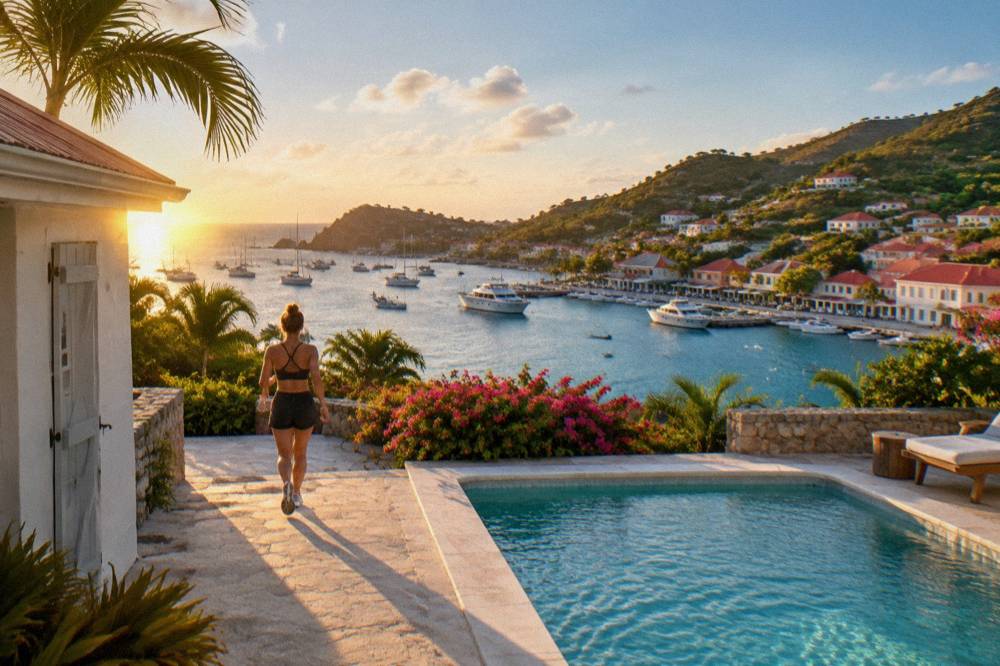
Toiny, at the island's south-east corner, holds Hotel Le Toiny above a coastline the tourism committee describes among its listed beaches, and a stretch of villa-bearing hillside. Pointe Milou sits on the island's north-central coast. The celebrity dimension of these choices, and where high-profile visitors are reported to stay, is covered separately on the site at where celebrities stay in St Barts.
| Trip type | Areas that fit | Why |
|---|---|---|
| Family stay | Grand Cul-de-Sac, Lorient | Shallow bay at Grand Cul-de-Sac, residential calm at Lorient |
| Harbour and dining | Gustavia | Restaurants and shops walkable in the capital |
| Beach-front hotel | Flamands, Saint-Jean, Grand Cul-de-Sac | Cluster of hotels above or beside the sand |
| Seclusion | Colombier and Gouverneur hills, Toiny | Villa stock, no hotel on those sands |
| Walkable village | Gustavia, Saint-Jean | Densest concentrations of shops and services |
Whichever base you choose, the island rewards a day on the water, and the tours above all depart from St Martin or Sint Maarten rather than from St Barts itself, reaching Colombier Bay and Ile Fourchue, both inside the marine reserve. The environment agency's regulatory-zones page lists a 5-knot speed limit in its zones, a ban on jet skis and towed devices, 23 dive sites, restrictions on anchoring in Colombier and Fourchue bays and a preference for ecological mooring buoys, which is why a crewed charter, where a captain handles the rules, is the straightforward way to see those coves. The related option on this page is the full-day St Barth private charter, a private day trip from St Martin.
To add that day on the water, book a group sail and snorkel tour.
Hotel Or Villa In St Barts: Which Should You Book?
St Barts splits its lodging between a compact set of hotels, most of them small and upscale, and a large villa market available year-round, and the practical difference is seasonal: many hotels close in late August and reopen in waves between mid-October and early November, while villas generally stay available, making them the backbone of autumn stays. Groups, families and longer stays lean toward villas; short visits and first-timers often prefer a hotel for its services. The island has no hostels.
The hotel lineup includes Eden Rock at Saint-Jean, Cheval Blanc at Flamands, Le Toiny at Toiny, Le Sereno and Le Guanahani at Grand Cul-de-Sac, Hotel Christopher at Pointe Milou, Le Barthelemy at Grand Cul-de-Sac, Hotel Manapany, Le Village at Saint-Jean, Hotel Tropical, Hotel Taiwana, Les Ilets de la Plage and Sunset Hotel in Gustavia.
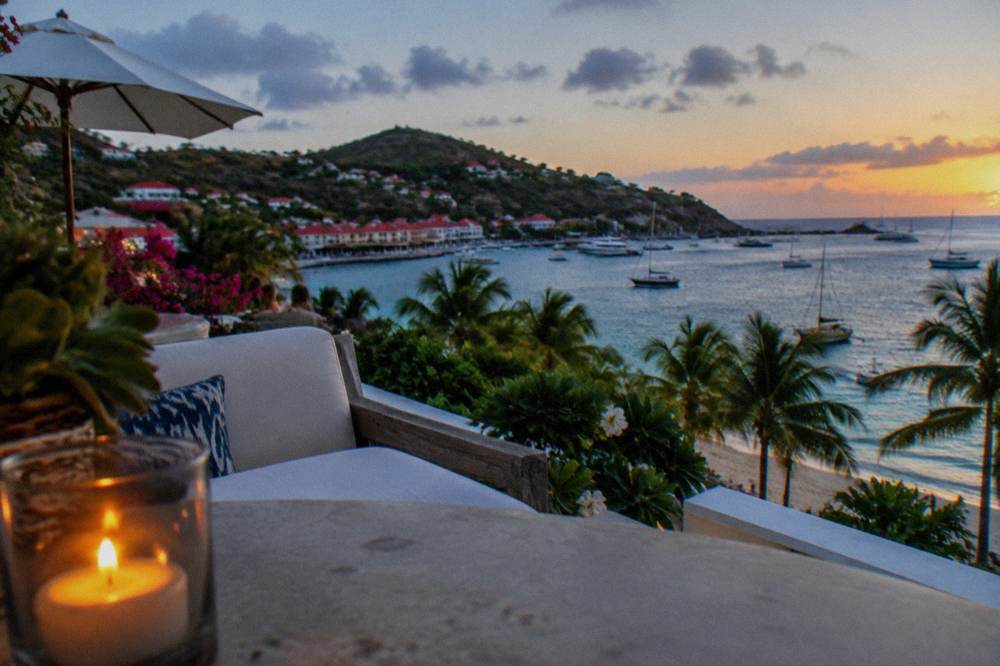
Two ownership changes are reported: Rosewood Le Guanahani becomes Airelles Le Guanahani on 1 November 2026 for the 2026 to 2027 season, and Carl Gustaf in Gustavia is reported to be rebranding under the Fouquet's name. Both are reported changes rather than confirmed schedules of detail. The reopening pattern after the autumn closure, however, is a firm one: the working calendars for autumn 2026 show Le Toiny reopening in mid-October, hotel tables at Cheval Blanc and Le Barthelemy on 22 October, Hotel Christopher around 23 to 24 October, and the Guanahani's tables under the Airelles name at the start of November.
Villas are managed by named agencies, among them WIMCO, Sibarth and St Barth Properties. The most luxurious place to stay in St Barts question is answered separately on the site, since it turns on named properties rather than on this page's area-by-area frame.
| Lodging type | Availability pattern | Typical guest |
|---|---|---|
| Hotel (Flamands, St Jean, Grand Cul-de-Sac) | Many close late August, reopen mid-October to early November | Short stays, first-timers, service-led trips |
| Villa (hills island-wide) | Generally available year-round | Groups, families, longer stays, autumn visitors |
| Guesthouse and small hotel | Some stay open through autumn | Value-conscious and off-season stays |
When Is The Best Season To Stay In St Barts?
The main season runs from roughly December to April, when the Meteo-France normals for 1991 to 2020 show mean daily highs of 28.5 C in January against the year's lower rain totals, while October is the wettest month at 135.6 mm against February's 38.4 mm, inside a hurricane season that runs from 1 June to 30 November. Sea temperature runs warm all year, about 26 C in winter to about 29 C from August to October.
The climate table below, drawn from the Meteo-France normals, 1991 to 2020, for the St Barthelemy station, shows the pattern plainly: warm throughout, with rain concentrated in the autumn months. September holds the highest mean daily high at 31.7 C and January the lowest at 28.5 C, a narrow band that makes temperature a weak basis for choosing dates compared with rain and the event calendar.
| Month | Mean daily high C | Mean daily low C | Rain mm |
|---|---|---|---|
| Jan | 28.5 | 23.5 | 52.6 |
| Feb | 28.6 | 23.3 | 38.4 |
| Mar | 29.0 | 23.5 | 41.4 |
| Apr | 29.8 | 24.2 | 50.9 |
| May | 30.7 | 25.1 | 61.7 |
| Jun | 31.2 | 25.9 | 56.0 |
| Jul | 31.2 | 26.0 | 80.4 |
| Aug | 31.6 | 26.3 | 79.6 |
| Sep | 31.7 | 26.2 | 96.9 |
| Oct | 31.4 | 25.8 | 135.6 |
| Nov | 29.9 | 25.0 | 118.6 |
| Dec | 28.9 | 24.1 | 79.2 |
The event calendar shapes demand as much as the weather. The St Barths Bucket Regatta runs in mid-March, the St Barth Music Festival is scheduled for 8 to 18 January 2027, the Gourmet Festival for 9 to 15 November 2026, and Les Voiles de St Barth in April with 2027 dates unconfirmed. New Year's Eve brings its traditional fireworks over Gustavia harbour. The site's New Year's Eve in St Barts guide covers that week in detail, and the autumn low season, including what stays open, is treated in the site's season coverage.
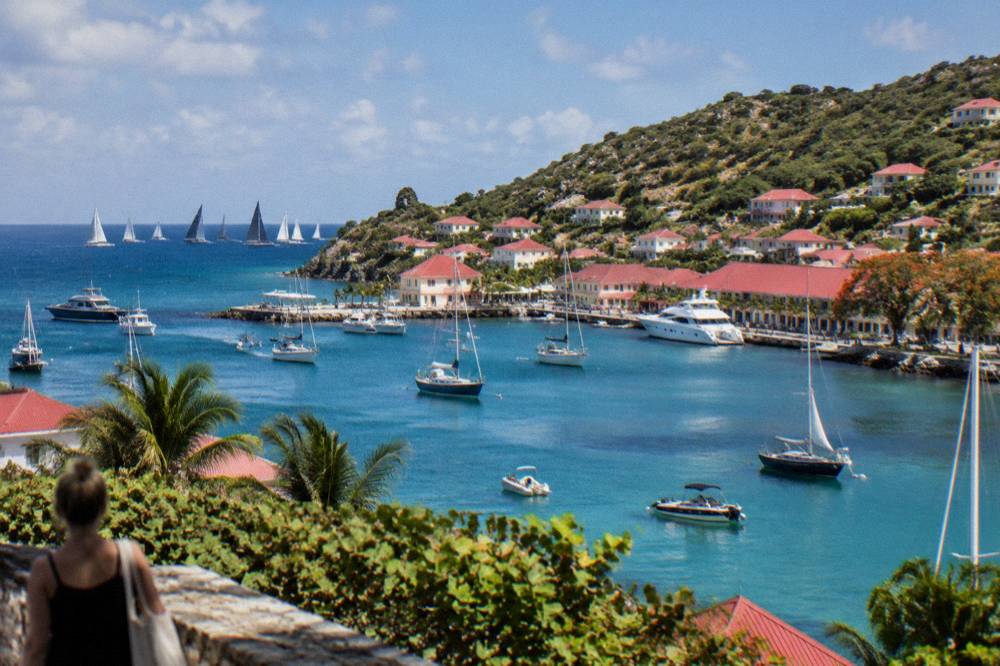
Hurricane season deserves a plain statement rather than a warning: the season runs 1 June to 30 November, the peak of activity falls mid-August to mid-October, and Hurricane Irma struck the island in September 2017. No prediction of a storm belongs on any page. What the season means practically is that autumn is when the hotel closures cluster, which loops back to the lodging choice above: a villa stay is the reliable shape for an autumn visit.
How Do You Arrive, And Does It Affect Where You Stay?
Almost every visitor arrives through St Martin, either by a short hop on a small turboprop into Gustaf III Airport at Saint-Jean or by ferry from Philipsburg or Marigot to Gustavia, and the arrival route matters less for where you stay than for where you land: the airport sits on the north coast while both ferries dock in the capital. No jets land on the island, and the airport operates in daylight only.
The gateway pattern is fixed by geography and by the runway. Flights connect to St Martin (SXM) on the Dutch side, where Winair and St Barth Commuter fly the hop, St Barth Commuter also serves Grand Case (SFG) on the French side and Pointe-a-Pitre (PTP) in Guadeloupe, and Tradewind Aviation serves San Juan (SJU) and Antigua (ANU). The details, with no fares and no timetables, sit in the site's how to get to St Barts guide.
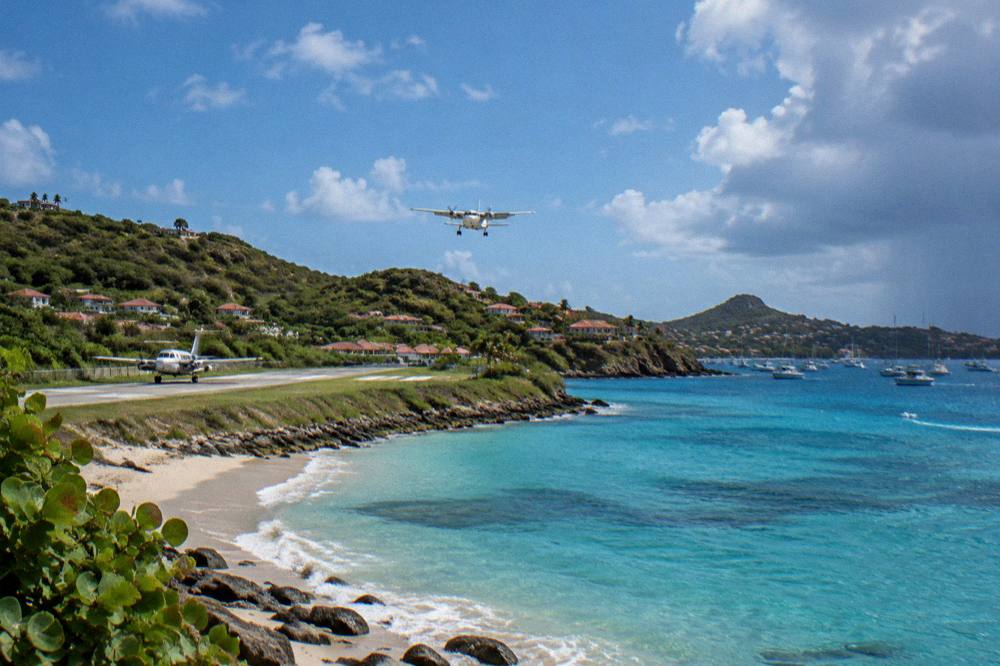
On the water, Great Bay Express runs from Philipsburg on the Dutch side, about 45 minutes to Gustavia, and Voyager runs from Marigot on the French side, about 50 to 60 minutes; both are about figures from the operators, and the crossing can be rough, so no smooth passage should be promised. The ferry operators and schedule page holds the detail. Cruise passengers tender to Gustavia, since there is no cruise pier.
Arrival side and stay side rarely need to match, because the island is about 21 square kilometres and drive times are short on roads that are narrow, winding and steep. Getting around is covered in the site's car rental guidance, which confirms Avis, Budget and Hertz counters at the airport alongside local agencies and Mini Moke specialists, with no prices printed.
Is It Worth Adding A Boat Day To A St Barts Stay?
A boat day is the standard way to reach Colombier Beach and Ile Fourchue, two of the marine reserve's protected zones that have no road access and no hotel on their sand, and every bookable option listed here departs from St Martin or Sint Maarten rather than from St Barts, which makes it a day trip rather than a spur-of-the-moment excursion. The reserve's rules are simplest to respect with a licensed crew.
The marine reserve, run by the environment agency, lists its zones and rules on its regulatory-zones page: a 5-knot speed limit inside the zones, no jet skis or towed devices, no dogs on beaches, no touching of turtles, corals or protected species, no collecting of shells or coral, and no vessels over 25 m in Colombier and Fourchue bays, with ecological mooring buoys preferred over anchoring. Those rules define what a boat day there looks like: slow approaches, buoyed moorings and snorkelling without gloves.
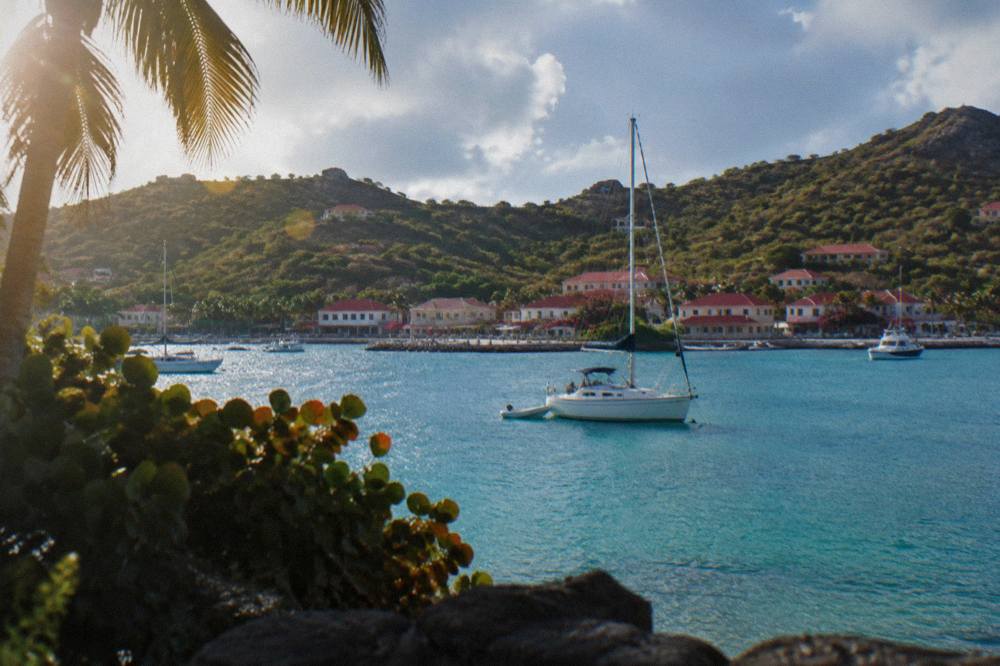
The options split by shape. The one per-person group sail runs only from 12 May to 31 August 2027 on its listing, so a high-season stay in January or March cannot use it, while the private charters run per group year-round on their listings. The overnight catamaran, two days and one night, suits a stay built around the water rather than around a hotel base.
For a multi-day or split-base trip, the overnight option below turns the crossing itself into the trip: it departs St Martin, spends the night aboard and returns the following day, which pairs naturally with a villa stay on the island before or after.
What Does A Week In One Area Look Like?
A week based in a single area works well on an island this size, because every beach, restaurant cluster and sight sits within a short drive of every other, and the practical rhythm is set by fixed anchors rather than distances: the public beaches are free and open, the marine reserve rules govern any boat day, and the event calendar, from the Music Festival in January to the Gourmet Festival in November, supplies the peaks.
The choice of area changes the view from the balcony more than the reach of the week.
A Flamands-based week, for instance, pairs morning swims on one of the island's broader sands with afternoons in Gustavia, ten minutes of narrow road away, and a boat day to Colombier booked from St Martin. A Grand Cul-de-Sac week leans on the shallow bay and turtle-spotting from the shore, respecting the reserve's no-touching rule, with the north-coast beaches of Lorient and Saint-Jean around the headland. A Gustavia week keeps the harbour, Shell Beach (Grand Galet) and the boutique streets at the door, and suits visitors who arrive by ferry, since both ferry operators dock there.
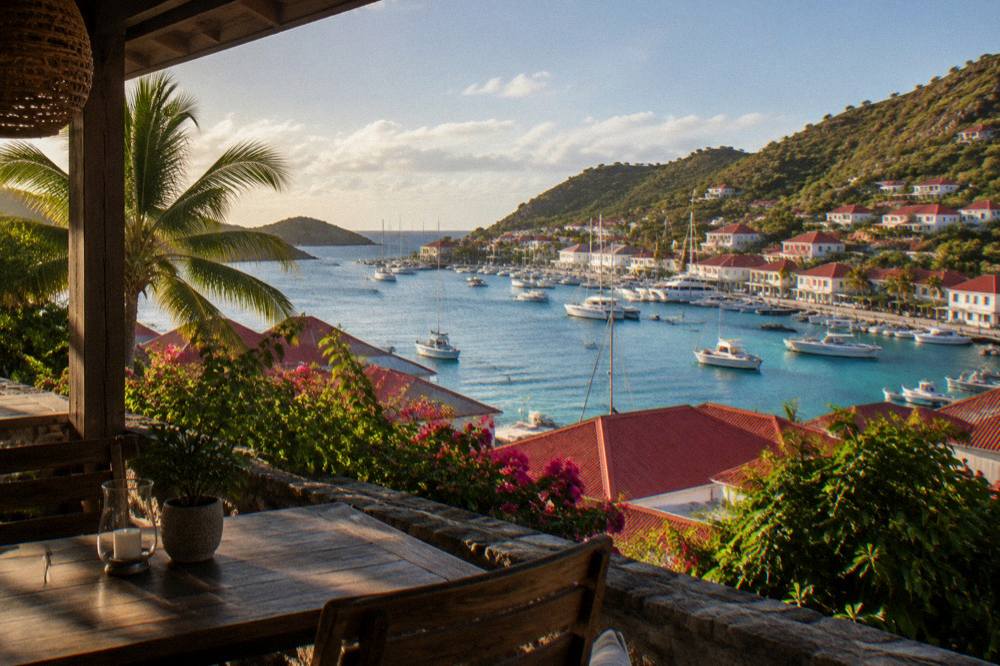
The one structural limit on any week is the autumn closure pattern: a November visit lands in the reopening window, with hotels coming back in waves between mid-October and early November and the Gourmet Festival running 9 to 15 November 2026, while a September or early-October visit means villas, year-round local spots and quieter roads. Shopping visitors will find the details on the site's St Barts shopping guide, and anyone planning a wedding-based stay can start from the St Barts weddings guide.
For those weighting a stay around the water, the charter options above repeat here for a final comparison, and the related full-day charter can also be checked directly:
St Barthelemy Travel covers the areas, beaches and arrival routes in depth elsewhere on St Barthelemy Travel, and the pages linked through this guide carry the detail this overview compresses.
Common Questions About Where To Stay In St Barts
Where to stay in St Barts for a first visit?
Gustavia, Saint-Jean or Flamands make the usual first-visit bases, because they put shops, restaurants and beaches closest together, and the island is small enough that every other area is a short drive away.
Where to stay in St Barts with a family?
Grand Cul-de-Sac on the north-east coast is the family-oriented area, around a shallow bay where turtles are common, and Lorient offers a similar residential calm on the north coast.
Are all beaches in St Barts public?
Yes. Every beach on the island is public and free to access, from Saint-Jean to Colombier, so a hotel or villa choice changes convenience rather than beach access. Dogs are banned on all beaches island-wide under a municipal order the environment agency cites on its beach page.
Do St Barts hotels close in autumn?
Many do. The pattern is a closure in late August and a reopening in waves between mid-October and early November; villas generally stay available year-round, which is why autumn visits lean on the villa market.
Hotel or villa in St Barts?
Hotels suit short stays and service-led trips and cluster at Flamands, Saint-Jean and Grand Cul-de-Sac; villas suit groups, families and longer stays, sit in the hills island-wide, and are managed by named agencies including WIMCO, Sibarth and St Barth Properties.
Does the arrival route affect where you should stay?
Only marginally. Both ferries dock in Gustavia and the airport sits at Saint-Jean, but the island spans about 21 square kilometres with short drives on narrow, steep roads, so any base reaches every beach.