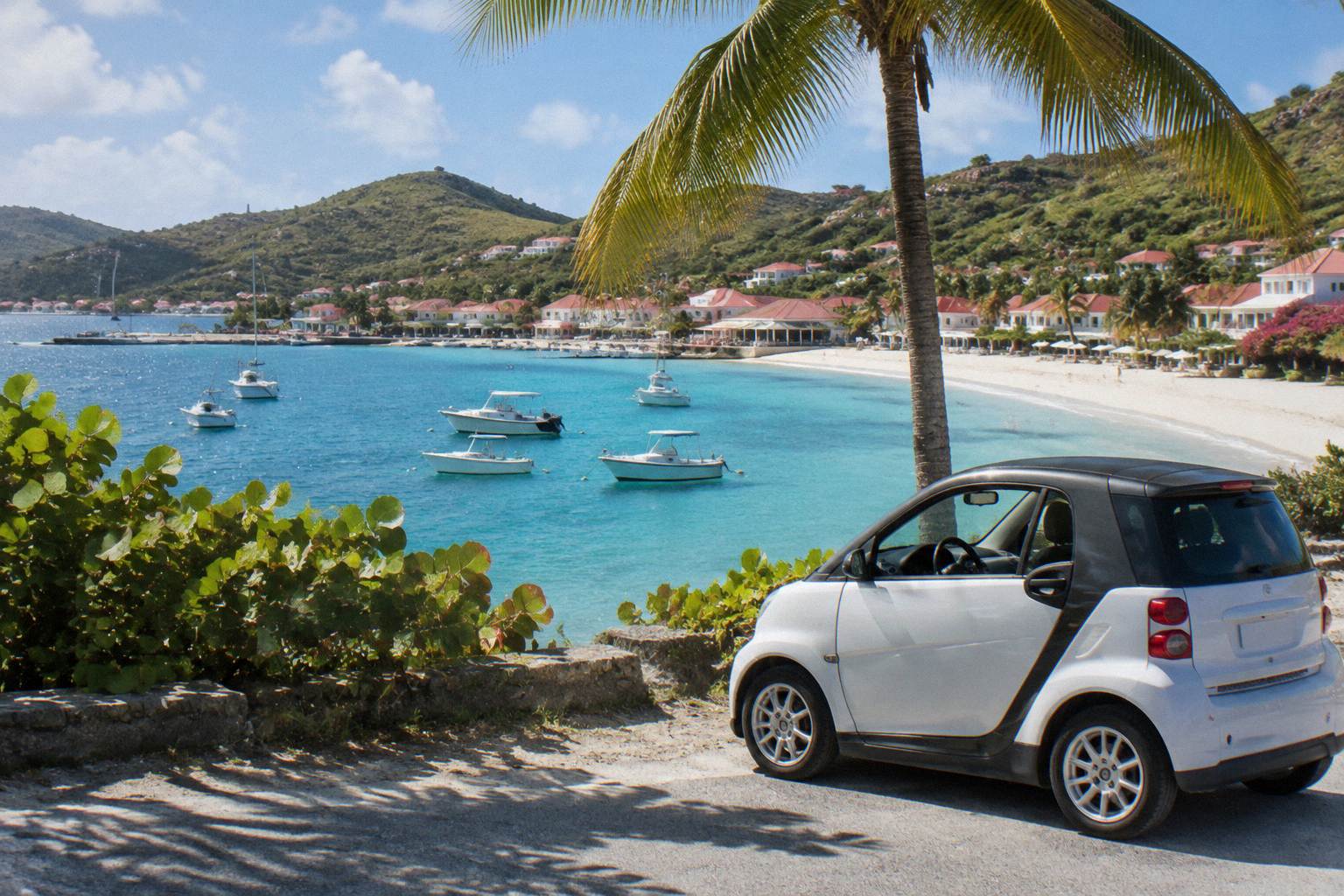
Scooter Rental In St Barts
St Barthelemy, usually written St Barts, is a small French island of about 21 square kilometres, and a scooter is one way to move between its beaches and Gustavia, provided the hills and the road rules are understood first.
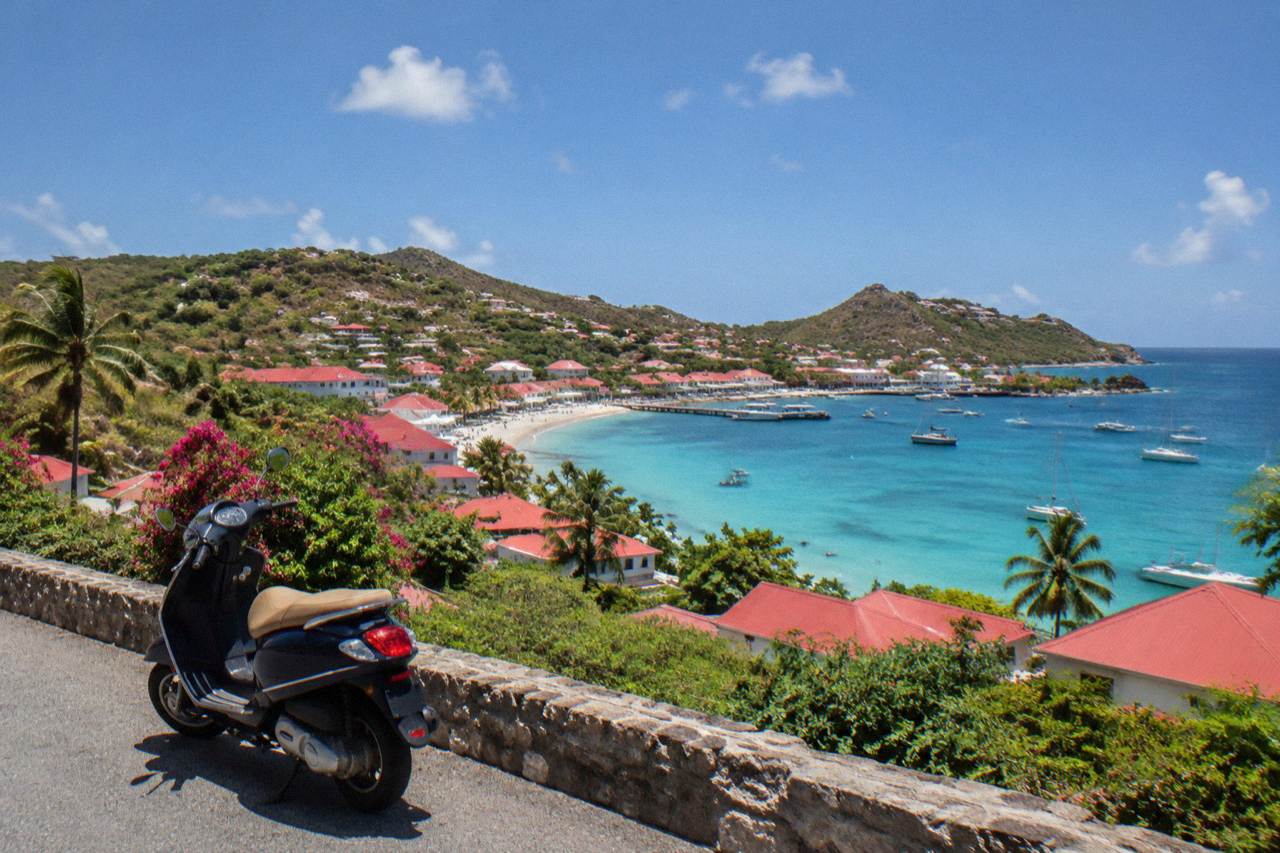
No rental price, minimum age or helmet rule is published, so confirm terms directly with the agency.
St Barthelemy, written St Barts in everyday use, is a French overseas collectivity in the Caribbean with Gustavia as its harbour capital, the euro as its currency and about 21 square kilometres of hills, public beaches and turquoise water. Moving around it is a real question for every visitor, because the island's roads climb and twist between coves, and the airport at Saint-Jean receives only small turboprop aircraft. A scooter is one of the options local rental agencies offer, and this guide sets out where rentals sit, what the road rules are reported to be, how a scooter compares with a car, and what to weigh before riding. For the wider picture on four wheels, the companion page on renting a car in St Barts covers the airport counters and local firms.
Is A St Barts Scooter Rental A Good Idea?
A scooter on St Barts is a real option that local agencies offer, but it suits confident riders on dry days, because the island's roads are narrow, winding and steep, traffic drives on the right, and the reported speed limits are 50 km/h island-wide and 30 km/h in Gustavia and Saint-Jean. Every term, from the rental price to the minimum rider age and the helmet rule, has to be confirmed with the agency itself.
The honest starting point is geography. St Barts is a hill island, not a flat one. Roads cut across ridges between bays, and grades steep enough to need low gear in a car are part of normal driving here, as villa-manager and rental guides for the island describe. A light two-wheeler on those grades, in afternoon heat, is a different proposition from a scooter on a coastal flat. Rain adds a second variable: the Meteo-France normals, 1991-2020, show 891.3 mm of rain a year on the island, with October the wettest month at 135.6 mm, and a wet descent on a steep road is the scenario worth thinking about before booking.
Against that, the island is small, the distances between the main beaches are short by any Caribbean standard, and parking a scooter is simpler than parking a car in a compact harbour town. Gustavia's centre is compact and walkable, which means a scooter is less about the town itself and more about reaching beaches such as Flamands, Lorient or Grand Cul-de-Sac. Riders who already handle a scooter comfortably at home, and who pack for the possibility of rain, are the natural fit.
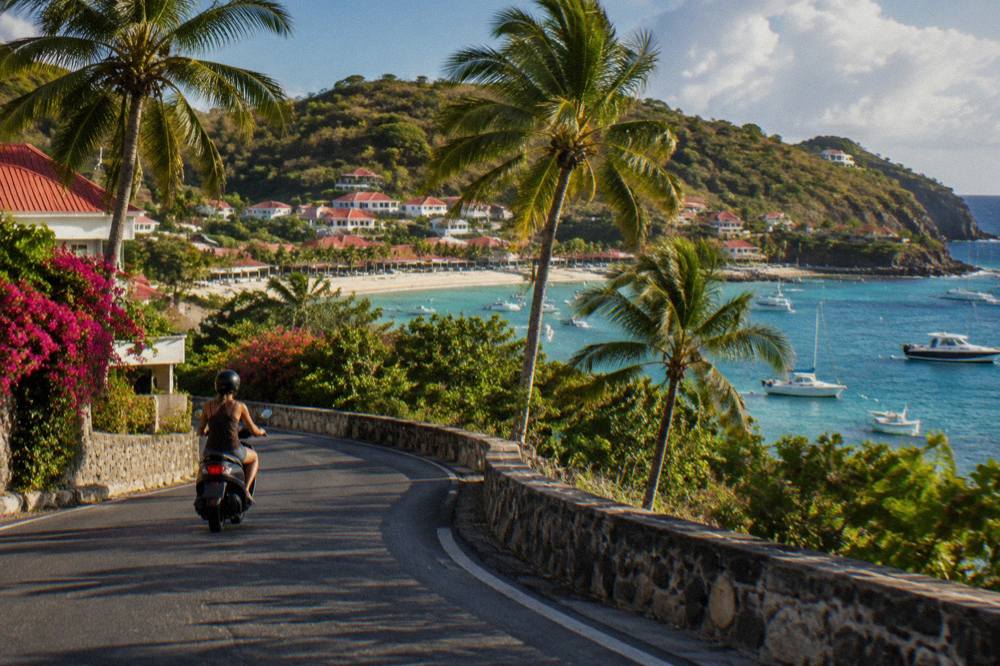
Key figures for riding a scooter on St Barts
Reported speed limits and island facts for riders
St Barts scooter rental guide; figures reported by island rental and villa-manager guides.
Where Can You Rent A Scooter In St Barts?
Scooter and moto rentals exist on St Barts through local agencies rather than the international brands: the airport counters at Gustaf III include Avis, Budget and Hertz for cars, while two-wheeler rental is a local-agency business. Confirming availability and terms directly, before travel, is the only reliable route.
The rental landscape on the island has two layers. The car layer is documented: a supplier page read for this site lists Avis, Budget and Hertz at SBH, and local operators, including firms renting the open-air Mini Moke, sit alongside them. The scooter layer is thinner: local scooter and moto rentals exist on the island, though no specific agency, price or condition is named, so a rider's practical step is to ask a local agency or a hotel concierge for the current operators once dates are set.
Timing matters as much as the operator. The island's high season runs roughly December to April, the same window that brings the sailing events, and rental fleets of every kind are busier then. In the autumn, many hotels and restaurants close for maintenance and reopen between mid-October and early November, a pattern rather than a dated notice, and the low-season island is quieter on the roads. Whatever the month, booking ahead and reconfirming on arrival is the sensible sequence.
| Rental layer on St Barts | What available information shows | Where it sits | What |
|---|---|---|---|
| International car brands | Avis, Budget and Hertz counters | Gustaf III Airport, SBH | Rates and terms |
| Local car agencies | Local operators, including Mini Moke rental | Around the island, delivery commonly offered | Rates and fleet sizes |
| Scooter and moto rental | Exists through local agencies | Local agencies, not the airport brands | Price, age limit, helmet rule, fleet |
| Villa and hotel concierges | Can point to current two-wheel operators | Island-wide | N/A, ask directly |
A scooter decides your days on land, but the island's signature experiences are on the water, and every bookable boat product listed here departs from St Martin or Sint Maarten rather than from St Barts. A day trip by boat pairs naturally with a land-based scooter plan, and the options below cover the group and private formats that leave from the neighbouring island.
Scooter Or Car In St Barts: Which Fits Your Trip?
A car fits riders carrying beach gear, families or anyone wary of steep grades, while a scooter fits solo travellers staying light, because St Barts roads are narrow, winding and hilly, parking a car in Gustavia is tighter than parking a two-wheeler, and the reported 50 km/h island limit keeps speeds low either way. Neither choice changes the beaches: all of them are public.
The comparison comes down to three practical axes. The first is the terrain itself: hills that make a small car with an automatic gearbox the stress-free choice, and that reward a scooter rider with engine braking and easy passing on narrow lanes. The second is load: a cooler, snorkel sets and a week's shopping fit in a car, while a scooter demands travelling light. The third is the town: Gustavia's centre is compact, and a scooter slips in and out of it more easily than a car, for which street parking is tight, often on inclines, alongside public lots and Blue Zone timed spots.
The comparison table below leaves rates out entirely, because rental pricing varies by season regardless.
| Factor | Scooter | Small car or Mini Moke |
|---|---|---|
| Terrain fit | Needs confident riding on steep, narrow roads | Automatic gearbox handles grades easily |
| Load capacity | Light luggage only | Beach gear and shopping |
| Gustavia parking | Easier to place in a compact town | Tight street spots, public lots, Blue Zone timed areas |
| Weather exposure | Rider is fully exposed to sun and rain | Covered |
| Rental availability | Local agencies only, confirm ahead | Airport brands plus local firms |
| Reported speed context | 50 km/h island-wide, 30 km/h in Gustavia and Saint-Jean | Same limits apply |
A third option deserves a line of its own: doing without a vehicle entirely. A stay centred on Gustavia, with its shops, harbour and Shell Beach (Grand Galet) within the town's compact bounds, can work on foot, with taxis for longer hops. Agree the taxi price with the driver before setting off, as fares on the island are settled that way.
What Are The Road Rules For A Scooter Rider In St Barts?
St Barts follows French traffic rules as a French overseas collectivity: traffic drives on the right, the reported speed limit is 50 km/h island-wide and 30 km/h in Gustavia and Saint-Jean, French right-of-way rules such as priority from the right apply at unsigned intersections, and there is one roundabout near the airport, with minimal traffic lights and limited road markings in places.
Those figures come from island rental and villa-manager guides, reported rather than from a government page, so treat them as the working numbers locals use. For a scooter rider, three of them matter most. The 30 km/h zones in Gustavia and Saint-Jean are exactly where pedestrians, parked cars and delivery vehicles cluster, and the narrow lanes leave little margin. The unsigned-intersection rule, priority from the right under French practice, surprises riders from countries where the main road always has priority. And the single roundabout by the airport, at the top of the Saint-Jean stretch, is the one piece of road geometry that behaves differently from every other junction on the island.
One rule with real force sits off the road entirely: the marine reserve. The environment agency's regulatory-zones page lists a 5-knot limit on the water in protected zones, a ban on jet skis and other motorized and electric water devices, 23 dive sites, no dogs on beaches and no touching of turtles. None of that touches a road scooter, but it shapes what a visitor can rent for the sea, and a rider planning a beach day should know that motorized water toys are simply not part of the island's rules. Drones are prohibited in or near the reserve without authorization, another point for anyone filming a ride for social media.
| Road rule on St Barts | Reported figure or practice | Why it matters on a scooter |
|---|---|---|
| Side of the road | Right | Habit for riders from left-driving countries |
| Island speed limit | 50 km/h | Low ceiling, but grades reward steady throttle |
| Town speed limits | 30 km/h in Gustavia and Saint-Jean | Pedestrians and tight lanes |
| Right of way | French rules, priority from the right at unsigned junctions | Check right at every unmarked crossing |
| Roundabouts | One, near the airport | The island's only circular junction |
| Traffic lights | Minimal | Junctions rely on signs and convention |
Can You Ride A Scooter To The Beaches Of St Barts?
Every beach on St Barts is public, and a scooter reaches the main ones, including Saint-Jean, Flamands, Lorient, Grand Cul-de-Sac, Saline, Gouverneur, Shell Beach (Grand Galet) and Colombier, with the caveat that access roads vary and the tourism committee lists all of them as free to enter. Parking, sand and facilities at these beaches are not graded, so plan by position.
The island's beach map falls into a rough ring around the coast, with Gustavia on the leeward side. Shell Beach sits closest to the capital. South and east of it lie Gouverneur and Saline, both reached by roads that climb over the island's central spine. Colombier, on the northwestern tip, is the exception that proves the value of planning: it is a beach at the end of a trail, reached on foot rather than by a parking lot at the sand, and it is also inside the marine reserve's protected zones. A scooter is a fine way to reach a trailhead; it is not a way to reach the sand at Colombier itself. More of these guides are collected on St Barthelemy Travel.
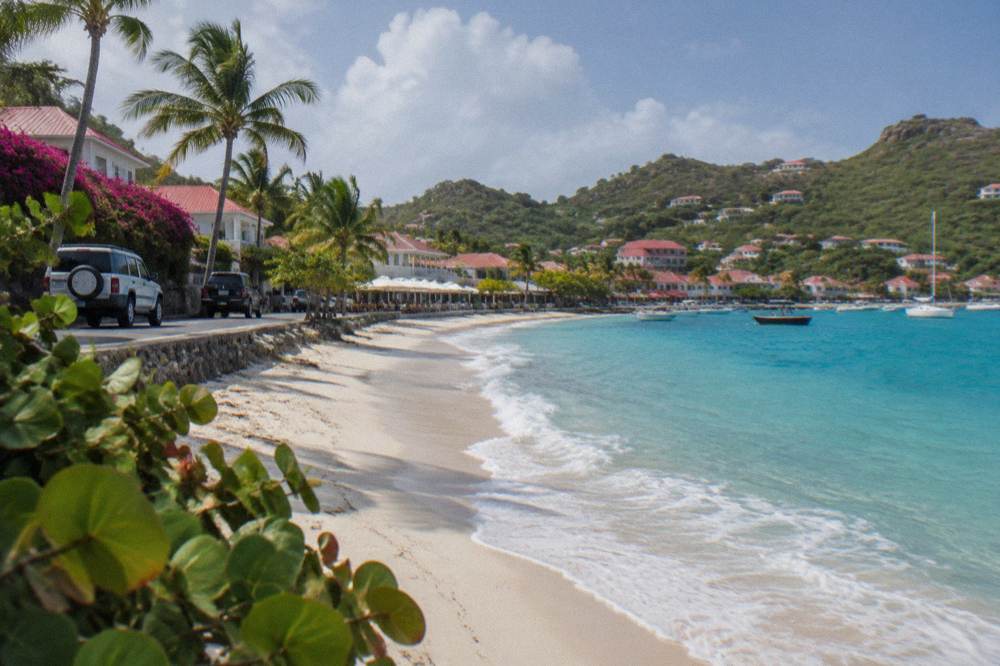
The beach-hopping pattern works well on two wheels for the simple reason that the beaches are numerous and close together on an island of about 21 square kilometres. Riders should carry what they need, and should note two reserve rules that touch beach visits anywhere on the island: the environment agency's beach page states that dogs are banned from all beaches, even on a leash, and collecting coral, shells or sand is prohibited in the reserve's zones. Sea turtles, green and hawksbill, are common in some bays, and the environment agency's rule is strict: no touching, chasing or feeding, in the water or on the sand.
| Beach | Map position | Public status | Access note |
|---|---|---|---|
| Saint-Jean | North coast by the airport | Public | Beside the town of Saint-Jean |
| Flamands | North coast west of Saint-Jean | Public | Reached over the hill from Gustavia |
| Lorient | North coast east of Saint-Jean | Public | Village beach |
| Grand Cul-de-Sac | Northeast coast | Public | Lagoon area, turtles common |
| Saline | South coast | Public | Reached over the central spine |
| Gouverneur | South coast west of Saline | Public | Hill road from Gustavia side |
| Shell Beach (Grand Galet) | West coast near Gustavia | Public | Short hop from the capital |
| Colombier | Northwestern tip | Public | Reached by trail; inside reserve zones |
For riders pairing beach days with a boat day, the ferry connections from St Martin page explains the two operators, Great Bay Express from Philipsburg and Voyager from Marigot, with crossings of about 45 minutes and about 50 to 60 minutes respectively, both described by the operators themselves and both subject to weather.
What Does A St Barts Scooter Rental Involve Before You Ride?
Renting a scooter on St Barts involves confirming four things directly with the agency: the price and what it includes, the minimum rider age and licence requirement, the insurance and deposit terms, and the delivery or pickup arrangement. The general rental pattern on the island, drawn from car-rental practice, is advance booking for the December-to-April window and direct confirmation of terms.
Start with the licence. For cars, island rental practice, as rental-company pages describe it, asks for a valid home-country licence, a passport or ID, and a credit card in the renter's name, with an International Driving Permit typically needed only for licences in non-Roman alphabets. Whether local scooter agencies apply the same pattern varies by company, so the only safe move is to ask. Insurance is the second question: confirm whether the rate includes liability cover, what the deposit holds, and what happens in the event of a fall or damage, because a scooter claim on a foreign policy is not always simple.
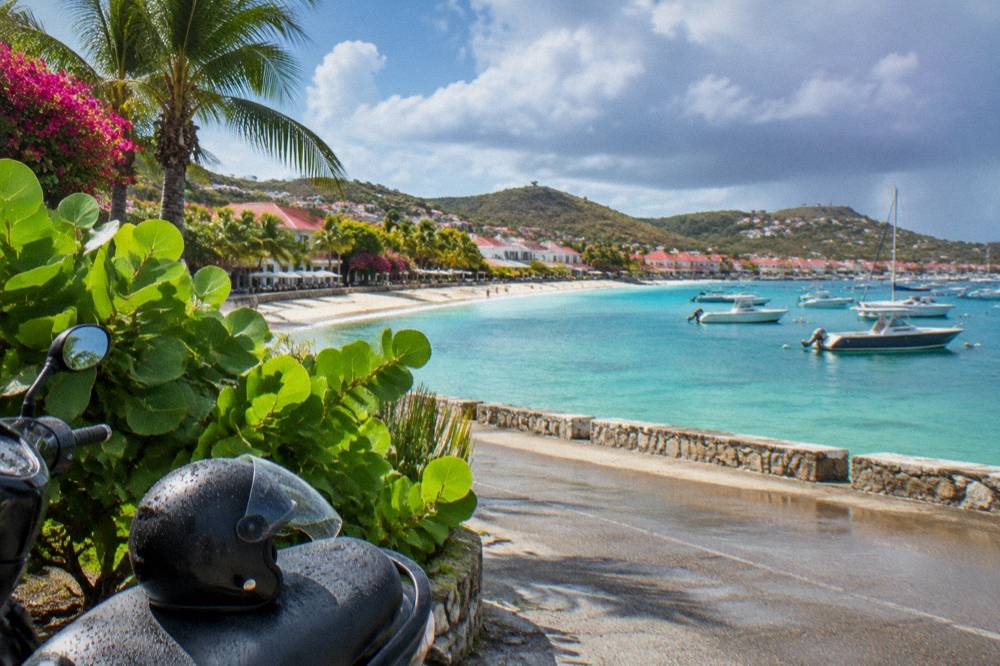
The third and fourth questions are practical ones. Delivery is commonly offered by local rental firms for cars, and many agencies will bring a vehicle to a hotel or villa; ask whether a scooter can be delivered the same way. And inspection matters: the standing advice for any rental on the island is to inspect the vehicle thoroughly at pickup, photograph any existing damage, and confirm the fuel or charge state before signing. On a scooter, add a check of brakes, tyres and lights, because the island's steep descents load all three.
| Pre-rental checklist | What to ask the agency | Why it matters |
|---|---|---|
| Insurance and deposit | Cover included, deposit held, damage process | Claims across borders can be slow |
| Delivery or pickup | Hotel or villa delivery availability | Common island practice for local firms |
| Inspection | Brakes, tyres, lights, existing damage | Steep roads load every system |
How Does Weather Affect A St Barts Scooter Plan?
St Barts is warm year-round, with Meteo-France normals, 1991-2020, showing mean daily highs from 28.5 C in January to 31.7 C in September, and rainfall of 891.3 mm a year with October the wettest month at 135.6 mm; hurricane season runs 1 June to 30 November with its peak mid-August to mid-October, so a scooter plan needs a rain fallback rather than a seasonal guarantee.
The monthly pattern tells a rider two things. First, heat: even the coolest months sit near 29 C by day, so a midday ride across the island's hills is a sun-exposed hour on a machine with no shade. Second, rain: the totals climb through the autumn, from 79.2 mm in December and 96.9 mm in September to October's 135.6 mm peak, and a wet road on a steep descent is the single biggest safety variable for two wheels here. February, at 38.4 mm, is the month with the lowest total in the normals table.
What Are The Alternatives To A St Barts Scooter?
The alternatives to a scooter on St Barts are a rental car or Mini Moke from the airport brands or local agencies, a taxi for point-to-point trips, walking in compact central Gustavia, or arriving by boat from St Martin for a day without any island vehicle at all, since every bookable tour listed here departs from St Martin or Sint Maarten and visits St Barts by sea.
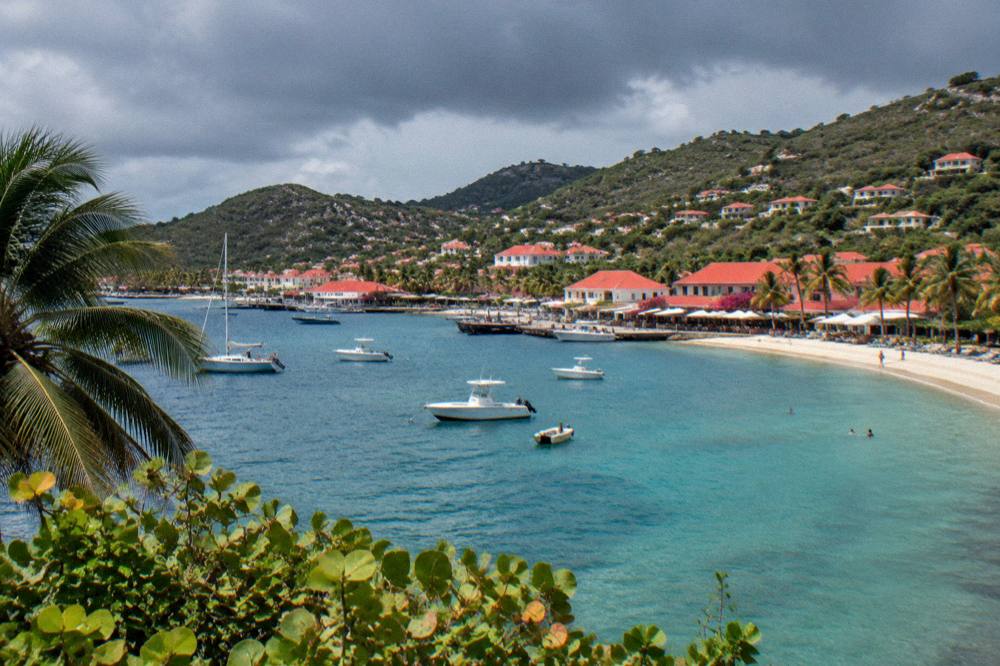
The boat alternative deserves more attention than it usually gets. A day trip from the neighbouring island reaches Colombier and Ile Fourchue, both inside the marine reserve's zone system, and Gustavia's harbour, without a single hill climb. The Boomerangs group sail and snorkel is the per-person option, running in the window stated on its listing, while the private charters, such as the private charter from St Martin, price per group and give a party the boat to itself. For the full picture of the island's options, the things to do in St Barts page collects the land and sea choices in one place.
On land, the choice narrows to wheels or feet. Gustavia's centre is compact, its harbour, shops and Shell Beach (Grand Galet) all sitting close together, so a stay based there can skip a vehicle on quiet days. Taxis exist island-wide; agree the price before the ride. The wider comparison of neighbourhoods for basing a car-free or scooter-light stay sits in the site's guide to where to stay in St Barts.
| Way to move on and around St Barts | Best for | Basis |
|---|---|---|
| Scooter from a local agency | Solo riders staying light, confident on hills | Local scooter and moto rentals exist |
| Rental car or Mini Moke | Groups, gear, steady handling on grades | Avis, Budget, Hertz at SBH, local firms |
| Taxi | Point-to-point trips, evenings | Service exists; no fare published |
| Walking | Central Gustavia | The town centre is compact |
Should You Book A St Barts Scooter Before You Fly?
Book the scooter before you fly if the trip falls between December and April, because that high-season window fills rental fleets of every kind on a small island, and book or at least enquire ahead for the November shoulder too, since properties reopen between mid-October and early November and demand returns with them; for a low-season stay, asking a local agency or concierge on arrival is workable, with reconfirmation always wise.
The sequence that works is the same one the island's rental guides recommend for cars. Confirm the dates, confirm the terms in writing, and reconfirm a day or two before arrival, because flight schedules into SBH run daylight hours only and a late arrival changes a pickup. Riders connecting through St Martin should build slack into any same-day plan that pairs a ferry crossing with a scooter pickup: the operators themselves describe the Great Bay Express crossing as about 45 minutes and Voyager as about 50 to 60 minutes, both weather-dependent, and the crossing can be rough.
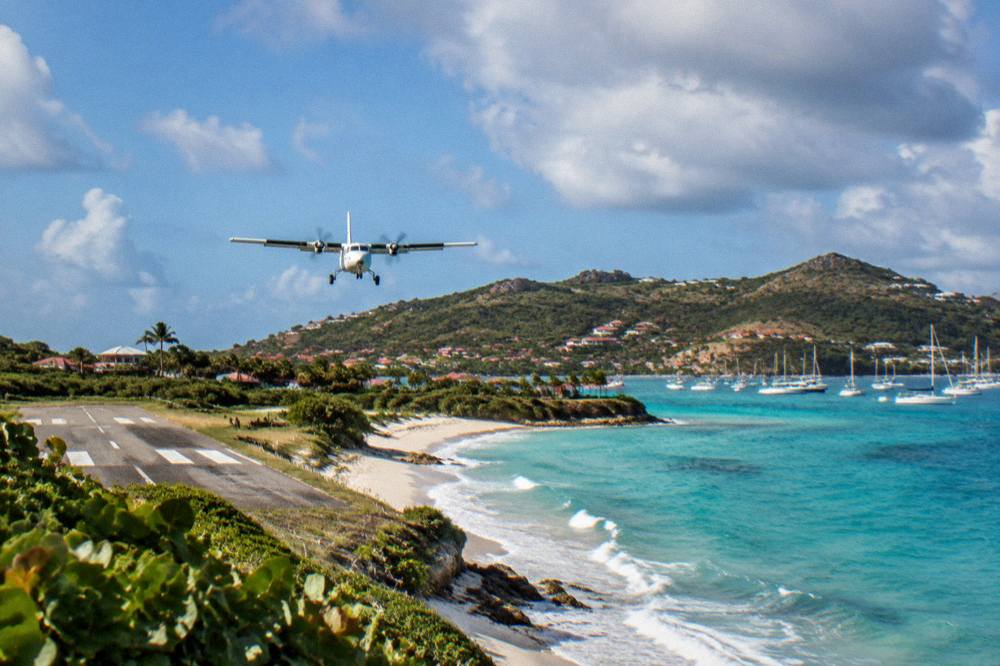
The last word belongs to the road, not the booking page. St Barts rewards riders who take the hills seriously, ride the reported 30 km/h in the towns slowly and literally, and treat rain as a signal to stop for a coffee rather than push on. The island's beaches are all public, its reserve rules protect the water and the sand, and its distances are short enough that patience costs very little time. For the flights, ferries and airport details behind the journey, the site's St Barts airport guide and the page on ferry operators and schedules complete the picture, and the boat options below round out a plan that mixes two wheels with a day on the water.
Common Questions About St Barts Scooter Rental
Are scooters available to rent on St Barts?
Yes, through local agencies. Local scooter and moto rentals exist, while the international brands at Gustaf III Airport, Avis, Budget and Hertz, are car counters. No agency's price, age limit or fleet is listed, so confirm directly.
Do I need a helmet on a scooter in St Barts?
Ask the rental agency at pickup about the island's helmet rule and follow its instruction. Given the narrow, steep roads described in the island's rental guides, a helmet is the sensible default regardless of what any rule requires.
Is St Barts hard to ride a scooter on?
The roads are narrow, winding and hilly, with grades that car guides say can need low gear, and a reported speed limit of 50 km/h island-wide and 30 km/h in Gustavia and Saint-Jean. Confident riders manage comfortably; first-timers generally do better in a car.
How much does a scooter rental cost in St Barts?
Rental prices on the island vary by season, so the agency's own quotation is the only real number. Expect the December-to-April high season to be priced differently from the low season.
Can a scooter reach all the beaches of St Barts?
A scooter reaches the access roads for the main public beaches, including Saint-Jean, Flamands, Lorient, Grand Cul-de-Sac, Saline, Gouverneur and Shell Beach (Grand Galet). Colombier is the exception in practice: it is a trail-end beach inside the marine reserve's zones, reached on foot.
Can I rent a scooter instead of taking a boat tour?
The two are not substitutes. A scooter covers the island's roads, while every bookable tour listed here departs from St Martin or Sint Maarten and visits St Barts by sea, reaching places such as Colombier Bay and Ile Fourchue that a road vehicle cannot.