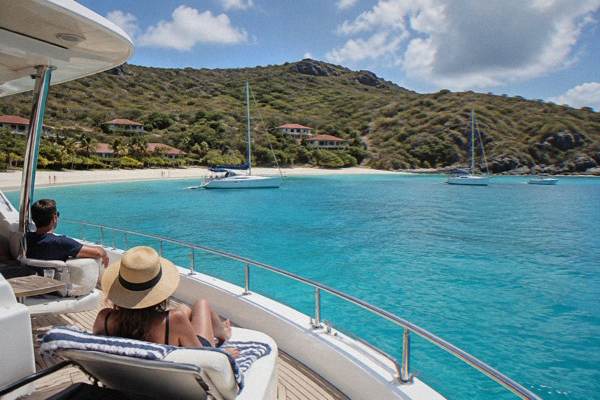
Arriving In St Barts By Yacht
St Barthelemy is a small French island in the Caribbean, and arriving by yacht means one harbor town, Gustavia, a set of French entry formalities and a marine reserve with rules worth knowing before you drop anchor.
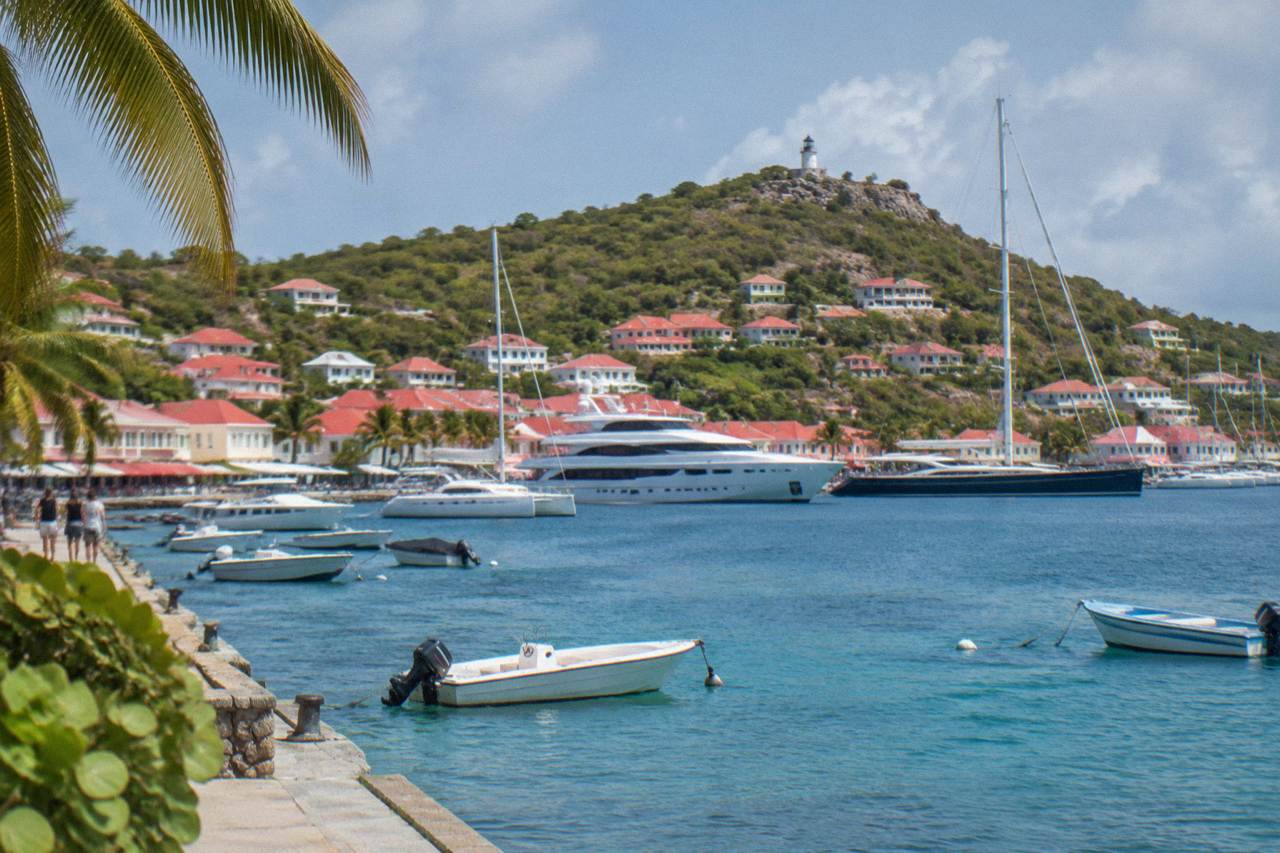
Yachts arrive at Gustavia, the harbour capital of St Barts. Clearance is with French customs and immigration because the island is outside the Schengen area, the marine reserve limits speeds and anchoring around Colombier and Ile Fourchue, and the sailing season peaks from December to April.
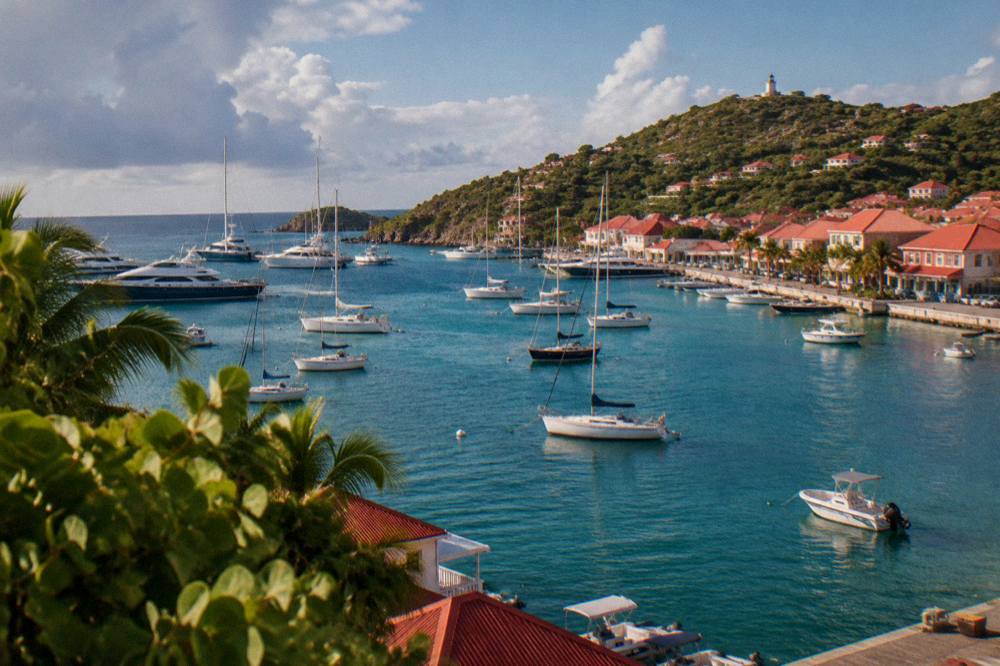
St Barthelemy, known everywhere on this site as St Barts, is a French island in the Caribbean of about 21 square kilometres, and its front door for arriving yachts is the harbour town of Gustavia. The port sits in a natural bay on the leeward side, ringed by red roofs and steep hills, and it is the only port of entry on the island. Cruise ships anchor offshore and tender in because there is no cruise pier, private boats tie up along the quays or swing on moorings in the outer harbor, and the whole arrival is administered under French rules. That combination, a small French collectivity with a working commercial port wrapped around a superyacht marina, shapes everything about a yacht arrival here.
This guide walks through the harbor itself, the clearance steps, the marine reserve rules that govern the bays north and west of Gustavia, the season, the anchorages, and the charter options for anyone who wants to make the crossing from St Martin or Sint Maarten by boat rather than by plane. For the broader picture of reaching the island, see the companion guide on how to get to St Barts.
Where Does A Yacht Arrive In St Barts?
A yacht arriving in St Barts comes into Gustavia, the island's capital and only port of entry, on the leeward coast. The Port de Gustavia administers the harbor, which combines commercial quays, a marina basin and outer anchorage space, and visiting yachts report to the port office on arrival. There is no other port of entry on the island, and cruise ships do not dock here either: they tender passengers into the town because no cruise pier exists.
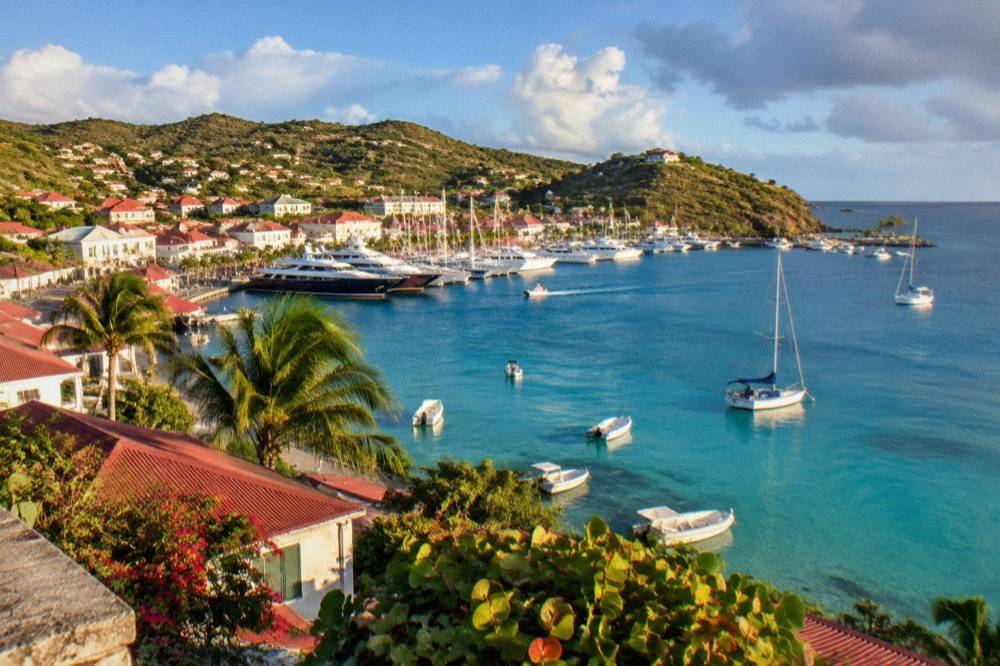
Gustavia wraps around a U-shaped bay with the town's stone and red-roofed buildings rising behind the quays. The harbor divides into zones: inner quays used by fishing boats, ferries and local traffic, marina berths, and an outer anchorage where larger vessels lie to their own ground tackle. The port authority's website covers commercial operations, port rules and contacts, and it is the reference point for berth requests and harbor regulations.
The town is compact and walkable from any berth. Shops, galleries and services cluster on the streets behind the waterfront, and the harbourfront itself is where arrivals, ferries and tenders all converge. Visitors who want the shore side of the visit can start with the guide to Gustavia harbor and the round-up of things to do in St Barts.
| Harbor element | What it is | Notes for arriving yachts |
|---|---|---|
| Port de Gustavia | The island's only port of entry | Administers quays, marina and outer anchorage |
| Inner quays | Working waterfront for ferries and local boats | Also the tender landing point for cruise ships |
| Marina basin | Berthed berths for visiting vessels | Contact the port office for availability |
| Outer anchorage | Open anchorage in the bay | Common position for larger yachts |
| Fuel and services | Harbor-side provisioning | Confirm openings, many businesses close in autumn |
What Are The Clearance Formalities For A Yacht In St Barts?
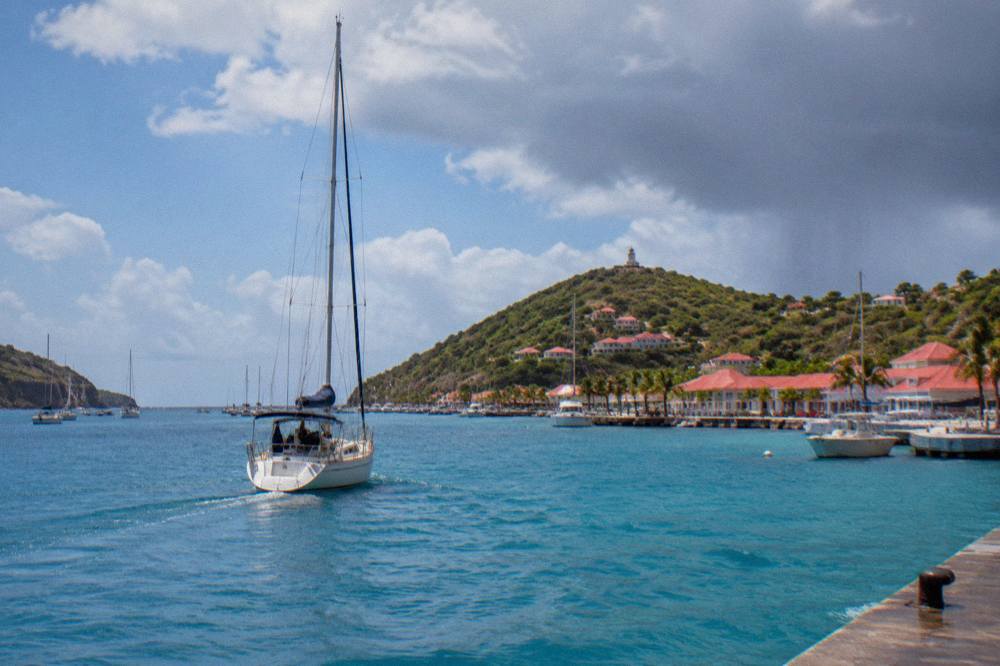
Clearing into St Barts means French entry formalities, because the island is an overseas collectivity of France that sits outside the Schengen area. Arriving yachts declare to customs and immigration under French rules, crew passports are the working document, and a Schengen visa alone does not authorize entry to the territory. The port office in Gustavia is the landing point for the paperwork.
The island's status matters more than many skippers expect. It is French, so French law governs, but it is not in the Schengen area, and the French foreign ministry's guidance states that ETIAS and EES do not govern entry either, with ETIAS not operational. Entry is governed instead by a French ministerial order covering the overseas collectivity. Visa-exempt nationalities such as US, UK, Canadian and EU citizens are generally admitted for short stays, and the standard advice is to carry a valid passport, an onward or return ticket and evidence of accommodation.
For the crew of a private yacht the practical sequence is straightforward: proceed to the port, fly the Q flag where convention requires it, and declare crew, vessel and itinerary to the authorities at the port office. Because rules and enforcement details change, the correct reference is the Collectivity's own information and, for nationality-specific requirements, each crew member's own government travel advice. The customs and entry guide and the page on the St Barts passport question cover the document side in more depth.
| Clearance step | What happens | Who handles it |
|---|---|---|
| Arrival at Gustavia | Vessel proceeds to port and signals arrival | Skipper |
| Declaration | Crew, vessel and itinerary declared | Skipper at the port office |
| Immigration | Passports checked under French overseas rules | French authorities |
| Customs | Goods and currency declarations as applicable | French customs |
| Departure | Outward clearance when leaving for another island | Skipper |
One point that trips up crews arriving from St Martin: the crossing between the French and Dutch sides of that island and St Barts is an international movement between distinct territories, not a domestic hop, so the paperwork is done in both directions. Crews planning onward island-hopping should repeat the process at each territory.
What Rules Apply In The St Barts Marine Reserve?
The St Barts marine reserve imposes a 5-knot speed limit inside its zones, bans jet skis, seabobs and towed motorized devices, prohibits dogs on the beaches and forbids touching or feeding protected species including sea turtles, according to the environment agency's regulatory-zones page. It lists 23 dive sites and sets mooring and anchoring rules in Colombier and Ile Fourchue bays, including a limit on vessels over 25 meters.
The reserve, the Reserve Naturelle Nationale de Saint-Barthelemy, covers five zones including Colombier Bay and the waters around Ile Fourchue, with simple and enhanced protection areas. The enhanced zones add bans on fishing, anchoring and scuba in defined patches. Ecological mooring buoys are the preferred option in Colombier and Ile Fourchue, with time limits on their use, and anchoring restrictions apply outside the buoy fields.
For turtle interactions the rule is absolute: green and hawksbill turtles are common in the lagoon at Grand Cul-de-Sac and around Colombier, and the environment agency's page states plainly that touching, chasing or disturbing them is prohibited, on the beach or in the water. Drone flights are restricted in and near reserve zones without prior authorization. None of this is obscure fine print; it is the operating law of the nicest bays on the island.
| Reserve rule | Where it applies | Source |
|---|---|---|
| 5-knot speed limit | Protected zones | Environment agency regulatory-zones page |
| No jet skis or motorized water devices | Reserve waters | Environment agency |
| No dogs on beaches | All island beaches | Municipal order, cited by the agency |
| No touching turtles or protected species | Island-wide waters | Environment agency |
| Vessels over 25 m excluded | Colombier and Ile Fourchue bays | Environment agency |
| Ecological moorings with time limits | Colombier and Ile Fourchue | Environment agency |
| Drones need authorization | In and near reserve zones | Environment agency |
When Is The Best Season To Arrive In St Barts By Yacht?
The yacht season in St Barts runs from December through April, when the Meteo-France normals show mean daily highs of 28.5 to 29.8 C and the lowest monthly rainfall totals of the year, with February at 38.4 mm. Hurricane season runs 1 June to 30 November with its peak from mid-August to mid-October, and many hotels and restaurants close for that autumn window, reopening between mid-October and early November.
The climate table for the island, Meteo-France normals 1991-2020, gives mean daily highs from 28.5 C in January to 31.7 C in September, with 891.3 mm of rain across the year. October is the wettest month at 135.6 mm and February the driest at 38.4 mm. The sea stays warm year-round, about 26 C in winter to about 29 C from August to October. For yachts, the winter months also bring the steady trade winds and the regatta calendar that fills Gustavia with large sailing yachts.
The seasonal events are a draw in their own right. The St Barths Bucket Regatta, a superyacht fixture, sails in mid-March, and the harbor is at its busiest around it. The Music Festival runs 8 to 18 January 2027 in its 43rd edition, and the Gourmet Festival runs 9 to 15 November 2026. Dates for Les Voiles de St Barth in April and for the Film Festival remain unconfirmed, so the organizers' own channels are the reference.
| Month | Mean daily high C | Rain mm | Season note |
|---|---|---|---|
| January | 28.5 | 52.6 | Music Festival 8 to 18 Jan 2027 |
| February | 28.6 | 38.4 | Lowest monthly rainfall in the normals |
| March | 29.0 | 41.4 | Bucket Regatta, mid-March |
| April | 29.8 | 50.9 | Les Voiles, April, dates unconfirmed |
| September | 31.7 | 96.9 | Hurricane season peak window |
| October | 31.4 | 135.6 | Wettest month in the normals |
| November | 29.9 | 118.6 | Reopenings, Gourmet Festival 9 to 15 Nov 2026 |
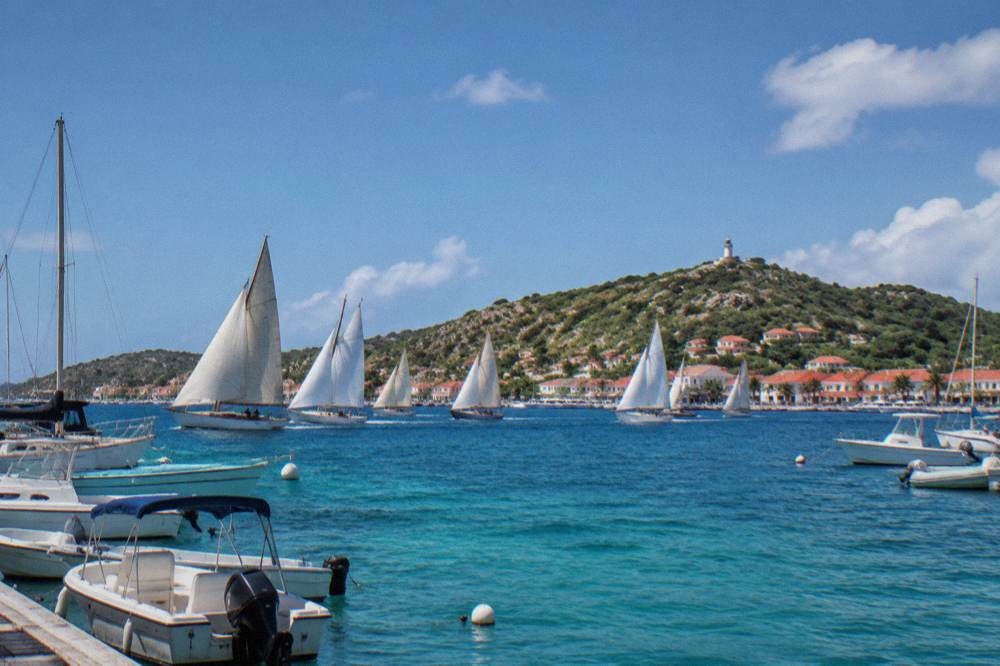
Which Bays And Anchorages Can A Yacht Use Around St Barts?
The usable anchorages around St Barts are Gustavia harbor itself, Colombier Bay and Ile Fourchue on the northwestern side, all governed by the marine reserve's rules, with Grand Cul-de-Sac offering a shallow anchorage on the calm eastern side. The tourism committee lists the island's beaches as public and free to access, and the reserve's mooring and speed rules apply in the protected bays rather than at every cove.
Colombier, reachable by boat or on foot from Flamands, sits inside the reserve, with its ecological moorings and the 25-meter vessel limit. Ile Fourchue, the small island northwest of Colombier, is likewise a reserve anchorage with buoys preferred over anchoring. Both are day stops for boats out of Gustavia and, in season, for charter boats over from St Martin. The crossing bays on the western side are exposed to swell; the eastern side, including Grand Cul-de-Sac, sits behind the reef in shallower, calmer water.
All of the island's beaches are public. That single fact does a lot of work on a boat itinerary: from a mooring at Colombier the beach is a dinghy ride away, and no part of the shoreline is privately closed. The reserve's dog ban, no dogs on any beach, applies island-wide under a municipal order, so four-legged crew stay aboard.
| Bay | Position | Character | Reserve status |
|---|---|---|---|
| Gustavia | Leeward coast, south | Port of entry, marina and anchorage | Harbor rules apply |
| Colombier | Northwest coast | Sheltered bay, walk-in beach from Flamands | Reserve zone, moorings, 5 knots |
| Ile Fourchue | Island northwest of Colombier | Buoy field behind the islet | Reserve zone, buoys preferred |
| Grand Cul-de-Sac | East coast | Shallow, reef-sheltered lagoon | Turtle protections in the lagoon |
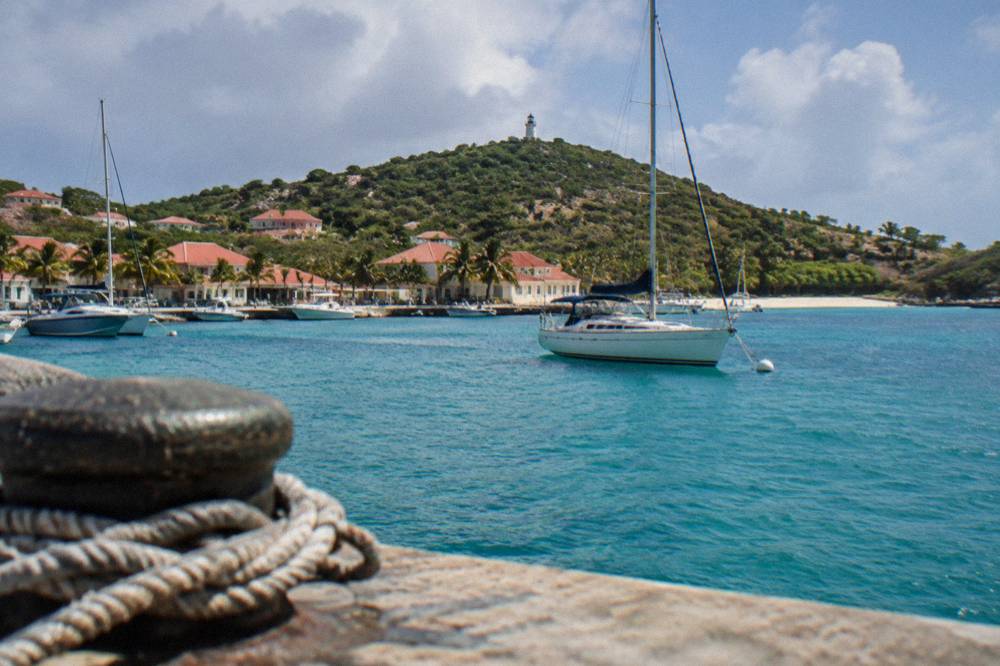
Can You Charter A Boat To St Barts From St Martin?
Yes, and every bookable charter listed here departs from St Martin or Sint Maarten, crossing to St Barts as a day or overnight trip: a private sailboat, several private motor and catamaran charters priced per group, an overnight catamaran trip, and one per-person group sail and snorkel excursion that runs only from 12 May to 31 August 2027 on its listing. None departs from St Barts itself.
The crossing from St Martin is the classic yacht arrival short of arriving on your own hull. Charter boats leave from the Dutch and French side marinas, clear into Gustavia, and typically spend the day across the bays before returning. The private sailboat option, a charter from St Maarten to St Barth, runs as a full-day private trip with the crossing as part of the experience, and the operator's live listing carries the current price and calendar. See the live listing if a sail-over matches your plans.
For a party that wants the boat and the overnight together, the two-day catamaran trip moors in St Barts overnight, which is the closest a visitor without a boat comes to a genuine yacht arrival. The group sail, the only per-person product listed here, visits Gustavia, Colombier and Ile Fourchue in one day and ties directly into the reserve content above.
| Charter option | Departure | Type | Best fit |
|---|---|---|---|
| Private sailboat | Sint Maarten | Private day sail | A sailing-focused crossing |
| Private charter from St Martin | St Martin | Private day charter | A motorboat day with flexibility |
| Full-day private charter | St Martin or Sint Maarten | Private day charter | Larger parties |
| Overnight catamaran | St Martin | Two-day private trip | An overnight stay in St Barts |
| Group sail and snorkel | St Martin or Sint Maarten | Per-person day sail | Solo travellers and couples |
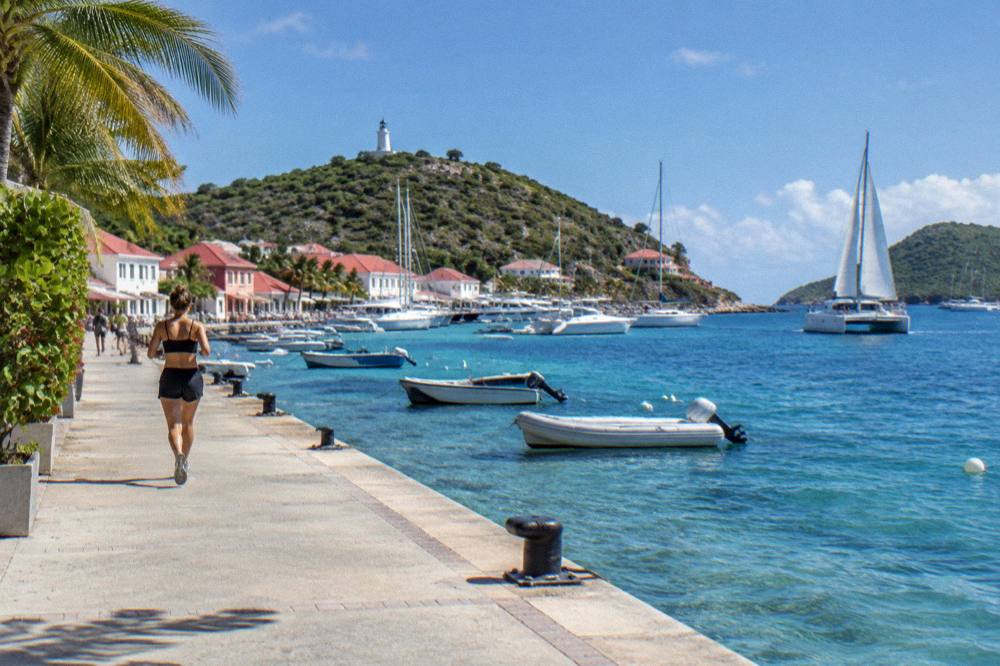
What Should A Skipper Expect On The Approach?
The approach to Gustavia is from the leeward, south or west side of the island, with the harbor entrance marked and the town visible below the surrounding hills, and skippers should plan arrival in daylight because conditions around the island change with swell and wind. The reserve's 5-knot zones begin well before the anchorage at Colombier, and the port should be contacted ahead for berth or mooring arrangements in season.
Two practical points recur in port guidance. The first is swell: the outer harbor and the bays to the northwest are open to Atlantic ground swell at times, and mooring choice matters more than proximity to town. The second is timing around events: regatta weeks in spring and the end-of-year period fill the harbor, and the port office is the channel for confirming space. No public schedule of yacht arrivals exists in machine-readable form; arrangements run through direct contact.
For provisioning and shore logistics, the island's shops and restaurants largely close in the autumn low window and reopen between mid-October and early November, a pattern rather than a fixed calendar, so a shoulder-season arrival finds a quieter island with fewer services open. The St Barts shopping guide covers the retail side, and the airport guide explains the plane alternative for crew joining by air through St Martin.
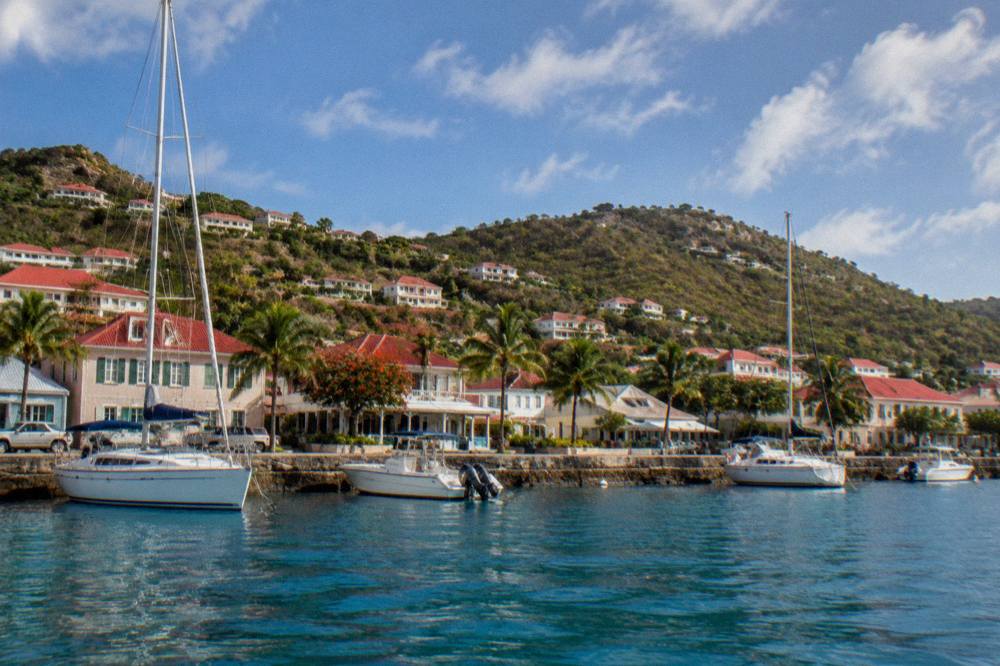
What Is There To Do Once The Yacht Is Tied Up In Gustavia?
Once the yacht is secured, the shoreline of St Barts offers public beaches at every cove, the museums and forts of Gustavia within a walk of the quay, snorkelling in the reserve bays, and a French-influenced restaurant and shopping scene in the capital, with the full inventory on the site's things-to-do page. All beaches are public and free, and no walking tour product is listed here.
Gustavia itself rewards an afternoon: the harbor fortifications, the Wall House Museum and the island's Swedish-period history are a short walk from any berth. Beyond town, the beaches ring the island from Saint-Jean and Flamands to Saline, Gouverneur and Grand Cul-de-Sac, each public. The St Barts itinerary guide arranges them into days, and the honeymoon itinerary does the same for couples.
For crews with a boat at their disposal, the reserve bays are the high point, and the snorkelling around Ile Fourchue and Colombier shows why the protection rules exist. Sea turtles are present in the lagoon at Grand Cul-de-Sac and around Colombier, at a respectful distance and untouched. Back in Gustavia, the end-of-year period brings fireworks over the harbor on New Year's Eve, an event covered in the New Year's Eve guide.
Common Questions About Arriving In St Barts By Yacht
Can you arrive in St Barts by private yacht?
Yes. Gustavia is a working port of entry with quays, marina berths and an outer anchorage, and private yachts clear in there under French rules. The port office administers arrivals.
Do you need a passport to arrive in St Barts by yacht?
Yes, passports are the working document for crew, and ferry operators on the same corridor require them too. The island is outside the Schengen area, so each crew member should also check their own government's travel advice for validity requirements.
Can you anchor anywhere in St Barts?
No. The marine reserve's zones at Colombier and Ile Fourchue prefer ecological mooring buoys, cap vessels at 25 meters and restrict anchoring, and a 5-knot speed limit applies inside reserve zones. Gustavia harbor has its own port rules.
How long does the crossing from St Martin to St Barts take?
The scheduled ferries on the corridor run about 45 minutes from Philipsburg and about 50 to 60 minutes from Marigot, per the operators' pages, and a sailing or motor yacht crossing varies with conditions. No charter duration is quoted outside the operator listings themselves.
When is yachting season in St Barts?
December through April, when rainfall in the Meteo-France normals is at its lowest and the regatta calendar runs, including the Bucket Regatta in mid-March. Hurricane season runs 1 June to 30 November with its peak from mid-August to mid-October.
Can you charter a yacht to St Barts without owning one?
Yes. Every bookable charter listed here departs from St Martin or Sint Maarten, from private sailboat and motor charters to a two-day overnight catamaran and a per-person group sail, all crossing to St Barts as day or overnight trips.
A yacht arrival remains the most fitting entrance to St Barts: the island's whole economy and history sit around that one harbor, and the reserve bays to the north are the reward once the paperwork is done. Whether the crossing happens on a private hull or a chartered sailboat out of St Martin, the sequence is the same: clear in at Gustavia, respect the reserve, and enjoy a shoreline where every beach is public.