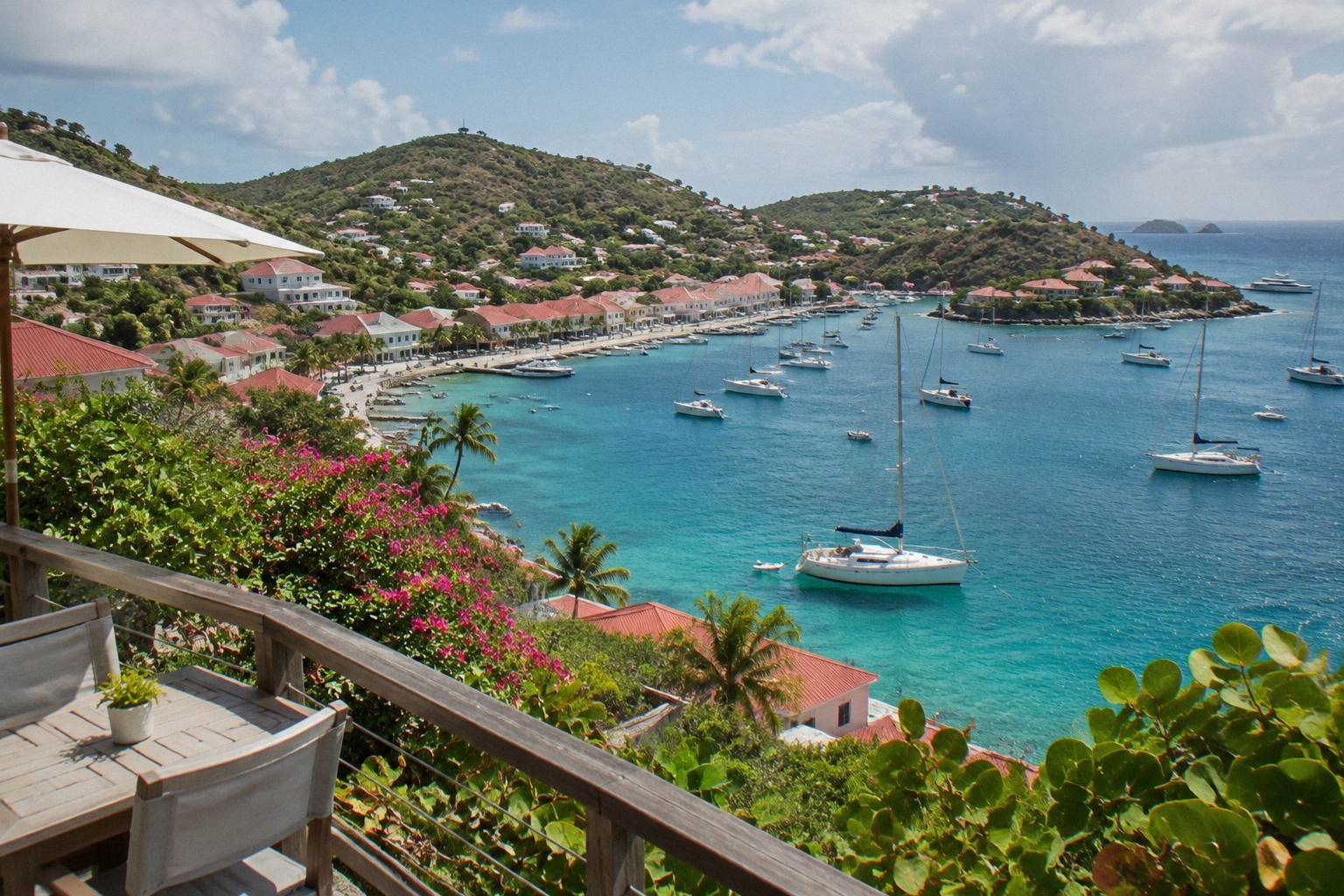
A Long Weekend In St Barts
St Barthelemy, better known as St Barts, packs a harbour capital, public beaches and a famously short runway into about 21 square kilometres, which makes it unusually well suited to a long weekend.
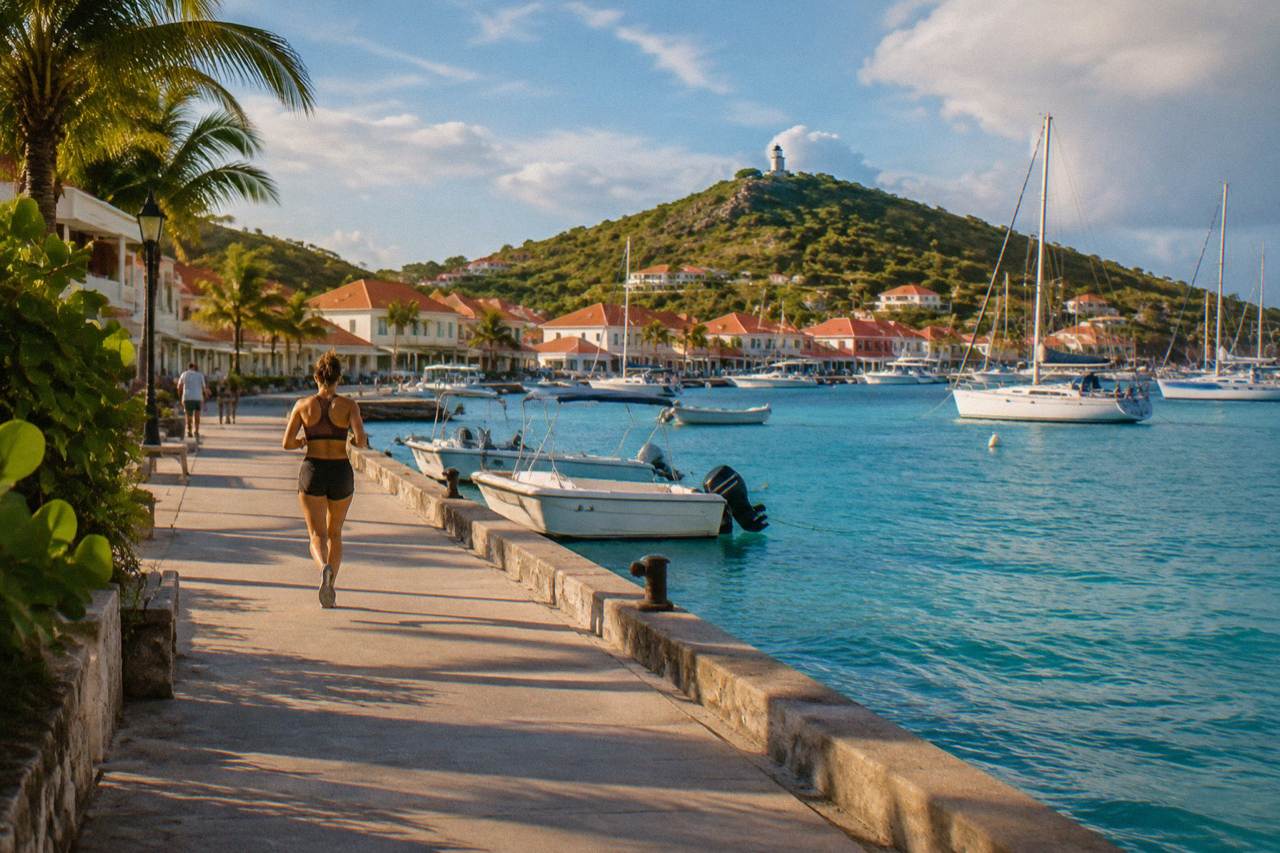
Arrive through St Martin by small plane or ferry, base yourself in or near Gustavia, and split the weekend between the harbour, one beach per half-day, and a boat day to Colombier and Ile Fourchue.
St Barthelemy, usually written St Barts, is a small French island in the Caribbean, an overseas collectivity of France since 2007, with Gustavia as its harbour capital and about 21 square kilometres of hills, public beaches and turquoise water. That scale is the reason a long weekend works here. The airport, Gustaf III (SBH), sits on a 646 m runway that takes only small turboprops in daylight conditions, so nearly everyone arrives through St Martin by small plane or ferry, and once on the island nothing is far from anything else. This page lays out a realistic three-day St Barts weekend, from the arrival logistics to a beach-by-day plan, with the tour options that depart from St Martin woven in where they genuinely help.
How Many Days Do You Need For A St Barts Weekend?
Three full days is the practical minimum for a satisfying St Barts weekend, and four is the comfortable version: one day for arrival and Gustavia, one for beaches and the island loop by car, and one for a boat day to Colombier or Ile Fourchue. Because the island is only about 21 square kilometres, each of those days can hold two or three stops without feeling rushed, and the constraint is rarely distance, it is ferry schedules and daylight flight windows at the small airport.
The rhythm of a short stay matters more than the checklist. Gustavia, the capital, rewards a slow morning around its harbour, shell museums and the two fort sites above town, while the beaches, all of them public, are scattered around a coastline you can drive in under an hour if the roads cooperate. The roads are narrow and steep, speed limits are 50 km/h island-wide and 30 km/h in Gustavia and St Jean, so the driving itself takes attention rather than time.
A weekend also forces a choice about the boat. The marine reserve's rules, listed on the environment agency's regulatory-zones page, include a 5-knot limit in protected zones, no jet skis and no anchoring damage at Colombier and Ile Fourchue bays, so arriving by an operator who knows the buoys and zones is the straightforward route to those two spots. Every bookable boat tour listed here departs from St Martin or Sint Maarten, which means a boat day pairs naturally with either your arrival day or your departure day, or replaces a hotel night entirely.
| Day | Morning | Afternoon | Evening |
|---|---|---|---|
| Friday | Small plane or ferry from St Martin, settle in | Gustavia harbour walk, Wall House Museum | Harbour front in Gustavia |
| Saturday | Beach on the south coast, Saline or Gouverneur | Island loop by rental car, Flamands and Corossol | Sunset from a west-facing spot |
| Sunday | Boat day to Colombier and Ile Fourchue | Return crossing, last swim | Departure or final night |
If your window is shorter, the St Barts itinerary page breaks the same material into flexible blocks, and the three-day guide goes deeper on each stop.
How Do You Get To St Barts For A Long Weekend?
Nearly all weekend visitors reach St Barts through St Martin: a short hop by small STOL turboprop from Princess Juliana airport (SXM) or Grand Case (SFG), or a ferry of about 45 minutes from Philipsburg with Great Bay Express or about 50 to 60 minutes from Marigot with Voyager. No jet lands on the island, the runway is 646 m and daylight-only, and the ferry crossing can be rough, so the weather outlook shapes both options.
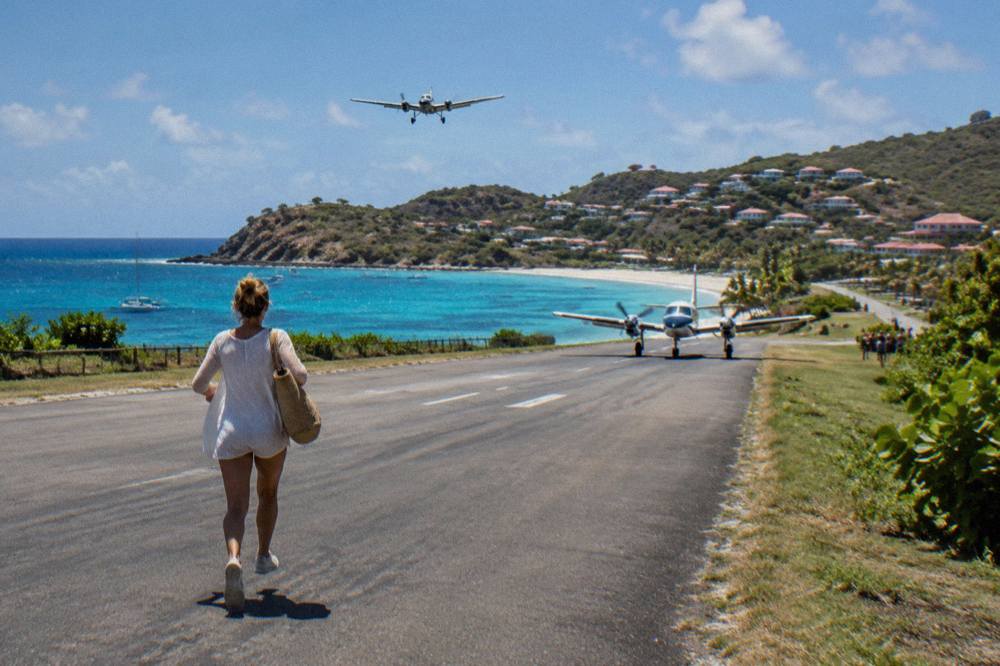
The air route is the signature one. St Barth Commuter flies from SXM, SFG and Pointe-a-Pitre, Tradewind flies from San Juan and Antigua, and Winair serves the island from SXM with Twin Otters. All of them land at Gustaf III, one of the shortest commercial runways anywhere, on a steep approach that pilots need special certification to fly. The St Barts airport guide covers what to expect at the terminal, and the flights from St Maarten page covers the busiest feeder route. Booking the SXM connection with buffer matters on a weekend: the small aircraft fill quickly and the last departures of the day leave before sunset.
The ferry is the fallback and, for some, the preference. Great Bay Express leaves from Bobby's Marina in Philipsburg on the Dutch side, and Voyager leaves from the Marigot terminal on the French side, both landing at Gustavia. Check-in for Great Bay Express closes well before departure and a passport is required, so the operator's ferry page is the thing to read the night before. Neither operator promises a smooth crossing, and sailings can be adjusted for weather or seasonal maintenance.
A third option turns transport into the trip itself: chartering a boat from St Martin that delivers you to St Barts and stays with you. That is what the featured overnight option on this page does, and it is worth weighing against a hotel night for a weekend.
The overnight catamaran is the only two-day product: it crosses from St Martin, overnights on the St Barts side and returns the following day, which maps almost perfectly onto a Friday-to-Sunday weekend. For anyone who wants the boat but not the night, a private sailboat covers the crossing and a full day around the island before an evening return.
| Route | Mode | Operator or carrier | Notes |
|---|---|---|---|
| SXM (Sint Maarten) to SBH | Small plane | St Barth Commuter, Winair | Busiest feeder route, book ahead |
| SFG (Grand Case) to SBH | Small plane | St Barth Commuter | French-side departure |
| PTP (Guadeloupe) to SBH | Small plane | St Barth Commuter | Regional option |
| SJU (San Juan) to SBH | Small plane | Tradewind | Longest common scheduled hop |
| ANU (Antigua) to SBH | Small plane | Tradewind | Limited frequency |
| Philipsburg to Gustavia | Ferry | Great Bay Express | About 45 minutes, from Bobby's Marina |
| Marigot to Gustavia | Ferry | Voyager | About 50 to 60 minutes, 2 to 3 sailings a day |
What Should Day One Of A St Barts Weekend Look Like?
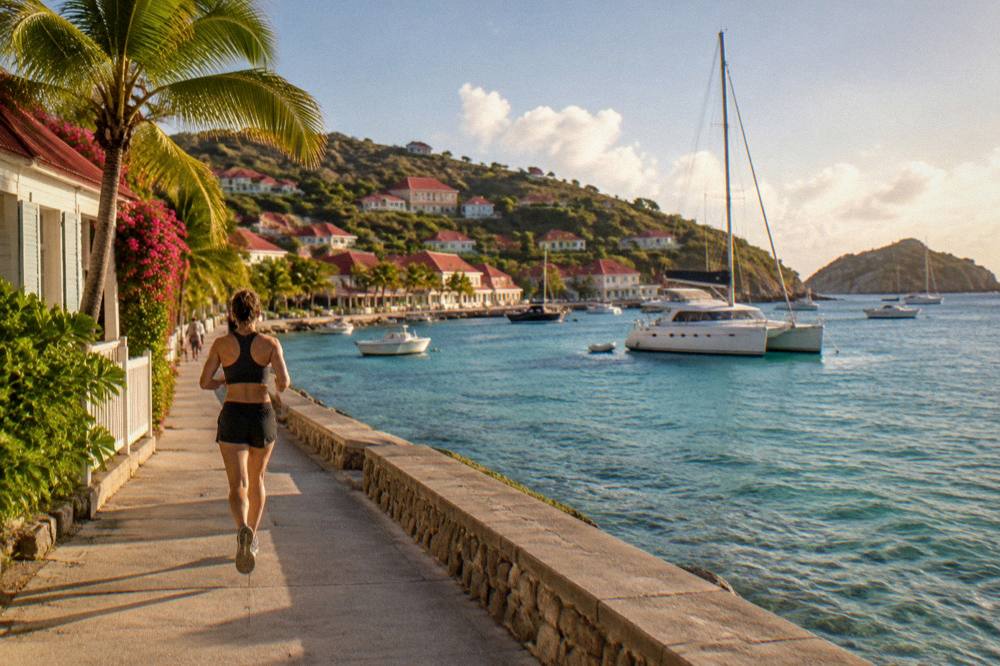
Day one should be Gustavia day: arrive through St Martin in the morning, drop bags, and give the afternoon to the harbour capital, walking the quays, the Wall House Museum, and the fort sites above town, with a swim at Shell Beach (Grand Galet) a few minutes' walk from the centre. Everything in this list sits within the town itself, so a first day survives late arrivals, ferry delays and jet lag without losing the plot.
Gustavia is the island's working harbour and its most walkable quarter. Cruise passengers tender in here because there is no cruise pier, superyachts tie up along the quays in season, and the town's Swedish-era street names are the visible trace of its past, which includes the island's status as a French collectivity since 2007 and Hurricane Irma in September 2017. The Gustavia harbour page maps the quays and the Wall House Museum covers the town's own collection.
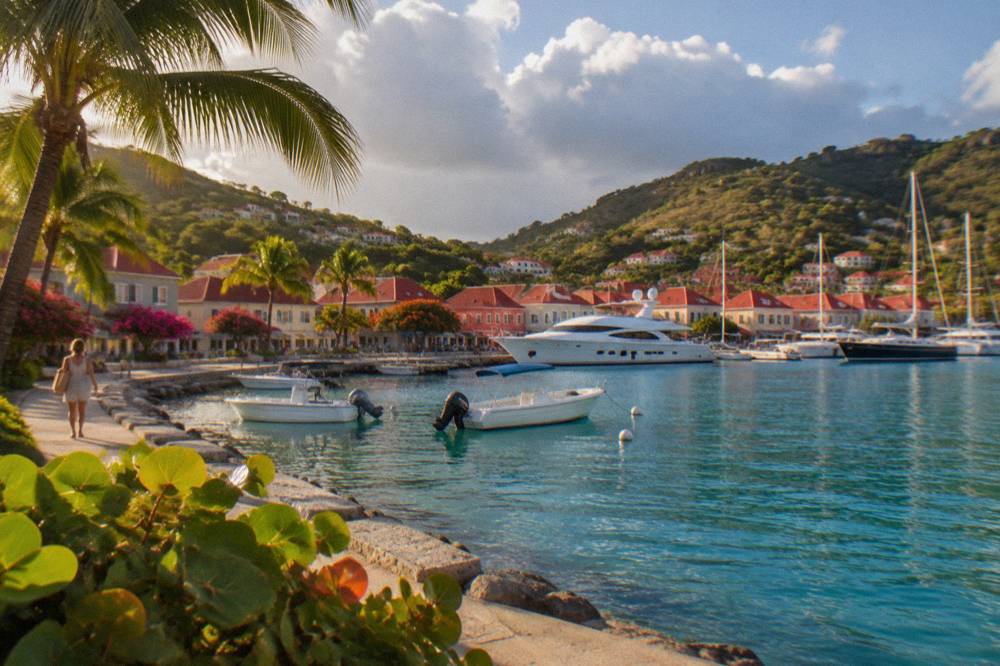
Two short climbs reward the effort. Fort Karl and Fort Gustaf sit above the town, and both give a view down over the harbour; the Fort Gustaf page describes the position of each. Below them, Shell Beach, a public beach of broken coral and shell rather than sand, is close enough to town that a swim fits between the museum and dinner. No lifeguard, facility or parking claim can be made for it beyond its name, position and public status.
If the schedule only allows a two-night weekend, consider replacing the Saturday hotel night with the overnight catamaran: Friday in Gustavia, Saturday afloat around Colombier and Ile Fourchue, Sunday home. That single swap turns the weakest day of a short trip, the middle Saturday spent checking in and out, into the highlight, and it removes two ferry crossings from the itinerary.
What Should Day Two Of A St Barts Weekend Look Like?
Day two should be the island loop: rent a car or Mini Moke in the morning, take one beach on the south coast before the sun is high, then drive the island through Flamands, Corossol and Grand Cul-de-Sac, stopping at one or two more public beaches and finishing at a west-facing spot for the sunset. Driving is on the right, roads are narrow and steep, and Avis, Budget and Hertz all have counters at the airport alongside local agencies.
The loop is not long, but it is not fast either. The island's roads climb between bays, and the practical speed limit of 50 km/h, 30 km/h in Gustavia and St Jean, is close to what the terrain allows anyway. Book the car ahead for weekend dates, because the island's fleet is small and December to April is the busy season. The car rental and rental car tips pages cover the rest.
The beaches, all public, divide naturally by coast. Saline and Gouverneur face south and sit at the end of short walks from small parking areas. Flamands is the broad north-facing bay, Colombier the west-facing cove best reached by boat or by the hike described on the Colombier hike page, and Grand Cul-de-Sac the shallow eastern bay. Each is public, each has a name and a map position, and the marine reserve's rules apply island-wide, including the ban on dogs on all beaches under a municipal order and the 5-knot limit on the water.
| Beach | Coast | Position on the island | Best fit in the day |
|---|---|---|---|
| Shell Beach (Grand Galet) | West | Walking distance from Gustavia | Day one swim |
| Saline | South | Mid-island, south coast | Morning, day two |
| Gouverneur | South | West of Saline | Morning, day two |
| Flamands | North | North-west bay | Midday, day two |
| Corossol | West | North of Gustavia | Afternoon stop, day two |
| Grand Cul-de-Sac | East | Eastern shallow bay | Afternoon, day two |
| Colombier | West | North-west cove | Boat day or hike, day three |
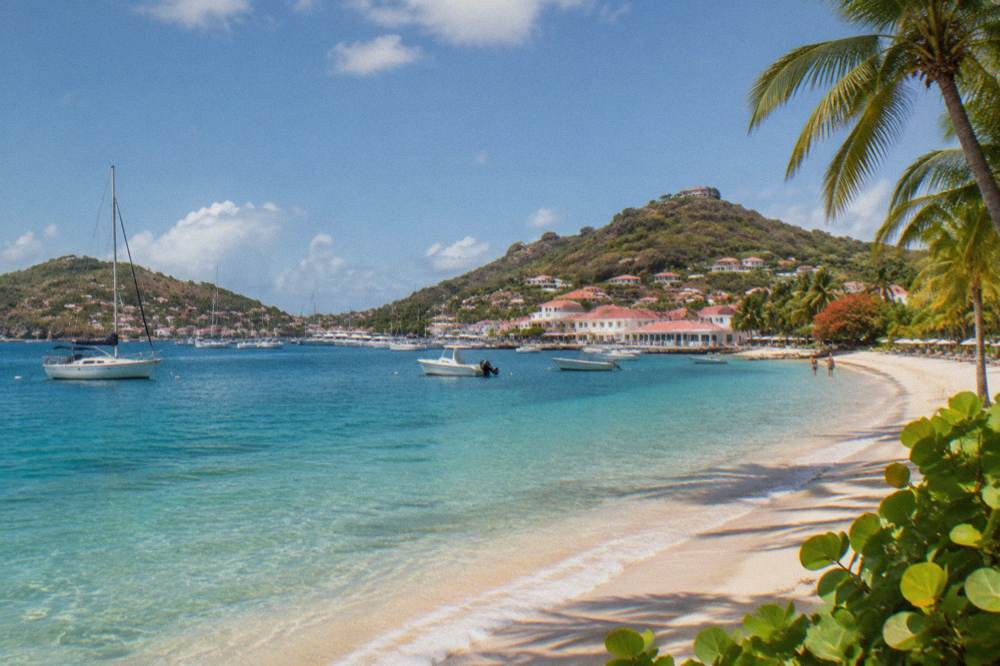
Two rules from the environment agency's regulatory-zones page shape any beach or water stop: no touching or chasing turtles, corals or other protected species, and no collecting shells, coral or sand. Turtles are common in the water around the island and nest on its beaches, and the agency asks that sightings and nests be reported rather than approached. The sea turtles page has the detail.
For a weekend in the May-to-August window, one alternative day two exists: the per-person group sail, which runs only 12 May to 31 August 2027 on its listing and visits Gustavia, Colombier and Ile Fourchue in a single day from St Martin. It suits a weekend built around a St Martin base with St Barts as the destination day. Everything else covered here is indexed on St Barthelemy Travel.
What Should Day Three Of A St Barts Weekend Look Like?
Day three should be the water day and the exit in one: either a morning boat trip around the marine reserve's bays with an afternoon ferry or flight out, or, for a Monday-departure weekend, a full private charter that builds the crossing, Colombier, Ile Fourchue and the return into a single booked day. All charter options listed here leave from St Martin or Sint Maarten, so the day either starts from your St Barts hotel via a morning crossing or begins and ends on the St Martin side.
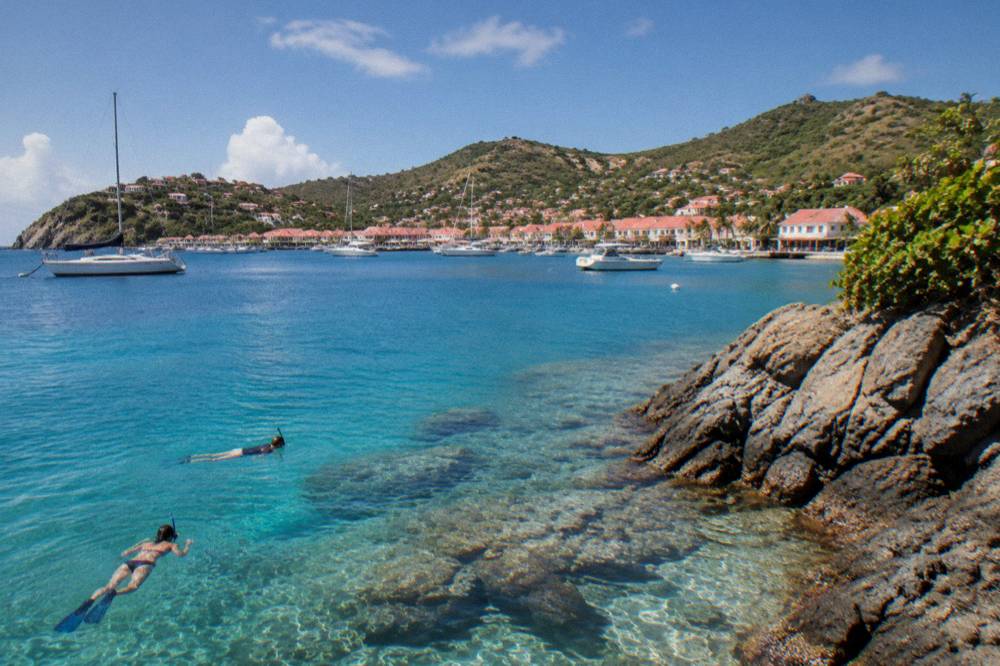
Colombier and Ile Fourchue are the two names that justify the boat. Both sit inside the marine reserve's regulated zones, where vessels over 25 m are excluded, ecological mooring buoys are preferred and anchoring is restricted, all listed on the environment agency's page. Ile Fourchue, a small uninhabited island off St Barts' north-west, and Colombier's bay are the classic snorkel stops, and the reserve lists 23 dive sites in its waters.
If the weekend ends Sunday evening, the honest structure is a morning swim at whichever beach sits nearest your base, an unhurried lunch, and an afternoon departure that leaves daylight margin at the airport, which closes shortly after sunset. If it ends Monday, the private charter day fills Sunday completely. The sunrise to sunset day page sketches what a full island day can hold, and the beach hopping itinerary strings the coasts together for a longer stay.
Where Should You Stay For A St Barts Weekend?
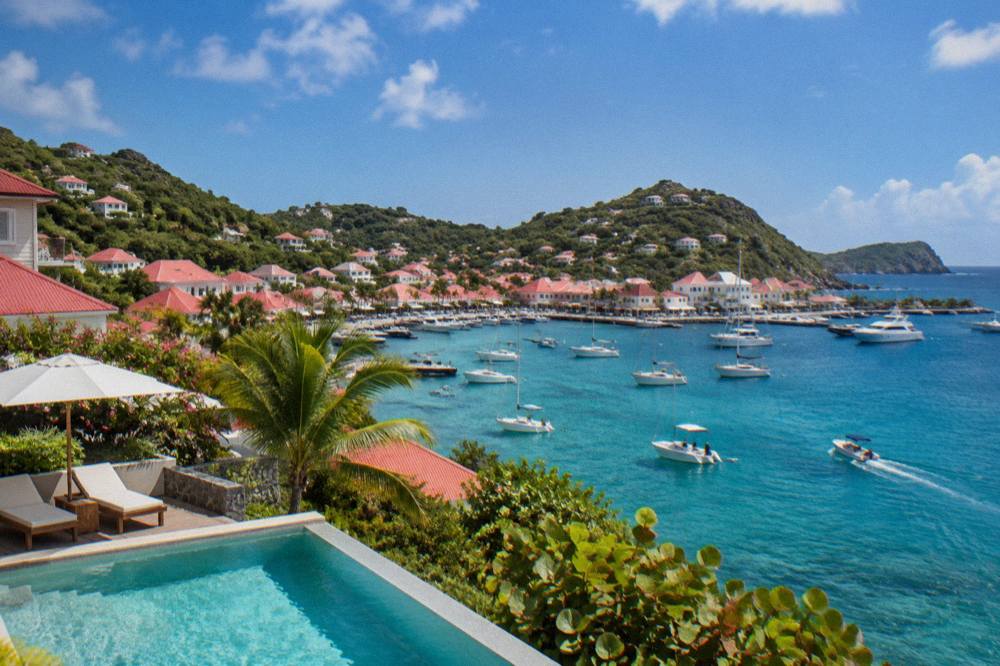
For a two or three-night St Barts weekend, Gustavia itself and the Saint-Jean area are the practical bases, because they put the harbour, the airport and a public beach within minutes of each other, while Flamands, Grand Cul-de-Sac and Lorient suit travellers who want quiet and are happy to drive. Hotels follow a seasonal pattern: many close in late August and reopen in waves between mid-October and early November, and villas stay available year-round, which makes them a strong autumn-weekend option.
The trade-off is simple. Gustavia means walking to dinner and the quays, and the where to stay in Gustavia page lays out the town's position. Saint-Jean sits by the airport and its beach, Flamands holds the island's broad north bay, and Grand Cul-de-Sac curves along the shallow east coast. The best area to stay page compares them, and the hotel versus villa page covers the third option.
Rates vary by season and each property's own booking page shows them. The major hotels, including Cheval Blanc, Eden Rock, Le Toiny, Le Barthelemy and the Christopher, follow the autumn closure-and-reopening cycle, while a large villa market with no published count operates year-round through managers such as WIMCO, Sibarth and St Barth Properties. For a November weekend, the Gourmet Festival from 9 to 15 November 2026 is the natural anchor date.
| Base | Position | Character | Suits |
|---|---|---|---|
| Gustavia | Harbour capital, west coast | Walkable, quays, museums, shops | No-car weekends |
| Saint-Jean | Centre-north, by the airport | Beach and village together | Short stays, early flights |
| Flamands | North-west bay | Broad beach, quiet | Beach-first weekends |
| Grand Cul-de-Sac | East coast | Shallow bay, low-key | Families |
| Lorient | North-centre | Residential, village feel | Slow weekends |
When Is The Best Season For A St Barts Weekend?
The busiest and most reliable weekend weather runs from December through April, outside the Atlantic hurricane season, which spans 1 June to 30 November with a peak from mid-August to mid-October. Meteo-France normals for 1991 to 2020 put the mean daily high between 28.5 C in January and 31.7 C in September, with 891.3 mm of rain across the year and October the wettest month at 135.6 mm, so the island stays warm in every season but the risk profile changes.
The numbers deserve a read before generalising. February is the month with the least rain in the normals table at 38.4 mm, October the most at 135.6 mm, and the warmest mean high belongs to September. The hurricane overlap is the reason the autumn weeks carry the lowest seasonal activity and the reopening pattern: hotels and restaurants shut in late August and come back between mid-October and early November, and the low season and October pages cover what that window looks like on the ground.
| Month | Mean daily high (C) | Mean daily low (C) | Rain (mm) |
|---|---|---|---|
| January | 28.5 | 23.5 | 52.6 |
| February | 28.6 | 23.3 | 38.4 |
| March | 29.0 | 23.5 | 41.4 |
| April | 29.8 | 24.2 | 50.9 |
| May | 30.7 | 25.1 | 61.7 |
| June | 31.2 | 25.9 | 56.0 |
| July | 31.2 | 26.0 | 80.4 |
| August | 31.6 | 26.3 | 79.6 |
| September | 31.7 | 26.2 | 96.9 |
| October | 31.4 | 25.8 | 135.6 |
| November | 29.9 | 25.0 | 118.6 |
| December | 28.9 | 24.1 | 79.2 |
Figures are Meteo-France climate normals, 1991 to 2020, for the St Barthelemy station. Event weekends change the calculus: the Music Festival from 8 to 18 January 2027, the Bucket Regatta in mid-March, Voiles de St Barth in April with 2027 dates unconfirmed, and the Gourmet Festival from 9 to 15 November 2026 all pull visitors into town, and the festivals page lists the rest.
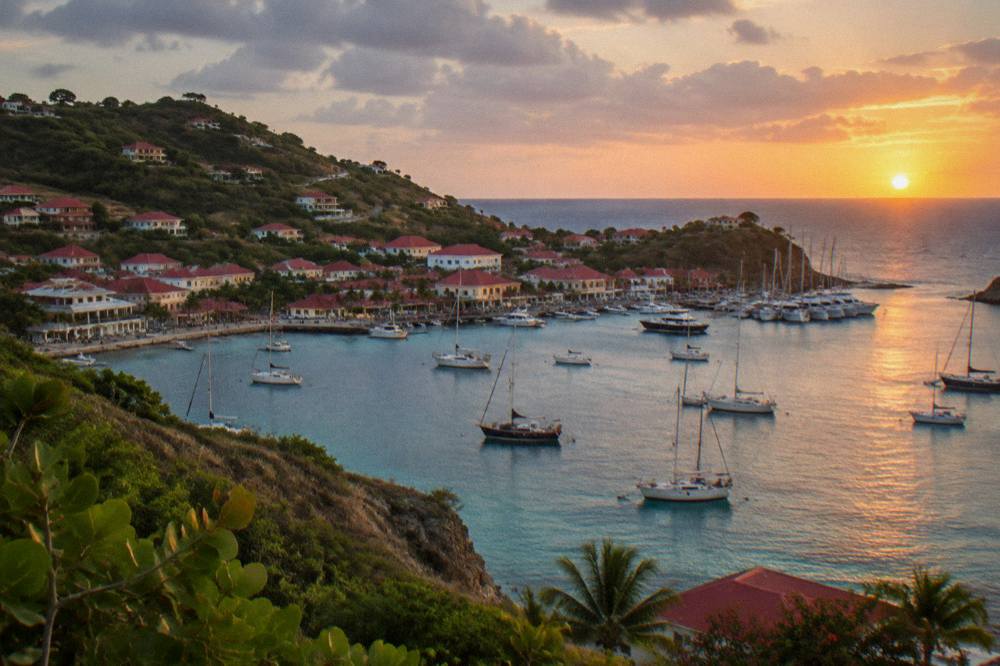
For a weekend that combines the shoulder season's quiet with full operation, late November through early December is the window the reopening pattern points to: the hotels are back, the sea is still warm, and the December crowds have not yet arrived. Whatever the dates, never plan around a storm forecast this far out, and check the current outlook close to travel.
Common Questions About A St Barts Weekend
Is a weekend in St Barts worth it?
Yes, if the goal is a compact harbour town, public beaches and one boat day. The island's size means three days cover Gustavia, several beaches and a trip to Colombier or Ile Fourchue, and the main cost of a short stay is travel time through St Martin rather than distance on the island.
Do you need a car for a weekend in St Barts?
Usually yes for two or more days outside Gustavia. Roads are narrow and steep, driving is on the right, and Avis, Budget, Hertz and local agencies rent at the airport, with Mini Mokes available through local operators. A no-car weekend is workable if the base is Gustavia itself.
Can you do St Barts as a day trip from St Martin?
Yes. Ferries run from Philipsburg with Great Bay Express, about 45 minutes, and from Marigot with Voyager, about 50 to 60 minutes, and every boat tour listed here departs from St Martin or Sint Maarten, including options that visit Gustavia, Colombier and Ile Fourchue in one day.
What is the wettest month for a St Barts weekend?
October, at 135.6 mm in the Meteo-France 1991 to 2020 normals, with 891.3 mm falling across the year. February shows the lowest monthly total at 38.4 mm. Hurricane season runs 1 June to 30 November, peaking mid-August to mid-October.
Are beaches free in St Barts?
Yes, all of them are public. Dogs are banned on every beach under a municipal order, the marine reserve bans touching protected species such as turtles, and collecting shells, coral or sand is prohibited in reserve zones.
What documents do you need for a St Barts weekend?
A passport is required for the ferry and for air arrival, and the island sits outside the Schengen area, so ETIAS and EES do not govern entry. Visa rules differ by nationality and government advice differs on passport validity, so check your own government's travel advice before booking.
A long weekend in St Barts rewards planning more than pace: fix the St Martin connection first, decide whether the boat is a day or a night, and let the island's small scale do the rest.