How Far Is St Barts From St Maarten?
How far St Barts is from St Maarten in practical travel terms: ferry crossing times from the operators, the short-hop flight, and how to plan the connection between the two islands.
St Barthelemy, the small French Caribbean island universally written St Barts, lies just off the southern edge of its larger neighbour St Maarten, and the gap between them is crossed every day by ferries and small turboprop aircraft. The tourism committee presents the two as a natural pair, with St Maarten acting as the main gateway for flights from North America and Europe and St Barts a short connection beyond it. The honest answer to a distance question here is not a single number but a set of crossing times published by the operators themselves, plus a few practical realities of the route that first-time visitors should know before booking anything.
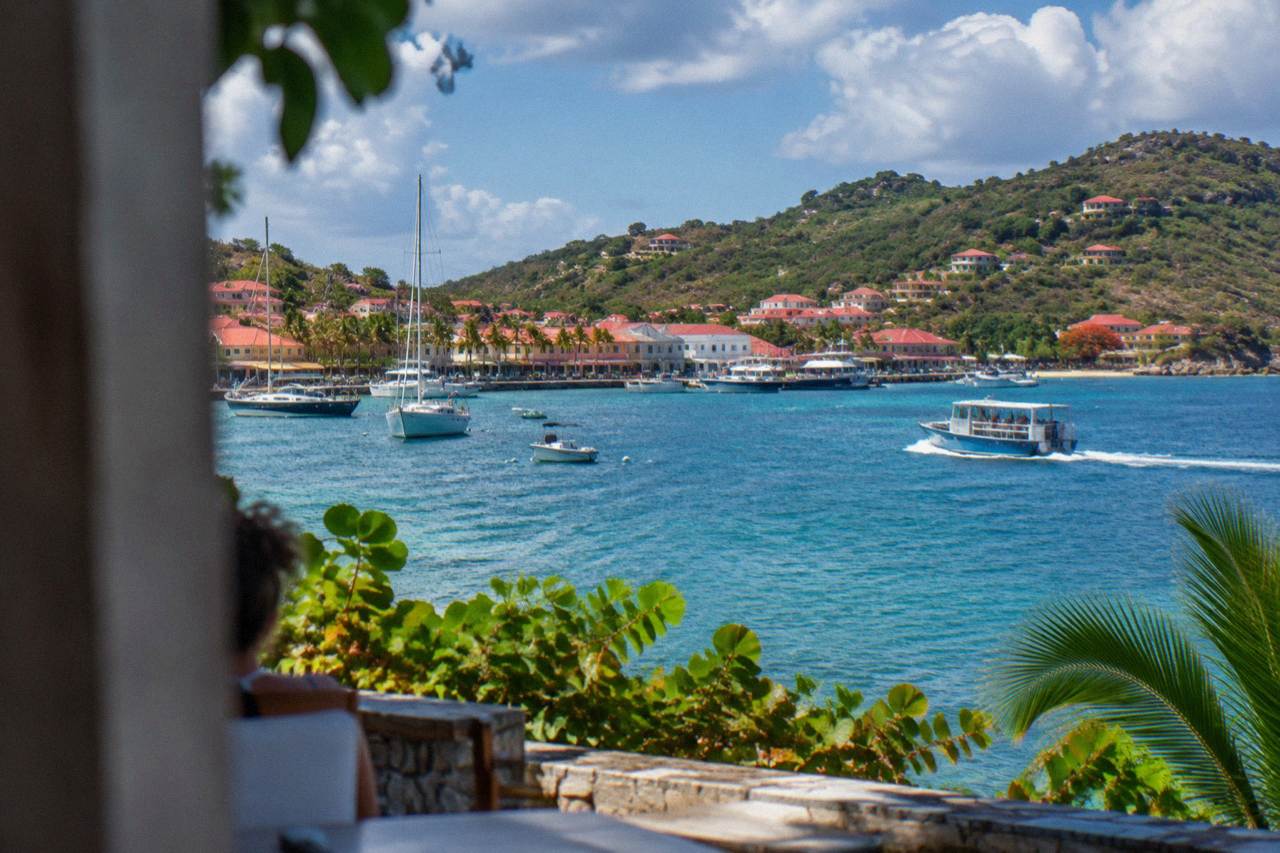
In practical travel terms, St Barts is a short hop from St Maarten: the Great Bay Express ferry crosses from Philipsburg in about 45 minutes, the Voyager ferry crosses from Marigot in about 50 to 60 minutes, and the flight between the islands is a brief connection in a small turboprop. Both ferry operators publish these crossing figures on their own pages. The two islands share a lagoon-fringed corner of the northeastern Caribbean, with St Barts sitting to the southeast of St Maarten.
The island measures about 21 square kilometres and Gustavia, its harbour capital, faces west toward St Maarten across open water. That geography is why the ferry terminals sit where they do: Great Bay Express leaves from Bobby's Marina in Philipsburg on the Dutch side, Sint Maarten, while Voyager leaves from the Marigot terminal on the French side, St Martin. Both arrive at the ferry quay in Gustavia, which puts passengers within a short walk of the town itself.
A word on what the distance means for planning. Because the crossing is short in absolute terms, the variables that matter are not kilometres but sea conditions, check-in rules and season. The operator's ferry page asks passengers to arrive about 45 minutes before departure, notes that check-in closes about 15 minutes before the boat leaves, and requires a passport. None of that is negotiable at the dock, so the total door-to-door time from a hotel in St Maarten to a hotel in Gustavia is considerably longer than the crossing alone.
| Connection | Route | Crossing time (operator figure) |
|---|---|---|
| Great Bay Express ferry | Philipsburg (Bobby's Marina), Sint Maarten to Gustavia | About 45 minutes |
| Voyager ferry | Marigot Ferry Terminal, St Martin to Gustavia | About 50 to 60 minutes |
| Scheduled small plane | St Maarten to Gustaf III Airport (SBH), St Barts | A short hop in a small turboprop |
Which Ferry Runs From St Maarten To St Barts?
Two scheduled ferry operators serve the route: Great Bay Express, from Bobby's Marina in Philipsburg on the Dutch side of St Maarten, and Voyager, from the Marigot terminal on the French side, both arriving at Gustavia on St Barts. The Great Bay Express crossing takes about 45 minutes; Voyager's takes about 50 to 60 minutes with two to three sailings a day in each direction. Fares, departure times and timetables vary by season and should be checked on the operators' own booking pages.
The choice between the two usually comes down to where on St Maarten a traveller is staying, since the terminals sit on opposite sides of the island. Philipsburg, the Dutch capital, anchors the Great Bay Express departure point. Marigot, the French-side capital, anchors Voyager's. Both operators run daily year-round subject to weather and seasonal adjustments, with more sailings in the busy winter months and occasional reductions in the quiet autumn period.
The crossing itself deserves respect. The stretch of water between the islands is open sea, and conditions affect both comfort and scheduling: sailings can be delayed or cancelled when the sea is rough, and the operators say so plainly on their own pages. Anyone prone to seasickness should plan accordingly, and the site's guide to the St Maarten to St Barts flight connection covers the small-plane alternative for days when the ferry looks unappealing.
A passport is required for the ferry in both directions, even though the two islands feel like neighbours. St Barts is a French overseas collectivity and, importantly for European travellers, sits outside the Schengen area, so document rules differ from a hop between Schengen countries. Travellers unsure about their own nationality's requirements should check their government's travel advice rather than rely on second-hand summaries; the site's page on whether US citizens need a passport for St Barts covers the most common case.
How Long Is The Flight From St Maarten To St Barts?
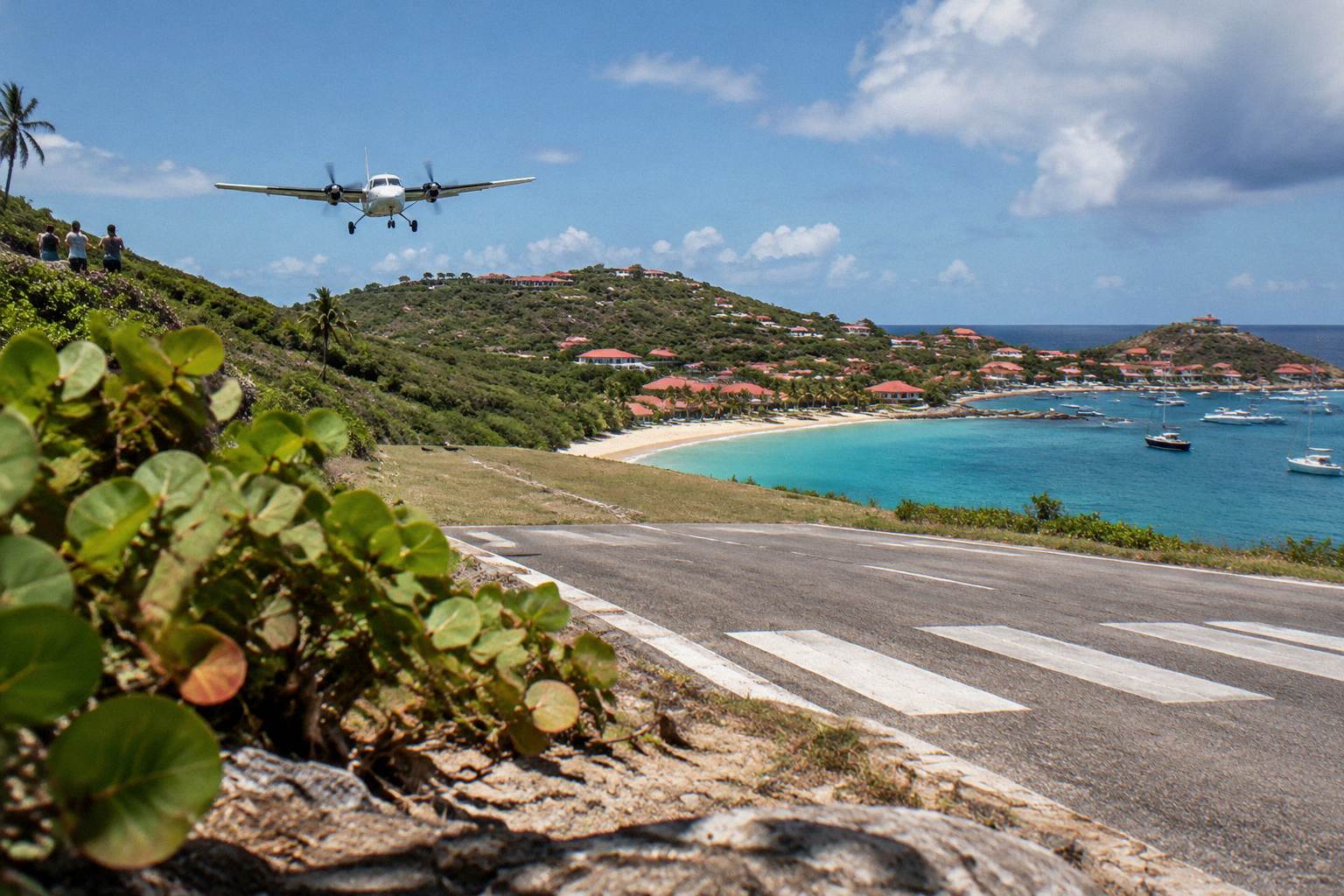
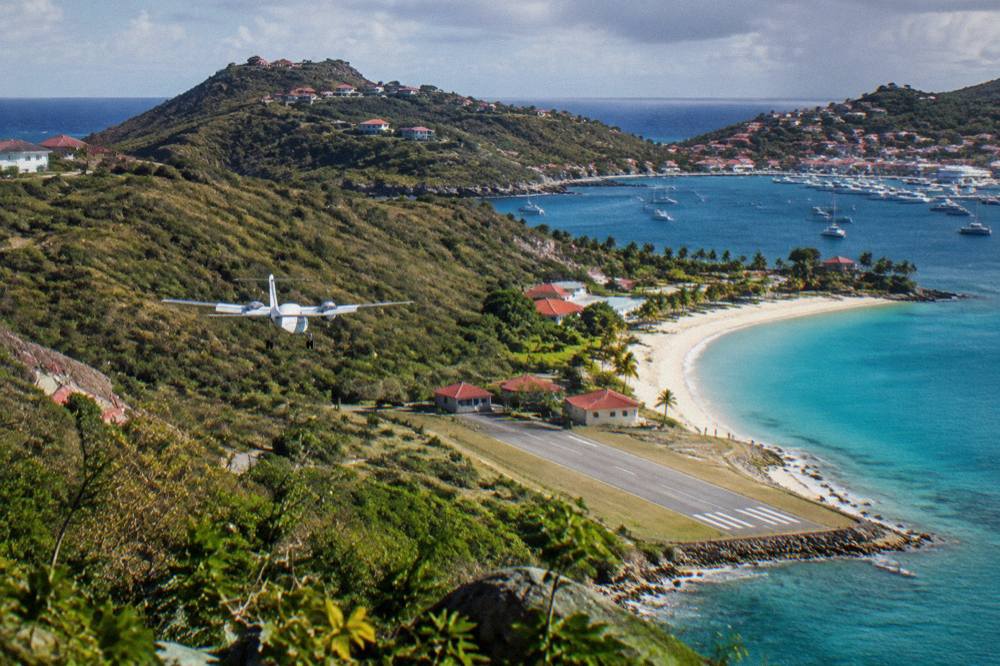
The flight from St Maarten to St Barts is a short hop in a small turboprop, one of the most frequent connections in the region, flown by carriers including St Barth Commuter and Winair into Gustaf III Airport (SBH) at St Jean. The runway at SBH is 646 m long, so only small STOL aircraft use it, in daylight and visual conditions only, and no jets land on the island. Schedules rise and fall with the season rather than staying fixed.
Gustaf III Airport, also called Remy de Haenen, sits at the edge of Saint-Jean and is famous for the steep approach over a hill and the very short runway at the water's edge. The practical consequence for distance planning is that frequency, not duration, is what to check: multiple daily flights operate in the high season, with fewer in the quieter months, and the last arrivals of the day are limited by daylight. St Barth Commuter serves the route from St Maarten, along with Grand Case on the French side and Pointe-a-Pitre in Guadeloupe; Tradewind connects St Barts with San Juan and Antigua for travellers arriving from further afield.
Because the airport closes shortly after sunset and operates on visual rules only, weather and time of day shape the schedule far more than distance does. A morning flight is the default advice for anyone with a same-day connection onward. The site's longer guide to flying to St Barts covers the aircraft, the approach and the booking practicalities in detail, and for travellers weighing the whole journey from North America the page on flying direct to St Barts from the US explains why a St Maarten stop is part of almost every itinerary.
Can You Visit St Barts As A Day Trip From St Maarten?
Yes, St Barts works as a day trip from St Maarten, and it is one of the most common ways to see the island: the ferry crosses in about 45 to 60 minutes each way, small planes fly the hop, and several boat tours depart from St Martin or Sint Maarten and spend the day around St Barts before returning. The bookable options listed here all leave from the St Martin side, never from St Barts itself.
To turn the hop into a full day on your own boat, book a private day charter.
A day gives a realistic taste of Gustavia and one or two beaches.
The per-person option is the Boomerangs group sail and snorkel, a day trip that departs from the St Martin side and crosses to St Barts with time around Colombier Beach and Ile Fourchue; its listing runs it as a seasonal product from 12 May to 31 August 2027, so anyone travelling outside that window should check the live dates. Beyond it, the trip list is mostly private charters priced per group, from single-day sailboat and motor charters to a two-day, one-night private catamaran that turns the crossing into a mini voyage. Details, prices and availability for each render from the live listings rather than from fixed figures here.
A day trip rewards planning. Gustavia, the harbour capital, is compact and walkable from the ferry quay, with the Shell Beach (Grand Galet) cove at its western edge; beyond town, the island's roads are narrow and steep, so a beach within a short drive, such as Flamands or Lorient, is the realistic second stop. The site's overview of things to do in St Barts maps the options by area, and the comparison piece on spending time in St Maarten before or after St Barts helps with the harder question of how to split days between the two islands.
What Affects The Crossing Between St Barts And St Maarten?
Three things shape the crossing more than raw distance: sea conditions, season and the travel document rules. Sea state can delay or cancel ferry sailings on any given day; season moves both ferry frequency and flight schedules up in winter and down in autumn; and a passport is required on the ferry because St Barts sits outside the Schengen area as a French overseas collectivity. Hurricane season runs from 1 June to 30 November, with the peak from mid-August to mid-October, when services adjust.
The seasonal pattern is worth understanding in advance. Frequency on both the ferries and the small-plane routes rises in the high season that runs roughly from November to April, alongside the island's sailing events, and drops in the late summer and autumn low season, when many hotels and restaurants on St Barts close for their annual break and reopen between mid-October and early November. Weather-wise the Meteo-France normals, 1991-2020, show the island warm year-round, with a mean daily high of 28.5 C in January and 31.7 C in September, and October the wettest month at 135.6 mm of the annual 891.3 mm. None of that predicts a specific day; it just explains why autumn schedules run leaner.
| Factor | Effect on the St Maarten to St Barts crossing |
|---|---|
| Sea conditions | Ferry sailings can be delayed or cancelled; the operators flag weather dependence |
| Season | More ferry sailings and flights in the November to April high season, fewer in autumn |
| Documents | Passport required on the ferry in both directions; St Barts is outside Schengen |
| Airport rules | SBH operates in daylight and visual conditions only, so evening arrivals are not possible |
| Check-in | Great Bay Express asks for arrival about 45 minutes early; check-in closes about 15 minutes before departure |
For travellers connecting through Princess Juliana Airport on the Dutch side, the geography question also becomes a transfer question: the airport and the two ferry terminals sit in different parts of St Maarten, so the connection between flight and ferry needs buffer time. The site's page on getting from the SXM airport to the St Barts ferry walks through that specific link, including where each terminal sits relative to the airport.
Is It Easier To Fly Or Take The Ferry To St Barts?
For most itineraries the choice between flying and the ferry from St Maarten to St Barts comes down to budget, tolerance for a rough sea passage and where on St Maarten the journey starts: the ferry from Philipsburg crosses in about 45 minutes and from Marigot in about 50 to 60 minutes, while the flight is a short hop in a small aircraft that some travellers find more daunting than any boat. Both run daily year-round, weather permitting, and both require a passport.
The ferry suits travellers staying on St Maarten, anyone watching costs, and anyone who would rather arrive across the water into Gustavia's harbour. The flight suits tight connections, travellers who get seasick, and anyone who wants to experience the famous landing at SBH, though that landing involves a steep descent that nervous flyers should know about in advance. Luggage limits are tighter on the small aircraft than on the ferry, which matters for divers and families.
Whichever way the crossing is made, St Barts repays the effort, and the distance that looks like a line on a map turns out to be one of the shortest, most routine hops in the Caribbean. More on the island's appeal, its beaches and its harbour town is collected in the site's St Barts destination guide, and the boating options that turn the crossing itself into the day's highlight are listed with live prices and dates on each operator page.
Common Questions About The St Barts And St Maarten Distance
How Far Is St Barts From St Maarten?
In practical terms, the crossing is about 45 minutes by Great Bay Express ferry from Philipsburg and about 50 to 60 minutes by Voyager from Marigot, with the flight a short hop in a small turboprop. The operators publish these figures on their own pages; no fare or timetable is fixed here.
Which Ferry Goes From St Maarten To St Barts?
Great Bay Express runs from Bobby's Marina in Philipsburg on the Dutch side, and Voyager runs from the Marigot terminal on the French side, both arriving at Gustavia on St Barts. Passports are required, and Great Bay Express asks passengers to arrive about 45 minutes early, with check-in closing about 15 minutes before departure.
Can The St Maarten To St Barts Ferry Crossing Be Rough?
Yes, the stretch between the islands is open sea and conditions affect sailings. The operators state that services are subject to weather, and crossings can be delayed or cancelled when the sea is rough, so travellers sensitive to seasickness may prefer the short-hop flight.
Do You Need A Passport To Travel Between St Maarten And St Barts?
Yes, a passport is required for the ferry in both directions, because St Barts is a French overseas collectivity outside the Schengen area. Travellers should check their own government's travel advice for the exact validity rules that apply to their nationality.
Can You Do St Barts As A Day Trip From St Maarten?
Yes. The ferry and the flight both make a day trip practical, and several boat tours depart from the St Martin or Sint Maarten side and spend the day around St Barts, including a per-person group sail and a range of private charters, before returning in the evening.
Why Do No Jets Fly Direct To St Barts From St Maarten?
The runway at Gustaf III Airport (SBH) is 646 m long, which limits the field to small STOL turboprops operating in daylight and visual conditions only. Larger aircraft, including any jet, cannot use the runway, so nearly all visitors arrive via a small plane, the ferry or a boat transfer.