Vitet And Devet Area Guide
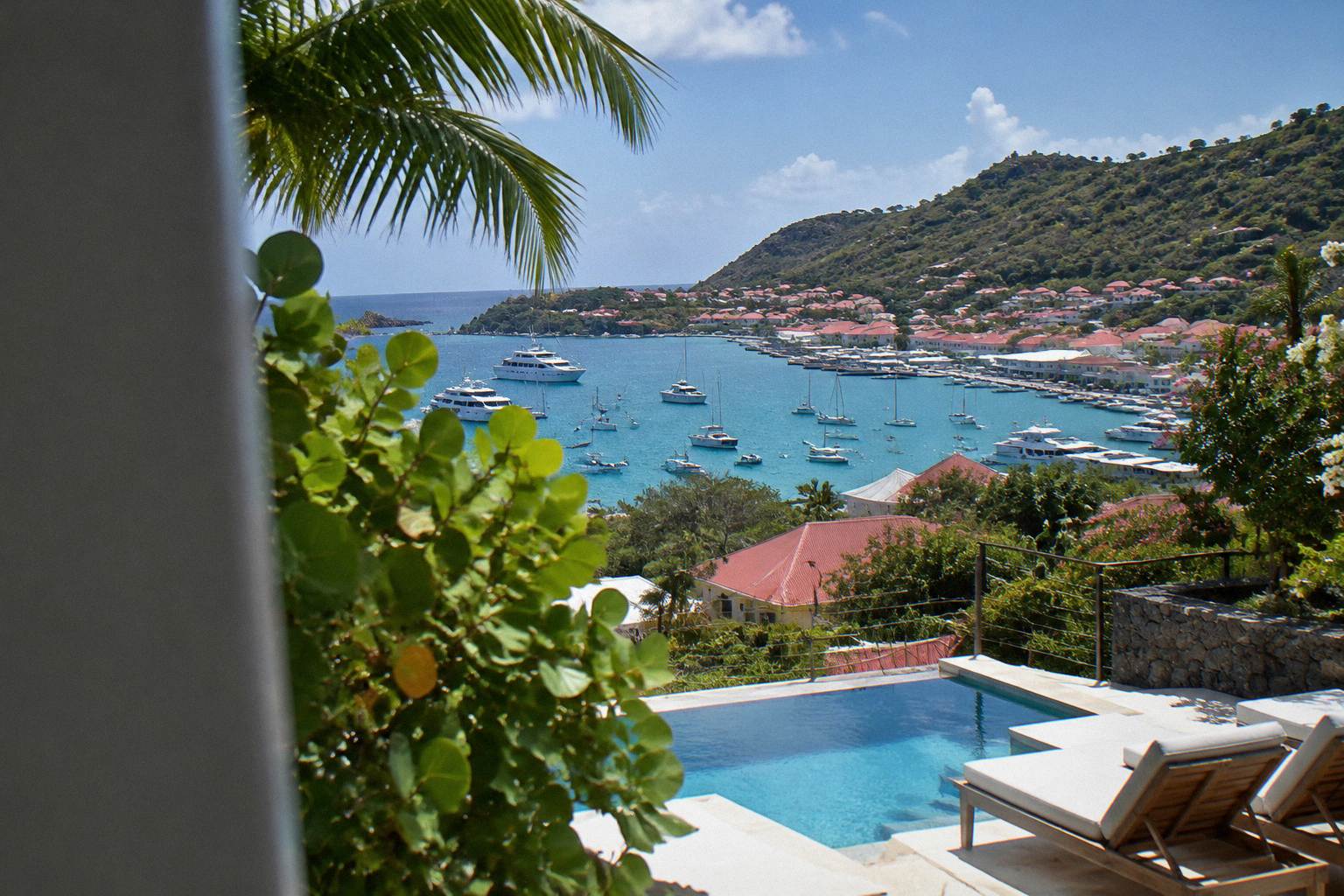
Vitet and Devet are the quiet hill country in the interior southeast of St Barts, a villa-covered ridge between Grand Cul-de-Sac, Toiny and Lorient with some of the island's widest views.
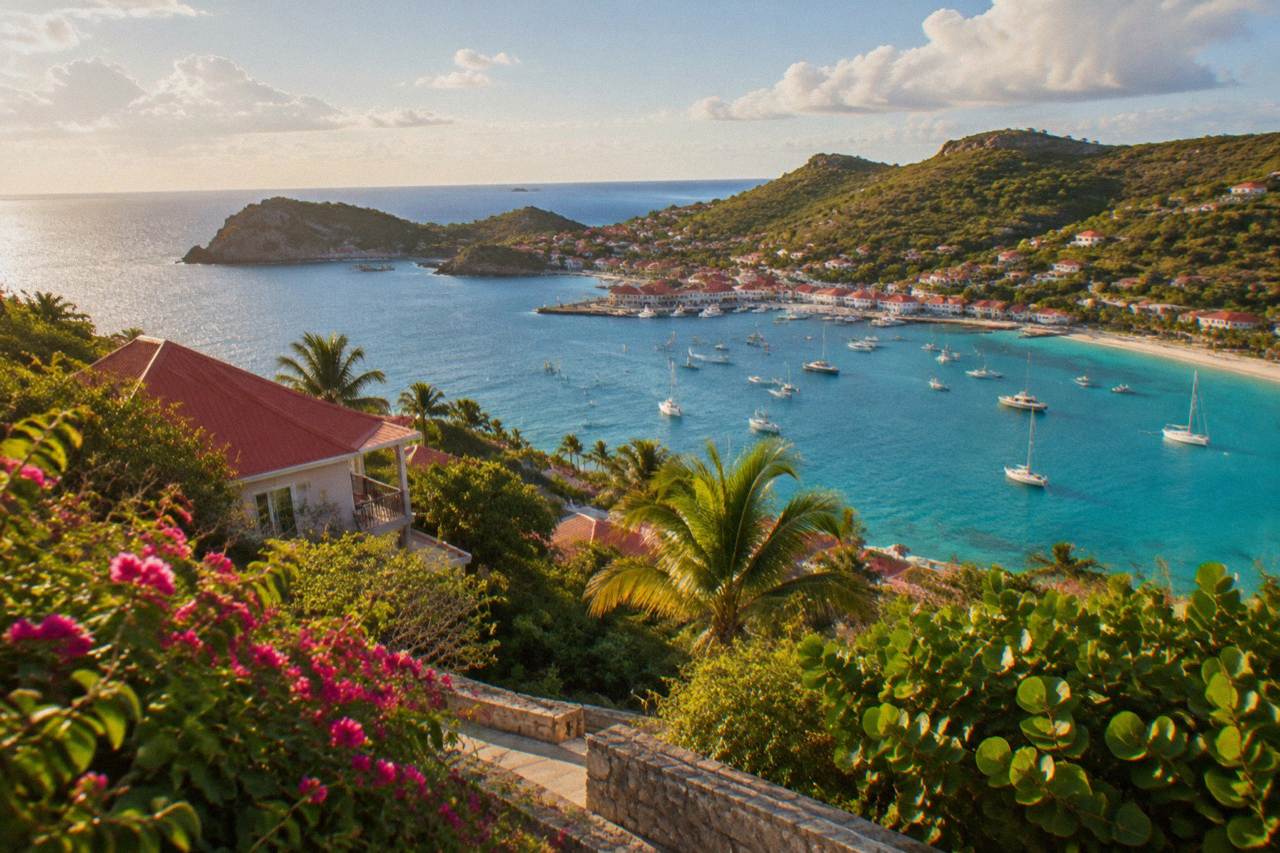
Vitet and Devet sit on the high ground of south-central St Barts, between Grand Cul-de-Sac and the Toiny coast. The area is residential: hillside villas, small roads, panoramic views and quick drives to the public beaches of Grand Cul-de-Sac, Toiny and Lorient. There is no village center and no hotel strip; a rental car is the practical way to stay here.
St Barthelemy, written St Barts, keeps about 10,700 residents and roughly 21 square kilometres of hills, public beaches and turquoise water, and much of that land is not beachfront at all: it is green interior ridge, and Vitet and Devet are two of its central-southern heights. The area sits above the island's southeastern corner, between the Grand Cul-de-Sac bay, the Toiny coast and Lorient, and it is one of the quietest addresses on the island. The tourism committee's material presents St Barts through its beaches and Gustavia harbour; Vitet and Devet belong to the other St Barts, the residential hillside of villas, small winding roads and long views over both the Atlantic and the Caribbean sides of the island.
Where Are Vitet And Devet On St Barts?
Vitet and Devet occupy the high interior ground of south-central St Barts, on the ridge between Grand Cul-de-Sac bay to the northeast, the Toiny coast to the southeast and Lorient to the west. There is no village center, no harbor and no commercial street: the area is a spread of hillside homes and villas reached by narrow roads that climb from the coastal routes. Gustavia, the capital, lies across the island to the southwest.
The simplest way to hold the geography is to picture the island's southeastern lobe. Grand Cul-de-Sac, a public beach on the Grand Cul-de-Sac area guide, curves along the sheltered northeastern shore. The Toiny coast, covered in the Toiny area guide, faces the open Atlantic to the southeast. Lorient, on the northern side, has its own beach and village feel and is described in the Lorient area guide. Vitet and Devet fill the elevated country behind all three, close enough that a short drive in almost any direction ends at water.
The area's position on the island's spine gives it something the coastal addresses cannot offer: sightlines in several directions at once. From the upper roads the view can run east over Grand Cul-de-Sac and the small islets offshore, south over Toiny, and west across the island's ridgeline toward Gustavia's harbor lights in the evening. The island's total land area is only about 21 square kilometres, so "interior" on St Barts is a relative term; nowhere in Vitet or Devet is far from a beach, only from walking distance to one.
Devet is the slightly higher, quieter of the two, on the ridge's eastern shoulder above the Grand Cul-de-Sac side. Vitet spreads along the hillside facing south and east. Neither name refers to a commune or a municipality: like all of St Barts, the territory is administered as a single overseas collectivity of France since 2007, with its territorial seat in Gustavia, and neighborhood names are traditional quarters rather than official boundaries.
What Is The Vitet Area Known For On St Barts?
Vitet is known on St Barts for three things: hillside villa accommodation with wide views, quiet residential roads far from the harbor bustle, and its position as the island's natural lookout over the southeast coast. It holds no famous beach, no monument and no shopping street, and that absence is precisely its character. Travelers who choose Vitet or Devet are choosing space, silence and panoramas over walkable sand.
The villa market is the area's defining feature. A large villa market exists on St Barts without a reliable count, and the hills of Vitet and Devet hold a substantial share of it, because hillside lots with views are where the island's larger properties sit. Villa managers active on the island include WIMCO, Sibarth and St Barth Properties, named here as managers only.
The second draw is orientation. Because the ridge stands between the Atlantic side and the Caribbean side, the upper roads work as a free viewing platform over the island's southeastern quadrant. Nothing listed here of this site is bookable on St Barts itself; every tour departs from St Martin or Sint Maarten. But the view from the hills shows exactly what those boat tours come to see: the bays, the headlands and the turquoise shallows that ring the island.
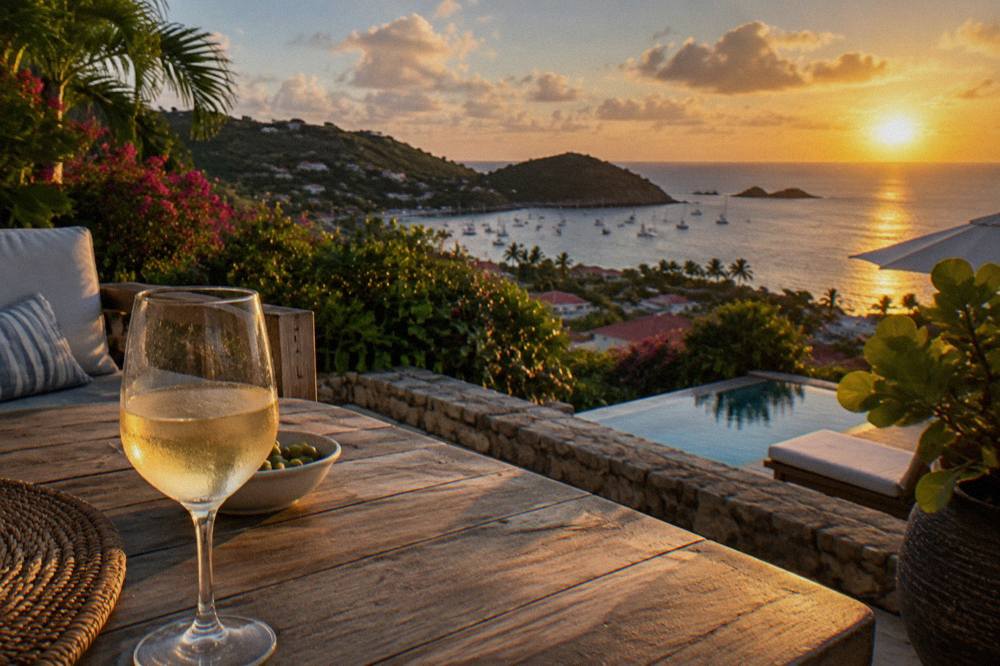
Third, the area functions as the quiet counterweight to Gustavia and Saint-Jean. The harbor capital holds the shops and restaurants described in the Gustavia where to stay and Gustavia shopping guides, and Saint-Jean carries the airport-and-beach energy covered in the St Jean area guide. Vitet and Devet have none of that traffic. What they offer instead is the residential St Barts, where the evening sound is wind and tree frogs rather than harbor music.
For a fuller map of how the island's quarters compare, the best area to stay in St Barts guide and the St Barts neighborhoods map place Vitet and Devet against the coastal alternatives, and the root things to do in St Barts page lists the island's headline activities.
Is Vitet Or Devet A Good Place To Stay On St Barts?
Vitet and Devet suit travelers who want a private villa with a view, do not need to walk to a beach or a restaurant, and are comfortable driving narrow hill roads every day. They do not suit travelers who want harbor nightlife, walkable sand or a hotel with staff on site, because the area has no hotel strip and no commercial street. The choice is a trade of convenience for space and quiet.
Practically, the area's accommodation story is almost entirely villas. St Barts as a whole skews toward upscale hotels and a large villa market, and the hills are where villas dominate. Some island hotels close each autumn and reopen between mid-October and early November as a seasonal pattern, and villas generally remain available year-round, which makes the hills a natural choice in the shoulder months when hotel tables are shuttered. The trade is services: a villa stay in Vitet means provisioning your own kitchen, while a hotel in Gustavia or Saint-Jean means concierge and restaurant downstairs.
Driving is the second reality of a hill stay. St Barts follows French traffic rules, drives on the right, and its roads are narrow, winding and steep, with a 50 km/h island-wide limit and 30 km/h in populated areas such as Gustavia and St Jean. The Vitet and Devet roads add gradient and tight bends to that picture. The St Barts car rental question is covered elsewhere on this site, but the short version for this area is that a car is not optional here: it is how you reach every beach, shop and meal.
To take on those hill roads yourself, book a rental car.
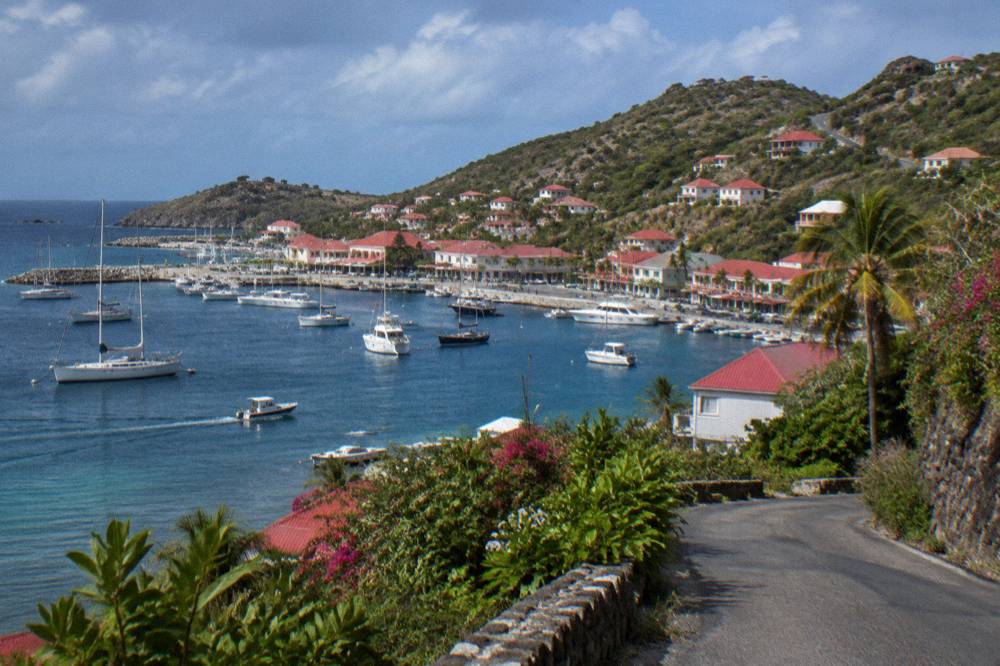
The area also rewards a certain kind of traveler on a certain kind of trip. Families spreading across a multi-bedroom villa, groups of friends, and couples on a quiet escape are the natural fits, and the itineraries on this site, including the St Barts family itinerary and the St Barts honeymoon itinerary, treat a hillside base as one of the island's two main lodging styles, the other being beachfront hotels. If your St Barts fantasy is a terrace above two coasts with nothing on the schedule, Vitet or Devet is that fantasy in address form.
A stay in the hills pairs naturally with a day on the water, and the one scheduled group product is worth flagging here: the Boomerangs group sail from St Martin, which visits Gustavia, Colombier and Ile Fourchue and is priced per person, with dates from 12 May to 31 August 2027 on its listing. See the live listing if a sea day fits a hill-based week.
Which Beaches Are Closest To Vitet And Devet On St Barts?
The nearest public beaches to the Vitet and Devet hills are Grand Cul-de-Sac on the sheltered northeast shore, the Toiny coast immediately to the southeast, and Lorient to the northwest, with Saint-Jean and Flamands a longer drive across the island. All beaches on St Barts are public, and the area's hill position puts three of them within a short drive in different directions.
Every beach on St Barts is public and free to access, a fact worth repeating because the villas above them are private. From the Vitet ridge, the coastal choices spread like spokes. Grand Cul-de-Sac sits in the bay below the northeastern slope, a shallow, sheltered crescent that is also one of the spots where green and hawksbill turtles are commonly seen in the water. The Toiny coast faces the open Atlantic just over the southern shoulder of the hill. Lorient lies to the northwest, a public beach with a village atmosphere around it.
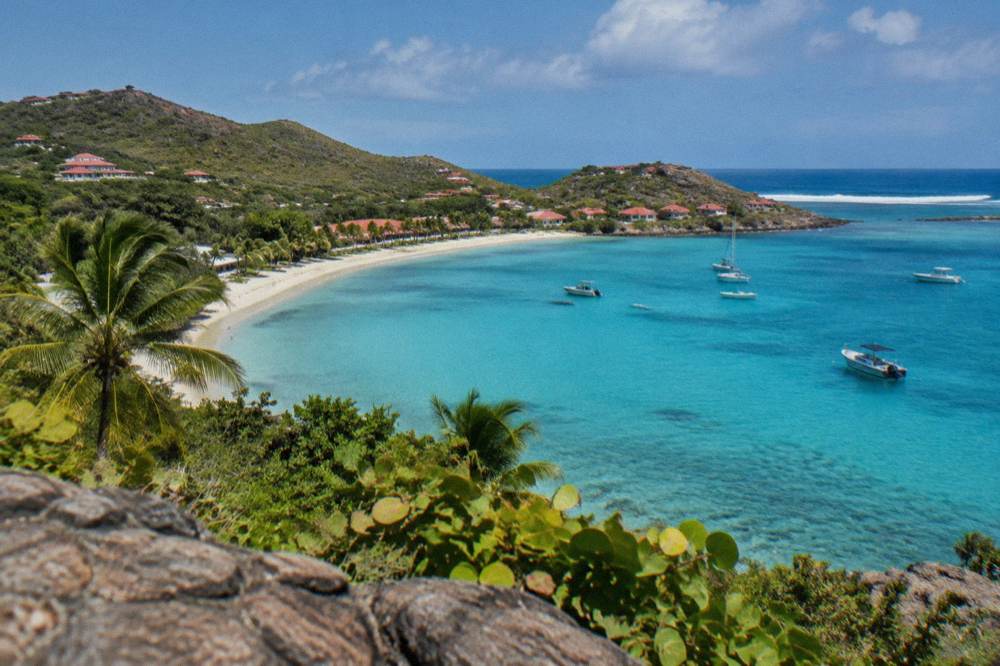
Further out, Saint-Jean on the northern shore, covered in the St Jean beach guide, and Flamands on the Caribbean side, covered in the Flamands beach guide, are the next ring of options, and the island's famous southwestern sands, Saline and Gouverneur, sit beyond them. What matters for planning is the pattern, which is that the hills trade doorstep sand for a spread of beaches in every direction within one small island.
One set of rules applies to all of them. The marine nature reserve, which covers zones including Colombier Bay and Fourchue, sets a 5-knot speed limit in its zones, bans jet skis and other motorized water devices, prohibits dogs on beaches and asks visitors never to touch turtles or other protected species, according to the environment agency's regulatory-zones page. In fact dogs are prohibited on all the island's beaches under a municipal order, even on a leash. The St Barts nature reserve guide carries the full rule set.
| Beach | Direction from Vitet and Devet | Character |
|---|---|---|
| Grand Cul-de-Sac | Northeast, below the ridge | Sheltered shallow bay, public |
| Toiny | Southeast, over the hill shoulder | Open Atlantic shore, public |
| Lorient | Northwest | Village-adjacent public beach |
| Saint-Jean | North, longer drive | Public beach beside the airport |
| Flamands | West, longer drive | Public Caribbean-side beach |
| Saline | South, across the island | Public, no road-front buildings |
How Do You Get To Vitet And Devet On St Barts?
Travelers reach Vitet and Devet through the same gateways as the rest of St Barts: a flight into St Martin, then either a small plane to Gustaf III Airport or the ferry to Gustavia, and finally a rental car up the hill roads. No transit serves the area directly, taxis exist on the island without published routes here, and the practical last leg is always a self-drive vehicle on narrow, steep roads.
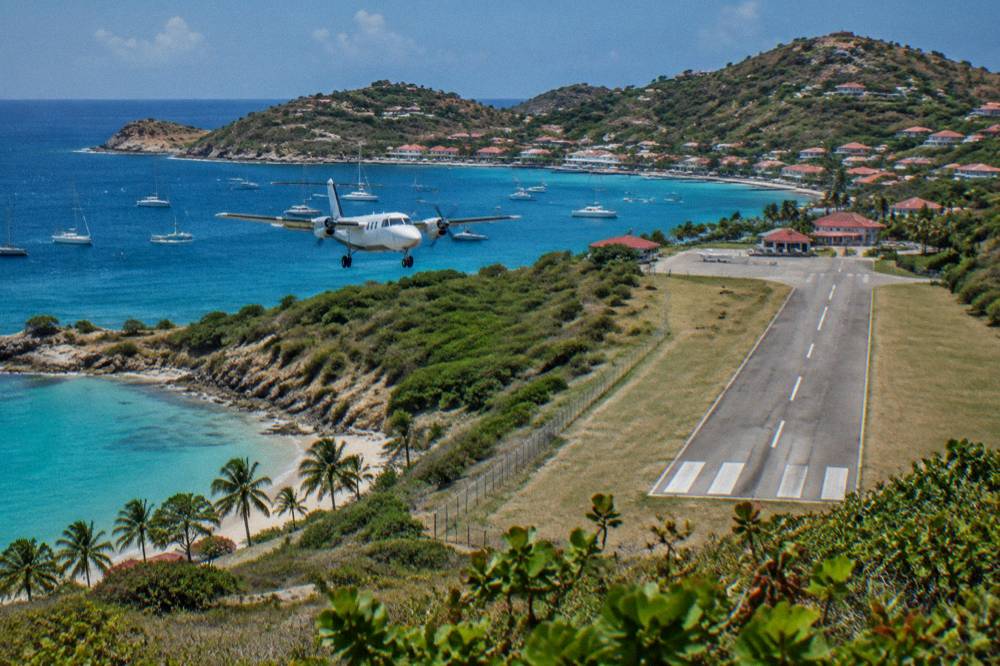
The island's airport, Gustaf III, also called Remy de Haenen and coded SBH, has a 646-metre runway served only by small STOL turboprops in daylight and visual conditions; no jets land on St Barts. The feeder carriers are St Barth Commuter from St Martin's SXM and Grand Case airports and from Guadeloupe, Tradewind from San Juan and Antigua, and Winair. The alternative is the ferry: Great Bay Express from Philipsburg on the Dutch side, about 45 minutes, and Voyager from Marigot on the French side, about 50 to 60 minutes, both operators' own pages show current sailings, and the crossing can be rough. The full arrival picture, including the how to get to St Barts decision between plane and ferry, is covered in this site's transport guides.
Once on the island, the car question answers itself for a hill stay. Rental counters at SBH include Avis, Budget and Hertz, local agencies exist, and the iconic open-air Mini Moke is available through local operators, though the site prints no rental price. Automatics predominate on the island and smaller vehicles suit the roads. From the airport or the Gustavia ferry dock, the drive to Vitet and Devet climbs from the coast road onto the ridge, and French right-of-way rules apply at unsigned intersections.
| Arrival leg | Option | Operator or mode | Notes |
|---|---|---|---|
| Long-haul gateway | Fly to St Martin (SXM) | Scheduled airlines | Main feeder hub for St Barts |
| Gateway to island | Small plane | St Barth Commuter, Tradewind, Winair | STOL turboprops only, daylight |
| Gateway to island | Ferry from Philipsburg | Great Bay Express | About 45 minutes |
| Gateway to island | Ferry from Marigot | Voyager | About 50 to 60 minutes |
| Harbor or airport to Vitet | Rental car | Avis, Budget, Hertz, local agencies, Mini Mokes | Steep hill roads to the ridge |
What Is The Weather Like In The Vitet And Devet Hills?
The Vitet and Devet hills share the island's tropical climate: Meteo-France normals for 1991 to 2020 show a mean daily high of 28.5 C in January rising to 31.7 C in September, with 891.3 mm of rain across the year and October the wettest month at 135.6 mm. Elevation on a 21-square-kilometre island does not create a separate climate zone; it brings slightly fresher evening air on exposed terraces.
The numbers deserve a little unpacking, because they shape when a hill stay feels best. The December-to-April stretch combines the lower end of the temperature range with the drier months of the normals table, February showing the lowest monthly rainfall at 38.4 mm. From August through November the rain totals climb, October peaking at 135.6 mm, and those months overlap the Atlantic hurricane season, which runs from 1 June to 30 November with its peak from mid-August to mid-October. The site never predicts a storm for a date; it reports the window.
| Month | Mean daily high (C) | Mean daily low (C) | Rain (mm) |
|---|---|---|---|
| January | 28.5 | 23.5 | 52.6 |
| February | 28.6 | 23.3 | 38.4 |
| April | 29.8 | 24.2 | 50.9 |
| July | 31.2 | 26.0 | 80.4 |
| September | 31.7 | 26.2 | 96.9 |
| October | 31.4 | 25.8 | 135.6 |
| December | 28.9 | 24.1 | 79.2 |
Source of the figures: Meteo-France climate normals, 1991 to 2020, for the St Barthelemy station. The sea around the island stays warm year-round, roughly 26 C in winter to about 29 C from August to October in rounded secondary figures, so the swimming season never closes; only the rain odds change. A hillside pool terrace in Vitet faces the same sky as the beach below it, with one difference worth knowing: the exposed ridge catches the trade winds more steadily than the sheltered bays, which is pleasant in the warm months and worth a windbreak in winter evenings.
How Does Vitet And Devet Compare With Other St Barts Areas?
Vitet and Devet trade the walkability of Gustavia and Saint-Jean for space, views and quiet: no hotel strip, no shops, no harbor, but larger private properties and a central position above the southeast coast. Against Pointe Milou, the island's other famous view address, the ridge offers a similar villa-and-panorama formula. Against Grand Cul-de-Sac or Lorient, it swaps doorstep sand for altitude.
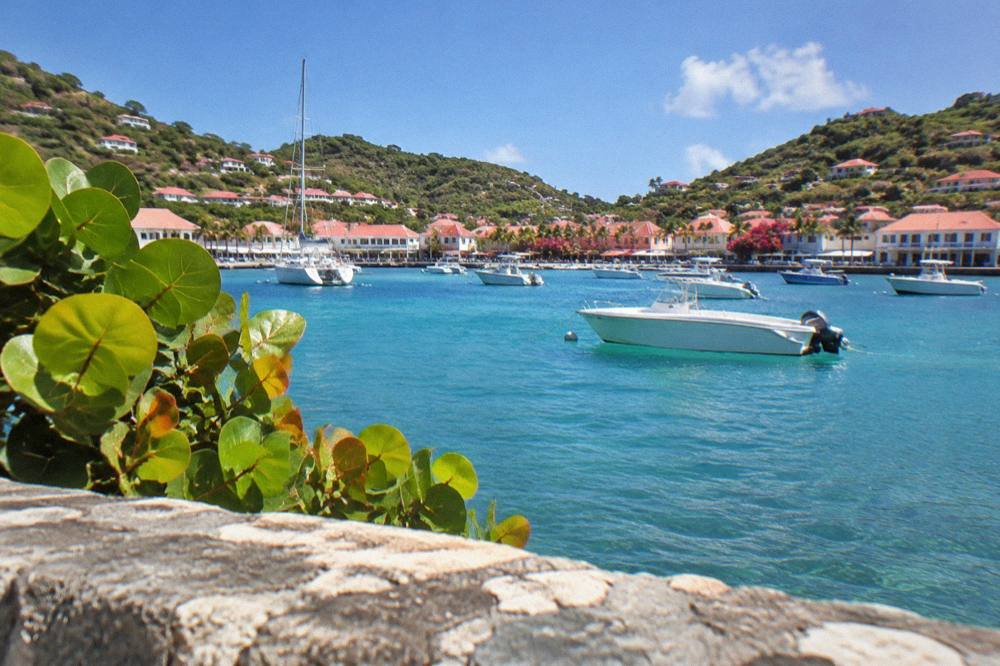
The island's neighborhoods sort into a few recognizable types, and the hills are their own type. Gustavia is the harbor capital with the shops and tables. Saint-Jean pairs the airport with a beach town feel. The beach quarters, Flamands, Lorient, Grand Cul-de-Sac and the Colombier area, put sand first. Pointe Milou, covered in the Pointe Milou area guide, is the northeastern cliff-and-view address. Vitet and Devet complete the set as the interior ridge: the place where the view is the amenity.
| Area | Setting | Character | Best for |
|---|---|---|---|
| Vitet and Devet | Interior hill ridge | Villas, views, quiet | Privacy and space |
| Gustavia | Harbor capital | Shops, restaurants, yachts | Walkable town stay |
| Saint-Jean | Northern shore | Airport, beach, energy | Convenience |
| Pointe Milou | Northeastern cliffs | Villas, sunset panoramas | Views over water |
| Grand Cul-de-Sac | Sheltered bay | Shallow beach, water sports | Calm swimming |
| Lorient | Northwest coast | Village feel, public beach | Relaxed family base |
Two honest cautions belong in any comparison. First, a hill stay inverts the usual beach-holiday rhythm: instead of walking down to sand and driving to views, you wake with the view and drive to the sand. Some travelers find that trade perfect, and the St Barts beach hopping itinerary is built around exactly that drive-to-everything pattern. Second, the quiet is real quiet: the area has no nightlife of its own, and evening plans mean a drive down to the coast or into Gustavia.
What Can You Do From A Vitet Or Devet Base On St Barts?
A Vitet or Devet base supports the full island program: mornings on the public beaches of the southeast coast, afternoons in Gustavia's shops and museums, hikes such as the Colombier trail, and boat days that depart from St Martin or Sint Maarten, since nothing listed here departs from St Barts itself. The ridge is a base camp, not an attraction district; the island is the attraction.
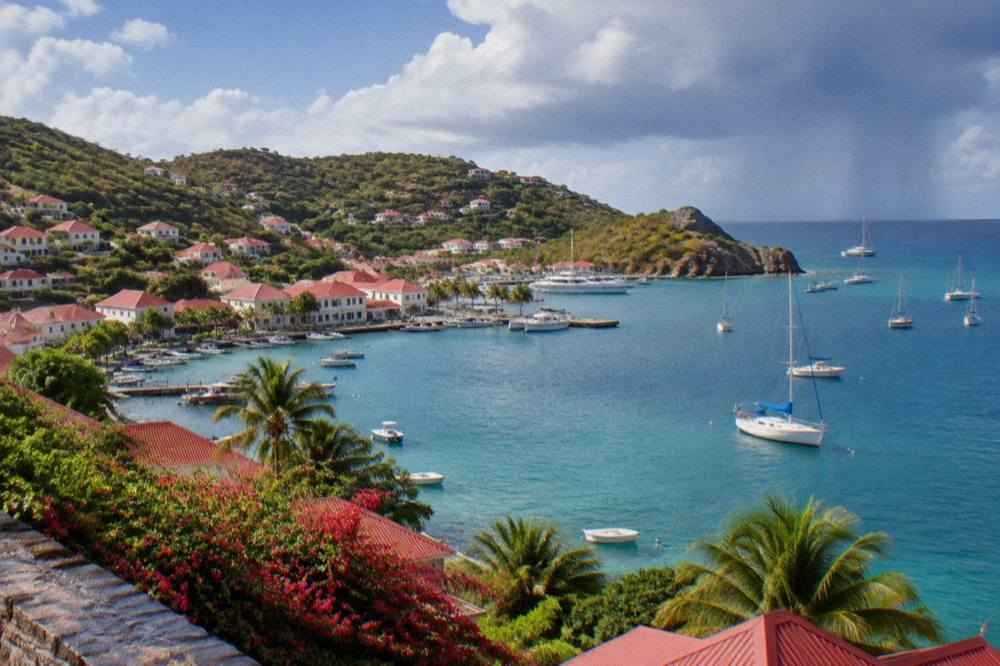
The on-island list from the hills is long because the island is small. Beach days rotate through Grand Cul-de-Sac, Toiny, Lorient, Flamands, Saline, Gouverneur and Colombier, all public. The hiking trails described in the St Barts hiking trails guide, including the Colombier hike, are reachable by car. Gustavia's harbor, forts, museums and shopping fill the town-side days. Sunset belongs to the west-facing shores, and the St Barts sunset spots guide maps them; from a Vitet terrace the evening show plays out over the ridgeline instead.
The water-side program is where the area's central position helps least, because the boat products all start across the St Martin channel. The group sail from St Martin to Gustavia, Colombier and Ile Fourchue is the one per-person option listed here; the private charters, including the 8-hour private charter from St Martin and the 2-day 1-night private catamaran, are priced per group and depart from the Dutch or French side. A traveler staying in the hills simply adds the crossing or the pickup logistics to the day, and the marine reserve's rules, the 5-knot zones, the jet-ski ban, the no-touch rule for turtles, govern the water side of every one of those trips.
For the day-trip minded, the St Barts to St Martin crossing also runs in reverse, and island-hopping options toward Anguilla and Saba are covered in this site's day-trip guides.
Common Questions About Vitet And Devet On St Barts
Are Vitet and Devet walkable areas of St Barts?
No. The two quarters are residential hillside with steep, narrow roads and no commercial street, sidewalk network or beachfront path. Walking is fine for a villa driveway and little else; every beach, shop and restaurant is a drive away. Travelers who want a walkable base should look at Gustavia or Saint-Jean instead.
Are there hotels in Vitet and Devet on St Barts?
The area is essentially a villa district rather than a hotel one. St Barts hotels cluster in Gustavia, Saint-Jean, Flamands, Grand Cul-de-Sac, Toiny and Pointe Milou, while the interior ridge holds private villas booked through managers such as WIMCO, Sibarth and St Barth Properties. Rates vary by season and each operator's own pages show current availability.
Do you need a car to stay in Vitet or Devet?
Yes, a rental car is the practical requirement for a stay in these hills. Roads on St Barts are narrow, winding and steep, driving is on the right, and the limit is 50 km/h island-wide with 30 km/h in populated areas. Counters at Gustaf III Airport include Avis, Budget and Hertz, alongside local agencies and Mini Moke operators.
Which beach is closest to Vitet and Devet?
Grand Cul-de-Sac on the northeast shore, the Toiny coast to the southeast and Lorient to the northwest are the nearest public beaches, all a short drive downhill from the ridge in different directions. All beaches on St Barts are public and free to access.
Is Vitet a good area for views on St Barts?
Yes, the ridge position between the Atlantic and Caribbean sides gives the upper roads sightlines over Grand Cul-de-Sac, the Toiny coast and, in the evening, the western sky above Gustavia's harbor. The comparable view address on the island is Pointe Milou on the northeastern cliffs.
What is the difference between Vitet and Devet?
The two names describe neighboring parts of the same ridge rather than distinct villages. Devet sits on the eastern shoulder above the Grand Cul-de-Sac side; Vitet spreads along the hillside facing south and east. Both are quiet residential quarters with villa accommodation and no commercial center, and neither is an official municipality: St Barts is administered as one overseas collectivity of France.
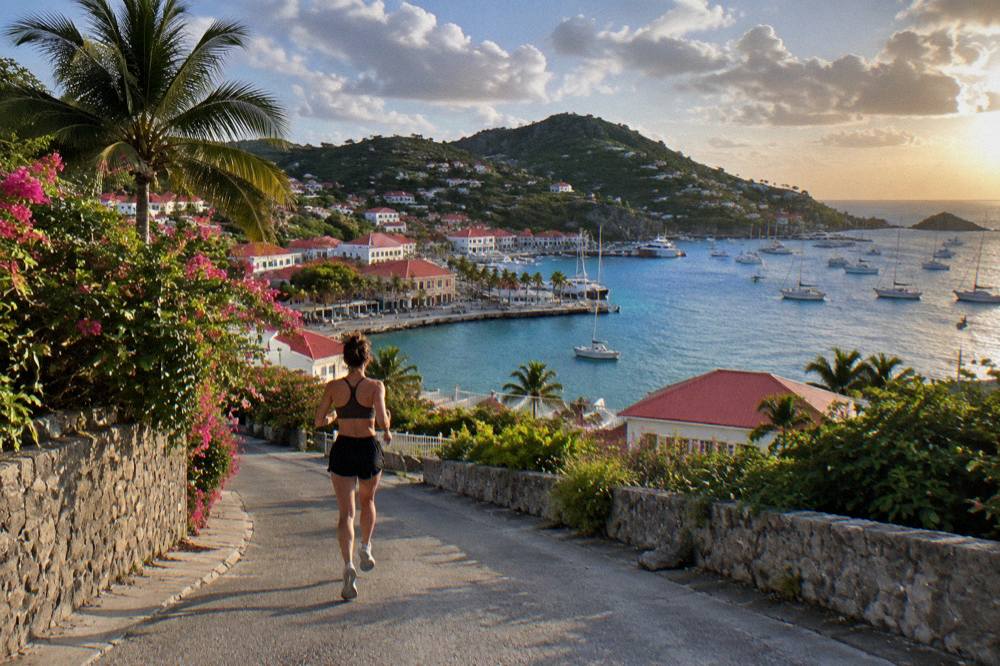
The honest summary of Vitet and Devet is that they are not a destination in themselves but a way of staying on St Barts: high, quiet, view-first and car-dependent, with the whole island's beaches and Gustavia's harbor a short drive below. Travelers who want that rhythm will find the ridge one of the island's most rewarding addresses, and the surrounding quarters covered across St Barthelemy Travel hold every alternative worth weighing against it.