St Barts Family Itinerary
A day by day plan for families on St Barthelemy: public beaches, short drives, Gustavia harbor stops and a boat day that works with children.
Base a St Barts family trip on short hops between public beaches, Gustavia harbor and one boat day. Rent a small car, keep drives between stops short, swim in the morning, and let the itinerary flex around naps and heat.
St Barthelemy, usually written St Barts, is a small French island in the Caribbean of about 21 square kilometres with roughly 10,700 residents, which makes it unusually manageable for a family: the beaches are all public, the drives between them are short, and the harbour capital, Gustavia, sits within easy reach of every coast. This itinerary paces the island for parents and children, mixing swimming, shell hunting, a boat day and enough downtime that nobody melts down in the midday heat. The island is hilly, so a small rental car is the backbone of the plan, and every stop on it is either a public beach or an open public place.
What Makes A St Barts Family Itinerary Different?
A St Barts family itinerary works because the island is small, every beach is public and free, and the distances between stops are minutes rather than hours, so the plan can be built around short swims and long pauses instead of long transfers. The environment agency protects the marine reserve with a 5-knot speed limit, a jet-ski ban and a rule against touching turtles, which shapes what a boat day with children looks like.
The scale of the island is the whole trick. At about 21 square kilometres, St Barts fits between a morning beach and an afternoon beach without anyone spending an hour in a car seat. The tourism committee lists the beaches by name, from Saint-Jean and Flamands to Grand Cul-de-Sac, Lorient, Saline, Gouverneur and Colombier, and every one of them is public, which means no club membership, no day pass and no gate. For a family, that removes the single biggest planning headache most Caribbean islands impose.
The second difference is the marine reserve. The environment agency's regulatory-zones page lists a 5-knot speed limit inside its zones, a ban on jet skis, seabobs and towed sports, and a strict no-touching rule for turtles, corals and starfish. For parents this cuts both ways: no jet ski noise near the swimming beaches, but also a conversation to have with children before any snorkel stop, because the rules apply to visitors of every age and dogs are not allowed on the beaches at all.
The third difference is seasonal. Many hotels and restaurants close each autumn and reopen in waves between mid-October and early November, so a family arriving in that window should expect some places to be freshly reopened and a handful still shut. Villas, by contrast, generally stay available year-round, which is one reason families often land on a villa rather than a hotel. The villa route is covered in detail on the family villa guide.
How Many Days Should A Family Spend In St Barts?
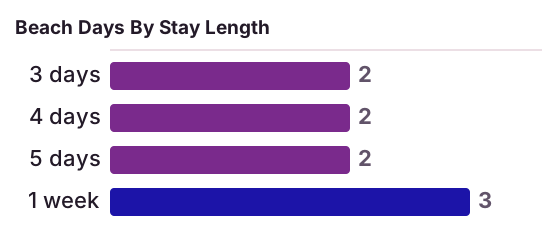
Five days is the sweet spot for a St Barts family trip: one day for Gustavia and a near beach, two alternating beach days on opposite coasts, one boat day, and one loose day for the airport spectacle, shell hunting or a repeat of whatever the children liked best. Three days works if the boat day is dropped, and a full week suits families who want true low tempo rather than more stops.
The reason five days fits is not the number of sights, it is the cost of switching tempo. Children settle into a rhythm on an island like this: morning swim, lunch, quiet hours, late afternoon again. Five days lets that rhythm establish itself without pressure to compress. The three and four day options on the three day itinerary and the four day itinerary strip the same structure down for shorter stays, and the pacing logic below applies to all of them.
| Stay length | Beach days | Boat day | Loose day | Best fit |
|---|---|---|---|---|
| 3 days | 2 | Skip or make it the centerpiece | No | First visit, tight connection |
| 4 days | 2 | 1 | Half | Families with one long travel day either side |
| 5 days | 2 to 3 | 1 | 1 | The recommended family default |
| 1 week | 3 to 4 | 1 | 2 | Slow travelers, repeat families |
For families weighing St Barts against its bigger neighbour, the comparison page on St Barts versus St Martin explains the trade-offs in stay length and logistics.
What Does Day One In St Barts Look Like For A Family?
Day one should stay close to base: a morning swim at the nearest public beach, a slow lunch, an introduction to Gustavia harbor in the late afternoon when the heat drops, and an early night, because arrival day on St Barts almost always involves a ferry crossing or a small plane and children arrive tired even when the hop itself is a short one. Keep the driving under an hour total.
Arrival logistics first. Families reach St Barts either by small plane into Gustaf III Airport or by ferry from St Martin or Sint Maarten. The airport's 646 m runway takes small STOL turboprops only, in daylight and visual conditions, so flights arrive early in the day. The ferry operators are Great Bay Express from Philipsburg on the Dutch side, about 45 minutes, and Voyager from Marigot on the French side, about 50 to 60 minutes; both operators' pages ask for check-in well before departure and a passport for every traveler. The crossing can be rough, so plan for it honestly with children rather than promising calm water. The full picture is on the getting there guide.
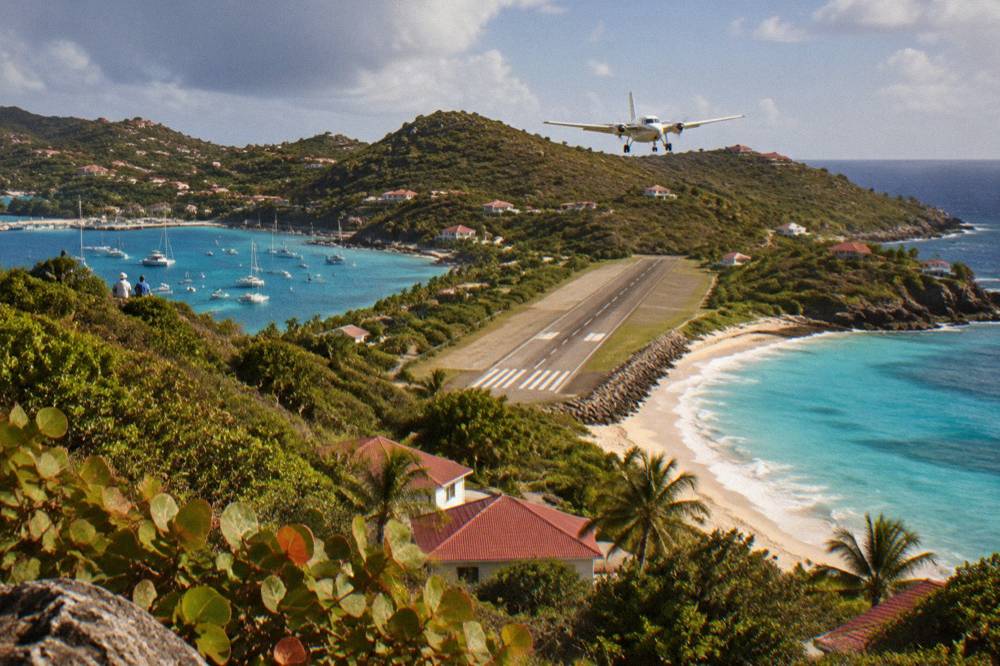
Once installed, pick the beach nearest the villa or hotel. Families staying near Saint-Jean have the Saint-Jean beach guide as a neighbor reference point only in the sense that every named beach has its own page on this site; the practical rule is simpler: swim early, eat, rest, and save exploring for the afternoon. The Meteo-France normals for St Barts show a mean daily high of 28.5 C even in January, rising to 31.7 C in September, so midday is for shade everywhere on the island, all year.
Late afternoon belongs to Gustavia. The harbor, the old stone forts above the town and the ice cream stops around the quays are all open public space, free to wander, and compact enough that a tired child can walk most of it. How to fill a fuller harbor day, including the fort walks and the small museums, is laid out in the main St Barts itinerary.
Which St Barts Beaches Suit Children Best?
The honest family answer is geographic: Grand Cul-de-Sac on the northeast coast is the island's classic shallow lagoon setting, Lorient and Saint-Jean sit minutes apart on the north coast, and Flamands, Saline, Gouverneur and Colombier each trade convenience for space. Every beach is public, and the environment agency bans dogs on all of them.
What this site can state is position, access and the reserve rules, not per-beach conditions. Grand Cul-de-Sac sits on the northeast coast where the marine reserve notes green and hawksbill turtles in its lagoon waters; the no-touch rule applies there as much as anywhere. Lorient is on the north coast east of Saint-Jean. Flamands faces north on the island's widest stretch of sand. Saline and Gouverneur face south on the untouched windward shore, reached on foot from their parking areas. Colombier, at the island's western tip inside the reserve, is reached only by boat or on foot, which is exactly why most families reach it by boat rather than hike.
| Beach | Coast | Access with children | Reserve rules in force |
|---|---|---|---|
| Grand Cul-de-Sac | Northeast | Road access, lagoon setting | Turtle no-touch rule, no dogs |
| Lorient | North | Road access, near the village | No dogs, standard island rules |
| Saint-Jean | North | Road access beside the airport | Standard island rules |
| Flamands | North | Road access | No dogs, standard rules |
| Saline | South | Short walk from parking | No dogs, no collecting shells |
| Gouverneur | South | Road access to the sand | No dogs, no collecting |
| Colombier | West | Boat or hiking trail only | Full reserve zone, 5-knot limit |
The no-collecting rule deserves a family-specific mention. The environment agency's page lists no collecting of coral, plants, shellfish, crustaceans, sand, rocks or shells inside the reserve zones, which reframes the classic childhood shell hunt: shells stay on the beach in reserve areas. Outside reserve zones the general public-beach rule holds, but framing the hunt as looking rather than taking keeps every beach day on the right side of the rules.
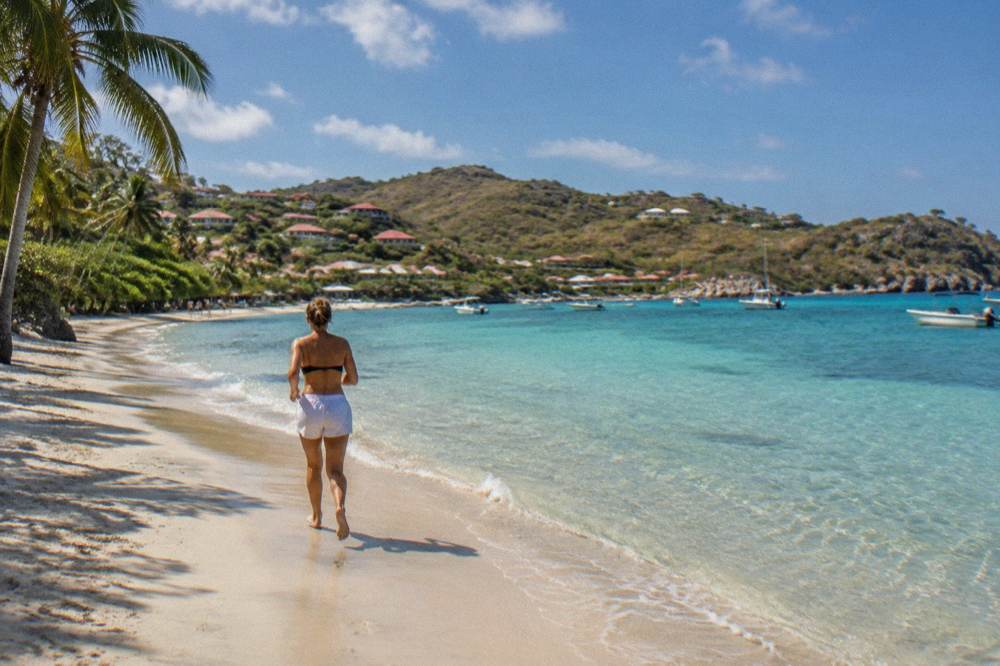
Two beach days, alternating coasts, is the pattern that works. One morning north, one morning south, with the afternoons free. Families who want the fuller version, with every named beach sequenced, can follow the beach hopping itinerary.
How Does A Family Do A Boat Day From St Barts?
Every bookable boat tour listed here departs from St Martin or Sint Maarten and visits St Barts, so the family boat day is either a crossing-and-tour combination from the neighbour island or a chartered private boat on the day you are already based on St Barts, arranged locally. The group sail option, the Boomerangs day from St Martin, runs only from 12 May to 31 August 2027 on its listing and prices per person.
This is the single most misunderstood mechanic of a St Barts family trip, so it is worth spelling out. The ticketed day trip that covers Gustavia, Colombier Beach and Ile Fourchue leaves from the St Martin side. A family already sleeping on St Barts either takes the ferry over to join it, or books the whole thing as a St Martin day at the start or end of the stay. The alternative is a private charter, which five of the six products listed here are, priced per group rather than per person, which changes the arithmetic completely for a family of four or five. More of these guides are collected on St Barthelemy Travel.
The marine reserve rules govern the boat day itself. The 5-knot limit applies inside the zones, jet skis and towed sports are banned, no vessel over 25 m may anchor in Colombier or Fourchue bays, and ecological mooring buoys are preferred. For children this translates to a slow, quiet approach into Colombier, a snorkel stop where nothing gets touched, and no banana-ride expectations. The crossing itself is open Caribbean water, and rough days happen; the operators' own pages state weather cancellation terms.
For a family that wants the water without the crossing, the private options below are the per-group route, and each leaves from the St Martin side too. The comparison of group sail versus private charter, with children in mind, is the same decision as group versus private anywhere: fixed departure versus own clock.
Families who prefer to keep the boat content on land can substitute the airport day: Gustaf III's approach over the hill at Saint-Jean is one of the Caribbean's famous spectacles, viewed from open public ground, and the airport spotting guide covers where the public watch from.
What Should Days Four And Five Of A St Barts Family Trip Include?
Day four should be the loose day: the Corossol village and its shell museum in the morning, the forts above Gustavia at golden hour, and a repeat swim wherever the children asked to return, while day five is the buffer day for weather, rebooking or the ferry back to St Martin, kept deliberately empty so nothing important depends on the last morning.
The loose day exists because island trips with children accumulate friction: a rough ferry, a rainy afternoon, a nap that runs long. October is the wettest month in the Meteo-France normals at 135.6 mm against a yearly 891.3 mm, and the hurricane season runs 1 June to 30 November, so a shoulder-season family trip carries real odds of a washed-out morning. No one can predict a storm for a date, but anyone can leave a day unbooked. The rainy day itinerary exists for exactly this.
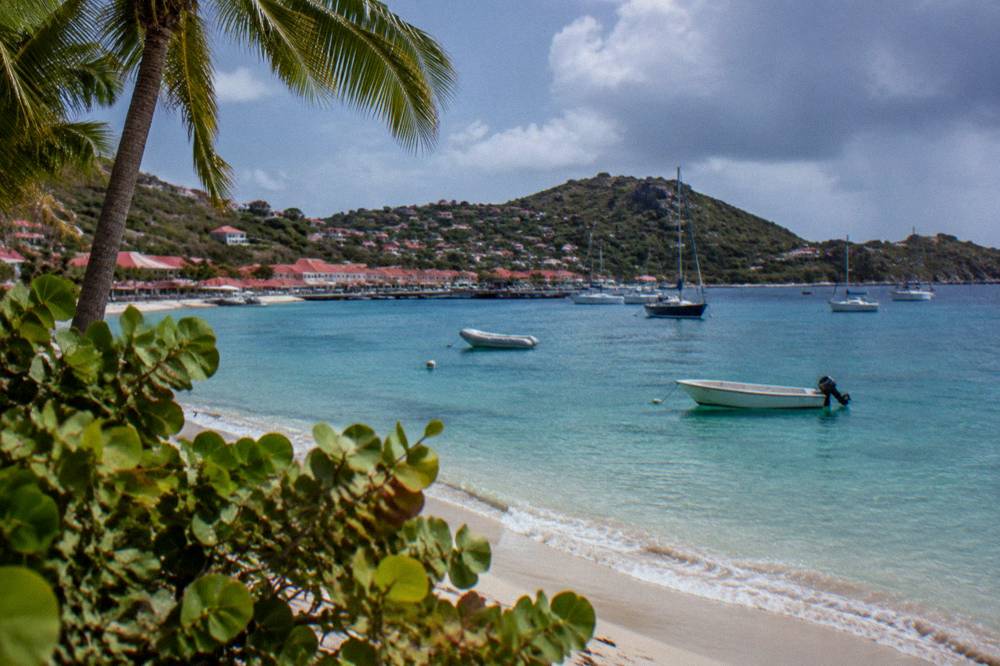
Corossol, on the northwest coast, is the quiet village stop: the shell museum there is a small indoor attraction, and the village beach beside it is public and usually empty of crowds. The forts above Gustavia, Fort Karl and Fort Gustaf, are open public viewpoints over the harbor, short enough for young legs. The Wall House Museum in town covers the island's Swedish period, though history on this site goes only as deep as the collectivity status since 2007 and Hurricane Irma in September 2017, so treat the museums as shelter-and-interest stops rather than curriculum.
| Day | Morning | Afternoon | Evening |
|---|---|---|---|
| 1 | Arrival, nearest beach swim | Rest at base | Gustavia harbor stroll |
| 2 | North coast beach | Quiet hours | Early dinner |
| 3 | Boat day from St Martin, or charter | Rest | Harbor or villa |
| 4 | Corossol village and museum | Repeat favourite beach | Fort viewpoint at golden hour |
| 5 | Buffer: weather, rebooking, ferry | Departure or spare swim | Travel |
The golden hour deserves protecting. The island's west-facing harbor and the sunset spots guide list the public viewpoints, and a fort above Gustavia with a tired child and a cold drink is a better last memory than a rushed restaurant.
What Practical Rules Should Families Know Before Driving And Swimming?
Families should know three things: driving is on the right with a 50 km/h island limit and 30 km/h in Gustavia and Saint-Jean on narrow, steep roads, so book a small automatic; the reserve bans touching any marine animal, collecting shells in its zones, and dogs on every beach island-wide; and entry rules are French overseas rules, outside Schengen, with US passport books rather than cards accepted for air travel and onward tickets required.
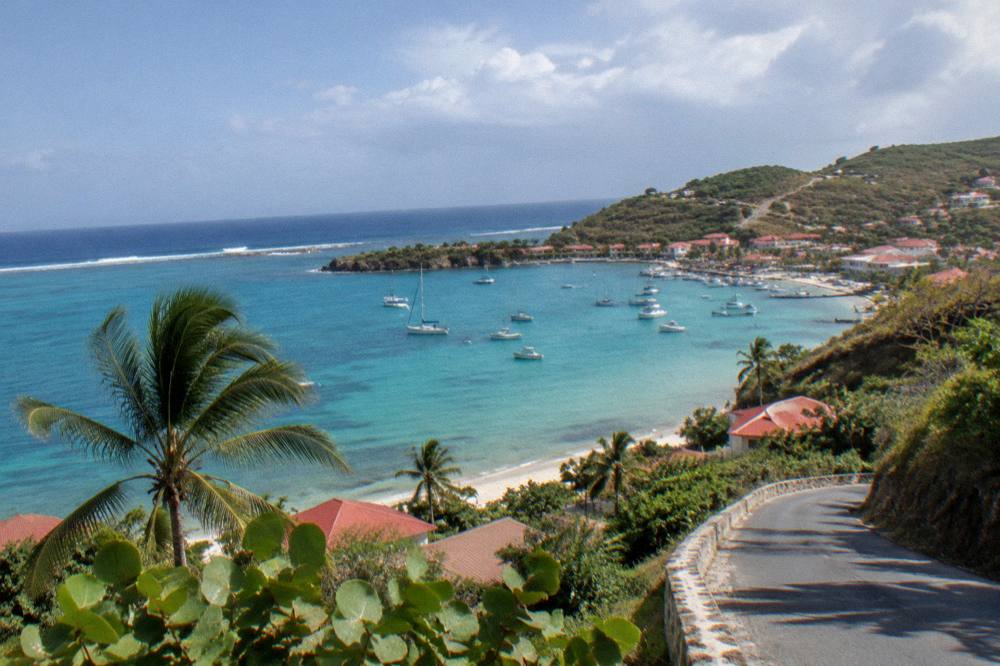
The driving point matters more with children than solo. The roads are narrow, winding and hilly with steep grades, and the rental counters at SBH include Avis, Budget and Hertz alongside local agencies and Mini Moke specialists. A Moke is the postcard choice but offers minimal protection; small SUVs and compacts are the practical family pick, and delivery to hotels and villas is commonly available. Rates vary by season, and the rental company's own page shows them. More detail sits in the car rental guide and the broader getting around guide.
Swimming rules are the environment agency's list, worth repeating to children before the first snorkel: no touching, chasing or feeding turtles, corals, urchins, starfish, sharks or rays; no gloves in the water; no collecting. Drones are prohibited near the reserve without authorization, which affects the family holiday video plans more than people expect. Nest sightings are reportable to the agency, whose beach page carries the contact.
Entry rules are French, not Schengen. A Schengen visa does not authorize entry where a visa is required, ETIAS does not govern this territory and is not live, and US citizens need a passport book rather than a passport card for air travel. Passport validity requirements differ by nationality and by each government's own travel advice, so the instruction that holds for every family is: check your own government's travel advice for St Barthelemy before booking. Every traveler needs an onward ticket.
| Topic | The rule | Who states it |
|---|---|---|
| Speed limits | 50 km/h island-wide, 30 km/h in Gustavia and Saint-Jean | Getting-around guidance |
| Marine reserve | 5-knot limit, no jet skis, 23 dive sites listed | Environment agency zones page |
| Wildlife | No touching turtles or feeding any protected species | Environment agency |
| Beaches | Dogs prohibited on all beaches, island-wide, even leashed | Municipal order via environment agency |
| Entry | Outside Schengen; passport book for US air travelers; onward ticket required | French entry rules, gov advice |
| Climate | 891.3 mm rain a year, October wettest at 135.6 mm | Meteo-France normals, 1991-2020 |
When Is The Best Time Of Year For A St Barts Family Trip?
For families the practical window is May to early August, when the Meteo-France normals show warmth without the October rainfall peak, the sea is warm, and the one per-person group sail listed here is actually running, from 12 May to 31 August 2027 on its listing; December to April is the high season alternative, drier on paper but busier and with the autumn closures freshly behind it.
The climate table gives the honest frame. Mean daily highs run from 28.5 C in January to 31.7 C in September, and the yearly rain total of 891.3 mm is not spread evenly: February averages 38.4 mm and October 135.6 mm. The sea runs warm all year, about 26 C in winter to about 29 C from August to October. Hurricane season runs 1 June to 30 November with its peak mid-August to mid-October, and the odds concentrate in late summer. The month by month breakdown is on the season guide.
The family-specific wrinkle is the boat day. Outside it, the boat day is a private charter priced per group, or nothing. Families planning around school holidays should also note the autumn closure pattern: many hotels and restaurants shut between late August and early October and reopen in waves between mid-October and early November, so an October half-term trip meets an island still waking up, while a Christmas trip meets full season and full prices.
Where Should A Family Stay In St Barts?
A villa is the default family answer on St Barts because villas stay available year-round through the autumn hotel closures, sleep a family without booking two rooms, and put a kitchen between you and every restaurant reservation, while hotel families should check the specific property's seasonal dates against their travel window and know that the island has no hostels and very little at the bottom of the market.
For a home base with space and privacy, book a private villa.
The villa market is large, with specialist managers including WIMCO, Sibarth and St Barth Properties operating on the island. What the pattern supports is simpler: villas do not close for autumn the way hotels do, and a kitchen plus a pool plus separate bedrooms is the configuration families actually use. The full comparison, including family-specific villa selection, is in the family villa guide and the family vacation guide.
Area choice matters for the driving budget of the itinerary. Gustavia, Saint-Jean and Lorient put a family central; Flamands, Grand Cul-de-Sac and Toiny trade centrality for space and quiet; Corossol is the village option. The best area to stay guide breaks down each one, and the pacing differences are already visible in the day plan above.
Families extending the trip should read the one week itinerary for the fuller version of this plan, the first timer itinerary if this is a first Caribbean trip, and the St Martin before-or-after question, whether to spend time on St Martin around the St Barts stay, which matters most for families flying through SXM and weighing the ferry against a connecting small plane.
Common Questions About A St Barts Family Itinerary
Is St Barts good for families with young children?
The island's scale, public beaches and short drives suit families well. What no source supports is a safety or calm-water claim for any specific beach; the honest framing is geographic, with Grand Cul-de-Sac's lagoon setting the classic family choice, and the marine reserve rules applying to children as much as adults.
How many days do you need in St Barts with kids?
Five days is the recommended family default: two to three beach days, one boat day and one loose buffer day. Three days works without the boat day, and a week suits families who want a slower rhythm rather than more stops.
Do the boat tours leave from St Barts?
No. Every bookable tour listed here departs from St Martin or Sint Maarten and visits St Barts. Families either join the boat day from the St Martin side, typically at the start or end of the stay, or arrange a private charter locally.
Can children snorkel at Colombier?
Colombier sits inside the marine reserve, reached by boat or on foot. Snorkeling is governed by the environment agency's rules: no touching turtles, corals or starfish, no gloves, no collecting, and the 5-knot approach means boats arrive slowly and quietly.
Is there a bad time of year for a St Barts family trip?
No date can be predicted, but the pattern is clear: hurricane season runs 1 June to 30 November with its peak mid-August to mid-October, October is the wettest month in the Meteo-France normals at 135.6 mm, and many hotels and restaurants close from late August into October. May to early July is the quiet shoulder most families prefer.
Do you need to rent a car for a family trip to St Barts?
Practically, yes. The island is hilly with narrow, steep roads, the beaches are spread across several coasts, and taxis operate without meters on route-based tariffs. A small automatic from the counters at SBH, including Avis, Budget and Hertz, is the standard family setup, and delivery to villas is commonly available.
The itinerary above is a frame rather than a script: swap the beach days, keep the buffer day, and let the children's favourite cove win the last morning. For everything bookable, from the group sail to the private charters, the live listing shows current dates and terms.