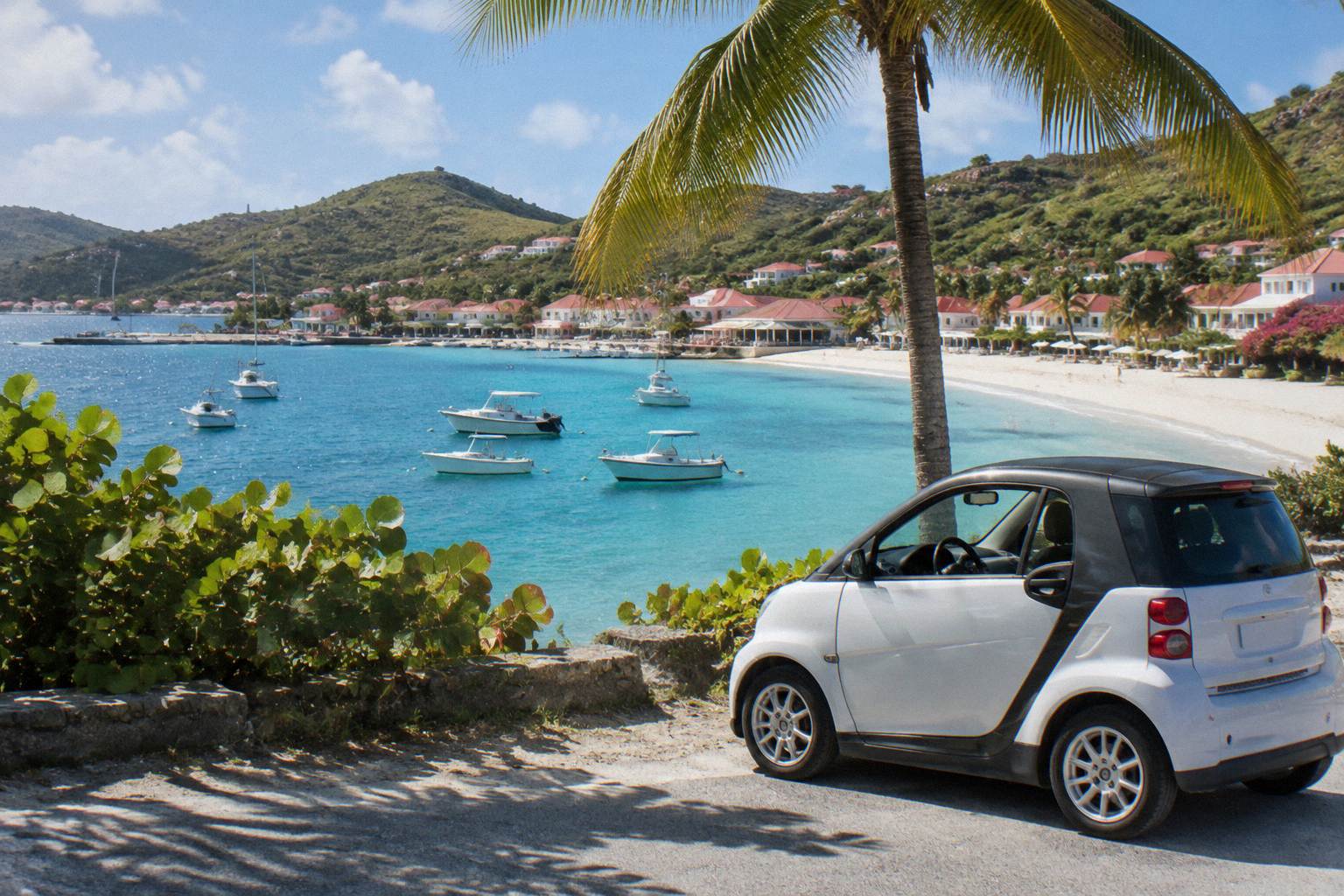
Where To Watch The Sunset In St Barts
St Barthelemy, the small French Caribbean island better known as St Barts, faces its western shoreline toward the open Caribbean Sea, and that geography sets the evening show: a harbor amphitheater, a shell-strewn cove within walking reach of town, and boat decks arriving from St Martin timed to the descent.
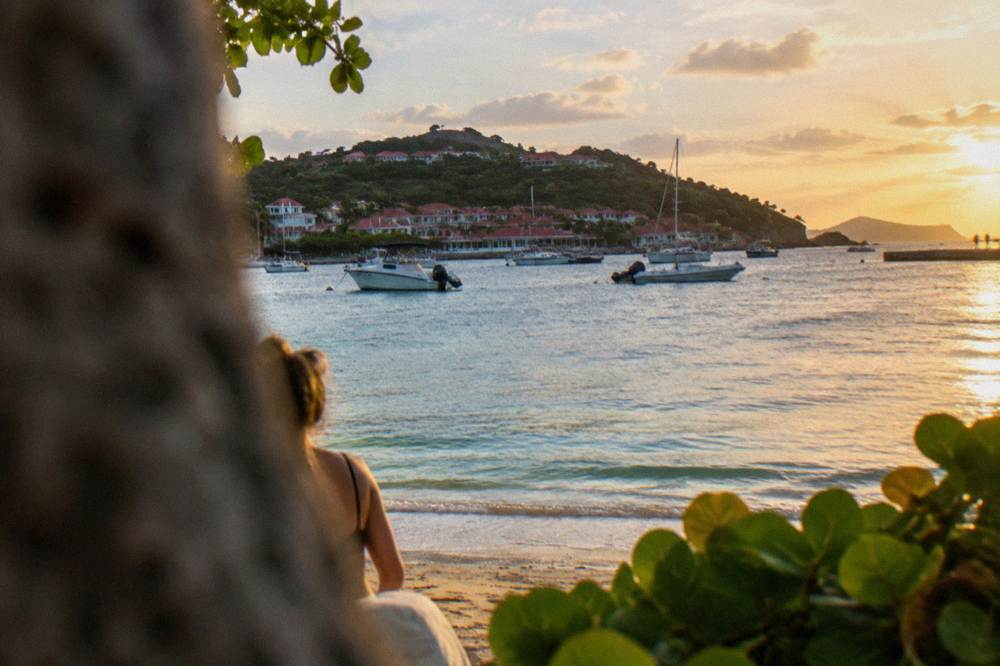
Shell Beach (Grand Galet) near Gustavia and the harbor front itself are the classic west-facing sunset spots in St Barts, with Flamands and Colombier offering quieter coastal alternatives and private sailing trips from St Martin putting the sunset over open water.
St Barthelemy, usually written St Barts, is a small French island in the Caribbean of about 21 square kilometres, and its evening light is one of the few shows on the island that costs nothing. All beaches are public, the harbour capital Gustavia wraps around a bay that opens to the west, and the island's position at UTC-4 with no daylight saving means the sun slides into the Caribbean Sea somewhere over Sint Maarten and the open water, evening after evening. This guide from St Barthelemy Travel covers the shore spots, the harbor vantage points, the boat options listed here, and the practical questions that come with chasing the last hour of light on a steep little island.
Which Spots In St Barts Actually Face The Sunset?
The west-facing sunset spots in St Barts are Shell Beach (Grand Galet) on the edge of Gustavia, the Gustavia harbor front itself, and the northwest-facing shore at Colombier, while Gouverneur and Saline face south and Saint-Jean and Lorient face north, so the evening light plays across them rather than setting into them. Every one of them is public and free to access. The island's shape does the sorting: Gustavia sits in a bay on the leeward side, and the sun descends over the water more or less behind it.
Geography is the whole game here. A spot that faces the open sea to the west gives you the sun dropping into water; a spot on the south or north coast gives you long side-light and color in the opposite sky, which some photographers prefer. The Shell Beach guide covers the cove's position relative to Gustavia in detail, and the Gustavia harbor page does the same for the town's rim of vantage points.
| Spot | Where It Sits | Direction It Faces | What The Sunset Gives |
|---|---|---|---|
| Shell Beach (Grand Galet) | South edge of Gustavia | West and southwest | Sun into open water close to town |
| Gustavia harbor front | Center of the harbour capital | West | Color over the anchored boats and masts |
| Colombier | Northwest coast, reached by trail or boat | Northwest | Late light over the water toward open sea |
| Flamands | North coast west of Saint-Jean | North | Side-light and color inland of you |
| Gouverneur | South coast | South | Warm light on the hills, sun setting to your right |
| Saline | South coast east of Gouverneur | South | Wide sky and dune silhouettes in the last color |
The names in that table each have a full page on this site, and the pattern to notice is that only the leeward, westward openings put the sun itself into the sea. The rest trade the direct drop for the warm wash that low tropical sun throws across white sand and green hills.
Is Shell Beach The Classic St Barts Sunset Spot?
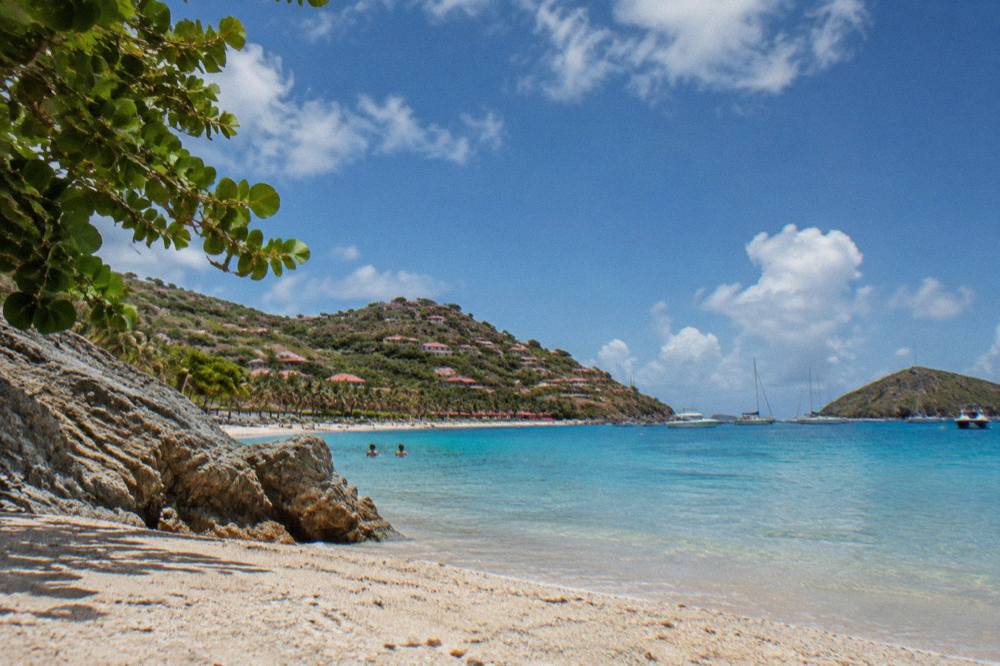
Shell Beach, also called Grand Galet, is the classic St Barts sunset spot because it is the one west-facing shore within easy walking reach of Gustavia: the tourism committee lists it among the island's public beaches, it sits on the harbor town's southern edge, and its rocks and shells catch the last light facing directly into the setting sun over the sea. It is public, it is free, and it is close to the center of town, a combination almost nothing else on the island offers at that hour.
The beach's own attraction page describes its position and access. What matters for the sunset specifically is the orientation. The cove opens west, so the sun descends into the water in front of you rather than beside you, and the shore's broken shell and rock strand reflects the color in a way sand alone does not. The environment agency's beach rules apply like everywhere else on the island: dogs are banned from every beach under a municipal order, the marine reserve zones prohibit touching protected species, and collecting shells is restricted in reserve areas, so look rather than gather.
Because the spot is walkable from the harbor front, the natural evening sequence in Gustavia is to watch from the water's edge at Shell Beach, then walk back toward the harbor as the afterglow climbs. The path between them is short and paved for most of the way, along the edge of town rather than over the hills that separate Gustavia from everywhere else.
The harbor side of the evening deserves its own hour. The Wall House Museum and the two fort headlands, Fort Karl and Fort Gustaf, sit at either side of the bay, and both headlands give elevated views down onto the harbor with the sun descending behind the mast forest. The forts are public open spaces and cost nothing.
What Does The Sunset Look Like From Gustavia Harbor?
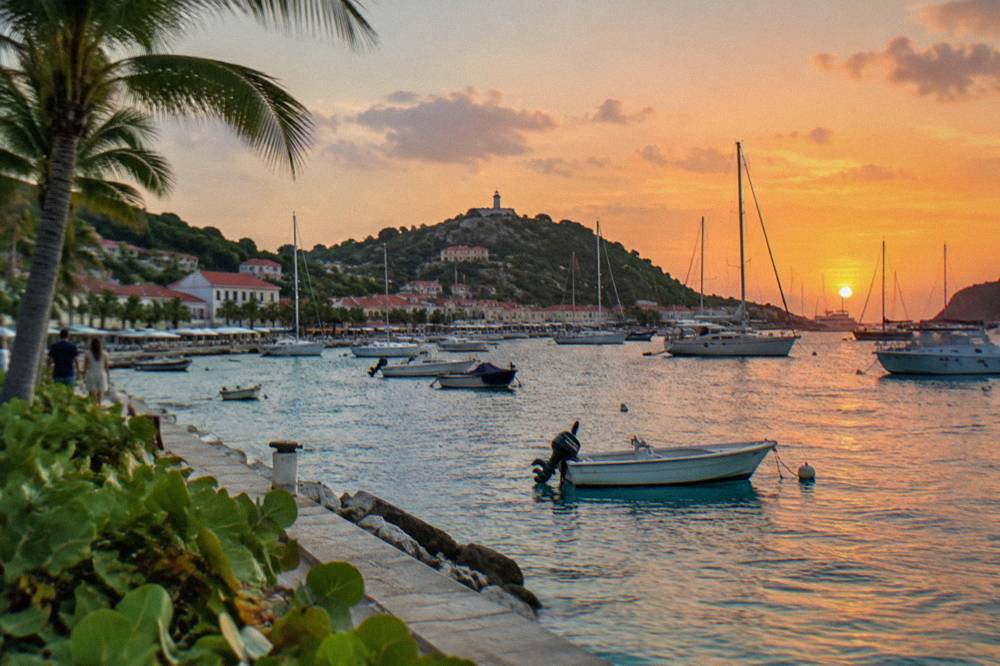
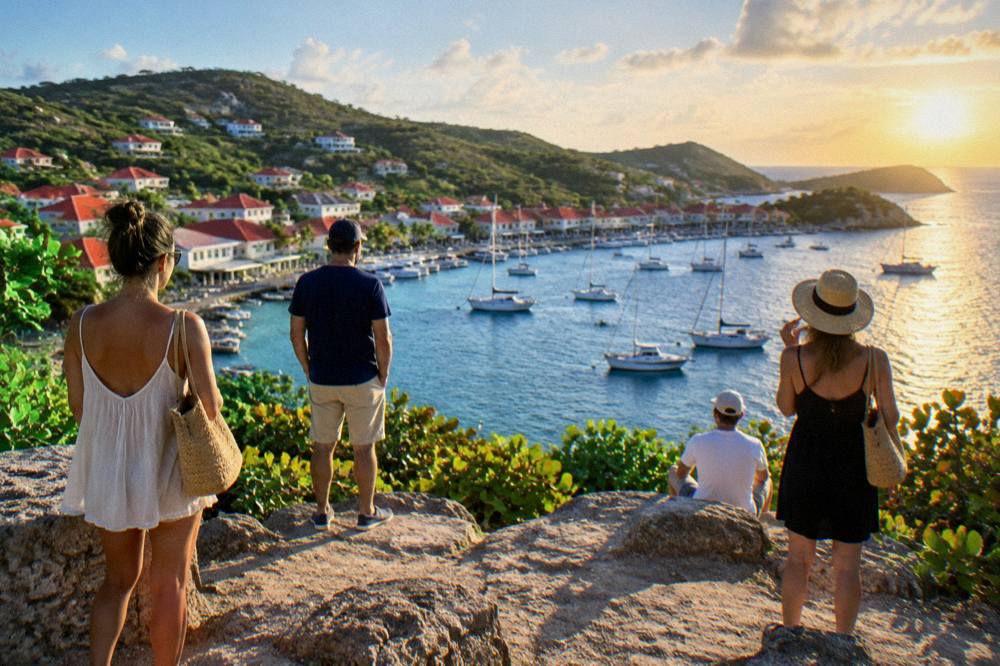
The Gustavia harbor sunset is a boat-and-water version rather than an open-sea version: the bay opens west, so the sun goes down over the anchorage and the silhouettes of boats, with the red-roofed town behind you catching the reflected color on its waterfront facades. The harbor is the island's working centre, and the evening light makes it the single most photographed waterfront on St Barts.
The harbor page covers the layout in full. For sunset planning, the practical division is simple: the water side of the quay gives you the sun itself, while the town side, along the storefronts of Gustavia, gives you the afterglow on the buildings. The harbor's shopping stretch is covered separately in the Gustavia shopping area notes around Le Select, the town's long-standing bar landmark, which operates on its own hours that this page does not state.
One caution that comes from the authorities rather than from any writer: the harbor is an active port, cruise ships tender at anchor, and the ferry quays run scheduled services. Stay off operational piers and give working vehicles the right of way on the quay. The public walkway is continuous and free.
Can You Watch The St Barts Sunset From A Boat?
Yes, and the boat option is the one product category listed here that is built around it: every bookable trip here is a charter or group sail departing from St Martin or Sint Maarten, and a private skipper can time the crossing and the anchor stop so the descent happens over open water off St Barts rather than from shore. None of these trips departs from St Barts itself; they arrive at it.
The featured option for a sunset-oriented day is the private sailboat charter from St Maarten, a sailing yacht trip across to the island with a skipper, run as a private charter for your own party. Because it is private, the schedule is yours to shape with the operator, and an afternoon departure with an evening arrival puts the sun behind you on the crossing and the St Barts coast glowing ahead. Availability and the live price are on the operator's listing: See the live listing.
The second water option is the group sail, the Boomerangs Group Sail and Snorkel, which runs as a day trip from St Martin to Colombier and Ile Fourchue. Its per-person format runs only from 12 May to 31 August 2027 on its listing, which happens to be the season of late sunsets, so the return leg often carries the last of the light. The third is the overnight catamaran, a two-day, one-night private trip that anchors overnight and therefore hands you a sunset and a sunrise over the water. Both are laid out below.
A note on the rules that apply to any boat evening here: the marine reserve's regulatory zones, published by the territorial environment agency, set a 5-knot speed limit inside protected zones, ban jet skis and motorized water toys outright, cap vessel size in Colombier and Ile Fourchue bays, and ask skippers to use ecological moorings. A licensed charter crew works inside those rules automatically, which is one quiet argument for taking the boat option rather than running your own.
What Time Is Sunset In St Barts Through The Year?
St Barts sits at UTC-4 with no daylight saving time, so sunset runs roughly two hours later in midsummer than in midwinter across the year, earliest in the December-January window when the island is busiest and latest around June and July; exact times for a given date are published in any standard sunrise-sunset table for latitude about 17.9 degrees north, and no ticket or booking is needed to check them. What the island's own data adds is the weather that usually comes with that hour.
The climate context comes from the Meteo-France normals, 1991-2020, for the St Barthelemy station. The mean daily high runs from 28.5 C in January to 31.7 C in September, and the year delivers 891.3 mm of rain, with October the wettest month at 135.6 mm and February the least rainy at 38.4 mm. Translated to the evening hour: the deep-winter sunset arrives early and cool enough to want a layer, while the summer and autumn sunset comes late and warm.
| Month | Mean Daily High (C) | Mean Daily Low (C) | Rain (mm) | Evening Character |
|---|---|---|---|---|
| January | 28.5 | 23.5 | 52.6 | Early, mild sunset in peak season |
| February | 28.6 | 23.3 | 38.4 | Early sunset, the least rainy month |
| April | 29.8 | 24.2 | 50.9 | Later light, shoulder-season quiet |
| July | 31.2 | 26.0 | 80.4 | Late, warm sunset in hurricane season |
| September | 31.7 | 26.2 | 96.9 | Latest heat of the year, off-season |
| October | 31.4 | 25.8 | 135.6 | Wettest month, dramatic skies possible |
The hurricane season window, 1 June to 30 November with a climatological peak near 10 September, matters less for sunsets than you might assume and more than you might like: it is the season of the most theatrical evening clouds, and also the season when a tropical wave can erase the show entirely. Neither outcome can be promised on a given date, and this page will not try.
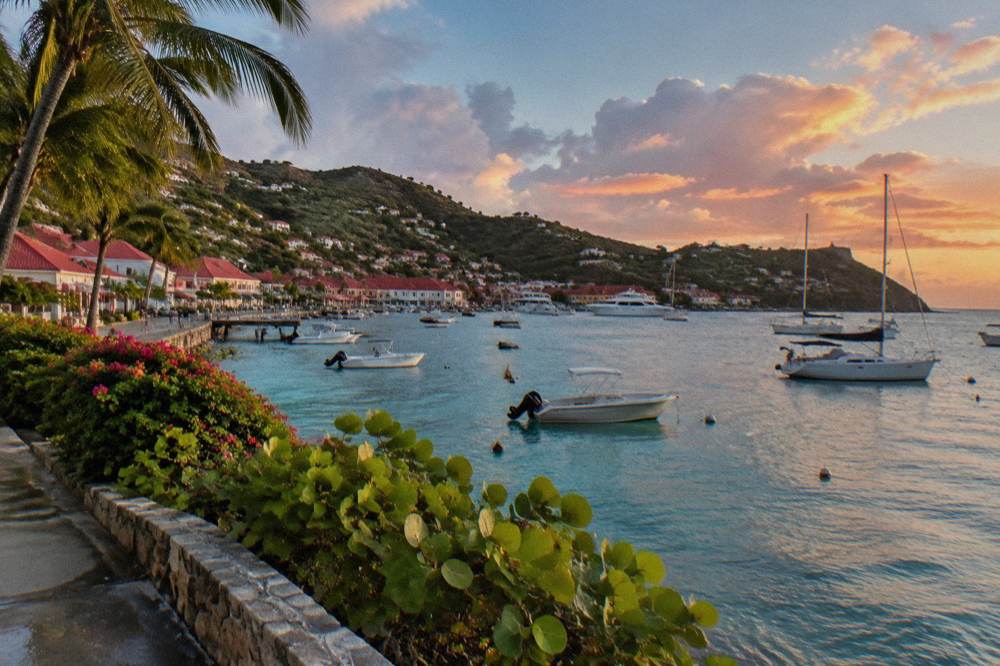
Which Beaches Give The Quietest St Barts Sunset?
The quietest sunset shores in St Barts are the south-coast beaches of Gouverneur and Saline and the northwest cove of Colombier, all public, all free, and all a deliberate drive or hike from Gustavia, so they see evening use mainly from the people who made the trip on purpose; Colombier is the furthest commitment because it is reached on foot or by boat rather than by parked car at the sand. Each has a full page on this site.
Gouverneur sits below a steep hill on the south coast, reached by a winding road down from the ridge. It faces south, so the sun sets to the right of the beach over the headland, and the reward is the whole bay turning gold rather than a direct drop into the sea. Saline lies behind its dune field a short walk from the road, and its width at dusk gives the sky the biggest canvas on the island. The rules are the island's rules: public sand, dogs prohibited, nothing collected, nothing disturbed.
Colombier is the sunset beach for the committed. The cove faces northwest toward Ile Fourchue and open water, it sits inside the marine reserve's protected zones, and the overland approach is the island's best-known trail, covered in the hiking notes. Arriving by sea is the alternative, and the group sail and private charters from St Martin both stop in that bay. For an evening anchored in Colombier with the sun going down outside the cove, the overnight catamaran is the only product that holds you there until morning.
| Beach | Coast | Faces | Access Commitment | Evening Trade-off |
|---|---|---|---|---|
| Colombier | Northwest | Northwest | Trail on foot or by boat | Best water horizon, hardest to reach |
| Gouverneur | South | South | Steep road from the ridge | Sun sets beside the bay, not in front |
| Saline | South | South | Short walk over the dune | Vast sky, indirect descent |
| Flamands | North | North | Road access, west of Saint-Jean | Side-light, town glow nearby |
| Lorient | North | North | Road access through the village | Family-shore feel, indirect light |
| Anse des Cayes | North | North to northwest | Road access, east of town | Surf-side rocks, partial sea view |
One further caution belongs here rather than anywhere else: the marine reserve's rules are enforced in these bays, and they include the 5-knot limit, the ban on jet skis and towed toys, and the prohibition on drones near or within reserve zones without authorization. Sunset photographers should assume a drone flight over Colombier needs a permit it almost certainly will not get.
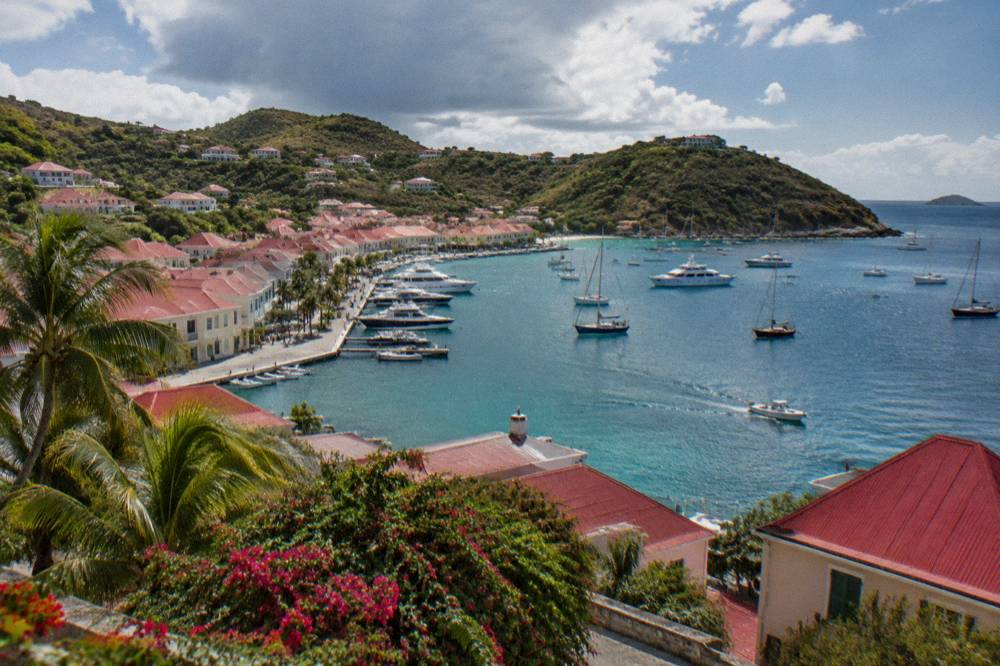
How Do You Get To A St Barts Sunset Spot Without A Car?
You can reach the Gustavia sunset spots, Shell Beach and the harbor front, entirely on foot because both sit in or beside the harbor capital, and everything else on the sunset list is realistically a drive, a taxi ride, or a boat, since the island's roads are narrow, steep, and unlit after dark and the walking routes between bays cross hills rather than follow the coast. Taxis operate on official route-based tariffs with evening surcharges, and rental desks at the airport include Avis, Budget, and Hertz alongside local agencies and Mini Moke specialists.
The car question gets a full treatment on the airport spotting page's neighbor, the getting-around guide, but the sunset-specific version is this: the light goes fast, the roads home are dark, and driving on the right over steep grades after dusk rewards caution. A taxi arranged in advance for a remote beach sunset is the low-stress pattern, and the island's taxi services take bookings rather than cruising.
The all-in-one alternative is a full-day itinerary built around light at both ends. The sunrise to sunset day plan on this site runs the island from first light to the last color, and it is the template to copy if the sunset is the point of the trip rather than a pleasant accident at the end of it.
What Should You Bring For A St Barts Sunset?
Bring water, a light layer for the winter months when the mean daily low dips to about 23 C, reef-safe sun protection for the hour before, and a light source for the walk back, because the beaches carry no lighting, the roads between them are unlit, and the steep descents to Gouverneur and the Colombier trail are not walks to improvise in full darkness. Camera or not is taste; footwear is not.
The packing reality follows the calendar. A February evening at 23 C wants nothing more than a shirt; a September evening at 26 C with the day's high of 31.7 C only just behind it wants the water bottle more than the layer. Rain belongs in the plan only in the wet months: October averages 135.6 mm and November 118.6 mm per the Meteo-France normals, 1991-2020, and an evening shower in those months is a normal event rather than a surprise, often followed by the best color of the week.
| Item | Why It Matters At Dusk | Season Notes |
|---|---|---|
| Water | Tropical evenings stay warm after the sun drops | Essential May through November |
| Light layer | Mean daily low 23.3 C in February | Winter months only |
| Torch or phone light | Beaches and trails are unlit | Every month, essential on the Colombier trail |
| Reef-safe sunscreen | The waiting hour is still tropical sun | Year-round, mean high 30.2 C |
| Dry bag | Boat trips and sea spray on charters | If booked on the water |
| Camera | The harbor and west-facing coves at their best | Optional |
For anyone whose sunset plan is the boat plan, the practical answer to "what do I bring" is answered by the operator's listing, which states what is included on board and what is not. The featured sailboat charter page carries those details and live availability.
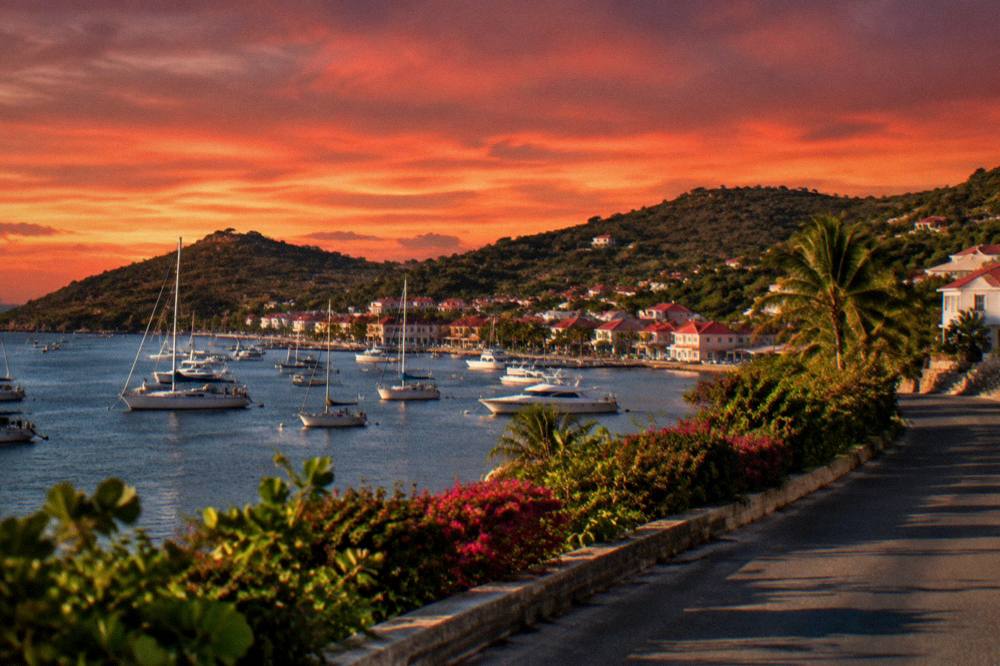
Do The East And North Coasts Get Any Sunset At All?
The north-coast beaches of Flamands, Lorient, and Anse des Cayes and the east-coast shores of Grand Cul-de-Sac and Toiny do not face the setting sun, but they get the second half of the show, the afterglow, in which the entire western sky stays colored for twenty minutes or more after the sun itself is gone, and on those shores the color arrives reflected off the water and the hills rather than direct. Some of the island's best photographs are made in that window, not before it.
Flamands is the strongest of them because it sits far enough west on the north coast to catch the light sweeping around the island's shoulder. Saint-Jean and Lorient sit with their backs to the direct show and their faces full of reflected color. The east-facing shores, Grand Cul-de-Sac and the Toiny coast, are sunrise beaches first, but their lagoon and reef edges hold the dusk color on the water in the opposite direction.
The pattern to remember is simple: west-facing shores for the descent, south-facing shores for the golden hour, north-facing shores for the afterglow, east-facing shores for the morning. The island is small enough that a determined evening could take in two of them, but the roads between bays are steep and slow, so one well-chosen spot beats a rushed circuit.
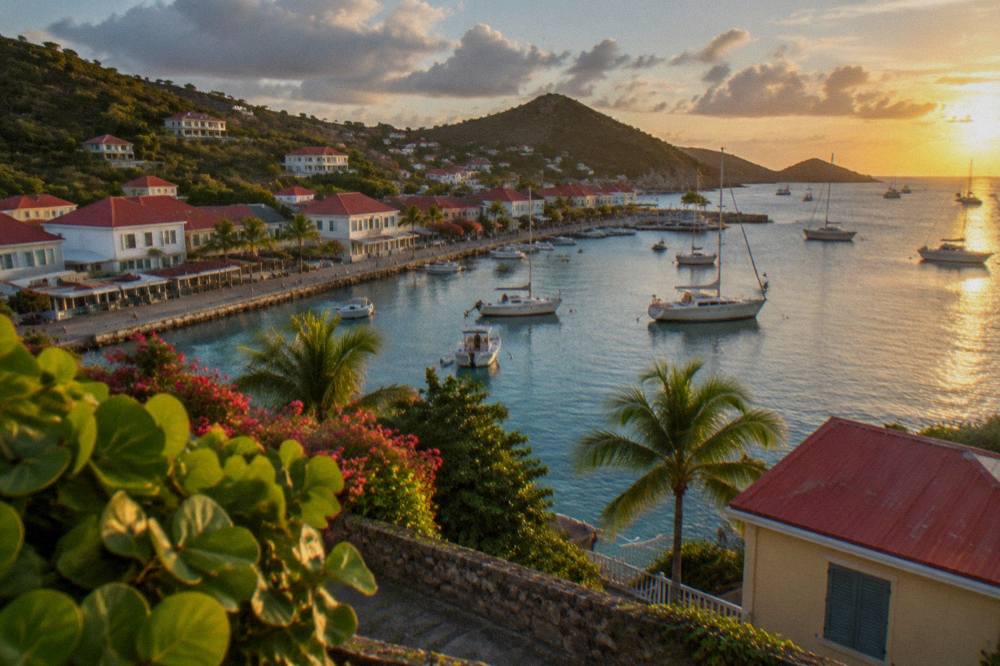
What Are The Best Free Sunset Spots In St Barts?
Every sunset spot in St Barts is free, because every beach on the island is public under local law and the Gustavia harbor front, both fort headlands, and the island's roads and viewpoints are open public spaces; no entrance fee, ticket, or reservation exists for any of them, and no guided walking tour operates on the island, so the free option and the only shore option are the same thing. The money on this island goes into beds, boats, and tables, not into access.
That fact shapes the whole evening culture of the place. The public status of the sand means nobody can wall off the best angle, and the small scale of the island means the harbor crowd and the empty-south-coast crowd are twenty minutes of driving apart at most. The two fort parks above Gustavia, described on the Fort Gustaf page, add the elevated option at no cost, and the Corossol beach and village shore on the leeward side gives a working-harbor version of the same westerly light, fishing nets and all.
The only paid sunset experiences that exist here are the water ones, the charters and the group sail covered above, and their prices, ratings, and schedules render from live listings rather than from this page. On shore, the evening belongs to whoever showed up.
Common Questions About St Barts Sunsets
Where is the best place to watch the sunset in St Barts?
Shell Beach (Grand Galet) on the edge of Gustavia and the Gustavia harbor front are the classic west-facing spots, with the fort headlands above town adding elevation. Colombier is the wilder option, reached on foot or by boat.
What time does the sun set in St Barts?
The island sits at UTC-4 with no daylight saving, so sunset falls early in the December-January window and latest around June and July, a spread of roughly two hours across the year. Any standard sunrise-sunset table for latitude about 17.9 degrees north gives the exact time for your date.
Can you watch the sunset from a boat in St Barts?
Yes, through the charter and group-sail trips that depart from St Martin or Sint Maarten, including a private sailboat charter, a group snorkel sail to Colombier, and a private overnight catamaran. No tour listed here departs from St Barts itself.
Are the beaches in St Barts free at sunset?
Every beach on the island is public and free at all hours. Dogs are prohibited on all beaches under a local order, and the marine reserve zones ban collecting shells and touching protected species.
Is sunset better in winter or summer in St Barts?
Winter sunsets come earlier and cooler, with mean daily lows about 23 C in the coolest months, while summer and autumn sunsets come later and warmer, with the wettest months, October at 135.6 mm of rain per the Meteo-France normals 1991-2020, also producing the most dramatic evening clouds.
Do you need a car for a St Barts sunset?
Not for Gustavia, where Shell Beach and the harbor front are walkable from anywhere in town. For Gouverneur, Saline, Flamands, or Colombier, plan a drive, a pre-booked taxi, or a boat, and carry a light source for the return in the dark.
The last light on St Barts is free, public, and repeated nightly; the only decisions are which shore faces you toward it and whether you watch it from the sand or from the deck of a boat that crossed from St Martin to be there.