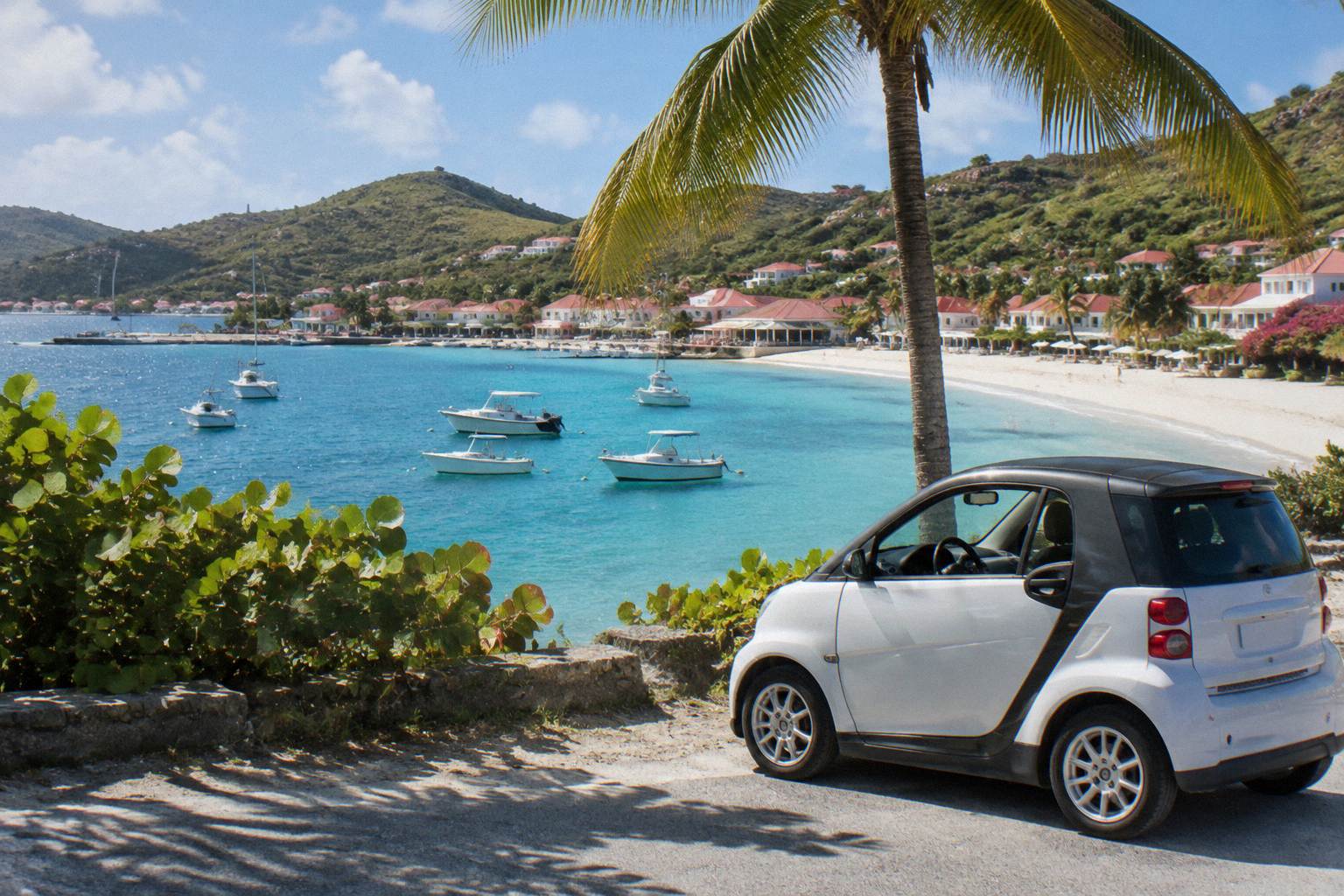
Grocery Shopping In St Barts
St Barthelemy, usually written St Barts, is a small French island in the Caribbean, and feeding yourself there starts with understanding how its shops work: a thin spread of small stores, French imports, and a villa culture built around cooking in.
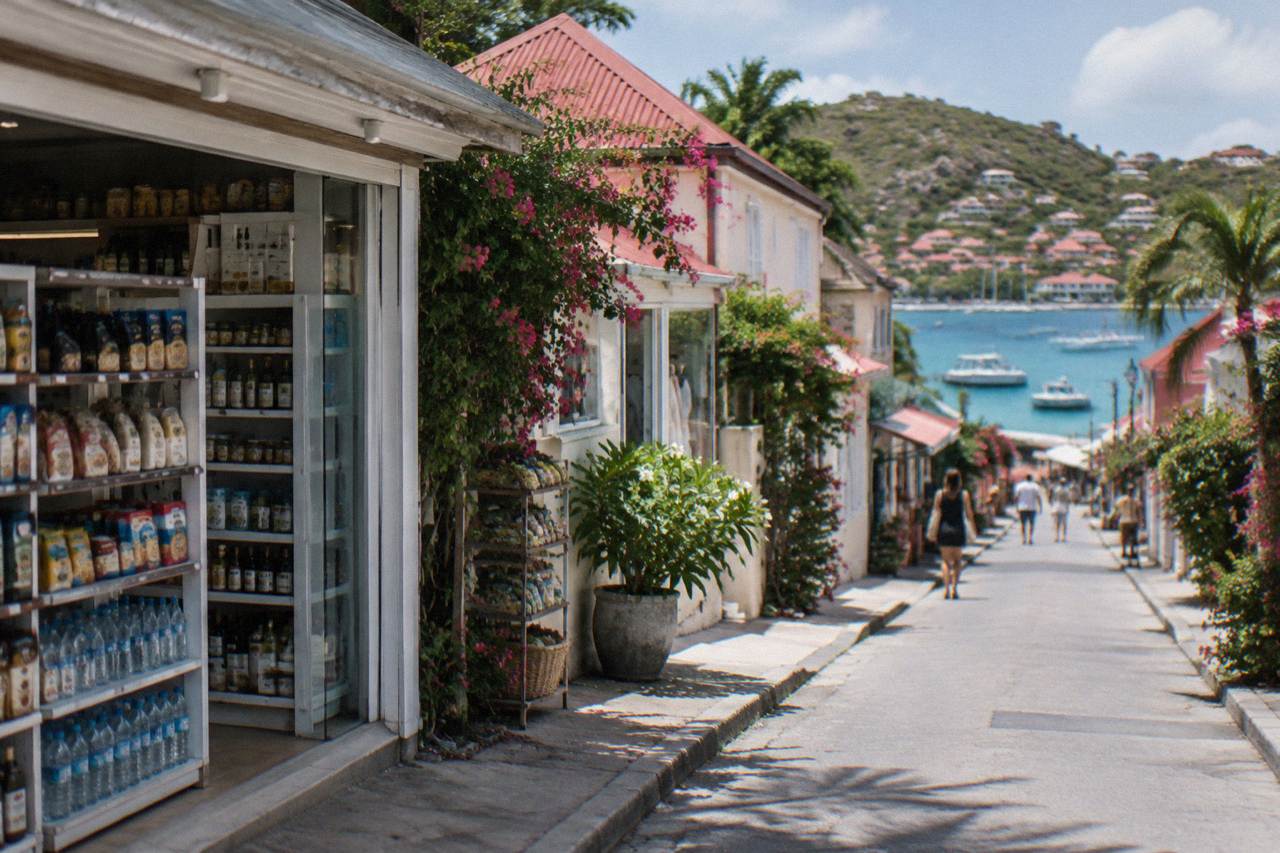
Groceries in St Barts come from a small number of supermarkets and convenience stores clustered in and around Gustavia and Saint-Jean, with smaller outlets in villages such as Lorient and Corossol. Stock is heavily imported from France and North America, so selection is broader than on many Caribbean islands, but everything arrives by boat or plane, which shapes price, freshness and hours.
St Barthelemy, usually written St Barts, is a small French island in the Caribbean, about 21 square kilometres of hills and public beaches with roughly 10,700 residents, and nearly everything on its shelves arrives from somewhere else. That single fact drives the whole grocery question. There is no industrial agriculture to speak of, no deep-water cargo terminal for container traffic in the way a big island has, and a population the size of a small mainland town supports only a thin retail layer. What the island does have is French logistics: the territory is an overseas collectivity of France, uses the euro, and its stores carry a recognizably French range alongside regional produce, which is why a villa week in St Barts so often becomes a cooking week. This guide from St Barthelemy Travel covers where shopping actually happens, what is worth carrying versus buying, what customs allows, and how the arrival route, ferry or a small turboprop into Gustaf III Airport, shapes the first shop of the trip.
Where Do You Buy Groceries In St Barts?
Grocery shopping in St Barts is concentrated in and around Gustavia and Saint-Jean, where the larger supermarkets sit, with smaller convenience outlets scattered through villages such as Lorient, Corossol and Grand Cul-de-Sac. The island is about 21 square kilometres, so no shop is ever far from any beach, and driving is on the right with a 50 km/h island-wide limit, 30 km/h in Gustavia and Saint-Jean.
The retail geography follows the population. Gustavia, the harbour capital, and Saint-Jean, the airport district, are the two commercial nodes, and that is where the biggest food shops are found. Beyond them the island thins out quickly: Lorient on the north coast, Corossol on the west, Flamands, Grand Cul-de-Sac and Toiny each support small outlets that serve their immediate neighbourhood. Shops exist, they cluster where people live, and the roads between them are narrow, winding and steep, which is why a single well-planned shop beats several small trips.
What distinguishes St Barts from equally small islands is the import mix. As a French overseas collectivity since 2007, the territory is supplied through French distribution channels, so dry goods, dairy, charcuterie, cheese, wine and packaged goods arrive from France and, in smaller volumes, from North America and the wider Caribbean. Fresh produce is a mix of imported and regional, and the tourism committee's site presents the island's food scene as French-influenced across its restaurant pages; the same French-influenced range runs through the shops. If a villa menu depends on a specific French ingredient, the odds of finding it are better here than on most islands this size.
Practical consequences follow. Cars and Mini Mokes are rented at the airport from Avis, Budget and Hertz counters plus local agencies, and a rental makes the grocery run straightforward; the alternatives are covered in getting around St Barts. Book wheels before arrival in the December-to-April peak, and plan the big provisioning shop for the first afternoon rather than the first morning, since arrival days already carry a flight, a ferry or both. Shopping for anything beyond food, from resort wear to jewellery, is a different errand entirely, and the retail scene in Gustavia and the wider St Barts shopping guide cover it.
Should You Bring Food Or Buy It On Arrival In St Barts?
For a villa stay, buy the heavy basics on the island and bring only the specific items a kitchen cannot do without: favourite coffee, dietary staples, spices, and anything sealed and non-perishable. Luggage space on the last leg is the real constraint, because most arrivals reach St Barts on a small STOL turboprop with a 646 m runway or on a foot-passenger ferry from St Martin, and both punish overpacking.
The last leg matters more than the long-haul flight. Gustaf III Airport, also called Remy de Haenen, takes only small STOL turboprops in daylight and visual conditions, and the aircraft types used, Twin Otters, Cessna Grand Caravans and Pilatus PC-12s among them, have modest holds. A suitcase padded with canned goods is a poor trade against a suitcase of clothes and beach kit. The ferry is more forgiving for foot passengers, but a cool bag of frozen goods will not survive a tropical crossing plus a check-in window, and the operators require passports and close check-in before departure. The ferry operators and schedule guide covers the two current services in detail.
So the split looks like this. Buy on the island: water, soft drinks, milk, bread, eggs, butter, produce, meat and fish, charcoal, paper goods and cleaning supplies, all heavy or perishable and all stocked in Gustavia and Saint-Jean. Bring from home: the coffee you actually drink, tea, protein powders or supplements, specialty gluten-free or allergen items, spice blends, and a sealed packet or two of hard cheese or cured sausage if French customs rules allow it from your origin. Wine and spirits are a genuine category decision: French labels are present on the island, and carrying bottles through two flights and a turboprop hop is a risk of breakage that many travellers decline.
| Decision | Bring In Luggage | Buy On The Island | Why |
|---|---|---|---|
| Water and drinks | No | Yes | Heavy, bulky, stocked everywhere |
| Coffee and tea | Yes | Optional | Specific brands may be unavailable |
| Fresh produce | No | Yes | Perishable, regional supply exists |
| Wine and spirits | Optional | Yes | French range present; breakage risk in transit |
| Dietary and allergen staples | Yes | Optional | Niche items cannot be assumed |
| Charcoal and cleaning supplies | No | Yes | Weight, not value, is the issue |
There is a seasonal layer too. Many hotels and restaurants close each autumn and reopen in waves between mid-October and early November, and the quieter the island, the thinner some retail hours become; the pattern is annual, though no date can be promised for any single shop. Arriving in the reopening weeks means the island is restocking for the season, which is a reasonable moment for a first big shop. The wider rhythm of the year, including hurricane season from 1 June to 30 November with its peak mid-August to mid-October, is covered in how to get to St Barts, which also explains the gateway logic through St Martin.
If a cooking-and-villa week is not the point of the trip at all, the alternative is to let the water do the work. The day trips below all depart from St Martin or Sint Maarten and visit St Barts by sea.
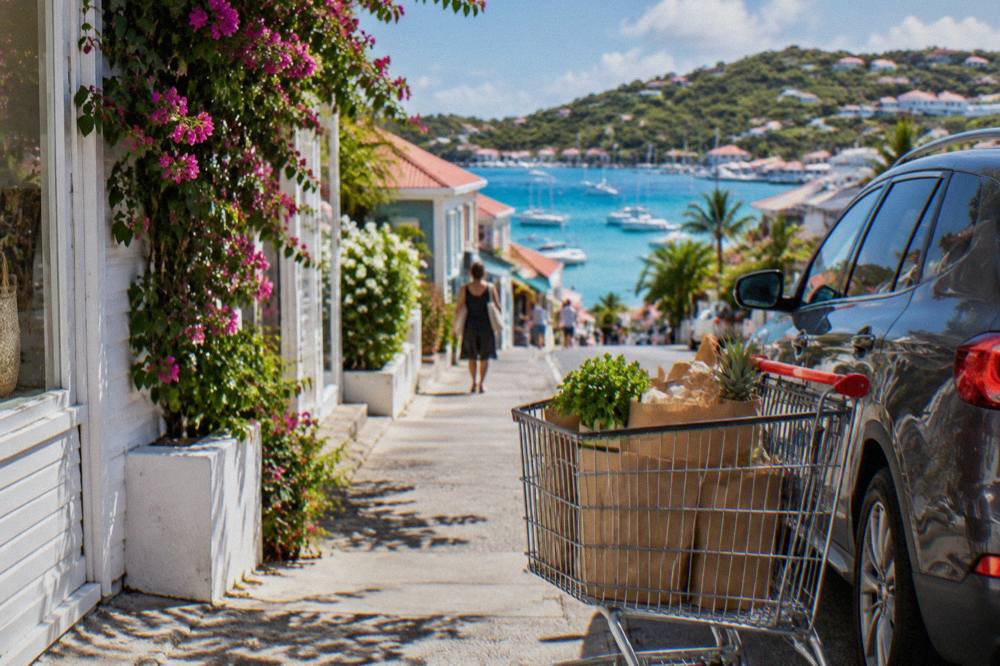
What Can You Carry Through Customs Into St Barts?
Entry to St Barts follows French overseas customs rules rather than Schengen systems, so the same limits that govern bringing goods into French territory apply: personal quantities only, no fresh meat or plant material from outside the permitted channels, and cash above 10,000 euros declared. Travelers should check their own government's travel advice for entry, since nationality-specific requirements can differ from the general framework.
The territory sits outside the Schengen area, a point confirmed by the local customs formalities guidance, and a Schengen visa alone does not authorize entry where a visa is required at all. For US, UK, Canadian and EU citizens, short tourist stays of up to 90 days are generally visa-exempt, a US passport book rather than a card is needed for air travel, and an onward ticket is required. None of that changes what goes in the suitcase, but it frames the check-in questions on both the long-haul and the island hop.
For food specifically, the working rule is that French restrictions on animal products and plants govern. That means no fresh meat, no unpasteurized dairy surprises, and caution with fruit and seeds; sealed, shelf-stable goods such as coffee, tea, packaged snacks and factory-sealed cheese are the safe category. Quantities should look like personal use, not resale. Anything commercial in volume invites questions at Gustavia's small arrivals area, where the ferry terminal and the airport both handle customs informally but with full French authority. Cash declarations above 10,000 euros equivalent follow standard EU-related thresholds, and the territory's tourist tax, the taxe de séjour, is collected by accommodations rather than at the border, generally 5 percent of the nightly net price.
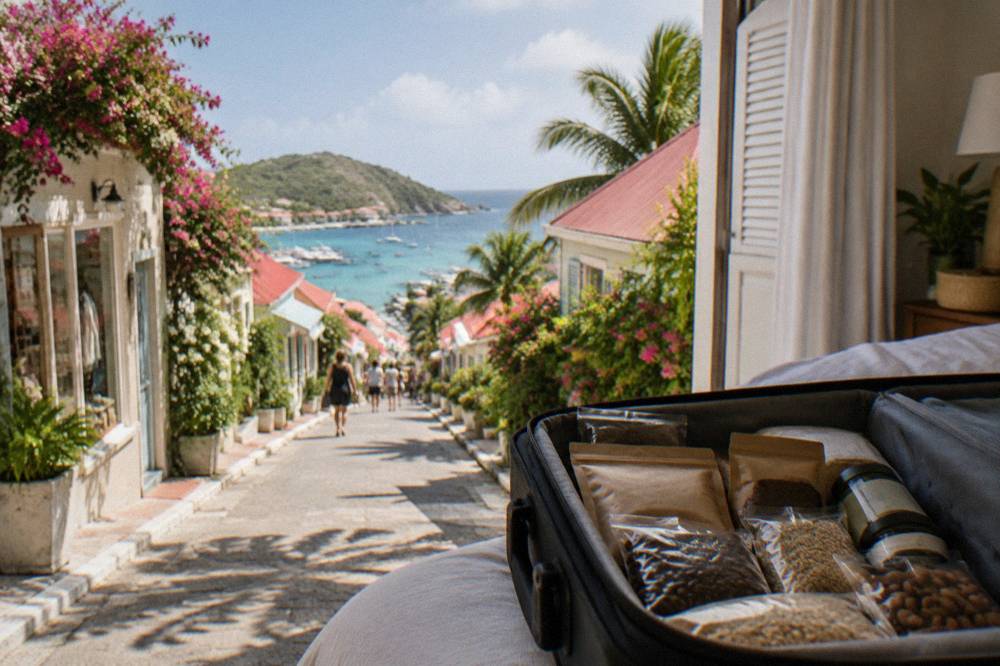
One more angle: provisioning from St Martin. Some travellers shop on the Dutch or French side before crossing, where big-box retail exists on Sint Maarten, and bring goods across on the ferry or a private transfer. That is a legitimate strategy for a villa group, but it adds luggage to a crossing that can be rough, and the ferry operators state check-in closes well before departure. A calmer version is to arrive light, shop locally on day one, and accept the island's range as part of the trip. For arrivals routed through Princess Juliana airport, the connection options are laid out in SXM airport to the St Barts ferry.
If the first-day plan is a shop followed by a day on the water later in the week, the per-person group sail is the one shared option, and it can be checked here: See the live listing. Its own page, Gustavia, Colombier and Ile Fourchue by sail, covers the route in full.
How Does Grocery Shopping Fit A Villa Stay In St Barts?
Villa stays are the natural home of grocery shopping in St Barts: the island has a large villa market with no reliable count, managed by specialists such as WIMCO, Sibarth and St Barth Properties, and pre-arrival provisioning is a standard service in that market. Rates vary by season, and each property's own booking page shows them.
The villa economy is the reason the island's shops carry restaurant-grade ranges at all. A villa week means breakfasts on a terrace, beach picnics and long dinners at home, and the rental managers that dominate the market, WIMCO, Sibarth and St Barth Properties among them, operate concierge desks whose whole function includes arranging the first shop before guests land. The typical arrangement: send a list, the villa is stocked before arrival, and the bill lands on the account. That service exists across the villa sector generally, so asking the booking contact is the simplest route, whether the villa came from a specialist manager or a platform listing.
What belongs on a provisioning list for a St Barts villa is mostly what belongs on any warm-climate list: breakfast goods, bread, cheese and charcuterie, salad and fruit, grill items, pasta and rice, coffee, wine and a great deal of water. The grill-and-salad pattern suits the climate, which the Meteo-France normals, 1991-2020, put at a mean daily high of 28.5 C in January rising to 31.7 C in September, warm enough year-round that cold drinks and shade define lunch. Cold-chain realism matters: a villa refrigerator on arrival day has been off between guests in some cases, so frozen items go in the second shop, not the first.
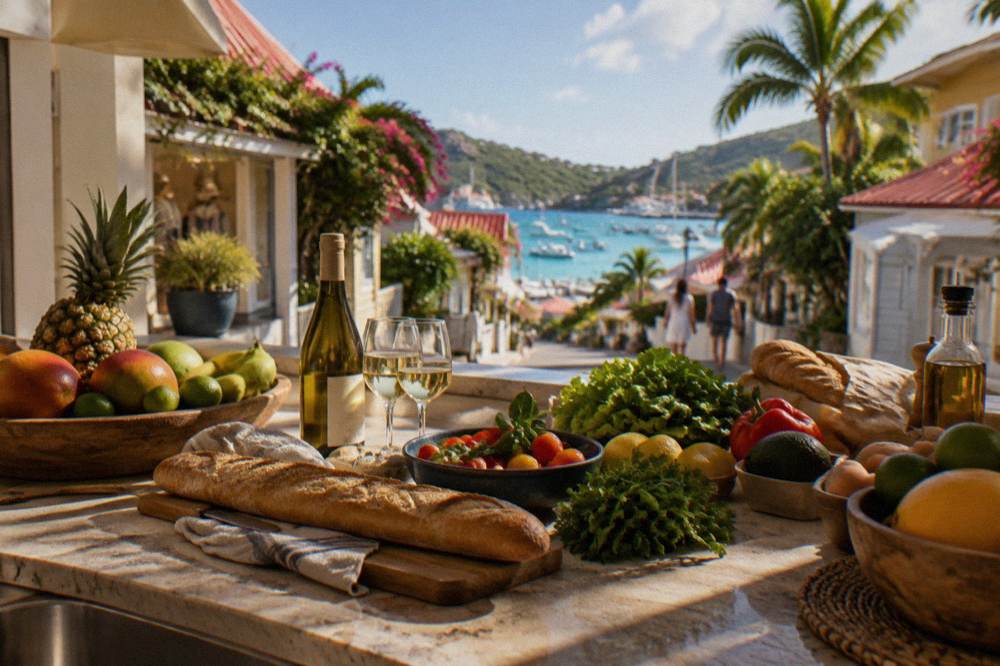
For travellers weighing a villa against a hotel, the trade is exactly this: a hotel folds meals into restaurants and room service, while a villa converts into a kitchen and makes the grocery question central. The hotel side of that comparison, including properties that close each autumn and reopen between mid-October and early November, is covered in the St Barts hotels guide and the five star hotel guide. Villas run year-round, which makes them the anchor option in the quiet weeks when hotel tables are closed.
When Is The Best Season To Shop And Stock Up In St Barts?
The December-to-April high season offers the fullest shelves in St Barts, because that is when hotels have reopened and the island is fully staffed, while the autumn low season, overlapping the hurricane season from 1 June to 30 November with its peak mid-August to mid-October, is the thinnest retail window as many businesses close and reopen between mid-October and early November. No month can be promised busy or empty.
The climate numbers explain the calendar. The Meteo-France normals, 1991-2020, show warm weather every month, a mean daily high from 28.5 C in January to 31.7 C in September, but rainfall is what separates the seasons: 891.3 mm across the year, with October the wettest month at 135.6 mm and February the least rainy at 38.4 mm. Hurricane season runs 1 June to 30 November with the climatological peak near 10 September, and the island's accommodation sector largely closes through the deepest part of that window, reopening in waves between mid-October and early November.
| Month | Mean Daily High C | Mean Daily Low C | Rain mm |
|---|---|---|---|
| Jan | 28.5 | 23.5 | 52.6 |
| Feb | 28.6 | 23.3 | 38.4 |
| Mar | 29.0 | 23.5 | 41.4 |
| Apr | 29.8 | 24.2 | 50.9 |
| May | 30.7 | 25.1 | 61.7 |
| Jun | 31.2 | 25.9 | 56.0 |
| Month | Mean Daily High C | Mean Daily Low C | Rain mm |
|---|---|---|---|
| Jul | 31.2 | 26.0 | 80.4 |
| Aug | 31.6 | 26.3 | 79.6 |
| Sep | 31.7 | 26.2 | 96.9 |
| Oct | 31.4 | 25.8 | 135.6 |
| Nov | 29.9 | 25.0 | 118.6 |
| Dec | 28.9 | 24.1 | 79.2 |
Source for both tables: Meteo-France climate normals, 1991-2020, St Barthelemy station.
For a grocery strategy, the seasonal read is straightforward. In high season, book everything early: the rental car, the villa provisioning slot and any restaurant tables, because December to April is when the island is fully open and fully occupied, and New Year's Eve fireworks over Gustavia harbour mark the annual peak of the peak. In the May-to-August shoulder, the island is open and quieter, and the one per-person group sail listed here runs only from 12 May to 31 August 2027 on its listing, a useful marker of which sea activities operate outside high season. In September and early October, assume reduced hours everywhere and confirm before relying on any single shop.
| Season Window | Shelf Stocking In Shops | Notes For A Villa Shop |
|---|---|---|
| December to April | Fullest, island fully reopened | Book car and provisioning early |
| May to August | Full, quieter island | Group sail runs 12 May to 31 Aug 2027 on its listing |
| September to mid-October | Reduced, many closures | Confirm hours before relying on one shop |
| Mid-October to November | Reopening in waves | Shops restock as tables reopen |
What Rules Affect Food, Beaches And Picnics In St Barts?
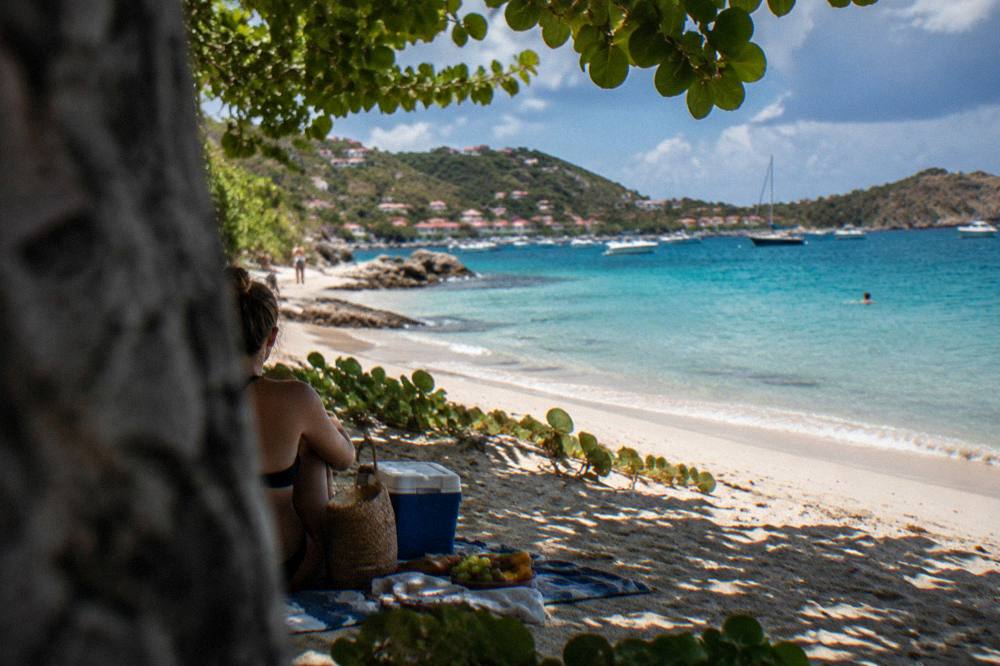
Picnics in St Barts happen on public beaches, since every beach on the island is public, but the marine reserve's rules apply on and around the water: a 5-knot speed limit in its zones, no jet skis, no dogs on beaches, no touching turtles and 23 listed dive sites, according to the environment agency's regulatory-zones page. Garbage must be carried out, and the agency's beach guidance covers waste and wildlife protection.
The environment agency, Agence Territoriale de l'Environnement, administers the St Barthelemy Marine Nature Reserve, and its rules shape any beach day built around a cooler. The speed limit and gear bans govern boats; the dog ban covers beaches and the water in reserve areas under a municipal order that applies island-wide; and the no-touching rules protect green and hawksbill turtles, which the agency notes around Colombier and in the Grand Cul-de-Sac lagoon. For a picnic, the operative points are simpler: all beaches are public and free to access, dogs stay home, and everything carried in is carried out.
| Reserve Rule | What It Means For Visitors |
|---|---|
| 5-knot speed limit in zones | Boats and charters slow inside reserve waters |
| No jet skis or towed devices | Water toys are banned in reserve zones |
| No dogs on beaches | Applies island-wide, leashed or not |
| No touching turtles or corals | Watch, never chase, feed or handle |
| 23 listed dive sites | Sites are documented under reserve management |
The same caution applies to reef-safe sunscreen choices near reserve waters, and the agency's pages ask visitors to reduce waste and disturbance near nesting areas. For travellers whose sea day is a charter rather than a picnic, many private operators will provision the boat as part of the trip, which removes the shopping errand entirely; the charter options from St Martin are worth comparing.
How Does Your Arrival Route Change The Grocery Run In St Barts?
Arriving by small plane from St Martin limits what you can carry, because Gustaf III Airport takes only STOL turboprops on its 646 m runway in daylight hours, while the two scheduled ferries, Great Bay Express from Philipsburg at about 45 minutes and Voyager from Marigot at about 50 to 60 minutes, allow foot passengers more luggage including cool bags, with passports required and check-in closing before departure.
The gateway logic is always St Martin. Long-haul flights land at Princess Juliana (SXM) on the Dutch side or, less often, at the regional gateways of San Juan, Pointe-a-Pitre or Antigua, and the last hop is either a small plane or the ferry. St Barth Commuter flies from SXM, Grand Case and Pointe-a-Pitre, Tradewind serves San Juan and Antigua, and Winair serves SBH from St Maarten with Twin Otters; the St Barts airport guide covers the famous approach. Each leg is a short hop, and the 646 m runway means the aircraft are small by design.
| Last-Leg Option | Departure Point | Crossing | Luggage Reality For Groceries |
|---|---|---|---|
| Scheduled ferry, Great Bay Express | Bobby's Marina, Philipsburg | About 45 minutes | Foot passenger, cool bag feasible |
| Scheduled ferry, Voyager | Marigot Ferry Terminal | About 50 to 60 minutes | Foot passenger, check-in closes early |
| Small plane, St Barth Commuter | SXM, Grand Case, Pointe-a-Pitre | Short hop | Small holds, pack light |
| Small plane, Tradewind | San Juan, Antigua | Short hop | Small holds, pack light |
| Small plane, Winair | SXM | Short hop | Twin Otter, pack light |
Durations are about figures from the operators' own pages; fares and timetables are not printed because they are dynamic. The practical fork: travellers carrying a full provisioning haul across should take the ferry and accept the crossing, which can be rough, while travellers carrying clothes only should fly and shop on arrival. Anyone starting from Princess Juliana airport can weigh the two routes in the ferry connection guide.

Can You Shop For Groceries Without A Car In St Barts?
Shopping without a car in St Barts is workable but unbalanced: Gustavia and Saint-Jean are walkable in themselves and taxis exist on fixed route tariffs, but the roads between villages are steep with a 50 km/h island-wide limit, so a single taxi-based haul from a supermarket to a hillside villa is awkward for heavy goods. Delivery through a villa manager or a rental company is the usual workaround.
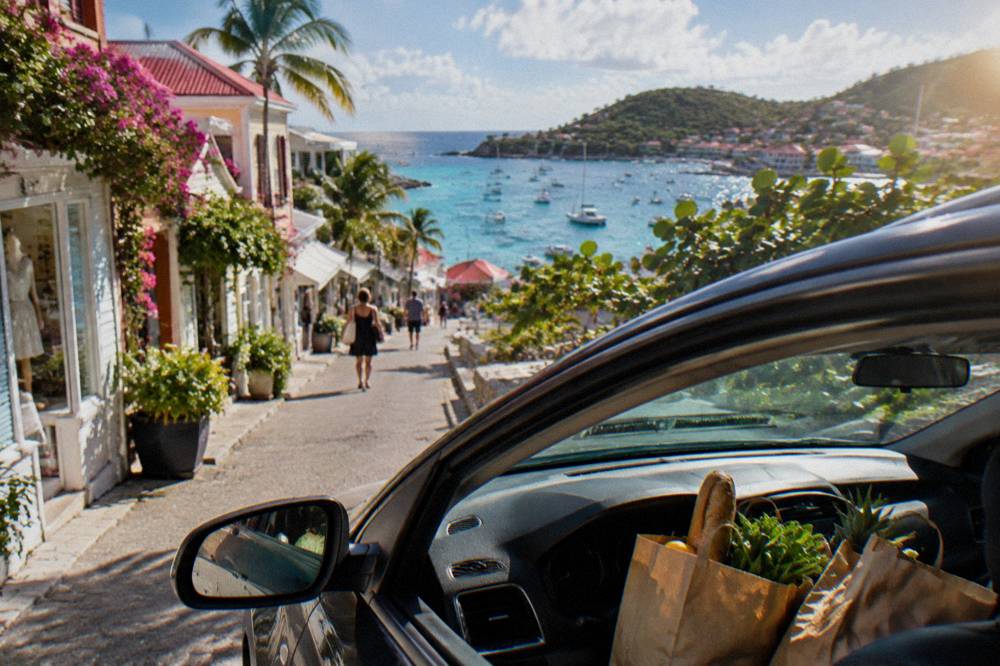
The taxi system is real and tariffed, with surcharges in the evenings and on Sundays. What matters is shape: taxis suit people-moving, not case-moving, and a week's groceries for a family in a Caribbean heat that averages a 30.2 C mean daily high across the year belongs in a boot, not a back seat. Local rental agencies commonly deliver vehicles to hotels and villas, which pairs neatly with a first-day shop: take delivery of the car, drive to Gustavia or Saint-Jean, load up once.
The car-free alternatives, in order of practicality: stay within walking distance of Saint-Jean or Gustavia and shop in small daily trips; ask the villa manager to provision before arrival, which most offer; or use a hotel base instead of a villa, which dissolves the question entirely and is covered in the boutique hotel guide. The St Barts car rental guide and the wider things to do in St Barts overview cover the mobility picture. For a short stay built around a boat day rather than cooking, the charters below handle their own provisioning and depart from St Martin or Sint Maarten.
Common Questions About Grocery Shopping In St Barts
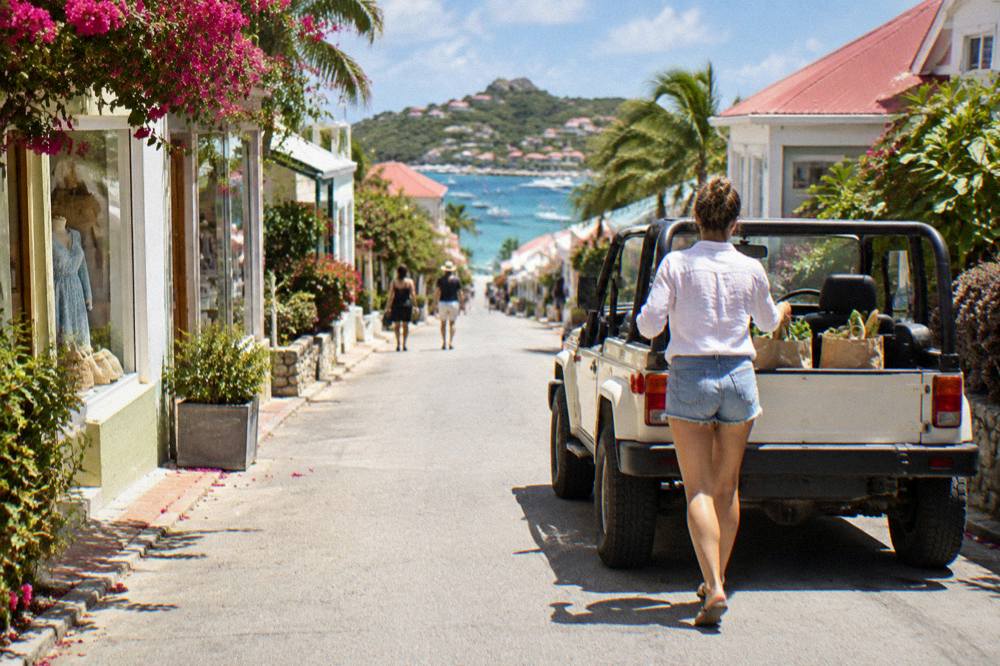
Grocery shopping in St Barts is a small-island exercise with French range: shops cluster in Gustavia and Saint-Jean, villas drive the provisioning habit, customs follow French overseas rules, and the arrival leg, a small plane or a ferry from St Martin, sets how much can be carried in. The questions below reuse the exact phrases travellers search, answered from the information on this page.
Are there supermarkets in St Barts?
Yes. The island's food shops are concentrated in and around Gustavia and Saint-Jean, with smaller convenience outlets in villages such as Lorient and Corossol and Grand Cul-de-Sac. The range is French-influenced through the territory's French supply channels, alongside regional produce. Individual store hours and ranges varied.
St barts groceries: should I bring food or buy it there?
Buy heavy and perishable basics on the island and bring only sealed, non-perishable favourites such as coffee, tea and specialty dietary items. The last leg into St Barts is either a small STOL turboprop with a modest hold or a foot-passenger ferry from St Martin, and both punish bulky luggage.
Can I bring food through customs into St Barts?
St Barts follows French overseas customs rules. Personal quantities of sealed, shelf-stable goods are the safe category; fresh meat, unpasteurized dairy and plant material are restricted under French rules, and cash above 10,000 euros equivalent must be declared. Check your own government's travel advice for entry, as entry rules vary by nationality.
Do villas in St Barts offer grocery provisioning?
Pre-arrival provisioning is a standard service in the island's villa market. The specialist managers, WIMCO, Sibarth and St Barth Properties among them, run concierge desks that can stock a villa before arrival, and platform-listed villas often arrange the same through the property contact. Rates vary by season and each property's own booking page shows them.
Can I shop for groceries without a car in St Barts?
It is workable if you stay near Gustavia or Saint-Jean and shop in small trips, or if the villa manager provisions before arrival. Taxis run on fixed route tariffs but suit people more than a week's haul, and the roads between villages are steep and narrow with a 50 km/h island-wide limit.
When is the best time of year to shop in St Barts?
The December-to-April high season offers the fullest shelves once hotels have reopened. Many businesses close each autumn and reopen in waves between mid-October and early November, overlapping the hurricane season that runs 1 June to 30 November with its peak mid-August to mid-October. October is the wettest month at 135.6 mm of rain in the Meteo-France normals, 1991-2020.
The pattern that holds across every question: on an island of about 21 square kilometres supplied almost entirely by sea and air, the grocery plan is the trip plan. Shop once, shop early in the stay, let the villa concierge do it if the budget allows, and keep the beach cooler for bread, cheese and fruit on whichever public beach the day chooses.