St Barts Travel Advisory
St Barthelemy, usually written St Barts, is a small French island in the Caribbean, and the practical warnings that matter there are specific ones: a short-runway airport with no jets, an autumn closure season, hurricane months, marine reserve rules and a two-operator ferry link from St Martin.
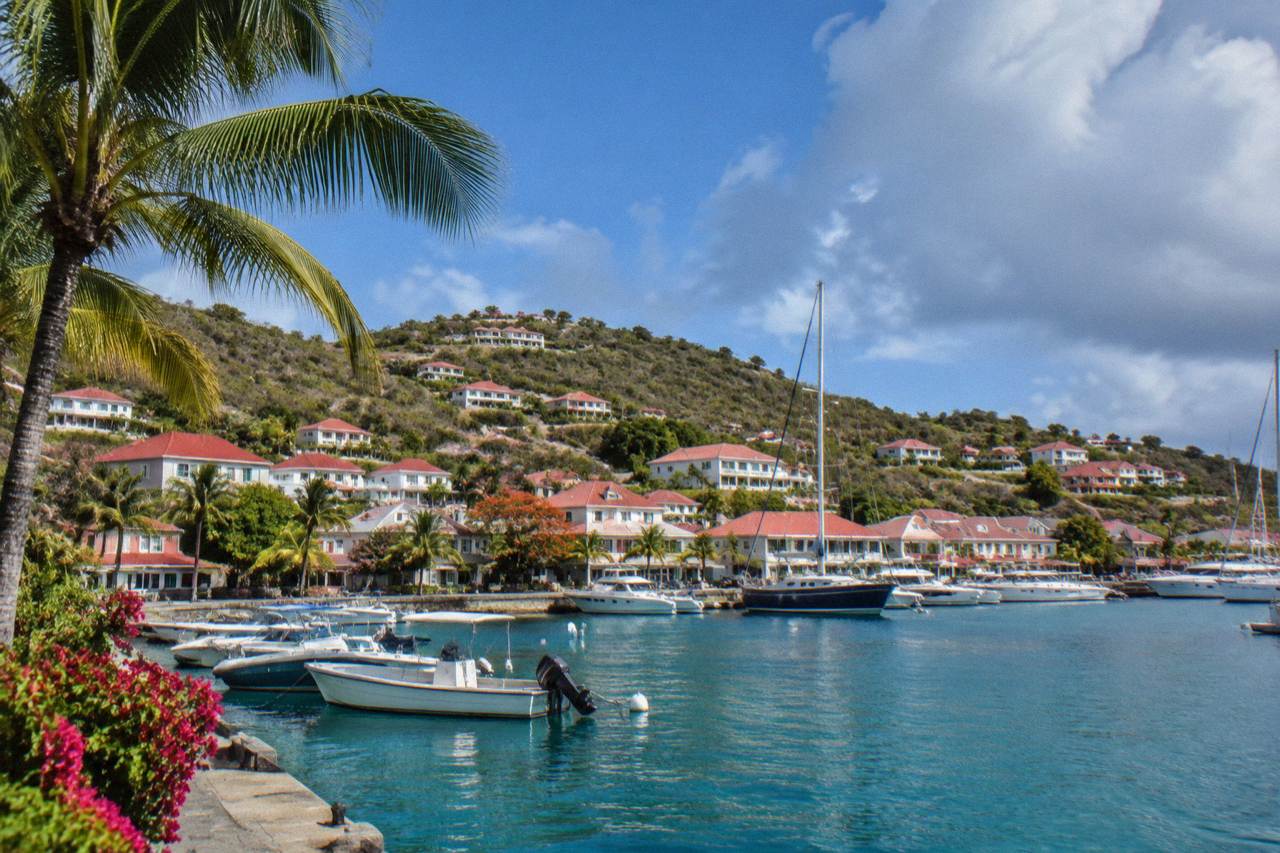
St Barts is a French overseas collectivity with a low crime rate, warm weather year round, hurricane season from 1 June to 30 November, and entry rules set by France outside the Schengen area; the main practical advisories concern the short STOL runway, rough ferry crossings, autumn hotel closures and marine reserve rules.
St Barthelemy, usually written St Barts, is a small French island in the Caribbean, an overseas collectivity of France since 2007 with its capital at Gustavia, and a place where the travel advisory that matters is practical rather than dramatic. There is no outbreak to dodge and no district to avoid. What actually shapes a trip here is a set of structural facts: a 646 m runway that accepts only small turboprops in daylight, a ferry link from St Martin that can be rough, an autumn window when many hotels and restaurants close, a hurricane season that runs from 1 June to 30 November, and a marine reserve whose rules apply to anyone who gets on or near the water. This page sets out what is known from official and operator sources, what the rules are, and what to check before booking anything.
For a broader orientation first, the site's St Barts attractions overview covers what there is to do, and how to get to St Barts covers the routing decisions. This advisory page stays on warnings, rules and timing.
Is St Barts Safe To Visit?
St Barts is generally considered a safe destination, with low recorded crime, a resident population of about 10,700 spread over about 21 square kilometres, standard French emergency numbers (15 for medical, 17 for police, 18 for fire, and 112 as the European emergency number), and no government advisories specific to the island beyond ordinary Caribbean precautions. The island is an overseas collectivity of France and is policed under French law.
The safety questions travellers actually ask about St Barts are rarely about crime. They are about the road network, the sea and the sun. Roads are narrow, winding and steep, driving is on the right, the speed limit is 50 km/h island-wide and 30 km/h in built-up areas such as Gustavia and St Jean, and French right-of-way rules apply at unsigned intersections. That combination is the reason the island's car rental guidance, covered in detail on the St Barts car rental page, leans toward small vehicles with high clearance.
The sea is the other recurring theme. The marine nature reserve covers five zones including Colombier Bay and Ile Fourchue, and the environment agency's regulatory-zones page lists a 5-knot speed limit inside its zones, a ban on jet skis, seabobs and towed sports, a ban on dogs on beaches and in the water within reserve areas, and a strict prohibition on touching, chasing or feeding protected species including sea turtles, corals and rays. Collecting coral, shells, sand or rocks is banned, and drones are prohibited in or near the reserve without authorization. Anyone planning a boat day, including the popular sail-and-snorkel trips out of St Martin described on the Colombier and Ile Fourchue sail page, is inside these rules the moment the boat anchors.
Sun and heat deserve ordinary tropical caution: the Meteo-France normals, 1991-2020, show mean daily highs never falling below 28.5 C, and sea temperature is warm year-round, about 26 C in winter to about 29 C from August to October by secondary estimates. There is no lifeguard claim to make for any beach; all beaches are public and generally undeveloped, so swimmers make their own judgment of conditions on the day.
| Advisory topic | Situation in St Barts | Where it is set |
|---|---|---|
| Crime level | Low; French policing and law apply | Collectivité of St Barthelemy |
| Emergency numbers | 15 medical, 17 police, 18 fire, 112 general | Standard French numbers |
| Road rules | Drive on the right, 50 km/h limit, 30 km/h in Gustavia and St Jean | French traffic rules |
| Marine reserve | 5-knot zones, no jet skis, no dogs on reserve beaches, no touching turtles | Environment agency regulatory-zones page |
| Beaches | All public; dogs banned island-wide by standing municipal order | Municipal order and environment agency |
| Health care | Basic local provision; serious cases are evacuated off-island | Reported by local health sources |
St Barts Travel Advisory: Key Figures
Practical limits and facts for visitors, from speed limits to the tourist tax
Stated in the St Barts travel advisory, citing French traffic rules and local agencies
Do You Need A Passport Or Visa For St Barts?
St Barts sits outside the Schengen area and applies French overseas entry rules: US, UK, Canadian and EU citizens do not need a visa for stays of up to 90 days, EU citizens may enter on a national ID card, US citizens need a passport book rather than a card, and every traveller should confirm current passport-validity wording against their own government's travel advice before flying, because stated validity requirements differ by nationality and by source.
The entry framework is an order of 18 April 2012, as amended, published on Légifrance. Because St Barts is not in Schengen, a Schengen visa alone does not authorize entry: where a visa is needed, it must be valid for this specific territory, mentioning the French departments or collectivities in the Americas. ETIAS and EES, the new European systems, do not govern entry here, and ETIAS was not operational, so there is no electronic authorization to apply for.
What the official advice pages say, in brief, is that US, UK, Canadian and EU citizens are visa-exempt for short tourist stays, that an onward or return ticket is required, and that EU citizens can use a national identity card. The exact passport-validity wording varies across government advice pages, and airlines can apply the strictest applicable rule at check-in, so the practical advisory is to check your own government's page for St Barthelemy and the French West Indies shortly before travel rather than rely on a summarized number of months. Full details, including the customs picture, are on the site's St Barts passport and entry guide.
A few practical wrinkles follow from the geography. Anyone routing through St Martin or Sint Maarten crosses from one immigration regime to another: the French side and the Dutch side are separate for entry purposes, even though the island is open between them. And anyone arriving by yacht clears in at Gustavia, a process covered on the Gustavia harbor page.
| Nationality | Document reported to be accepted | Visa for stays up to 90 days |
|---|---|---|
| EU citizens | National ID card or passport | Not required |
| US citizens | Passport book (passport card not accepted for air travel) | Not required |
| UK citizens | Passport | Not required |
| Canadian citizens | Passport | Not required |
| Other nationalities | Passport, and a visa valid for the territory where applicable | Apply via France-Visas with territorial validity |
One cost item that surprises people is the tourist tax, the taxe de séjour: 5 percent of the net nightly price of accommodation, excluding breakfast, collected by hotels and villa agencies year-round and remitted through the Collectivité's official platform. It appears on the accommodation bill rather than at the border. Exemptions exist for seasonal workers on contracts and for long-term rentals above six months.
Health documentation is unremarkable: no specific vaccination is required for St Barts by the French rules in force, though routine travel vaccinations are sensible anywhere in the Caribbean, and the standard advice about travel insurance, which the site covers separately in St Barts travel insurance, applies with extra force on an island whose serious medical cases are evacuated off-island.
When Is Hurricane Season In St Barts?
The Atlantic hurricane season runs from 1 June to 30 November each year, with the peak of activity from mid-August to mid-October and the climatological peak near 10 September, and St Barts shares this calendar with the rest of the Leeward Islands; the island was struck by Hurricane Irma, a Category 5 storm, in September 2017, the event that still shapes local preparation. The advisory is about scheduling and insurance, not forecasting.
The season overlaps the warmest and wettest part of the year. The Meteo-France normals, 1991-2020, show mean daily highs of 31.6 C in August and 31.7 C in September, with October the wettest month at 135.6 mm and the annual total at 891.3 mm. February is the month with the lowest rainfall in the normals at 38.4 mm. The full monthly picture is on the St Barts weather page.
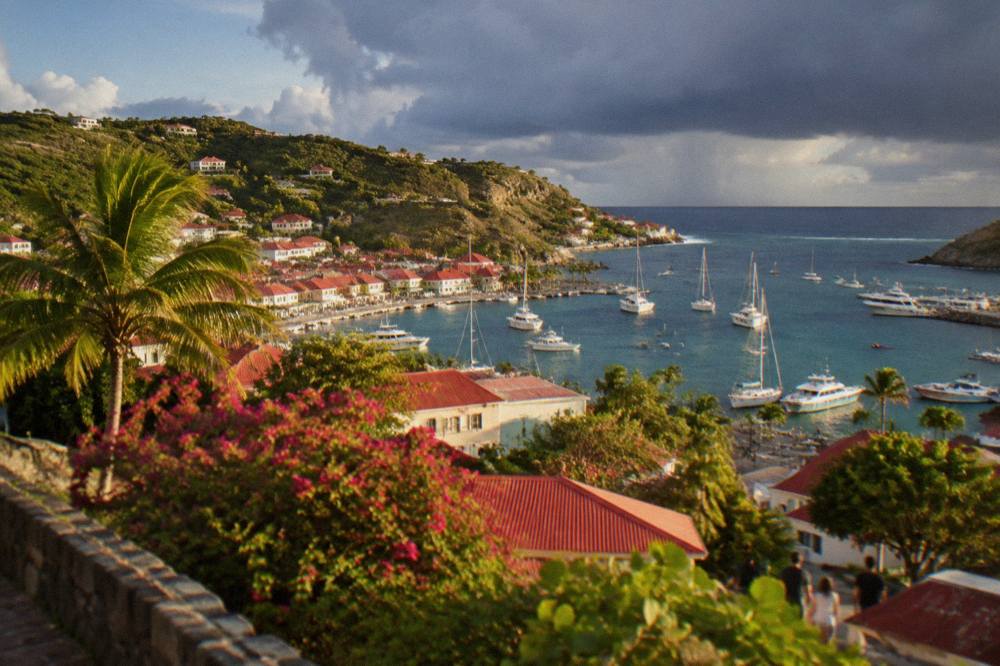
Irma, in September 2017, caused devastation across St Barts and St Martin, with severe damage to buildings and infrastructure. The island rebuilt, and the seasonal rhythm since has continued as before, but the anniversary matters practically: the autumn low season, from roughly late August through October, is when many hotels and restaurants close anyway, which limits what is open even in a quiet storm year.
The practical advisory for anyone travelling between June and November is threefold. First, watch the official sources: the US National Hurricane Center publishes the Atlantic tropical weather outlook, and Meteo-France issues vigilance warnings for the St Martin and St Barthelemy area through its Guadeloupe office. Second, book refundable rates where possible and carry travel insurance that names hurricane disruption, checking the wording on evacuation cover. Third, accept that ferry services and small-plane flights are weather-dependent by nature and can be cancelled at short notice; the crossing from St Martin can be rough even in ordinary conditions.
Anyone considering the boat options above should read them with the season in mind: the group sail, the private sailboat and the overnight catamaran all depart from St Martin or Sint Maarten, and all are subject to sea conditions on the day. Operators cancel for weather when conditions require it, and a flexible date is the single best protection in the storm months.
| Period | Season character | Advisory implication |
|---|---|---|
| December to April | High season; the driest part of the normals, February lowest at 38.4 mm | Book transport and rooms well ahead |
| May and June | Shoulder season | Quieter, with services still running |
| 1 June to 30 November | Atlantic hurricane season official window | Refundable bookings, insurance, outlook monitoring |
| Mid-August to mid-October | Peak of hurricane activity; many hotels closed | Limited dining and lodging; verify openings |
| November | Season winds down; Gourmet Festival 9 to 15 November 2026 | Reopening wave through the month |
Why Can Flights To St Barts Be Cancelled Or Rescheduled?
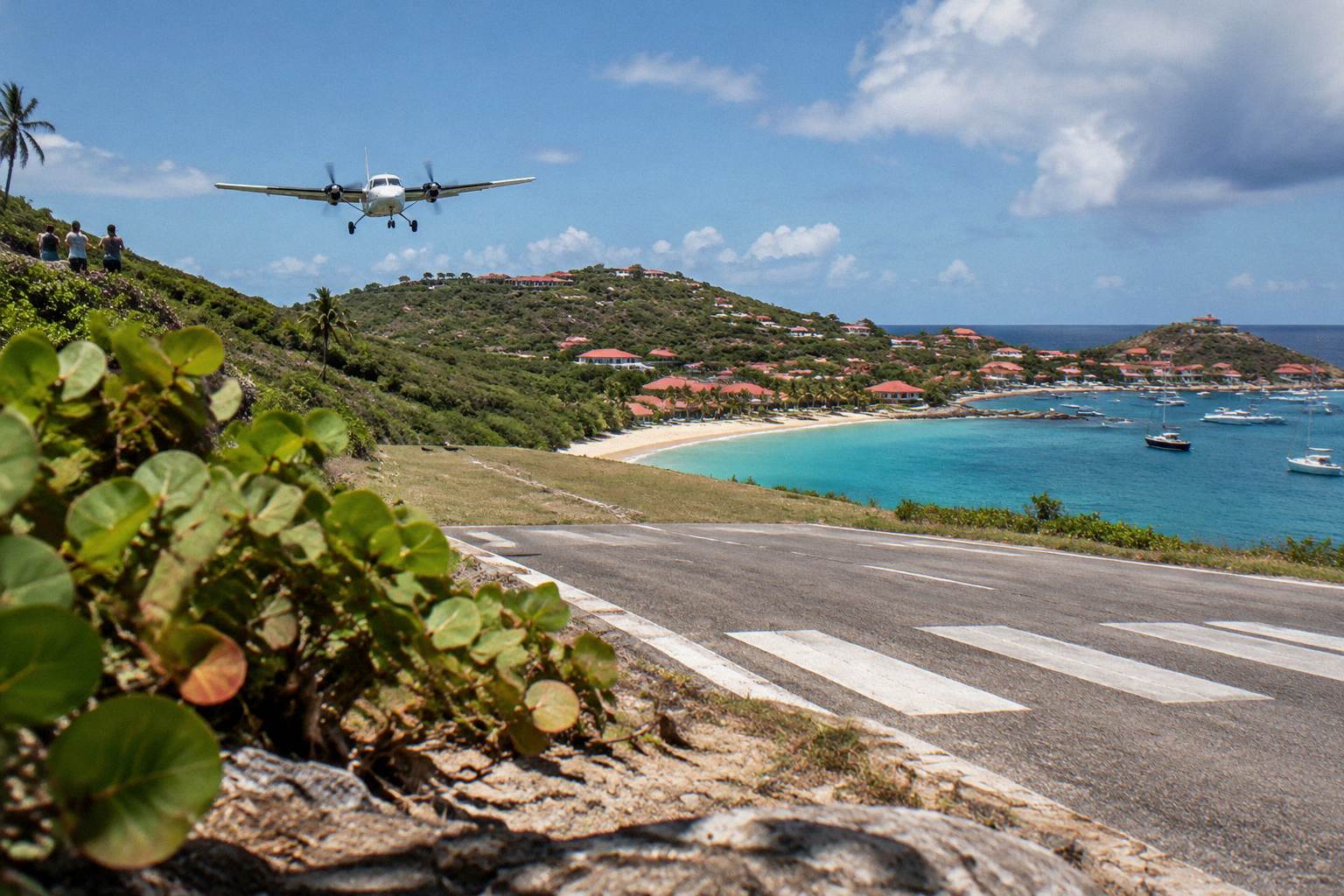
The airport, Gustaf III (also called Remy de Haenen, code SBH), has a single 646 m runway, accepts only small STOL turboprops, operates in daylight and visual conditions only, and closes shortly after sunset, which means no jets land on the island, weather minimums are stricter than at ordinary airports, and diversions or cancellations are a structural feature of the schedule rather than a sign of trouble. Anyone flying into SBH connects through St Martin, San Juan, Guadeloupe or Antigua first.
The operational facts come from the airport's published aeronautical data. The runway is 646 m, roughly 2,119 ft. Only STOL-rated aircraft such as the Twin Otter, the Cessna 208B Grand Caravan and the Pilatus PC-12 are permitted, and pilots need specific qualification for the approach, which descends over terrain. There are no runway lights, so operations end for the day around a quarter of an hour after sunset and begin in the morning. Wind, cloud or visibility outside visual limits grounds the schedule.
The booking advisory that follows is simple: build slack into any same-day connection, especially outbound. If a flight from St Martin to St Barts cancels for weather, the fallback is the ferry, and vice versa, which is why many travellers book the small plane one way and the boat the other. The details of both are on flights to St Barts and the St Barts ferry operators and schedule page.
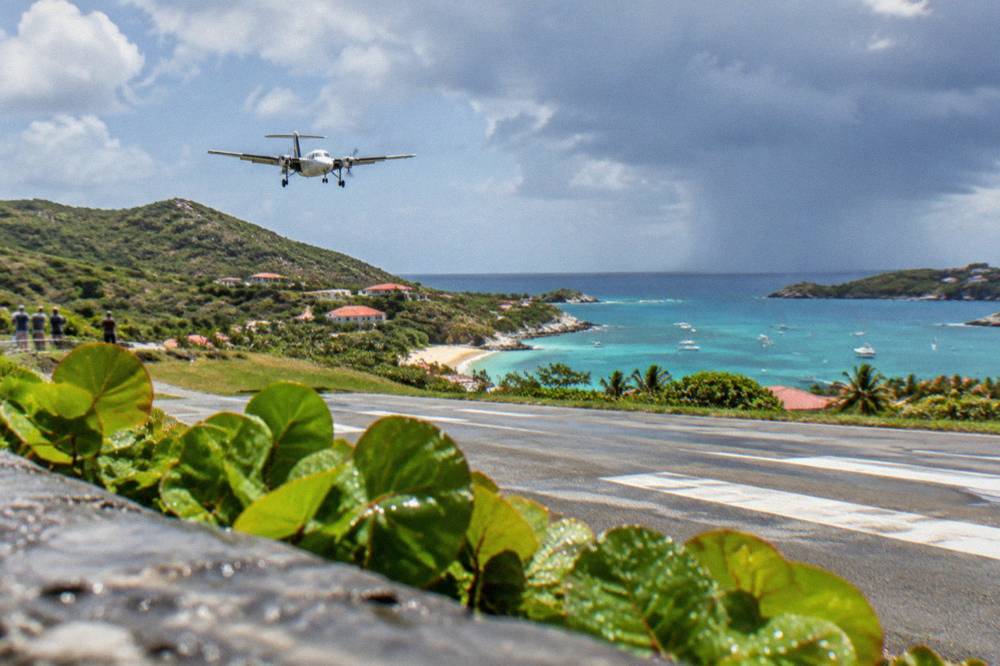
Two carriers divide the feeder routes. St Barth Commuter flies from St Martin (SXM), Grand Case on the French side (SFG) and Pointe-a-Pitre in Guadeloupe (PTP); Tradewind flies from San Juan (SJU) and Antigua (ANU). Winair also serves the island from St Martin. No flight time in minutes should be relied on from memory; the honest description is that the hop from St Martin is short and the San Juan hop is the longest common scheduled leg. The St Barts airport guide and the St Barts airport code page cover the terminal side, and landing at St Barts airport covers the approach itself.
Is The Ferry From St Martin To St Barts Reliable?
Two operators run the scheduled ferry link: Great Bay Express from Bobby's Marina in Philipsburg on the Dutch side, with a crossing of about 45 minutes, and Voyager from the Marigot ferry terminal on the French side, with a crossing of about 50 to 60 minutes; both require a passport, both ask passengers to check in well ahead of departure, both run roughly two to three sailings a day in each direction with seasonal variation, and both are subject to weather cancellation, because the crossing can be rough.
The ferry facts worth knowing before booking are on the operators' own pages. Great Bay Express gives a check-in window that closes before departure and lists the crossing at about 45 minutes; the Port of Saint-Martin's page for the Marigot terminal confirms Voyager's service and its roughly 50 to 60 minute duration. Neither fare should be quoted from memory: fares are seasonal and are shown on the operators' booking pages. A former third service from Oyster Pond has ceased, so the two terminals above are the current options.
The advisory part is the sea itself. The channel between St Martin and St Barts is open water, and seasickness is common enough that the site keeps a dedicated page on it. Anyone prone to motion sickness should take remedies before boarding, sit toward the centre of the vessel, and consider the small plane as an alternative when the forecast is poor. The routing decision between SXM airport and the ferry terminals is laid out on the SXM airport to St Barts ferry page.
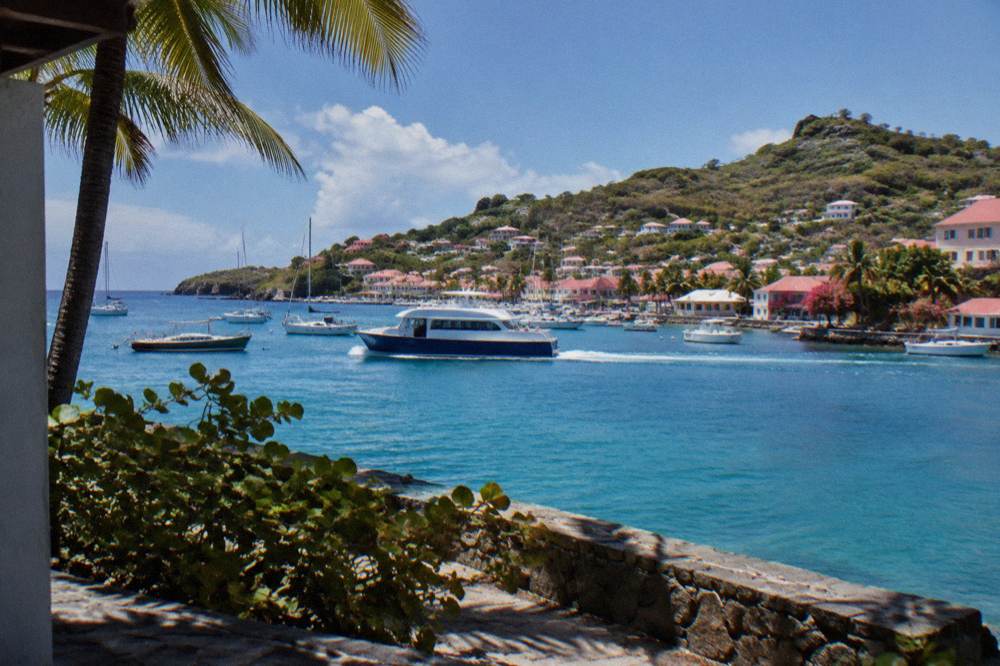
Passports matter even for a day trip: the ferry is an international crossing between two immigration regimes, so the same documents as a flight apply. Luggage space is limited on small fast ferries, and the site's St Barts luggage guide addresses packing for both the ferry and the tiny aircraft.
| Route | Operator | Departure point | Crossing (operator or port figure) |
|---|---|---|---|
| Sint Maarten to Gustavia | Great Bay Express | Bobby's Marina, Philipsburg | About 45 minutes |
| St Martin to Gustavia | Voyager | Marigot ferry terminal | About 50 to 60 minutes |
What Health And Practical Precautions Apply On The Island?
St Barts uses French emergency numbers (15, 17, 18 and 112), has basic local medical provision with off-island evacuation for serious cases, runs on the euro with US dollars sometimes accepted but euro cash or cards preferred, uses plug types C and E, sits at UTC minus 4 with no daylight saving, and presents the ordinary tropical cautions: sun exposure, hydration and mosquitoes, none of which is specific to this island but all of which matter in a climate whose mean daily high never falls below 28.5 C.
The medical picture is the one to plan around. Pharmacies and a small hospital structure exist on the island, but anything serious is evacuated, usually to St Martin, Guadeloupe or further. That is the entire argument for travel insurance with medical evacuation cover, and it is stronger here than on a mainland destination. Visitors should carry copies of prescriptions and know that French is the official language of administration, though English is widely spoken.
Everyday practicalities are covered in the site's dedicated guides and summarized here. The currency is the euro; cards are widely taken and ATMs exist, but small cash amounts in euros are useful. Electricity is 230 V with plug types C and E, so North American visitors need adapters; the details, including what the sockets look like, are on the St Barts electricity page. The time zone is Atlantic Standard Time, UTC minus 4, with no daylight saving, which matters for flight and ferry check-in times.
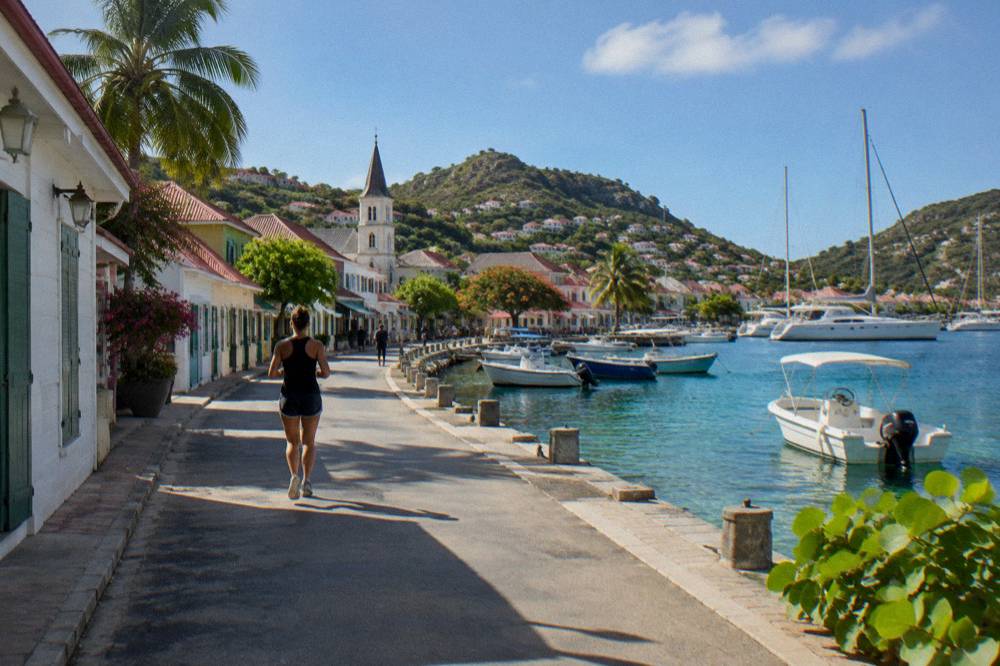
Mosquitoes exist, as everywhere in the Caribbean, so ordinary repellent use is sensible, particularly around dawn and dusk. Tap water is produced locally and the general guidance is to treat it as drinkable in established accommodation and to buy bottled water elsewhere if preferred; the site's page on tap water addresses this directly. Sun protection is the most commonly underestimated risk: the latitude is tropical, the sea reflects, and a first afternoon without sunscreen is a predictable mistake.
| Practical topic | The rule or fact | Where to read more |
|---|---|---|
| Emergency numbers | 15 medical, 17 police, 18 fire, 112 general | French standard, applies in the territory |
| Currency | Euro; cards widely accepted | St Barts currency guide |
| Electricity | Plug types C and E, 230 V | St Barts electricity guide |
| Time zone | UTC minus 4, no daylight saving | St Barts time zone guide |
| Water | Local supply; bottled water widely available | Tap water guide |
| Medical | Local care basic; serious cases evacuated off-island | Travel insurance guide |
Are There Any Local Laws Visitors Should Know About?
Yes, and the ones with teeth are environmental: dogs are banned from all beaches island-wide under a standing municipal order, the marine reserve enforces a 5-knot speed limit, bans jet skis and motorized water toys, prohibits touching or feeding protected species including sea turtles, bans collecting coral, shells and sand, and restricts drones in and near reserve zones, with fines possible for violations. Beaches are all public, so access itself is never the issue; behaviour on and around them is.
The environment agency, the Agence Territoriale de l'Environnement, publishes the regulatory-zones page that lists these rules, and its beach page explains the island-wide dog ban: it exists to protect nesting birds and turtles and to keep sand clean, and signs stand at beach entrances. The dog rule is the one visiting families most often miss, because it applies on every beach, not only inside the reserve, and even to leashed dogs.
The reserve rules matter to anyone on the water. Green and hawksbill turtles are common around St Barts, and the rule is absolute: no touching, chasing or feeding, and nests or strandings should be reported to the environment agency rather than handled. Anchoring is restricted in Colombier and Ile Fourchue bays, where ecological mooring buoys are preferred and vessels over 25 m are excluded. Scuba and fishing are banned in the enhanced protection zones. The site's St Barts nature reserve page maps the zones.
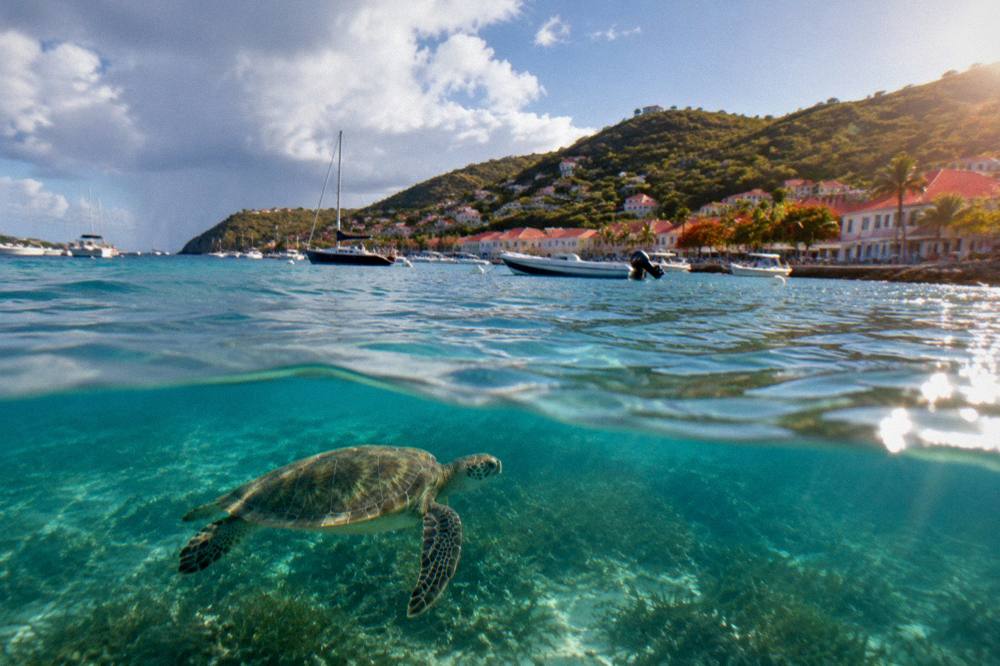
Beyond the environment, ordinary French law applies. That means, among other things, that identification should be carried when travelling between islands, that drug laws are French and strict, and that topless sunbathing is accepted on many beaches as a matter of French practice while full nudity is not legal, though it is discreetly tolerated by tradition at the far ends of some beaches. The site's page on that subject covers the etiquette in detail.
Driving rules are French too: drive on the right, give way to the right at unsigned intersections where the rule applies, and respect the 50 km/h and 30 km/h limits. Seatbelts are mandatory. There is one roundabout on the island, near the airport, and almost no traffic lights, so the flow depends on local convention more than signals. Parking in Gustavia uses a mix of street space, public lots and timed blue-zone discs, and is tight in the high season.
What Should You Check Before Booking A Trip To St Barts?
Before booking, check four things: that your passport meets the validity wording your own government gives for St Barthelemy, that your dates avoid or consciously accept the hurricane window and the autumn closure period when many hotels and restaurants shut, that your route through St Martin has enough connection slack for a weather cancellation on the last leg, and that any boat day you book departs from St Martin or Sint Maarten, since every tour listed here leaves from there, not from St Barts itself.
The closure pattern deserves emphasis because it is the most common September disappointment. Many hotels and their restaurants close for the autumn, generally from late August, and reopen in waves between mid-October and early November for the new season; a smaller set of local places stays open year-round, and villas remain an option through the low season. Booking an October stay without confirming the property is open is a real error. The reopening pattern, not individual dated notices, is the reliable fact, and the site's St Barts hotels guide works through it.
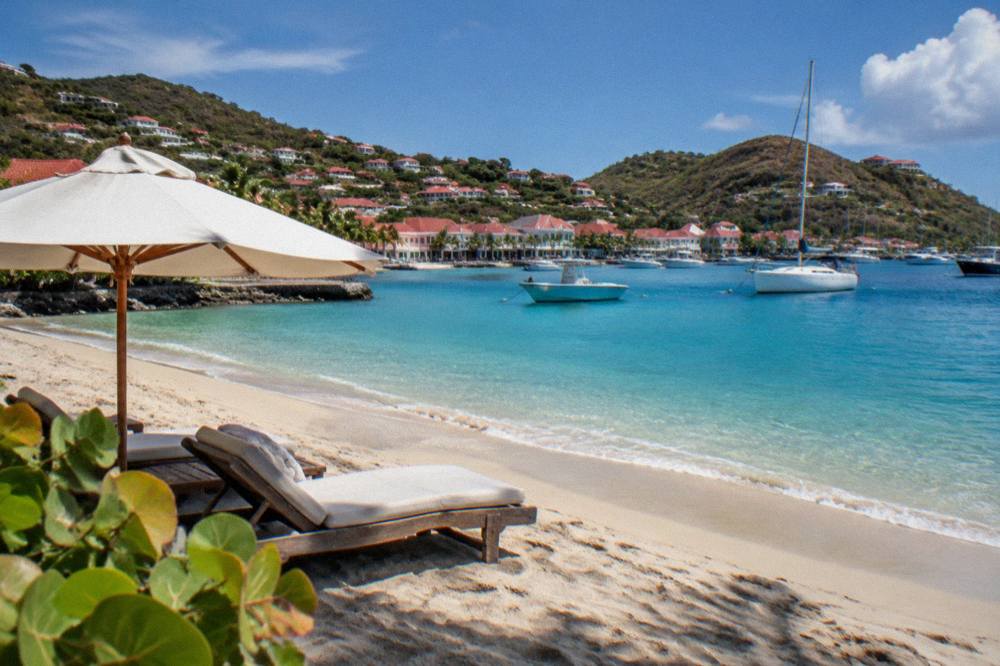
Transport booking follows the same logic. Reserve the small plane and the ferry with refundable or changeable terms where they exist, because both cancel for weather. If arriving on a cruise ship, note that ships tender to Gustavia and that tender operations themselves can be affected by swell, a subject the St Barts cruise port page covers. And if the trip is built around an event, book around the confirmed dates only: the Music Festival runs 8 to 18 January 2027 and the Gourmet Festival runs 9 to 15 November 2026, while several spring events, including Les Voiles and the Film Festival, had unconfirmed 2027 dates.
For the boat day itself, the decision is between a per-person group sail, which runs only from 12 May to 31 August 2027 on its listing, and private charters priced per group. Both kinds leave from St Martin or Sint Maarten. A related read is the site's St Barts travel packages guide, which assembles flights, lodging and boat days into whole itineraries.
A private charter, like the one above, removes the fixed-departure constraint of a group trip and gives a family or a group of friends the whole boat, at a per-group price shown on the live listing. It still leaves from the St Martin side, and it is still weather-dependent, so the same slack-in-the-schedule advice applies.
What Are The Most Common Mistakes Visitors Make In St Barts?
The recurring mistakes are scheduling ones: booking September or early October without checking whether the hotel is open, planning a tight connection into the small-plane hop and losing a day to weather, expecting a smooth ferry crossing, bringing a dog to a beach where dogs are banned island-wide, touching or chasing sea turtles in the reserve, and assuming a tour departs from St Barts when every bookable option listed here leaves from St Martin or Sint Maarten. Each of these is avoidable with one check before booking.
The car question is the other classic. A car, or a Mini Moke, genuinely helps on an island whose roads wind between beaches and whose taxis are limited, and the counters at SBH include Avis, Budget and Hertz alongside local agencies. Book ahead for the December to April window. The counter-argument, that a stay based entirely in Gustavia or St Jean can work on foot and taxis, is true for short stays; the site's do you need a car in St Barts discussion weighs both sides.
Money mistakes round out the list. The tourist tax of 5 percent of the nightly room price lands on the accommodation bill, tips are discretionary in the French manner rather than an American percentage, and card acceptance is broad but not universal at small local spots, so some euro cash is wise. There is no separate departure tax to worry about at the ferry or airport in ordinary circumstances. The site's pages on currency, tipping and the tourist tax cover all three.
Finally, the biggest picture mistake is treating St Barts as a place to improvise. It is small, about 21 square kilometres, but its capacity is thin: a short-runway airport, two ferry operators, a limited hotel stock that closes seasonally, and a marine reserve whose rules are enforced. Travellers who book the structure, flights, ferry, room, car and one boat day, before leaving home, and who leave one flexible day for weather, get the island at its best. Those who arrive with nothing reserved in the high season often spend the visit rearranging plans, and St Barthelemy Travel exists precisely to prevent that outcome.
Common Questions About St Barts Travel Advisory
Is St Barts safe to visit?
St Barts is generally considered safe, with low crime and French policing. The practical risks are environmental: narrow steep roads, strong sun, sea conditions on the ferry crossing and the marine reserve rules. Standard care with valuables applies as anywhere.
Do I need a visa for St Barts?
US, UK, Canadian and EU citizens do not need a visa for stays of up to 90 days. St Barts is outside the Schengen area, so ETIAS and EES do not govern entry, and a Schengen visa alone does not authorize entry where a visa is required. Check your own government's travel advice before flying.
When is hurricane season in St Barts?
The Atlantic hurricane season runs from 1 June to 30 November, with the peak from mid-August to mid-October. Hurricane Irma struck in September 2017. No forecast can predict a storm for a specific date, so the advisory is to monitor the National Hurricane Center and Meteo-France and to book refundable terms in those months.
Why do flights to St Barts get cancelled?
Gustaf III airport has a 646 m runway with no lights and operates only in daylight and visual conditions with small STOL turboprops. Wind, cloud or low visibility grounds the schedule. Build connection slack and keep the ferry as a fallback.
Can the ferry to St Barts be rough?
Yes. The crossing from Philipsburg takes about 45 minutes and from Marigot about 50 to 60 minutes, and both operators cancel for weather. The sea can be rough even outside storm season, so motion-sickness remedies are a reasonable precaution.
Are dogs allowed on beaches in St Barts?
No. A standing municipal order bans dogs from all beaches island-wide, even on a leash, and the marine reserve adds its own enforcement inside protected zones. Violations are subject to fines.