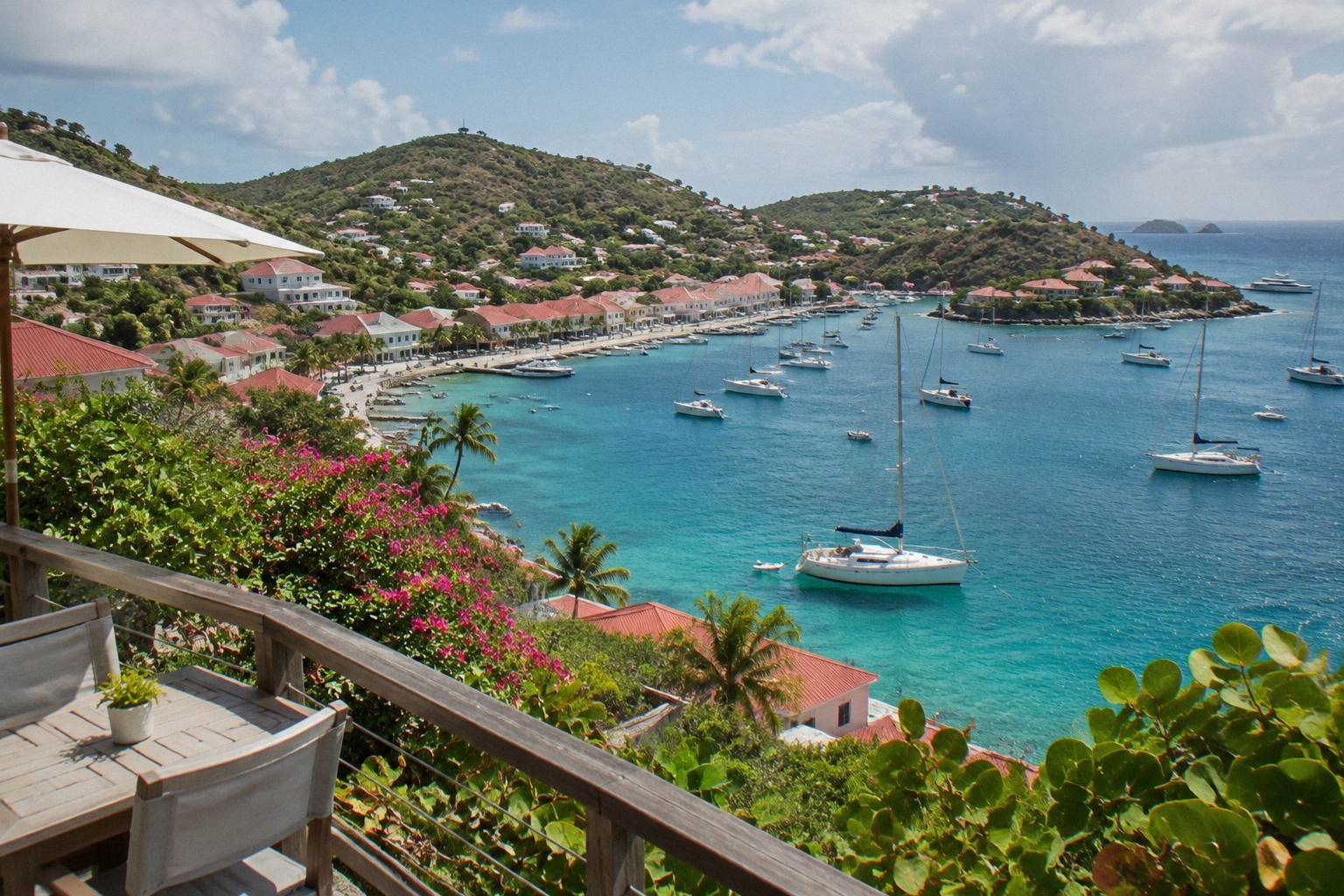
Anse Des Cayes Area Guide
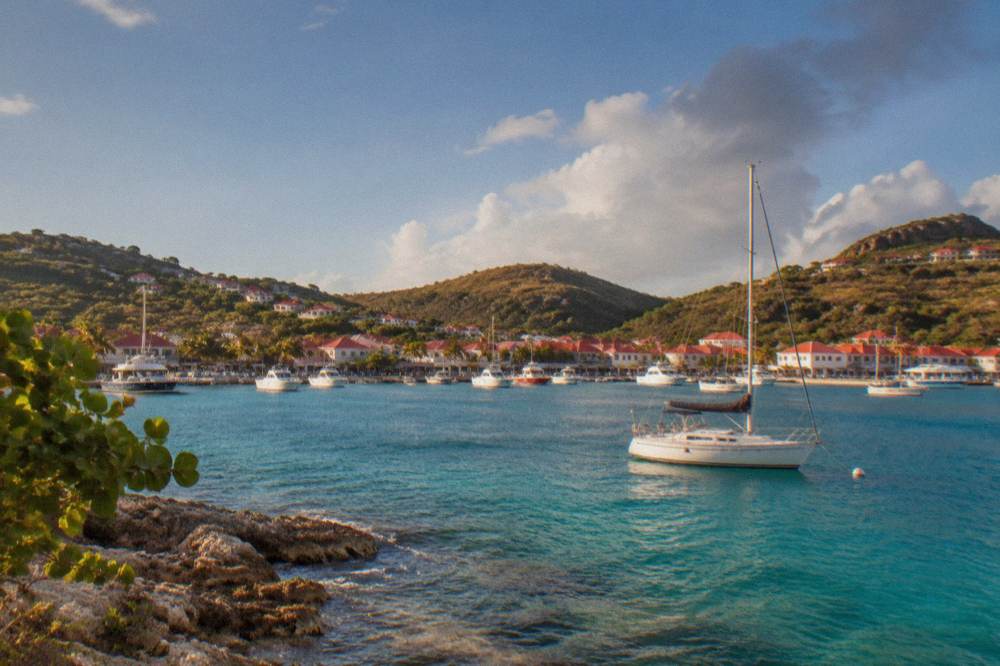
Anse des Cayes sits on St Barts' northwestern coast between Gustavia and Saint-Jean, a residential stretch of hillside villas above a public beach. This guide covers the area's geography, accommodation logic, transport, climate and the boat trips that visit the island from St Martin.
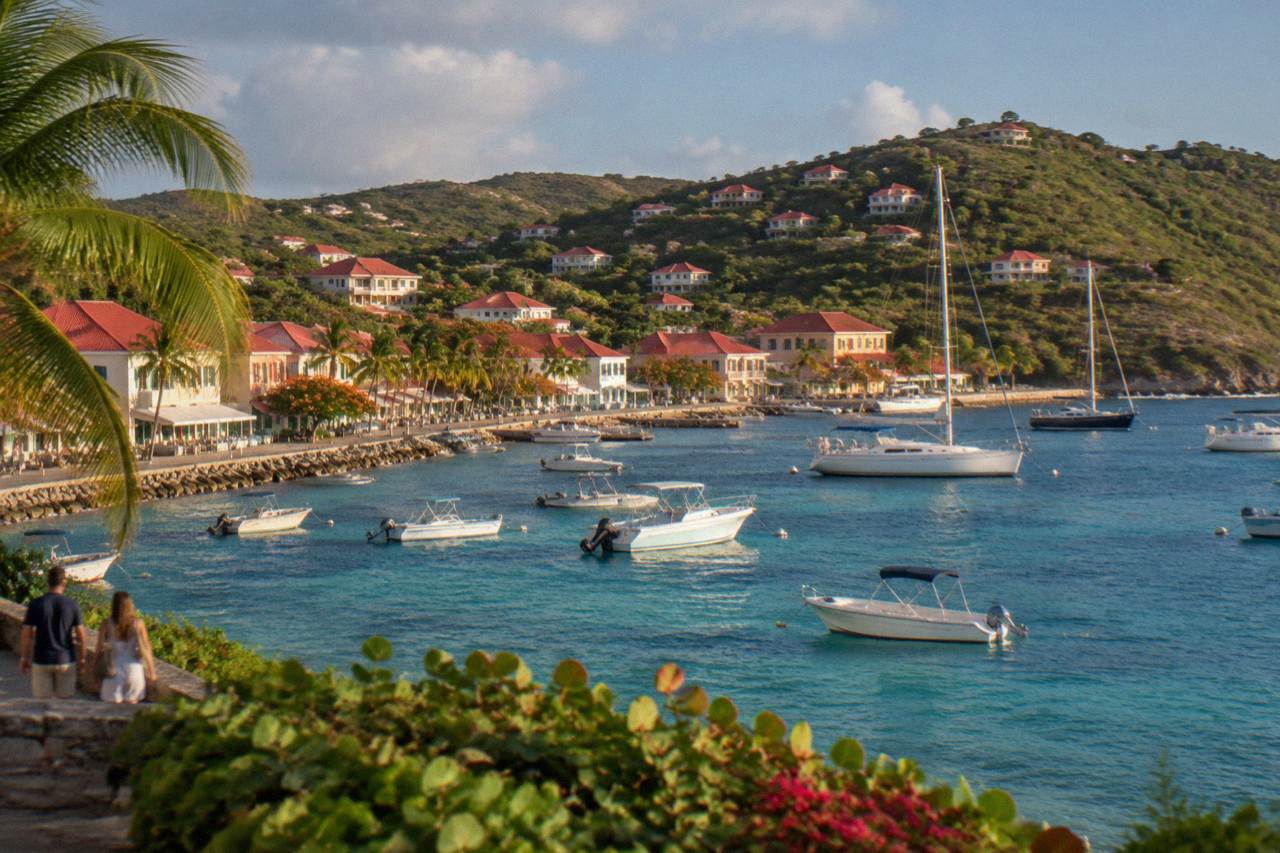
Anse des Cayes is a residential area on the northwestern coast of St Barts, the French Caribbean island, with a public beach of the same name. It sits inland of the hills between Gustavia and Saint-Jean, and it is best suited to travellers who rent a villa or car and want a quieter base than the harbour town.
The area takes its name from its bay, Anse des Cayes, one of the island's public beaches, and it is known mostly for villas rather than hotels. The island itself is small: about 21 square kilometres, roughly 10,700 residents, an overseas collectivity of France since 2007, with the euro as currency, French as the official language and English widely spoken. For orientation, see the St Barts neighborhoods map, and for the wider picture start with things to do in St Barts.
Where Is The Anse Des Cayes Area In St Barts?
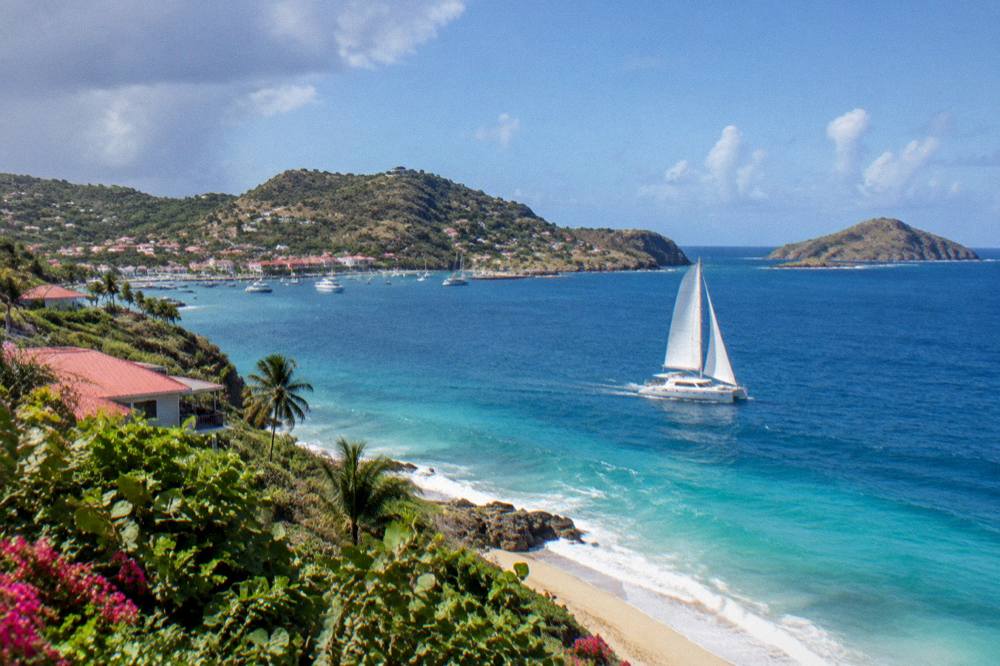
Anse des Cayes occupies a stretch of the northwestern coast of St Barts, the French Caribbean island, between Gustavia to the south and Saint-Jean to the northeast, with the beach of the same name at the foot of a residential hillside. The area looks out over the Caribbean Sea toward the neighboring island of St Martin on the horizon, and the whole island spans only about 21 square kilometres.
That position matters for two practical reasons. First, Anse des Cayes sits close to the middle of the island's populated western arc, which puts Gustavia's shops and the airport at Saint-Jean both within a short drive on the island's narrow, steep roads. Second, the area is residential in character: the villa market dominates, and the large specialist managers on the island, WIMCO, Sibarth and St Barth Properties, are the main rental channels, each with a large villa portfolio on the island.
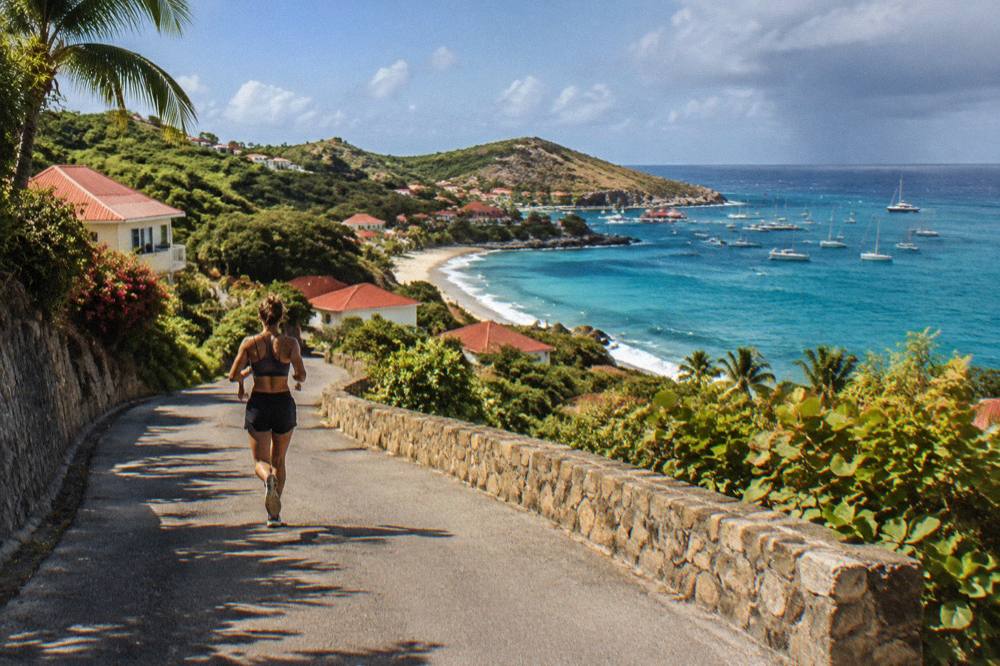
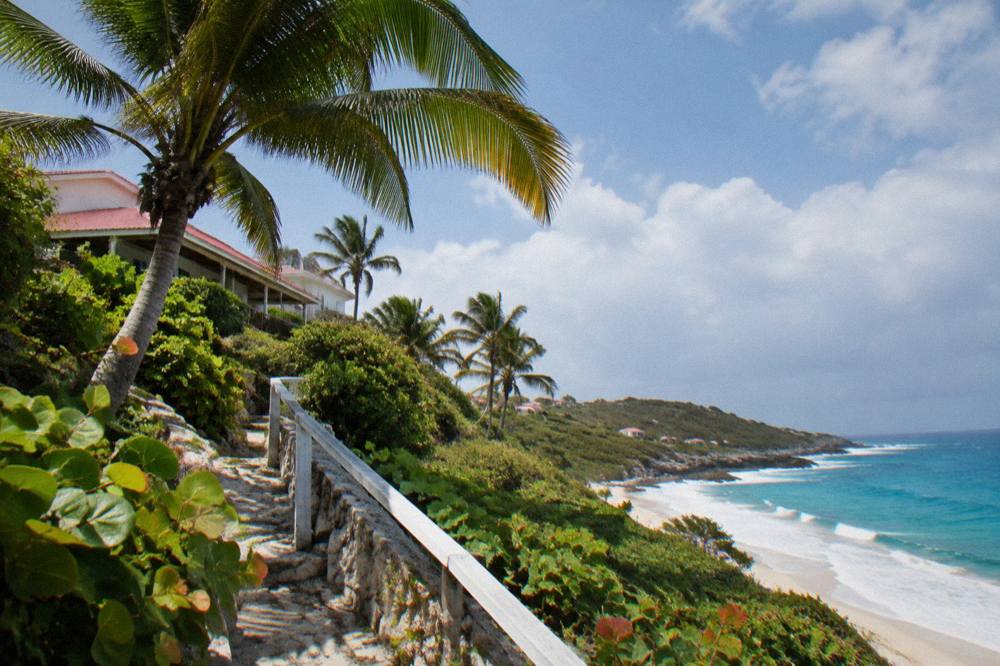
The hillside setting also shapes what a stay here feels like. The roads through the area climb and dip with the terrain, houses sit in terraces above the bay, and the outlook from the upper streets runs out over open water toward St Martin on clear days. That combination of a residential slope, a public beach at the bottom and a central position on the island's western arc is the area's whole identity, and it is the reason travellers who pick it tend to be villa renters planning a car and a quiet base rather than a hotel crowd. Neighboring areas tell a different story: the Corossol area guide covers the fishing-village stretch to the south, and the Pointe Milou area guide covers the sunset-facing cliffs to the east.
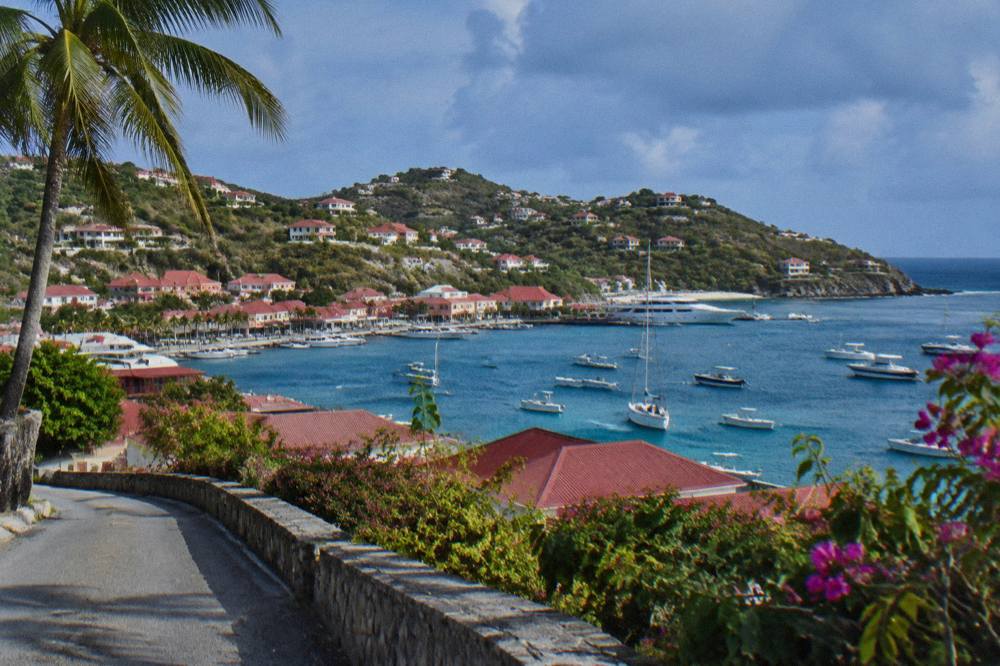
For context, the island's key facts, drawn from official French and tourism sources, look like this:
| Fact | Figure | Basis |
|---|---|---|
| Status | French overseas collectivity since 2007 | French government and Collectivité |
| Capital | Gustavia | Collectivité |
| Land area | About 21 square kilometres | French government territory page |
| Population | About 10,700 | INSEE census |
| Currency | Euro | Tourism committee |
| Languages | French official, English widely spoken | Tourism committee |
| Airport | Gustaf III (SBH), 646 m runway, turboprops only | Airport technical data |
What Is The Beach At Anse Des Cayes Like?
Anse des Cayes is one of St Barts' public beaches, free to access like every beach on the island, sitting in its own bay on the northwestern coast. The tourism committee's beach list names it alongside Saint-Jean, Gouverneur, Saline, Shell Beach, Flamands, Colombier, Grand Cul-de-Sac, Lorient, Toiny, Marigot and Corossol, and all of them are public by rule. Beyond its name, its map position and its public status, this guide omits any details on sand, waves or facilities.
That restraint is deliberate. On an island where every shoreline is public, the differences between beaches come down to where they sit and how you reach them, and those two facts are what a planner can rely on. Anse des Cayes' bay sits below a residential hillside, which shapes its character more than any descriptive label would. Neighboring beaches are covered in their own guides: Shell Beach by Gustavia, Saline on the south coast and Flamands on the northern shore.
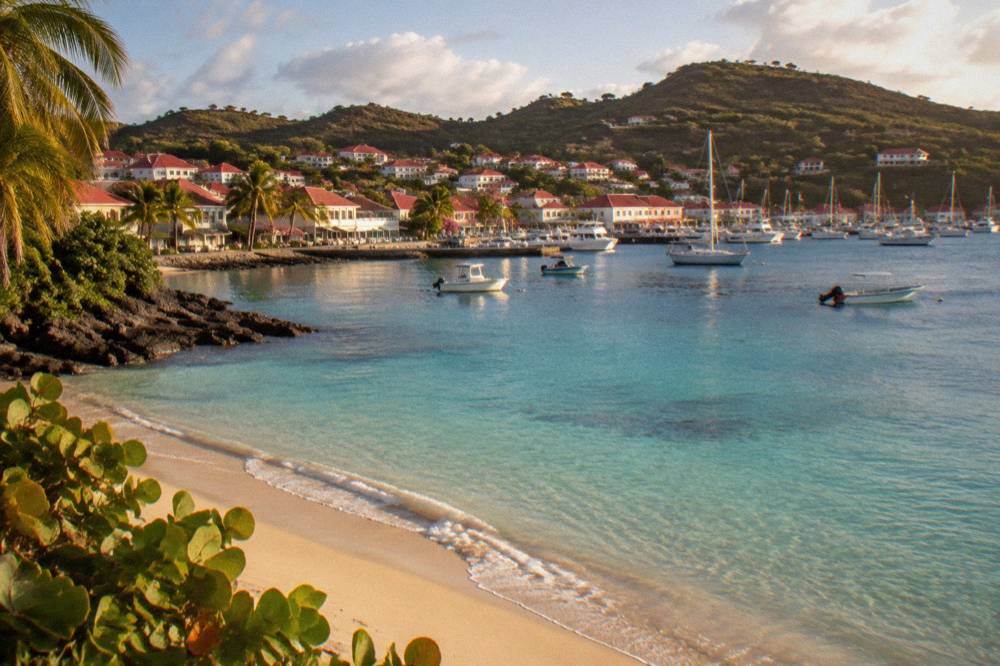
The named public beaches, and where each sits on the island's map, are:
| Beach | Position on the island |
|---|---|
| Anse des Cayes | Northwestern coast, between Gustavia and Saint-Jean |
| Saint-Jean | Mid-north coast, by the airport |
| Flamands | Northern coast |
| Colombier | Northwestern tip, reached by boat or by a walk |
| Shell Beach (Grand Galet) | West coast, by Gustavia |
| Gouverneur | South coast |
| Saline | South coast |
| Grand Cul-de-Sac | Northeast coast |
| Lorient | North coast, east of Saint-Jean |
| Toiny | Southeast coast |
| Marigot | North coast |
| Corossol | West coast, north of Gustavia |
One set of rules does apply in the water around the island. The marine nature reserve, run by the territorial environment agency, covers zones including Colombier Bay and Ile Fourchue, and its regulatory page lists firm limits. Sea turtles, green and hawksbill among them, are strictly protected, and the agency asks anyone who spots a nest to report it. The rules matter to swimmers and boaters alike, since the reserve's zones sit within easy reach of the island's beaches.
| Rule in the marine reserve zones | Detail |
|---|---|
| Speed limit | 5 knots maximum on the water in protected zones |
| Jet skis and similar | Banned, along with seabobs, electric surfboards and towed sports |
| Wildlife | No touching, chasing or feeding protected species, including turtles |
| Dogs | Not allowed on beaches or in the water in reserve areas |
| Dive sites | 23 sites listed within the reserve |
| Vessels in Colombier and Fourchue bays | None over 25 m, ecological mooring buoys preferred |
Boats are one of the best ways to see those zones, and the island's bookable day trips all depart from St Martin or Sint Maarten across the water. Three of the strongest options:
Where To Stay In The Anse Des Cayes Area?
Anse des Cayes is primarily a villa area rather than a hotel district: the accommodation stock is private hillside houses booked through the island's specialist villa managers, WIMCO, Sibarth and St Barth Properties, rather than the named hotel properties clustered in Gustavia, Saint-Jean, Flamands and Grand Cul-de-Sac. Villas stay available year-round, including the autumn weeks when many hotels close for the low season, which is a real advantage of the area.
The seasonal pattern is worth understanding before booking anything. Many hotels and restaurants on the island close each year in late August and reopen in waves between mid-October and early November; this is a recurring pattern, not a one-off, and dates shift a little every year. Villas generally keep operating through that window, so a stay in Anse des Cayes in September or October is more likely to run as planned than one tied to a hotel calendar. Rates for both hotels and villas vary by season, and the property or manager's own booking page shows current figures.
A villa base also changes the rhythm of a trip. With a kitchen and a rental car, the day revolves around the island's public beaches, a provisioning stop at one of the island's grocery shops, and evenings on the terrace rather than in a hotel dining room. The trade-off is self-sufficiency: there is no concierge desk in Anse des Cayes, and the island's restaurant tables, from Gustavia's harbour front to the beach clubs of Saint-Jean and Flamands, are a drive rather than a stroll. The Gustavia restaurants guide maps the dining options in the capital.
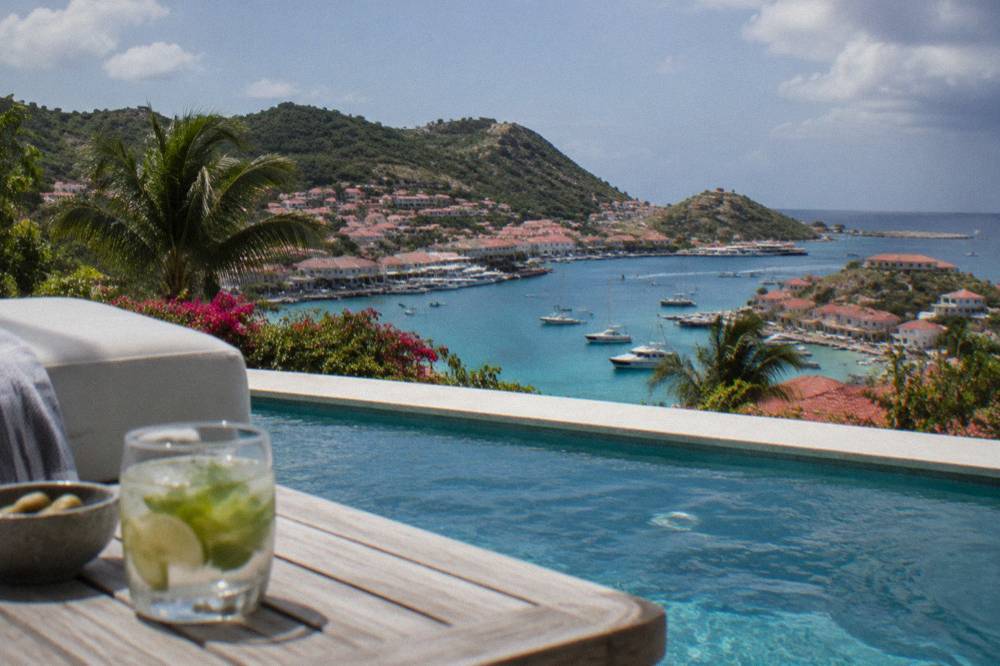
Choosing between areas comes down to what kind of base suits the trip. The St Jean area guide covers the island's most central neighbourhood, the Flamands area guide covers the northern hotel coast, and the Lorient area guide covers a quieter family-oriented stretch. The full comparison, including how Anse des Cayes stacks against the rest, is in the best area to stay in St Barts guide, and the attraction page for Anse des Cayes covers the beach itself.
If the trip is built around a boat day, a private charter can be reserved ahead of the villa itself, since dates sell through the season.
How Do You Get To And Around The Anse Des Cayes Area?
Anse des Cayes is reached the way all of St Barts is reached: fly into a Caribbean gateway, usually St Martin (SXM), then take a small turboprop to Gustaf III Airport (SBH) or a ferry from Philipsburg or Marigot across to Gustavia. From there the area is a drive on the island's narrow, steep, right-hand-drive roads, where the speed limit is 50 km/h island-wide and 30 km/h in Gustavia and Saint-Jean, and a rental car is the practical answer.
The airport shapes every arrival. Gustaf III's runway is 646 m, only small STOL turboprops land there, and operations are daylight and visual conditions only; no jet lands on the island. Gateway flights go to St Martin (SXM), San Juan (SJU), Guadeloupe (PTP) or Antigua (ANU), then a small plane or the ferry finishes the journey. St Barth Commuter flies from SXM, Grand Case (SFG) and PTP; Tradewind flies from San Juan and Antigua; Winair also serves the island from St Martin. On the water, Great Bay Express runs from Philipsburg, about 45 minutes, and Voyager runs from Marigot, about 50 to 60 minutes, both operators' own figures and both weather-dependent; the crossing can be rough, so no smooth passage is promised. The full detail is in the site's getting-there and ferry guides, including ferry operators and schedule.
The arrival options, without fares or timetables, which the operators' own pages carry:
| Route | Operator or mode | Notes from the operators |
|---|---|---|
| St Martin (SXM) to SBH | St Barth Commuter, Winair | A short hop, small turboprops |
| Grand Case (SFG) to SBH | St Barth Commuter | A short hop |
| Guadeloupe (PTP) to SBH | St Barth Commuter | Scheduled feeder route |
| San Juan (SJU) to SBH | Tradewind | Pilatus turboprop service |
| Antigua (ANU) to SBH | Tradewind | Seasonal service |
| Philipsburg to Gustavia | Great Bay Express ferry | About 45 minutes, passport required |
| Marigot to Gustavia | Voyager ferry | About 50 to 60 minutes |
On the island itself, the rental counters at the airport include Avis, Budget and Hertz, local agencies exist, and the open-air Mini Moke is the island's signature rental. Driving is on the right, French right-of-way rules apply, and roads are narrow, winding and steep with tight passing; the site's St Barts car rental and rental car tips guides cover the practicalities. No rental price, minimum-driver-age or parking tariff is fixed across companies. The airport approach itself, over a hill onto the short strip at Saint-Jean, is one of the island's spectacles, and the airport spotting guide covers where the landings are watched from.
For travellers staying in Anse des Cayes and arriving without a car, a private transfer by boat from St Martin is another way in, with the operator handling the whole crossing.
What Is The Weather Like In The Anse Des Cayes Area?
Anse des Cayes shares St Barts' tropical climate, and the Meteo-France normals for 1991 to 2020 show a mean daily high running from 28.5 C in January to 31.7 C in September, with 891.3 mm of rain across a typical year and October the wettest month at 135.6 mm. The island is warm year-round, the sea is warm, about 26 C in winter rising to about 29 C from August to October, and February has the lowest monthly rain total at 38.4 mm.
Those normals matter for planning because the Atlantic hurricane season runs from 1 June to 30 November, with the peak of activity from mid-August to mid-October and the climatological peak near 10 September. The season overlaps the warmest and wettest months, which is also when many hotels close for their annual break. No storm, rain event or crowd level is predicted here for any date; the pattern is the only honest thing to state. The site's best time to go season guide and the St Barts hurricane season page carry the full picture.
| Month | Mean daily high C | Mean daily low C | Rain mm |
|---|---|---|---|
| Jan | 28.5 | 23.5 | 52.6 |
| Feb | 28.6 | 23.3 | 38.4 |
| Mar | 29.0 | 23.5 | 41.4 |
| Apr | 29.8 | 24.2 | 50.9 |
| May | 30.7 | 25.1 | 61.7 |
| Jun | 31.2 | 25.9 | 56.0 |
| Jul | 31.2 | 26.0 | 80.4 |
| Aug | 31.6 | 26.3 | 79.6 |
| Sep | 31.7 | 26.2 | 96.9 |
| Oct | 31.4 | 25.8 | 135.6 |
| Nov | 29.9 | 25.0 | 118.6 |
| Dec | 28.9 | 24.1 | 79.2 |
The calendar of confirmed events also shapes when the island feels busy, and two carry firm dates:
| Event | Timing |
|---|---|
| St Barth Music Festival | 8 to 18 January 2027, the 43rd edition |
| St Barths Bucket Regatta | Mid-March |
| Les Voiles de St Barth | April, 2027 dates unconfirmed |
| St Barth Film Festival | Late April or early May, dates unconfirmed |
| St Barth Gourmet Festival | 9 to 15 November 2026 |
What Boat Day Trips Visit St Barts From St Martin?
Every bookable boat trip that visits St Barts departs from St Martin or Sint Maarten, from ports including Simpson Bay, Cole Bay, Anse Marcel and Grand Case, and none departs from St Barts itself: The trip list covers a per-person group sail and a set of private charters, several priced per group, and an overnight private catamaran option for a two-day visit. The group sail runs on its listing from 12 May to 31 August 2027, and the five charter products run as private bookings.
The flagship day trip is the group sail that calls at Gustavia, Colombier Beach and Ile Fourchue in one seven-hour circuit, and it is the natural pairing with a villa stay in Anse des Cayes: a day on the water among the reserve's mooring buoys, then back to a quiet hillside in the evening. Private charters, priced per group, suit families or groups of friends who want the itinerary to themselves. The Colombier area guide covers the beach those trips anchor off, which no jet ski can approach, given the reserve's ban. The anchoring rules in that bay, with ecological mooring buoys preferred and vessels over 25 m excluded, keep the setting that the trips sell.
If that day on the water appeals, book a group sail and snorkel tour.
The overnight option is the one that changes the shape of a trip: two days and one night by private catamaran from St Martin, sleeping aboard and waking at St Barts. For a full comparison of all three, with prices, ratings and durations rendered from the live listings:
The group sail in detail, for planners who want the per-person option:
One thing no boat trip replaces: Anse des Cayes' own beach is free, public and steps from the villas above it. The area rewards travellers who plan a car, a villa and one big day on the water, in roughly that order of priority. For everything beyond the area itself, the site's things to do in St Barts page is the full index, and St Barthelemy Travel covers the rest of the island area by area, from the Gustavia restaurant scene to the Gustavia shopping streets.
Common Questions About The Anse Des Cayes Area
Is the beach at Anse des Cayes public?
Yes. Every beach on St Barts is public, and Anse des Cayes is on the tourism committee's beach list alongside Saint-Jean, Gouverneur, Saline, Shell Beach, Flamands, Colombier, Grand Cul-de-Sac, Lorient, Toiny, Marigot and Corossol. Access is free.
Are there hotels in the Anse des Cayes area?
The area is mainly a villa district. The island's named hotel properties cluster in Gustavia, Saint-Jean, Flamands and Grand Cul-de-Sac, while Anse des Cayes is served by the villa market through managers such as WIMCO, Sibarth and St Barth Properties. Rates vary by season and each property's own booking page shows them.
Do you need a car to stay in Anse des Cayes?
In practice, yes. The area is residential and hilly, roads are narrow and steep, and the island's speed limit is 50 km/h island-wide with 30 km/h zones in Gustavia and Saint-Jean. Rental counters at the airport include Avis, Budget and Hertz, and local agencies rent the open-air Mini Moke.
How far is Anse des Cayes from Gustavia?
Anse des Cayes sits on the northwestern coast between Gustavia and Saint-Jean on an island of about 21 square kilometres, so the drive is short on the map. No journey time is given for that exact route, and the island's steep roads make distances deceptive anyway.
When is the best time to stay in the Anse des Cayes area?
The island is warm year-round, with mean daily highs from 28.5 C in January to 31.7 C in September per the Meteo-France normals for 1991 to 2020. Hurricane season runs 1 June to 30 November, peaking mid-August to mid-October, and many hotels close in that window, while villas generally stay available. The choice is between the December to April high season and the quieter shoulder months.
Can you take a boat trip from Anse des Cayes?
No bookable tour departs from St Barts. Every boat trip listed here departs from St Martin or Sint Maarten and visits St Barts, including the group sail to Gustavia, Colombier and Ile Fourchue and a set of private charters. A villa stay in Anse des Cayes pairs well with one of those days on the water.