Solo Travel In St Barts
St Barthelemy, usually written St Barts, is a small French island in the Caribbean built around couples, villas and honeymooners, yet it works surprisingly well for one person with a ferry ticket and a flexible plan.
Yes, St Barts suits solo travel if you arrive prepared: it is a small, walkable-in-parts French island reached through St Martin, all beaches are public and free, the one per-person boat day listed here runs 12 May to 31 August 2027, and the main solo hurdles are cost and the absence of hostels.
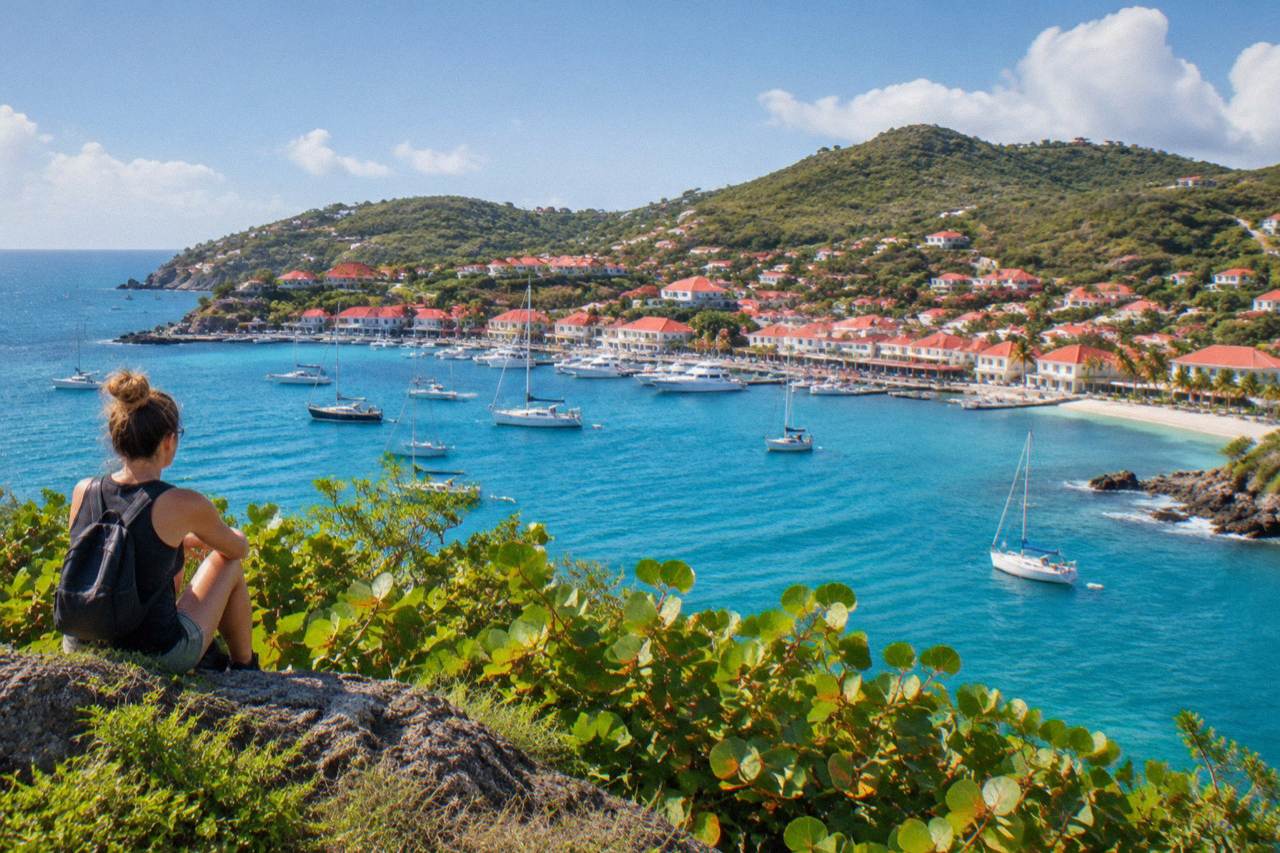
St Barthelemy, usually written St Barts, is a small French island in the Caribbean that most marketing imagery shows to couples: hillside villas, harbour tables for two, a honeymoon beach on every postcard. None of that stops it working for one person. The island is about 21 square kilometres with roughly 10,700 residents, the capital Gustavia sits on a harbour you can cross on foot, every beach is public, and the whole territory runs on euro cash, French as the official language and English widely spoken. What solo travel here demands is planning, because the island has no hostels, and the bookable boat products that visit its coast almost all leave from neighbouring St Martin or Sint Maarten rather than from St Barts itself.
This guide, from St Barthelemy Travel, walks through the questions a person travelling alone actually asks: whether the island suits it, how to arrive without a partner to split logistics with, what fills a week of days, where to base yourself, and what the season calendar does to a solo budget.
Is St Barts Good For Solo Travel?
Yes, St Barts works for solo travel, with two honest caveats. The island is small, officially about 21 square kilometres, all of its beaches are public and free to access, and Gustavia is compact enough to explore on foot. The caveats: there are no hostels or dorms anywhere on the island, so a lone traveller pays a full room rate, and every boat tour listed here departs from St Martin or Sint Maarten rather than from St Barts.
The freedom part comes easy. The tourism committee's site lists the island's beaches as public, which means a solo traveller needs no club membership, no reservation and no companion to spend a day at Gouverneur, Saline or Colombier. The island's scale helps too: one bus-sized road network links the beaches and villages, and car rental desks at the airport include Avis, Budget and Hertz alongside local agencies and the open Mini Moke operators, covered in the St Barts car rental guide.
The friction part is structural rather than social. With no hostels, the entry point to accommodation is a hotel room or a small guesthouse, and the St Barts hotels guide explains what that means in each area. On the water, a solo traveller faces a market built for groups: five of the six boat products listed here are private charters priced per boat, not per person. The exception is the group sail out of St Martin, a shared departure that visits Gustavia, Colombier Beach and Ile Fourchue, described in more detail below.
To keep costs down when choosing where to stay, book a room or apartment.
How To Get To St Barts Alone?
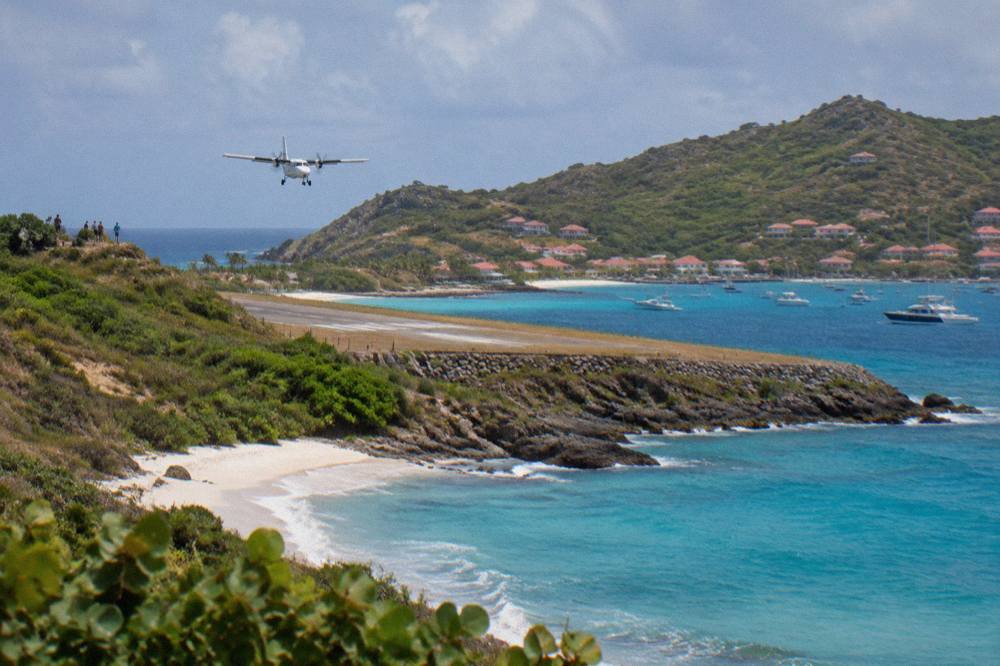
A solo traveller reaches St Barts through St Martin: fly into Princess Juliana Airport on Sint Maarten, then either a small plane to Gustaf III Airport or a ferry to Gustavia. The airport's 646 m runway accepts only small turboprops in daylight, and two ferry operators, Great Bay Express from Philipsburg and Voyager from Marigot, run the crossing. No jet lands on the island.
The routing matters more for a solo traveller than for a group, because every connection is a point where a shared plan can absorb delay and a lone one cannot. The full mechanics, gateway by gateway, sit in the how to get to St Barts guide. In outline: St Barth Commuter flies from SXM, Grand Case on the French side and Guadeloupe, Tradewind flies from San Juan and Antigua, and Winair also serves the island from SXM with small turboprops. Flights run in daylight and visual conditions only, a constraint the airport guide unpacks; a late-day arrival into St Martin can mean an overnight there, which the St Maarten before or after St Barts question addresses in practice.
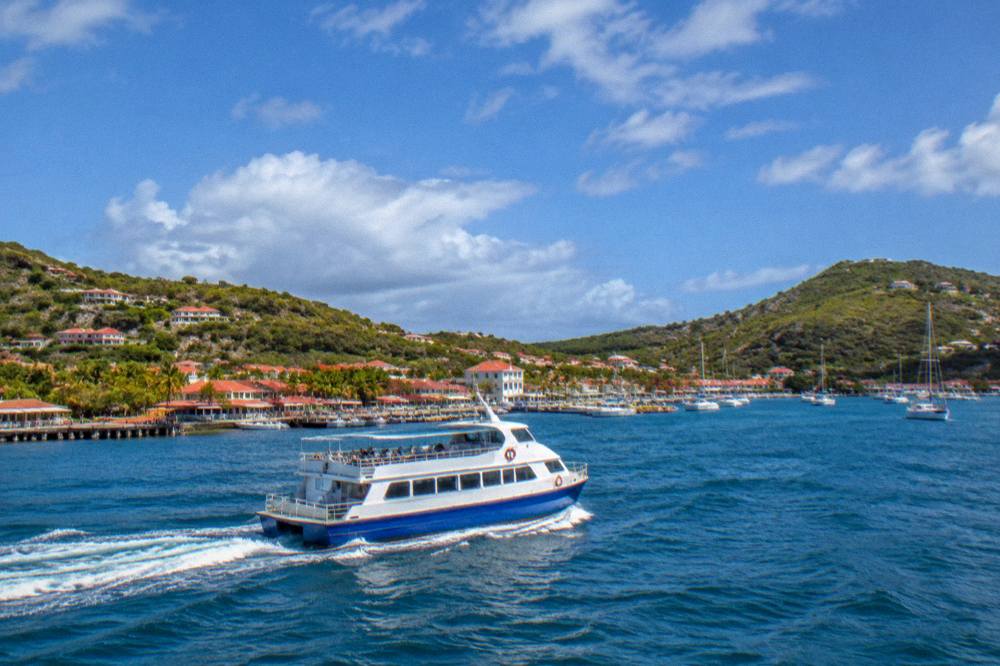
The ferry is the solo-friendly option in one specific sense: it removes the weather sensitivity of the STOL approach and replaces it with a sea crossing that can be rough, so no smooth crossing should be assumed. Great Bay Express leaves from Bobby's Marina in Philipsburg, on the Dutch side, with a crossing of about 45 minutes; Voyager leaves from the Marigot terminal on the French side, with a crossing of about 50 to 60 minutes. Both operators' pages carry the current timetables, and neither fare appears in this guide; the ferry operators and schedule guide covers the detail, including the connection from SXM airport to the ferry docks. A passport is required for the ferry, and check-in closes before departure, so the operator's own page is the place to confirm the timing on the day.
| Option | Gateway | Operator or carrier | Solo note |
|---|---|---|---|
| Small plane | Princess Juliana (SXM), Sint Maarten | St Barth Commuter, Winair | Short hop; daylight only, no jets at SBH |
| Small plane | Grand Case (SFG), St Martin | St Barth Commuter | French-side alternative if staying on that side |
| Small plane | San Juan (SJU), Puerto Rico | Tradewind | Useful from the US East Coast |
| Small plane | Pointe-a-Pitre (PTP), Guadeloupe | St Barth Commuter | Links the French Caribbean islands |
| Ferry | Philipsburg, Sint Maarten | Great Bay Express | About 45 minutes; Bobby's Marina |
| Ferry | Marigot, St Martin | Voyager | About 50 to 60 minutes; Marigot terminal |
One structural point worth knowing before booking anything: entry to St Barthelemy sits outside the Schengen area, and the entry rules follow French overseas regulations rather than Schengen systems. The passport and customs guide states what applies; for validity questions, check your own government's travel advice rather than any fixed number quoted second-hand.
What Can A Solo Traveller Do In St Barts?
A solo traveller in St Barts fills days with the public beaches, the walking trails, Gustavia's harbour and forts, and one shared boat day out of St Martin. Every beach is public and free, the tourism committee lists walking options across the hills, and the only per-person boat product, the group sail, visits Gustavia, Colombier and Ile Fourchue from 12 May to 31 August 2027 on its listing.
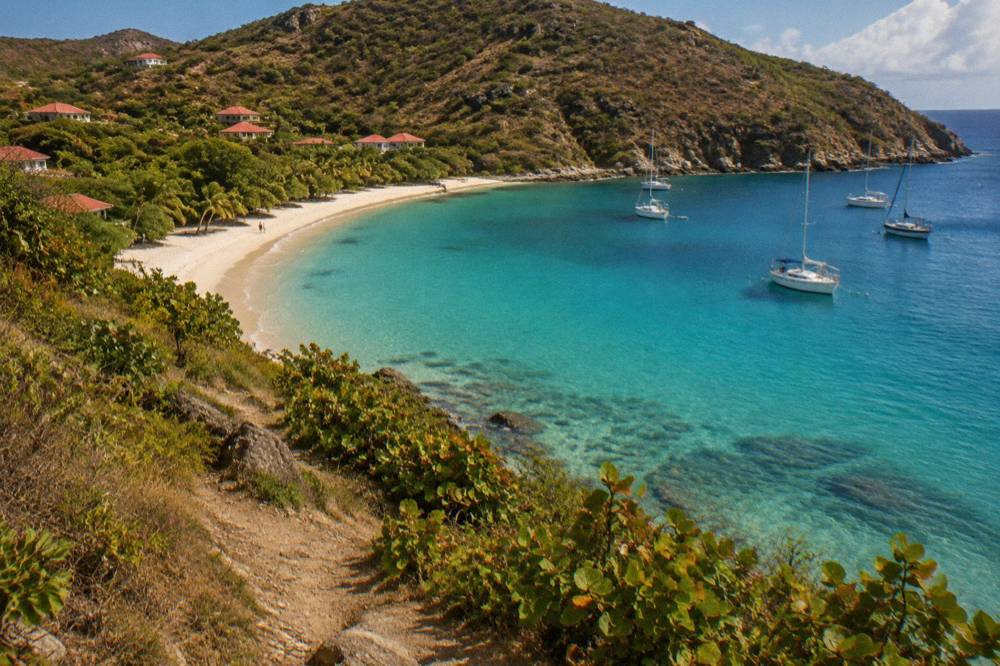
The beach list is the backbone. The tourism committee's beaches section names Saint-Jean, Gouverneur, Saline, Shell Beach, Flamands, Colombier, Grand Cul-de-Sac, Lorient, Toiny, Marigot, Corossol and Anse des Cayes, all public. For a lone traveller the practical difference is access and map position, which the per-beach guides cover: Colombier sits at the island's northwestern tip and also gives its name to the hike in, Saline lies on the south coast, and Shell Beach is the one within walking range of Gustavia, which matters when you have no car for the day.
The marine reserve shapes what any visitor, solo or not, may do on and in the water. The environment agency's regulatory-zones page lists a 5-knot speed limit in its zones, a ban on jet skis and other motorized water devices, a ban on dogs on beaches, 23 dive sites, and a strict no-touching rule for turtles and other protected species. For a solo swimmer the practical takeaways are simple: no drone flying near the reserve zones without authorization, no collecting shells or coral, and turtles are watched from a distance, never touched.
| Activity | Where | Solo practicality | Source of the rule or listing |
|---|---|---|---|
| Beach days | All named public beaches | Free, no booking needed | Tourism committee beaches listing |
| Colombier walk | Northwestern hills | Reached on foot from the road end | Hiking listings and trail guides |
| Gustavia on foot | Harbour capital | Fort Karl, Fort Gustaf, the Swedish-era sites | Gustavia and museum guides |
| Snorkelling at Colombier | Marine reserve zone | Speed and no-touch rules apply | Environment agency zones page |
| Shared boat day | Departs St Martin | The one per-person product | Operator listing, 12 May to 31 Aug 2027 |
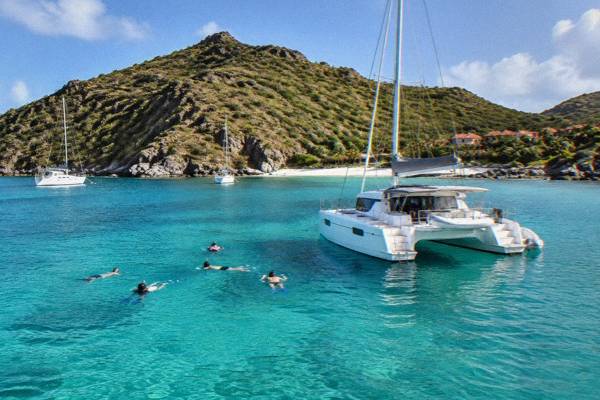
The boat day deserves its own paragraph, because it is the single biggest social opportunity on a solo itinerary. The St. Barths: Gustavia, Colombier Beach, and Ile Fourchue tour leaves from St Martin or Sint Maarten and spends a full day on the water, calling at Gustavia harbour, Colombier Beach and Ile Fourchue, with snorkel stops inside the reserve's rules. Because it is priced per person rather than per boat, it is the one product where a single traveller does not pay for eight empty seats. It runs only from 12 May to 31 August 2027 on its listing, so a high-season solo trip cannot rely on it. See the live listing
For a fuller week of plans, the itineraries section does the sequencing work: the three-day itinerary and the first-timer itinerary both work for one person, and the rainy-day itinerary answers the question every solo traveller asks at 7 a.m. when the sky is grey.
Where Should A Solo Traveller Stay In St Barts?
Gustavia is the natural solo base: the harbour capital is walkable, holds the shops and evening life, and needs no car after dark, while Saint-Jean puts a traveller beside the airport beach and Lorient offers a quieter village alternative. Hotels rather than hostels define the market, since no dorms exist on the island, and rates vary by season, with the property's own booking page showing them.
The area logic for a solo traveller differs from a group's. A couple in a villa wants privacy; a lone visitor usually wants proximity, because every taxi ride and every dinner alone gets easier on foot. The best area to stay guide and the Gustavia where-to-stay page break the island down neighbourhood by neighbourhood. In brief: Gustavia for walkability and the harbour, Saint-Jean for the beach-and-airport bustle covered in the Saint-Jean area guide, Lorient for calm as set out in the Lorient area guide, and Grand Cul-de-Sac or Toiny for a quieter, more spread-out stay.
| Base | Character | What a solo traveller gains | Trade-off |
|---|---|---|---|
| Gustavia | Harbour capital, shops and tables | Walkable evenings, ferry dock, no night driving | Harbour-side rooms are in demand |
| Saint-Jean | Beach and airport village | Beach on the doorstep, services nearby | Busier through the day |
| Lorient | Quiet village, public beach | Calm mornings, a residential feel | Fewer evening options |
| Grand Cul-de-Sac | Lagoon-side, resort stretch | Water sports access, relaxed pace | Spread out; a car helps |
| Flamands | Wide beach, residential hills | A long public beach | Car effectively needed |
One calendar point changes every accommodation decision, and it hits a lone traveller hardest because there is no companion to spot a closed restaurant. Many hotels and restaurants close each autumn and reopen in waves between mid-October and early November; villas, by contrast, generally stay available year-round. A solo trip in September or early October therefore meets a quieter, part-closed island, while a trip from mid-November onward meets the full season, with the Gourmet Festival running 9 to 15 November 2026.
Is St Barts Safe For A Solo Traveller?
St Barts presents the risks of a small French overseas territory rather than those of a large city, and a solo traveller's planning should follow ordinary travel advice: check your own government's current advisory before booking, carry travel insurance, and note the standard French emergency numbers 15, 17, 18 and 112. No safety statistic or destination-wide verdict can substitute for the advisory pages, which are the live source.
The honest way to answer a safety question without inventing a statistic is to point at what the advisory system actually says and let it speak. The travel advisory guide and the is St Barts safe page collect that material, and the travel insurance guide covers the cover question. The practical solo-specific notes that survive scrutiny: roads are narrow, winding and steep, with a 50 km/h island-wide limit and 30 km/h in Gustavia and Saint-Jean, so a lone driver should not overestimate a first afternoon at the wheel; and hurricane season runs 1 June to 30 November with its peak from mid-August to mid-October, which the hurricane season guide covers without predicting any storm.
Two further solo-relevant facts come from the rules rather than from impressions. The marine reserve bans dogs from all beaches island-wide, under a municipal order, so a lone traveller with a dog has no beach exception. And the island's terrain is hilly, so step-free access varies by property and path; the accessibility guide advises checking with each property directly rather than assuming.
When Is The Best Time For Solo Travel In St Barts?
For a solo traveller the best window is May to early August: the Meteo-France normals, 1991-2020, still show mean daily highs of 30.7 C in May rising to 31.6 C in August, the sea is warm, and the only per-person boat product runs 12 May to 31 August 2027 on its listing. High season, roughly December into April, costs more and books earlier, and October is the wettest month at 135.6 mm.
The climate table tells the temperature story plainly, and the temperatures barely move: from a mean daily high of 28.5 C in January to 31.7 C in September, with mean daily lows between 23.3 C and 26.3 C. Rain is the real seasonal variable, 891.3 mm across the year, with February lowest at 38.4 mm and October highest at 135.6 mm. The best time to go guide and the month pages, from St Barts in May through St Barts in October, work through the calendar in detail.
| Month | Mean daily high (C) | Mean daily low (C) | Rain (mm) | Solo note |
|---|---|---|---|---|
| January | 28.5 | 23.5 | 52.6 | Music Festival window, 8 to 18 Jan 2027 |
| February | 28.6 | 23.3 | 38.4 | Lowest rain of the normals; peak season |
| April | 29.8 | 24.2 | 50.9 | Les Voiles sailing week, April, dates unconfirmed |
| May | 30.7 | 25.1 | 61.7 | Group sail window opens 12 May 2027 |
| August | 31.6 | 26.3 | 79.6 | Group sail window; hurricane-season peak begins |
| September | 31.7 | 26.2 | 96.9 | Quietest month; deepest autumn closures |
| October | 31.4 | 25.8 | 135.6 | Wettest month in the normals |
| November | 29.9 | 25.0 | 118.6 | Reopenings; Gourmet Festival 9 to 15 Nov 2026 |
Source for all figures: Meteo-France normals, 1991-2020, for the St Barthelemy station. Two calendar facts sharpen the choice. The group sail's 12 May to 31 August 2027 window sits squarely in the cheaper, quieter half of the year, which makes the low season unusually attractive for one person. And the reopening wave between mid-October and early November means a late-autumn solo trip should be booked with the closure pattern in mind rather than against it.
What Does Eating And Shopping Alone Look Like In St Barts?
Eating alone in St Barts is unremarkable in the way French-influenced harbour towns make it unremarkable: harborfront tables in Gustavia, beach-end snacks and bakeries. Shopping runs through Gustavia's boutiques, covered in the shopping guide, and the free evening entertainment is the harbour itself.
The food scene can be described honestly only in general terms: French-influenced cooking, a seasonal closure wave in autumn, and a Gourmet Festival each November that brings visiting chefs into participating restaurants, running 9 to 15 November 2026. The restaurants overview and the Gustavia restaurants page hold the structure; specific tables are booked on the day. For a solo traveller the useful pattern is that lunch-and-beach days need no reservation culture at all, and the groceries guide covers the self-catering angle that keeps a lone week within shape.
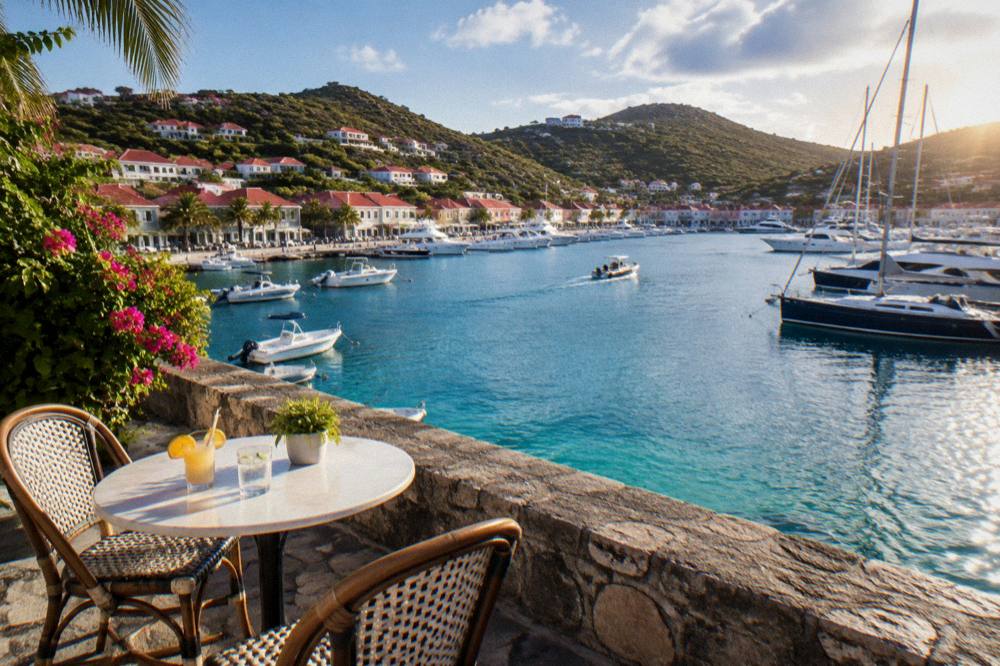
Shopping is Gustavia's other half-day. The shopping guide maps the boutiques, and the Gustavia shopping page narrows it to street level. Evening is when a solo traveller most feels the island's size: the nightlife answer is an honest one, that the island's evenings run on harbour tables and hotel bars rather than a late district, and the sunset spots guide lists where the day ends well without company required.
| Solo evening option | Where it happens | What it needs |
|---|---|---|
| Harbour walk and sunset | Gustavia quays | Nothing but timing |
| Beach sunset | West-facing shores such as Shell Beach | A short walk or drive from dinner |
| Live music in season | Venues around Gustavia and the beaches | Season timing; check locally |
| New Year's Eve fireworks | Over Gustavia harbour | The 31 December date only; 2027 details unconfirmed |
Can You Visit St Barts Solo Without Renting A Car?
Yes, a car-free solo trip to St Barts is possible but narrow: Gustavia, its harbour, Shell Beach, the shops and the ferry dock work on foot, while the outer beaches and villages depend on taxis, whose fares are not published here, or on the island's limited alternatives. Driving is on the right, roads are steep and narrow, and the practical solo pattern is a car for beach days plus feet for Gustavia evenings.
The trade-off is laid out in the do you need a car in St Barts answer and the getting around guide. For one person the arithmetic differs from a group's: a shared group splits one rental and fuel four ways, while a solo traveller pays it whole, which is why some lone visitors rent for only part of a stay, base themselves in Gustavia, and walk. The taxi option is real, with route-based tariffs and evening surcharges described in the taxi guide.
Should You Combine St Barts With St Martin On A Solo Trip?
Yes, and for a solo traveller the combination is close to compulsory rather than optional, because every bookable boat product listed here departs from St Martin or Sint Maarten, and the small-plane and ferry connections both run through it. A night on the French or Dutch side turns a connection into part of the trip and removes the risk of a missed same-day link.
The practical pages make the case in detail: St Barts to St Martin, the SXM airport to St Barts ferry guide and the day trips and island hopping overview. The overnight angle matters twice over for one person. First, arrival timing: the STOL airport operates in daylight only, so a late flight into SXM can force a night on St Martin anyway, and planning it beats enduring it. Second, the boat products: a group-sail day or a private charter departure from Simpson Bay, Cole Bay, Anse Marcel or Grand Case sits naturally at the start or end of a St Barts stay rather than as a mid-trip excursion, which is exactly how the overnight catamaran option is built.
For travellers weighing alternatives or neighbours, the comparison pages, St Barts vs St Martin and the Anguilla day trip guide, set the region in context.
What Should A Solo Traveller Pack And Book For St Barts?
A solo trip to St Barts needs a passport, euro-friendly payment habits, reef-safe sun protection, walking shoes for the hills, and bookings made early for the high season, roughly December into April. The island uses the euro, plugs C and E, and sits at UTC-4 with no daylight saving; entry rules follow French overseas regulations outside Schengen, and travel insurance is a planning decision, not a legal requirement stated here.
The packing list guide, the currency guide and the electricity guide hold the detail. Booking order for one person is worth stating plainly: the St Martin link first, since seats on small planes and ferries are the scarce items; the room second, mindful of the autumn closure pattern; and the boat day third, with the group sail's 12 May to 31 August 2027 window checked against the dates before anything else is committed. Solo travellers with a wedding, an LGBT-specific question or a package-build in mind will find the weddings, LGBT and travel packages pages ready for those threads.
Common Questions About Solo Travel In St Barts
These are the questions solo planners ask most about St Barts, answered from the island's rules, its climate normals and the list of boat products that serve it. Each answer states what a source says rather than what an impression suggests, and each sticks to figures the island's own listings and normals carry.
Is St Barts good for solo travel?
Yes, with caveats. All beaches are public and free, Gustavia is walkable, and the island is small, about 21 square kilometres. The caveats are cost, since there are no hostels, and the boat market, since five of the six products listed here are private charters priced per group.
Are there hostels in St Barts?
No. The island has no hostels or dorms; accommodation is hotels, small guesthouses and villas, and rates vary by season, with the property's own booking page showing current rates.
Can I take a tour alone in St Barts?
The one per-person product is the group sail and snorkel day, which departs from St Martin or Sint Maarten and visits Gustavia, Colombier Beach and Ile Fourchue. It runs from 12 May to 31 August 2027 on its listing. The operator's live listing shows current dates.
Is there a free walking tour in St Barts?
No guided or tip-based walking tour is listed here. What is free are the public beaches and the open public places, including Gustavia's harbour, the forts and the coastal paths, which can be walked independently.
When should a solo traveller avoid St Barts?
The deepest quiet falls in September and early October, when many hotels and restaurants close and October, the wettest month at 135.6 mm in the Meteo-France 1991-2020 normals, overlaps the hurricane-season peak of mid-August to mid-October. Travellers who go then should book around the closure pattern; travellers who want the full island go from mid-November onward.
A solo week in St Barts, planned around a Gustavia base, one car day, a string of public beaches and a shared boat departure out of St Martin, delivers nearly everything the island offers a couple, at the price of doing the logistics alone.