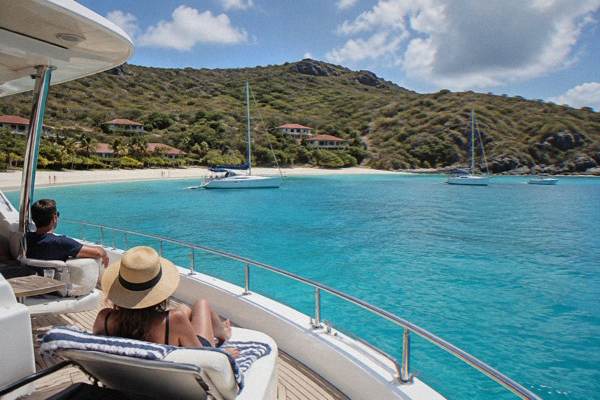
St Barts With Kids: A Family Guide To Beaches, Ferries And Slow Days
St Barthelemy, the small French Caribbean island everyone calls St Barts, is about 21 square kilometres of public beaches, steep little roads and one harbour town, and it works for families who plan around its quirks: small planes, no jet skis, dogs banned on every beach and hotels that close each autumn.
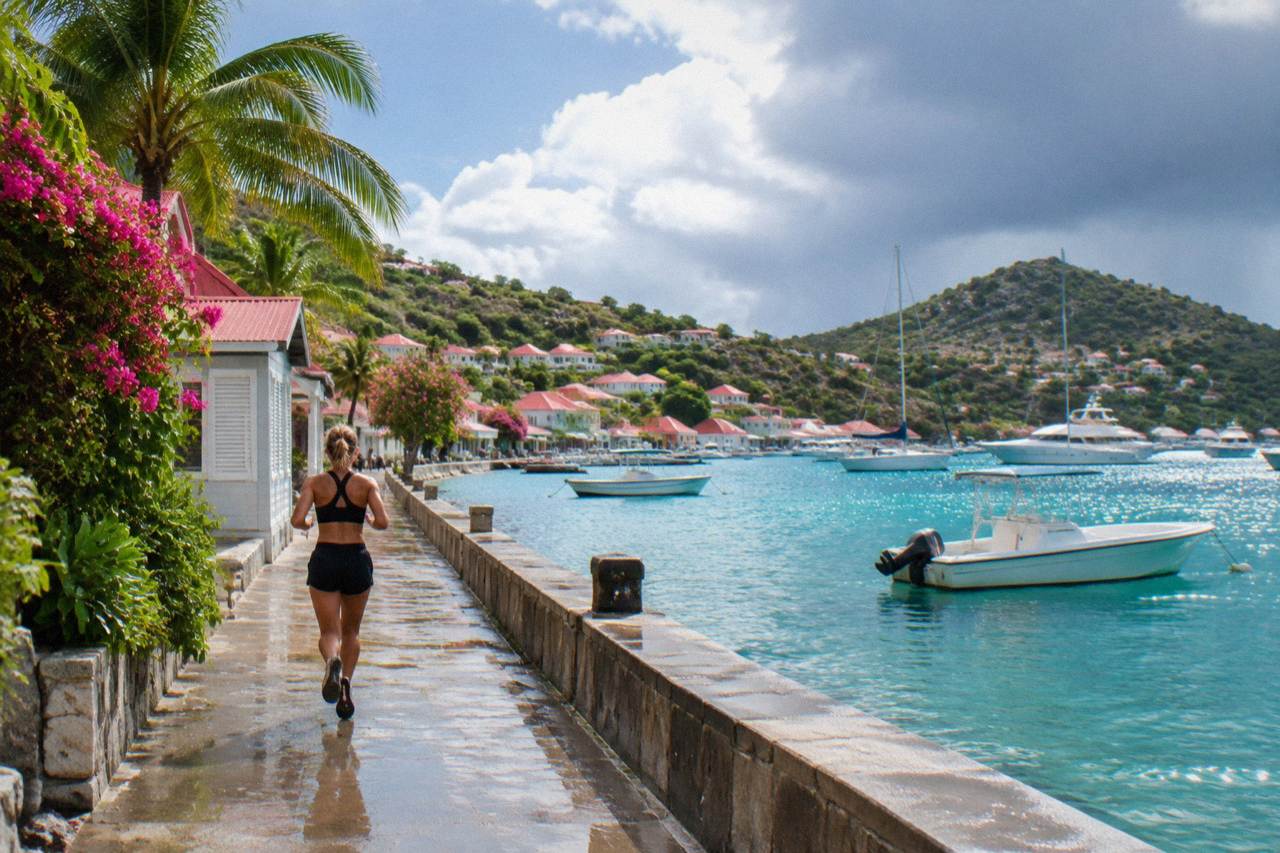
Yes, St Barts works with kids: every beach is public, the sea is warm year-round, the crossing from St Martin takes about 45 to 60 minutes by ferry, and a rental car with the right seat is the standard way to move a family around an island of about 21 square kilometres.
St Barthelemy, better known as St Barts, is a French overseas collectivity in the Caribbean with about 10,700 residents, a harbour capital called Gustavia and roughly 21 square kilometres of hills, turquoise water and public beaches. It is not a resort island in the all-inclusive sense: there is no big waterpark, no dolphin experience and, because of the marine reserve rules, no jet skis anywhere on the water. What it offers a family instead is small, slow and unusually uncomplicated, once the logistics are understood. This guide covers the arrival, the beaches, the car seat question, the reserve rules children will actually meet, and the season patterns that shape when a trip makes sense.
For more on the island's full range of options, see things to do in St Barts, which is the site's main overview page. This page stays on the family question.
Is St Barts A Good Island For Kids?
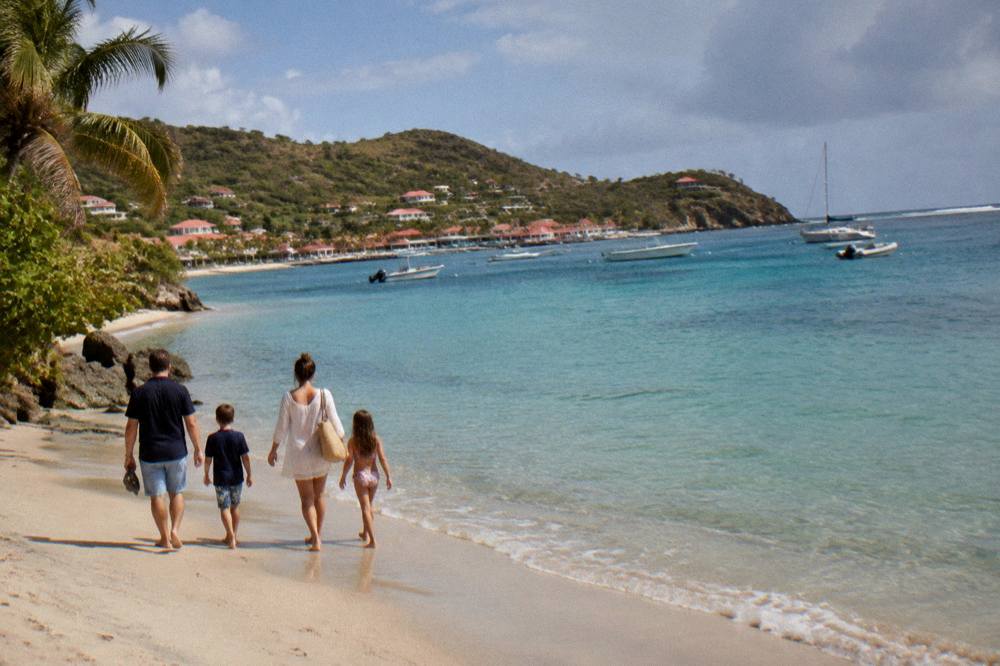
St Barts suits families who want beaches, boats and slow days rather than engineered attractions: every beach on the island is public and free to access, the sea is warm year-round at about 26 C in winter rising to about 29 C from August to October, and the marine reserve bans jet skis and motorised water toys entirely, so the environment children swim in is quiet by law rather than by luck. There are no theme parks and no aquarium. The compensations are simple ones: sand, shallow bays such as Grand Cul-de-Sac on the north shore, and a scale where the whole island is a short drive end to end. The St Barthelemy Travel guides cover each of these beaches individually if you want to go deeper.
The honest caveats are practical, not safety ones. The island is hilly, with narrow, winding, steep roads, so walking everywhere with a stroller is not realistic. Restaurants and hotels largely operate on French rhythms, meaning late dinner seatings, and many close entirely each autumn and reopen between mid-October and early November. None of this rules families out; it just means the trip rewards a little planning.
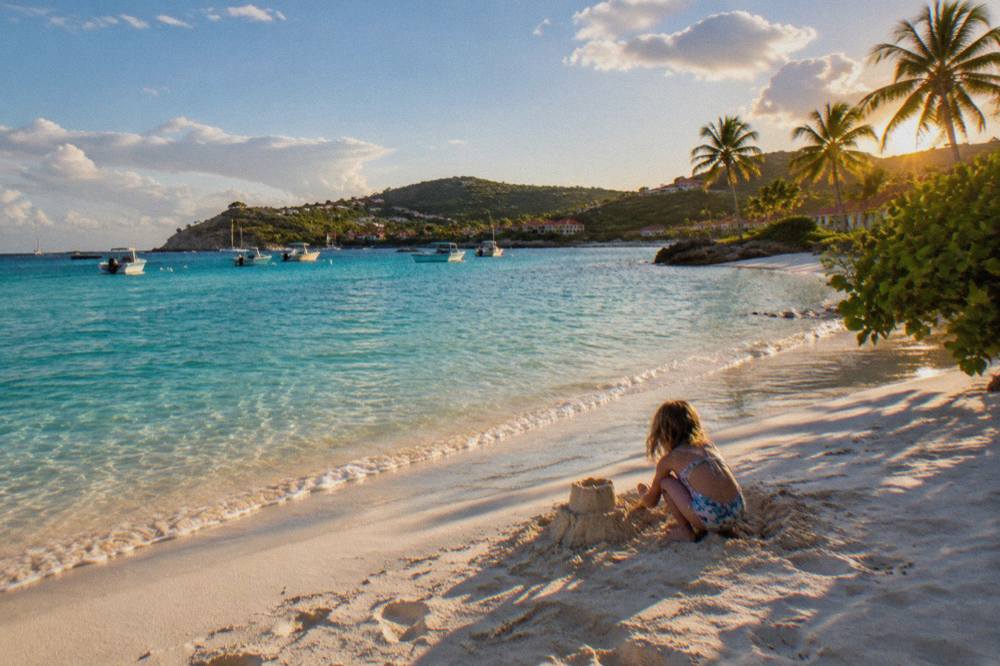
The other structural fact is the arrival. Gustaf III Airport has a 646 m runway served only by small turboprops, in daylight and visual conditions, so a family trip almost always runs through St Martin first, by small plane or by ferry. The dedicated guide to getting to St Barts covers that in full.
Which Beaches In St Barts Work Best With Children?
St Barts has no private beaches: the tourism authority lists every strand from Saint-Jean to Colombier as public and free, and the practical family choice comes down to map position, with Grand Cul-de-Sac on the sheltered north shore, Lorient and Saint-Jean near the airport and shops, and Colombier reachable only on foot or by boat, which is exactly why the group sail from St Martin stops there. Nobody can promise a beach will be calm on a given day; conditions vary, and the island's beaches are undeveloped, often with no vendors and no organized facilities. What is established is the public status of every beach and the geography.
| Beach | Map position | Family note |
|---|---|---|
| Grand Cul-de-Sac | North shore, east of Lorient | Sheltered lagoon position; green and hawksbill turtles are common here, and touching them is prohibited |
| Saint-Jean | North shore, beside Gustaf III Airport | Plane-spotting from the sand at one end; the town of Saint-Jean sits behind it |
| Lorient | North shore, west of Grand Cul-de-Sac | Village beach with a residential setting |
| Flamands | North-west coast | Long strand below the Flamands area |
| Gouverneur | South coast, east of Gustavia | Reached by a winding road over the hill |
| Saline | South coast, east of Gouverneur | Backed by a salt pond; a walk from parking over a low rise |
| Shell Beach (Grand Galet) | West coast, short walk from Gustavia | Rocky shoreline, closest beach to the harbour town |
| Colombier | North-west tip | No road access; hiking trail or boat only, hence its place on sail itineraries |
Two rules matter more here than on most islands. First, dogs are banned from every beach island-wide under a standing municipal order, even on a leash, a rule the environment agency ties to protecting birds, reptiles and nesting turtles. Second, the nature reserve prohibits touching, chasing or feeding turtles, corals, urchins, starfish, sharks and rays, and bans gloves in the water. Children who can follow "look, don't touch" rules will meet a lot of marine life; the Colombier hike and the area guide to Grand Cul-de-Sac expand on both.
How Do You Get To St Barts With Children?
A family reaches St Barts through St Martin: either the ferry, with Great Bay Express running from Philipsburg on the Dutch side in about 45 minutes and Voyager from Marigot on the French side in about 50 to 60 minutes, or a small plane, with St Barth Commuter flying from St Martin, Grand Case and Guadeloupe, and Tradewind from San Juan and Antigua into the 646 m runway at Gustaf III, where no jets land. Both ferry operators run roughly two to three sailings a day in each direction, more in the high season, and both warn that services are subject to weather; the crossing can be rough, and no source promises a smooth one. Check-in for the ferry typically opens 45 to 60 minutes before departure and closes shortly before sailing, with passports required.
The flight is famously short and scenic, but it is a small turboprop with limited baggage space, and operations are daylight-only with no runway lights. If a missed connection would strand the family overnight, the ferry is the more recoverable option, since it can be rebooked the same day subject to seats. The airport guide and the page on landing at St Barts airport cover what to expect on approach, and the ferry operators and schedule page plus SXM airport to the St Barts ferry handle the boat side.
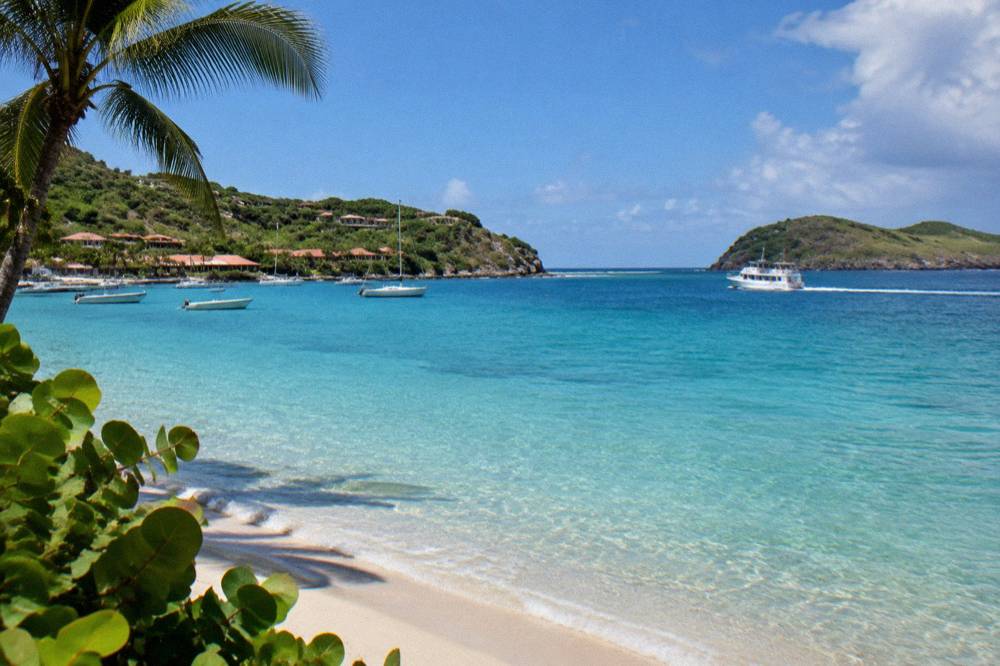
Entry is its own question: St Barts sits outside the Schengen area, so European ETIAS-style systems do not govern arrival, and passport requirements differ by nationality, which is why the St Barts passport page and your own government's travel advice are the right places to check before booking.
Do You Need A Rental Car In St Barts With Kids?
Yes, a car is close to essential for a St Barts family trip: the island's roads are narrow, winding and steep, distances between beaches and Gustavia are not walkable with small children, and the standard fleet is small automatics and Mini Mokes from counters at the airport including Avis, Budget and Hertz plus local agencies, with booking well ahead the norm for December through April. Driving is on the right, the general limit is 50 km/h island-wide with 30 km/h in Gustavia and Saint-Jean, and one roundabout near the airport is the island's only one. The car rental guide and the broader getting around page carry the detail.
Child seats are the one thing to confirm in writing with the rental company: fleets skew tiny, seat inventory is limited, and the minimum driver age varies by company, so a parent under 25 may face a surcharge. Many local agencies deliver vehicles to hotels and villas, which helps when the family arrives by ferry rather than by plane. An International Driving Permit is generally only needed for licences in non-Roman alphabets, and a credit card in the driver's name is standard.
What Are The Marine Reserve Rules Kids Should Know?
The environment agency's regulatory-zones page lists a 5-knot speed limit inside protected zones, a total ban on jet skis, seabobs, electric surfboards and towed sports, 23 dive sites, a ban on dogs on every beach in the reserve areas, and strict protection for turtles and other species that children must not touch, chase or feed, with no gloves allowed in the water. For a family, three of these will actually come up: the no-touching rule around turtles in Grand Cul-de-Sac and Colombier, the no-dogs rule on the sand, and the quiet-water effect of the 5-knot zones, which keeps anchor bays slow and calm for swimming.
| Rule | What it means for a family day |
|---|---|
| 5-knot speed limit in protected zones | Boats in reserve bays move slowly; anchor areas are quiet for swimmers |
| No jet skis, seabobs or towed sports | No rented motorised toys anywhere on the island's waters |
| No touching turtles, corals, starfish or rays | Snorkelling is look-only; explain it before the first swim |
| No dogs on beaches | Even leashed pets stay off the sand, island-wide |
| No collecting shells, coral, sand or rocks | Souvenirs stay in photos, not pockets |
| Drones restricted without authorization | Leave the drone home or check the rules first |
Sightings of turtle nests or the animals themselves can be reported to the environment agency, whose beach page asks visitors to reduce light and noise near nesting areas. That is a genuinely useful thing to teach children: the island's turtles are monitored, and the rules are written for them.
The Boomerangs Group Sail and Snorkel from St Martin is the one per-person product, running only from 12 May to 31 August 2027 on its listing, and it puts a family into Colombier and Ile Fourchue, the two bays that are hardest to reach on foot with children. See the live listing
When Is The Best Time To Take Kids To St Barts?
The Meteo-France normals for St Barthelemy, 1991-2020, show a mean daily high of 28.5 C in January rising to 31.7 C in September, with 891.3 mm of rain across the year and October the wettest month at 135.6 mm, so the December-to-April stretch combines the cooler end of a warm climate with the driest months, while hurricane season runs from 1 June to 30 November with its peak from mid-August to mid-October. February is the low point for rain at 38.4 mm; the sea stays warm throughout, about 26 C in winter and about 29 C from August to October. A storm-free week or a crowd-free beach can never be guaranteed in any month, so treat the calendar as probability, not forecast.
| Month | Mean daily high (C) | Rain (mm) | Family note |
|---|---|---|---|
| January | 28.5 | 52.6 | Music Festival runs 8 to 18 January 2027 |
| February | 28.6 | 38.4 | Lowest monthly rainfall in the normals |
| March | 29.0 | 41.4 | Bucket Regatta in mid-March |
| April | 29.8 | 50.9 | Shoulder month before the season quietens |
| July | 31.2 | 80.4 | Inside hurricane season |
| September | 31.7 | 96.9 | Season peak; deepest hotel closures |
| October | 31.4 | 135.6 | Wettest month in the normals |
| November | 29.9 | 118.6 | Gourmet Festival 9 to 15 November 2026 |
The autumn closure pattern matters more than the rain chart for families: many hotels and restaurants close in the September-to-mid-October window and reopen in waves between mid-October and early November, so a half-term trip in late October lands on a partly reopened island while a Christmas trip lands on a fully open one. The month-by-month pages, from St Barts in December to St Barts in October, take this further.
Where Should A Family Stay In St Barts?
The family-friendly geography of St Barts puts the practical bases on the north and east shore, around Saint-Jean, Lorient and Grand Cul-de-Sac, where the beaches, shops and airport cluster, while Gustavia suits families who want the harbour town on foot and the south-coast beaches such as Gouverneur and Saline stay quieter but require a drive over the hill, and villas remain available year-round even when hotels close. The accommodation market leans heavily upscale, a large villa market exists year-round, and the smaller guesthouse-style options are concentrated around Saint-Jean and Lorient.
| Area | Position on the island | Why families pick it |
|---|---|---|
| Saint-Jean | North shore, beside the airport | Beach, shops and the airstrip in one walkable cluster |
| Lorient | North shore, east of Saint-Jean | Village feel with its own public beach |
| Grand Cul-de-Sac | North-east shore | Sheltered lagoon position, turtle habitat |
| Flamands | North-west coast | Long beach below a residential hillside |
| Gustavia | Harbour capital, west coast | Shops and Shell Beach in walking range, harbor life |
| Toiny | South-east coast | Quieter end of the island, above a wilder shore |
The trade-offs are honest ones. Gustavia gives walkability but sits at the bottom of the island's steepest approach roads. The north shore gives flat access to the calmest-lying bays. A villa solves the kitchen-and-laundry question that travelling with children always raises, and it sidesteps the autumn hotel closures entirely. The site's hotels overview and where to stay pages carry the property-level detail, and the best area to stay guide compares the neighbourhoods directly.
If a villa would make the family stay easier, book a private villa rental.
For a family that would rather not repeat the ferry with small children in both directions, the Private Charter from St Martin is a per-group option departing St Martin, and the boat-based day trips all let a family see Colombier and Ile Fourchue without the hiking trail. See the live listing for dates.
What Can You Do In St Barts With Kids Beyond The Beach?
Beyond the public beaches, the family options on and around St Barts are boat days from St Martin that call at Gustavia, Colombier and Ile Fourchue, plane-spotting at Gustaf III Airport where the runway ends at the beach at Saint-Jean, the hiking trails including the Colombier path, the small museums in Gustavia and Corossol covering the island's Swedish period and shell craft, and the winter events calendar anchored by the Music Festival from 8 to 18 January 2027. No jet ski, dive, kayak or fishing product is bookable on the island from the trip list, and the marine reserve bans the motorised toys anyway, so the sea time runs through sailing and swimming. The free things are the beaches and the open public places, described on the attractions pages without hours or difficulty grades.
A few specifics. The airport spotting page covers the famous approach over the road at Saint-Jean, a reliable free half-hour with children. The Wall House Museum and the Corossol shell museum are the indoor fallbacks. Sunset watching is free and the sunset spots page lists the vantage points. None of the island's walking-tour products exists: there is no guided walk listed here, and the beaches and public places are free without one.
What Should You Pack For Children In St Barts?
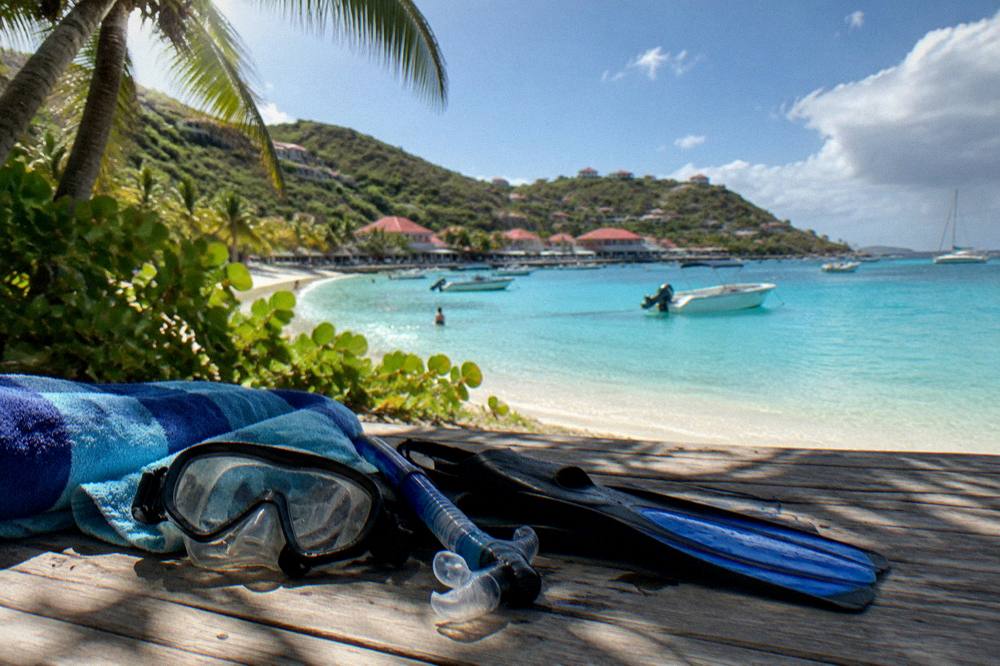
Pack for sun, steep walking and a French Caribbean rhythm: reef-safe sun protection and rash guards for long snorkel days, water shoes for the rocky stretches at Shell Beach and Colombier, sturdy sandals for the hills and the Colombier trail, a stroller that handles rough ground or a carrier for younger children given the narrow roads without sidewalks, and motion-sickness remedies for the ferry crossing, which both operators run subject to weather and which no source promises will be calm. The island runs on the euro, cards are the norm, and US dollars are not the local currency, so the money question is covered on the currency page rather than solved by packing cash.
Electricity is the other quiet trap: plugs are types C and E, European two-pin, so chargers need adapters, and anything with a US plug should travel with one. The electricity page and the full packing list handle both.
Is St Barts Safe For Families?
No crime statistic, safety verdict or medical-evacuation claim for St Barts appears in any available information for this page, so the honest answer runs through what is documented: the environment agency's beach and reserve rules, emergency numbers 15, 17, 18 and 112 as standard French numbers, the island's hilly terrain and step-varying access, and the standing advice to read your own government's travel advice before booking, which is also where passport-validity rules should be checked rather than guessed. The practical safety picture for a family is mostly environmental: strong sun, exposed hikes, boats and driving on steep narrow roads. Each of those is managed with ordinary preparation, a properly fitted car seat and the reserve's look-don't-touch rules.
The emergency numbers are worth saving offline before arrival, since they are the French standard set and work across the territory. For health-specific questions, including travel while pregnant, the safety page and travel advisory page set out the current guidance.
The 2-Day 1-Night Private Catamaran is the one product listed here that turns the St Martin crossing itself into the trip, departing St Martin with up to four guests for an overnight on the water. See the live listing for dates.
What Does A Realistic Family Day Look Like?
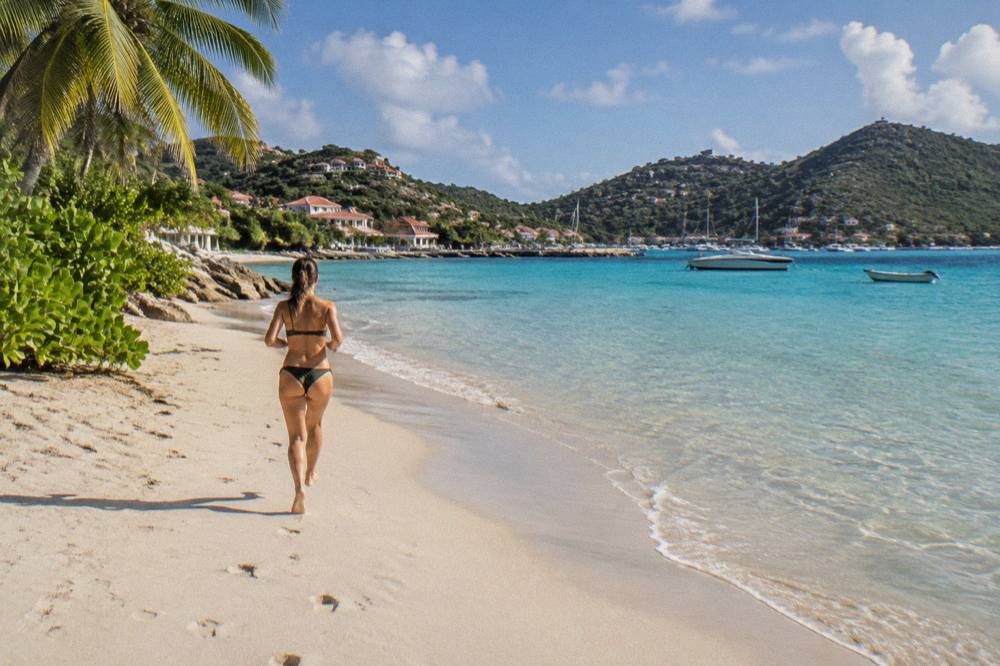
A realistic St Barts family day is one beach, one slow meal and one short drive, not a checklist: a morning on the sand at Saint-Jean or Grand Cul-de-Sac, a midday pause in Gustavia or Lorient, an afternoon of snorkelling in a reserve bay under the look-don't-touch rules, and a sunset stop on the west coast near Shell Beach, with the whole thing fitting inside about 21 square kilometres and a 50 km/h speed limit that keeps every drive short. The itineraries on this site are built exactly this way, from the three-day plan to the dedicated family itinerary, and the one-week version adds the boat day and a second area.
The rhythm matters more than the content. French islands eat late, and the restaurants largely operate on adult schedules, so families that shift the main meal to midday and keep evenings simple travel easier here. The beaches have no entrance fee, no gate and no facilities to book, which makes the day plan endlessly revisable around a nap or a tide.
Common Questions About St Barts With Kids
Is St Barts good for kids?
It suits families seeking beaches, boats and quiet water rather than attractions: every beach is public, the marine reserve bans jet skis and motorised toys, the sea is warm year-round, and the island's small scale keeps drives short on narrow, hilly roads.
Do you need a car seat in St Barts?
French traffic rules apply, so children travel in appropriate restraints. Rental fleets are small and seat inventory limited, so confirm child seats in writing with the rental company before arrival, or bring your own.
Can children take the ferry from St Martin to St Barts?
Yes. Great Bay Express from Philipsburg and Voyager from Marigot both carry families, with passports required and check-in typically 45 to 60 minutes before departure. The crossing takes about 45 to 60 minutes and can be rough in weather.
Are St Barts beaches free?
Every beach on the island is public and free to access, from Saint-Jean and Grand Cul-de-Sac to Colombier. Dogs are banned on all beaches island-wide, even leashed, under a standing municipal order.
When is the best time to visit St Barts with kids?
The Meteo-France normals, 1991-2020, show the December-to-April stretch with mean daily highs near 28.5 to 29.8 C and the year's lowest rainfall, February at 38.4 mm. Hurricane season runs 1 June to 30 November, peaking mid-August to mid-October, when many hotels also close for the autumn.
Are there jet skis in St Barts?
No. The marine reserve's regulatory page bans jet skis, seabobs, electric surfboards and towed sports outright, along with touching turtles and other protected species, so sea time runs through swimming, snorkelling and sailing.
A family trip to St Barts, planned around the ferry or the small plane, a rental car with the right seats and the reserve's simple rules, gives children the kind of island day that needs no queue and no ticket: a public beach, warm water and a short drive home.