St Barts In February
February sits in the heart of the St Barts high season: warm, dry by the island's standards, and busy with sailing events and Carnival season. Here is what the climate normals, the ferry operators and the tourism calendar actually say.
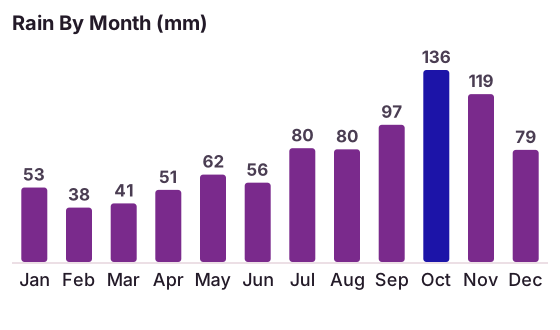
February in St Barts brings a mean daily high of 28.6 C and the lowest monthly rainfall in the Meteo-France normals at 38.4 mm, making it one of the driest months of the year and part of the December to April high season, with warm sea and everything open.
February places St Barthelemy, better known as St Barts, in the middle of its high season: the French Caribbean island's driest stretch of the year, its hotels fully reopened after the autumn closure window, and its harbour full of visiting yachts. The Meteo-France climate normals for the island's station, covering 1991 to 2020, give February a mean daily high of 28.6 C and a monthly rainfall total of 38.4 mm, the lowest of any month in the table. This guide sets out what that means in practice: the weather, the season, the water, the events, the journey through St Martin, and the decisions worth making before booking.
What Is The Weather Like In St Barts In February?
February in St Barts has a mean daily high of 28.6 C, a mean daily low of 23.3 C and 38.4 mm of rain across the month, the lowest rainfall figure of the year in the Meteo-France normals for 1991 to 2020. The sea stays warm, at about 26 C in winter. Hurricane season does not apply: it runs 1 June to 30 November, so February sits wholly outside it.
Those normals come from the Meteo-France station on the island itself, station code 97123001 near Gustavia, at 44 metres of altitude, with records running from 1959. The 1991 to 2020 averaging period is the standard reference the French weather service publishes, and for February it shows a remarkably narrow daily band: nights near 23 C, afternoons near 29 C. Rain arrives in short showers rather than long frontal systems, and the monthly total is the lowest in the whole table, ahead of March at 41.4 mm and December at 79.2 mm.
| Month | Mean daily high | Mean daily low | Rainfall |
|---|---|---|---|
| February | 28.6 C | 23.3 C | 38.4 mm |
| March | 29.0 C | 23.5 C | 41.4 mm |
| January | 28.5 C | 23.5 C | 52.6 mm |
| April | 29.8 C | 24.2 C | 50.9 mm |
The comparison matters because it corrects a common assumption. February is not markedly cooler than the months around it, and the Atlantic hurricane season, which runs 1 June to 30 November with a climatological peak near 10 September, has no bearing on a February trip. Wind is the one element the normals table does not cover; the island's weather is trade-wind weather, and the same breeze that keeps afternoons comfortable is what fills the sails of the regatta fleet later in the season. For a fuller month-by-month picture, the St Barts season guide covers the whole year, and the site's general St Barts weather page adds detail on how the year breaks down.
Is February High Season In St Barts?
Yes. February sits inside the island's high season, roughly December to April, when hotel rates and villa rates are at their annual peak and the island is fully open. Every major hotel has reopened by then, because the autumn closure window, which runs from mid-August and ends with reopenings between mid-October and early November, is long past. Rates vary by season and by property, so the booking pages show current figures.
The high season is a structural fact of the island's calendar, not a mood. The autumn pattern is consistent year to year: many hotels and restaurants close for maintenance and staff holidays in September and early October, then reopen in waves. By February the whole island is operating, from the harbour restaurants in Gustavia to the beach clubs along Saint-Jean and Flamands. The trade-off is simple: February offers the driest weather and the fullest calendar, and it is the month when demand is strongest across hotels, villas, rental cars and restaurant tables.
The events calendar is part of that demand. February is Carnival season across the French Caribbean, and St Barts marks Mardi Gras with parades and celebrations; the tourism committee's calendar is the place to confirm the current year's programme, since specific dates shift with the liturgical calendar. The big sailing events fall on either side of February: the St Barths Bucket Regatta in mid-March and Les Voiles de St Barth in April. A February visitor who wants the regatta spectacle can read up in advance on the St Barths Bucket Regatta, and anyone weighing a New Year trip instead can compare with the St Barts New Year's Eve guide, which describes the island's busiest single week.
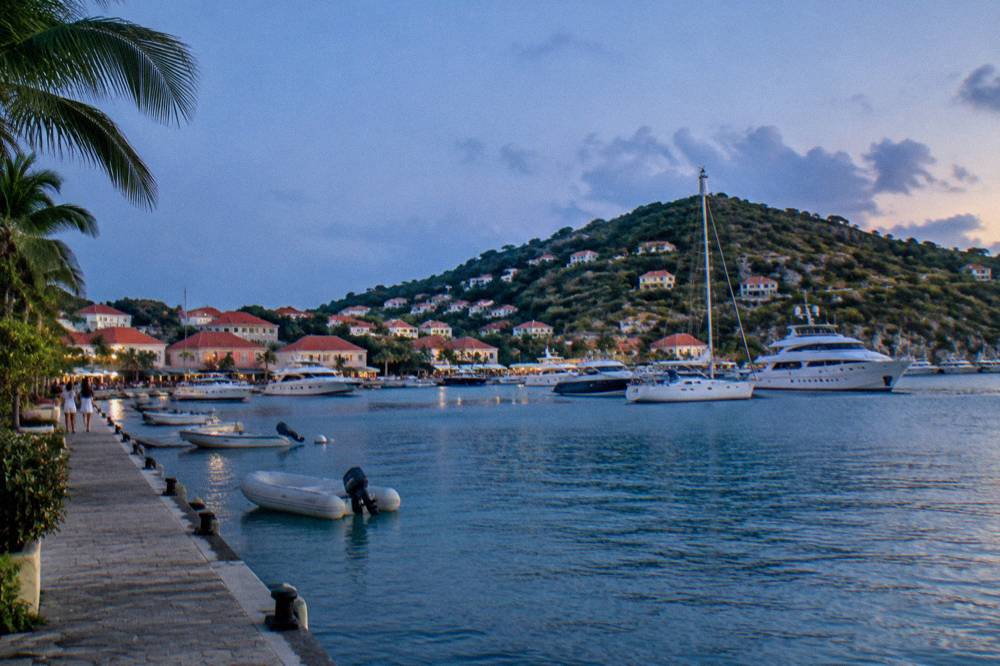
Planning around the season also means planning around the water. February's warm, dry conditions and steady trade winds are exactly what boat days are built on, and every boat trip listed here departs from St Martin or Sint Maarten and crosses to St Barts for the day. That is worth knowing early, because it shapes where you stay: a day-tripper sleeps on the neighbouring island, while a visitor staying on St Barts itself books the island's own hotels and villas and arrives by plane or ferry.
What Are The Best Days Out On The Water In St Barts In February?
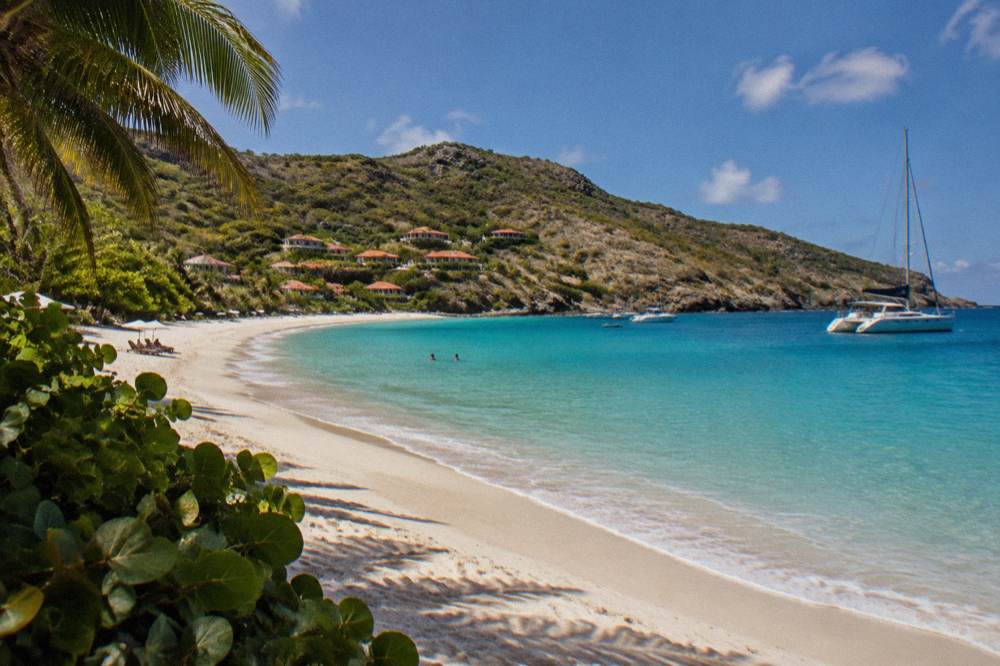
A February boat day from St Martin typically pairs Gustavia's harbour with Colombier Beach and Ile Fourchue, two of the spots inside the marine reserve's protected zones. The group sail listed here runs as a seven-hour day trip from the neighbouring island, and the private charters run eight hours or longer. All of them leave from St Martin or Sint Maarten, never from St Barts itself.
The logic of these trips is geographic. Colombier sits on the island's northwestern tip, reachable on foot by a hiking trail or by boat, and Ile Fourchue is a small uninhabited island to the northwest that anchors inside the marine reserve. The reserve's rules, published by the island's environment agency on its regulatory-zones page, apply on the water: a 5-knot speed limit inside the protected zones, no jet skis, no touching or chasing turtles, and no collecting shells, coral or sand. Boats over 25 metres are barred from the two bays, and mooring buoys are preferred over anchoring.
One seasonal note matters here. The one per-person group sail listed here, the Gustavia, Colombier and Ile Fourchue tour, runs its per-person departures only from 12 May to 31 August 2027 on its listing, so a February traveller who wants that route books it as a private arrangement or picks a different product. See the live listing to see what the operator is running for your dates. The five other products listed here are private charters priced per group, which suits families and groups of friends in the high season.
| Trip style | What it suits | Departure point |
|---|---|---|
| Group sail and snorkel | Solo travellers and couples on a per-person basis | St Martin / Sint Maarten |
| Private day charter | Families and groups wanting their own boat and route | St Martin / Sint Maarten |
| Overnight catamaran | Visitors wanting a night at anchor off St Barts | St Martin / Sint Maarten |
| Public ferry | Independent day trips on a scheduled crossing | Philipsburg or Marigot |
The one per-person group sail's summer-only window is the kind of detail that catches out February planners, so it is worth repeating plainly: per-person seats on that product run 12 May to 31 August 2027 on its listing. Private charters, by contrast, operate through the high season, which is when their per-group pricing is at its most sensible for a party of six or eight. For land-based alternatives, the site's main things to do in St Barts page covers the full list.
Can You Swim And Snorkel In St Barts In February?
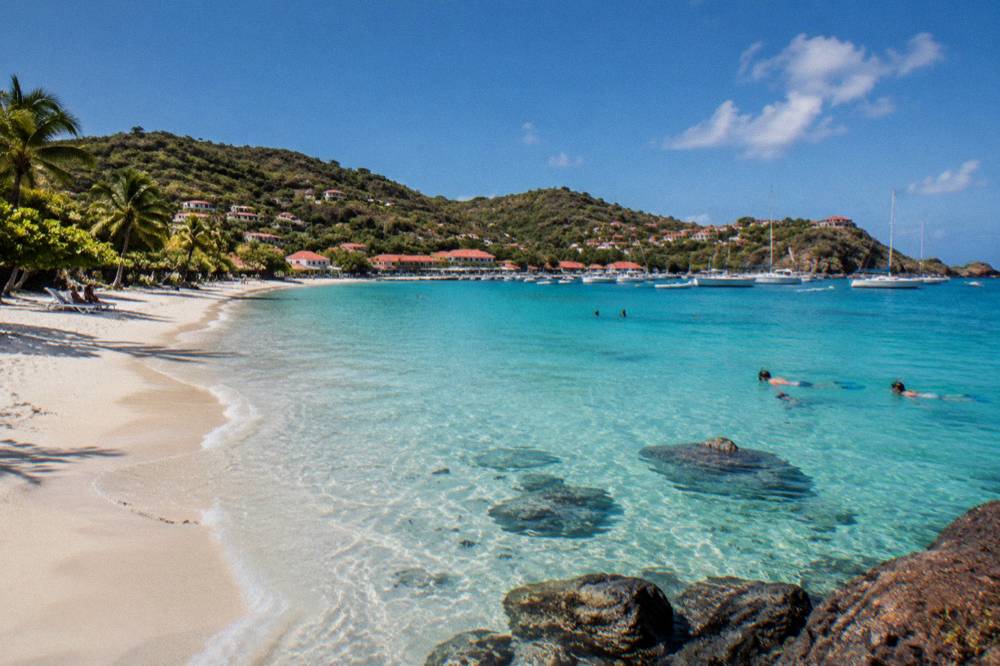
Yes. The sea around St Barts stays warm year round, at about 26 C in winter, and February falls squarely in that winter band. Green and hawksbill turtles are present around the island, notably in the Grand Cul-de-Sac lagoon and around Colombier, and the environment agency's rules are strict: no touching, chasing or feeding them, and no gloves in the water.
All of the island's beaches are public and free to access, from Saint-Jean and Gouverneur to Saline, Shell Beach (Grand Galet), Flamands, Colombier, Grand Cul-de-Sac, Lorient, Toiny and Corossol. Two island-wide rules apply everywhere, and they come from the authorities rather than from custom. First, dogs are banned from every beach on the island, even on a leash, under a long-standing municipal order, with signs at the entrances. Second, the marine reserve's protections extend to behaviour in the water: no collecting, no touching of protected species, and no motorised or electric water toys such as jet skis or seabobs inside the zones.
| Rule | Where it applies | Who publishes it |
|---|---|---|
| 5-knot speed limit on the water | Marine reserve zones | Environment agency |
| No jet skis or seabobs | Marine reserve zones | Environment agency |
| No dogs, even on a leash | Every beach island-wide | Municipal order |
| No touching turtles or collecting shells | Reserve zones and beaches | Environment agency |
| No drones without authorization | In and near reserve zones | Environment agency |
For swimmers, the practical February picture is straightforward: the water is warm enough that no wetsuit is needed, and the trade-wind breeze that defines the season is more noticeable on the beach than in the water. The environment agency asks anyone who finds a turtle nest to report it, and asks visitors to keep light and noise down near nesting areas, which mostly affects the remote beaches at night. The site's page on St Barts sea turtles covers the species and the rules in more depth, and the best snorkeling beaches on St Barts page lists the shore-access spots.
How Do You Get To St Barts In February?
Almost everyone reaches St Barts through St Martin: a short hop by small plane from Princess Juliana airport (SXM), Grand Case (SFG), San Juan (SJU), Guadeloupe (PTP) or Antigua (ANU), or a scheduled ferry from Philipsburg or Marigot. No jet lands on the island, because the runway at Gustaf III Airport is 646 metres and serves small STOL turboprops in daylight and visual conditions only.
The airport constraint defines the whole journey. Gustaf III Airport, also called Remy de Haenen and coded SBH, has a single 646-metre runway, no runway lights, and a steep approach over terrain that requires specially qualified pilots. The scheduled carriers are St Barth Commuter, which flies from SXM, SFG and PTP; Tradewind, which flies from SJU and ANU; and Winair, which serves the island from SXM. The St Barts airport guide explains the approach and the aircraft, and the page on landing at St Barts airport describes what the descent involves.
The ferry alternative runs on two routes. Great Bay Express crosses from Bobby's Marina in Philipsburg, on the Dutch side, in about 45 minutes; Voyager crosses from the Marigot ferry terminal, on the French side, in about 50 to 60 minutes. Both are operator "about" figures, both require a passport, and both advise arriving well before departure, with check-in closing before the boat leaves. The crossing can be rough, and sailings are subject to weather, so a ferry booking is never a guarantee against a bumpy ride. The St Barts ferry operators and schedule page carries the detail, and SXM airport to the St Barts ferry explains the connection if you land at Princess Juliana.
Entry rules deserve one flag. St Barts is outside the Schengen area, so the ETIAS and EES systems do not govern entry, and a Schengen visa alone does not authorize it where a visa is required. US, UK, Canadian and EU citizens are generally visa-exempt for short tourist stays, and the rule of thumb is to check your own government's travel advice for current passport requirements before flying, since the passport-validity question is the one on which advice differs. Other pages covering the same trip are gathered on St Barthelemy Travel.
Where Should You Stay In St Barts In February?
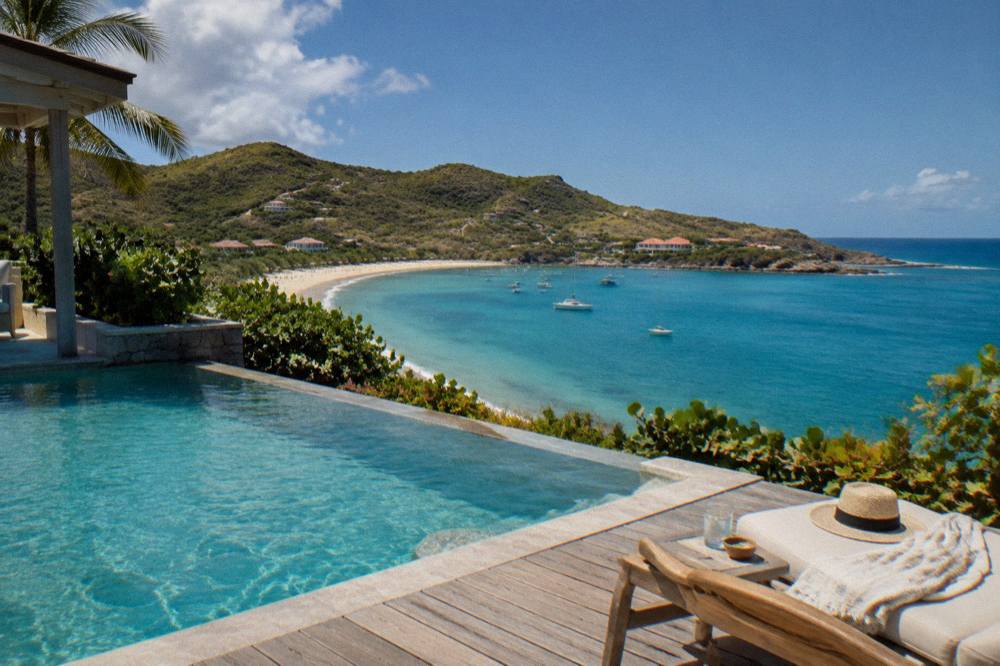
February travellers choose between the island's hotels, concentrated in Gustavia, Saint-Jean, Flamands, Grand Cul-de-Sac, Pointe Milou and Toiny, and its large villa market, handled by specialist managers such as WIMCO, Sibarth and St Barth Properties. All properties are open by February, because the autumn closure window ends with reopenings between mid-October and early November. Rates vary by season, and each property's own booking page shows current figures.
The hotel map matters more in February than in any other month, because high-season demand makes location a live trade-off. Gustavia puts you walking distance from the harbour, the shops and the shell museum; Saint-Jean sits by the airport and the island's most photographed beach; Grand Cul-de-Sac and Toiny are quieter, on the windward side; Flamands and Pointe Milou sit between. Named properties include Eden Rock, Cheval Blanc St-Barth Isle de France, Le Toiny, Le Sereno, Hotel Manapany, Hotel Christopher, Le Barthelemy and Le Village St Barth, all covered on the St Barts hotels page, with the top tier profiled under St Barts luxury hotels.
| Area | Character | Suited to |
|---|---|---|
| Gustavia | Harbour capital, shops and restaurants | Visitors who want to walk |
| Saint-Jean | Beach, airport, beach clubs | First-timers and families |
| Flamands | Wide beach, hotel row | Quiet beach stays |
| Grand Cul-de-Sac | Shallow lagoon, calm water | Families with children |
| Pointe Milou | Hillside views | View seekers |
| Toiny | Wild coastline, quiet | Retreat-style stays |
Villas are the other half of the market, and they suit February groups particularly well, since a villa sleeps a party at a per-week price that a run of hotel rooms rarely matches in high season. No manager is "the best": WIMCO, Sibarth and St Barth Properties are named simply as established specialist managers who book direct with on-island concierge support. The St Barts villas and where to stay in St Barts pages compare the two models area by area.
Should You Rent A Car In St Barts In February?
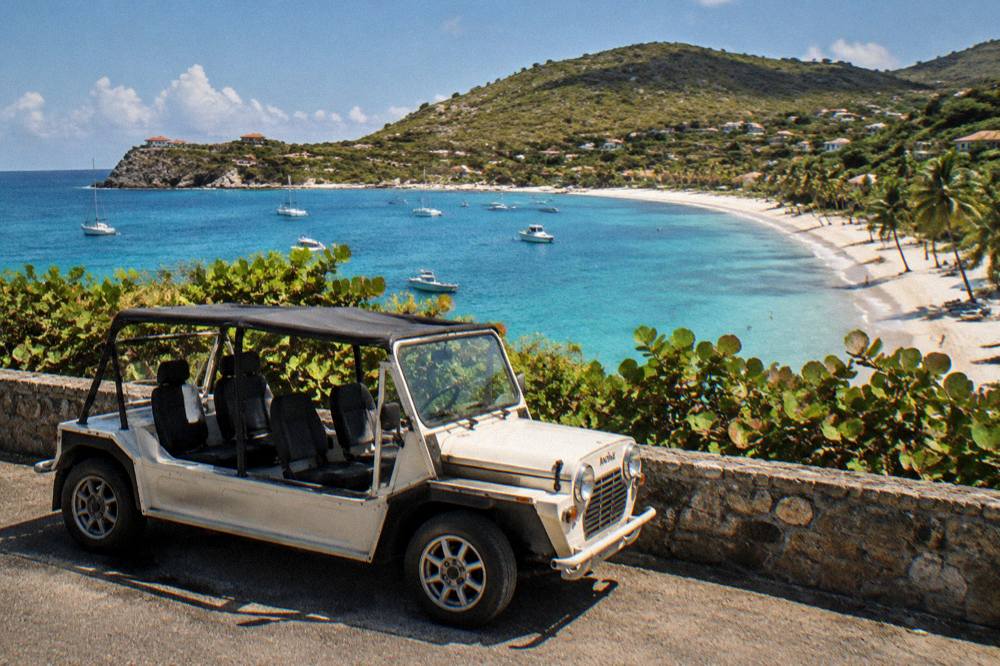
Most February visitors do rent a car or a Mini Moke, because the island's roads are its only transport network and the beaches are spread across about 21 square kilometres of hills. Driving is on the right, speed limits run at 50 km/h island-wide and 30 km/h in Gustavia and Saint-Jean, and the counters at the airport include Avis, Budget and Hertz alongside local agencies. Rental prices vary.
The road network explains the decision. Roads are narrow, winding and steep in places, with a single roundabout near the airport and French right-of-way rules at unsigned junctions. Small cars and the open-air Mini Moke are the standard choices, and local agencies supply the Mokes. Rental terms vary by company, including the minimum driver age, so the rental company's own terms are the reference. Book ahead for February: high-season demand is the pattern every guide and directory reports, and delivery to hotels and villas is commonly available from local firms. The St Barts car rental page carries the full picture, including the getting around St Barts alternatives for anyone who would rather not drive.
Taxis exist and work on route-based tariffs rather than meters, with surcharges in the evening and on Sundays and holidays. For a February stay of four days or more centered on beaches, a rental wins on flexibility; for a two-night Gustavia stay with a boat day booked from St Martin, a taxi pair of transfers can be enough.
What Should You Pack For St Barts In February?
Pack for a warm, dry, breezy month: daytime temperatures near 29 C, nights near 23 C, and the lowest monthly rainfall of the year at 38.4 mm in the Meteo-France normals. Bring reef-safe sunscreen, a light layer for trade-wind evenings on the water, walking shoes if the Colombier hike is on the list, and plug adapters for types C and E.
The evening layer is the item people forget. The trade winds that make February afternoons pleasant keep working after sunset, and a boat trip back from St Barts to St Martin in the late afternoon runs into that breeze at speed. Beachwear is standard everywhere by day, and Gustavia's shops mean anything forgotten can be bought on the island. The full list, including the electronics and paperwork details, is on the St Barts packing list page, and the island's electrical sockets, plug types C and E, are covered on the St Barts electricity page.
| Item | Why February needs it |
|---|---|
| Reef-safe sunscreen | Marine reserve rules and daily sun near 29 C |
| Light windproof layer | Trade-wind evenings and boat transfers |
| Walking shoes | Colombier trail and Gustavia's hills |
| Plug adapters C and E | French-style sockets on the island |
| Passport | Required for the ferry and for entry |
One last February-specific note on planning the week. Because per-person seats on the group sail run only from 12 May to 31 August 2027 on its listing, a February week leans on the private charter products, all of which depart from St Martin or Sint Maarten. That makes the neighbouring island part of the plan: many February visitors spend the night before the boat day in Simpson Bay or Grand Case, cross in the morning, and spend the day across Gustavia, Colombier and Ile Fourchue before sailing back. The site's St Barts itinerary and St Barts ferry operators pages cover both halves of that plan, and St Barthelemy Travel keeps the full list of bookable crossings and charters in one place.
Common Questions About St Barts In February
Is February a good time to visit St Barts?
Yes. The Meteo-France normals for 1991 to 2020 give February the lowest monthly rainfall of the year at 38.4 mm, with a mean daily high of 28.6 C, and the month sits wholly outside the 1 June to 30 November hurricane season. Everything is open, because the autumn hotel closures end with reopenings between mid-October and early November.
What is the weather like in St Barts in February?
The Meteo-France normals, 1991 to 2020, show a mean daily high of 28.6 C, a mean daily low of 23.3 C, and 38.4 mm of rain across the month, the lowest total in the annual table. The sea is warm, at about 26 C in winter.
Is February hurricane season in St Barts?
No. The Atlantic hurricane season runs 1 June to 30 November, with its peak from mid-August to mid-October, so February falls entirely outside it.
Can you swim in St Barts in February?
Yes. The sea stays warm year round, at about 26 C in winter, and all of the island's beaches are public and free to access. Dogs are banned from every beach under a municipal order, even on a leash.
Is St Barts expensive in February?
February sits in the December to April high season, when demand across hotels, villas and rental cars is at its annual peak. Rates vary by season and by property, and each property's own booking page shows current figures.
What should I book ahead for February in St Barts?
Hotels, villas, rental cars and restaurant tables are the standard high-season bookings. Boat trips from St Martin, including the private charters listed here, are also worth booking ahead, since February is the busiest stretch of the year for the day-trip fleet.