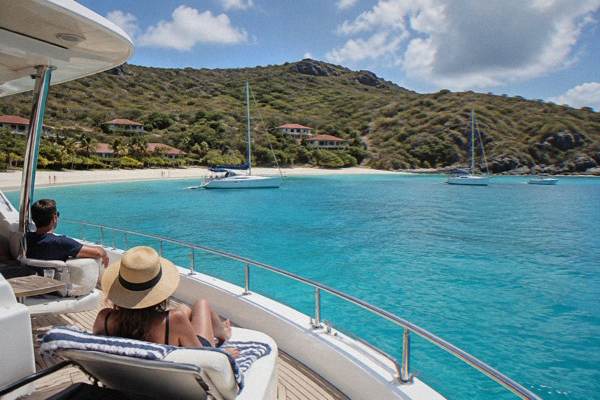
St Barts Family Vacation
St Barthelemy, better known as St Barts, is a small French island in the Caribbean that families can cover in a week: public beaches, a harbour capital, short transfers from St Martin, and boat trips that suit children and teenagers alike.
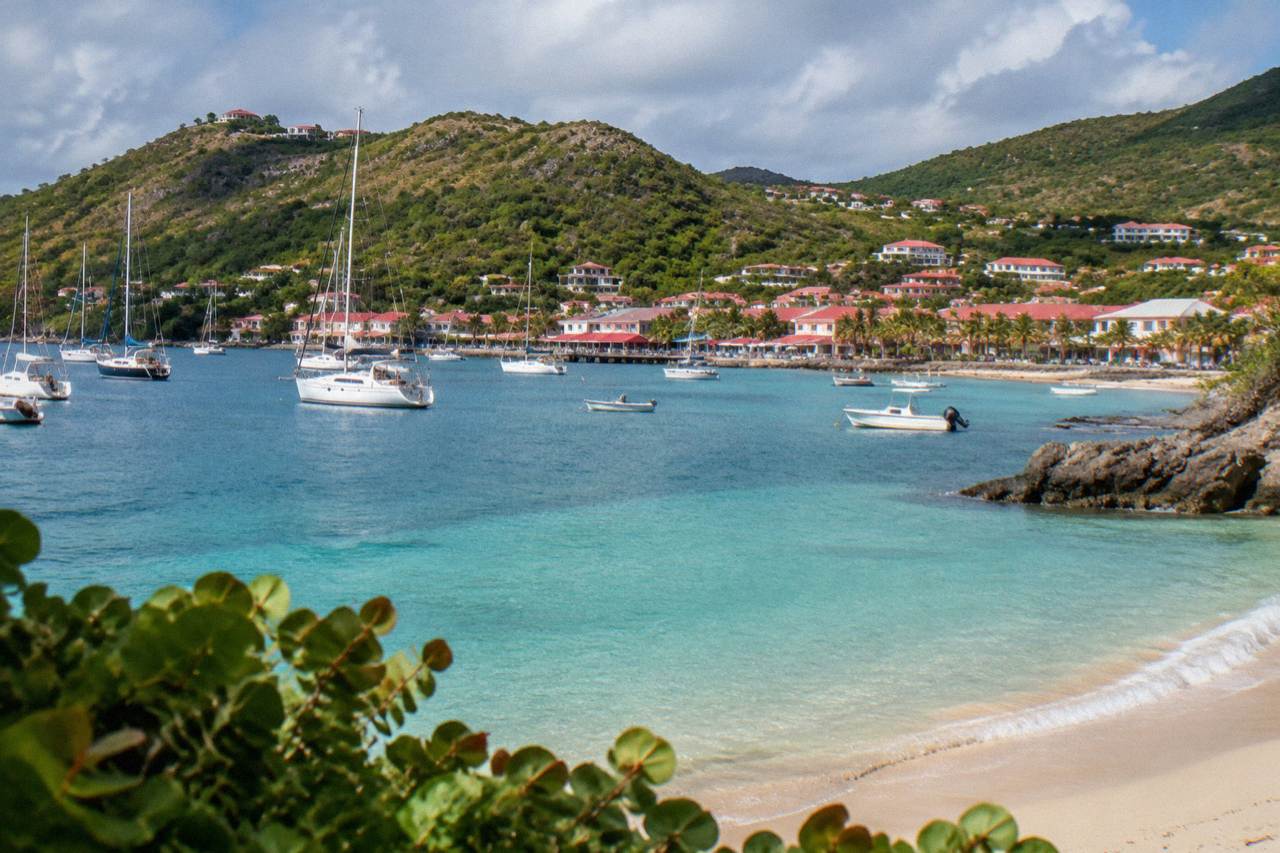
Yes, St Barts works as a family vacation: all beaches are public and free, the island is about 21 square kilometres so nothing is far, families reach it via St Martin by small plane or ferry, and the marine reserve makes the water itself an attraction.
St Barthelemy, written St Barts on this site, is a French overseas collectivity in the Caribbean with about 10,700 residents, a harbour capital called Gustavia, euro currency and English widely spoken alongside French. It covers about 21 square kilometres of hills, public beaches and turquoise water, which is the quiet reason it suits families: nothing on the island is more than a short drive apart, and every beach on it is public and free to access. This St Barthelemy Travel guide walks through the practical decisions, when to go, where to base, which beaches to choose, how to get there, and what a family can do together on the water.
Is St Barts A Good Choice For A Family Vacation?
Yes, St Barts works well for families who want beaches, water and a walkable harbour town rather than theme-park entertainment. All beaches on the island are public and free, the tourism committee lists the main ones by name and location, and the marine reserve gives the water itself an educational angle: the environment agency's regulatory-zones page lists a 5-knot speed limit, a jet-ski ban and 23 dive sites, with rules that ask visitors not to touch turtles or bring dogs onto beaches.
The island's scale is its family advantage. About 21 square kilometres means a beach, the harbour and a villa are never far apart, and a week is enough to settle into a rhythm rather than rush a checklist. The trade-off is honest: St Barts has no big resort animation programs, no water parks and no nightlife aimed at children. What it has is warm sea, quiet roads once you leave Gustavia, and open public space. The tourism committee's own destination pages frame the island around beaches, sailing events and Gustavia's harbour, which matches what a family actually does here: swim, boat, eat, repeat.
Families with teenagers often do best, because the water activities carry the trip. Families with toddlers can manage too, but the practical planning shifts toward staying close to one beach and using the site's family itinerary as a template rather than a schedule. Accessibility varies with the terrain: the island is hilly with steep roads in places, so step-free access differs property to property and is worth confirming directly with your hotel or villa manager before booking.
What Is The Best Time Of Year For A St Barts Family Vacation?
For most school calendars, the best windows are mid-December to April, when the Meteo-France normals for St Barthelemy show mean daily highs of 28.5 to 29.8 C and monthly rain between 38.4 and 79.2 mm, and May to early July, when the climate normals show highs around 30.7 to 31.2 C with 56.0 to 61.7 mm of rain. Hurricane season runs 1 June to 30 November, peaking mid-August to mid-October, so autumn breaks carry weather risk.
The numbers come from the Meteo-France climate normals, 1991-2020, for the St Barthelemy station, and they describe averages rather than promises. February is the lowest-rain month in the table at 38.4 mm and October the highest at 135.6 mm, with 891.3 mm across a typical year. September has the highest mean daily high at 31.7 C and January the lowest at 28.5 C, a narrow band that tells you the island is warm year round; the sea runs about 26 C in winter to about 29 C from August to October.
| Month | Mean Daily High (C) | Mean Daily Low (C) | Rain (mm) |
|---|---|---|---|
| Jan | 28.5 | 23.5 | 52.6 |
| Feb | 28.6 | 23.3 | 38.4 |
| Mar | 29.0 | 23.5 | 41.4 |
| Apr | 29.8 | 24.2 | 50.9 |
| May | 30.7 | 25.1 | 61.7 |
| Jun | 31.2 | 25.9 | 56.0 |
| Jul | 31.2 | 26.0 | 80.4 |
| Aug | 31.6 | 26.3 | 79.6 |
| Sep | 31.7 | 26.2 | 96.9 |
| Oct | 31.4 | 25.8 | 135.6 |
| Nov | 29.9 | 25.0 | 118.6 |
| Dec | 28.9 | 24.1 | 79.2 |
Two seasonal patterns matter for family planning. First, many hotels and restaurants close each autumn and reopen in waves between mid-October and early November, so a half-term trip in October can land on an island still waking up; confirm openings with each property directly. Second, the event calendar clusters in the cooler months: the St Barth Music Festival runs 8 to 18 January 2027, the Gourmet Festival 9 to 15 November 2026, and the Bucket Regatta in mid-March, all of which add harbour spectacle a family can watch for free from Gustavia's quays. For a fuller seasonal breakdown, see the site's season guide.
Which Area Of St Barts Should A Family Base Itself In?
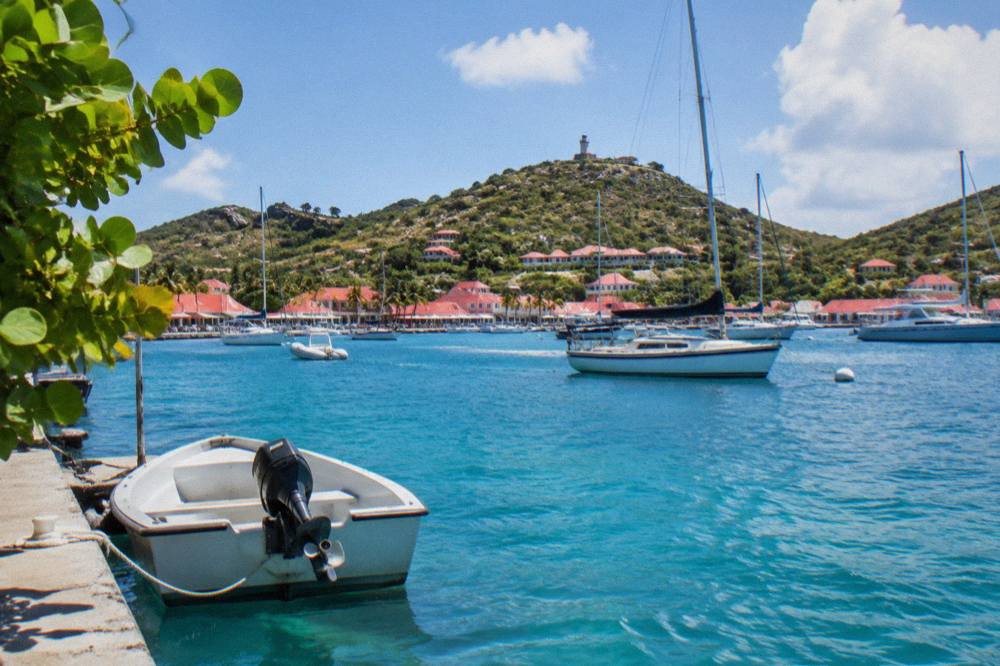
Gustavia, Saint-Jean, Grand Cul-de-Sac, Flamands and Lorient are the five practical family bases, each with a distinct character: Gustavia for the harbour, shops and ferry pier; Saint-Jean for the airport-side beach town feel; Grand Cul-de-Sac for a sheltered bay on the windward side; Flamands for a broad west-facing beach; and Lorient for a quieter residential stretch with its own public beach. All are on an island small enough that the choice shapes atmosphere more than distance.
The site carries a full area-by-area comparison, but the short version for families runs like this. Gustavia puts you walking distance from the tender quays, the shell museum and the harbour walls where regatta boats tie up; it is the busiest address on the island. Saint-Jean sits by the airport and the beach of the same name, which makes plane-spotting a free daily entertainment; the St Barts airport guide covers the approaches children love watching. Grand Cul-de-Sac wraps around a shallow bay on the island's east side, a map position that shelters it from the open Atlantic. Flamands holds one of the island's broadest beaches on the north shore, and Lorient mixes a public beach with a residential village feel.
| Area | Character | Nearest Public Beach | Suits Families Who Want |
|---|---|---|---|
| Gustavia | Harbour capital, shops and quays | Shell Beach (Grand Galet) | Walkable town life and boat watching |
| Saint-Jean | Beach town beside the airport | Saint-Jean | Airport spotting and beach days |
| Grand Cul-de-Sac | Sheltered bay, east side | Grand Cul-de-Sac | Calm bay swimming and watersports |
| Flamands | Broad beach on the north shore | Flamands | Space and a long stretch of sand |
| Lorient | Residential village feel | Lorient | Quieter streets and a local pace |
Accommodation splits into hotels and villas, and families with children often lean villas for kitchens and separate bedrooms. A large villa market exists on the island, with WIMCO, Sibarth and St Barth Properties named as the main managers, and the site's vacation rentals guide and villas overview cover the decision in depth. Rates vary by season, and each property's own booking page shows current figures.
To find the ideal base for your crew, book a family villa.
Which Beaches Can Families Reach Easily On St Barts?
Every beach on St Barts is public and free, and the tourism committee's destination pages list the main ones by name: Saint-Jean, Gouverneur, Saline, Shell Beach (Grand Galet), Flamands, Colombier, Grand Cul-de-Sac, Lorient, Toiny, Marigot and Corossol. Families can describe each only by name, map position and public status, so the choice comes down to which bay sits closest to your base and how you want to arrive.
Colombier deserves its own note because the sea, not the road, is the easy way in: the beach sits on the island's northwest corner inside the marine reserve, and boat trips from St Martin stop there routinely. That makes it a destination for a family boat day rather than a drive-and-park outing. The reserve's rules apply once you are in the water: the environment agency's regulatory-zones page lists a 5-knot speed limit in its zones, a ban on jet skis and other motorized water devices, a ban on dogs on beaches and in the water in reserve areas, and a strict no-touching rule for turtles, corals and other protected species.
| Beach | Map Position | Access Notes For Families |
|---|---|---|
| Saint-Jean | South shore beside the airport | Public; short transfer from Saint-Jean area stays |
| Gouverneur | South coast, west of Saline | Public bay reached by road |
| Saline | South coast, east of Gouverneur | Public; no development on the bay |
| Shell Beach (Grand Galet) | West edge of Gustavia | Public; walking distance from the harbour town |
| Flamands | North shore, west of Gustavia | Public; broad bay beside the Flamands area |
| Colombier | Northwest corner, inside the reserve | Public; most often reached by boat |
| Grand Cul-de-Sac | East (windward) side | Public; sheltered bay position |
| Lorient | North shore east of Flamands | Public; beside the village |
For the bare question of how many beaches exist and which bays suit which kind of day, the site's beach guide by coast and the individual beach pages carry more detail. Keep the marine-reserve rules in mind wherever you swim: the environment agency asks visitors to report turtle nests rather than disturb them, and drones are prohibited in and near reserve zones without authorization, which matters for families who travel with one.
How Do Families Get To St Barts?
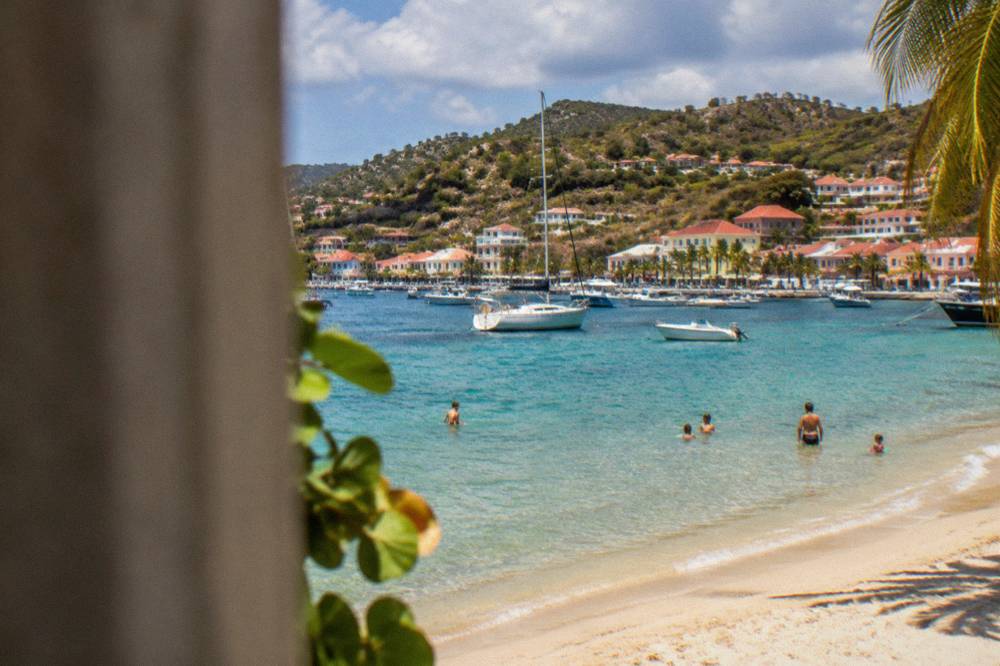
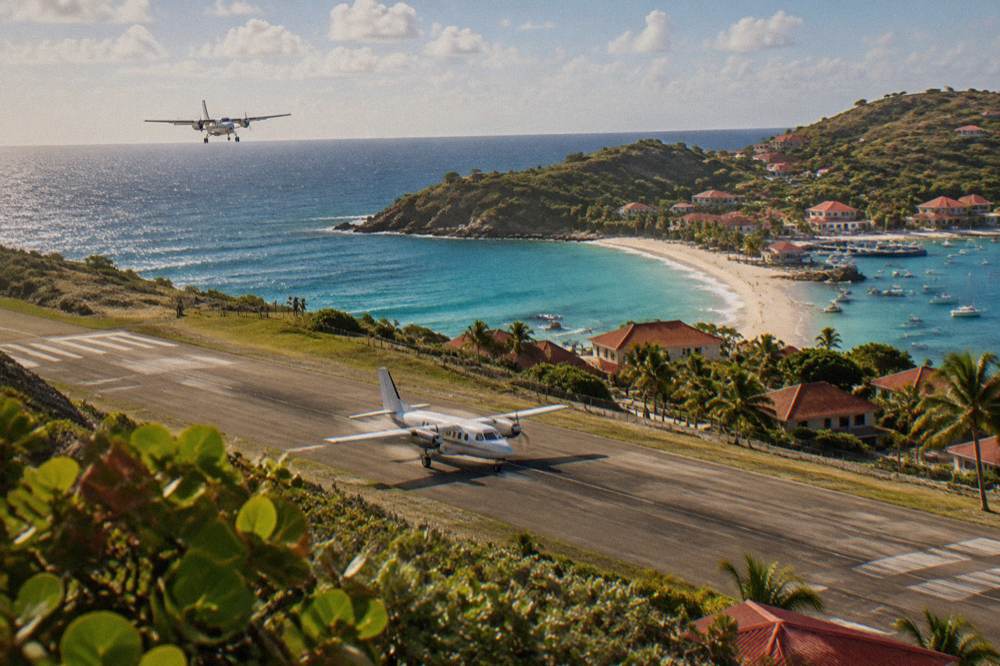
Families reach St Barts through St Martin: flights land at Princess Juliana (SXM) on Sint Maarten, Grand Case (SFG) on St Martin, San Juan (SJU), Guadeloupe (PTP) or Antigua (ANU), then a small STOL turboprop or a ferry completes the trip to Gustavia. No jet lands on St Barts itself: the runway at Gustaf III Airport is 646 m, operations are daylight and visual conditions only, and only specially certified small aircraft fly the approach.
The small-plane hop is the part children remember. St Barth Commuter flies from SXM, SFG and PTP, Tradewind flies from SJU and ANU, and Winair serves the island from SXM with Twin Otters; the site's how to get to St Barts and flights to St Barts pages cover each carrier and gateway. For US families, the flying from the US guide lays out the routing through the gateways, and the landing at St Barts airport page explains the famous low approach over the headland.
The ferry is the alternative, and it leaves from St Martin or Sint Maarten, never from St Barts. Great Bay Express runs from Philipsburg on the Dutch side, about 45 minutes according to the operator's page, and Voyager runs from Marigot on the French side, about 50 to 60 minutes; the operator's pages state a passport is required and check-in closes before departure. The crossing can be rough, and neither operator promises a calm one, so families with children prone to seasickness should weigh the small plane instead. The site's ferry operators and schedule guide and the SXM airport to ferry page walk through both terminals.
| Route | Mode | Operator | Notes From Operator Pages |
|---|---|---|---|
| Philipsburg to Gustavia | Ferry | Great Bay Express | About 45 minutes; departs Bobby's Marina |
| Marigot to Gustavia | Ferry | Voyager | About 50 to 60 minutes; 2 to 3 sailings a day each way |
| SXM to SBH | Small plane | St Barth Commuter, Winair | Short hop; STOL aircraft only |
| SJU to SBH | Small plane | Tradewind | Pilatus PC-12 service |
| PTP to SBH | Small plane | St Barth Commuter | Guadeloupe gateway |
Entry rules deserve one sentence of care: St Barts sits outside the Schengen area, so ETIAS and EES do not govern entry, US visitors need a passport book rather than a card, and families should check their own government's current travel advice for passport validity before flying.
The listing above is the one shared departure listed here, the Boomerangs Group Sail and Snorkel, and it is the natural family pick: a per-person day on the water from St Martin that stops at Gustavia, Colombier Beach and Ile Fourchue. Its listing runs the per-person format only from 12 May to 31 August 2027, so check the operator's live dates against your school holidays.
Do You Need A Rental Car On A St Barts Family Vacation?
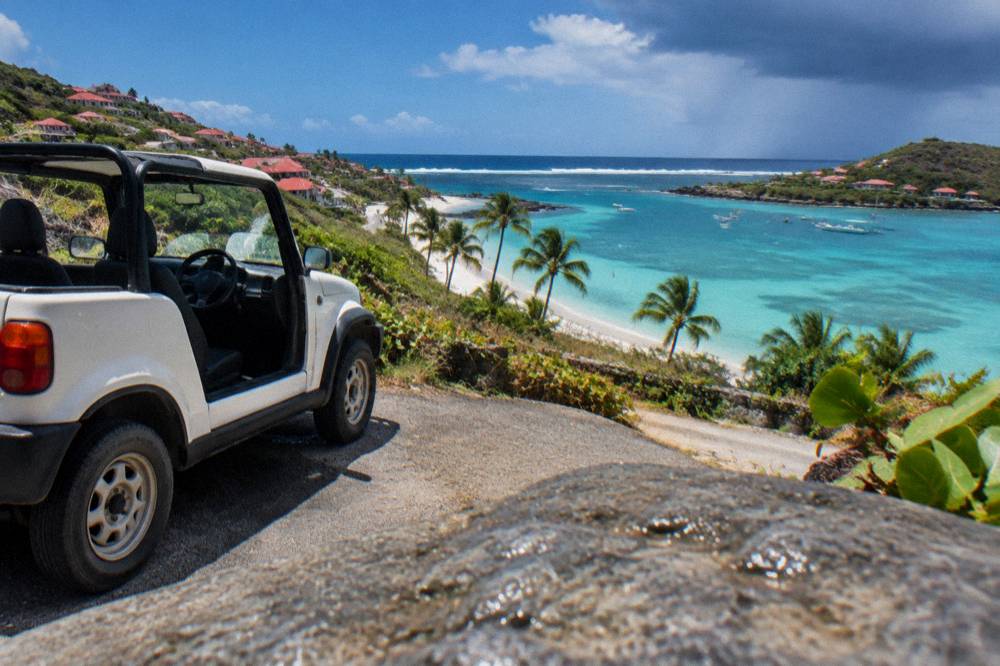
Yes, in practice a rental car makes a St Barts family trip far easier, because the island is hilly with narrow, winding roads and there is no public-transport alternative. Avis, Budget and Hertz hold counters at the airport, local agencies rent the open-air Mini Moke, driving is on the right, the speed limit is about 50 km/h island-wide with about 30 km/h in Gustavia and Saint-Jean, and minimum driver ages vary by company.
The roads are the reason to think before booking anything large. Sources describe the island's roads as narrow, winding and steep in places, with tight passing and one roundabout near the airport, which is why small automatic cars and small SUVs are the usual recommendation. The site's St Barts car rental guide covers the companies at the airport, and the getting around guide covers taxis as a supplement for evenings. Fares for any of these vary by season and by company, and each provider's own page shows them.
For families, the honest framing is that a car converts a week from one-beach to many-beach. Without one you are choosing a base, such as Grand Cul-de-Sac or Flamands, and staying beach-anchored, with taxis for Gustavia evenings. With one you can rotate bays, visit Corossol's village and shell museum on the west side, and carry snorkel gear and shade in the boot.
| Family Situation | Car Or No Car | Why |
|---|---|---|
| Staying one week, one beach base | Optional | Taxis and walking can cover a single-bay week |
| Staying one week, want several bays | Yes | Hills and narrow roads make walking between beaches unrealistic |
| Villa with kitchen shopping | Yes | Grocery runs and gear hauling are easier with a boot |
| Teenagers who want independence | Yes | Lets the day split without renegotiating taxi plans |
| Arriving by ferry with luggage | Optional | Taxis meet the Gustavia pier; a car can be collected in town |
One rule applies whatever you drive: dogs are banned on all beaches island-wide under a municipal order, so a family travelling with a pet plans around that. The site's pet travel page touches on the practicalities.
What Can A Family Do Together On The Water From St Martin?
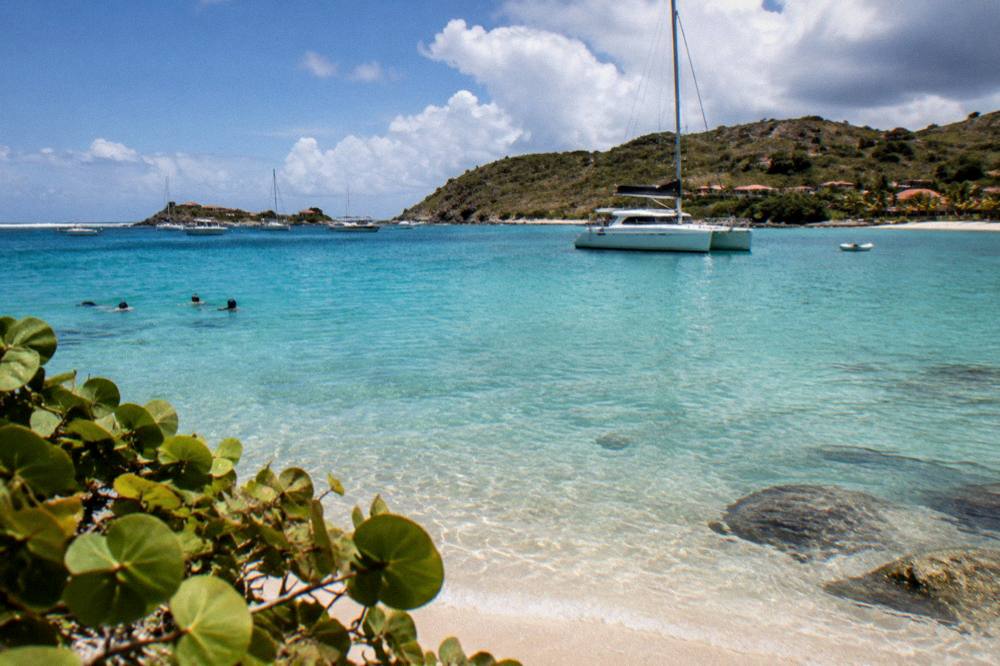
Every bookable boat trip listed here departs from St Martin or Sint Maarten, and families choose between one shared sail and five private charters: the Boomerangs Group Sail and Snorkel is the per-person option, while private charters priced per group, including an eight-hour full-day charter, a Nikki Beach charter from Sint Maarten, a seven-and-a-half-hour sailboat and a two-day one-night catamaran, let a family set its own stops at Gustavia, Colombier and Ile Fourchue.
The shared sail is the value play for a family of four who want a taste of the coast. The private charters are the flexibility play: you decide how long to swim at Colombier, whether to lunch aboard, and when to walk Gustavia's quays. The two-day catamaran turns the trip into an overnight, mooring near St Barts rather than day-tripping. All prices, ratings and durations for these products render from the listings below rather than from this page's prose.
A word on expectations in the water. The marine reserve's rules shape every one of these days: the 5-knot limit inside its zones, the no-touching rule for turtles and corals, and the ban on jet skis and towed motorized devices. That last ban is worth knowing before a teenager asks: there is no jet-ski rental to book around Colombier or Ile Fourchue, by law rather than by scarcity. For land-side alternatives on days ashore, the itineraries section has a day-by-day family plan.
What Rules Should Families Know Before Swimming And Snorkeling In St Barts?
The environment agency's regulatory-zones page lists the rules that govern every family swim in the reserve: a maximum of 5 knots for vessels in protected zones, no jet skis, seabobs, electric surfboards or towed sports, no touching, chasing or feeding of protected species including sea turtles, corals and rays, no gloves in the water, no collecting coral, shells, sand or rocks, no dogs on beaches or in the water in reserve areas, and no drones without authorization in or near the zones.
For parents, three of these translate directly into beach instructions. First, turtles are common in some bays, including around Grand Cul-de-Sac and Colombier, and the rule is strict: look, do not touch, and report any nest sighting to the environment agency rather than approaching it. Second, the shell-collecting ban surprises children, so set that expectation before the first beach stop; the island's shell museum in Corossol village is where shells belong, on display. Third, the dog ban covers every beach island-wide, leashed or not, under a standing municipal order.
| Rule | What It Means For A Family |
|---|---|
| 5-knot vessel limit in reserve zones | Boats approach swim areas slowly; swim zones stay calm |
| No touching turtles, corals, rays | Watch only; report nests to the environment agency |
| No collecting shells, sand, coral | Leave the beach as found; visit the Corossol shell museum instead |
| No dogs on beaches | Island-wide, leashed or not; plan pet care before you fly |
| No jet skis or towed motorized devices | Not bookable in reserve zones at any price |
| No drones without authorization | Keep the travel drone away from reserve bays |
The reserve covers five zones including Colombier Bay and Ile Fourchue, with vessels over 25 m barred from those bays and ecological mooring buoys preferred, which is why the boat days above feel unhurried. The 23 dive sites the agency lists sit mostly beyond family snorkeling depth, but the same rules govern them, and teenagers doing a discovery dive will hear them again from any local instructor.
What Should A Family Pack For A St Barts Vacation?
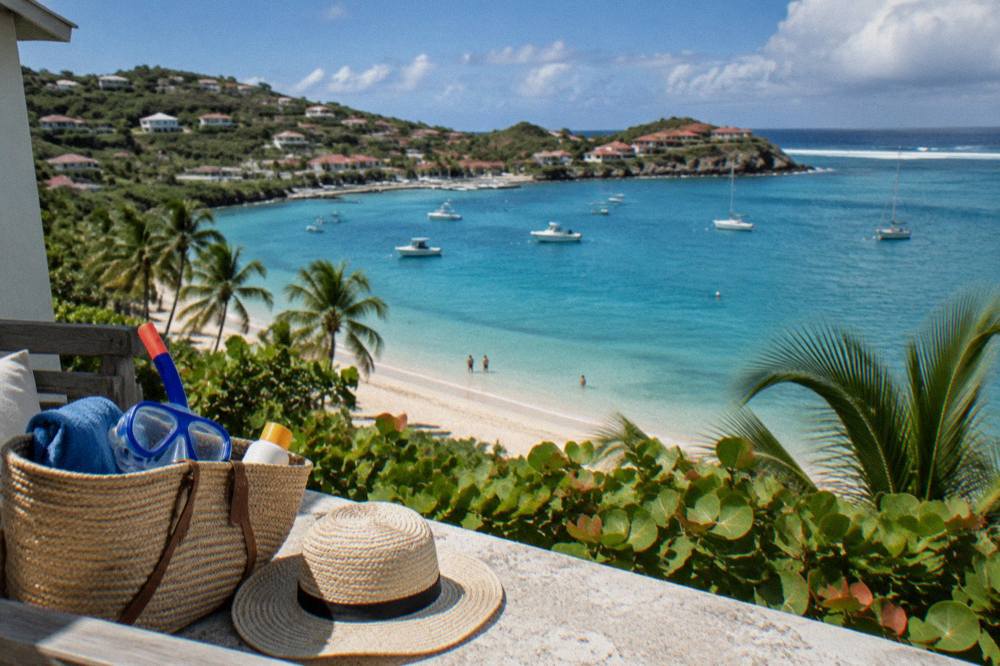
Pack for warm weather and strong sun with a few specific additions: reef-safe sunscreen for the marine reserve, water shoes for rocky entries, snorkel masks sized for children, light long-sleeve layers for boat days, and a dry bag for the ferry crossing, because the island is warm year round, the Meteo-France normals show mean daily highs between 28.5 and 31.7 C, and the sea sits at about 26 C in winter rising to about 29 C from August to October.
Clothing needs are simple: the island is casual by day, and the site's dress code notes cover what Gustavia's shops and restaurants expect in the evening without printing any rule as law. Plugs are types C and E, so North American families bring adapters. The time zone is UTC minus four with no daylight saving, which helps with jet-lag math for east-coast departures. Mosquitoes exist on the island as they do across the Caribbean, so repellent earns its place in the bag, and tap-water questions are covered separately on the site rather than guessed here.
| Item | Why It Earns Its Place |
|---|---|
| Reef-safe sunscreen | Reserve rules protect corals; standard formulas work against that |
| Child-sized snorkel masks | Turtles and fish are the island's main free attraction |
| Water shoes | Some bay entries are rocky; no per-beach condition claims are printed |
| Dry bag | The ferry crossing can be wet and rough |
| Light layers | Boat days at speed feel cooler than the beach |
| Plug adapters, type C and E | North American plugs do not fit local sockets |
What Does A Sample Week Look Like For A St Barts Family?
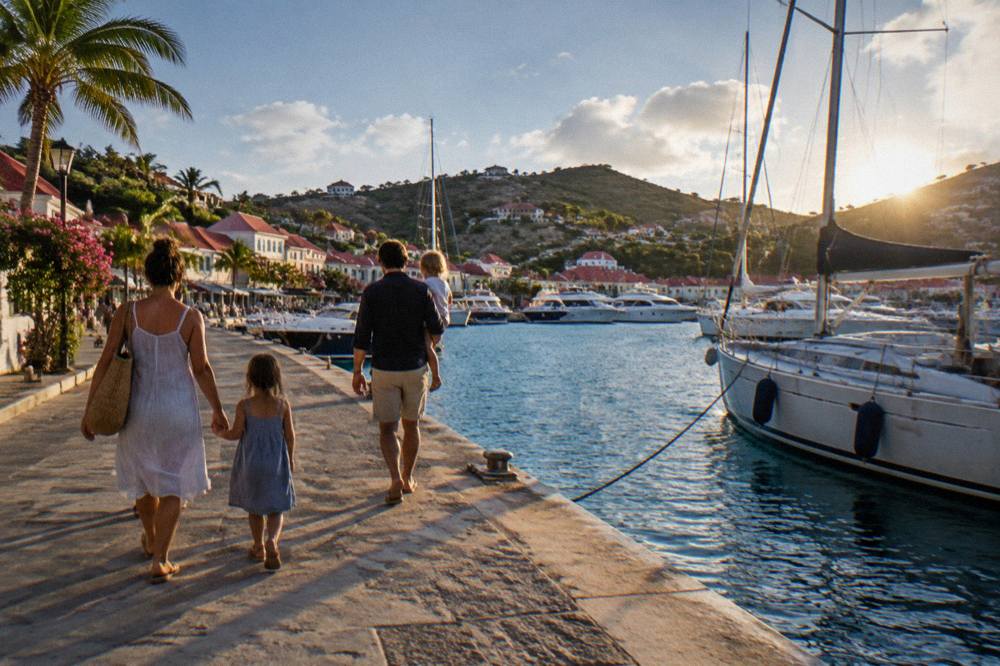
A sample week pairs a home beach with one outing a day: two or three days rotating the public bays near your base, one day in Gustavia for the harbour, the shell museum and the fort views, one boat day from St Martin to Colombier and Ile Fourchue, one slow day at Grand Cul-de-Sac or Flamands, and a final morning in Saint-Jean watching the planes land. Nothing on the island demands a queue, a ticket or a schedule beyond the ferry and the flight.
The point of the sample is the pacing rather than the order. Families who try to see every beach in three days end up in the car more than the water. The site's full family itinerary breaks this into days with morning and afternoon blocks, and the three-day and longer variants suit shorter breaks. If your week lands in January, the Music Festival adds evening concerts; in mid-March, the Bucket Regatta fills Gustavia's harbour with classic superyachts that children can study from the quay for free.
Common Questions About A St Barts Family Vacation
Is St Barts good for families with young children?
It can be. All beaches are public, the island is small enough that a single base covers everything, and the sea is warm year round. The caveats are real: roads are steep and hilly, and many hotels close each autumn, so confirm openings before booking an October stay.
Can children take the ferry from St Martin to St Barts?
Yes, the Great Bay Express from Philipsburg and the Voyager from Marigot both carry families, and the operator's page states a passport is required for the crossing. The trip takes about 45 minutes from Philipsburg or about 50 to 60 minutes from Marigot, and the crossing can be rough, so weigh the small plane for children who get seasick.
Are there any free things to do on St Barts with kids?
The public beaches and open public places are the free core of a St Barts trip: every beach is public and free to access, Gustavia's harbour and quays are open to walk, and plane-spotting at Saint-Jean costs nothing. No guided walking tour is listed here, so plan the free days around beaches and the harbour town.
Do babies and toddlers need a passport for St Barts?
Children need their own valid travel document, the same as adults. St Barts is outside the Schengen area, US visitors need a passport book rather than a card, and passport-validity rules differ by nationality, so check your own government's travel advice before flying rather than relying on a single number.
When is hurricane season on St Barts?
Hurricane season runs 1 June to 30 November, with the peak from mid-August to mid-October and the climatological peak near 10 September. October is also the wettest month in the Meteo-France normals at 135.6 mm. No prediction of a storm for any date is possible, and travel insurance is a family decision worth making with the dates in front of you.
A St Barts family vacation, in the end, is a small-island week done well: one base chosen from the five family areas, a rental car for the hills, public beaches rotated at whatever pace the children set, and one or two days on the water from St Martin to see Colombier and Ile Fourchue the way the marine reserve intends, slowly and without touching anything.