St Barts In Low Season
St Barthelemy, the small French island in the Caribbean better known as St Barts, slows down between roughly May and October, and that low season behaves differently from the high season almost everywhere on the island.
The St Barts low season runs roughly May through October, overlapping the Atlantic hurricane season from 1 June to 30 November. Temperatures stay warm, many hotels and restaurants close in autumn and reopen between mid-October and early November, and the island is quieter than in the December to April peak.
St Barthelemy, the small French island in the Caribbean usually written as St Barts, has two broad rhythms: the December to April high season that fills Gustavia harbour and the villa hills, and a long low season that stretches roughly from May into October. The low season is not a single experience. Late spring is warm and settled, midsummer is tropical and humid, and early autumn overlaps the peak of the Atlantic hurricane season, when many hotels and restaurants take their annual closure. This guide lays out what the pattern actually looks like, using the island's own climate record and the reopening rhythm reported by local sources, so a traveler can judge whether the quieter months fit their trip. The broader seasonal picture is covered in the site's best time to visit St Barts guide.
When Exactly Is The Low Season In St Barts?
The St Barts low season runs roughly from May through October, with the deepest quiet in September and early October, when many hotels and restaurants take their annual closure and reopen in waves between mid-October and early November. The December to April period is the high season, and the shoulder weeks on either side, late April into May and late October into November, are the transition. Local reporting describes this as a pattern rather than a fixed calendar.
The shape of the year is set by two overlapping clocks. One is the travel calendar: North American and European visitors arrive in numbers from mid-December through Easter, and thinned-out schedules follow once that wave passes. The other is the Atlantic hurricane season, which runs from 1 June to 30 November with its peak from mid-August to mid-October and a climatological peak near 10 September. The island's own tourism economy tracks both clocks at once, which is why the quietest stretch on the calendar, September, sits inside the busiest stretch of the hurricane season.
It helps to split the low season into three phases. May and June are warm, green and still well served, with hotels mostly open and the sea beginning its summer warm-up. July and August are tropical, with families from France arriving on holiday even as other markets stay away; the island is quieter than in winter but not abandoned. September and early October are the true trough, when the closure wave is at its deepest and the reopening calendar published by local sources picks up again from mid-October onward. Hurricane Irma, which struck in September 2017, falls inside this window, and the memory of it shapes how the island plans its autumn every year.
The table below gives the working breakdown used across this site.
| Period | Season label | What defines it |
|---|---|---|
| December to April | High season | Peak arrivals, full schedules, sailing events |
| May to June | Early low season | Warm and settled, hotels largely open |
| July to mid-August | Mid low season | Tropical, French school holidays, quieter than winter |
| Mid-August to mid-October | Deep low season | Closure wave, hurricane season peak |
| Late October to November | Reopening | Hotels and restaurants return in waves, Gourmet Festival in November |
What Is The Weather Like In St Barts In The Low Season?
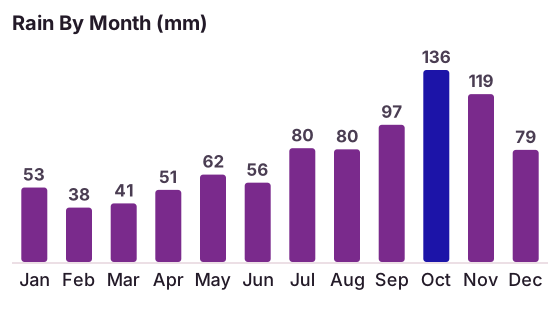
The low season is warm throughout: Meteo-France normals, 1991-2020, for the St Barthelemy station show mean daily highs rising from 30.7 C in May to 31.7 C in September, with rainfall increasing toward autumn, from 61.7 mm in May to 135.6 mm in October, the wettest month of the year. The sea stays warm, about 26 C in winter and about 29 C from August to October. None of this predicts any particular day.
The Meteo-France normals, 1991-2020, are the island's own long-run climate record, measured at the St Barthelemy station, and they describe a genuinely narrow temperature range. The mean daily high never falls below 28.5 C in any month of the year, and the low season months sit at the top of that range. Rain is the real variable. The annual total is 891.3 mm, and the distribution is lopsided: February averages just 38.4 mm, while October averages 135.6 mm, and September runs at 96.9 mm. In other words, the low season's second half carries a much larger share of the island's rain than its first half.
| Month | Mean daily high C | Mean daily low C | Rain mm |
|---|---|---|---|
| May | 30.7 | 25.1 | 61.7 |
| Jun | 31.2 | 25.9 | 56.0 |
| Jul | 31.2 | 26.0 | 80.4 |
| Aug | 31.6 | 26.3 | 79.6 |
| Sep | 31.7 | 26.2 | 96.9 |
| Oct | 31.4 | 25.8 | 135.6 |
| Nov | 29.9 | 25.0 | 118.6 |
Meteo-France normals, 1991-2020, St Barthelemy station.
Two cautions go with that table. First, a monthly normal is a long-run average, not a forecast of a dry week in May or a wet one in October, and this page does not try. Second, the hurricane season overlaps the warmer and wetter months, and the responsible way to plan around it is monitoring, not avoidance by guesswork. Météo-France publishes vigilance bulletins for the Saint-Martin and Saint-Barthélemy area, and the US National Hurricane Center issues Atlantic outlooks throughout the season. Travelers booking any Caribbean trip inside 1 June to 30 November should read their government's travel advice and hold appropriate insurance; the site's hurricane season guide covers this in more depth at St Barts hurricane season.
The sea deserves its own line. A secondary source rounds sea temperature to about 26 C in winter and about 29 C from August to October, which makes the low season the warmer time to swim. The beaches, all of them public, cost nothing, and there are no tickets, no timed entry and no seasonal pass for any of them.
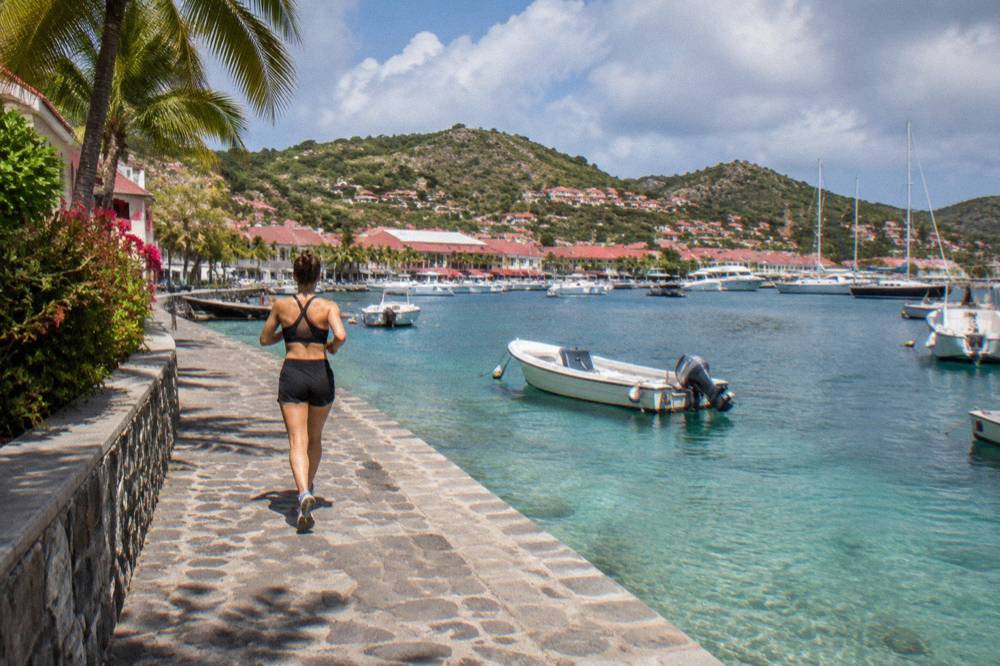
Which Hotels And Restaurants Close During The St Barts Low Season?
Many St Barts hotels and restaurants close each autumn and reopen in waves between mid-October and early November, a repeating pattern that local sources describe year after year rather than a set of fixed dates. The deepest closures land in September and early October. A smaller group of locally oriented places stays open all year, and villas generally remain available throughout, which makes them the most dependable low season lodging.
Local reporting describes the pattern plainly: hotels shut in August, sit closed through September and into October, and come back in clusters across late October, with a few stragglers in early November. Hotel restaurants and beach clubs generally follow their hotels. The restaurateurs' association circulating lists in local media works the same way, with tables returning in the second half of October and a handful of year-round local spots never closing at all. No per-property dates belong on a page like this one, because they shift every season and pass quickly; what does not shift is the shape.
One structural change is worth knowing about. Rosewood Le Guanahani, the property at Grand Cul-de-Sac, becomes Airelles Le Guanahani on 1 November 2026, a change attributed to secondary press rather than a confirmed operator page, so treat the name as in transition if booking there in the 2026 to 2027 window. Details of named hotels, with no rates and no ratings, sit in the site's St Barts hotels guide.
| Low season phase | Hotels | Restaurants | Practical read |
|---|---|---|---|
| May to mid-August | Largely open | Largely open | Closest to a normal island |
| Late August | Closure wave begins | Beach clubs wind down | Book around fixed reopenings |
| September | Deepest closures | Deepest closures | Fewest options of the year |
| Early October | Mostly closed | Early reopeners appear | Quietest weeks |
| Mid to late October | Reopening waves | Reopening waves | Verify each property directly |
| November | Nearly all back | Nearly all back | Gourmet Festival marks the restart |
The practical takeaway is not "avoid autumn" but "verify before booking." A traveler holding a September reservation should confirm the property is actually open that week, and a traveler eyeing late October should do the same in reverse. Villas sidestep much of this: the island's large villa market runs year-round, and managers such as WIMCO, Sibarth and St Barth Properties operate through the low season.
Confirm your property is open for the dates you want. Book a low season stay.
Is The Low Season Worth It Compared With High Season In St Barts?
The low season trades the island's peak energy for warmth, emptier beaches and a slower Gustavia, at the cost of shorter opening hours, the autumn closure wave and hurricane season planning overhead. High season delivers full schedules, sailing regattas and December to April reliability. Neither is objectively better; the trade is real, and this page is not permitted to predict crowds, availability or prices by month.
The honest framing is a straight comparison of what each period offers, without invented price claims or crowd predictions. What can be said is structural. High season carries the island's event calendar: the St Barths Bucket Regatta in mid-March, Les Voiles de St Barth in April, the New Year's Eve fireworks over Gustavia harbour and the winter shopping season, covered at St Barts New Year's Eve and St Barts shopping. The low season carries two dated events: the St Barth Gourmet Festival from 9 to 15 November 2026, which lands in the reopening window, and the St Barth Music Festival from 8 to 18 January 2027, which sits in high season's opening weeks but is worth knowing when reading the year as a whole.
| Factor | High season, December to April | Low season, May to October |
|---|---|---|
| Mean daily high | 28.5 to 29.8 C | 30.7 to 31.7 C |
| Rain pattern | Drier months in the normals table | Wetter months, October highest at 135.6 mm |
| Hotels | Open, full | Autumn closure wave, verify directly |
| Signature events | Bucket Regatta, Les Voiles, New Year's Eve | Gourmet Festival in November |
| Hurricane season | Outside | Overlaps from 1 June to 30 November |
| Beaches | Public and free | Public and free |
For some travelers the low season is the better trip, full stop. Anyone who values an unhurried morning at Saline or Colombier, warm sea, and a Gustavia without pressure on tables will find the May to June window especially appealing: the closure wave has not started, the Meteo-France normals show the early low season months at their driest of the half-year, and the island still runs at close to full service. Travelers whose trip must include a specific hotel restaurant or beach club should check dates against the reopening pattern rather than assuming.
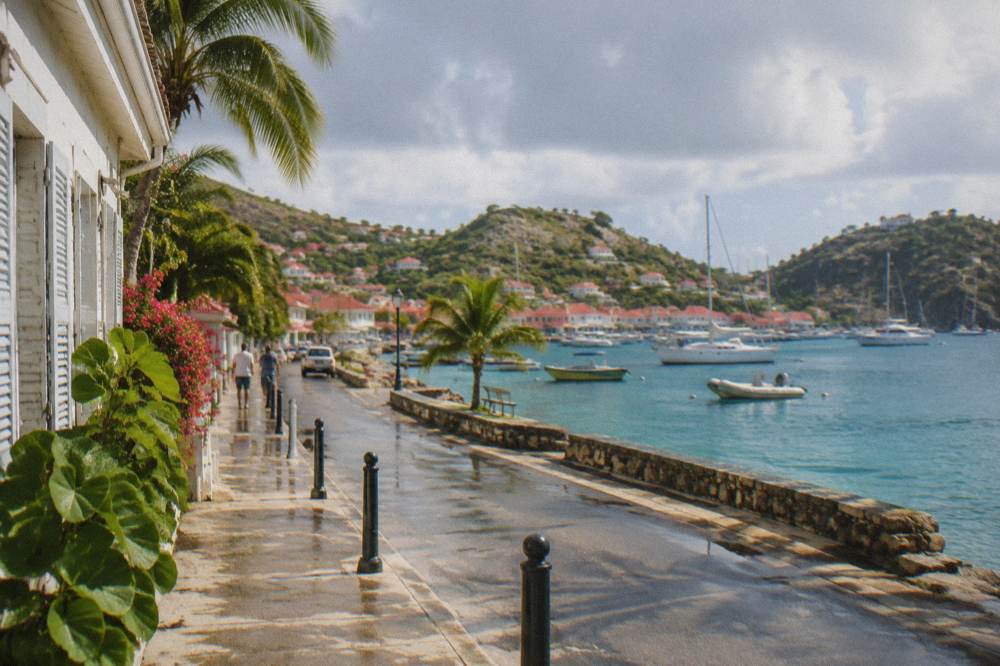
What Can You Do In St Barts In The Low Season?
The low season's activities are the island's permanent ones: the public beaches, swimming in warm sea that runs about 26 C in winter to about 29 C from August to October, snorkeling inside the marine reserve's rules, hiking the island's trails, and wandering Gustavia's harbor and forts. No jet skis operate in the reserve's zones, dogs are banned from beaches island-wide, and the reserve's 5-knot speed limit shapes every boat day.
The beach list does not shrink with the season, because every beach on St Barts is public and free. Saint-Jean, Gouverneur, Saline, Shell Beach, Flamands, Colombier, Grand Cul-de-Sac, Lorient, Toiny, Marigot, Corossol and Anse des Cayes all remain exactly that: public. What changes is how many people share them, and this page makes no prediction on that score. The marine reserve rules apply year-round with no seasonal discount: the environment agency's regulatory-zones page lists a 5-knot limit in its zones, a ban on jet skis and other motorized water devices, 23 dive sites, no dogs on beaches and no touching of sea turtles or other protected species. Hikers will find the Colombier trail and the island's other paths open as public paths; the site's St Barts hiking trails guide covers them.
Gustavia itself is a low season pleasure. The harbor, Fort Karl, Fort Gustaf, the Wall House Museum and the island's small Swedish-history museum keep their own hours, which this page does not print. The free things on St Barts are structural, not ticketed: the beaches and the open public places. No walking tour is offered anywhere on the island, and no free or tip-based guided walk exists either. Everything else covered here is indexed on St Barthelemy Travel.
One timing note matters for boat lovers. The one per-person group sail listed here, a day trip that leaves from St Martin or Sint Maarten and calls at Gustavia, Colombier Beach and Ile Fourchue, lists its season as 12 May to 31 August 2027 on its listing. That window sits squarely inside the low season, which makes it one of the few products whose published calendar matches the quieter half of the year. Its page is at Gustavia, Colombier and Ile Fourchue tour, and the operator's listing shows live dates.
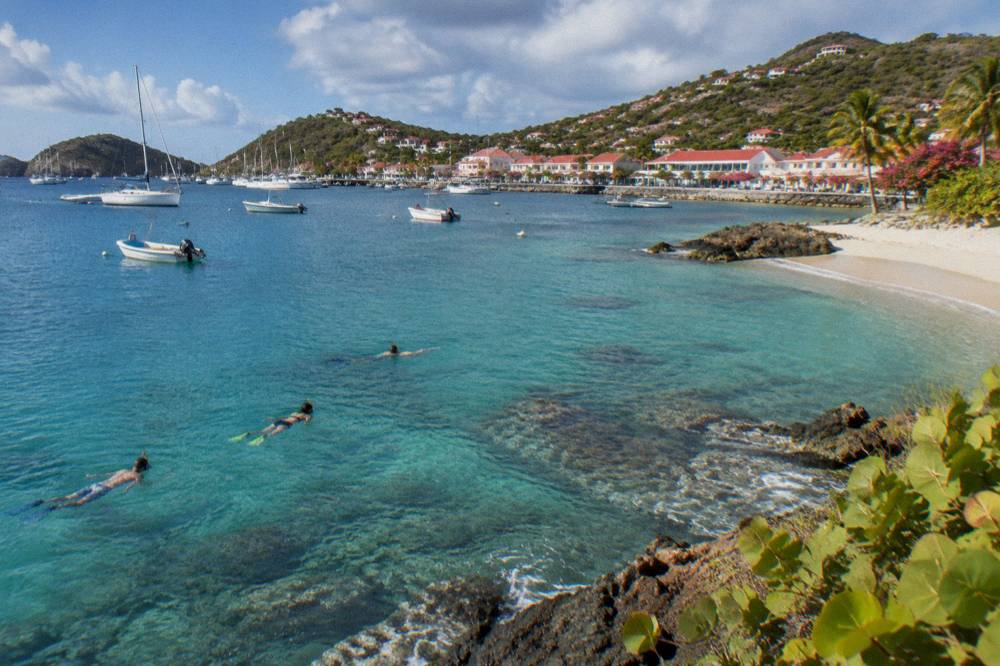
How Do You Get To St Barts In The Low Season?
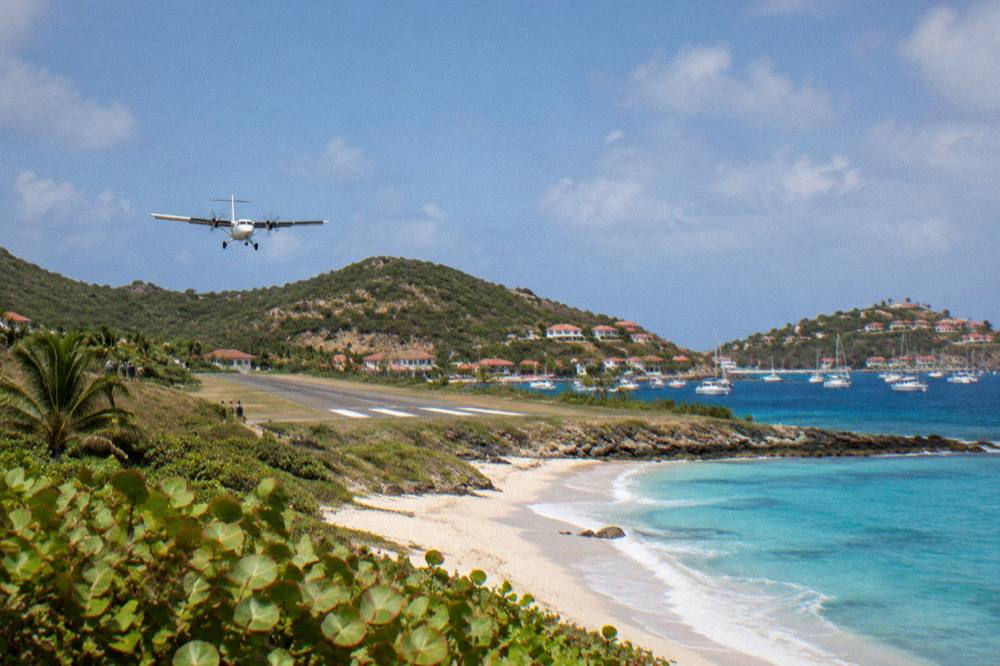
Getting to St Barts works the same way all year: fly into a gateway, then a small plane or the ferry. Gateway airports are St Martin, San Juan, Guadeloupe and Antigua; St Barth Commuter flies from St Martin, Grand Case and Pointe-a-Pitre, Tradewind from San Juan and Antigua, and Winair serves the island from St Martin. Two ferries, Great Bay Express from Philipsburg and Voyager from Marigot, run to Gustavia. No jets land at SBH.
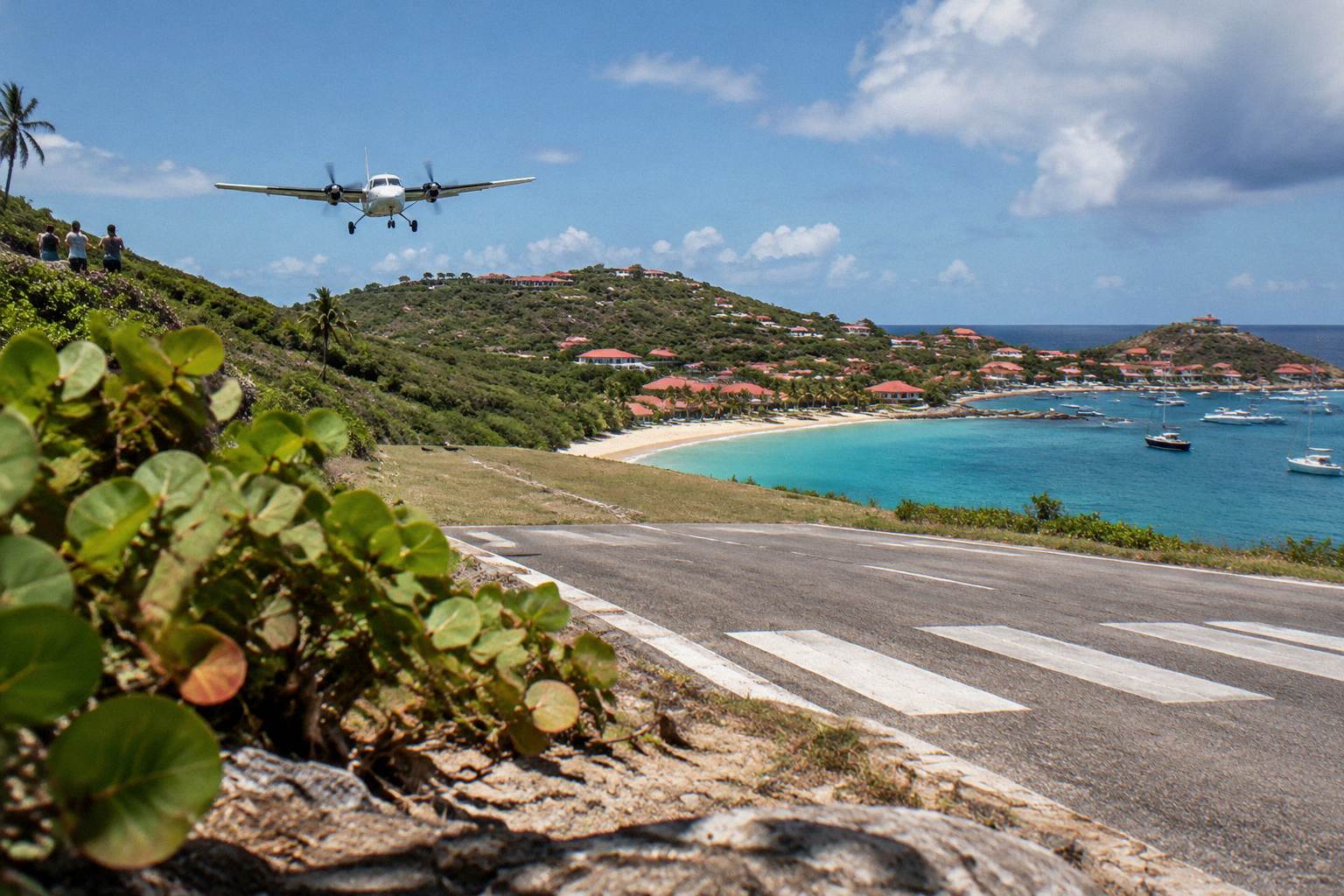
The airport does not change character with the seasons, only tempo. Gustaf III Airport, code SBH, also called Remy de Haenen, has a 646 m runway on a slope at Saint-Jean, which limits it to small STOL turboprops in daylight and visual conditions only. No jet lands there in any season, and no direct flight from outside the Caribbean exists. That structural fact is why every St Barts itinerary passes through St Martin or another gateway, and the full picture is at How to get to St Barts.
The ferries run year-round, with schedules that swell in the November to April peak and thin in the trough. Great Bay Express departs Philipsburg on the Dutch side, Sint Maarten, from Bobby's Marina, a crossing of about 45 minutes; Voyager departs Marigot on the French side, about 50 to 60 minutes. Both operators' pages carry the current timetables, and both require a passport; Great Bay Express asks passengers to arrive well before departure, with check-in closing before the boat leaves. The crossing can be rough in open water, so prone travelers should plan accordingly. Details live at St Barts ferry operators and schedule.
| Route | Mode | Operator or carrier | Notes |
|---|---|---|---|
| St Martin SXM to SBH | Small plane | St Barth Commuter, Winair | Short hop, frequent in season |
| Grand Case SFG to SBH | Small plane | St Barth Commuter | Short hop |
| Pointe-a-Pitre PTP to SBH | Small plane | St Barth Commuter | Guadeloupe gateway |
| San Juan SJU to SBH | Small plane | Tradewind | Puerto Rico gateway |
| Antigua ANU to SBH | Small plane | Tradewind | Seasonal frequency |
| Philipsburg to Gustavia | Ferry | Great Bay Express | About 45 minutes, passport required |
| Marigot to Gustavia | Ferry | Voyager | About 50 to 60 minutes |
Two low season cautions apply to this table. Ferry timetables are seasonal, and local reporting has documented temporary service reductions in the September to mid-October window in past years, so the operator's own booking page is the authority for a specific date. And because both ferries and the STOL flights depend on weather and, for flights, daylight, the deep low season's unsettled spells can touch either; a buffer day before a homeward flight is ordinary practice. The airport itself has its own guide at St Barts airport guide.
Do Tours Still Run To St Barts In The Low Season?
Yes, boat tours from St Martin and Sint Maarten still run to St Barts in the low season, including the per-person group sail whose listed season is 12 May to 31 August 2027, private day charters from St Martin, and a two day, one night private catamaran. Every bookable tour listed here departs from St Martin or Sint Maarten, never from St Barts itself, and each listing carries its own operating calendar.
The trip list on this site covers three kinds of product: the group sail and snorkel day trip, private day charters, and overnight charters. The group sail, which visits Gustavia, Colombier Beach and Ile Fourchue, is the one product priced per person, and its listed season, 12 May to 31 August 2027, is effectively a low season product by design. The private charters, priced per group, run on their own calendars, which the listings show. Nothing listed here departs from Gustavia or any other St Barts port; Simpson Bay, Cole Bay, Anse Marcel and Grand Case on the neighboring island are the departure points.
A private sailboat charter suits a low season day well, because the skipper can read the conditions and shape the itinerary, and the marine reserve's rules, from the 5-knot zones to the no-touch rules for turtles, are the same in October as in February. The reserve bans jet skis outright, so no itinerary anywhere listed here includes one. Travelers weighing the choice between the per-person sail and a private boat can compare both on the things to do in St Barts page.
The overnight catamaran answers a different low season question: what if the island's hotel closures are the problem? Sleeping aboard sidesteps the reopening calendar entirely, and a two day, one night format leaves from St Martin and overnights in St Barts waters, subject to the reserve's mooring and anchoring rules for Colombier and Ile Fourchue bays, which the environment agency's regulatory-zones page details.
For a celebration or a fixed-date trip, a full day private charter gives the same freedom in a single-day format, with the departure, again, from the St Martin side. The one decision worth making early in the deep low season is the date itself: sea state governs these crossings, and the operator's listing shows current availability.
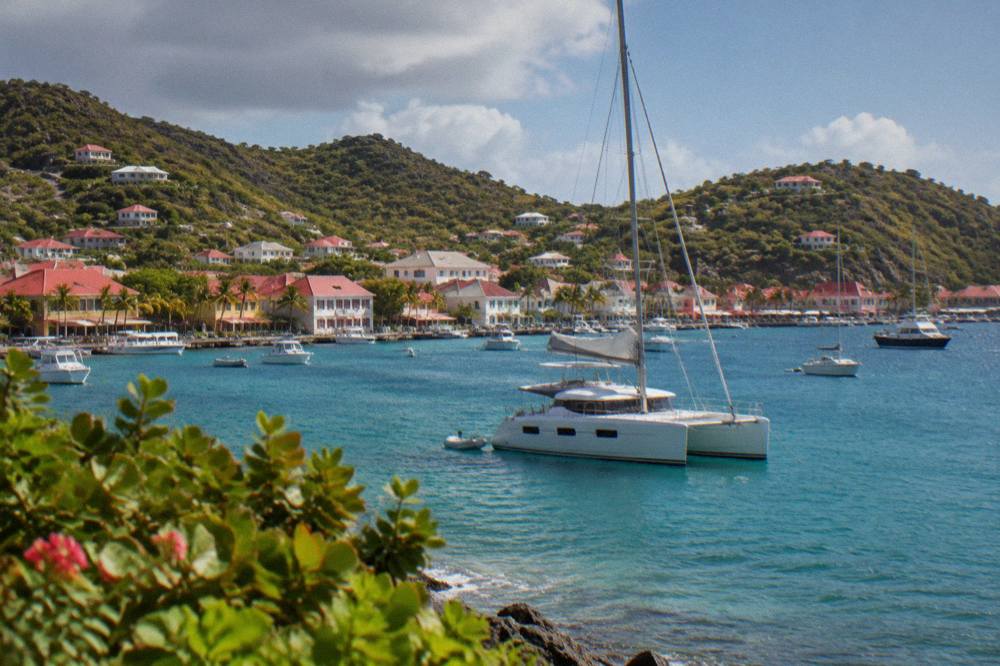
What Should You Pack And Plan For A Low Season Trip To St Barts?
Pack for a warm, humid tropical island with a chance of rain: light clothing, sun protection, reef-safe swim gear, a light rain layer, and nothing that depends on jet skis or drones near the reserve. Plan around three low season realities: the autumn closure pattern, hurricane season monitoring from 1 June to 30 November, and ferry or small-plane schedules that thin in the trough. Euros rule local spending, and French and English both work.
The basics do not change. St Barts uses the euro, French is the official language with English widely spoken, and the island is about 21 square kilometres with roughly 10,700 residents. Electricity runs on plug types C and E. Driving is on the right, roads are narrow and steep, and rental counters at the airport include Avis, Budget and Hertz, alongside local agencies and the open-air Mini Moke. The St Barts car rental guide covers the practicalities.
The low season additions are the ones worth a checklist. Hold travel insurance that names weather disruption, since the hurricane season's peak, mid-August to mid-October, overlaps the quietest weeks. Watch Météo-France's vigilance bulletins and the National Hurricane Center's Atlantic outlook in the days before travel, without treating either as a promise. Confirm, directly and in writing, that each booked hotel and each hoped-for restaurant is open on the exact dates. And if the trip hinges on a boat tour, check the listing's calendar before locking flights, because the per-person group sail's listed season stops at the end of August.
| Planning item | High season approach | Low season approach |
|---|---|---|
| Hotel booking | Book early for peak weeks | Verify the property is open at all |
| Weather watch | Routine | Météo-France vigilance and NHC outlooks |
| Insurance | Advisable | Advisable and weather-named |
| Ferry and flights | Full schedules | Confirm the specific date |
| Events | Regattas, New Year's Eve | Gourmet Festival, 9 to 15 November 2026 |
| Boat tours | All options listed | Check each listing's calendar |
A note on expectations. The low season is not a discount version of the same island; it is a different island, slower and warmer, with shorter lists and longer lunches. Travelers who accept that framing tend to plan better ones. The site's overall season guide carries the month-by-month comparison at best time to go to St Barts.
Common Questions About The St Barts Low Season
When is the low season in St Barts?
Roughly May through October, with the quietest and most closed-down stretch in September and early October. The December to April period is the high season, and late October into November is the reopening window, when hotels and restaurants return in waves.
Is St Barts hot in the low season?
Yes. Meteo-France normals, 1991-2020, show mean daily highs of 30.7 C in May rising to 31.7 C in September, and the sea is warm, about 26 C in winter to about 29 C from August to October.
Does it rain a lot in the St Barts low season?
Rain rises through the season in the climate normals: 61.7 mm in May, 96.9 mm in September and 135.6 mm in October, the wettest month of the year, against an annual total of 891.3 mm. Rainfall for any given day or week is unpredictable.
Are hotels closed in St Barts in September?
Many are. Hotels and restaurants close each autumn and reopen between mid-October and early November as a repeating pattern. A smaller group of locally oriented places stays open year-round, and villas generally remain available, so September trips are possible with direct verification.
Is the low season the same as hurricane season in St Barts?
They overlap but are not identical. The low season runs roughly May to October; the Atlantic hurricane season runs 1 June to 30 November, with its peak from mid-August to mid-October. The deep low season and the hurricane peak coincide.
Do the ferries to St Barts run in the low season?
Yes, Great Bay Express from Philipsburg and Voyager from Marigot run year-round to Gustavia, though timetables thin in the trough and local reporting has documented temporary reductions in past Septembers. The operators' own booking pages carry the current schedules.
The low season rewards travelers who plan around the pattern instead of against it: pick the phase that matches what they want from the island, verify what will be open, and let the warm water and empty sand do the rest. That is the whole of it, as St Barthelemy Travel lays out across the season and access guides linked above.