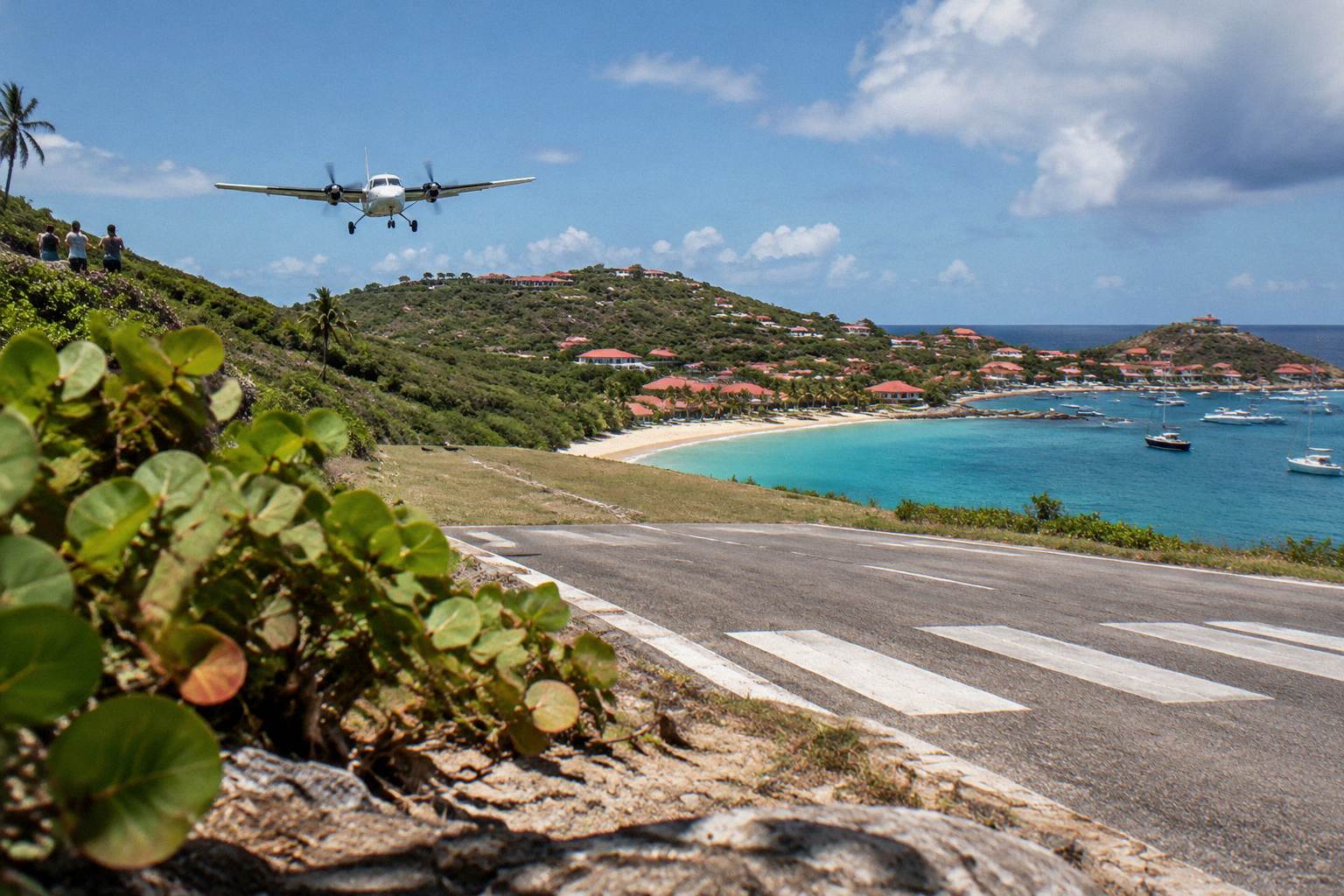
Helicopter To St Barts
St Barthelemy, usually written St Barts, has one of the shortest commercial runways in the Caribbean, and that single fact shapes every arrival, whether by helicopter, small plane or ferry from St Martin.
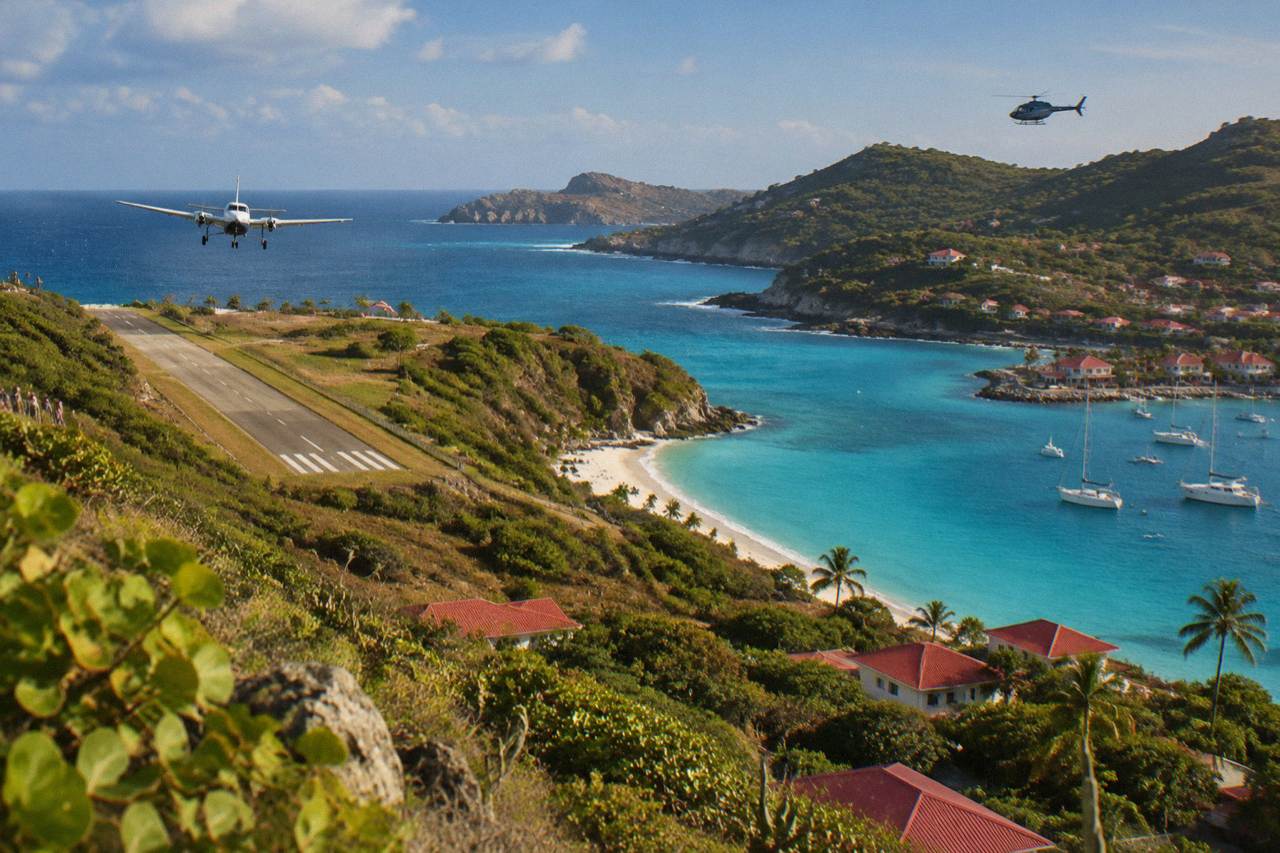
Helicopter transfer to St Barts exists only as an on-demand charter booked directly with operators, never as a scheduled service, and no helicopter product sits listed here. Arrivals work through gateway airports at St Martin, San Juan, Guadeloupe or Antigua, then a short STOL turboprop hop or a ferry crossing to Gustavia.
St Barthelemy, usually written St Barts, is a small French island in the Caribbean of about 21 square kilometres, and the way you arrive matters more here than almost anywhere else in the region. The airport, Gustaf III, also called Remy de Haenen, has a runway of just 646 metres, which rules out jets entirely and pushes travelers toward a small set of choices: a STOL turboprop from a gateway airport, a ferry from St Martin or Sint Maarten, a private boat, or a helicopter transfer arranged as a charter. This page explains how those pieces fit together and where a helicopter does and does not fit into a St Barts itinerary. St Barthelemy Travel covers the full arrival picture elsewhere, including the complete guide to getting to St Barts.
Can You Take A Helicopter To St Barts?
A helicopter to St Barts is an on-demand charter arrangement rather than a scheduled service: there is no helicopter route, timetable or published fare, and no helicopter product appears listed here. Arrivals instead run through small STOL planes from gateway airports or the ferries from St Martin and Sint Maarten, both of which are fully documented by operators and bookable in advance.
That is the honest starting point. Charter flights of this kind are arranged directly with operators, quoted per request and dependent on aircraft availability, so price, duration and frequency vary from one request to the next. Around it, the essentials are simple: the airport's physical limits, the fixed-wing carriers that serve it, and the two ferry companies that cross from St Martin. A traveler weighing a helicopter against the alternatives is really weighing a private charter against a short hop on a scheduled or semi-scheduled turboprop, or a crossing on a ferry that takes about 45 minutes from Philipsburg or about 50 to 60 minutes from Marigot, according to the operators' own pages.
The practical framing matters. Because every bookable product listed here departs from St Martin or Sint Maarten rather than from St Barts itself, the arrival leg and the activity leg of a trip are two separate decisions. The pages on flights to St Barts and the St Barts airport guide cover the fixed-wing side in detail, and this page keeps the helicopter question in proportion: a niche charter option sitting alongside a dense, well-documented network of planes and boats.
Why No Jet Ever Lands At St Barts
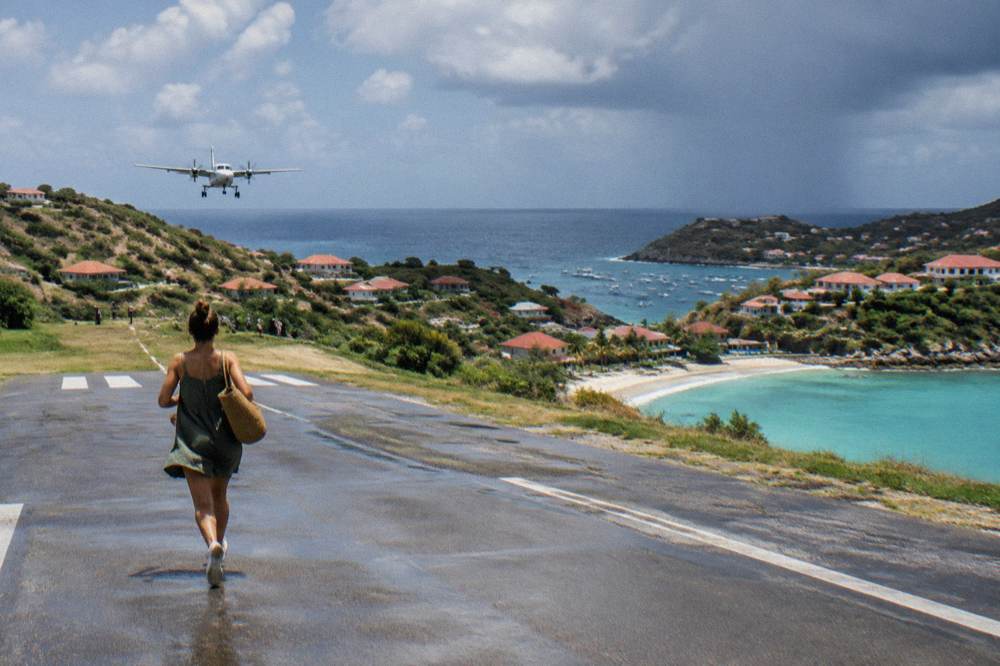
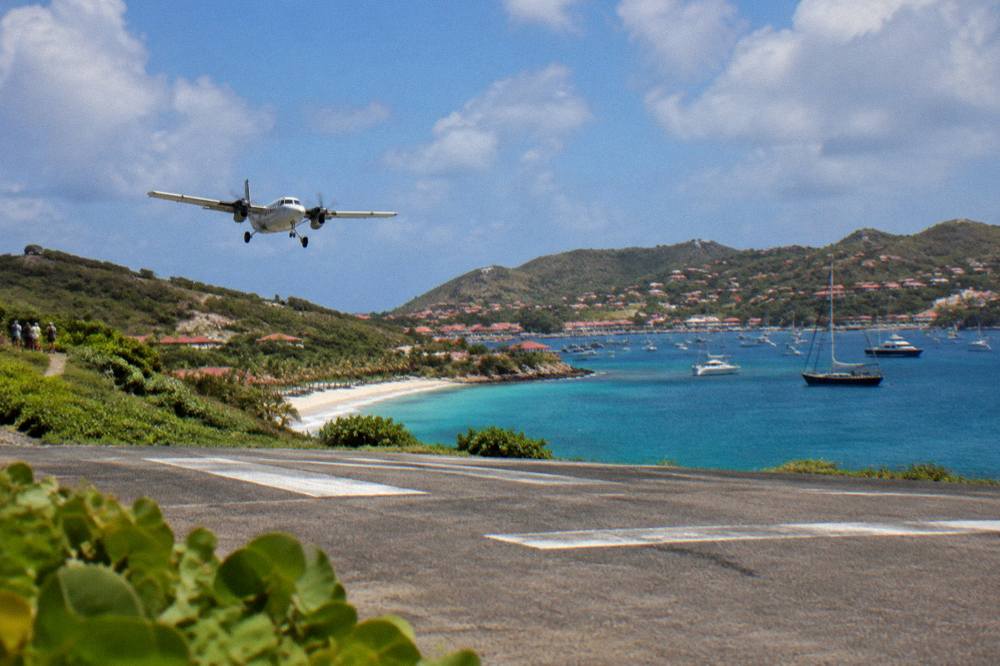
The runway at Gustaf III Airport is 646 metres long, which physically excludes jets: only small STOL turboprops such as the Twin Otter and Cessna Grand Caravan types operate there, and flying is limited to daylight and visual conditions because the runway has no lighting for night operations. No direct jet flight from outside the Caribbean reaches the island.
The consequences ripple through every itinerary. A traveler arriving on a long-haul jet connects through one of four gateways: Princess Juliana Airport on Sint Maarten (SXM), San Juan in Puerto Rico (SJU), Pointe-a-Pitre in Guadeloupe (PTP) or Antigua (ANU). From there the last leg is a short hop on a small aircraft, or a ferry, or a charter of some kind. The tourism committee's materials and the airport's own published details are consistent on this point, and the site's page on flying to St Barts from the US walks through the gateway logic for American travelers.
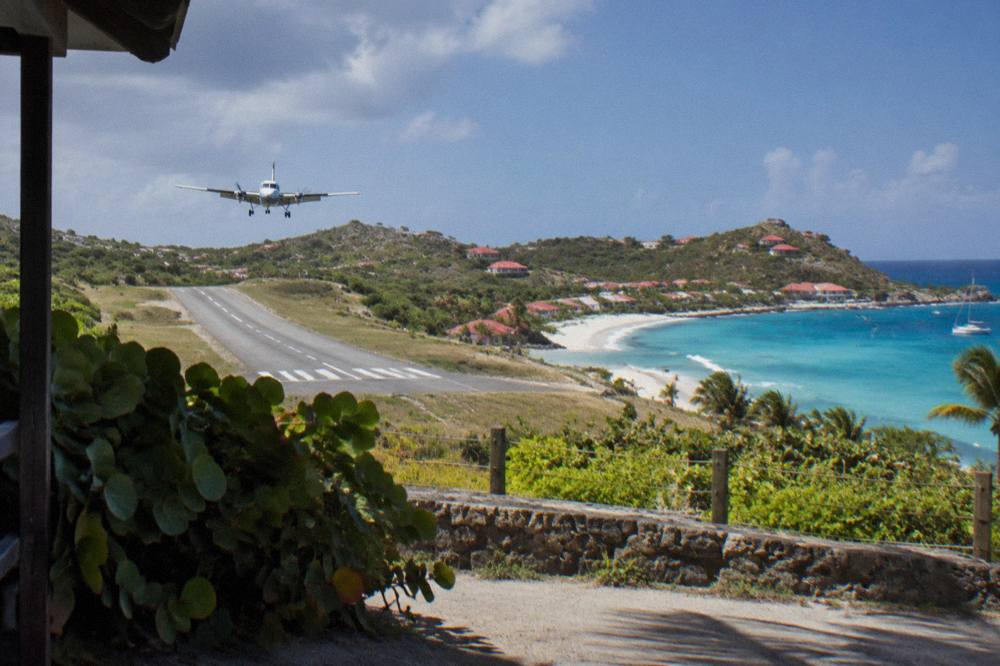
This is also why the helicopter question comes up so often. The island is hard to reach by design and by geography, and a helicopter feels like an obvious shortcut over the last leg. It can be, as a private charter, but the same constraints that shape fixed-wing flying shape rotorcraft too: daylight operations, weather sensitivity, and an island with limited dedicated helipad infrastructure relative to its harbor. There are no scheduled helicopter links, so any arrangement is bespoke, quoted per trip and confirmed directly with the operator.
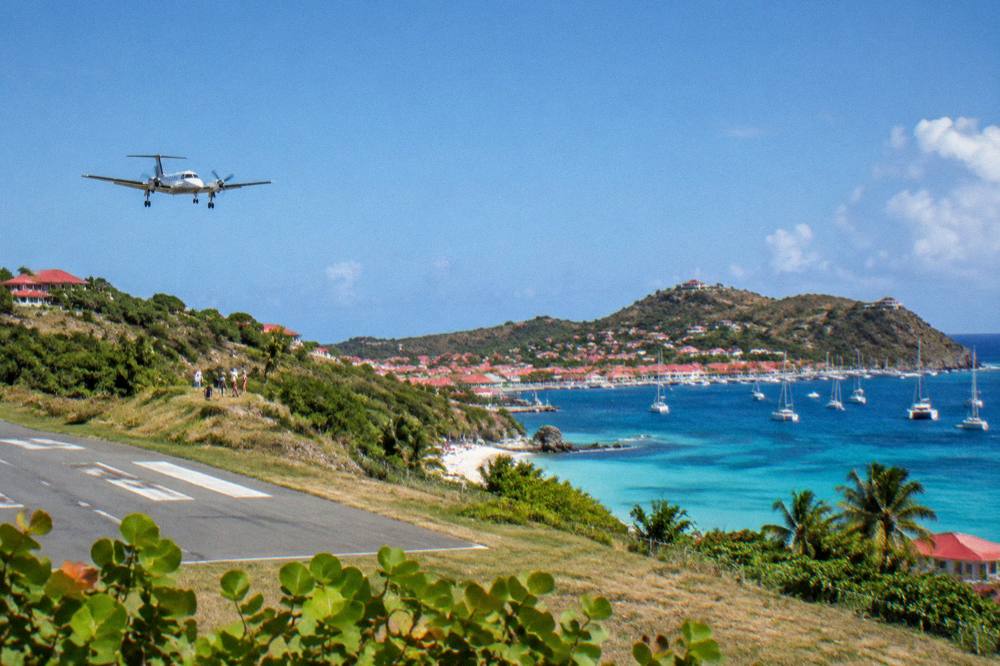
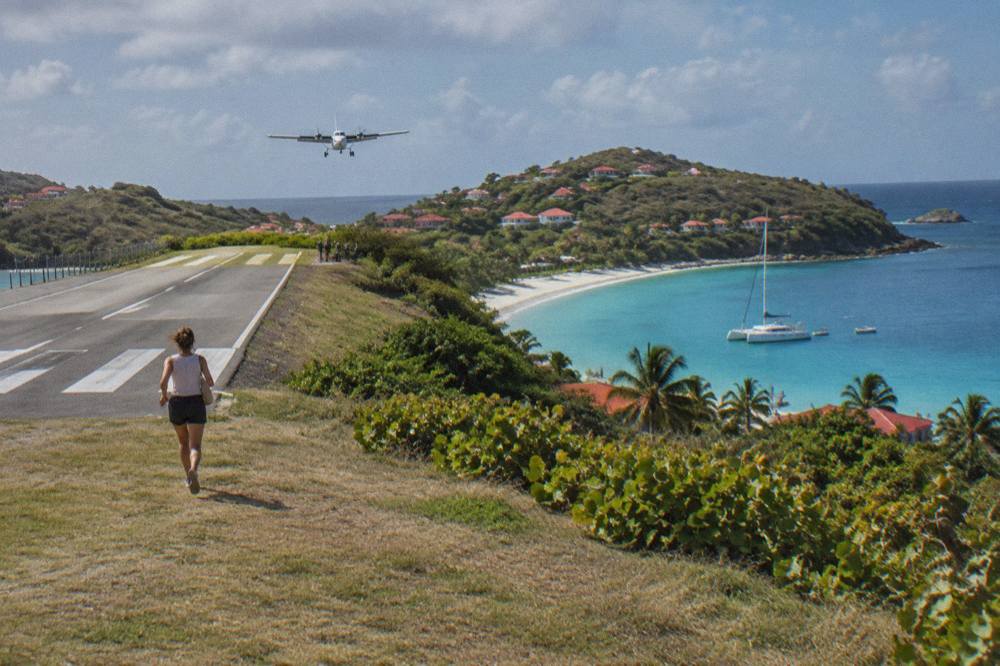
For travelers who find the famous approach itself appealing rather than daunting, the fixed-wing landing at SBH is a known spectacle, and the site's page on landing at St Barts airport describes what the approach involves from the passenger's seat.
Between the air options and the water options sits a simple truth about this island: the last leg from St Martin is short, and several ways of crossing it are bookable today, all of them departing from the St Martin or Sint Maarten side. The trio above spans the range, from a per-person group sail to full private charters.
What Airlines Actually Fly Into St Barts?
Two named carriers dominate scheduled service into St Barts according to their own pages: St Barth Commuter flies from St Martin (SXM), Grand Case (SFG) on the French side and Pointe-a-Pitre in Guadeloupe (PTP), while Tradewind Aviation flies from San Juan (SJU) and Antigua (ANU). Winair also operates Twin Otter aircraft from Sint Maarten.
The carrier landscape is small because the airport is small. The table below shows what the operators' own pages verify, and nothing beyond it. Fares, timetables, flight durations in minutes and baggage rules are deliberately absent; the operators' booking pages carry current schedules.
| Carrier | Gateway airports served | Aircraft type noted in sources |
|---|---|---|
| St Barth Commuter | SXM, SFG (Grand Case), PTP (Pointe-a-Pitre) | Cessna 208B Grand Caravan |
| Tradewind Aviation | SJU (San Juan), ANU (Antigua) | Pilatus PC-12 |
| Winair | Operates Twin Otters at SXM | DHC-6 Twin Otter |
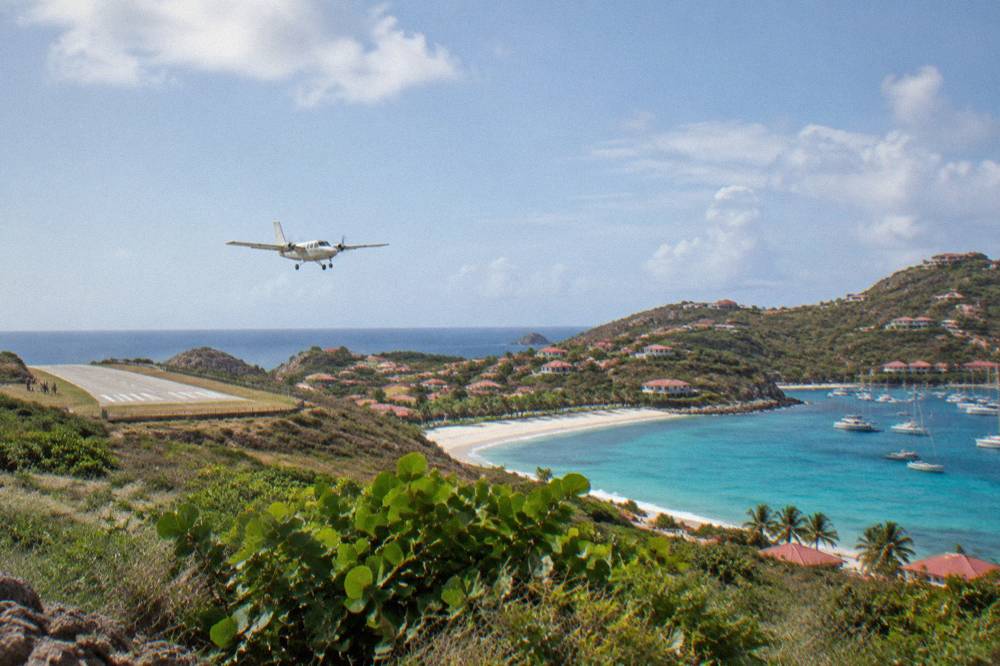
The choice of gateway usually follows the long-haul itinerary rather than the island hop itself. Travelers from Europe often connect through St Martin or Guadeloupe; travelers from the United States mostly connect through San Juan or St Martin; and the site's pages on Winair at St Barts and flights from Miami to St Barts look at specific corridors. What no gateway changes is the endpoint: a 646-metre runway, a daylight-only operation, and a landing that pilots require special qualification to perform.
Is The Ferry From St Martin A Better Option Than Flying?
For many itineraries the ferry is the most flexible documented alternative to any flight, helicopter included: Great Bay Express runs from Philipsburg on the Dutch side with a crossing of about 45 minutes, and Voyager runs from Marigot on the French side with a crossing of about 50 to 60 minutes, according to the operators' pages. Both require a passport and both are weather dependent, and the crossing can be rough.
The two operators serve the two sides of St Martin and Sint Maarten, which matters for where a traveler's gateway flight lands. Princess Juliana Airport sits on the Dutch side near Simpson Bay, from which the Great Bay Express departure point at Bobby's Marina in Philipsburg is the natural match; a flight into Grand Case on the French side pairs more naturally with the Voyager terminal at Marigot. The operators' check-in rules call for arriving well before departure, with Great Bay Express asking passengers to check in around 45 minutes ahead and closing check-in shortly before sailing.
| Operator | Departure point | Side of St Martin | Crossing stated by operator |
|---|---|---|---|
| Great Bay Express | Bobby's Marina, Philipsburg | Dutch (Sint Maarten) | About 45 minutes |
| Voyager | Marigot Ferry Terminal | French (St Martin) | About 50 to 60 minutes |
Fares, timetables and sailing frequencies shift with season and demand, and the operators' own booking pages are the live source. What can be said is that the crossing is open water and conditions vary; travelers prone to seasickness should plan for it, and the site's page on St Barts ferry operators and the schedule goes deeper, including the connection from SXM airport to the ferry.
Against a helicopter charter, the ferry trades speed and privacy for certainty and price transparency: it is a bookable, scheduled, per-seat service rather than a bespoke quote. Against the small planes, it trades the aerial approach for sea level and a bigger bag allowance mindset, since ferry baggage rules are generally more forgiving than a Grand Caravan's. Neither comparison needs invented numbers to make the point; the structural difference between a scheduled seat and a private charter says it all.
What A St Barts Helicopter Charter Involves In Practice
A helicopter transfer to St Barts is arranged as a private charter quoted directly by the operator: there is no published fare, timetable or terminal network, so the practical steps are to contact a charter operator, confirm aircraft availability for the date, and hold a fallback plan, most commonly the St Martin small-plane hop or the ferry, since weather affects rotorcraft as much as anything else in the islands.
Two structural points are worth knowing before requesting a quote. First, the natural origin for a helicopter leg is St Martin or Sint Maarten, the same gateway the planes and ferries use, so the helicopter replaces only the last leg of a journey, not the long-haul flight into the region. Second, daylight and visual conditions govern aviation on and around the island, and a day that grounds a Twin Otter can ground a helicopter too; a same-day fallback across the strait is what makes the plan dependable.
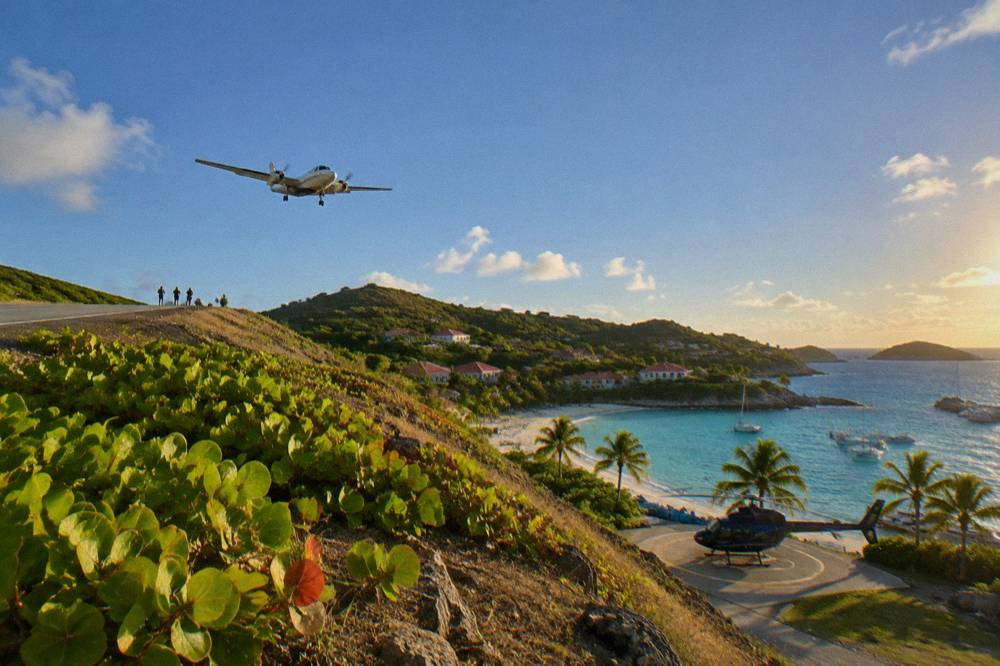
For travelers whose real interest is the aerial view rather than the transfer itself, there is a middle path worth naming: the fixed-wing approach into SBH is itself a low-altitude arrival over water and terrain, widely written about and covered on this site, and it comes bundled with the price of a scheduled seat rather than a charter quote. The site's page answering whether St Barts has one of the most difficult landings explains the airport codes and the approach context around it. Between a helicopter charter and a scheduled Grand Caravan, many itineraries land on the latter for exactly this reason.
The honest summary of the helicopter option is that it exists in the region as a bespoke service, sits outside everything this site covers, and should be budgeted and planned as a private charter with a contingency, never as a bookable scheduled leg of a trip.
When Is The Best Time To Arrive In St Barts?
The Meteo-France climate normals for St Barts, 1991 to 2020, show mean daily highs from 28.5 C in January to 31.7 C in September, with 891.3 mm of rain across the year and October the wettest month at 135.6 mm. The Atlantic hurricane season runs 1 June to 30 November with its peak from mid-August to mid-October, which shapes both flight and ferry reliability in those months.
Every arrival mode on this page is weather sensitive in its own way. Daylight-only flying at SBH means the winter months, with their earlier sunsets and longer booking days, simply offer more schedule; the ferry crosses open water year-round; and a helicopter charter, like everything aloft, lives within the same visual-conditions regime. None of that predicts any individual day, and no storm can be forecast from a climate table, but the seasonal pattern is documented and worth planning around.
| Month | Mean daily high (C) | Mean daily low (C) | Rain (mm) |
|---|---|---|---|
| January | 28.5 | 23.5 | 52.6 |
| April | 29.8 | 24.2 | 50.9 |
| July | 31.2 | 26.0 | 80.4 |
| September | 31.7 | 26.2 | 96.9 |
| October | 31.4 | 25.8 | 135.6 |
| December | 28.9 | 24.1 | 79.2 |
The calendar also interacts with the arrival choice through the autumn closure pattern: many hotels and hotel restaurants close in the late-summer low period and reopen in waves between mid-October and early November, so an autumn arrival may be more about the accommodation calendar than the flight calendar. The site's season guide on the best time to go covers this in depth.
What If You Skip The Helicopter And Arrive By Boat?
Every bookable St Barts product listed here departs from St Martin or Sint Maarten and arrives by water, which makes a private charter an arrival method in its own right: The trip list spans a per-person group sail and several private charters priced per group, all rated by their listings, and a private boat can turn the transfer itself into the first day of the trip.
The logic is simple. If a helicopter is a private charter through the air, a private charter across the water is its mirror image, and unlike the helicopter it is bookable today from listings with published prices, ratings and durations rendered on each product page. The full-day private charter below is the flagship example, and the overnight catamaran goes further, making the crossing the trip itself.
For travelers who like the idea of arriving with a day already built around it, the sequencing works like this: fly into SXM, overnight or connect on the Dutch or French side, then cross to Gustavia on your own boat with stops along the St Barts coast. The marine reserve's rules frame the day: the environment agency's regulatory-zones page lists a 5-knot limit in protected zones, a ban on jet skis, no dogs on beaches and no touching of turtles, all of which any responsible captain plans around.
The group sail option deserves a special mention for solo travelers and couples, because it is the one product listed here priced per person rather than per group, and it runs only from 12 May to 31 August 2027 on its listing. Outside that window the choice is between the private charters, and the full guide to the Gustavia, Colombier and Ile Fourchue sail covers what that day involves. Travelers weighing the whole corridor can also compare St Barts and St Martin as destinations before committing to either side.
How To Plan The Whole Arrival In One Pass
A well-built St Barts arrival plan has three layers: a gateway choice among St Martin, San Juan, Guadeloupe and Antigua; a last-leg choice among the small planes, the two ferries, a private boat charter or a helicopter charter; and a fallback, because daylight flying, open-water crossings and charter availability all respond to weather. Booking the last leg and the first night's accommodation in the same pass avoids the classic trap of a gateway arrival with no confirmed crossing.
The order of operations that the practical options support is straightforward. Book the long-haul into a gateway first, since that anchor is least flexible. Then choose the last leg: a scheduled small plane for the aerial approach, a ferry seat for the budget-conscious and sturdy-of-stomach, a private charter boat for a group that wants the transfer to be the day, or a helicopter quote for a traveler who wants the air option and accepts the bespoke process that comes with it. Then hold the fallback: the ferry operators and schedule page covers the two companies, and the operators' booking pages carry live sailing times.
One last structural note ties the whole page together: entry to St Barts sits outside the Schengen area, so the travel-document question is its own subject, and travelers should check their own government's travel advice for passport validity rather than relying on a number quoted second-hand. The site's customs and entry page covers the rules as the French authorities state them.
Common Questions About Helicopter Travel To St Barts
Is there a scheduled helicopter service to St Barts?
No scheduled helicopter service operates to St Barts. Helicopter transfer in the region is an on-demand charter arranged and quoted directly with operators, with no published timetable or fare.
Why can't jets fly into St Barts?
The runway at Gustaf III Airport is 646 metres long, which allows only small STOL turboprops. Jets cannot land there, and all operations are daylight and visual-conditions only. Travelers on jets connect through St Martin, San Juan, Guadeloupe or Antigua.
Which airlines fly to St Barts?
According to the operators' own pages, St Barth Commuter serves St Barts from St Martin (SXM), Grand Case (SFG) and Pointe-a-Pitre (PTP), and Tradewind Aviation serves it from San Juan (SJU) and Antigua (ANU). Winair operates Twin Otter aircraft from Sint Maarten.
How long is the ferry from St Martin to St Barts?
The operators state about 45 minutes for Great Bay Express from Philipsburg and about 50 to 60 minutes for Voyager from Marigot. Both crossings are weather dependent and can be rough, and a passport is required.
Can I book a boat instead of a helicopter to St Barts?
Yes. Every bookable St Barts product on this site departs from St Martin or Sint Maarten by water, including a per-person group sail and several private charters priced per group, all with live availability on their listings.
Do I need a passport for St Barts?
A valid passport is required for most arrivals, including on the ferry, and St Barts sits outside the Schengen area. Passport-validity rules differ by nationality, so check your own government's travel advice before booking.