What Is The Capital Of St Barts?
The capital of St Barts is Gustavia, the island's harbour town. This guide covers what Gustavia is, where it sits, and how visitors arrive there from St Martin.
The capital of St Barthelemy, the small French island in the Caribbean usually written St Barts, is Gustavia, a harbour town of red roofs on the island's west coast. It is the seat of the territorial council, the main port of arrival and the commercial centre of an island that covers about 21 square kilometres and counts roughly 10,000 residents. The town wraps around a sheltered bay where ferries from St Martin dock, cruise tenders land and yachts anchor through the winter season, and almost every visitor to St Barts passes through it at least once.
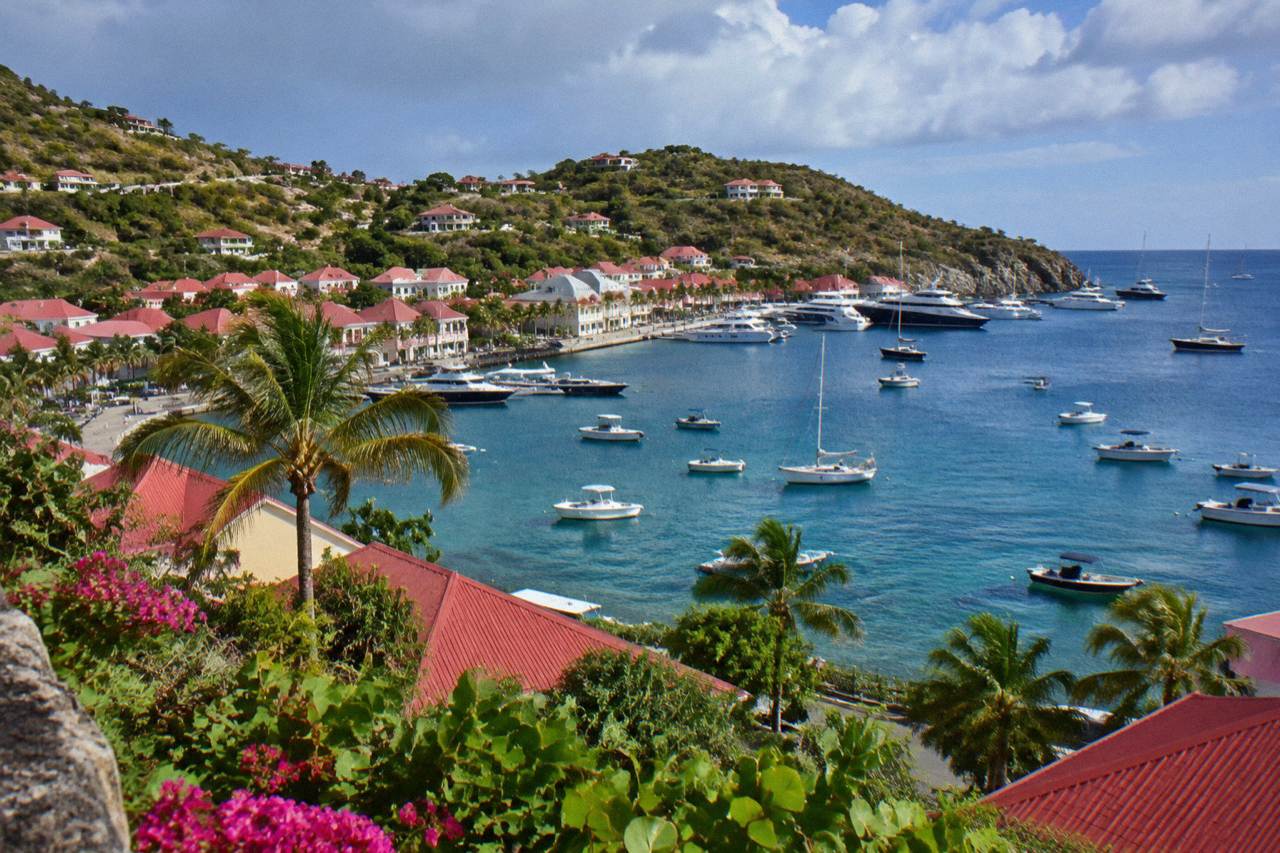
The capital of St Barts is Gustavia, a harbour town on the west coast of the island that serves as its administrative and commercial centre. St Barthelemy is a French overseas collectivity, a status it has held since 2007, and Gustavia is where the territorial institutions sit, where the main port operates and where the ferry terminals, shops and much of the island's working life are concentrated.
Gustavia is small enough to walk across in an afternoon. The town follows the curve of its bay, with the harbour front along the water and steep lanes climbing the hillside behind it. Because the island is only about 21 square kilometres, nothing in Gustavia is far from the beaches and villages around it, and the town functions less like a big-city capital and more like a single busy port quarter that the whole island orbits.
The population of St Barthelemy as a whole is about 10,700, and a large share of island life is anchored in and around the capital. Public services, the port offices and the bulk of the retail sector sit in Gustavia, while the settlements elsewhere on the island, such as Saint-Jean, Lorient and Corossol, are far smaller. The tourism committee presents Gustavia as the island's centre of gravity, and for most travellers it works out that way in practice, since the ferry piers, the tender landing and the main road junctions all sit in or beside the town.
For planning purposes, this matters more than it might seem. Readers weighing where the best area to stay on St Barts is will usually compare the beaches and outer villages against Gustavia's harbour convenience, and anyone wondering whether St Barts is worth the effort of getting there is really asking whether a small French island with one busy harbour town justifies the journey. For a wider look at the island's draws, the site's things to do in St Barts page covers the full range.
Where Is Gustavia On The Island Of St Barts?
Gustavia sits on the west coast of St Barts, facing the island's sheltered natural harbour on the leeward side. That position is the reason it became the capital: the bay protects boats from the prevailing Atlantic swell, which makes it the safest anchorage on the island and the natural landing point for ferries, tenders and yachts. The town occupies the shore and hillside around that bay, with the airport a short way north near Saint-Jean.
The west-coast location shapes how the island is used. Beaches on the exposed northern and eastern shores, such as Toiny and Grand Cul-de-Sac, take the open Atlantic, while the capital's bay stays calm enough for a working port. All of the island's beaches are public, including those near town such as Shell Beach, a short walk from the harbour front, which the nicest beach in St Barts question often circles back to.
The island's road network also converges on the capital. Driving is on the right, roads are narrow, winding and steep, the speed limit is typically 50 km/h island-wide and 30 km/h in built-up areas such as Gustavia and Saint-Jean, and rental counters for Avis, Budget and Hertz, plus local agencies with Mini Mokes, operate at Gustaf III Airport. The practical question of renting a car in St Barts usually resolves into how often a visitor wants to leave the capital for the outer beaches.
| Feature | Detail |
|---|---|
| Position | West coast of St Barts, on the leeward shore |
| Harbour | Sheltered natural bay, the island's main anchorage |
| Status | Capital and administrative seat of the Collectivité de Saint-Barthelemy |
| Island context | About 21 square kilometres total, roughly 10,000 residents |
| Nearest airport | Gustaf III Airport (SBH) near Saint-Jean, small turboprops only |
| Cruise access | Tender boats land passengers in the bay; no cruise pier exists |
Because the town is compact and the island is small, Gustavia also works as a base rather than just a transit point. Accommodation in town puts the harbour, the shops and the ferry within walking distance, and a drive to even the far corners of the island is a modest outing on roads that demand attention rather than speed.
For visitors who want the harbour perspective, the one bookable day trip listed here that actually calls at the capital by sea is the Gustavia, Colombier and Ile Fourchue sail, which departs from St Martin and spends its day on the water between the capital and the marine reserve; See the live listing if a day arriving in Gustavia by boat appeals.
Why Does St Barts Have Its Capital On The Water?
Gustavia is the capital because its bay is the island's best natural harbour, and on a small island with no river, no mountain pass and no inland centre, the safe anchorage became the town. St Barts is an island of hills and coves, so settlement and trade concentrated where boats could shelter, and the administrative functions followed the port. The same bay today still handles the ferries, the tenders and the yachts, which keeps the capital's economy tied to the water.
The harbour is not a ceremonial detail. Cruise ships anchor offshore and send tenders in, because there is no pier built for them, and the Collectivité caps authorized cruise calls at ships carrying up to 1,200 passengers, which keeps the bay and the town on a human scale. Yacht events anchor the winter calendar: the St Barths Bucket Regatta runs in mid-March, and Les Voiles de St Barth follows in April, both staged out of the capital's anchorage. More of these guides are collected on St Barthelemy Travel.
Around the bay, the town's everyday character is French in language and administration, with English widely spoken and the euro as currency. Emergency numbers follow the French system, 15 for medical, 17 for police, 18 for fire and 112 as the European emergency number, a small reminder that this Caribbean harbour town is administratively part of France rather than a neighbouring island federation. Readers asking what country St Barts belongs to usually expect a short answer, and Gustavia's French street names and gendarmerie make the point physically.
How Do Visitors Reach Gustavia From St Martin?
Visitors reach Gustavia from St Martin either by small plane into Gustaf III Airport followed by a short drive, or directly by sea on one of two scheduled ferries: Great Bay Express from Philipsburg, a crossing of about 45 minutes, and Voyager from Marigot, about 50 to 60 minutes. No jets land at St Barts, the 646 m runway takes only small STOL turboprops in daylight, and the crossing can be rough, so neither route is guaranteed calm.
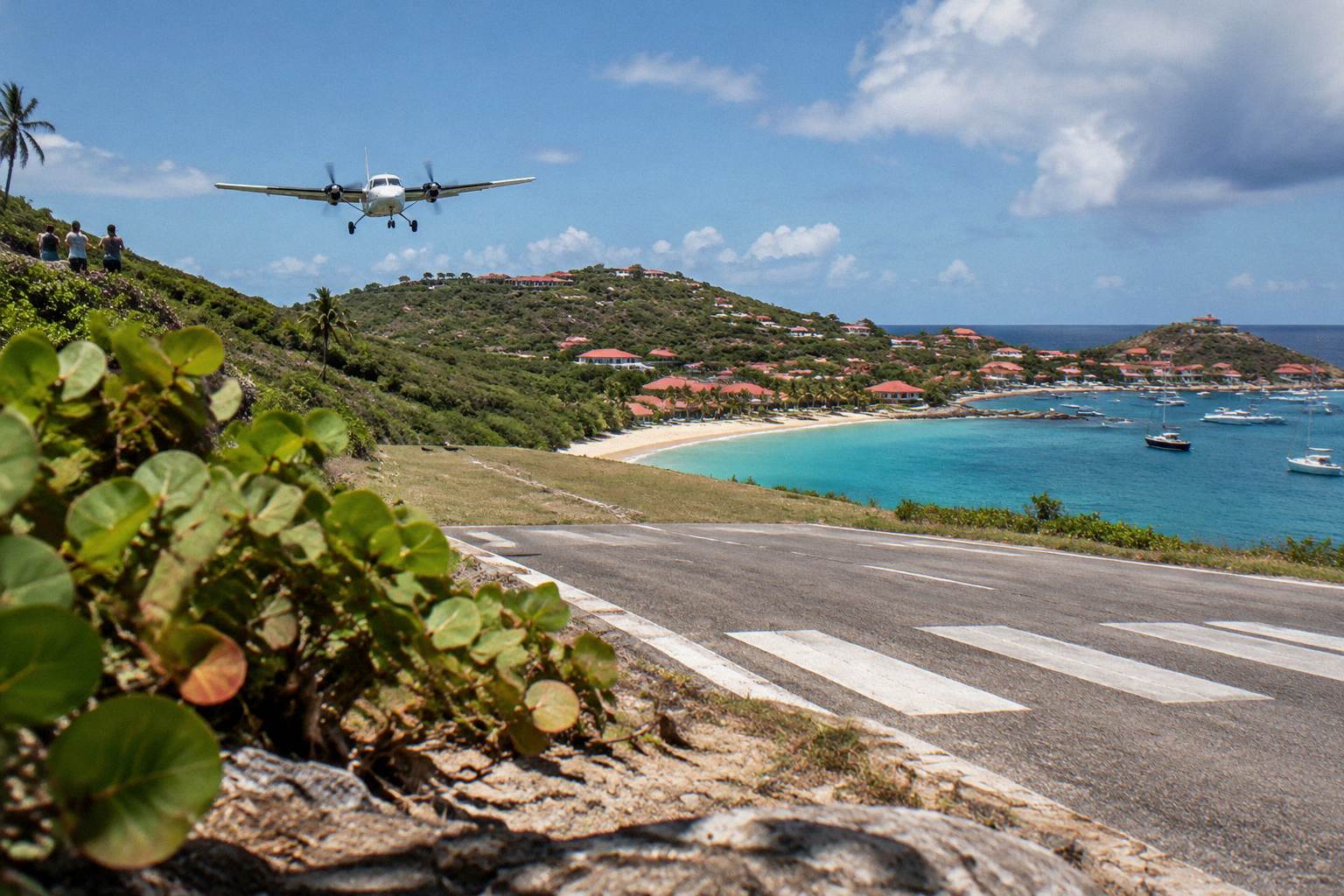
The air route runs from Princess Juliana Airport on the Dutch side, from Grand Case on the French side and from Guadeloupe via St Barth Commuter, and from San Juan and Antigua via Tradewind, all in small turboprop aircraft certificated for the short runway. The airport sits near Saint-Jean, and the road down to the capital is a short, steep hop that lands travellers in the heart of Gustavia within minutes of touchdown. It is a famously scenic approach, one reason some flyers connect through St Martin specifically to take it.
The sea routes are simpler and cheaper to plan. Great Bay Express departs from Bobby's Marina in Philipsburg on the Dutch side, with check-in about 45 minutes before departure and passport required; Voyager departs from the Marigot Ferry Terminal on the French side. Both operators typically run two to three sailings a day in each direction, more in the high season and fewer in the shoulder months, and the operators' own pages carry the live timetables. Anyone sensitive to swell should know the crossing is open water and can be bumpy; it is never a promised smooth ride.
| Route To Gustavia | Operator | Departure Point | Crossing |
|---|---|---|---|
| Scheduled ferry | Great Bay Express | Bobby's Marina, Philipsburg (Sint Maarten) | About 45 minutes |
| Scheduled ferry | Voyager | Marigot Ferry Terminal (St Martin) | About 50 to 60 minutes |
| Scheduled small plane | St Barth Commuter | St Maarten (SXM), Grand Case (SFG), Guadeloupe (PTP) | Short hops |
| Scheduled small plane | Tradewind | San Juan (SJU), Antigua (ANU) | Longer connections |
The two-airport, two-ferry structure is why getting to St Barts is harder than reaching most Caribbean islands: there is no direct jet service from anywhere outside the region, so every itinerary runs through a gateway, most often St Martin, and finishes with a small plane or a boat. Travelers heading out from the United States can read the site's page on flying to St Barts from the US for the gateway picture.
What Can Visitors See And Do Around Gustavia?
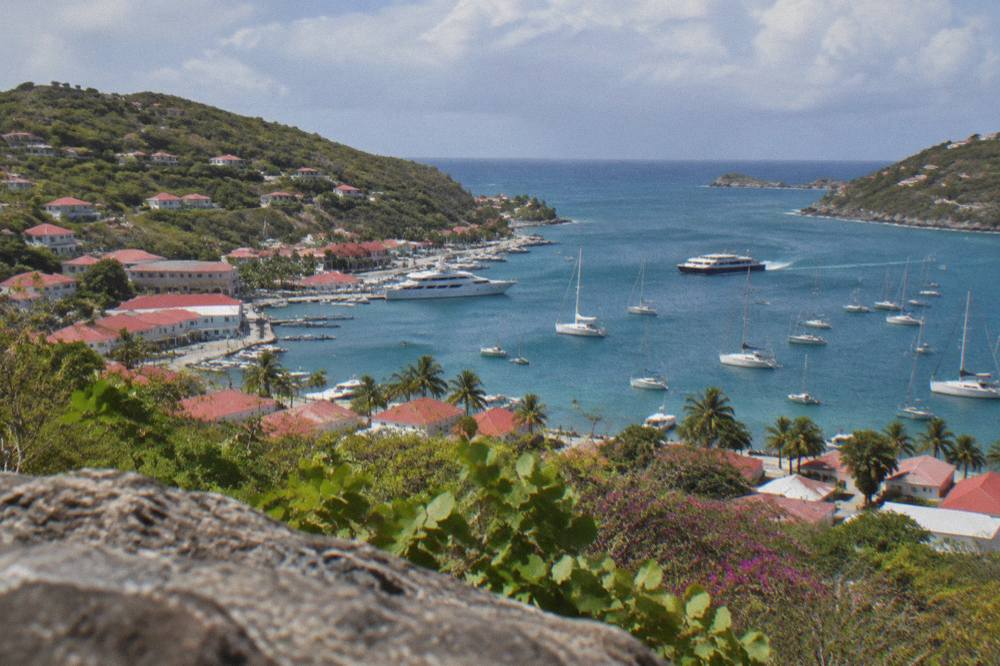
Around Gustavia visitors find the harbour front itself, the shopping streets behind it, historic fort sites on the headlands and public beaches within a short drive, including Shell Beach on the town's edge. The town's museums cover the island's Swedish-era past and its maritime life, the forts above the bay give the classic view over the anchorage, and every beach on St Barts is public and free to access, so nothing around the capital requires a ticket beyond the museums' own entry terms.
The harbour is the main attraction in the plainest sense. Yachts, tenders and ferries share the bay, and the quays are the place to watch the island's seagoing life operate. Above the town, fort sites on the headlands frame the view over the capital and out to sea, and the island's small museums, including the Wall House Museum and the shell museum at Corossol, hold the local heritage. The site carries a dedicated page on the Wall House Museum and a guide to the island's Swedish history for readers who want the detail.
Food around the capital follows the island's French-influenced character, with harbour-side tables through the town. No individual restaurant is named as a recommendation here, and no meal price is printed, but the general picture is a compact dining scene concentrated in Gustavia with more scattered through the villages. The page on what food St Barts is known for covers the island's food identity in general terms.
One planning note worth knowing: many hotels and restaurants on St Barts close for the autumn each year and reopen in waves between mid-October and early November, so a Gustavia trip planned for September or early October meets a quieter island than the same trip in February. The St Barth Gourmet Festival, dated 9 to 15 November 2026, marks the point at which the season is fully running again.
Common Questions About The Capital Of St Barts
What Is The Capital Of St Barts?
The capital of St Barts is Gustavia, the harbour town on the island's west coast. It is the administrative seat of the Collectivité de Saint-Barthelemy, the main port of arrival and the island's commercial centre.
Is Gustavia A Big City?
No. Gustavia is a small harbour town that can be walked across in an afternoon, set on an island of about 21 square kilometres with roughly 10,000 residents in total. It functions as a capital the way a county town does, not the way a national metropolis does.
Do Cruise Ships Dock In Gustavia?
Cruise ships do not dock. They anchor offshore and passengers come ashore by tender boat, because the port has no cruise pier. The Collectivité authorizes cruise access for ships of up to 1,200 passengers, which keeps calls small.
Which Country Does The Capital Of St Barts Belong To?
Gustavia is the capital of St Barthelemy, a French overseas collectivity since 2007. The currency is the euro, French is the official language with English widely spoken, and the emergency numbers are the standard French ones, 15, 17, 18 and 112.
How Do You Get To Gustavia Without Flying?
By ferry from St Martin. Great Bay Express runs from Philipsburg with a crossing of about 45 minutes, and Voyager runs from Marigot with a crossing of about 50 to 60 minutes. Both typically sail two to three times a day in each direction, subject to weather and season.
Is There An Airport In Gustavia?
The island's airport, Gustaf III, also called Remy de Haenen, sits near Saint-Jean a short drive from the capital. Its runway is 646 m, only small STOL turboprops operate there, flights run in daylight and visual conditions only, and no jets land at St Barts.