Why Is It So Hard To Get To St Barts?
St Barts has no jet airport and no direct long-haul flights: here is exactly why getting there takes a connection through St Martin, and every option for the last leg.
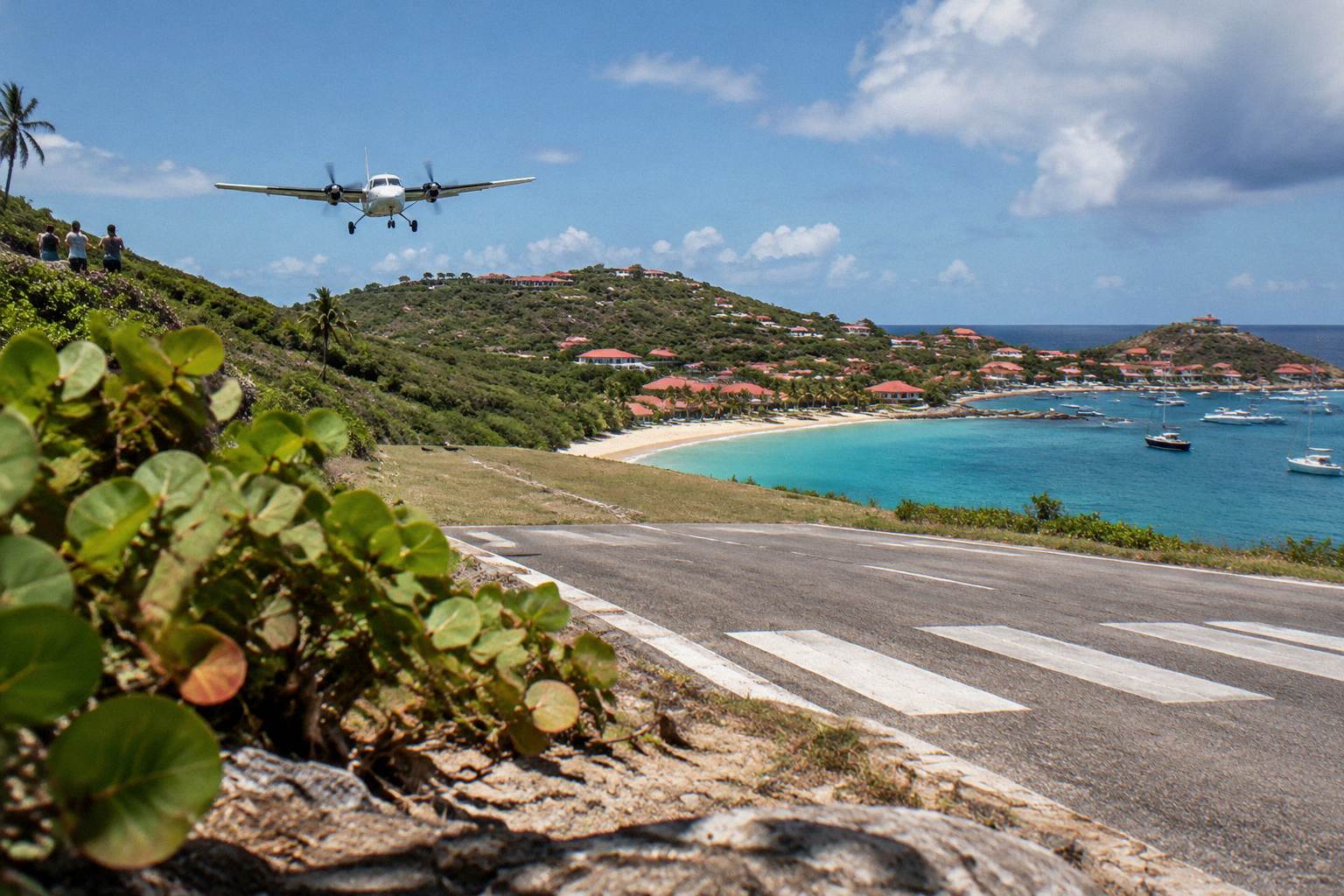
St Barthelemy, usually written St Barts, is a small French island in the Caribbean of about 21 square kilometres with roughly 10,700 residents. The runway at Gustaf III Airport is 646 m long, which rules out every jet, and the harbour at Gustavia takes ferries but no cruise pier. The result is an island that almost every traveller reaches through a gateway, usually St Martin, then finishes with a small plane or a ferry. The full picture on St Barthelemy Travel covers each of these hops in depth, and this page explains why the hops exist at all.
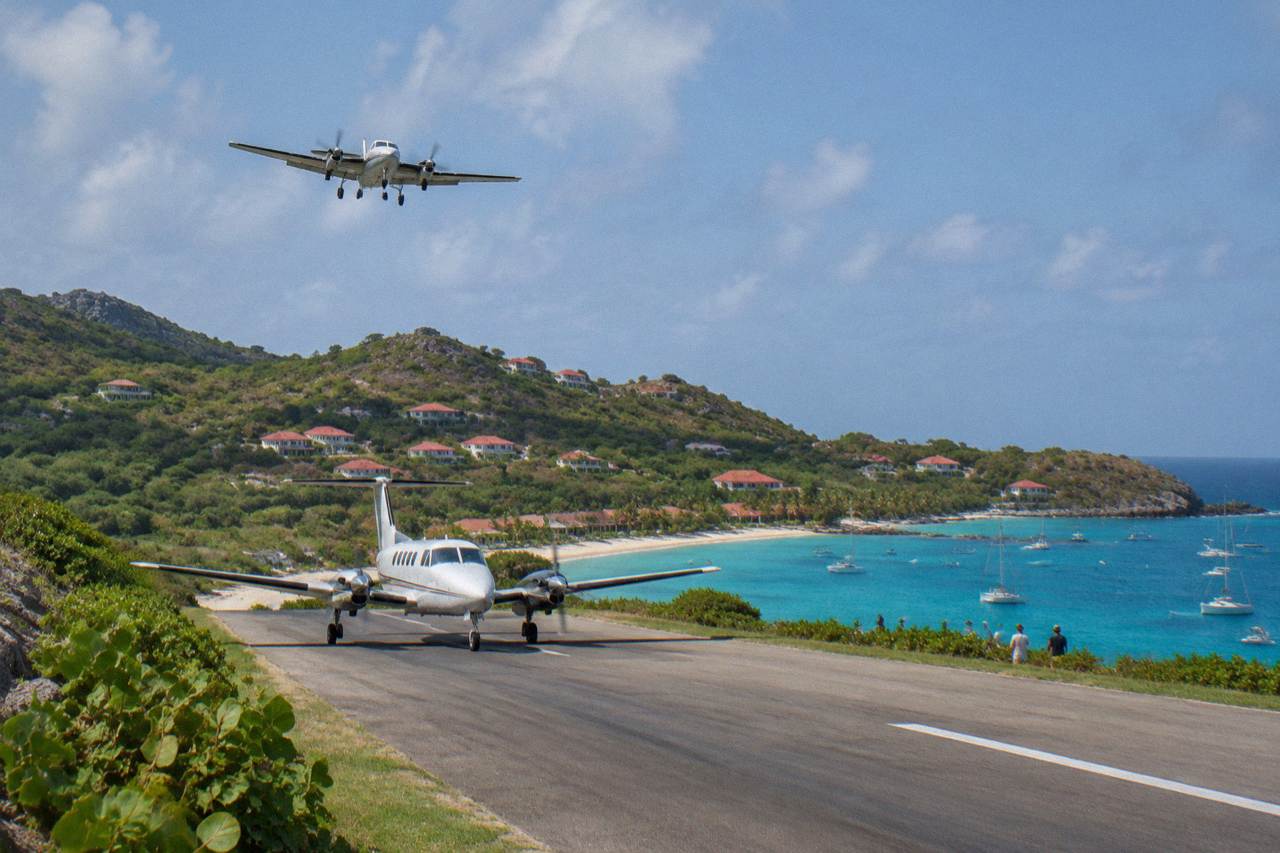
St Barts is hard to reach because its airport, Gustaf III (SBH), has a runway of just 646 m, which no jet can use, and because operations are restricted to daylight and visual flight conditions. There are no direct flights from outside the Caribbean, so every traveller connects through a hub such as St Martin (SXM), San Juan (SJU), Guadeloupe (PTP) or Antigua (ANU), then finishes with a small STOL turboprop or a ferry.
The airport is also called Remy de Haenen, and its runway is one of the shortest serving scheduled traffic anywhere. Only STOL-rated aircraft, types built for short takeoffs and landings such as the Twin Otter, the Cessna 208B Grand Caravan and the Pilatus PC-12, are permitted. The approach crosses terrain, pilots need a special qualification, and there are no runway lights, so the airport opens in daylight and closes shortly after sunset. Weather that would barely delay a jet airport, low cloud or an afternoon squall, can suspend operations entirely.
The second reason is scale. An island of about 21 square kilometres with a population of about 10,700 does not generate the passenger volumes that justify long-haul widebody service, and the community has shown no interest in building the infrastructure that would invite it. Cruise ships anchor offshore and tender their passengers into Gustavia because there is no pier, and ship access is capped by the collectivity at 1,200 passengers per vessel. Smallness is not an accident here; it is managed.
What Makes The Gustaf III Runway So Restrictive?
A 646 m runway, 2,119 feet, leaves no margin for jets, which need several times that distance, and the terrain approach plus a daylight-only rule tighten the limits further. The airport's technical figures come from the French aviation information publications, and they permit only small STOL turboprops, flown in visual conditions, by pilots holding a specific qualification for the strip.
Jets need far more runway than 646 m even in ideal conditions, and the strips that serve them are also built with long, clear overrun areas. St Barts has none of that. The approach passes over a hill, the runway slopes, and the arrival ends near the beach at Saint-Jean. It is a certified, scheduled airport, but one built to the scale of the island, and the aircraft that serve it carry a handful of passengers at a time in daylight.
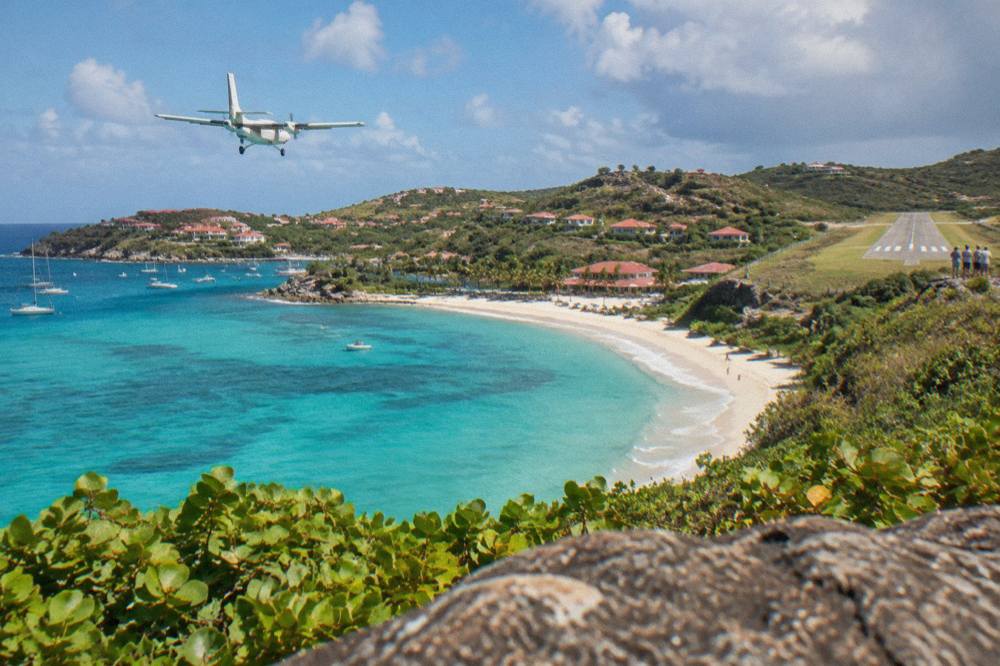
That constraint ripples back up the whole journey. Since no long-haul aircraft can land, the jet you fly from the US, Canada or Europe stops somewhere else first. The gateway airports are Princess Juliana (SXM) on Sint Maarten, San Juan (SJU) in Puerto Rico, Pointe-a-Pitre (PTP) in Guadeloupe and Antigua (ANU). From any of them, the final leg is flown by one of the small operators or covered by sea.
| Gateway Airport | Code | Small-Plane Operator To St Barts | Notes |
|---|---|---|---|
| Princess Juliana, Sint Maarten | SXM | St Barth Commuter | The main gateway; frequent short hops |
| Grand Case, St Martin | SFG | St Barth Commuter | French-side alternative airport |
| Pointe-a-Pitre, Guadeloupe | PTP | St Barth Commuter | Useful from the French Caribbean |
| San Juan, Puerto Rico | SJU | Tradewind | Pilatus PC-12 service |
| Antigua | ANU | Tradewind | Limited, more seasonal |
Winair also operates Twin Otter aircraft in the region, so treat it as a name to check when booking rather than a promise. If you are weighing the flying options in detail, the companion page Can You Fly Direct To St Barts From The US? takes the American side of the question further.
Why Do You Almost Always Connect Through St Martin?
St Martin is the natural gateway because it sits closest to St Barts, offers the most frequent small-plane departures across to the island, and also runs the two scheduled ferry services that reach Gustavia by sea: Great Bay Express from Philipsburg and Voyager from Marigot. Sint Maarten's airport additionally receives the long-haul jets that St Barts itself cannot take, concentrating the connections in one place.
The two ferry operators split by departure point. Great Bay Express leaves from Bobby's Marina in Philipsburg on the Dutch side, and the crossing to Gustavia takes about 45 minutes, an operator figure. Voyager leaves from the Marigot ferry terminal on the French side, and its crossing takes about 50 to 60 minutes. Both run roughly two to three sailings a day in each direction, more in the winter high season, and both require a passport and check-in well before departure. Neither operator's crossing is guaranteed smooth: the stretch between the islands can be rough, and sailings are subject to weather.
That is the honest shape of the "difficulty". It is not that St Barts is remote, it lies among the Leeward Islands with busy neighbours, it is that the last leg is always small: a nine-seat turboprop or a ferry. Some travellers decide that if the final hop must be by sea anyway, it might as well be a good day on the water, and a sailing that calls at Gustavia, Colombier Beach and Ile Fourchue does exactly that, leaving from St Martin. See the live listing if that framing appeals.
What Do The Entry Rules Add To The Journey?
Entry adds a layer because St Barts is a French overseas collectivity that sits outside the Schengen area, so a Schengen visa does not authorize entry, and ETIAS does not apply either, since it is not operational and does not govern this territory. Visa-exempt nationalities including US, UK, Canadian and EU citizens stay up to 90 days, and onward travel documents are checked on arrival.
For US citizens the passport book is the required document, a passport card will not do for air travel, and UK guidance points to passport validity beyond the planned departure date. The exact validity margin your own government advises is the one to follow, since official advice differs between countries and this page prints no single number of months. EU citizens may use a national ID card. There is a local tourist tax, collected through accommodations rather than at the border. The entry specifics are covered in Do US Citizens Need A Passport For St Barts?, and the practical side of the transfer between islands in What Is The Best Way To Get To St Barts? as the companion planning page.
Does The Weather Ever Close The Door?
Weather can suspend both routes at once: the airport flies only in daylight visual conditions, so low cloud, fog on the approach hill or an evening arrival can scrub a flight, while the ferry operators cancel sailings when the crossing is rough. Hurricane season, which runs 1 June to 30 November with a peak from mid-August to mid-October, overlaps the warmest and wettest months on the climate normals.
The Meteo-France normals for 1991-2020 show mean daily highs of 28.5 C in January and 31.7 C in September, with 891.3 mm of rain across the year and October the wettest month at 135.6 mm. None of that makes travel impossible in the season, and the island is warm year-round with a sea that stays warm, about 26 C in winter rising to about 29 C from August to October. It does mean the last leg, a daylight flight or an open-water ferry, is the part of the itinerary most exposed to a day's conditions. Building a buffer night in St Martin removes nearly all of the stress this can cause.
Is The Difficulty Part Of The Point?
The island's own authorities cap cruise arrivals at 1,200 passengers per ship, allow no cruise pier so vessels tender into Gustavia, and maintain an airport sized for turboprops, and each limit is a choice that keeps St Barts small. The difficulty of the journey is not a failure of infrastructure but a working system that filters volume before it ever reaches the harbour.
A reader weighing whether the effort is repaid can look at what the island does with its limited access: about 21 square kilometres of public beaches, a marine reserve managed under environment-agency rules, and a harbour town that superyachts and ferries share. The reserve's regulatory page lists a 5-knot speed limit in its zones, a jet-ski ban, 23 dive sites and a rule against touching turtles, which tells you the character of the place better than any hotel brochure. Sailing events fill Gustavia each spring, with the Bucket Regatta in mid-March and Les Voiles de St Barth in April, and the Music Festival runs 8 to 18 January 2027.
For the stay itself, What Part Of St Barts Is Best To Stay In? maps the neighbourhoods, and Is It Worth Going To St Barts? takes the value question head on.
Common Questions About Getting To St Barts
Why Is It So Hard To Get To St Barts?
Because Gustaf III Airport has a 646 m runway that excludes jets and operates in daylight visual conditions only, so no direct flight from outside the Caribbean exists. Every traveller connects through a hub such as St Martin, San Juan, Guadeloupe or Antigua and finishes by STOL turboprop or ferry.
Can a jet land in St Barts?
No. The runway is 646 m long, roughly 2,119 feet, and only small STOL-rated turboprops are permitted. Jets land at gateway airports such as Sint Maarten (SXM) or San Juan (SJU), where travellers transfer.
Which airport do you fly into for St Barts?
Most itineraries use Princess Juliana (SXM) on Sint Maarten. From there, St Barth Commuter flies the short hop to St Barts, or Great Bay Express runs the ferry from Philipsburg. Voyager sails from Marigot on the French side.
Is there a ferry to St Barts?
Yes. Great Bay Express runs from Bobby's Marina in Philipsburg, about 45 minutes to Gustavia, and Voyager runs from the Marigot terminal, about 50 to 60 minutes. Both sail two to three times daily in each direction, subject to weather, and both require a passport.
Does the weather stop flights to St Barts?
It can. The airport has no runway lights and flies only in daylight visual conditions, so low cloud or an evening arrival can cancel a flight, and ferries suspend service in rough seas. A buffer night in St Martin absorbs nearly all such disruption.
The short answer to the question in the title is that St Barts chose a small door, and the door still works: connect through St Martin, decide between the turboprop and the ferry for the last leg, and the island on the other side is the reason the queue to get in exists.