Is It Worth Going To St Barts?
A plain answer to whether St Barts is worth the trip, what the island offers, what it costs in effort to reach, and who it suits best.
St Barthelemy, usually written St Barts, is a French overseas collectivity in the Caribbean with about 10,700 residents, a harbour capital called Gustavia, and an airport whose 646 m runway accepts only small turboprops in daylight. That combination, a genuinely small island with a genuinely unusual arrival, is the heart of the question. The island asks more of a traveler than a normal beach destination, and it gives back something narrower and more specific in return. This page works through both sides of that trade.
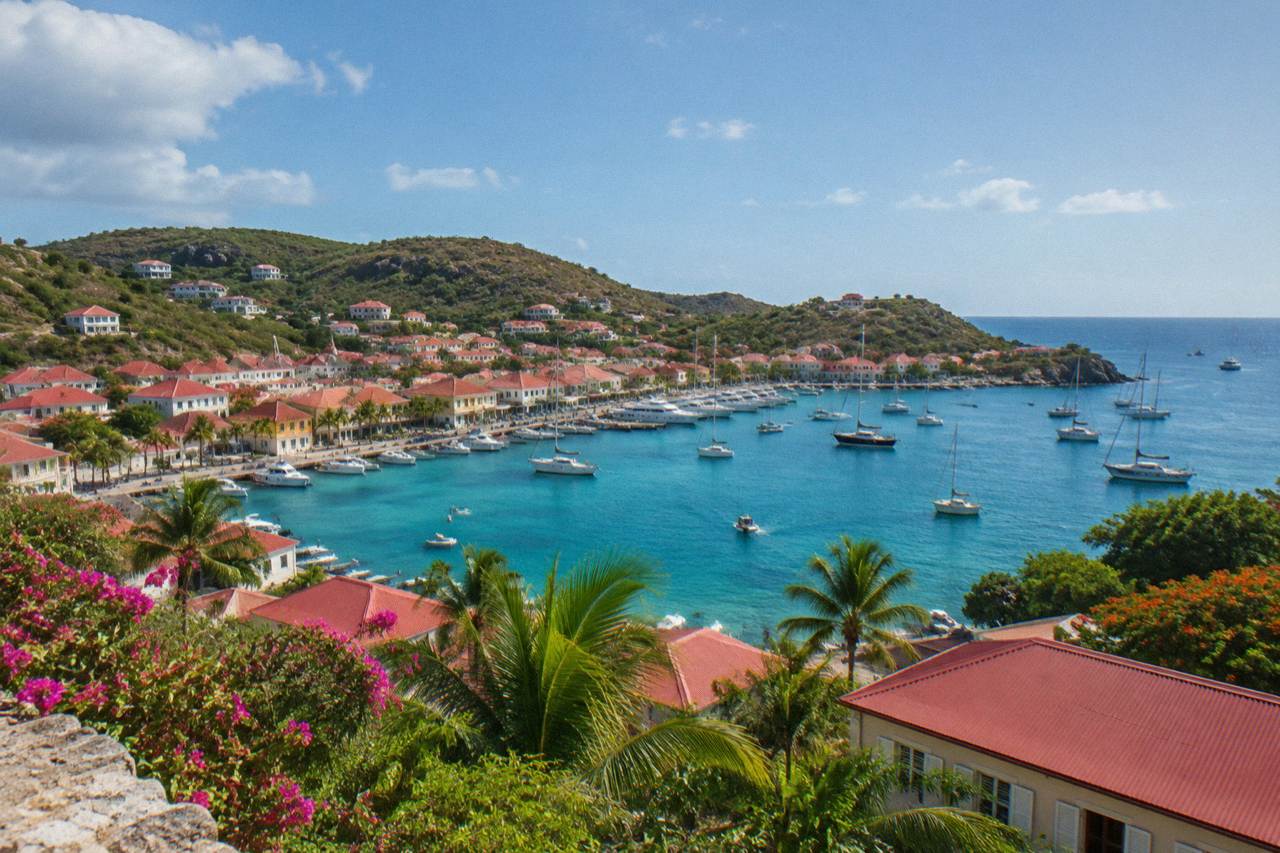
Yes, for a traveler whose priority is beaches, water, walking-scale towns and a quiet French-Caribbean atmosphere, and no, for a traveler who wants nightlife, dense sightseeing, all-inclusive resorts or an easy arrival. The island is about 21 square kilometres, all beaches are public, and the tourism committee describes a destination built around its shoreline, its harbour and its restaurant scene rather than around attractions.
The honest framing is that St Barts is a place you go to rather than through. The Meteo-France normals, 1991-2020, show a mean daily high between 28.5 C in January and 31.7 C in September, which means the core product, warm weather and warm sea, is available every month of the year. The tourism committee's own material leads with the beaches, the harbour at Gustavia and the sailing calendar, not with museums or monuments. Anyone deciding should read the sections below on what the island is, what getting there involves, and what its genuine downsides are.
What Makes St Barts Different From Other Caribbean Islands?
St Barts differs in scale, governance and access: it is a French overseas collectivity since 2007 with roughly 10,700 residents, the euro as currency, French as the official language with English widely spoken, and an airport limited to small STOL turboprops by its 646 m runway. There is no cruise pier, and ships tender passengers into Gustavia. The island is not built for volume.
That last point shapes everything. Cruise calls are regulated by the Collectivité, which authorizes access for ships with a capacity of up to 1,200 passengers, and there is no public cruise call schedule because the port does not publish one. Ships anchor offshore and tender in. The result is an island that never absorbs a mass-market crowd at once, whether by design or by geography.
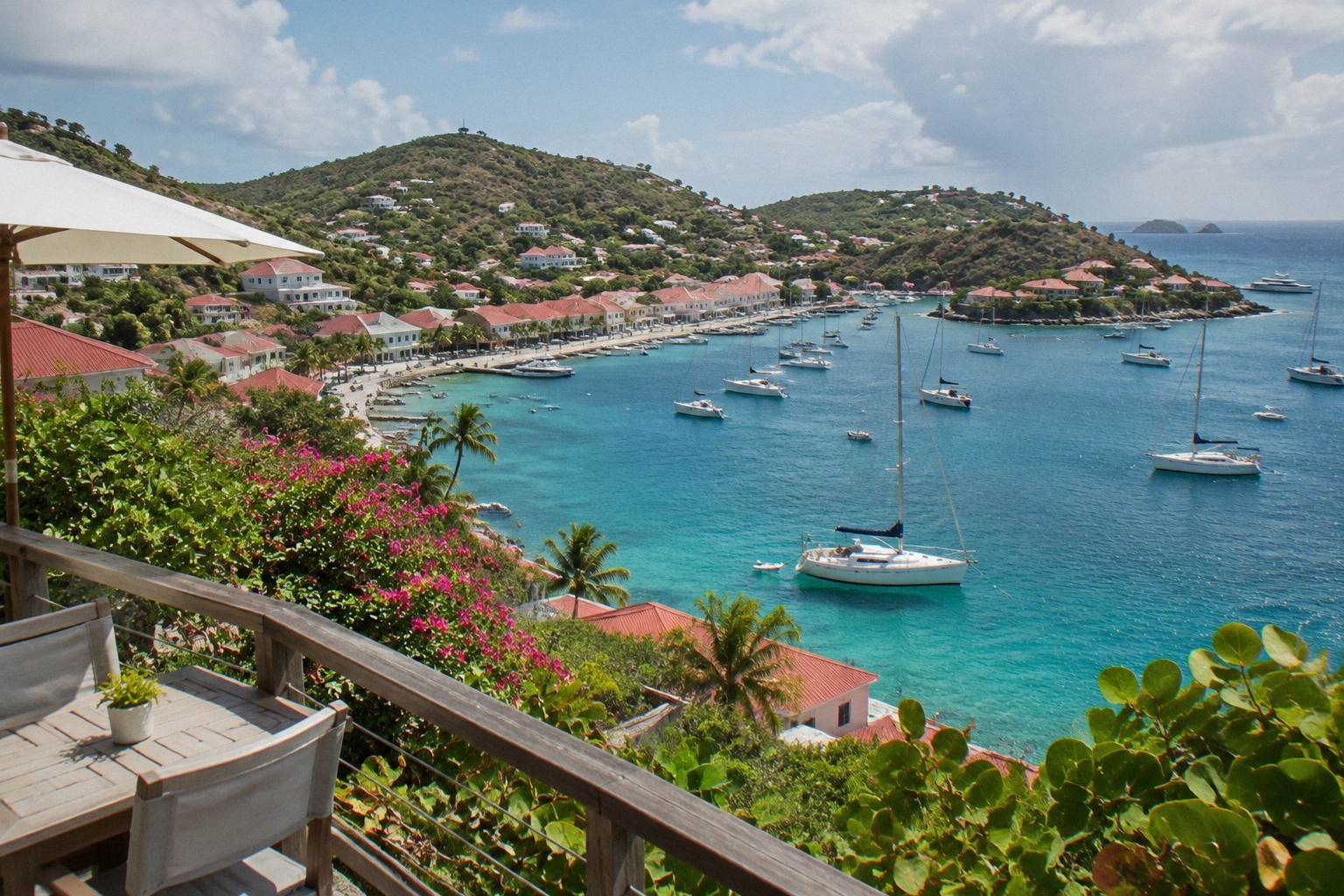
The French character is the other differentiator. Gustavia is the capital, a walking-scale harbour town of red roofs, and the retail and dining culture around it is French-influenced. All beaches on the island are public, including those in front of hotels, which is not the case everywhere in the Caribbean. The marine reserve adds another layer: the environment agency's regulatory-zones page lists a 5-knot speed limit in protected zones, a ban on jet skis, 23 dive sites, and rules against touching turtles or bringing dogs onto beaches. The island's natural assets are actively managed, not just marketed.
For a point of comparison, how St Barts stacks up against its larger neighbor is a question worth a separate read, because the two islands share an airport gateway but almost nothing else.
What Does A Day On St Barts Actually Look Like?
A typical day centres on a beach in the morning, Gustavia or a shoreline village around midday, and a French-influenced dinner in the evening, and the whole circuit fits inside about 21 square kilometres. The official tourism material describes beaches at Saint-Jean, Gouverneur, Saline, Flamands, Colombier, Grand Cul-de-Sac, Lorient and more, all public, plus harbour walks at Gustavia and low-key villages like Corossol.
The rhythm is slow by design. There is no large attraction circuit. Wall House Museum and the small museums in Gustavia cover the island's Swedish period, and the forts above the town are short walks with harbour views, but the tourism committee's own pitch leads with shoreline, boats and food. If the question is which beach to prioritize, the island's answer is genuinely contested.
The strongest version of a St Barts day, according to the way the island is actually described by its tourism committee, is a day that includes the water. Colombier Beach and Ile Fourchue sit inside the marine reserve and are reached most easily by boat. The day sail from St Martin that calls at Gustavia, Colombier and Ile Fourchue is the per-person option, and See the live listing if that shape of day appeals.
How Hard Is It To Get To St Barts?
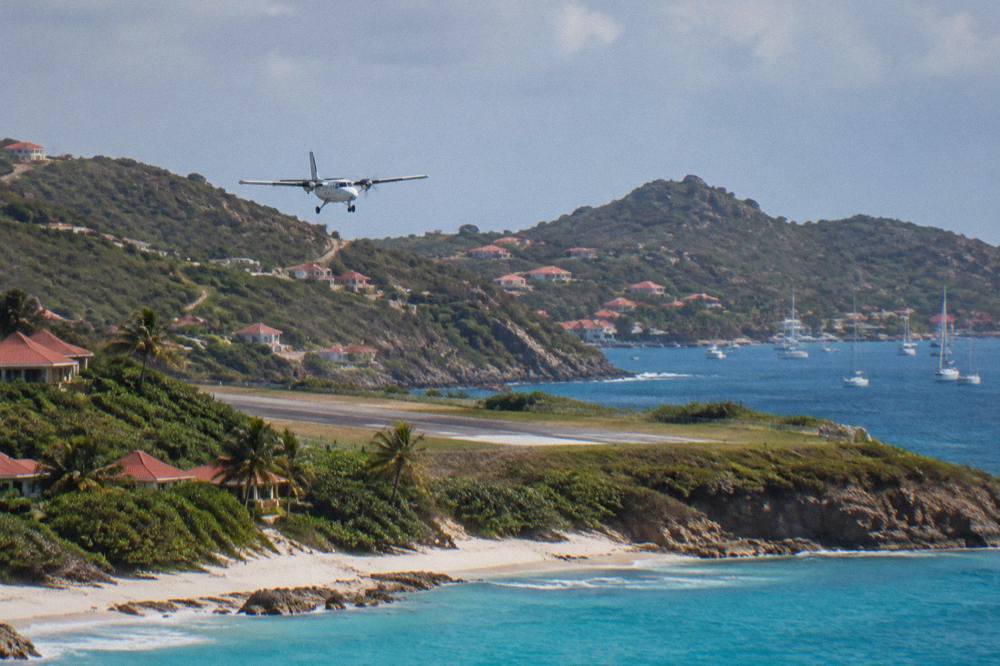
Reaching St Barts always involves a second step: travelers fly into a gateway, usually St Martin (SXM), sometimes San Juan, Guadeloupe or Antigua, and then take a small STOL turboprop or a ferry for the final hop. The runway at Gustaf III Airport is 646 m, jets cannot land, and operations are daylight and visual-conditions only. The ferries from Philipsburg and Marigot take roughly 45 to 60 minutes.
The two scheduled ferry operators are Great Bay Express from Bobby's Marina in Philipsburg on the Dutch side, about 45 minutes to Gustavia, and Voyager from the Marigot terminal on the French side, about 50 to 60 minutes. The crossing can be rough, and both operators' pages note weather-dependent service. On the flying side, St Barth Commuter serves SBH from St Martin, Grand Case and Pointe-a-Pitre, and Tradewind serves it from San Juan and Antigua; Winair flies the SXM to SBH hop on Twin Otters.
| Final step to Gustavia | Where it starts | Operator or carrier | Notes |
|---|---|---|---|
| Scheduled ferry | Philipsburg, Dutch side | Great Bay Express | About 45 minutes, passport required, check-in closes before departure |
| Scheduled ferry | Marigot, French side | Voyager | About 50 to 60 minutes, roughly 2 to 3 sailings a day each way |
| Small plane | St Martin (SXM) | St Barth Commuter, Winair | Short hop, STOL aircraft only |
| Small plane | Grand Case (SFG) | St Barth Commuter | Short hop from the French-side airport |
| Small plane | San Juan (SJU), Antigua (ANU) | Tradewind | The longer feeder routes into SBH |
The difficulty of the arrival is a real factor and deserves its own reading, and travelers coming from the United States should start with how the routing from the US works. The short version: the arrival is a feature for some travelers and a burden for others.
When Is The Best Time To Go To St Barts?
The November to April window carries the island's high season, its sailing events and its reopened hotels, while May to August is quieter, and the 1 June to 30 November hurricane season overlaps the warmest and wettest months, with the peak of activity from mid-August to mid-October. The Meteo-France normals, 1991-2020, put October as the wettest month at 135.6 mm and February the least rainy at 38.4 mm.
Temperature is not the variable it is elsewhere: the mean daily high runs from 28.5 C in January to 31.7 C in September, a narrow band, and the sea stays warm, about 26 C in winter rising to about 29 C from August to October. The real seasonal decisions are about closure patterns and events. Many hotels and restaurants close each autumn and reopen in waves between mid-October and early November, a recurring pattern rather than a fixed calendar. The St Barth Music Festival runs 8 to 18 January 2027, the Bucket Regatta falls in mid-March, and the Gourmet Festival runs 9 to 15 November 2026. The island's sailing weeks in April are a marquee draw but their 2027 dates were unconfirmed when this page was written.
| Month | Mean daily high | Rain, Meteo-France normals 1991-2020 | Season note |
|---|---|---|---|
| January | 28.5 C | 52.6 mm | High season, Music Festival 8 to 18 Jan 2027 |
| February | 28.6 C | 38.4 mm | Least rainy month in the normals |
| April | 29.8 C | 50.9 mm | Sailing weeks, dates for 2027 unconfirmed |
| September | 31.7 C | 96.9 mm | Hurricane-season peak window begins mid-August |
| October | 31.4 C | 135.6 mm | Wettest month, hotels reopening mid-month |
| November | 29.9 C | 118.6 mm | Gourmet Festival 9 to 15 Nov 2026 |
What Are The Genuine Downsides Of St Barts?
The downsides are cost, access, seasonal closures and limited infrastructure for some travel styles: no jet can land on the island, the ferry crossing can be rough, many hotels and restaurants close in the autumn, nightlife is modest, and the island's reputation for high prices is consistent across the accommodation market. It is also not a destination for travelers who want a packed sightseeing itinerary.
None of those are hidden. The accommodation market skews upscale, and no hostel or dormitory product exists on the island. Whether a rental car is necessary is its own question with its own answer, but the roads are narrow and steep, the speed limit is 50 km/h island-wide and 30 km/h in Gustavia and Saint-Jean, and the driving is on the right under French rules. Nightlife is real but limited; the honest answer on nightlife is that a few venues carry it and it is not the island's product.
For families and expecting mothers, the practical safety picture is covered separately, and the short version is a well-serviced French territory with standard medical infrastructure for its size, plus emergency numbers 15, 17, 18 and 112.
Who Should Skip St Barts Altogether?
Travelers who want all-inclusive resorts, high-volume nightlife, direct long-haul flights, dense land attractions or a low-cost trip should skip St Barts, because the island offers none of those five things and its access and accommodation market are structured against them. The island's own tourism material markets none of them. What it markets is shoreline, sailing, French-influenced dining and quiet.
The all-inclusive point is structural: the island has no all-inclusive resort model to speak of, and accommodation is hotels plus a large villa market with no number attached here. The flight point is physical: no jet lands at SBH, ever, and no direct flight from outside the Caribbean exists, so a second leg is mandatory. The cost point is consistent: this is a destination where the accommodation market starts high, and a traveler setting a tight budget is better served elsewhere in the region.
Common Questions About Going To St Barts
Is It Worth Going To St Barts?
For beach, water and quiet French-Caribbean atmosphere, yes: the tourism committee's own description of the island is built around its public beaches, its harbour and its sailing calendar. For nightlife, all-inclusive ease or a budget trip, no, and the effort of the arrival is real.
Is St Barts expensive?
This site prints no accommodation rates, and rates vary by season. The accommodation market is consistently described as upscale, with no hostels on the island, and local costs are in euros. Properties' own booking pages show current rates.
Do you need a passport for St Barts?
Entry follows French overseas rules, outside the Schengen area. US citizens need a passport book, and UK, Canadian and EU citizens have their own document rules. Travelers should check their own government's travel advice for current requirements before booking.
How many days are enough in St Barts?
The island is about 21 square kilometres, so the physical circuit is short. A long weekend covers Gustavia and several beaches; four to five days allows the marine reserve bays by boat and a slower rhythm without rushing.
Can you get to St Barts without flying?
Yes, by ferry. Great Bay Express runs from Philipsburg and Voyager runs from Marigot, both to Gustavia, in roughly 45 to 60 minutes. The crossing can be rough and services are weather-dependent.
Are the beaches in St Barts public?
Yes, all of them, including the beaches in front of hotels. The environment agency's rules apply across the marine reserve: no dogs on beaches, no touching turtles, and a 5-knot speed limit on the water inside protected zones.
The verdict: St Barts is worth the trip for a traveler who wants exactly what it has, a small, quiet, French island with public beaches and managed water, reached by a small plane or a ferry. It is not worth the trip for a traveler who wants any of the five things it does not have. More of the island's practical picture is laid out across St Barthelemy Travel, including the season guide and the getting-there pages, and the honest decision is easier after reading both.